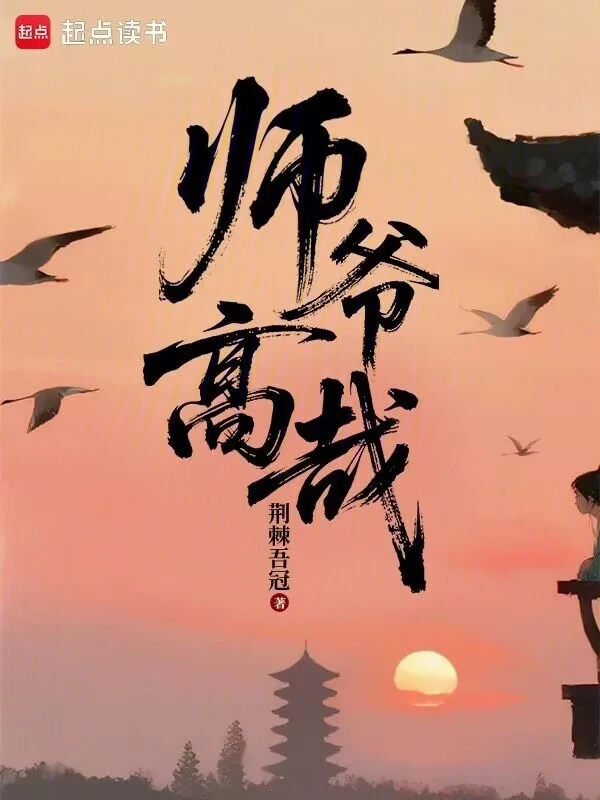
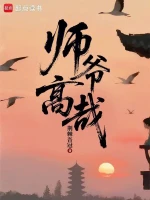
Master, Gao Zai
师爷高哉
- Status
- Ongoing
- Length
- 1.4M Words
- Genre
- Historical
- Audience
- Male
- Subgenre
- Song-Yuan-Ming Dynasties
- Updated
- 3h ago
- Source
- Qidian
Stats
830Monthly votes
24.8kRecommends
50.3kFans
376Chapters
Tags
Honours
Synopsis
Reader comments
In booklists 2

I Love It so Much That I'm at a Loss What to Do. It's Such a Great Book.
Rating 1-10, 10 years + bookworm, strong personal subjective consciousness. So far, no book has been given a score of more than 7 (I often wonder why it is still rated 1-10). A book with a score of 7 is already very good. After looking at it, the eunuch rate is almost half.
36Books34Follows1dUpdated
I Have Read and Finished This Book for Everyone to Consider.
Countless times when I was looking for books, I was thinking about how to find a book that suits me. Most of the time I saw an interesting book and read it with interest, but then gave up after less than a hundred chapters. Some ideas are good, but it is difficult to keep them good, so it is very difficult to find books. So I recommend the books I have read for everyone to learn from!
10Books1Follows1moUpdated
Readers also read
 Red Mansion: Start Escaping and Farming from the Equipment Bar
 Northern Qi, Sage Khan
 Republic of China 1922: Start with Pan-Fried Buns
 Gou Served as Sima Under Dong Zhuo
 Siheyuan: Start by Picking up Attributes
 Wei and Jin Dissatisfied with Zhou
 Emperor of the Song Dynasty 1066
 Immortal Who Seizes the Body
 Devouring the Starry Sky: Infinite Opportunities to Hoard Treasures at the Beginning
 Wei Bo Is an Envoy, Even Dogs Are Not Suitable
 Qingyao
 Daming: the First Assistant of a Poor Family!
Written at the end of volume three
It's an honor to see you cut out your own flesh and blood for readers to see. From the playing skills in Volume 1 and Volume 2 to the playing methods in Volume 3 (although some places are too stream-of-conscious, so I'll wrap it up). From the master's unscrupulous tactics in the first volume, to the second volume where he gradually understood what to do and what not to do, and now to the more restrained technique. It's quite interesting for readers to go from watching a lively scene, a fight, to watching a person confess himself. Watching the master fall into the world of mortals and become a person who can feel pain, the Taoist priest has gone from being an incarnation of absolute power at the beginning to the current conflict. The two people have a very clear lineage of their own growth that continues to the present, and then reflects each other. Beautiful I have some other small expectations. I am honored to see the author cut out the flesh and blood, but I don't want to see it too weird or self-centered. Let me make a wish
Another Mingchuan masterpiece
Recently, after "The Ming Dynasty 1566" became popular, another wave of Ming Dynasty craze started, which basically focused on the Jiajing period. Some of them reformed step by step from the emperor level, and some of them became famous ministers to help the country. However, it is very fresh to write about a small person (master). Let's talk about the advantages 1. The author's writing style is first-rate, and he is definitely not a newcomer. He has a deep accumulation of writing skills, and the description of the environment and background is detailed and non-procrastinating, giving people a strong sense of picture. If this kind of writing style can be persisted to the middle and late stages, it will be ranked among the top five in the historical classification. 2. The author has a strong sense of history. Many scenes in the book can be directly used as scripts and acted out on the stage. The lines match the characters' identities. Reading the book is like watching a drama. There are not many words, so I will summarize these for now, but the book is not perfect, and there are several problems. 1. The protagonist's status is too low, and he can't even take the imperial examination (which is quite reasonable, and if you don't cheat modern people, the eight-part essay can't really compete). Could it be that he has been working as a conspirator behind the scenes? This won't work. Keeping the plot behind the scenes and relying on others won't give readers sustained pleasure. 2. The main content is written too densely, and the rhythm is very fast and interlocking, without giving readers a chance to breathe. This writing makes the historical atmosphere of the entire book lower, if there is no daily description. The above are just personal opinions. I hope the author will update more and the book will get better and better
Have you ever been a master? Just scribbling here, taking it for granted.
Okay, the joke is over. Seriously recommend this book. First, this book can be adapted into a film and television script, and the plot is very solid. The two lines proceed alternately, the temple and the rivers and lakes each have their own merits, and finally converge to reach a climax. In other words, this was rewritten in imitation of the Ming Dynasty. In the Ming Dynasty, Hai Rui was in the local office, and Jiajing was in the high hall. One was extremely yin, the other was yang, and finally the dragon and the tiger were in harmony. This book also has this template. But I want to bring up Hai Rui's hidden thread in the family, and this book can also learn from it. How the protagonist's mentality changes. His growth history is linked through the loops of memory chapters and plot chapters, forming the effect of twists and turns. How did he abandon the narrow sense of pity and use a kind of great kindness and compassion to save the Ming Dynasty that was on the edge of the cliff? How did he learn this set of dark practices by going round and round? My assumption is that this book will climax with Jiajing's death and Zhang Juzheng's coming to power. No more than two million words. Because it is difficult to see the big from the small. To arrange the entire timeline and combine the character stories requires strong plot planning skills, so it can only end with the death of Jiajing. Because the Ming Dynasty only took this picture, I was worried that without a reference, the writing power would inevitably be insufficient later. In addition, in the story, fighting against Japanese pirates, changing rice into mulberry, and even the downfall of Yan Song and his son are all small ups and downs in the plot. So I don't think it's a super long novel. Second, after talking about the structure, let's talk about the characters. This character is very similar to Wu Si Tao, but he is more philistine and cunning, and less noble and noble. I think this part of the characteristic comes from the author, who must have experienced it. Third, we should talk about writing techniques. Fourth, finally let's talk about the most critical idea. . . .
I just found out that the introduction has changed. I recommended it to others and they said that the new introduction looked like shit. . .
Personally, I feel that the original introduction is the most eye-catching. The author just needs to stick to his original idea...🤡
So awkward
I can only say that people read online articles to escape reality. I can only say that the writing is a bit too realistic, and I just feel uncomfortable and don't want to continue reading.
A very good group portrait, the protagonist is like the string of beads, and the other people are like beads. Just like the sentence conveys the truth, the author uses characters with different acting styles and principles as a carrier of thoughts. The most important thing is that he does not make a definite evaluation of the characters, because people are changeable after all; as for how to think about it, it depends on the readers themselves. (Writing this, I suddenly remembered an old song by Huang Zhan, "Ask Me")
To be honest, when I read the comment section, I felt that this book was very strange, saying that it had no main purpose. Then I read the first three chapters, and I just couldn't finish reading. The protagonist is neither completely bad nor completely good. Do bad things and do good things. When you do good things, you always think about bad things. Contradictory. And I can't see it. The Machiavellian tactics that everyone in the comment section is bragging about
This is a thinking of Ming history
When the Ming Dynasty was established in 1368, years of wars had led to desolation of the land, a sharp decline in population, and a serious lack of social productivity. Recuperation and recuperation were a must-have national policy. In 1371, Ming Taizu issued the "Sea Ban", which prohibited all Chinese ships from going to sea and severely punished private traders and ship owners. In 1374, the Baobao Promotion Department was established, and the Ming Dynasty Baobao was officially issued the following year. It was initially put on the market through financial channels such as salary and military pay, and the paper currency standard was forcibly implemented, severely cracking down on privately minted copper coins, and prohibiting the circulation of gold and silver. (Since the imperial court banned the circulation of gold and silver, then the gold and silver circulating among the people Where did it come from? It is obvious that precious metals such as gold and silver have not needed national power to give them credit value since ancient times. Through border smuggling and the trade development of the land and sea Silk Road in the past dynasties, bureaucratic capital and private tycoon families have accumulated a large amount of hard currency gold, silver and copper. Since the Song Dynasty, A large amount of precious metals in society are no longer in the hands of the court, and the newly established Ming Dynasty court has almost no gold and silver reserves. In order to maintain the operation of the country, it needs to continue to make financial expenditures. If precious metals are directly used as the national currency, it is tantamount to the country voluntarily giving up its monetary sovereignty, and the court will only have one. It is an empty shelf and exists in name only. For example, if banknotes are forced to be used as national currency without reserves, the country will still be subjugated if the country's credit is completely overdrafted) In 1381, Ming Taizu further strengthened the sea ban policy and issued the "Da Ming Huidian", which required all merchant ships to go to sea with government approval. (While prohibiting private overseas trade, the tribute trade system was used to establish maritime trade monopolized by the central royal power. Earning overseas gold and silver provided credit support for the Ming Dynasty treasure banknotes. Hedging bureaucratic capital and private capital used hoarded precious metals to seize the country's monetary sovereignty. All foreign trade was settled with treasure banknotes. The Ming Dynasty purchased precious wood and spices. , Foreign luxury goods, foreign trade silk, porcelain, iron pots, prices were all set by the Ming Dynasty) In 1402, Emperor Yongle ascended the throne. In addition to continuing to maintain Zhu Yuanzhang's national policy, he also sent Zheng He on seven voyages to the West from 1405 to 1433 (expanding trade routes, destroying pirates and escorting merchant ships, and monitoring private smuggling). Zhu Yuanzhang established the rules of living for the people when he founded the country, and set the tax rate at a very low level. Emperor Yongle was able to move the capital to Beijing, build the Forbidden City, build the Ming Tombs, conduct five expeditions to Mobei, conduct an expedition to Vietnam, repair the Great Wall, and dredge the North-South Grand Canal. Compiling the Yongle Canon, any of the above items would be enough for the whole court and the public (such as Emperor Yang of the Sui Dynasty and Emperor Wu of the Han Dynasty), but if the Yongle Dynasty did all these things, then he must have the money to do these things, and where does this money come from? It can only be the Western trade. It is easy to earn, otherwise there is no way to explain the national finances (all the vassal states at that time accepted the Ming Dynasty treasure banknotes. Zheng He used such depreciating banknotes to exchange for a large amount of gold, silver and various physical objects. The Ming Dynasty treasure banknotes can be printed as much as they want, and the Ming Dynasty does not need to worry Regarding the issue of inflation, Zheng He sold high and bought low. Ming historians estimate that Zheng He made seven voyages to the West and earned 720,000 taels of gold and 12.76 Million taels of silver. This is the total income. At the same time, he spent a total of 6 million taels of silver on the seven voyages. The total cost was that when Ming Xianzong Zhu Jianshen became emperor, there were still 2.4 Million taels of silver in the treasury) In 1435, Ming Xuanzong died at the age of 37, and Ming Yingzong, who was only 8 years old, succeeded to the throne. Amid the cry of "wasting people, hurting money, and not beneficial to the national economy", all data and information related to the maritime trade in the Western Sea and the maritime fleet were basically sealed or destroyed, causing the central finance of the Ming Dynasty to shrink significantly. Even with the support of the wealth accumulated in previous maritime trade, the national credit of the Ming Dynasty treasure banknotes began to gradually decline and depreciate. (From the epitaph of Guo Yan, we can learn that he was ordered to supervise the construction of 120 "Xiaban sea ships" in the eighth year of Zhengtong (1443) of Emperor Yingzong of the Ming Dynasty, and was appointed as the "general coordinator of the eight prefectures". Due to his good supervision, "the military and the people benefited from it". After the completion, "tens of thousands of military and civilian officials from the eight prefectures came to the mansion to express their thanks." This confirms Emperor Yingzong of the Ming Dynasty was preparing to restart the national plan for the Western Ocean trade. After the ship was built, it was first put on hold due to the civil uprising, and then the Tumubao Incident occurred in 1449. In 1457, just a few months after the restoration of the Emperor Yingzong of the Ming Dynasty, he wanted to start the Western Ocean trade plan again. Zhang Zhao objected on the grounds of needing disaster relief. In order to provide relief to the former. Let him clean up the mess and sail to the West. By the Chenghua period in 1464, Emperor Xianzong of the Ming Dynasty Zhu Jianshen ordered the Ministry of War to search for archives of Zheng He's voyages to the West, but found that the relevant documents (including charts) were missing, and Liu Daxia, an official of the Ministry of War at the time, was accused of hiding or destroying them. Archives, since then the imperial court has completely lost the ability to return to the Western Ocean) In 1567, Longqing Emperor Zhu Zaijing was forced to shut down the business due to the increasing national financial deficit. Bureaucratic capital and private capital began to encroach on the maritime trade that was originally a monopoly of state-owned enterprises in the Ming Dynasty. With the massive inflow of wealth and silver, most of the tax revenue went into the hands of bureaucratic capital and private capital, except for the imperial court. The amount of silver in private circulation also increased massively, and the monetary sovereignty of the Ming Dynasty was gradually being eroded. Longqing Emperor Zhu Zaijing was an adult and knew the stakes. Silver must not be allowed to become the legal currency of the Ming Dynasty. However, this was the last step for bureaucratic capital and private capital plutocrats to steal the monetary sovereignty of the Ming Dynasty. From the death of Ming Xuanzong at the age of 37 to the ascension of Emperor Longqing to the throne, it was 1 In 31 years, it was 132 years before Emperor Longqing switched on and off. How could the century-old plan of bureaucratic capital and private capital plutocrats stop progressing and fall short? Therefore, Emperor Longqing had to die in 1572, five years after the switch, in pursuit of beauty and lust, in order to ensure that Emperor Wanli, who was only 10 years old, ascended the throne. In 1581, Zhang Juzheng promoted a whip law to abolish treasure banknotes and use silver as the national currency. As a result, the country lost its monetary sovereignty, and its economic lifeline gradually fell into the hands of bureaucratic interest groups, Jiangnan gentry and maritime merchants who controlled large amounts of gold and silver. They emptied the country's wealth and got rid of the control of the central royal power. After Zhang Juzheng's death, Emperor Wanli liquidated him on charges of "authoritarianism and chaos in government", deprived him of his title and ransacked his home. Wanli once ordered "dissection of coffins and slaughter of corpses", intending to dig graves and whip corpses to vent his anger. However, due to the strong persuasion of officials such as Chief Assistant Shen Shixing, this was not actually implemented. In the Chongzhen period, there were no eunuchs to check and balance, and Chongzhen could only borrow money from ministers to pay the army, until the Manchu Qing Dynasty, the collaborator selected by the capital tycoons, entered the customs in 1644 (I just want to be the wife of the county magistrate, I don't care who is the county magistrate, this is the fundamental reason why the Song and Ming Dynasties fell from the world twice). By 1662, the Southern Ming Dynasty fell, and the Manchu Qing Dynasty began a 295-year dark rule.
It's really speechless to keep arguing about whether the emperor or the civil servants are to blame. The root is the feudal model, and history has repeatedly proven that this is something even more backward than the tribal council/alliance + enfeoffment. The pot of the agricultural dynasty county system (feudal model) invented by the Sumerians in the 3rd and 4th millennium BC. When several civilizations adopted the feudal model, they were all brutally tortured by surrounding forces that were far weaker than them. Play Tribal Council/Alliance + Enfeoffment, with a population of hundreds of thousands, beat the Qing Dynasty to inherit the Zhou Dynasty. Tens of millions of people came from Playing Tribal Council/Alliance + Enfeoffment. From 1000 to 1400, 25 histories were made in 2100, and the average collapse occurred once every hundred years. Comprehensive 400 years of the Yuan and Qing Dynasties, half occupied and suppressed for 600 years of fighting in the Southern and Northern Dynasties, the Northern and Southern Dynasties, the Song Dynasty, and 400 years of the Sui and Tang Dynasties, descendants of Xianbei Other civilizations that played feudalism were repeatedly beaten by those who were far weaker than them, playing tribal council/alliance + enfeoffment, and were beaten repeatedly. Ancient Persia has a history of 2500 years. It was conquered by the ancient Greeks who were far weaker than them, playing alliance/parliament + enfeoffing the Arabs and Central Asians. It took 1500 years of conquest, 16 dynasties, and an average of more than a hundred collapses. Ancient Egypt began to play the feudal mode in 3100 BC, which lasted for 30 dynasties, and the average collapse was once every hundred years After Eastern Rome/Byzantium switched to the feudal mode, it also lasted for more than a dozen dynasties per thousand years, with an average of one collapse per century. With such huge strength, even the backward and weak Bulgarian farming tribes could not defeat them, and they were often violently abused by surrounding enemies who were far weaker than them. In the late Roman Empire, after falling into feudalism, the empire of tens of millions of people was wiped out by hundreds of thousands or millions of German farming tribal councils/alliances + feudalism A nation can still be nationalistic. The feudal models of multiple nations/civilizations all look like this, so you know what the feudal model is.
Problems discovered after reading more than ten pages of Chapter 1
The masters of the Ming Dynasty were called staff. Hu Zongxian and Xu Wenchang, Yan Jia and Luo Longwen all had this kind of relationship. The main role of the staff was to write official documents, welcome and deliver, and make suggestions. The staff is private and has no establishment. It is not said that the county magistrate was promoted and left, but the staff stayed in the county. Also, if the county magistrate has left, usually the censor, magistrate, or magistrate will act as the county government. Even if it is not possible, the official Zuo will act as the agent. Why are you a non-staff person? The trial is not very realistic here, it is a forced extravagance. The county magistrate generally does not care about the name of the sentence, arrests the big ones and releases the small ones, and is in charge of money, food and schools. These two are the most important in political achievements. The execution names and other miscellaneous matters will be handled by Zuoerguan. When it is over, the seal will be used. In a feudal dynasty where everyone was inferior in everything but educated, or in the ultimate bureaucratic system of the mid-Ming Dynasty, without fame and fame, no matter how talented a genius is, it is of no use. Academic fame, followed by the literary world. Wen Zhengming and Xu Wenchang are at the pinnacle of their times, but they can only go so far.
Is he a human being? In the first chapter, he looks down upon human life.
The adulterer gave you fifty taels of silver, then turned around and beat the accuser to death. Is this what you think of a normal person? You cry and shout about the unfairness of the world every day, so you have no choice but to do this. Is it possible that you yourself are the cause of all this? When you are a cousin, you also need to erect an archway
Outrageous outlook
I was shocked after reading two chapters. I thought this book had good grades, so I quickly quit and looked at the badge of honor. Fortunately, there are no high-quality products. If these three views were high-quality products, I would want to uninstall Qidian.
I'm going to curse
How bad is the starting point? Look at the so-called dogs on the ranking list. Don't they blush? What qualifications do they have to be on it? Why is such a good book so dismal? Instead, those stinky dogs are on the list to stink us. What kind of world is this? It really pisses me off. This book should not have this score at all. Why? Those stinky dogs can all be on the list. This book is so good but so miserable.
The prime minister starts from the state and county, and the fierce general comes from the army.
The master had been working for three years in the county, and he had figured out the dirty tricks at the grassroots level. After staying under Shoupu for a few years, he knew how the people above him talked and acted, how they fought for power, and how they stood by each other. This way, you can see the growth of the character. In addition, he is a modern person, and he also has the overall future development. Do you have the world's affairs in your heart? You will have a bright future in whatever you do in the future.
Looking at the current serialized part, the advantage is that the story framework is well planned, and the two-way narrative gradually closes up, which is better than ordinary online novels. The disadvantage is that the author's details are not handled well, and it is not as easy to read as online novels. There are many clues and foreshadowing, which are hidden and make people think carefully, and then praise them in the echoes below. However, the online novel is serialized, so for readers who are following up, it is so deep. It's not very reader-friendly. You may have forgotten some details after saving for a few days, and the descriptions are relatively sparse. This may be because the plot is very tense at the beginning, and it keeps moving at a fast pace later on. As a result, most of the articles are filled with dialogues. It's really tiring to keep reading with tension.
No bragging, no blackmail
I took a look at the comment section and saw why there were so many scumbags. First of all, I think some book friends in the comments said that this book changed the online literature, which I think is a bit excessive, but this book is really good, and I think you can understand the truth inside when you calm down. Secondly, I looked at the criticism and mainly focused on a few points. One is that the writing technique is similar to the TV series and the other is that the three views are incorrect. I won't talk about the writing technique for now. After all, everyone has their own preferences, and I think the author's writing style is also relatively innovative. Innovation is not guilty. If everyone thinks innovation is not good, then you should just read ancient Chinese and read a few online novels. At this time, you said that you can't understand ancient Chinese. Where did the online novels come from? Isn't it from development? I think it's totally understandable for you to complain. The reader's experience is also very important. Sometimes I can't understand it, but it's not good if you use this to keep complaining and scolding, right? Incorrect three views is even more outrageous. The novel is about ancient times, so you can use the current three views to fit the ancient three views. And in ancient times, could you still live by talking about the three views in that position? Moreover, this novel is about the changes of the master, right? I think it can be regarded as teaching people to be kind. I only read the first three chapters and came here to spray some. Don't spray in the historical circle. Go to the urban area to spray. But I don't dare to spray for fear of being scolded to death, so I will catch us who like historical novels and bully us. It's really fucked. I think this book is quite good because the protagonist is a flesh-and-blood person. His growth and thoughts make me feel comfortable reading it. For those who like to read Long Aotian Wei Guangzheng, you can read it. If you really can't, read Rainy Night with a Knife and No Umbrella. It will make you feel good. I don't think there's anything wrong with you paying to come and scold me. If you didn't pay, I'd read 40 or 50 chapters and feel very disappointed. There's nothing wrong with me scolding you. After reading three or four chapters, I'd feel disgusted and just throw the book away. There's nothing wrong with it. But I don't know the main plot even though I've read so much. I didn't even know what the purpose was, so I just came here to complain. I really felt that it was because my life was not going as I wanted and I came to the comment section to vent. Why do I think it was because my life was not going as I wanted? It's because I just came here to fight with Heizi 🙂 In the end, I I think this Jiajing is really good. The author has been an emperor, and the characters are also really good. He deserves to die, he deserves to fail, he deserves to fail, he deserves to succeed, he deserves to die. This is like a story. It is really the best historical novel in the universe! All Trisolaran people love to read it!
Just like what Hai Rui said in "Public Security Shu": The king's behavior is not upright and his ministers' duties are unclear, which is the first thing in the world. If I don't say anything about this, what more can I say? What is good at the top will be bad at the bottom. Jiajing was very smart and skillful, but he did not use his intelligence in governing the country, but instead used it in cultivating immortality. The entire Ming Dynasty was manipulated by him, just to satisfy his selfish desires of cultivating immortals and ascending to heaven. Whether it is Yan Song or Xu Jie, what is the difference? Not all of them are the ministers of Emperor Wanshou, working for Emperor Wanshou. Hai Rui also said: However, after Yan Song resigned as prime minister, it was just like before Yan Song became prime minister, which is not the world of the Qingming Dynasty. Jiajing was indeed too powerful, and the system of the Ming Dynasty was also too powerful, but this power was not used on the right path. Jiajing could have led these famous ministers and generals to create a great era, but he did not, he did not intend to do this. What a pity. After all, Emperor Jiajing was just an ordinary man with various preferences and shortcomings. He was not a god. I said that the emperor of the Central Plains was made by a man from heaven, but that is not the case.
The aroma of wine is also afraid of deep alleys
I came here based on a nonsense recommendation from Weibo. I watched it non-stop for several days and found the latest. All votes are given. It was very comfortable to watch, but I always felt that there was a hazy film between them, making it unreal. It is best to have a class representative summarize it after a while in the book review area or comment area, and summarize it after a while. After all, speculation still needs to be confirmed to have positive feedback. Also, why is this book ranked so low and is the treasure so hard to find?
In terms of selfishness, Jiajing can be regarded as the best in history. If the Ming Dynasty had such an emperor, his death would not be unjust.
Did I remember it wrong? I remember that eunuchs in the Ming Dynasty did not call themselves slaves but slaves. I think slaves were only called this by the Manchus.
I'm not a history major, but I think the writing is really good, but the main character is a bit bad and not likable. It would be much better if the main character's real purpose behind the appearance of amassing money is actually to have great ambitions. . . Also, I feel that the writing of Yan Song is too stupid, and it all depends on Yan Shifan's guidance. I remember that the father and son were very good at trying to figure out Jiajing's thoughts.
No central idea
The writing is very good, it is indeed well written, the characters are vivid, and the writing is smooth and reasonable. However, it does not explain what the protagonist wants to do. So far, it can be seen that the protagonist is greedy for money and wants to be an official. Indeed, who doesn't like money and power, but this is an online novel. The atmosphere in your book cannot be called depressing, but it is not light either. In other words, what do you want to write about, about rebellion or the intrigues in officialdom? If you write the latter, you have to reflect it in the title and introduction of the book. If you want to write about rebellion, and the protagonist wants to clarify that the world has changed, then you can set up a plot now, or write a scene to let the protagonist express his intention in this regard 🙂
It's hard to find a second starting point for a historical strategy book of this level. It's neither a novice nor an ink writer. The story is told in a smooth and flowing manner.
After three chapters, it became so poisonous that I doubted my life.
Illogical
The whole nonsense, the master is not a government servant, the government servant is an official, fixed, the master is hired by the county magistrate, and he follows the county magistrate
Reading the beginning made me laugh. For example, the secretary of the county party committee has been transferred, and the county magistrate is waiting for an unstaffed secretary to make decisions. The ancients were not fools because they did not have the vision to travel through time and space. On the contrary, modern people are not necessarily better at playing politics than the ancients. Do you know what politics is? Have you seen "In the Name of the People"? Hou Liangping stopped Li Dakang's car and made Li Dakang crazy. Why? It's because of the political influence Li Dakang said. The situation in the novel is a hundred times more serious than that of Li Dakang. There are no secrets in the workplace, let alone the officialdom. It has been spread all the time. Everyone in the county government office, let alone promotion, is destined to be imprisoned. Especially the protagonist.
Another novel about the intrigues of the top talents in ancient times. I'm afraid I don't want to eat it.
Is Jiajing really "cool"?
The author is simply a genius
If you were to write a novel in the suspense section, I can't even imagine how terrifying it would be.
Is the author here? I actually want to say that some of the plots should be able to see the subtle ingenuity, but if you don't point them out, it will be difficult for readers to guess, and there will always be a feeling of missing the mark. 🙂I think some plots can be written a little clearer, even if it is to give a guide so that people have a direction to guess, or to have a proper reveal after the plot is over. My suggestion, if the author sees it, just refer to it as appropriate.