Ming Dynasty Veterinary Medicine, Who Saved Zhu Biao's Life at the Beginning
大明兽医,开局给朱标续命
- Status
- Ongoing
- Length
- 2.7M Words
- Genre
- Historical
- Audience
- Male
- Subgenre
- Song-Yuan-Ming Dynasties
- Updated
- 22h ago
- Source
- Qidian
Stats
Tags
Honours
Synopsis
Reader comments
In booklists 3


His Story
Pray here and interesting souls will come.
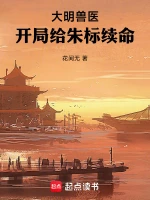

Reading and Sharing 🍒 Will Continue to Be Updated, Please Follow Me
I just started playing Shulist and I wasn't very good at it. 💤 I remember that the most exciting thing in the past was to read a good book😻 and then share it with everyone around me. I wish everyone in the world could read the same book as me👏. Good books bring you and me closer together, allowing us to experience together the beautiful dimensional world created by the authors. Try to add some novels that I think are good. If you feel the same, please give me a follow and send me flowers.

The Flowers and Fruits of Xiancao Village
I have been reading online articles for more than ten years, and started pursuing books from CMFU. Creating this book list is not only sharing, but also a kind of memory. As time goes by, I prefer to spend a leisurely afternoon with a book. Under the burden of life, this is a rare moment of peace for me. Time makes rain, and years are like tea. I would like to pay tribute to my time with this book list. @
Readers also read
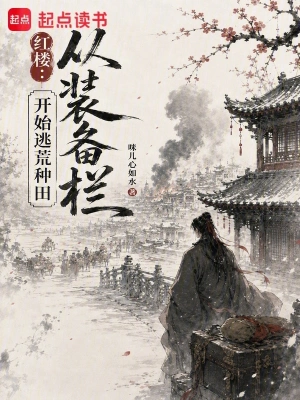 Red Mansion: Start Escaping and Farming from the Equipment Bar
 Northern Qi, Sage Khan
 Fu Ming 1627
 After Lying in Bed for Three Years, He Was Forced to Help the Han Dynasty
 Only I Can See Romance Game Announcements
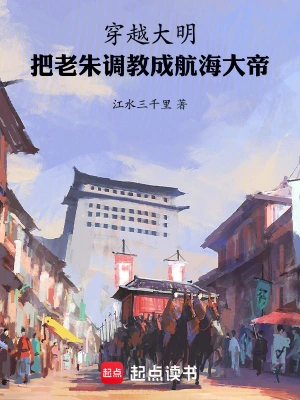 Travel Through the Ming Dynasty and Train Lao Zhu to Become a Sailing Emperor
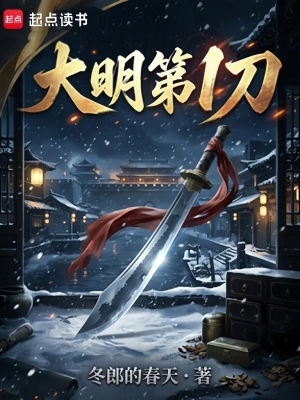 The First Sword of Ming Dynasty
 Starting from the Second Generation of Immortals
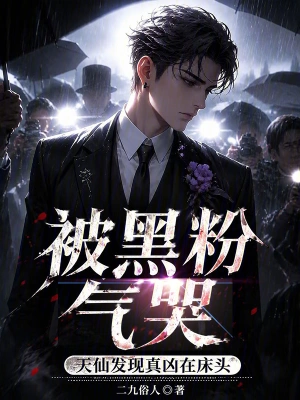 After Being Made Angry by the Anti-Fans and Crying, Tianxian Found Out That the Real Murderer Was at the Bedside
 The Fierce Ministers of the Song Dynasty
 He Was Born in the Northern Song Dynasty and Broke the Backbone of Xixia at the Beginning!
 Daming Straw Bag Exploring Flowers
 Fake Emperor Grandson of Ming Dynasty
Just a running account
I have read more than a hundred chapters, and the plot progression is mediocre, the character descriptions are too superficial, and the whole thing is like a running account, or more like a script. Skipping three to five chapters will not affect your understanding of the plot at all. Rather disappointed.
Apart from seeing a doctor, everything else is a mess
What are your thoughts on going to Lingnan? Have you forgotten the setting that requires you to take precious medicinal herbs for three years to extend your life? After going to Lingnan, people leave for tea. Even if the royal family is willing to continue to give, what should I do if there are problems in the middle? It is also true that there are anthropomorphic creatures in various noble houses. If King Yan was so short-sighted and mentally retarded, there would not be the only successful Jingnan in history.
N bj jJ .. W
What mistakes are easy to make in historical novels❓ Before the Ming Dynasty, the emperor was not called "Emperor". In the Song Dynasty, he was mostly called "Guanjia", and in other dynasties, he was often called "Your Majesty". From the Ming Dynasty, the emperor was occasionally called "Emperor", and in most cases he was called "Your Majesty". After Kangxi of the Qing Dynasty, people began to be generally called "Emperor". Princes and princes call themselves: Princes in the pre-Qin and Han Dynasties can be called "Gu", and a few can be called "Ignores". After the Wei, Jin, Southern and Northern Dynasties, the title of "Ignores" gradually became exclusive to the emperor, and princes, princes and princes can only be called "Gu" or "I". Song, Yuan and Ming called themselves "I" or "I". Before the Qing Dynasty, princes and princes rarely called themselves "this king". Starting from the Kangxi year of the Qing Dynasty, princes generally called themselves "this king". In ancient times, women called themselves: "nujia" was a modest name for women after the Song Dynasty. Women in the Han and Tang Dynasties more often called themselves "concubine", and noble women could call themselves "I" and "I". Before the mid-Ming Dynasty, most dynasties used copper coins for daily transactions, with very little gold and silver. It was only in the mid-to-late Ming Dynasty that silver became the mainstream currency. -In the late Ming Dynasty, "meeting votes/deposit checks" appeared among the people. There were no unified rules. Most of them were deposits and withdrawals/exchange receipts from acquaintances or local circulation, and were not legal currency. In the early years of Daoguang in the Qing Dynasty (1823): Rishengchang Bank was established, and private banks began to issue standardized banknotes, focusing on cross-regional exchange. They were only circulated in Shanxi merchant trade circles and major commercial ports, and were not yet popular. In the third year of Xianfeng in the Qing Dynasty (1853): the official issued the Ministry of Revenue official banknotes (official banknotes), which were forced to circulate nationwide. At the same time, the network of private banknotes expanded to the whole country, and official and private banknotes ran parallel. The use of banknotes entered an explosive period and became the "starting point of popularization." High-leg tables and chairs only completely replaced the low tables for sitting on the floor in the Song Dynasty. During the Han and Tang dynasties, people knelt and sat on the tables to eat and discuss matters. The furniture was mainly low tables and couches. The memorial system was only established during the Kangxi period of the Qing Dynasty. Officials in the Tang and Song Dynasties used "memorials", "tables" and "statements" when submitting memorials, while in the Ming Dynasty they used "memorials" and "memorials". There is no such thing as "memo" or "zhezi". In ancient formal occasions, the hand-over gesture was performed with the left hand outside and the right hand inside. The right hand outside was a special "unlucky gift" for funerals. "Better greetings" is a unique etiquette of the Qing Dynasty. It was mostly used by subordinates to superiors and juniors to elders. During the Tang and Song dynasties, people often performed cross-hand salutes and bows to greet greetings when they met, and there was no such thing as "sending greetings". Before the Yuan Dynasty, lower-level officials rarely called superior officials "adult". In some dynasties, subordinates called eunuchs "adult", and in some dynasties, they called their parents and elders "adult". Beginning in the Yuan Dynasty, lower-level officials would occasionally call officials of second-rank and above "sir". From the middle and late Ming Dynasty, only officials of third-rank and above would be called "sir" by their subordinates. Officials with lower ranks could not be called "sir". However, in the late Ming Dynasty, there began to appear a few cases where officials above the fourth rank were called "adult". Before the mid-Qing Dynasty, following the rules of the Ming Dynasty, only officials of third rank or above would be called "adult". Starting from the mid-Qing Dynasty, calling officials "adult" gradually became common for lower-level officials. Attention! ! ! What is mentioned above is that lower-level officials refer to higher-level officials. No matter which dynasty, it is absolutely impossible for higher-level officials to call lower-level officials "sir". Some novels even write about emperors or nobles calling other officials "sir". This is simply contrary to Tiangang! ! ! Finally, let's talk about the problem of civilians calling officials Before the middle and late Qing Dynasty, civilians in various dynasties and generations called officials differently, and most of them called them "officials" and "masters". From the middle to late Qing Dynasty, civilians also called officials "adult". {"NickName":"Restriction and Supervision","UserId":417773267}
There are obvious historical errors when taking the military household registration test at the beginning.
There are so many historical errors in this book that the author didn't even bother to look up the information First of all, military households in the Ming Dynasty could indeed take part in the imperial examination and had the qualifications for the imperial examination, but only one person per household was allowed to be a scholar (scholar), and they had to study health science (exclusive school for military households) first, and only after becoming a military student could they take the imperial examination. Otherwise, you will not be allowed to take the exam, and the protagonist is still in the founding years of Hongwu, which was the time when the implementation was the most stringent, and it was not the time when the military household system was at its most corrupt in the middle and late period. There is no need for the superior officer to embarrass you, a livestock manager, and you have no chance to go
Just because the protagonist says that veterinarians are poisonous
Even if you are cured, you will die. I am disrespectful. Please understand. In the past, the status of doctors was too low, especially Lao Zhu who could kill him whenever he wanted.
1. The protagonist is treating the prince. In order to avoid suspicion, the Yan Palace should not embarrass the protagonist again and again! It's so smart 2. Why is the protagonist always in trouble and causing all kinds of troubles? He is the prince's attending physician and his status is inappropriate. Although it is to create a situation, it is unreasonable.
Personally, I feel that one problem is that as the "imperial doctor" beside the prince, and the royal guards who follow him all the time, the protagonist always has some little Kalami to make things difficult for him, and his rank is a bit low in the overt and covert fights over and over again. Or let's talk about the contradiction of being high and low. He's a low-ranking doctor but he's an "imperial physician" who only comes into contact with the emperor and princes. Logically speaking, the court knows the protagonist more or less, so he shouldn't mess with him for a short period of time. He's a high-ranking veterinarian and he's made things difficult for little people. It's acceptable once or twice, but after watching it, this feeling of contradiction has always existed and hasn't changed yet. It feels like a fight between little people.
Can you please stop writing about things that women do to the protagonist every time? I can only write two sentences, but I have to make it so obscene. The front part is still pretty good. Now I don't know what I want to write about. It doesn't feel passionate enough to rebel. What does a doctor think when he travels to ancient times and wants to rebel? It doesn't feel like it's enough to arouse people's emotions. I can improve on this aspect. There are a lot of typos in the article and I need to correct them.
What is the author thinking? You still think that after studying Chinese medicine for a few days, you can surpass those imperial doctors. Originally, you thought that you can just get allicin out.
It would be boring to see Mr. Fang.
The protagonist neither supports Zhu Yunwen nor Zhu Di. He doesn't even have any generals under his command, so he just wants to rebel. Who can support him?
Although it has been updated to 10,000 words per day recently, the quality has declined, and the plot conflicts are a bit unreasonable. First, Jin Yiwei withdrew as soon as he was told, with no backup plan. Then he was sent to the cell by the steward of King Yan. He delayed the exam without saying anything. The reason was that not many people in the palace knew him. If he said in the prison that he was a doctor treating the prince, he would only be regarded as a madman, so he was left in the cell to wait. After being in the palace for so long, just in case, couldn't he have some tokens of the emperor and prince on him? It feels like no one knows you outside the palace, and everyone can give you a slap in the face 😰 I won't talk about the process of Wu Laoer's failed assassination. After he was almost killed, Zhu Yuanzhang wanted to send the Jin Yiwei Zhu Biao and said no, but he actually agreed. The two father and son are really big-hearted. It seems that the illness has been cured, and the protagonist can recover with or without him😄. It's not a big deal if there are shortcomings. Zhu Biao is still in a wheelchair. With Zhu Yuanzhang's character of killing the prince, he will not put the protagonist under house arrest in the palace. If the illness is not cured, it will be fine if he can't go out. I'm really afraid that the prince's condition will worsen again later, and a few people who don't know the protagonist will happen to come, and the danger will be saved, Zhu Yuanzhang will be furious again, and the cycle will repeat 😒
As for the writing style, it seems that the story is not about showing off overtly but still covertly. However, the plot arranged by the author is a bit frustrating. Others can play the protagonist casually. For example, the prince asks for technology at the beginning, but does not give any benefits. In ancient times, any technology was passed down from family to family. This is tantamount to robbery. Although it is reasonable, your theme is to support the Ming Dynasty, which is too conflicting. Whether it is rescuing people or animals later on, it feels like it's all pretentious. Although there is a flag at the beginning saying that treating people is high risk and the protagonist is a veterinarian, but later on he still heals people. It feels a bit both serious and serious. Regardless of whether the prince, Huang Zicheng, or the main person in charge behind the scenes, they basically did not create a good person image. The description of this character creation made me feel that it was a bit cheap to save Daming.
The male protagonist is just a pure tool
I can't stand it anymore, the disease has not been cured for more than a hundred chapters, and the plot is moving too slowly. Since I know how to do surgery, I don't want to get allicin or something.
About the rebellion of heart and mind It's a bit baffling. . . . How many years has it been since the world was unified? The new system has just been implemented. Do you want the world to be unified? Productivity can't keep up either.
I really get angrier the more I think about it, Chapter 295 is such a poorly written and deliberate plot, it is so deliberate that it is meaningless and can only disgust people. What is the role of Tang Mingxiang? The protagonist obviously takes the route of rebellion, depicting his tragedy, contrasting the bad nature of the feudal king, and then paving the way for a legitimate rebellion and paving the way for recruiting a rebel comrade. The outlook is yes, but what? The plot depicts a stupid man who killed his wife and children. It does not make him innocent, but makes him look stupid. He is so stupid that his value will not be reflected in the future, so what is the use of keeping this idiot around. My addiction to disgusting people has happened again. This is not the way to write about Tang's wife and children. Directly arranged for Tang to know that Zhu Di was going to attack him. Tang already knew it, and volunteered to the protagonist to ask for orders and was willing to serve as bait to join King Yan's army, which reflected Tang's bravery and strategy and showed that he could play a role in the future rebellion. The object arc is there, Secondly, the protagonist focuses on setting up an ambush on Tang. King Yan's goal is also Tang. His wife and children don't know anything, and they generally think that they have lured King Yan away and will not let Tang go and kill his wife and children. Insufficient protective power led to Tang's defeat, so he went to arrest his wife and daughter to threaten him, and then things turned into a murderer. Isn't it good to write like this? Tang's image of being brave and resourceful was established, and he had the help he deserved in the future. The deaths of his wife and children were relatively tragic and meaningful. In this chapter 295, Tang has become a fool and has no future value at all. His wife and children are just the background, which is meaningless. It does not reflect the madness of King Yan to attack women and children, nor does it reflect the value of Tang. The death of his wife and children is not tragic and sublime, which makes people regret. The whole article can only have the effect of diaphragming and responding to people.
To be honest, the plot was a bit too drawn out. It took N chapters to treat a prince.
It was poisonous as soon as it was released, and the protagonist was kidnapped while treating the prince's injuries. At the emperor's feet, Lao Zhu's favorite is still there. Even if he is tied up, he still has the most wisdom to use his hand knife to knock him out and directly resist him. As we were about to exit the alley, we saw the street outside. We were overtaken again and knocked unconscious with a knife... I can't blame others for the results of this book.
One of the most disgusting villains ever! The Mongolian iron hoof smashed Europe into pieces, spurred the European Renaissance, and then entered civilization. And this man righted the crumbling feudal era, and implemented policies that befuddled the people and the family world, which makes the people still unable to hold their heads up. This trash named Zhu is the emperor of the ages in your eyes.
What is the author of the ink?
You're there to lay the groundwork every day. Are you guys paying money to see you write down your journal? Several lines went hand in hand, but after looking around, I found that the main line was not written, and the transitions of tens of thousands of words were all nonsense.
It should be renamed (Veterinary at the beginning, to renew Zhu Biao's life after it is put on the shelves)
I found that in many historical novels, the protagonist is always struggling with how to explain to the people around him that he suddenly knows so much knowledge. What's so confusing about this? The ancients were very superstitious. Just say that when you go to bed at night, you have been taught by gods in your dreams. If such a story spreads, everyone will think that you are the enlightened person or the recipient of enlightenment. This will not only make the protagonist famous all over the world, but also make it easier for the protagonist to teach scientific knowledge to the world in the future.
It feels like the writing is not like the Ming Dynasty, and the various rules have been written in a tone like the Qing Dynasty.
After spending so much money, I feel like the author has changed when I read it today.
It is easy to write the history of the Ming Dynasty into some parts of the braided drama of the Qing Dynasty❗
"Slaves": Eunuchs in the Ming Dynasty called themselves "slaves". "Emperor": The Ming Dynasty rarely called the emperor this way, but it was commonly used in the Qing Dynasty. "Father": The prince in the Qing Dynasty called the emperor this way, but not in the Ming Dynasty. "son": This is also the title of the prince of the Qing Dynasty. "Ai Qing": Before the Qing Dynasty, emperors rarely called officials this way. "Memorial": This only appeared in the Qing Dynasty. Although it is the same document as the memorial, the difference is huge. "Futai, Fantai, Zhentai": These are the names of the Qing Dynasty. Those with "Tai" are all the names of the Qing Dynasty and were not used in the Ming Dynasty. "Master": In the Ming Dynasty, only top nobles and first- and second-rank officials were allowed. State and county officials were not called "Master". "Sir": In the Ming Dynasty, it was only used for first- and second-grade high-ranking officials, nobles, and elders of the father's generation. Prefecture and county officials below the third or fourth rank are not called adults. "Prince": Only in the Qing Dynasty did the person who addressed the prince as "Prince". "My King": This was also a self-proclaimed name only in the Qing Dynasty. "Bank Notes": Only available in the mid-Qing Dynasty. At the end of the Ming Dynasty, only money orders circulated among local acquaintances. "Greetings": Etiquette among officials and bannermen in the Qing Dynasty. This etiquette did not exist in the Ming Dynasty. "Eunuch": In the Ming Dynasty, only senior eunuchs had official positions, and ordinary eunuchs were called eunuchs. It was not until the Qing Dynasty that all eunuchs were collectively called eunuchs. "Our family": Eunuchs in the Ming Dynasty called themselves "I" to their subordinates, not our family. "Military Gate": a title used in the Qing Dynasty to address generals such as admirals. In the Ming Dynasty, civil officials such as governors and governors were called governors. "Kneeling Ceremony": Ming Dynasty officials had to kneel when communicating to the emperor. But lower-level officials do not have to kneel to their superiors. {"NickName":"Restriction and Supervision","UserId":417773267}
What does the protagonist use to dominate the world?
Speed up the progress, it's too confusing
Really, although the daily writing is good, but after Zhu Laosi rebelled, it was time to advance the plot quickly and ignite it. The rebellion was written at the same slow pace as the farming novel, and it really didn't keep the readers.
It looked okay at first, but after it was put on the shelves, it was just a mess of answers.