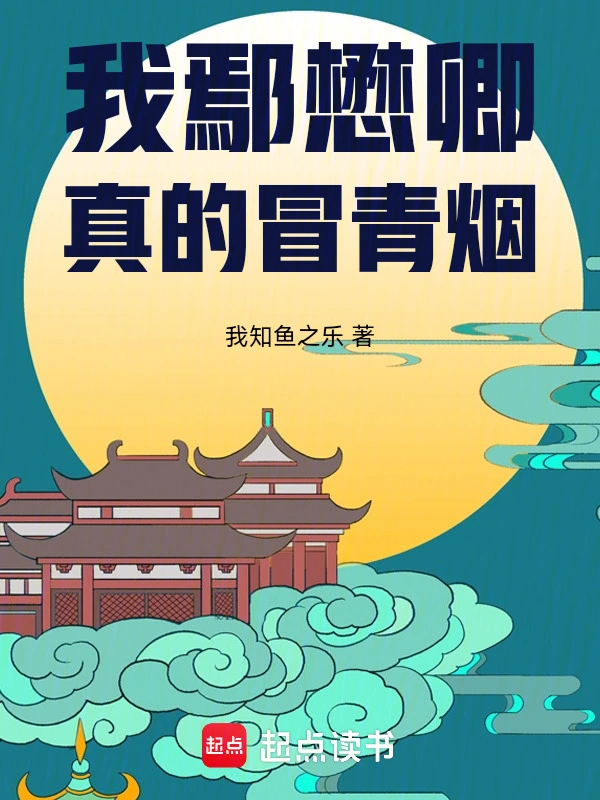
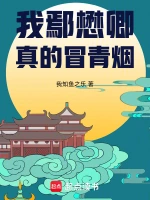
Daming: I, Yan Maoqing, Really Smoked
大明:我鄢懋卿真的冒青烟
- Status
- Ongoing
- Length
- 1.9M Words
- Genre
- Historical
- Audience
- Male
- Subgenre
- Song-Yuan-Ming Dynasties
- Updated
- 1d ago
- Source
- Qidian
Stats
Tags
Honours
Synopsis
Reader comments
In booklists 7
Historical Time Travel Novels of Song, Yuan, Ming and Qing Dynasties
Novels that travel through the Song, Yuan, Ming and Qing dynasties

Recently Followed
The recommended ones are all books with relatively smooth writing style. Of course, if you are looking for novels, don't worry. The books you have recently collected and paid attention to are worth reading.

Unsystematic, Not Popular, Tasteful
There are so many popular novels, but you always feel that they are not to your liking. It's because your mood has improved, or you're missing a certain flavor. Then come in and take a look! Most of the works selected here are not popular! But it's definitely a work worth savoring!
If You Are an Old Bookworm, You Can Enter the Book Shortage.
I have spent a lot less time reading recently, mainly because there is less to read. The serial works that I am still following after the author's daily updates have made it possible to re-read the completed novel. It is available in the book shortage, and I recommend it.
The Book List of Fenglinghuhu
A bit interesting
Books Read
Whatever I can remember is good.
See It Yourself
Own taste
Readers also read
 Northern Qi, Sage Khan
 After Lying in Bed for Three Years, He Was Forced to Help the Han Dynasty
 Fu Ming 1627
 Red Mansion: Start Escaping and Farming from the Equipment Bar
 Siheyuan: Start by Picking up Attributes
 Daming Straw Bag Exploring Flowers
 I Was a Demon in the Northern Song Dynasty
 Beastmaster: I Can See the Evolutionary Path
 Immortal Who Seizes the Body
 Daming: Your Majesty, It's Time to Drink Medicine!
 My Portable Ming Court
 Ming Dynasty Veterinary Medicine, Who Saved Zhu Biao's Life at the Beginning
 Online Game Fortune Teller
 Super God Armor Master
 My Violent Prince Just Wants to Be Deposed
 Cao Cao Asked Me to Rob Tombs
 Make Money in Online Games
Essentially, it's the same approach as the one who can return to modern times and enjoy happiness after death, but the goal has been changed from seeking death to the more difficult one of resigning from office and enjoying happiness. I don't know what this genre should be called. I see many book friends saying it, but I feel that each chapter is too detailed.
If the protagonist does not become the emperor, then the protagonist must carry out comprehensive changes that limit the emperor's rights. It is useless if the protagonist just copies the technology of later generations and adds a few reforms. If a country wants to produce a large number of original inventions and creations, it must carry out systematic changes in ideological foundation, political structure, legal system, social forces and other aspects. The reason why Britain was the first to enter the Industrial Revolution is that after experiencing the ideological changes of the European Renaissance, coupled with the British Glorious Revolution of 1688, the king's rights were further restricted. Britain established the framework of parliamentary sovereignty and the rule of law, and the bourgeoisie, the new aristocracy, and the king formed a check and balance, which allowed British civilians to gain unprecedented freedom. At this time, the degree of freedom of scholars, craftsmen, and farmers in Britain was higher than that of other European countries at the same time, and it was far more liberal than the civilians of China's Ming and Qing dynasties. The high degree of freedom of all British civilians fully inspired everyone's strength. The power of the Chinese emperor was not greatly restricted, and all officials, gentry and landlords were dependent on the imperial power. The freedom of civilians, who account for the vast majority of the country's population, is too low. This system inhibits innovation and hinders social development. China's Zhou Dynasty was a feudal system, and the central government could not control much of the local princes' affairs. The princes competed with each other. During this period, Chinese civilization truly allowed a hundred flowers to bloom. Most of the essence of Chinese civilization came from this period. During the Spring and Autumn Period and the Warring States Period, the "Mo Jing" recorded the principles of optics and mechanics, and the germination of geometry had emerged; the "Gan Shi Xing Jing" recorded astronomical observation data. The institutional innovation of the Spring and Autumn and Warring States periods stagnated after the Qin and Han Dynasties, lacking the ability to dynamically adjust. Since the Qin Dynasty, especially since the Han Dynasty deposed all schools of thought and only respected Confucianism, Chinese civilization has almost stood still and entered a dead end. The Zhou Dynasty and the Spring and Autumn Period and the Warring States Period were similar to the ancient systems of most European countries. They were all feudal systems. Even in successive years of war, less than 10% of the country's total population died directly or indirectly as a result of the war. But from the Qin Dynasty to the Qing Dynasty, every dynasty would kill half or more of the country's population due to war! What is even more tragic is that every time the dynasty changes, the system and civilization have almost no progress! {"NickName":"Restriction and Supervision","UserId":417773267}
Can the protagonist and Gao Gong be good brothers and form a lifelong alliance?
What mistakes are easy to make in historical novels❓
Before the Ming Dynasty, the emperor was not called "Emperor". In the Song Dynasty, he was mostly called "Guanjia", and in other dynasties, he was often called "Your Majesty". In the Ming Dynasty, the emperor was occasionally called "Emperor", and in most cases he was called "Your Majesty". After Kangxi of the Qing Dynasty, people began to be generally called "Emperor". Princes and princes call themselves: Princes in the pre-Qin and Han Dynasties can be called "Gu", and a few can be called "Ignores". After the Wei, Jin, Southern and Northern Dynasties, the title of "Ignores" gradually became exclusive to the emperor, and princes, princes and princes can only be called "Gu" or "I". Song, Yuan and Ming called themselves "I" or "I". Before the Qing Dynasty, princes and princes rarely called themselves "this king". Starting from the Kangxi year of the Qing Dynasty, princes generally called themselves "this king". In ancient times, women called themselves: "nujia" was a modest name for women after the Song Dynasty. Women in the Han and Tang Dynasties more often called themselves "concubine", and noble women could call themselves "I" and "I". Before the mid-Ming Dynasty, most dynasties used copper coins for daily transactions, with very little gold and silver. It was only in the mid-to-late Ming Dynasty that silver became the mainstream currency. -In the late Ming Dynasty, "meeting votes/deposit checks" appeared among the people. There were no unified rules. Most of them were deposits and withdrawals/exchange receipts from acquaintances or local circulation, and were not legal currency. In the early years of Daoguang in the Qing Dynasty (1823): Rishengchang Bank was established, and private banks began to issue standardized banknotes, focusing on cross-regional exchange. They were only circulated in Shanxi merchant trade circles and major commercial ports, and were not yet popular. In the third year of Xianfeng in the Qing Dynasty (1853): the official issued the Ministry of Revenue official banknotes (official banknotes), which were forced to circulate nationwide. At the same time, the network of private banknotes expanded to the whole country, and official and private banknotes ran parallel. The use of banknotes entered an explosive period and became the "starting point of popularization." High-leg tables and chairs only completely replaced the low tables for sitting on the floor in the Song Dynasty. During the Han and Tang dynasties, people knelt and sat on the tables to eat and discuss matters. The furniture was mainly low tables and couches. The memorial system was only established during the Kangxi period of the Qing Dynasty. Officials in the Tang and Song Dynasties used "memorials", "tables" and "statements" when submitting memorials, while in the Ming Dynasty they used "memorials" and "memorials". There is no such thing as "memo" or "zhezi". In ancient formal occasions, the hand-over gesture was performed with the left hand outside and the right hand inside. The right hand outside was a special "unlucky gift" for funerals. "Better greetings" is a unique etiquette of the Qing Dynasty. It was mostly used by subordinates to superiors and juniors to elders. During the Tang and Song dynasties, people often performed cross-hand salutes and bows to greet greetings when they met, and there was no such thing as "sending greetings". {"NickName":"Restriction and Supervision","UserId":417773267} Before the Yuan Dynasty, subordinate officials rarely called superior officials "adult". In some dynasties, subordinates called eunuchs "adult", and in some dynasties, they called their parents and elders "adult". Beginning in the Yuan Dynasty, lower-level officials would occasionally call officials of second-rank and above "sir". From the middle and late Ming Dynasty, only officials of third-rank and above would be called "sir" by their subordinates. Officials with lower ranks could not be called "sir". However, in the late Ming Dynasty, there began to appear a few cases where officials above the fourth rank were called "adult". Before the mid-Qing Dynasty, following the rules of the Ming Dynasty, only officials of third rank or above would be called "adult". Starting from the mid-Qing Dynasty, calling officials "adult" gradually became common for lower-level officials. Attention! ! ! What is mentioned above is that lower-level officials refer to higher-level officials. No matter which dynasty, it is absolutely impossible for higher-level officials to call lower-level officials "sir". Some novels even write about emperors or nobles calling other officials "sir". This is simply contrary to Tiangang! ! ! Finally, let's talk about the problem of civilians calling officials Before the middle and late Qing Dynasty, civilians in various dynasties and generations called officials differently, and most of them called them "officials" and "masters". From the middle to late Qing Dynasty, civilians also called officials "adult".
I came here on Zhihu, I don't need fans to talk about it, it's most likely a good book
The worse a book is, the higher the fan rating it needs to speak up. Basically like this
This kind of writing specifically for the purpose of slapping people in the face reminds me of another bad book, What the hell is it called Han Men? Did you change your waistcoat to write it?
I read forty chapters and posted a dozen of them, hahaha. The author is really a genius.
? ? ? What are you writing about? ? ?
Starting from about chapter 280, the protagonist has to write three pages of other people's inner activities in one sentence. What is this? You only update 5,000 words a day! It's not that you are not allowed to be as good as others, but others update 10,000 words a day, how many do you update in a day?
I suggest the author learn how to write group portraits. The plot you wrote about the Jinshi fighting each other has four characters with lines, but none of them seem to move. He just stood there in a daze and spoke. Others are just minor problems, come on!
Lightning strikes at the opening, Jiajing poops. Read the paper at the end, and then focus on describing pooping, using thousands of words.
What a lousy book. You actually start charging for it after it is put on the shelf. An author with a bad attitude like you doesn't care if you don't read the book, just throw it out of the bookshelf and never see it again! (Reference)
It's all the same routine, it's cheap, cute, and annoying. The first hundred or dozens of chapters are quite innovative, but if you write like this later, I can only say don't read it with your brain.
To be honest, I've read this book several times, but I've never read it because I can't read the main character's name...
The author follows a certain pattern, and you will get bored after reading more than a hundred chapters. The protagonist is determined to resign and return home until death. The problem is that this is impossible to achieve, and the male protagonist just wants to return home without thinking about anything else. The author's biggest problem is fighting each other for the sake of the plot and the rotten officialdom. The problem is that the author fails when he writes like this. The male protagonist competes on the track that others are best at. In the end, it can only be said to be a waste of time and life. Compete with a group of people who are inferior to each other.
After reading more than a hundred chapters, are you still thinking about becoming an official?
It's so nonsense to keep thinking about this goal. Do you have no idea whether you can go back to your hometown?
What a book, what a book! The article is tricky and the ideas are clear. It is really a good historical article that I have not seen for many years. The opening chapter is about the civil and military affairs of the Jiajing and Manchu dynasties, and it lacks a sense of immersion that an online article should have. Compared with historical articles in the past, this book always feels like reading other people's biographies. Actually, if I have time in the later stage, I would like to add some plot points about the protagonist going from a poor family to the palace examination. I feel that it doesn't make sense whether he is called "Yan Maoqing" or not, and changing the name will not affect the development of the plot. The author has made the pace so fast. I am worried that the book will not be long. There is probably nothing to write in 2-3 million words. It's unlikely that we will have to fight Zhang Juzheng later.
I'm a bit uncomfortable with the title
I always have inner monologues about the emperor, the emperor, etc. It feels a bit like the braided dynasty. It feels safer to use "Your Majesty"
It's okay, at least it's not bad. It's just a routine that comes and goes. The protagonist runs away in various ways and then gets promoted accidentally. This is the most ridiculous one among countless possibilities. It's fun once or twice, but it's all like this in dozens of chapters and I'm tired of it.
This is the first time I've seen someone use his writing style to write about Jiajing's poop.
Undoubtedly a good book, but a bit difficult to read
The book is a good book, and the plot is very attractive, but there are a few shortcomings. 1. The book bag is serious, the descriptions in many paragraphs are "not clear enough", and there is dyslexia. This is almost throughout the whole book. There is no doubt that the author has a strong historical background and ancient Chinese writing skills, but not all readers are like this. Therefore, if the wording can be clearer and closer to more ordinary readers, I believe the results will be better, and it may even have the potential to become a god. 2. Yan Maoqing's reason for wanting to retire and return to his hometown was valid at first, but as his strength and power increased, even Yan Donglou and Yan Song were able to handle it. If he keeps using this reason, it always feels a bit awkward.
It felt very frustrating. It was too difficult to become an official in the Ming Dynasty. It was difficult to resign once you were admitted to the Jinshi. The officialdom was very strife. Everyone did not want to do anything but thought about calculations and promotions. The emperor would not approve you to become an official even if he saw that you were valuable. Li Tingji wrote 123 resignation letters and lived in a ruined temple for 5 years without success. In the end, he risked beheading and ran back to his hometown in defiance of the order. Fortunately, Wanli did not pursue the case. He probably knew that time was running out and he died of illness four years ago. Every time he saw the political environment of Ming Dynasty officials, his scalp became numb. It was not something that a capable minister could solve. Even after Zhuge Liang came, people who sincerely governed the country could not even protect their affairs. The Ming Dynasty officialdom documents could not be read at all. They could only read the emperor's documents and the rebellion documents.
Isn't it good to write the plot honestly? You don't have to have a real wife to marry a princess
Both sides of the shoulder pick are out, it's so unbelievable. If you pick the shoulder pick, you have to have a brother who died young and had no heirs. O_o What does this say?
Zhang Juzheng's reforms during the feudal stage were already relatively progressive, but they were still mainly to improve the finances of the Ming Dynasty. Based on the execution ability in ancient times, the people did not necessarily get any tangible benefits. In the final analysis, the only thing that has really benefited us people is land reform. Judging from the content of the book, the author should have read about the Ming Dynasty. Teacher Liu has written so clearly about the shamelessness and selfishness of the feudal rulers, but he still has unrealistic illusions about the feudal dynasty?
Damn it, I have been reading online articles for 20 years, and this is the first time I have seen someone who can write about shitting in such detail. It disgusted me and made me laugh at the same time. I don't know if it made me laugh or made me laugh. For your sake, I want to read on.
Good book
The title of this book is not very good. The book itself is really good, with constant climaxes and characters with flesh and blood. The struggle between good and evil happens anytime and anywhere, and various methods emerge in endlessly, making it easy and easy. It was a good read, but it's gone. The author will update soon! !
There are too many loopholes in soul-traveling historical novels. A modern person who accidentally travels to a certain dynasty can remember so many details in history (even better than a history expert). China has thousands of years of history, and it is impossible for historical experts to remember every detail of a certain period of history in just a few years. Unless he is a historical expert who specializes in a certain period of history, does the protagonist of Soul Transmutation happen to be a historical expert who specializes in a certain period of history? Don't say that the protagonist was a lover of historical novels before time travel. Don't be ridiculous. Historical details are not something that historical novels can cover, it's not the same thing at all! Even if the protagonist happens to be an expert specializing in the history of a certain period. If you travel to ancient times, what can you do? This involves another big loophole in historical fiction. The protagonist can draw drawings of various machines and weapons, understand metallurgy and metal processing, chemical industry, and improve agricultural tools. In fact, these loopholes are easy to solve. Since the protagonist's soul has traveled to ancient times, it proves that ghosts do exist. Then write that when the protagonist goes to sleep at night, his soul leaves his body and returns to modern times. If he doesn't understand something, he can look up information in modern times. This solves various loopholes in soul-traveling historical novels.
It's a good read. I love reading it. I beg you for more updates. I like to read this kind of thoughtful historical text. It's refreshing and logical and I can provide it with a monthly ticket.
What point of view? Being an emperor and being murdered every day? Is it possible?
La💩Why are there such details about taste? I can no longer look directly at the old Taoist priest. All I can think about is a series of puffs and puffs~gudonggudong.
Unified Statement on Chapter 1, Paragraph 15
For some people who think that because of the killing of the nine tribes, the palace maids dare not commit regicide on their own, I can only say that the people are not afraid of death, so how can they refuse it with death. "Illegally punishing the palace residents, some had their tongues cut off, some had their bodies buried in deep snow and froze, some were tied to trees and starved to death, and some were burned with fire. When the palace people, old and young, saw this, they were worried about their lives. As a result, the three old women secretly poisoned the cherry pancake, and after taking it, they died without moving. Woohoo!" From "Emperor Taizu's Records"