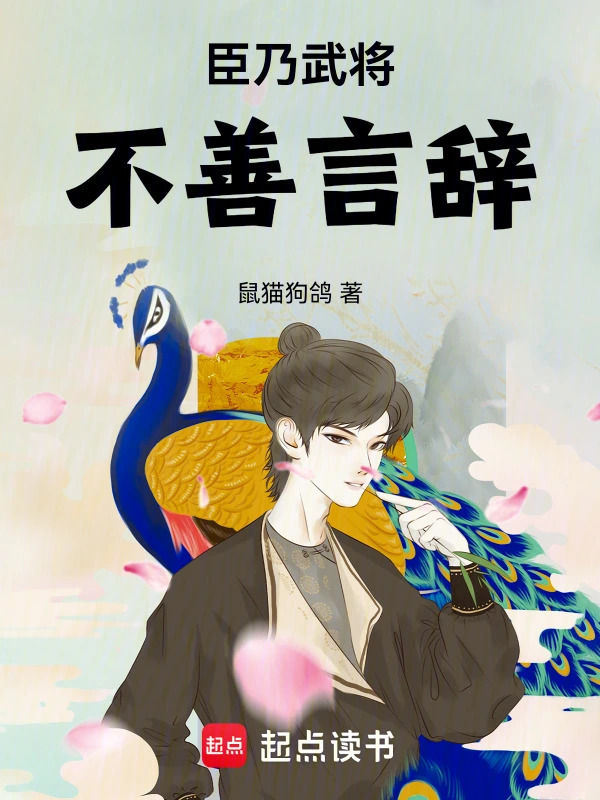
The Fierce Ministers of the Song Dynasty
大宋悍臣
- Status
- Ongoing
- Length
- 5.6M Words
- Genre
- Historical
- Audience
- Male
- Subgenre
- Song-Yuan-Ming Dynasties
- Updated
- 1d ago
- Source
- Qidian
Stats
775Monthly votes
67.4kRecommends
164.5kFans
768Chapters
Tags
Honours
Synopsis
Reader comments
In booklists 3
Historical Time Travel Novels of Song, Yuan, Ming and Qing Dynasties
Novels that travel through the Song, Yuan, Ming and Qing dynasties
21Books1.2kFollows1yUpdated
The Latest Book List to Solve the Book Shortage, Non-Novices (Entertainment, Immortality, Fun Awards)
Newly released, just completed, classical immortality, entertainment, fun group portraits, the fourth natural disaster in another world, fantasy, Dian Lao, urban, leisurely literature, etc. Based on personal taste, not a novice ♥
40Books53Follows6moUpdated
Good Books Must Read
My favorite book
31Books3Follows1yUpdated
Readers also read
 Red Mansion: Start Escaping and Farming from the Equipment Bar
 Fu Ming 1627
 Northern Qi, Sage Khan
 After Lying in Bed for Three Years, He Was Forced to Help the Han Dynasty
 Master, Adventurer and Woman
 When I Was in Hongwu, I Started by Rebelling Against the Party.
 The First Uncle of the Ming Dynasty
 Only I Can See Romance Game Announcements
 Starting from the Second Generation of Immortals
 Ming Dynasty Veterinary Medicine, Who Saved Zhu Biao's Life at the Beginning
 He Was Born in the Northern Song Dynasty and Broke the Backbone of Xixia at the Beginning!
 Datang: How to Become the Chief Planner of Xuanwu Sect
The book is okay, but there are too many typos. Sometimes when character A replies to B, he calls out B's name, but instead writes A's name. No revisions at all. Book friends have caught the bug, but it still hasn't been changed, which affects the perception very much.
Where does he call himself "I"?
A book of advice to the author
Nowadays, the discipline of the book review area is corrupt, and traitors are everywhere. This is due to the lack of updates. If the author diligently updates one hundred thousand words every day, then the traitors will be afraid and retreat, and the moral gentlemen will rejoice. This is a feat worthy of praise by Yao and Shun! I've heard that calves born in a sheepfold don't behave like sheep when they grow up. You are at the starting point and your computer keyboard is often used, but you have lost interest in updating it. Is this reasonable? Qidian is strong because it has inherited the etiquette and skills of its ancestors. Stop bursting, the pressure has nowhere to release, and instead you become tired. Isn't this the same as abandoning the roots of the tree and pursuing the treetops? If this continues, great disaster will surely happen! The reason why Bai Jin can have tens of thousands of royalties and not be harmed by villains is because they are willing to listen to what upright gentlemen have to say, while Poujie cannot get royalties and is even looked down upon by his girlfriend. This is because they are close to evil villains. I hope you can think carefully about the difference. There is one thing that makes the author cry bitterly, and there are six things that make the author sigh. Since ancient times, when doing things, the words are often very passionate. If they are not passionate, they will not be able to move the heart of the actor. Harsh words are akin to slander. Author, you should think carefully about whether such a thing is right or wrong. Those authors who updated less, delayed updates, or were late had no time to feel sentimental about themselves, so they were drowned in the torrent of works , leaving only later authors to be sentimental and sentimental about them without realizing it, and making future authors sentimental and sad about them.
This persona is actually not suitable for the Song Dynasty. The Song Dynasty had no shortage of strong men, but they just couldn't hold power.
The introduction is very attractive, the writing skills are great, but the content is not attractive at all in the early stage.
I finally found the prototype of the protagonist. It turns out that there really was such a fierce person in the Northern Song Dynasty! I just don't know how the author deals with the real Zhang Heng.
I hope to see a different kind of Song Dynasty.
If the protagonist does not become the emperor, then the protagonist must carry out comprehensive changes that limit the emperor's rights. It is useless if the protagonist just copies the technology of later generations and adds a few reforms. If a country wants to produce a large number of original inventions and creations, it must carry out systematic changes in ideological foundation, political structure, legal system, social forces and other aspects. The reason why Britain was the first to enter the Industrial Revolution is that after experiencing the ideological changes of the European Renaissance, coupled with the British Glorious Revolution of 1688, the king's rights were further restricted. Britain established the framework of parliamentary sovereignty and the rule of law, and the bourgeoisie, the new aristocracy, and the king formed a check and balance, which allowed British civilians to gain unprecedented freedom. At this time, the degree of freedom of scholars, craftsmen, and farmers in Britain was higher than that of other European countries at the same time, and it was far more liberal than the civilians of China's Ming and Qing dynasties. The high degree of freedom of all British civilians fully inspired everyone's strength. The power of the Chinese emperor was not greatly restricted, and all officials, gentry and landlords were dependent on the imperial power. The freedom of civilians, who account for the vast majority of the country's population, is too low. This system inhibits innovation and hinders social development. China's Zhou Dynasty was a feudal system, and the central government could not control much of the local princes' affairs. The princes competed with each other. During this period, Chinese civilization truly allowed a hundred flowers to bloom. Most of the essence of Chinese civilization came from this period. During the Spring and Autumn Period and the Warring States Period, the "Mo Jing" recorded the principles of optics and mechanics, and the germination of geometry had emerged; the "Gan Shi Xing Jing" recorded astronomical observation data. But from the Qin Dynasty to the Qing Dynasty, there was almost no progress! The institutional innovation of the Spring and Autumn and Warring States periods stagnated after the Qin and Han Dynasties, lacking the ability to dynamically adjust. Since the Qin Dynasty, especially since the Han Dynasty deposed all schools of thought and only respected Confucianism, Chinese civilization has almost stood still and entered a dead end. The Zhou Dynasty and the Spring and Autumn Period and the Warring States Period were similar to the ancient systems of most European countries. They were all feudal systems. Even in successive years of war, less than 10% of the country's total population died directly or indirectly as a result of the war. But from the Qin Dynasty to the Qing Dynasty, every dynasty would kill half or more of the country's population due to war! What is even more tragic is that every time there is a change of dynasty, there is almost no progress in the system and culture! {"NickName":"Restriction and Supervision","UserId":417773267}
One million words is a hurdle
I don't know about other novels, but for the historical novels I read, about one million words is an important node. But at that time, the plot of the full text is basically clear, and it is usually accompanied by a small climax. Take Song Chuan's "Shao Song" as an example. This number of words is probably after the Battle of Yaoshan, the main character is carved, and the offensive and defensive momentum of the Song and Jin Dynasties are different. Therefore, according to my imagination of the book, at least one million words, the protagonist must win three yuan in a row, then recognize the little emperor, and then serve in the northwest to fight against Li Yuanhao (you can try to stand up for the little emperor, and then offend the queen mother, on the one hand to subdue the royalists, on the other hand to be demoted to the northwest). After finishing Li Yuanhao, you can try to pass through Hexi and reopen the Silk Road (remember that the daughter of the emperor in white is still in Ganzhou Uighur, and can make a claim to the rebel army)
Wearing the Song Dynasty and not rebelling?
Like the title During the Song Dynasty, did you not rebel? Wear Hongwu and not rebel? Wear it clear and don't rebel?
If you don't kill the emperor of the Song Dynasty... It's impossible. The defense against military generals has reached an outrageous level. For the sake of imperial power, you can sell anything. Selling your country and paying protection fees has become the inheritance of Zhao and Song... Both the Liao and Jin countries have more hope of reform.
This character is just like popping candy, just popping. The protagonist is in the Song Dynasty, which can be said to be out of place. It's better to change the goal to rebellion. The trait of rebellion will come in handy.
Does the author's name come from the Tianjin funny dubbing station B, "Fat Dragon and Lao west"?
What do you think about becoming a general in the Song Dynasty? No matter how awesome you are, you are still on the same level as Yue Fei. He was unjustly killed. How can you be more awesome than him?
What are you writing about? It's almost 1 million words and I haven't passed the Jinshi exam yet. When you finish writing about taking back the Sixteenth Prefecture of Yanyun, are you going to write 10 million words?
What mistakes are easy to make in historical novels❓
Before the Ming Dynasty, the emperor was not called "Emperor". In the Song Dynasty, he was mostly called "Guanjia", and in other dynasties, he was called "Your Majesty". In the Ming Dynasty, the emperor was occasionally called "Emperor", and in most cases he was called "Your Majesty". After Kangxi of the Qing Dynasty, people began to be generally called "Emperor". Princes and princes call themselves: Princes in the pre-Qin and Han Dynasties can be called "Gu", and a few can be called "Ignores". After the Wei, Jin, Southern and Northern Dynasties, the title of "Ignores" gradually became exclusive to the emperor, and princes, princes and princes can only be called "Gu" or "I". Song, Yuan and Ming called themselves "I" or "I". Before the Qing Dynasty, princes and princes rarely called themselves "this king". Starting from the Kangxi year of the Qing Dynasty, princes generally called themselves "this king". In ancient times, women called themselves: "nujia" was a modest name for women after the Song Dynasty. Women in the Han and Tang Dynasties more often called themselves "concubine", and noble women could call themselves "I" and "I". Before the mid-Ming Dynasty, most dynasties used copper coins for daily transactions, with very little gold and silver. It was only in the mid-to-late Ming Dynasty that silver became the mainstream currency. In the late Ming Dynasty, "meeting votes/deposit checks" appeared among the people. There were no unified rules. Most of them were deposits and withdrawals/exchange receipts from acquaintances or local circulation, and were not legal currency. In the early years of Daoguang in the Qing Dynasty (1823): Rishengchang Bank was established, and private banks began to issue standardized banknotes, focusing on cross-regional exchange. They were only circulated in Shanxi merchant trade circles and major commercial ports, and were not yet popular. In the third year of Xianfeng in the Qing Dynasty (1853): the official issued the Ministry of Revenue official banknotes (official banknotes), which were forced to circulate nationwide. At the same time, the network of private banknotes expanded to the whole country, and official and private banknotes ran parallel. The use of banknotes entered an explosive period and became the "starting point of popularization." High-leg tables and chairs only completely replaced the low tables for sitting on the floor in the Song Dynasty. During the Han and Tang dynasties, people knelt and sat on the tables to eat and discuss matters. The furniture was mainly low tables and couches. The memorial system was only established during the Kangxi period of the Qing Dynasty. Officials in the Tang and Song Dynasties used "memorials", "tables" and "statements" when submitting memorials, while in the Ming Dynasty they used "memorials" and "memorials". There is no such thing as "memo" or "zhezi". In ancient formal occasions, the hand-over gesture was performed with the left hand outside and the right hand inside. The right hand outside was a special "unlucky gift" for funerals. "Better greetings" is a unique etiquette of the Qing Dynasty. It was mostly used by subordinates to superiors and juniors to elders. During the Tang and Song dynasties, people often performed cross-hand salutes and bows to greet greetings when they met, and there was no such thing as "sending greetings". {"NickName":"Restriction and Supervision","UserId":417773267} Before the Yuan Dynasty, subordinate officials rarely called superior officials "adult". In some dynasties, subordinates called eunuchs "adult", and in some dynasties, they called their parents and elders "adult". Beginning in the Yuan Dynasty, lower-level officials would occasionally call officials of second-rank and above "sir". From the middle and late Ming Dynasty, only officials of third-rank and above would be called "sir" by their subordinates. Officials with lower ranks could not be called "sir". However, in the late Ming Dynasty, there began to appear a few cases where officials above the fourth rank were called "adult". Before the mid-Qing Dynasty, following the rules of the Ming Dynasty, only officials of third rank or above would be called "adult". Starting from the mid-Qing Dynasty, calling officials "adult" gradually became common for lower-level officials. Attention! ! ! What is mentioned above is that lower-level officials refer to higher-level officials. No matter which dynasty, it is absolutely impossible for higher-level officials to call lower-level officials "sir". Some novels even write about emperors or nobles calling other officials "sir". This is simply contrary to Tiangang! ! ! Finally, let's talk about the problem of civilians calling officials Before the middle and late Qing Dynasty, civilians in various dynasties and generations called officials differently, and most of them called them "officials" and "masters". From the middle to late Qing Dynasty, civilians also called officials "adult".
Is the Song Dynasty considered a dynasty? None of them have ever unified the country. Has anyone traveled to other countries to destroy that weak country like the Song Dynasty?
No, why don't you go back to the Song Dynasty and destroy it? Unify?
The destroyed Song Dynasty is the good Song Dynasty
I heard that this novel has three million words and was written in less than five years. Renzong has not yet taken charge? Real or fake? How can you write so slowly? Are you planning to write a long article of tens of millions of words?
Only civil servants in the Song Dynasty have a future
The Song Dynasty has no future if it doesn't rebel. With Yue Fei's big muscles, he can still lose. Do you have half of Yue Fei's ability?
It's a good book, but the plot is written slowly. I really wanted to see the male protagonist beating someone up in court! I hope it won't be because there are too few people watching! Come on! 😊
To me personally, it's a fairy tale
To be honest, this Song Chuan novel is very suitable to my taste. The characters are well portrayed. I am looking forward to the plot of Song Daguanren in the Liao Kingdom! This month's monthly pass is all given to you temporarily.
Those who criticized the Song Dynasty generals for their low status
The protagonist is destined to be different from other Song Dynasty generals! In fact, the author has already opened his fingers. Which military general and emperor have saved lives since childhood, have been friends in times of need, both teachers and friends, and which military general has won three yuan in a row and can be recognized by two civil and military groups, with so many big bosses and masters endorsing him? There is so much foreshadowing, nothing like it, so what are you afraid of?
After reading it, tell me your personal opinion
I started reading it when I was still in Khitan, before the Bohai people rebelled. I finished reading it in one sitting today, and I felt a little bit dissatisfied. I discovered two major problems with you, the author. ,,,,,,,,,,,,, Later, when he becomes an official in Jiangling Mansion, this part can be regarded as a small plot. It has the same problem, and the emotions are not very high. The most important thing is to receive a secret edict and bring 800 people to Beijing to serve the king. Don't say you are a coup, you are just admonishing the army. However, the tension and depression in the early stage are not enough, and when it comes to the confrontation in the palace, the feeling created in the early stage is still not enough, and the release in the later stage is not released. People's sense of oppression, and the insecurity brought about by this oppression, and then the protagonist smoothed out the sense of oppression and insecurity by finding several generals such as Han, Yue, Zhang, Li, etc., And through battles one after another, and brought victory. How do you say that, desire to rise first suppress, desire to suppress first rise, he used it very well, and the emotional release was in place, and he didn't mean to always make the readers feel low, or high, and moved, but not in the past? The second point is also your old problem. It has been there since the beginning. I didn't notice it much before, but I saw it this time. It's when you write that you don't pay attention to the time. What's the date today? How long has passed? There are very few vocabulary words for a series of time nodes. According to some examples, a month passed in a flash on the second day. At noon, dinner had just been eaten. Another example is the part where he goes to conquer the barbarians, is there any? Are there any in Khitan? Suddenly I followed him to the Bohai Sea. I thought I had read it wrong, so I read it twice and did not say how long it took, because you said before that the Khitan people did not go to suppress the rebellion as soon as they received the news. They decided to wait for several months before going. As a result, they were still talking about things before and then went to the Bohai Sea Or take Shao Song as an example, I don't remember that he had this problem, right? I just think that this subject matter is okay, and your ideas are also okay. I am not like some people in the comment area who said that there was no future for being a military general in the Song Dynasty, and so on. I just feel that these two problems of yours are not very good.
25 Year end comments
It's the last month of the 25th year. It can be said that this book is the best Song Dynasty book I have read this year (although I have not read many Song Dynasty books). I hope that the author will continue to work hard and achieve higher results in 26 years, and I will donate all my monthly tickets as encouragement.
Shennong's post, please take a look at the new Baozi
In order to save typing, I used a screenshot of my own, because this book really suits my taste.
Come on more
This month is all for you
Vote
While it's doubled, I'll give you 16 votes 🤓
Not a bad opening angle
I saw Chapter 138 and it's off to a good start so far.
Please respect the readers. No matter how much it is, money is always paid. You have too many typos to read.