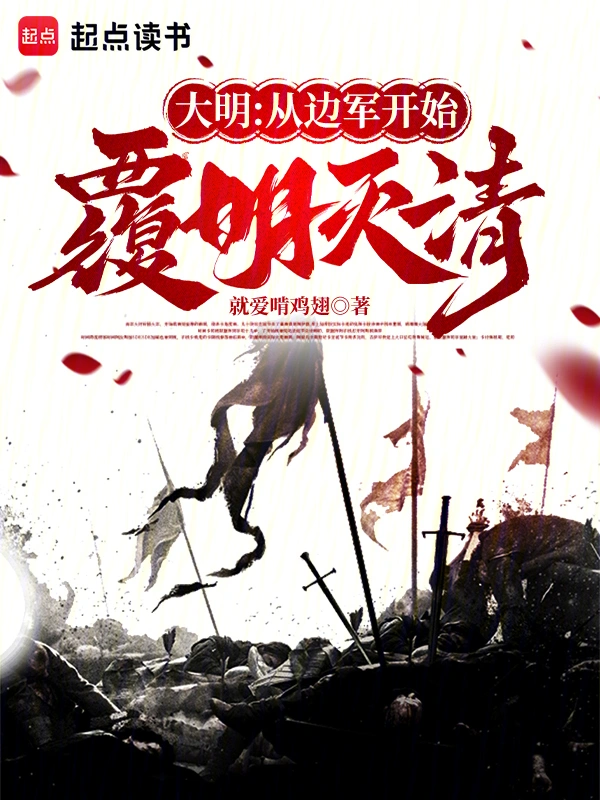
Reveal the Truth!
覆明!
- Status
- Ongoing
- Length
- 2.5M Words
- Genre
- Historical
- Audience
- Male
- Subgenre
- Song-Yuan-Ming Dynasties
- Updated
- 1d ago
- Source
- Qidian
Stats
Tags
Honours
Synopsis
Reader comments
In booklists 7
Historical Time Travel Novels of the Tang, Song, Yuan, Ming and Qing Dynasties
Historical novels that travel through the Tang, Song, Yuan, Ming and Qing dynasties

History Book List
History bookworms, share this with friends who are book-hungry. If you think it's okay, come back and give it a like, thank you!


#Weekbest# Come and Sit Down When You Are Tired
There are always some books that are unforgettable. There are always some books that will hinder your progress. Stop when you are tired, have a cup of tea, a book, and enjoy the sea of books.



My Starting Point Private Collection
There are no trending searches here, just treasures that I have read word by word and truly loved. Each book is carefully selected and prepared for you who also love stories. May we meet here and share a wonderful journey. This book list is a serialized book, and the completed book@complete book list
Decisive in Killing, Logical and Logical, All Heavens Flow
Here you can find all the good books you want, including creativity, decisiveness, and no virgin. We mainly recommend urban and fantasy books, and only recommend high-quality books.
Historical Literature Has No System
High rationality

Ten Years of Reading
Ten years of reading
Readers also read
 Red Mansion: Start Escaping and Farming from the Equipment Bar
 Northern Qi, Sage Khan
 After Lying in Bed for Three Years, He Was Forced to Help the Han Dynasty
 Gou Served as Sima Under Dong Zhuo
 Siheyuan: Start by Picking up Attributes
 You Have Really Hurt Me.
 Ming Dynasty959
 Immortal Who Seizes the Body
 Devouring the Starry Sky: Infinite Opportunities to Hoard Treasures at the Beginning
 Nanming, This Emperor Is a Bit Stable
 I Am Destiny: Conquer the World from the Western Regions
 Entrepreneurship in the Late Tang Dynasty
Regarding the governance of base areas, take Zhu Yuanzhang as an example
Lao Zhu's governance ability
Write quickly! ! !
Add more
It's not that Li Zicheng is so good. He has always said that he wants Li Zicheng. If Li Zicheng was really good, he would not be lost again within a few days of entering the capital.
The military system lasted throughout the life of ancient dynasties. No matter how powerful you were in the Spring and Autumn Period, it would all come to nothing. How can there be any saying in ancient times that you can win the hearts of the people and win the world? People are people of culture, right?
Full pay? It was almost impossible to earn a full salary in ancient times! Both east and west
The Eight Banners are dissatisfied with their pay and rely entirely on killing and robbing. Jianzhou Huang Taiji will capture you as a slave! It's time to put aside the stereotypes of winning the hearts of the people and winning the world, advanced victory over backwardness, civilization over barbarism, and the people's invincibility. What determines the outcome of a long-term war is efficiency and cost! In addition to core factors such as geographical layout and animal power advantages, it ultimately depends on who can organize and extract manpower and material resources to the greatest extent possible for the war! This is the historical materialism based on first principles! If you don't understand this, the author of historical articles is only worthy of sitting at the same table as Hupu's little brother. In addition to producing literary garbage, it has no meaning and value! Highly recommend the series of videos on Bizhan's Guide to Preventing Bleeding and Brainwashing by Yongle Emperor and Ming Chengzu
Are there any novels from the late Ming Dynasty that don't lick the Zhu family?
Just like this book, it is a novel that pulls together a team and reveals all the bad things about Zhu Ming and Manchu Qing.
Too passive
Passivity is too passive, there is basically no strategy and tactics, and core personnel are not cultivated. They occupy the territory and only focus on public security and the army. Let's wait for the general trend, but in the late Ming Dynasty, to take advantage of the general trend, we must expand our effective strength as much as possible. The mentality of the protagonist is very interesting now. He has ideas but not many, and he knows the direction but what he does is not interesting.
It was normal for the civil servants of the Ming Dynasty to be lawless and beastly!
It's hard to find such good late Ming rebellion novels anymore
Nowadays, due to the influence of the Internet, there are a lot of fans. If you search here at the starting point to save Chongzhen and save the Ming Dynasty, you will feel sick. What is worth saving in a rotten dynasty? If you sympathize with Diaozong, who sympathizes with you?
Settling accounts after the fall is the best politics
Zhu Yuanzhang always established the political power first, and then harassed the officials and gentry. He broke his promise after the founding of the People's Republic of China, but in fact, before the founding of the People's Republic of China, he had been at odds with the officials and gentry. Hey, there was Li Zicheng in the late Ming Dynasty before him, and the Taiping Heavenly Kingdom later. Both of them were controlled by the Han landlord class. After being defeated by the Qing Dynasty, the Qing Dynasty led a large group of Han landlords to seize the world 🙂. If they go against the landlords, especially when there are foreign invasions, they would rather betray the country than kill themselves. It is inevitable that class interests are greater than national interests. You thought you would follow the same path of Liu Xiu and Qingtian's failure, but that's different. The famous generals in Liu Xiu's army all came from aristocratic families and defected to Liu Xiu. You are all a bunch of idiots.
The author has always wanted to express the problems of the Ming Dynasty's system. The author has always wanted to establish a perfect system for all generations. It is very awesome. There is only a system that adapts to the times. There is no perfect system. You can never expect future generations to maintain the system.
Do you think those who shouted "Reverse the Qing Dynasty and restore the Ming Dynasty" really care about the Ming Dynasty? They just can't bear to part with the Han people's clothes. In the former Ming Dynasty, these rubbish of the Zhu family were even more cruel to the people. Just look at Jiajing and you will know that every family is clean.
I said they are almost unified. Can you give complete names to the protagonist's subordinates? Are Li Laowai, Heizi, and Dong Erzhu ridiculous? Even Xu Da and Chang Yuchun, who was under Zhu Yuanzhang, never shouted nicknames all day long.
Why did the title of the book become clear?
What's wrong, what's wrong, is the Qing Dynasty's power rising again? Ah? Why did you change the title of the book?
What mistakes are easy to make in historical novels❓ Before the Ming Dynasty, the emperor was not called "Emperor". In the Song Dynasty, he was mostly called "Guanjia", and in other dynasties, he was often called "Your Majesty". From the Ming Dynasty, the emperor was occasionally called "Emperor", and in most cases he was called "Your Majesty". After Kangxi of the Qing Dynasty, people began to be generally called "Emperor". Princes and princes call themselves: Princes in the pre-Qin and Han Dynasties can be called "Gu", and a few can be called "Ignores". After the Wei, Jin, Southern and Northern Dynasties, the title of "Ignores" gradually became exclusive to the emperor, and princes, princes and princes can only be called "Gu" or "I". Song, Yuan and Ming called themselves "I" or "I". Before the Qing Dynasty, princes and princes rarely called themselves "this king". Starting from the Kangxi year of the Qing Dynasty, princes generally called themselves "this king". In ancient times, women called themselves: "nujia" was a modest name for women after the Song Dynasty. Women in the Han and Tang Dynasties more often called themselves "concubine", and noble women could call themselves "I" and "I". Before the mid-Ming Dynasty, most dynasties used copper coins for daily transactions, with very little gold and silver. It was only in the mid-to-late Ming Dynasty that silver became the mainstream currency. -In the late Ming Dynasty, "meeting votes/deposit checks" appeared among the people. There were no unified rules. Most of them were deposits and withdrawals/exchange receipts from acquaintances or local circulation, and were not legal currency. In the early years of Daoguang in the Qing Dynasty (1823): Rishengchang Bank was established, and private banks began to issue standardized banknotes, focusing on cross-regional exchange. They were only circulated in Shanxi merchant trade circles and major commercial ports, and were not yet popular. In the third year of Xianfeng in the Qing Dynasty (1853): the official issued the Ministry of Revenue official banknotes (official banknotes), which were forced to circulate nationwide. At the same time, the network of private banknotes expanded to the whole country, and official and private banknotes ran parallel. The use of banknotes entered an explosive period and became the "starting point of popularization." High-leg tables and chairs only completely replaced the low tables for sitting on the floor in the Song Dynasty. During the Han and Tang dynasties, people knelt and sat on the tables to eat and discuss matters. The furniture was mainly low tables and couches. The memorial system was only established during the Kangxi period of the Qing Dynasty. Officials in the Tang and Song Dynasties used "memorials", "tables" and "statements" when submitting memorials, while in the Ming Dynasty they used "memorials" and "memorials". There is no such thing as "memo" or "zhezi". In ancient formal occasions, the hand-over gesture was performed with the left hand outside and the right hand inside. The right hand outside was a special "unlucky gift" for funerals. "Please say hello" is a unique etiquette in the Qing Dynasty. It was mostly used between subordinates to superiors and juniors to elders. During the Tang and Song dynasties, greetings were often performed with crossed hands and bows, and there was no such thing as "greeting hell". Before the Yuan Dynasty, subordinate officials rarely called superior officials "adult". In some dynasties, subordinates called eunuchs "adult", and in some dynasties, they called their parents and elders "adult". Beginning in the Yuan Dynasty, lower-level officials would occasionally call officials of second-rank and above "sir". From the middle and late Ming Dynasty, only officials of third-rank and above would be called "sir" by their subordinates. Officials with lower ranks could not be called "sir". However, in the late Ming Dynasty, there began to appear a few cases where officials above the fourth rank were called "adult". Before the mid-Qing Dynasty, following the rules of the Ming Dynasty, only officials of third rank or above would be called "adult". Starting from the mid-Qing Dynasty, calling officials "adult" gradually became common for lower-level officials. Attention! ! ! What is mentioned above is that lower-level officials refer to higher-level officials. No matter which dynasty, it is absolutely impossible for higher-level officials to call lower-level officials "sir". Some novels even write about emperors or nobles calling other officials "sir". This is simply contrary to Tiangang! ! ! Finally, let's talk about the problem of civilians calling officials Before the middle and late Qing Dynasty, civilians in various dynasties and generations called officials differently, and most of them called them "officials" and "masters". From the middle to late Qing Dynasty, civilians also called officials "adult". {"NickName":"Supervision and Restriction","UserId":406440657}
We can't give Wu Sangui a good end. It's best for this traitor to be cut to pieces by a thousand cuts.
A map usually used to read novels in the late Ming Dynasty
What kind of map do you guys usually use? Can you share it?
In fact, the "pseudo-historical theory" that has been popular on the Internet recently has exaggerated the Ming Dynasty as the Western origin of the "Yongle Dadian". The Westerners were the chieftains who colluded with Dai Qing inside and outside, and the first dynasty of the universe. In fact, it is a trick of people who are interested in doubling down. Exaggeration will only make the public feel illusory and disgusted. And if Ming is so awesome and still dies, it will make some people depressed, thinking that the fake youth is China's fate and destiny. In fact, it's just a boring story about the feudal dynasty's victory in the bad competition.
At the end of the book, does the pig's trotters choose to let their descendants inherit the decadent feudal dynasty? Didn't choose a constitutional monarchy? After all, as long as it is a feudal dynasty, no matter how capable and enlightened the founding emperor is in the early stage, after passing on, there will always be a faint king and he will not be able to escape the 300-year dynasty cycle.
It's quite interesting after reading more than twenty chapters!
Comments all said that Chongzhen was not good at this or that, but let's take a look at the results. From low-level officials to high-level officials, everyone is corrupt, and the people at the bottom begin to resist oppression. When asked who the culprit was, everyone said Chongzhen. The elders also brought the problem to Chongzhen to solve. How to solve it? Fund it! Where did the money come from? That must be Chongzhen's inner treasury, after all, the treasury money is gone. Don't ask where the money went, it's just gone. Oops! Chongzhen was really bad. He rode around the world doing bad things every day. In the end, the blame was passed to the pillars of the imperial court. It is human nature for the pillars not to take the blame. Chongzhen is really bad, and the old Zhu family is really nothing! 🤔
Was Shennong poisoned to death? 😅
After clearing and clearing, Chongzhen's soldiers started to develop. How to win?
If you have the ability to return to the Ming Dynasty, you should really fight against the Ming Dynasty and destroy the Qing Dynasty. The late Ming Dynasty was already rotten and it was only better than the late Qing Dynasty.
How can the protagonist ensure that after his death, China will be the first to enter the technological revolution, instead of being invaded by other countries that are the first to enter the technological revolution? The absolute monarchy forms a fundamental restriction on the independent scientific and technological revolution. The monopoly of power stifles institutional innovation. The monarchy builds social order with imperial power as the core. The world is the absolute rule of the royal land. Under this system, policy formulation relies on the emperor's personal cognition, social innovation is constrained, and the intellectual class is reduced to a vassal of the imperial power. I think the only way is for the protagonist to implement the constitutional monarchy before his death. If the protagonist wants his descendants to have long-term peace and stability, he must implement Britain's early mixed constitutional monarchy. The British constitutional monarchy is an important starting point for modern political civilization. Its core concepts, such as the rule of law, checks and balances of power, and parliamentary sovereignty, have been widely inherited by countries around the world. British institutional innovation has shaped the political landscape of the modern world. From the period after the Glorious Revolution to the 18th century, Britain showed the dual characteristics of separation of powers between the monarch and parliament. This check and balance of power in the transitional stage laid the foundation for the modern parliamentary constitutional monarchy, and finally completed the transformation to parliamentary sovereignty through the establishment of the responsible cabinet system. The protagonist should not implement Britain's late mature constitutional monarchy or other republican systems at the beginning. A phased and gradual strategy should be adopted, and the protagonist must gradually implement a mixed constitutional monarchy within no more than 60 years. History has proven that any reform that cannot complete the restructuring of power within three generations will eventually return to the old order. {"NickName":"Supervision and Restriction","UserId":406440657}
Looking at the history of the late Ming Dynasty, if the rebellion wants to succeed, it should unite poor farmers and small handicraft owners, reform children and scholars, and completely eradicate the gentry and landlord class. Only by profoundly understanding Chairman Mao's "Who are our friends and who are our enemies!" "Who do you believe, who do you rely on, and who do you help?" We will have a new understanding of overthrowing the gentry class, uniting the poor people, and dividing the land.
When did Nanyang be recovered? The historical record "Chu Shi Biao" records that "I am a commoner and worked hard in Nanyang", which shows that this place became ours at the end of the Eastern Han Dynasty.
It is suggested that when ranking the heroes of the founding of the country, Chongzhen should be ranked first. After all, Batulu, who is jokingly known as the number one hero of the Manchu Qing Dynasty, might as well be directly designated as the number one hero of the Han Dynasty.
The author expresses his reform ideas through the protagonist's mouth, hoping to get rid of scientific thought from the suppression of Confucianism. So why does he work so hard to subdue Lu Xiangsheng, a representative of Confucian conservatives? Is it to set a benchmark for Ming Dynasty officials to surrender? Then what position will be given to Lu Xiangsheng and the surrendering officials? Is it useful to maintain people in high positions or to kick these people out of the center of power by betraying their trust? The real core of the reformists is the protagonist. Only the protagonist believes that these things are useful. The rest are all dependent on the protagonist's power. Do these people have the enthusiasm? Yes, but not many, because the benefits brought by the dissemination of scientific ideas cannot cultivate interest groups that can fight against the old forces. The protagonist will fall immediately after his death. The protagonist does not want to weaken his opponent but wants to take away the power in his hands? The revolution will bleed, so don't be afraid of shedding a lot of blood. You have to carve out a time and space, and you have to fill it with your life. No matter what, it is better than the internal fighting and bloodshed later.
After the founding of the People's Republic of China, it was suggested that the country should be called the Chinese Empire, and it would be done in one step.
The title of King of Han is suggested to be only a transitional title, just like Zhu Yuanzhang's King of Wu. In the 17th century, the world has entered the Age of Discovery, and national and national consciousness has awakened. It is no longer appropriate to use the name of the country of Jia Tianxia, but directly use the name of the Chinese Empire to establish the territory and status of the Chinese nation in one step.
Speechless
Can't you finish writing it before posting it? Do this every day, I'm done with it 😰