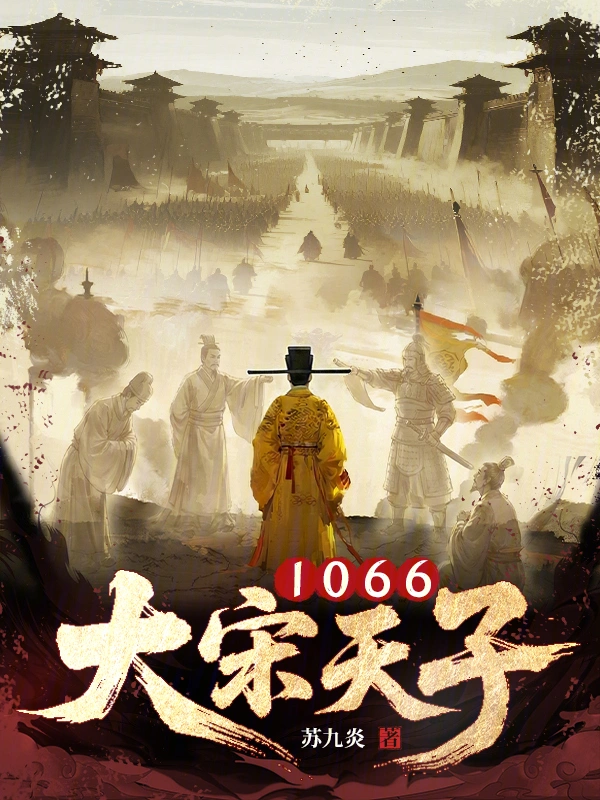
Emperor of the Song Dynasty 1066
大宋天子1066
- Status
- Ongoing
- Length
- 1.0M Words
- Genre
- Historical
- Audience
- Male
- Subgenre
- Song-Yuan-Ming Dynasties
- Updated
- 1d ago
- Source
- Qidian
Stats
345Monthly votes
20kRecommends
44.2kFans
336Chapters
Tags
Synopsis
Reader comments
Readers also read
 Red Mansion: Start Escaping and Farming from the Equipment Bar
 Northern Qi, Sage Khan
 After Lying in Bed for Three Years, He Was Forced to Help the Han Dynasty
 Fu Ming 1627
 On My First Day at the Police Station, I Ate Imported Candy from a Police Beauty.
 Northern Song Dynasty: Starting from the Interception of Hu Zhaoji's Throne
 Spring of the 14Th Year of Wanli
 What Should I Do If I Ascend to the Wrong World?
 My Girlfriend Cheated on Her and Got Pregnant, and I Ran Away Nine Months Later
 The Resurgence of the Song Dynasty Began by Pretending to Be the Emperor
 Huang Ming
 Datang: They Force Me to Be Emperor, Right?
Discussion on the entry point of the "Puyi dispute"
Yingzong of Song Dynasty was a small sect who became a large sect and inherited the legal system of Song Renzong. The purpose of his Puyi dispute was to prevent the clan and change the legal system. Song Yingzong was in poor health, and Empress Dowager Cao interfered in government affairs. If she did not change the legal system of her succession to her biological father, in the event of an accident, Empress Dowager Cao or powerful officials could establish other clans according to the elder brother's final brother. Song Yingzong's purpose from beginning to end was to change the legal system and designate his son as the successor. Song Yingzong and Jiajing both engaged in similar operations after becoming a major sect. The reason why the political fallout after Song Yingzong's operation lasted for three or four generations of emperors is because Song Yingzong's "Puyi Dispute" was a formal success but a failure in substance. Supporters such as Ouyang Xiu were not protected, and Sima Guang and others were not exiled on charges and cut off their political lives. It gave opponents the opportunity to counterattack in the future. Emperor Jiajing killed those who should be killed, exiled those who should be exiled, and reused those with support. After the legal system was changed, it did not cause too much political aftermath. So I think the author's adaptation is not as good as the original history. The original history was at least half successful, but when it came to the author, it completely failed. The original Sentai Emperor's ministers became clowns, and the Emperor also lost his authority.
There are new ideas and a good sense of substitution.
I can no longer read a historical novel about a max-level monster traveling through the past and crushing a dynasty. After reading this book, I gained something new. I respect traditional values, do not flatter historical figures, and use them as they should. Waiting for the author of Vanity Fair, I am now more impressed by Li Liangzuo's arrow. When reading historical texts, isn't it just a matter of drawing a picture and inserting it into the text?
It's too much. Renzong's dynasty was just okay, and there were many crises. Otherwise, why would we have to Qingli's New Deal? It's not an exaggeration to blame Song Huizong for the shame of Jingkang. This was an emergency. It was all manipulated by Song Huizong, and it had little to do with the first three generations of emperors.
Junk novels
A tyrant has a tyrant's style of play, and a coward has a coward's style of play. The so-called empress dowager of the Song Dynasty, no matter what, can be killed suddenly
Yingzong Zhao Shu is quite disgusting! The thirteenth son of Wang Pu'anyi's family was adopted by Emperor Renzong! Not long after he ascended the throne, Emperor Renzong's daughter was kicked out of the palace! He wants to make his biological father the emperor! A hermaphrodite with two faces
"Aijia" is not the true self-title of any dynasty. It only appears in operas and novels of the Yuan, Ming and Qing Dynasties.
Niubi, who claims to be Yingzong, can't wait to die?
What mistakes are easy to make in historical novels❓
Before the Ming Dynasty, the emperor was not called "Emperor". In the Song Dynasty, he was mostly called "Guanjia", and in other dynasties, he was often called "Your Majesty". In the Ming Dynasty, the emperor was occasionally called "Emperor", and in most cases he was called "Your Majesty". After Kangxi of the Qing Dynasty, people began to be generally called "Emperor". Princes and princes call themselves: Princes in the pre-Qin and Han Dynasties can be called "Gu", and a few can be called "Ignores". After the Wei, Jin, Southern and Northern Dynasties, the title of "Ignores" gradually became exclusive to the emperor, and princes, princes and princes can only be called "Gu" or "I". Song, Yuan and Ming called themselves "I" or "I". Before the Qing Dynasty, princes and princes rarely called themselves "this king". Starting from the Kangxi year of the Qing Dynasty, princes generally called themselves "this king". In ancient times, women called themselves: "nujia" was a modest name for women after the Song Dynasty. Women in the Han and Tang Dynasties more often called themselves "concubine", and noble women could call themselves "I" and "I". Before the mid-Ming Dynasty, most dynasties used copper coins for daily transactions, with very little gold and silver. It was only in the mid-to-late Ming Dynasty that silver became the mainstream currency. -In the late Ming Dynasty, "meeting votes/deposit checks" appeared among the people. There were no unified rules. Most of them were deposits and withdrawals/exchange receipts from acquaintances or local circulation, and were not legal currency. In the early years of Daoguang in the Qing Dynasty (1823): Rishengchang Bank was established, and private banks began to issue standardized banknotes, focusing on cross-regional exchange. They were only circulated in Shanxi merchant trade circles and major commercial ports, and were not yet popular. In the third year of Xianfeng in the Qing Dynasty (1853): the official issued the Ministry of Revenue official banknotes (official banknotes), which were forced to circulate nationwide. At the same time, the network of private banknotes expanded to the whole country, and official and private banknotes ran parallel. The use of banknotes entered an explosive period and became the "starting point of popularization." High-leg tables and chairs only completely replaced the low tables for sitting on the floor in the Song Dynasty. During the Han and Tang dynasties, people knelt and sat on the tables to eat and discuss matters. The furniture was mainly low tables and couches. The memorial system was only established during the Kangxi period of the Qing Dynasty. Officials in the Tang and Song Dynasties used "memorials", "tables" and "statements" when submitting memorials, while in the Ming Dynasty they used "memorials" and "memorials". There is no such thing as "memo" or "zhezi". In ancient formal occasions, the hand-over gesture was performed with the left hand outside and the right hand inside. The right hand outside was a special "unlucky gift" for funerals. "Better greetings" is a unique etiquette of the Qing Dynasty. It was mostly used by subordinates to superiors and juniors to elders. During the Tang and Song dynasties, people often performed cross-hand salutes and bows to greet greetings when they met, and there was no such thing as "sending greetings". Before the Yuan Dynasty, subordinate officials rarely called superior officials "adult". In some dynasties, subordinates called eunuchs "adult", and in some dynasties, they called their parents and elders "adult". Beginning in the Yuan Dynasty, lower-level officials would occasionally call officials of second-rank and above "sir". From the middle and late Ming Dynasty, only officials of third-rank and above would be called "sir" by their subordinates. Officials with lower ranks could not be called "sir". However, in the late Ming Dynasty, there began to appear a few cases where officials above the fourth rank were called "adult". Before the mid-Qing Dynasty, following the rules of the Ming Dynasty, only officials of third rank or above would be called "adult". Starting from the mid-Qing Dynasty, calling officials "adult" gradually became common for lower-level officials. Attention! ! ! What is mentioned above is that lower-level officials refer to higher-level officials. No matter which dynasty, it is absolutely impossible for higher-level officials to call lower-level officials "sir". Some novels even write about emperors or nobles calling other officials "sir". This is simply contrary to Tiangang! ! ! Finally, let's talk about the problem of civilians calling officials Before the middle and late Qing Dynasty, civilians in various dynasties and generations called officials differently, and most of them called them "officials" and "masters". From the middle to late Qing Dynasty, civilians also called officials "adult". {"NickName":"Supervision and Restriction","UserId":406440657}
The writing is excellent, and the historical district is truly amazing.
It's really good, but the author keeps giving you poison. It's a bit unbearable. The protagonist has only been the emperor for a few days. From an incompetent monarch to a great emperor, it has already spread to the Liao Kingdom. It has not been a month. What have you accomplished? Make others think highly of you. I just read it. No one said it. Change it as soon as possible. There must be a time, 3 to 5 years.
I started to know why I was suspended for one year and had no points, why I was suspended, and how to correct my fatigue and maritime illness. I am speechless knowing that I will write like this again. There is no way for a mentally retarded person to be able to conquer nature.
It feels like the author is playing the Song Dynasty version of King's Game.
Rather than saying it is a novel, it is better to say that what the author wrote is like a text version of the Kingdom Building Game of the Song Dynasty. The progress is arranged according to historical trajectories and historical figures, and various characters have a strong NPC feel.
If something doesn't make it into the draft, then what are you going to do with it? Inexplicable draft, since you went to the ancient village, you followed the ancient production methods. How about you being sixteen or seventy years old? Even if you are 14 years old, then you become the emperor, why don't you give up the emperor? When implementing a republican system, you can just be a soldier or Emperor Mao, because you don't have that IQ. If a person with a high IQ can be the prime minister or the president, then you are suitable to be a soldier.
A single briquette can bring considerable benefits to the Northern Song Dynasty
Begging to promote the regulation of honeycomb briquettes and charcoal I heard: The key to running a country is to satisfy the people's livelihood, strengthen the country, and consolidate the foundation of the country. Nowadays, the Song Dynasty has been in peace for a long time, and the number of household registrations has increased. The population in the capital and the major counties in the north has increased, and the demand for fuel has increased day by day. Competition among the people to cut down mountains and forests has raised the price of fuel charcoal, and people's livelihoods have been stranded. Government-run iron smelting and military industry castings are also often faced with a shortage of charcoal, which is a real concern for the people's livelihood. Without being presumptuous, I propose the strategy of carbolic briquettes, implementing the method of source control and licensing monopoly. It can enrich the national affairs, help the people's livelihood, and strengthen the military. It will be of benefit to all generations. The roads in the north are rich in carboniferous mineral deposits. In Gyeonggi, Hedong, and Hebei, the mineral veins stretch and have been mined for a long time. However, when people use scattered fires for miscellaneous purposes, the charcoal is not fully burned and wastes a lot of money. Moreover, the fireworks are dirty and unfavorable for living. In the past, fuel charcoal and coal were mixed for civil use and iron smelting, resulting in excessive felling of high-quality fuelwood, an imbalance between the supply and demand of charcoal, and high prices and difficulty in obtaining it. When smelting iron to cast soldiers and make farm implements, charcoal must be used first. The charcoal fire is pure and stable, without any impurities, and the iron produced is pure in texture, tough and usable. Coal is unrefined and contains poisonous mixtures. If iron is smelted directly, the iron will be brittle and inferior and cannot be used for fine craftsmanship. This has been the conclusion of metallurgy since ancient times. Nowadays, people consume countless amounts of charcoal for daily use. As a result, government iron smelting is often short of high-quality fuel, and the production capacity of weapons and agricultural equipment is not developed. This is actually the disadvantage of misuse of energy. The method of honeycomb briquette proposed by the minister is to use pebbles as materials and clay to make porous briquettes. Its method is extremely simple, and craftsmen can make it at will, without the need for complicated equipment; its use is extremely excellent, ventilation supports combustion, the firepower is long, and the fire is sealed and easy to preserve, which is far better than loose coal and firewood. This can be used for folk cooking and heating in winter, and can replace firewood and charcoal. The daily cost of ordinary people is greatly reduced, and there is no risk of freezing in the cold winter. More importantly, the implementation of this law should be based on a system where the government controls the source, licenses exclusive operations, and does not compete with the people for profits. It must not be self-produced by the government, which only increases consumption and waste. One is to monopolize the source of coal mines, bring all the coal mines in key areas such as Gyeonggi, Hedong, and Hebei to the government, set up official offices for inspection and control, and strictly prohibit private mining, smuggling, and private sales. When coal comes out of the mountains and enters customs, it must be verified by the government offices, and a mountain tax is collected to fundamentally control the flow of raw materials; secondly, double licenses are issued for all private briquette manufacturers. , Need to apply for a coal-making certificate, and those who sell coal must apply for a coal-selling certificate and pay annual fees. Those who make privately without a certificate will be severely punished by law and confiscated. Third, private production should be liberalized. The government does not set up government-run workshops and does not interfere with production techniques. The people and workshops are allowed to make their own goods and take responsibility for their own profits and losses. The government is only responsible for supervision and tax collection. This method is beneficial to all directions, and its benefits are threefold: One is that it benefits the people. Honeycomb briquettes are cheap, resistant to burning, and easy to obtain. People do not need to purchase fuel charcoal at a high price, and it is convenient for cooking and heating. In addition, private logging is prohibited, so that the mountains and forests can recuperate, the water and soil are preserved, and the ecology gradually recovers. The long-term benefits will benefit all people. On the second day, profit lies with merchants. The government does not seize business profits, but only provides permission to enter. Merchants and workshops are allowed to operate with licenses. The supply of goods is controlled by the government, and the market price is stable. There is no danger of hoarding, supply interruption, and price increases. If you operate in compliance with the law, you can make steady profits. It can also promote employment and stabilize the market. Three days benefit the country. The imperial court does not need to invest in building factories, and there is no disadvantage of operating losses. It collects mining taxes, license taxes, and transaction taxes. The national treasury has added stable financial resources, and the state has become increasingly abundant. What's more important is that the people use honeycomb briquettes for daily use, saving tens of millions of kilograms of high-quality charcoal, and allocate it to government-run iron smelting and military workshops, dedicated to refining refined iron, casting weapons, and making agricultural implements. The supply of charcoal is abundant, the quality of iron smelting is improved, the armaments are getting stronger, the equipment is getting better, the border equipment is stable, and the agricultural equipment is sophisticated. This is actually the key strategy to strengthen the army and consolidate the foundation. There is also a special coal control office to coordinate mineral resources, permits, taxes, and prices. Officials are responsible for supply and demand control, market price stabilization, and inspection of private fraud. They practice economic control techniques and experience financial management skills. This office became the foundation of the country's economic governance. It educated talents who could handle various national affairs such as salt, iron, tea, and grain. From then on, the court had no shortage of ministers who managed the world and benefited the people, and their ability to manage finances and govern was increasingly improved. Chen Yu believes that this strategy should be tried out in the northern counties of Kaifeng, Luoyang, Daming, and Taiyuan in the capital. The coal veins are nearby, the population is dense, and the demand for fuel is greatest. If the pilot is effective, it will be extended to Hebei and Hedong roads, and then gradually spread throughout the world. It benefits both the government and the people, and benefits both the superior and the subordinates. It does not disturb the people's livelihood or consume national funds. It not only relieves the people's livelihood fuel shortage, but also strengthens the foundation of the country's military preparedness. It also provides the imperial court with a long-term endowment. It can be achieved in one fell swoop. Your Majesty's Holy Judgment will be promulgated to the world, and the officials will be entrusted to implement it properly. Then the country will be blessed and all the people will be blessed! I would like to report.
I thought I was watching a movie. More to come.
I don't really like to write about the Song Dynasty, because I looked through history books and found that changing the Song Dynasty was much more difficult than changing other dynasties, and the resistance to reform was unmatched by other dynasties!
100,000 Deposited manuscripts, readers can rest assured
Yelu Hongji of Khitan, Prince Duan of Dali, Yingzong of Song Dynasty, Ouyang Xiu, Wang Anshi, Sima Guang, Su Shi, Su Che, Shen Kuo, Wang Shao, Wen Yanbo... Are waiting for a wonderful encounter with you!
The main problem of money shortage
Isn't it true that the copper coins of the Song Dynasty contained too much copper? This has led to everyone melting the money, making it into copperware, and then selling it, with several times the profit As a result, the book blindly mines, what's the use of opening more mines?
There's nothing wrong with the writing. Do you know why Shao Song is so popular? Because it has a knife handle. What you can't get in the war is still not available at the negotiation table. Even if it's on the shelves, you haven't touched the knife handle.
I read about 10 chapters
It's quite confusing. First of all, it's a matter of time. I chose this time travel but the writing is very fragmented. The author has a lot of time to choose from and it's easy to write. If it were earlier, the layout would be much easier. If it was later, the opening of Skyfall could also attract a lot of people. Second, there is not enough power. The author may not have read much history. Politics is a life-and-death struggle. If you don't know how to write about etiquette disputes, just learn from Emperor Jiajing. There is no way that both factions are satisfied. Just look at Yu Qian's end and you will know that he must die. Thirdly, the rights of the empress dowager of the Song Dynasty, after experiencing examples like Empress Wu and Liu E, she was very guarded against this aspect. Empress Cao was still very easy to deal with. The author's writing is a bit ugly. In summary, I still didn't choose the right time.
Haha, you are still talking about Zhezong. No matter how incompetent the Emperor Zhezong is, he will always be successful in expanding the land.
Hey, we actually opened up the upper, middle and lower reaches of the Taoshui River
After taking Minzhou, the upper reaches of Taoshui River, Taozhou, the middle reaches of Minzhou, and the lower reaches of Xizhou (town of Taojun) will be connected together. Not bad, not bad
How should Wang Anshi, who was writing a book and writing in Jiangning, arrange it? Tangled
Wang Anshi and Wang Jiefu were well-deserved great Confucians, with unparalleled literary achievements. After all, they were one of the Eight Great Masters of the Tang and Song Dynasties. They also had outstanding achievements in local governance, but the historical direction was still there after all. How to use him? I have been struggling for a long time and would like to hear your opinions from readers.
Author
The question is whether the author's novels have multiple female protagonists, and the answer is not very sure whether there are multiple female protagonists.
Is the Taiwang one okay?
Personally, I think it's a bit ambiguous, but I'm not someone who studies Zhou Rites. But I think it makes sense.
It's boring to be buried soon
The author of P Club Players also learned from P Club's view of history, right?
Classic 1444 The Ming Dynasty was already extremely weak. The Northern Song Dynasty could even reform in a few years. Where is the cliff 🤭
First time posting
A few suggestions for the author's reference: 1. Add a map appropriately. The evolution and development of history is closely related to geography. It is not easy to add ancient maps, but it will definitely increase the value of the book and assist understanding. (Refer to: Looking at History through Geography) 2. Time travel can only bring knowledge of later generations and historical insights on key events (and will decrease year by year), and will not bring about an overall improvement in comprehensive literacy. At present, the emperor has a crushing advantage over the elites (selected at the moment) and prime ministers (experienced and richer in experience) selected from all over the Song Dynasty. If it goes the way of writing, the quality of the full text will be reduced (please refer to: Qin Qin Ji) 3. Tragedy is more touching. At present, no matter big or small, the emperor is going smoothly, but some setbacks and regrets can be added appropriately (which can bring awakening and lessons).
Just out of curiosity: What books have you read about Sima Guang?
In his early days, Sima Guang mainly served as an admonisher, and his official position was not small. Because he opposed Wang Anshi's reform, he refused to be a deputy envoy to the privy council. After briefly knowing the Yongxing Army, he changed his sentence to stay in Xijing at the Yushitai, and then spent fifteen years in Luoyang to write the "Zi Zhi Tong Jian"; in 1085, he paid homage to Zuo Pushe, the minister and the minister (prime minister), and presided over the "Yuanyou Reform", which abolished Wang Anshi's new law. He died of illness in October of the same year and was posthumously given the posthumous title of Taishi and Wen Guogong, with the posthumous title of Wenzheng. He had only been prime minister for nine months, and his health had been very poor while he was prime minister. I feel that many friends have extremely polarizing opinions on it, which actually makes me a little curious. Let me confess first, I have read "Zi Zhi Tong Jian", but I have not finished it.
Qidian recommends millions of new users, Qidian's "Historical Classification—Millions of New Products" column
It has reached one million words, and the results are steadily improving. Thank you readers for your support. It has been recommended in the "Historical Category-Millions of New"