


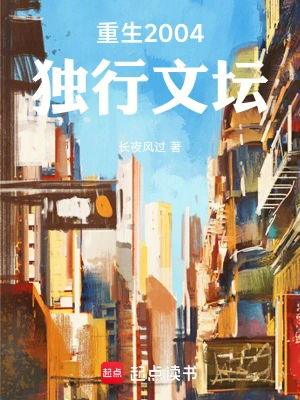
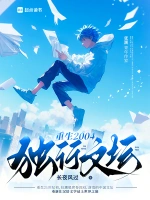
Reborn in 2004: A Lone Figure in the Literary World
重生2004:独行文坛
- Status
- Completed
- Length
- 1.7M Words
- Genre
- Urban
- Subgenre
- Campus Life
- Updated
- 1y ago
- Source
- Qidian
Stats
Tags
Synopsis
More by this author
In booklists 13

Their Story
Praying here for interesting souls to appear.
Urban Fiction
Urban fiction recommendations based on my personal taste.
To My Former Chuunibyou Self
Somewhere in the vast sea of books, you'll always find one that suits you. Maybe it once kept you up all night, or maybe... well, maybe that's all. Would you read it a second time? Could you keep going?
[Yu Feiyu's Recommendations] Completed Purchases (II)
I'll write a recommendation once I've finished reading.

Bookworm Reading List
Only introducing books I personally think are decent
Curing a Reading Slump
0. Running out of books to read is really painful. I hope I can help fellow readers find some relief. 1. This list is updated from time to time. 2. Some books may become less engaging later on, but I added them because they made me fall in love at first sight, so I won't remove them. 3. My tastes are all over the place, so this list isn't limited to any particular genre or set of genres. 4. I hope there will always be novels I can enjoy wholeheartedly. 5. No female-oriented fiction or romance. 6
Top-Tier Gems: Great Books I'm Following Right Now
A personal reading list
New Book Digger
I just love panning for gold in the sand and finding fresh new ideas...
Top Picks to Follow from Start to Finish
A personal list of excellent books I've seen through to the end
Showbiz Novels I’ve Vetted
Entertainment novels I've personally tried. Tastes differ, so give them a shot.
My Favorites
I like these, but you might not.
Professional Niche Fiction
Mostly niche, lesser-known stories about specific professions
Group Five Platinum Prospects
Just as the title says
Readers also read
 I’m a Cop, Why’d You Give Me an Esports System?
 Hong Kong Tycoon: 1963
 In the Americas, From Security Guard to Call of Duty
 There’s a Door in My Warehouse
 Hong Kong Films: In Wo Hop To, Uncle Deng Begs Me to Take Charge
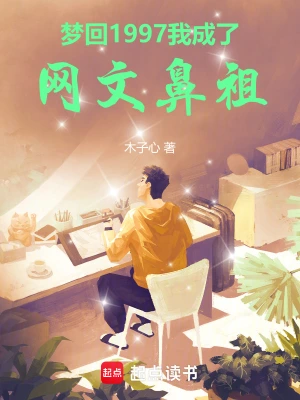 Back to 1997: I Became the Progenitor of Web Novels
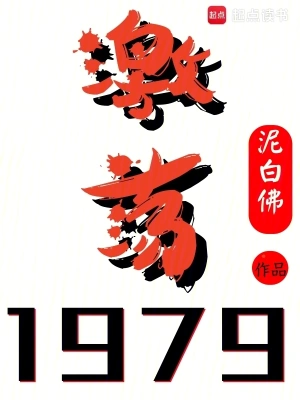 Turbulent 1979!
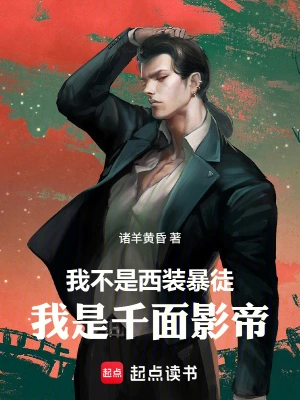 I’m Not a Suit-Wearing Thug, I’m a Chameleon Actor!
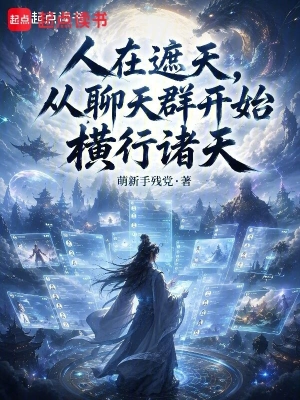 In Shrouding the Heavens, I Rule All Worlds from a Chat Group
 Chinese Showbiz: The Age of Genius
 Generation Z Artist
 We’re Reborn, So Who’d Still Be an Actor?
 Literary Giant 1879: Lone in France
Reader comments 44
Google Translate
Non-emotional value
Internet articles usually provide emotional value, so so many trivial articles can become popular. The threshold for traditional literature is too high, especially the time and brain capacity requirements. Information technology has greatly accelerated the speed at which the entire society is running wildly. We are driven to keep moving forward towards money, and even stopping and taking a breath has become a luxury. The brain is bombarded with all kinds of fragmented information all the time. Internet articles and short videos have become spiritual food to satisfy hunger. Let's not talk about whether it is delicious or not. The key is to eat in large quantities to satisfy your hunger. After I left college, I rarely read large paper books. The only one I could finish reading and read three times was The Three-Body Problem, which was not a pure literary work. So far in this book, although there are also plots of pretending to be x-faced, the emotional value it can provide is not high, but it is very rare to provide something other than emotional value. What is it? A rational analysis of literature and writing. This can be compared to a brick that allows you to step on it and look inside from the window of literature. The author deserves a thumbs up for being able to lay such a smooth brick into a web article!
If the heroine is Liu Moufei, don't call me. If not, just call me.
Reading the comments, they all said that there were some problems in the early stage. I think the problems were bigger in the middle and later stages. The early stage was just some harmless poison points, and Lao Bai was able to resist it. Later, when the protagonist created a Weibo on the same platform as China and the United States, I really couldn't stand it. When the author wrote this book, he had no idea what the wall was for, and he had no political common sense at all, so he just wrote it for fun. However, the new book is indeed good and has made great progress. By not writing about domestic bird food, it has avoided many problems at its root.
1. In 2004, the high school radio station provided song request service? A song costs 2 yuan? First, don't mistake the 2 yuan in 2004 as money. Second, doesn't it feel inappropriate for the school to openly provide this kind of paid service? High school studies are so stressful, and students are still asked to take turns on duty? Are you a top-notch high school? Does the school have a computer room? This is 2004! 2. It costs 5,000 to get a driver's license (C1) in Beijing in 2004? Can you check the information before writing? Although the protagonist has become a millionaire, this is just the rise of the protagonist's income, not the rise of the entire social economy?
There are some difficult parts at the beginning, but as I go through the psychological journey of the male protagonist, I feel that I can understand it. It is really rare to find a good book despite its flaws.
✍️✍️✍️ Take stock of the beautiful and plump female stars in the Chinese entertainment industry! 1970~1979 Lin Chiling 1974, Li Xiaoran 1976, Zuo Xiaoqing 1977 [Dong Xuan, Qin Lan, Joe Chen] 1979 1980~1984 [An Yixuan, Liu Yan, Huo Siyan] 1980 [Yang Rong, Zhang Meng, Li Xiaolu] 1981 [Wang Zhi, Zhou Weitong] 1982 [Jiang Xin, Li Yixiao] 1983 1985~1989 Li Yufen 1985 [Jiang Yan, Yang Mi, Gan Tingting, Clara] 1986 [Alan Dawa Zhuoma, Li Feier 1987 or 1981❓, Zhang Yuqi, Zhang Xinyu, Zhao Yihuan, Mou Xing] 19 87 [Jing Tian, Kan Qingzi, Wang Xiaochen, Liu Yuxin, Guo Xuefu, Zeng Zhiqiao] 1988 [Chen Xiaojun, Shen Mengchen] 1989 1990 ~1999 [Guo Shuyao, Lin Yanrou, Zhang Tianai 1990 or 1988❓, Xu Dongdong] 1990 Wang Zixuan 1992 [Bai Lu, Xu Lu] 19 94 [Zhao Yue, Meng Ziyi 1995 or 1994❓, Yu Shuxin] 1995 Cheng Xiao 1998 🈶 Welcome to add➕➕➕➕ ➕ {"NickName":"Supervision and Restriction","UserId":406440657}
Is this a case of literary youth disease? ? ? The plot of going to the countryside is so awkward. . . .
About "Young You"
The author chose "Young You". This movie is not in line with China's national conditions at all, because the students who were bullied in the movie all had very high scores, and they can even be said to be the seed players who are expected to be in the North. For such students, teachers and principals can allow someone to bully them? They are the results of the local education system. They are about to mature and are bullied to death? Even if the bully's family has great connections, it's time to stop. This has already affected the performance of the entire region's education system. In addition, the author, as a high school teacher, will not feel awkward at all when you watch this movie. Think about it, with half a year left, a Qingbei player in your class was bullied to death. As a teacher or principal, what will you do? ? ? ? If you were the local leader in charge of education, and under your leadership, one after another dead seed players, how would you react? ? ?
Warm Wen Xin
I stayed up late at night during the National Day holiday to finish the work. Purely speaking of the completion of the online article, I can say that it is "getting better and better". The rest is just a matter of opinion and wisdom based on small incisions. But I really like it. It reminds me of the years I spent in a third-rate liberal arts college, playing games all night, skipping classes and sleeping in, the little talents and talents I had, maybe just to meet this work today. 1. Ideals shine into the "literary world" If there is anything about this article that is definitely better than other online articles, it is not the author's pure literary creation and appreciation ability, or his familiarity with literary history, but his gentle and firm, yet rich and vigorous attitude towards all of this. The "middle-aged greasiness" that was much criticized in the early days has disappeared without a trace under the light of this idealism. The methods may be mature, radical or even deceitful, but the protagonist's heart becomes clearer as the plot progresses. This is a character arc that I highly recommend. Zhang Chao's actions also reflect a value born out of the literary tradition, "literature is to carry the Tao" and to influence the world and transform reality. In contrast, the description of him making money and investing, achieving a higher status, and being favored by girls is only unsatisfactory at best. The author's ideal itself, creating a clearer, more energetic and vibrant literary world, makes people feel happy. Rather, the word "literary world" (ch231, 234, 238) itself is more equal, open, fertile, and free than "literary world." It eliminates the sense of distance between those who are superior and educate the people, and allows ordinary readers like me to feel seen, respected, and cared for. The ancients said that "meaning comes first", and the determination to write may have started with "I can do it" brought about by the popularity of "literary literature". However, as the article says, "the past has shaped us and also shaped our creations." The author's values still vaguely draw the line when answering "why to write" and "what kind of work do you want to write". This explains why those paragraphs about writing pop songs, using old memes as popular tastes, playing with female stars, and using public obscenity as a creative guide are so embarrassing. It also explains the choice the author made when they were criticized: he would rather give up directly than try a more "novice" approach; instead, he would let himself go and let the protagonist completely devote himself to the endless literary career. 2. What is a "literary hero" The author's love for Lu Xun well answers a fundamental question - what kind of person can, or is "worthy", to be called a "literary hero"? Is it enough to attribute a once-famous or immortal masterpiece to oneself, supplement it with wealth, fame, status, and embellish it with the admiration of some women, the admiration of peers, and the enthusiasm of readers? I cannot agree. This is not the first time I have read an online article with similar themes written by top Chinese scholars. The previous one can be traced back to nearly twenty years ago. The author gave an answer that echoes this article: All things; outstanding behavior is enough to move the world. Use your leisure time to change the world's customs." She quoted this paragraph from Su Shi's "Wang Anshi's Gift to the Grand Tutor" to express the aesthetics that is rooted in the hearts of Chinese scholars of our generation. Although the author did not express it particularly directly, it can still be observed how the protagonist Zhang Chao went from a middle-aged time traveler who first saw a man silently crying to a woman, and under the guidance of lofty literary ideals, embarked on a trajectory of sublimation from "mortal" to "saint" and even "god". There are several descriptions in the later part of the article. He looked into the distance into the sky and was in a state of indifference. Even if he was in a crowd, chatting and laughing with his teachers and friends, he could not conceal his detached and independent loneliness. The choice he made to "deliberately break his idol" around "The Man in the Trap" created an even greater immortal soul for him. The character Zhang Chao entrusts us with all the beautiful qualities and all the imagination that the "young literary leader" corresponding to the "literary hero" in the article should have. His healthy body and mind, sound personality, lofty ideals, pragmatism, excellent aesthetics, tough temperament, and humorous speech all embody the most perfect, elegant, and exemplary ideal that we can expect. Educating, cultivating and shaping the "new" people of this era has originally been the shared vision of countless people with lofty ideals over the past hundred years. If Mr. Qian Xia has knowledge, he will surely feel more gratified by contemplating this book. Writing a book is creating a dream. In this sense, it is really a good dream. 3. See sincerity in technique Modifications of the original works involved in "Wen Zhongwen", as well as original works, essays, criticisms and speeches, also carry the author's literary ideals. Although ideals are no different, the author's pursuit is undoubtedly more palatable than chasing literary awards or using this opportunity to recruit a few more actresses. The first is the pattern of the selection. The first book is often the most revealing of the author's values. Choosing "Young Like You" as the protagonist's first feature, the field investigation and attention to "Shamate" reflect a natural sense of social responsibility; even "Your Name", which seems to be the most "youthful", has also caught up with the upgrading of the national comic industry. Literary and artistic creations must be rooted in life, which not only illuminates reality, but also warms people's hearts. As a child who experienced the end of the golden age of magazines, from "Ship Knowledge" to "Popular Software", I once bought half of the newsstand. Looking back at those weird youth literature, I wholeheartedly agree that the old-school aesthetics of the selected articles are more worthy of occupying the mainstream ecology and more worthy of being cherished by us. Second is the warmth of technique and the responsibility of criticism. By the time I was studying, the most criticized aspect of Chinese students' writing was still "levitation". You sing about the gaudy "isms" and then I come on stage. The writings are either about rural areas facing the loess or their backs to the sky, or about girls from hair salons at the fringes of urban and rural areas. They don't look contemporary at all. This has led to some personal doubts in my mind: There is a lot of discussion in the article about modernization and the modernity of literature. The use of "modern" techniques does not mean that the works written are "modern", and I deeply agree with this. But where is the way? Unlike the author, I struggled to learn Western literary theory, and I even retaken other related subjects such as aesthetics three times. Therefore, when the article talked about how to inherit literary heritage, I couldn't help but think that there should be a lot to be admired in traditional Chinese literary theory. For example, Shen Deqian of the Qing Dynasty said, "The ancients did not abandon the method of refining calligraphy, but they won by meaning, not by words. Therefore, they can see surprises in plain characters, dangers in common characters, newness in old characters, and color in simple characters." This is the same as the author's writing, "like an old craftsman treating the jade in his hand, repeatedly polishing every word and sentence, eliminating flashy and pretentious, and looking for the most accurate, powerful, and capable expression of complex emotions and profound thoughts." Language skills continue to develop, but in fact it has reached the point where ordinary readers like me are intimidated. If the texture is a little more complicated, I will just say nothing, neither understand it nor want to work hard - I am very grateful to the author for being tolerant of this. I still remember opening "Floating City" and not reading a few pages. Suddenly the story turned mysterious and the city sank into the sea. I was filled with incompetent rage: When I bought the book, no one told me that it had such a divine development. Wouldn't it hurt the conscience of my friends who said it was a "realistic" work and sold it to me... I understand the truth. Could we be like "Homeland" and put the fantasy elements on the table? If I had known this, I would have tightened my wallet. Therefore, I particularly appreciate the author's ability to master techniques, recognize form as part of the content, and always let it serve the content. I also deeply agree with the literary criticism concept derived from this, and regard it as a confidant - to promote the prosperity of literature and analyze the uniqueness of works for readers. "Blowing rainbow farts to my favorite author" used to be one of my core motivations for studying Chinese. Unexpectedly, after enrolling in school, I discovered that academics are in love with "big words" and are inseparable from "ism" and "school". They often interpret "pissing cow balls" as "solid-liquid-solid two-phase multi-layered elastic sphere structure". This really goes against my nature of talking about people, and I almost got reprimanded... I mean I dropped out of school. But then again, comparing the author's and my theoretical level, as well as the level of logic and clarity of expression, I feel that "terminology", an effort to replace lengthy descriptions with labels, can simplify the thinking process. Just like literal reasoning and narrative, creative practice brings about the development of literature, and the proportion of intuition continues to become smaller. Without terminologically encapsulated concepts with clear boundaries and an established evaluation system, it is difficult to interpret texts in the new era. If I could figure this out when I was tortured by terminology, I would probably be more willing to study hard and expand my window to understand the world. This article may be more profound as a result. 4. Talk about the shortcomings The power of thought constitutes a unique landscape in the middle and later stages of the article, which is quite rare in online articles. This also brings about an unattainable reading threshold. As a low-level literature lover, I am obviously ashamed of myself because of the author's reading volume, expressive ability and outstanding understanding, which makes people feel a powerless shock. "He has the eyelashes to brush away the dust of history, and the pupils to see through the chapters of the years." - His family background and long-term writing training are what he has. If he doesn't have them, he can't force them. My heart is still particularly lazy, boring, sensitive and fragile. I try hard but can't, so I have been living in such a muddle until today. For this reason, some readers say that the "poison" in the first half is bearable, but the plot in the middle and later stages is weakened and full of metaphysical polemics, making it even more unbearable to read. Striking a balance between "literary nature" and "internet sense" is the fate of Internet literature. This aspect has been greatly improved in the new book. It will be reminiscent of "The Business of Enlightenment", which reasonably depicts the social scene outside of literature and makes the villain characters profound. The serialization may not necessarily be powerful, but if it is tied in one breath, the ingenuity of the story is evident... Of course, there is still a sense of delicacy of a literary character, and the creation is detailed enough, so it does not seem despicable. In a sense, rather than dismissing it as unrealistic, it might as well be called a highly idealized and unique style. Secondly, there is the dilemma of creating the heroine, or the female character. As a female reader, I am very tolerant of Qidian, or the entire Chinese online creative environment, because if I didn't have such an open mind, I probably wouldn't be able to stay at it at all. Look at what the comment section is saying. "It's good to have fun with female celebrities" "It's better to collect a few more", just like ordering food... I understand this logic, but I still find it boring. The inability to write about women is not a personal problem of the author, but a fundamental creative dilemma - the fundamental reason is that women are not written enough, and they cannot transcend the literary images of mothers, wives and girls, and it is especially difficult to express the social experience and social self of contemporary women. I once studied Danmei with great concentration, precisely because compared to other genres at that time, it really expanded the scope of subject matter, enriched popular literature, and, in the author's words, allowed "the more complex and subtle parts of human nature" to be displayed; but later Shangdan writing transformed it into a new romance template, and I had no choice but to turn around and leave. In recent years, I have been reading non-CP books, and I have always pretended not to notice the bullshit female protagonists. In the final analysis, it is the same thing - until a sufficiently outstanding female image is created, at least to the bottom, do not use male images as a substitute. For this reason, the author's emphasis on women's liberation in his new book deeply impressed me. We sometimes forget that in China, it is less than a hundred years since women were able to live like a human being instead of an object. Getting paid through labor is the prerequisite for all freedom and dignity. I look forward to the "respectable Ms. Petty" from the bottom of my heart. The many articles on the polemic are generally the highlights. If I have to be critical, the author himself said that the story is gone as he writes, and the protagonist becomes a "container" for certain opinions and works. Even the feeling of an argumentative essay seems to fit the stereotype of a person like Zhang Chao who has always understood the world through words. The last author's mentor said when commenting on her work, "It's so literary that you won't even quarrel with people" (to the effect), including the author's comment on her own work, "You have to put the characters in unique dilemmas or legends, so that you can fully use your skills to cover up the work's understanding of the poverty of the material world and the blind spots in shaping the spiritual world." If you regard writing itself as a kind of practice, mastering the tool of speech is like mastering the ticket and the right to speak in a larger and transcendent world. This kind of ideological superiority is difficult to overcome. In this sense, there is no essential difference between it and wine, sex, wealth or fame and wealth. Therefore, those in high positions tend to forget their roots, and ascetics are the easiest to lose heart. The author himself understands this very well. My level is limited, so I won't go into detail. 5. Details of the text I don't know whether it is true or not, but I have always felt that listing of brocades is a very cunning technique - when I quote a series of seemingly profound works, even if I only have a partial understanding of them, it seems to be coated with a halo of being well-read. The same is true when describing characters and scenes. Of course, the detailed images mean careful observation and even subtle insights, but sometimes they also cleverly cover up the shortcomings of the plot and characters. Traditional online novels (ugh, what a weird term!) Are no different from ordinary novels. They also describe the environment and the appearance of the characters. However, I did find that the newer the works, the less they actually describe a character in detail. It is enough to know that he is a handsome guy. The description of the environment is almost non-existent, close to "meme". Instead, a lot of dialogue is used to advance the plot, and various forms of explanations are supplemented to reduce the reader's mental work. ifies in a huge novel of over a million words. The protagonist eats fruit several times, but always eats oranges. In addition to "the author likes to eat oranges" and "peeling them slowly" showing leisurely calmness, I would rather think of the moment when the eldest mother "stuffed something cold into my mouth"... I don't care, I insist on being far-fetched. This is the unspoken connection between the contemporary youth literary leader and his husband! I especially like the ending. The author quoted the ending of "The Condor" twice (ch387, 410), "This is a good meeting, there is a lot of joy", which shows that he likes it; in fact, it also fits the ending. Perhaps because the timeline jumps nearly 20 years at a time, he wants to highlight the changes in "middle age", so he did not reuse it. The author claims that "except for the protagonist, no one stands still", but because of the protagonist's gentle and firm attitude towards the world, many people around him still appear to be warm. The supporting characters may not be fleshed out enough and are somewhat "tool people", but this does not prevent me as a reader from feeling their sincere kindness and concern for the protagonist - just like a friend or classmate who is not close to me, I will still bless him for his success and hope that he has a bright future. Compared to the simple "opening the document alone" in the original ending, in a sense, Zhang Chao is alone. Even if the author does not exaggerate it, we can imagine the pressure, confusion and loneliness he must feel as "the only person who knows the future"; but those warm relationships make this loneliness rich. At least at the end of the day, Zhang Chao's life should be regarded as "making a big fuss and leaving quietly", full of the glory of "bravely standing at the forefront". Brave people will eventually change the direction of the tide. Thank the author for writing a good work^_^
The writing is more exciting than many previous ones with tens of thousands of monthly votes. Why is it not popular? Is it because most of the people reading novels now are primary and middle school students?