


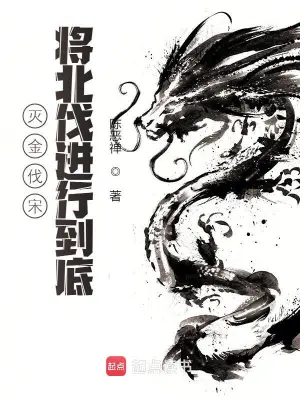
Great Song: From Lowly Soldier to Ruler of the Realm
大宋:从军中小兵到天下雄主
- Status
- Completed
- Length
- 3.7M Words
- Genre
- Historical
- Subgenre
- Song-Yuan-Ming Dynasties
- Updated
- 7mo ago
- Source
- Qidian
Stats
1.2kChapters
0Votes
51.7kRecs
127.6kFans
Tags
Synopsis
More by this author
In booklists 4
The Wind-Gatherer’s Picks: History, Xianxia, Fantasy, and a Little Something Else
Spring and Autumn Music Bureau
13Books6Follows1yUpdated
All Personally Handpicked, One Book at a Time
I do have some standards, so feel free to give these a try.
25Books33Follows1yUpdated
Transmigration Through History: Masterpieces from East and West
Transmigrate to ancient times and build an empire
42Books122Follows1yUpdated
Books I've Followed in 2024
New book. Taste test.
15Books9Follows1yUpdated
Readers also read
 The Corpse Plague of 1916
 An Important Town in the Residual Tang Dynasty
 Chronicles of the Red Mansion
 In the Ming Dynasty, the Days When the Cows and Horses Turned Over
 Simultaneous Transmigration: Becoming a Legend Before the Story Begins
 Tiger Guard
 At the End of the Jin Dynasty: From Human Livestock to Emperor
 Starting with Saving Manchester United
 Myriad Worlds: Starting with Darkest Dungeon
 Han Descendants of the Jin Court
 The Wily Qin
 The Taiping Records
 Chronicles of the Three Kingdoms
Reader comments 43
Google Translate
The title of this book scared me. I thought it was on a bald/jingwei body, and I wondered when did my mother become so courageous?
I know why the author changed the name. He couldn't handle the name "Carry Out the Northern Expedition to the End" because all the good things that were originally helpful to the Northern Expedition were delayed by the author again and again just for his own likes and dislikes, so he changed it to such a nondescript name in hopes of shifting the focus. But to be honest, only internet novices would come up with this name that has no connotation. It gives people a feeling that they don't know what it means. You are indeed passionate about becoming the leader of the world from a small soldier, but the problem is that the focus of the Liao, Song, Jin, Xia and Yuan Dynasties is the Northern Expedition. You don't write about the Three Kingdoms, the Southern and Northern Dynasties, the Five Dynasties and Ten Kingdoms, or the late Yuan and early Ming Dynasties. Why do you write about the Song and Jin Dynasties after Yue Fei, Jin Wushu and others? Isn't it just a Northern Expedition? The little soldiers come to dominate the world. It feels really strong, and it satisfies the previous feeling of bringing the protagonist into killing everyone. But the problem is that the Song and Jin Dynasties are more suitable to focus on the Northern Expedition. Becoming the co-owner of the world is just a matter of getting rich. Only the success of the Northern Expedition can save tens of millions of Han people. If you succeed in the Northern Expedition, you will naturally become emperor, and no one will object. However, if you succeed in the Northern Expedition and fail in the Northern Expedition, is there any difference between you and Wanyan Gou Zhao? Moreover, readers are not new to reading articles before. Everyone likes to read something meaningful. As an experienced reader of historical literature for ten years, why did I like this book before? Because I like to see that during the Song and Jin Dynasties, they could put forward such concise and concise claims as "driving out the Tartars and restoring China" with a sense of time and space, but they could still implement them without being suppressed by the Dukes of the Southern Song Dynasty. I like to watch the Tianping Army in Geng After Jiedu was betrayed, there is still a protagonist who can lead the Han people in the north to fight unswervingly. I like the hero's heroism in leading the generals to capture Wan Yanliang in the Battle of Chaohu. I like the protagonist who can take the overall situation into consideration and let Wan Yan go. Liang then led the Jin Dynasty to split and took the opportunity to calmly lead the Northern Expedition. I like that a hundred years later, Liu Qi, Li Xianzhong, Wei Sheng, Yu Yunwen, Zhang Rong, Li Daocheng, Min Bi, etc., Among the heroes, there can be an unshakable man of steel like the protagonist to lead them to the final victory instead of decadence. I like the hero Liu Dalang who can lead the Han people to victory, not the Han emperor Liu Huai who only wants to become the so-called "co-owner of the world". But looking at it now, the protagonist of this book has lost his heroic spirit in the long-term political struggle, and chose to "wait a little longer" under the attacks of both open and covert attacks. The unbearable movements of all parties have replaced Liu Huai as the protagonist, as if he were reading a "study (and imagination) of the situation in the north during the Song and Jin Dynasties" rather than a Northern Expedition novel. I know this is setting the stage. The Northern Expedition cannot rely on killing and killing. You have to unite the majority and do the basic skills well. I am not opposed to background narrative, but too much focus on the confrontation between the East and the Jin and the main warlords in the Southern Song Dynasty can easily lead to narrative overshadowing. After writing so much, where is the protagonist? In these descriptions, your protagonist is not in the story at all, but is just a backdrop. What about the Northern Expedition? Is the Northern Expedition also a backdrop? What I hate most is the female character creation in this book. I don't know what the author thinks. As the heroine of this book, Wei Rujun is delayed by the protagonist again and again about her wedding, and is delayed by various things, which breaks the hearts of his subordinates. This kind of thing should be done quickly and finalized in Shandong while Geng Jing is still alive. It doesn't take a day. This means that your regime has successors. This is absolutely beneficial to the Northern Expedition, because even if the protagonist's spirit is made of iron, his body is also made of flesh. One arrow can easily cause big trouble. How could Sun Ce forget about his death? At this time, there must be someone who can take over. The young master is also the master and has legal principles. If the protagonist dies tragically without an heir, who will take over? Wei Sheng was inseparable from the Southern Song Dynasty, and Xin Qiji and Zhang Baiyu had little prestige. How could we expect those two boys from the Wei family to become Sun Quan's successor to Liu Dalang? Or is it that the author wants to create a plot where the protagonist dies tragically and Wei Rujun leads the army like Qin Liangyu? It would be better for the protagonist to admit it first. He has to whet everyone's appetite, which is too teasing. I won't say much more about the second female lead, Xu Erya. The writing is also lumpy, and it seems that the two characters were not written by the same person. Oh, let's leave it at this for now. I thought about it and typed out more than a thousand words intermittently for an hour. I don't know how this book came to be like this. In the past, I strongly recommended this book to strangers who asked about the plot. It was right after the victory in the Battle of Chaohu, and I opened the book with a heroic face. I don't know why it has become so disgusting now, especially when the title of the book was changed. This is even more betrayal, betrayal of the readers, betrayal of Liu Dalang, and betrayal of the original intention of the author. After the name change, there may be many loyal readers who are attracted to "From Soldier to Common Master of the World" and are interested in it, but I will never admit that it is the follow-up to "Destroy the Jin, Conquer the Song, and Carry Out the Northern Expedition to the End". The two names may coexist, but they represent different meanings. The protagonist in my heart is always Liu Dalang who can rise up against Lan Shiji, not Liu Huai, who is too timid to deal with even Lu You.
The False Proposition of the Northern Expedition in the Southern Song Dynasty
1. From the perspective of the Zhao and Song dynasties, they did not want to reproduce the drama of military generals wearing royal robes. The national policy suppressed 5 Yang Wen. The military attache demoted Di and killed Yue. , Killing generals, three. The people do not want the Northern Expedition. It is the people who send people and provide food. The gentry and officials are exempted from taxes and service. Paying taxes makes people poor until death. Soldiers are either dead or injured. Therefore, Yang Zhong revolted. Fourth, those who returned to the south from the occupied territories in the north were not welcomed. The people were repatriated. The gentry treated Xin Qiji coldly. The Jin rebels treated the people well. Therefore, the Northern Expedition was a great injustice and could not be accomplished
The Song Dynasty did not deserve to be saved at all, and only a group of literary youths cared about the Song Dynasty.
If Wanyan Gou is not killed, the Northern Expedition will be useless.
This plot is so outrageous. Gold's cheats are flying, the explosives are mature, and the mobilization of troops is so smooth. Even gold can easily suppress it when it splits into things? Liangbi, what kind of super administrator is this? I haven't heard of any such example in history. Forget about the golden pile of loyal ministers and famous generals. After all, there is still some time before the end of history, so I just pinched my nose and recognized them. But after the Jin Kingdom was divided, it could still "divide without chaos" and dispatch troops and generals at will? Isn't this God's perspective controlling the situation? Let's talk about the so-called "survival between cracks" - killing Wei Sheng and forcing Liu and Song to fall out. You act like you're playing Werewolf, as if you can reverse the situation by messing up the situation cleverly. But the problem is: What Liu fought along the way was all his own troops, his own territory, and his own people's hearts. Song was a nominal ally in his company. Are you telling me now that "turning the other cheek" will make Liu collapse? This is too illogical. The main force of Dongxijin has been given away, can I rely on my advice to turn the tide? Song Quan is written like a useless snack, he can't hit anyone, he can choke each other to death in a lot of court dramas, but now he can actually stand up and become the key card to "control the world"? Why don't you write about the miracle again? Why can't we unite with the Jin Dynasty to fight against the Liao Dynasty? How long has it been since Jingkang, and now he feels that he is qualified to take charge of the situation? Should we wait and give the big coward a chance and instantly loyal ministers and good generals emerge in large numbers? A civil war insider is an outsider, right?
Who the hell wants to see how you get killed when you defeat Song Dynasty?
The camera shows this selfless feudal warrior of Daikin every day, how he uses his bad skills to defeat even worse people when faced with an inhumane coward. I really believe you are selling the synopsis. Why did I read your book? Then I can read the History of Southern Ming Dynasty 😊
Why was Xin Qiji not reused in the Southern Song Dynasty? (Change)
Why was Xin Qiji not reused in the Southern Song Dynasty? You may not believe it. When he was 23 years old, Xin Qiji did something earth-shattering. He took fifty brothers who were not afraid of death and took advantage of the darkness to sneak into the camp where fifty thousand Jin soldiers were stationed. They pulled the traitor Zhang Anguo out of the wine table and took him back to the Southern Song Dynasty overnight and beheaded him. After this incident spread, the entire Southern Song Dynasty was in a panic. The common people said that this was a god descending to earth, but the civil and military officials were secretly sweating - this young man who came back from the Kingdom of Jin was afraid that he would cause a big storm in the future. At that time, there were two groups of people sitting in the Southern Song Dynasty court. One group is the Zhuhe group, who are dressed in silk and holding tea cups. These people's ancestors are all veterans who followed Emperor Gaozong of the Song Dynasty to cross the river. Their fields are connected to each other and shops are spread all over the city. They are most afraid of war. They are afraid that the sound of the golden man's hooves will scare their adopted brother Pelican, and they are even more afraid that the increase in taxes will hurt their own pockets. The other faction is the main fighting faction wearing old armor. Most of them are generals who have fled from the north. They talk about fighting back to their hometown all day long. The two factions fought openly and secretly for decades, until Xin Qiji came out of the blue and brought the secret struggle to the surface. This Shandong man has two things that are most terrible. The first one was when he came back from the Kingdom of Jin. His grandfather had also been an official in the Kingdom of Jin. This status in the officialdom of the Southern Song Dynasty was like white rice mixed with sand. Those officials who were born in Jiangnan always glanced at him from the corners of their eyes and muttered privately: "Who knows if he is a spy sent by the Jin people? The second one is that he is so good at fighting that he dared to break into an enemy camp of 50,000 people at the age of twenty-three. Later in Jiangxi The troubles caused by the tea merchants can be settled in three strokes, five divisions and two. This kind of skill is a treasure in normal times, but it becomes a disaster in the eyes of the court who does not want to fight. The emperor has been thinking about it since his ancestor Zhao Kuangyin. "A cup of wine releases military power." The emperor of the Song Dynasty was most afraid of rebellion by his generals. He just scolded and intervened when there was injustice. Once, a certain official's nephew seized people's land, and he directly led the troops to tie him up and send him to prison. The official was so angry that he jumped in the court: "Xin Qiji used money like spreading sand, and killing people is like cutting leeks!" " The court's method of dealing with him was also devious. First he was sent to build embankments, and later he was transferred to manage the tea monopoly. These tasks seemed important, but in fact they were locking tigers in bamboo cages. The most ridiculous thing was that the emperor once summoned him to ask him what to do. He wrote a ten thousand-character strategy for governing the country, but the main peace faction changed it into a children's literacy textbook, and in turn laughed at him: "Master Xin's character is written like a crab crawling, you should read more." "When the Jin soldiers really came to fight, the imperial court hurriedly retrieved him from the countryside. But before the battle was over, the Lord and the faction used trippers to drive him away. Lao Xin was like a firefighter in his life. He would put out the fire wherever it started. But after he put out the fire, he hated him. The ground was soiled. When he quelled the tea merchants' riot in Jiangxi, he used a knife and reduced the tea tax. This was a comprehensive method, but it was said to be a "double-edged sword." He was infamous as "military pay". When he was sixty-eight years old and gray-haired, the golden soldiers and cavalry broke through Lin'an City, the gang leaders and factions thought of him again, but before the old general was fully dressed, he was sent back to his hometown with an edict. Before he died, the old man was still shouting "Kill the thieves" ", I don't know whether to scold the Jin soldiers or the moths in the court. In his life, he was like a copper pea. The steamer of the Southern Song Dynasty court could not be steamed no matter how hard it was steamed. In the end, he just threw it into the stove and burned it to ashes. Those leaders and factions were very proud. When the Jin people came, they kowtowed and proclaimed their submission. , Continue to live their wealthy life, but suffer the common people, they have to pay annual tribute to the golden people, and give red envelopes to corrupt officials. Looking back, Xin Qiji stumbled upon three words: If he was willing to be like other officials, he would accept it. By paying bribes and pretending to be stupid, he might be able to become a prime minister, but he insists on being serious and training elite troops for the Northern Expedition. This has touched the hearts of too many people who make money by negotiating peace, who enjoy happiness by squeezing the people, and who rely on power and cheating. Who among the officials can tolerate him? Even the emperor is afraid that if he really drives away the Jin people, whose descendants should sit on the dragon throne when those old ministers from the north come back? After all, the Southern Song Dynasty is a leaky ship, Xin Qiji thought. He worked as a ship repair craftsman, but the people on the ship would rather sit on the leaky boat and play mahjong than stand up to repair the holes. When the ship was about to sink, they blamed the ship repair people for disturbing their elegance. The child was even more cruel. Xin Qiji was repeatedly shunned in the officialdom of the Southern Song Dynasty, and his ambitions were hard to achieve, so he poured his passion into his poems. >When he retired to Daihu in Jiangxi Province at the age of forty-three, Xin Qiji wrote in "Shui Long Yin: Climbing the Kang Shang Xin Pavilion" that "I looked at Wu Gou and patted the railings, but no one understood me." These twelve words express the sadness of the military commander - the sword at his waist is still there, but he can only slap it. The railings vented anger. The Shangxin Pavilion in Jiankang City (today's Nanjing) has witnessed countless literati and poets, but he, a poet with a military background, left the heaviest sigh here. During the establishment of the Feihu Army in Hunan, he wrote "Po Zhenzi." The scene of "looking at the sword while drunk" comes from his real habit of rectifying the army and patrolling the battlefield at night. It seems heroic, but it is actually bitter - although the Flying Tiger Army is elite, it has never received the full support of the imperial court. Not long after the first poem was completed, he was transferred out of Hunan due to the impeachment of "cruel and greedy". At the age of fifty-six, he lived in Shangrao. It is an accurate time calculation. It was exactly forty-three years from his return to the south in 1162 to his tenure in Zhenjiang in 1205. The "folks shrine and drums under the temple" mentioned in the poem were the sacrificial scenes in Jinzhan District on the north bank of the Yangtze River that he saw with his own eyes. Ji's unique style of poetry stems from his special life experience. He has both scholarly knowledge and military talent; he is familiar with the situation in the occupied areas of the north and is well versed in the officialdom rules of the Southern Song Dynasty. This dual identity makes his poetry "a powerful warrior and a powerful warrior." "The battlefield records, and there is the tragic song of "but ten thousand words of peace and military strategy were exchanged for the master's planting of trees and books". As his disciple Fan Kai said in "Jia Xuan Ci Preface": "A noble man of this generation is proud of his integrity and his achievements. What is the meaning of the lyrics? Zhi Tao writes with ears. "
A joke from the Song Dynasty
In front of the street notice board in Bianjing. A: "Liu Jiedu captured Wan Yanliang alive, which is quite the legacy of Wu Mu!" B: "Much stronger than General Yue." A: "Why?" B: "He is not patriotic."
Thinking of the Northern Expedition in the Southern Song Dynasty? If you think about it, if you want to do the Northern Expedition in the Southern Song Dynasty, you have to change the court of the Southern Song Dynasty. Otherwise, it is just a dream. Unless you have overwhelming strength and can compete with the Southern Song Dynasty and the Jin Dynasty, how can the Jin Dynasty be destroyed? Destroyed by the Song Dynasty and Mongolia...