Ming Dynasty 1566: Regent of the World
大明1566:摄政天下
- Status
- Completed
- Length
- 2.3M Words
- Genre
- Historical
- Audience
- Male
- Subgenre
- Song-Yuan-Ming Dynasties
- Updated
- 1y ago
- Source
- Qidian
Stats
Tags
Synopsis
Reader comments
In booklists 6
Web Article Scorer
Novel creativity rigorous logic profound thoughts 90 masterpieces, 80 excellent works, 70 excellent works, 60 grains and fodder


His Story
Pray here and interesting souls will come.


Afraid of Accidentally Deleting, Keep a Backup
Mark it, don't lose it

I Can't Stop Wanting It, I Wish I Could Let the Authors Write Novels 24 Hours a Day
There are always a few novels that make you want to bind the author to the computer 24 hours a day, and you will not be fed if he does not update. There are always a few authors who are lazy and inexperienced, but you love this one, and you delete the book list countless times and add it back countless times. There are always a few books whose authors are not famous and whose works are not famous, but you always want to keep reading. There are always a few novels where you are obviously a poo
Personal Food
Some of the ones I've seen are pretty good.
Historically Biased
It's okay to look at it yourself
Readers also read
 Fu Ming 1627
 Red Mansion: Start Escaping and Farming from the Equipment Bar
 Northern Qi, Sage Khan
 After Lying in Bed for Three Years, He Was Forced to Help the Han Dynasty
 If You Are Already an Adventurer, Who Should Work Hard on Your Own?
 When I Was in Hongwu, I Started by Rebelling Against the Party.
 The First Uncle of the Ming Dynasty
 The Artist Begins in Prison
 Traveling at the Same Time: Great Love to the Heavens
 Daming: I, Yan Maoqing, Really Smoked
 The Fierce Ministers of the Song Dynasty
 My Portable Ming Court
 Ming Dynasty Admonition Minister
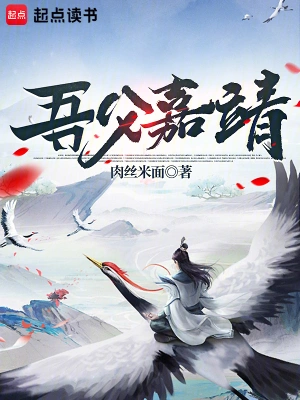 My Father Jiajing
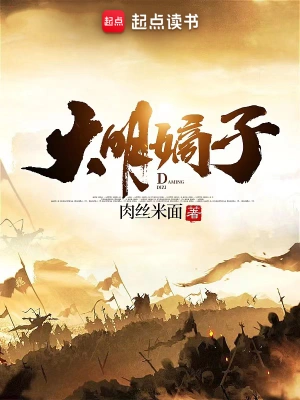 The Legitimate Son of the Ming Dynasty
Taoist priest, it's a pity to be honest.
It was not until the Jiajing period that the Ming Dynasty was brought back to normal. During the reign of Emperor Wu Zong, the number of refugees in the Ming Dynasty had reached six million, causing peasant riots to follow one after another. In the ninth year of Jiajing, an inventory of the land occupied by the emperor's relatives, military generals, nobles, and civil servants began. 57,400 Hectares were found near Jingcheng alone. This is 5.74 Million acres of land, which can accommodate 200,000 refugee households. It was also during the Jiajing period that the "Regulations on Suspensions and Vassals" and "Regulations on Preferences and Exemptions" were promulgated. The former targets the vassal king, and the latter targets the clan. In the "Regulations on Preferential and Exemption Rules", officials of the first rank are exempted from grain for twenty dan, and officials of the first rank are exempted from grain for twenty ding. No matter how many fields an official owns, a first-grade official can be exempted from up to twenty shi of grain, and a family can be exempted from up to twenty dan of labor service. This caused many officials to be dissatisfied with Emperor Jiajing, who caught fire three times on his way back to his hometown in Huguang for his southern inspection tour. It was Lu Bing* who carried Emperor Jiajing out, otherwise Emperor Jiajing would have been burned to death in the fire. These officials refused to save him and even made sarcastic remarks. They said that Jiajing was a Huodexingjun and would not be burned, so he would not let others save him. During the southern tour, the palace caught fire three times. It is not justified if someone did not set the fire deliberately. The Humble Administrator's Garden* covers an area of two hundred acres. Wang Xianchen*Hongzhi*sixth Jinshi. It is estimated that the construction of these two hundred acres of gardens will cost at least four million taels of silver. The Grand View Garden in Dream of Red Mansions cost at least 2-3 million taels. The Yiyuan Garden was built by Gu Wenbin of Ningshaotai Road, Zhejiang Province in the late Qing Dynasty on the site of the old residence of Wu Kuan, the minister of the Ming Dynasty. The current area is 6,270 square meters, which is not very large. It cost a total of 200,000 taels of silver that year. Calculate how much it will cost to build 200 acres of Humble Administrator's Garden. 4 Million is too low. How could a politically frustrated imperial censor Wang Xianchen get 4 million taels to build a garden? The Ming Dynasty also had Yu Garden, Tan Garden, Humble Administrator's Garden, Liuyuan Garden, Wufeng Garden, Huiyin Garden and so on. The Old Summer Palace and the Summer Palace were built by the Qing Dynasty. The scholar-bureaucrats of the Ming Dynasty built gardens at their own homes and did not allow the emperor to build gardens. Emperor Jiajing kept talking about building three major palaces During the Jiajing year, he could not sail to the Western Sea because of strong obstruction by civil servants, but the sea ban could still bring a lot of financial revenue. One sentence: "The military treasury, half of which was taken from the market." (Gu Yanwu's "Book of Benefits and Diseases of Counties and Counties in the World") is enough to explain the financial revenue obtained from the sea ban at that time. After the opening of the sea, smuggling was legalized, and the taxation was just a matter of money. The emperor paid 10,000 to 30,000 taels to send to the emperor. In fact, the policy of opening the sea only enriched the local wealthy people, and the country did not get the benefits of the sea opening. Hu Zongxian killed Xu Hai and Wang Zhi*, these people were dogs raised by the nobles, and Hu Zongxian was killed because of this. Hu Butang* was dedicated to the Ming Dynasty, but was killed by the Donglin Party in the prison! Hu Zongxian had successfully quelled the Japanese pirates, and there were no foreign enemies anymore. He should have been treated as a great hero; Hu Zongxian was not wanted by the emperor, and he issued orders to defend Hu Zongxian many times. As a result, Xu Jie* had Hu Zongxian put down. Assassination Jiajing used Gui Calyx to implement a whip*, controlled the Weaving Bureau to make money, used Hu Zongxian, Qi Jiguang, and Yu Dayou* to clear up the Japanese pirates and clean up the sea routes, and used strict Song collected the tax [commercial tax] and promoted Taoism to attack the Confucian civil servants. The civil servant group tried several times to kill Jiajing. The palace maid strangled him and set him on fire. Jiajing was lucky and his trusted aides came to save his life, so he survived. Brothers Lu Bing and Jiajing grew up playing together. Xu Shen was personally promoted by Jiajing and was Jiajing's confidant. During the palace fire and the Renyin Incident*, no one else saved Jiajing, so he relied on his cronies to save lives. Once Jiajing was unconscious in a fire, and no one came to save Jiajing. If his brother Lu Bing hadn't rushed into the fire and carried Jiajing away, Jiajing would have died. Later, Jiajing changed rooms to sleep every day, but still couldn't escape, and was almost strangled to death by the palace maid sent by Queen Fang. He was saved by the imperial doctor Xu Shen, who was promoted by Jiajing himself. This time Jiajing did not dare to live in the Forbidden City and went to Xiyuan. Later, Jiajing burned Queen Fang to death and publicly beheaded the chief minister Xia Yan* before it calmed down for a while. Zhu Houcong* was grateful to Xu Shen. He was appointed as the crown prince's Taibao and the Minister of Rites, and gave him a generous gift. However, not long after, the gentleman became ill and said: "I can't bear it anymore. The palace has changed, and I will kill myself if my own medicine is not effective. Therefore, I am frightened and palpitated, which cannot be cured by medicine and stone." He died. Xu Shen is dead. Died of shock. Xu Shen, the imperial doctor who saved Emperor Jiajing, died of fright a few months later. It was outrageous. It is seriously suspected that he died in revenge of the group that wanted Jiajing's death. Which imperial physician from Hongwu to Zhengde was frightened to death? The history makers really did not miss any opportunity to blacken Jiajing! Compare: Xiaozong Hongzhi* did not have any bad habits, he went to bed early and got up early and died in his thirties; Zhengde, who was in excellent health and could ride thousands of miles to the north, died in his thirties; Jiajing took heavy metal elixirs every day and had various bad habits, but he lived to sixty. How is it~; the reason is that Jiajing's spicy hands destroyed The Imperial Hospital, and not just once, completely eliminated the possibility of drug assassination; However, the assassination did not stop; it was just that the method changed. For Jiajing, it was obvious when it was dark; first there was a fire in the palace, but no one was able to save it. Fortunately, there was Lu Bing; the latter was a palace maid. Fortunately, he could not tie the knot, and one of his own people turned against him; I don't know about the others that were not recorded in the history books, and they were probably indispensable Jiajing was so shrewd, and Zhengde was killed. Of course, such an obvious thing would not happen. Unable to find out; "Chen Jingfa was sent to the Nanjing Pure Army, Zheng Hong was sent to Liaodong Guangning Guards, Wu and Wu nearby guards were all sent to the army, Tong, Haogu, Bangzhi, Zhi, Jie, You and Ying were all dismissed from their posts to serve the people" The above people directly killed Zhengde, Chen Jing was an eunuch, and the others were imperial doctors. Jiajing originally wanted to behead him, but because Yang Tinghe* stopped him, he was just dismissed from the army; the situation of Wu Zong and Xiaozong was exactly the same. Jiajing regiment destroyed Tai Hospital Compare Liu Wentai* and killed him The emperors were all demoted; how big of a difference is that? I told a joke: "There are no conspiracies in the palace, and there are no conspiracies in the officialdom." Jiajing was in poor health since he was a child. He could not give birth to a son for more than ten years after he ascended the throne. He was burned by fires and burned by palace maids for more than ten years. Well, he just took drugs and heavy metals when he had nothing to do; how could he live a long life? Lu Bing knew that he was on Jiajing's side. After Jiajing's death, the civil servants would definitely take revenge on his family. In his later years, he befriended Zhang Juzheng and married the civil servants to avoid being exterminated by the civil servants. In the 29th year of Jiajing, the Tatars besieged the capital. It was these Shanxi merchants and the general soldiers, governors, and governors of Shanxi, Shaanxi, and Xuanfu who let in. Why did they send Anda to Beijing? Because Jiajing closed border trade. Once these places were closed, there was no way for money to come in. Since the Tang Dynasty, the Silk Road has declined. There are deserts outside Jiayuguan. Datong, Shanxi, and Xuanfu are the gateways to trade with the west. There are no iron pots on the grassland. I answer that so many armored cavalry are sold in these places. Salt, iron, tea, firearms, Franco machine artillery*, etc. Can all be traded. Jiajing closed these openings and cut off their financial avenues. These people had no choice but to join forces with Anda and let the Mongols surround the capital to scare Jiajing. The reason for the palace change was that Jiajing reduced palace expenses and reduced the salaries of palace maids and concubines. Even the Taoist priests in the clan were reduced. The money saved subsidized the soldiers on the front line, which is why there was such a thing as palace maids. Renyin Palace Change* You don't understand the internal logic. You are a palace maid and you will kill the emperor? Your nine clans don't want it anymore? Guo Xun died in October of this year, and the palace change broke out in December. The queen arrived first and said that the emperor was dead, and then called the Jin Yiwei. Wuding Marquis Guo Xun Jiajing wanted to commute his sentence, but the civil servants disagreed. Jiajing still had no way, and finally Wu Dinghou died in prison. The military power was incomplete and he could not even protect his subordinates Zhang Cong* (the founder of Yiyi whip method, Zhang Juzheng's idol) and Wudinghou Guo Xun died, as well as Jiajing's biological mother passed away. He didn't go to court (for meetings) until Jiajing, and the incident with the palace maid was just an excuse. Did Jiajing still work hard after becoming a polished commander? Jiajing's biggest problem was that he didn't work as hard as he did in his youth in his later years. Hai Rui couldn't stand the fact that Jiajing gave up on himself in his later years and wrote a letter (the content mentioned that His Majesty worked hard in his youth) hoping that Jiajing could regain his original aspirations. Hai Rui: Your Majesty is talented and decisive, and has great wisdom. You can be like Yao and Shun, Yu, Tang, Wen, and Wu. You can be compared to Emperor Xuan of the Han Dynasty with his energy and magnanimity, Taizong of the Tang Dynasty with invincible prowess, Emperor Xianzong's ambition to quell tyranny, and Renzong of the Song Dynasty with his benevolence and forgiveness. To name just a few, Your Majesty Youwei, in the early years of his accession to the throne, eradicated the long-standing shortcomings and rejuvenated the world. Here is a summary: such as admonishing one to nourish the heart, fixing the crown and footwear to distinguish them, removing the statues of sages and sages, taking away the power of eunuchs inside and outside. Those who know it say that if you help each other and get people, peace is just around the corner Economically, in the ninth year of Jiajing, a whip law was implemented. The annual tax surplus exceeded 5 million taels of silver, and the Ming Dynasty's commodity economy flourished. Militarily, Jiajing established the national policy of defending in the north and attacking in the south, and drew SSR-level cards such as Qi Jiguang and Yu Dayou*. The great cause of the Anti-Japanese War lasted from the 25th year of Jiajing to the 45th year of Jiajing, until the battle of Wanqiaoshan completely wiped out the Japanese pirates, ending the two hundred years of Japanese pirates since the early Ming Dynasty. The Portuguese occupied Tuen Mun Island on the Pearl River and declared sovereignty. Jiajing ordered that any Portuguese ship encountered be bombed and sunk. So the Battle of Tuen Mun broke out. Portugal suffered repeated defeats and was finally annihilated. Until the fall of the Ming Dynasty, Western colonialists did not dare to go to Chinese territory to declare sovereignty. Culturally speaking, during the reign of Jiajing, Ming culture flourished. "Romance of the Three Kingdoms" and "Water Margin" were published during the Jiajing period, "Journey to the West" and "Jin Ping Mei" were also published during the Jiajing period. During the Jiajing period, a great debate on truth broke out, with a great quarrel between psychology and Neo-Confucianism. The result of the great discussion was the rise of private private schools among the people. There is also the science of opera and painting, with a bunch of big guys gathered together, such as Li Shizhen's "Compendium of Materia Medica" (medicine), Li Kaixian*'s "The Story of the Sword" (opera), and Xu Wenchang's "Ink Flowers" (painting), all of which bear witness to the free and open cultural atmosphere at that time. As for Jiajing, every family is clean, which is even more of a joke. They have been mobilizing troops in the southeast for twenty-five consecutive years, and the money has been lying in the sea. Fighting has always been a waste of money, but making peace with the Japanese pirates will not waste people and money. In the later stages of the Han-Hungarian War, Emperor Wu of the Han Dynasty even came up with such deceptive things as white deer coins in order to maintain military expenditures. Jiajing and Emperor Wu of the Han Dynasty had a go at it. In the later period, they minted large sums of money to collect private wealth for military expenditures. Fortunately, all parties played triumphant songs to withstand the tense situation, and the victory concealed the conflicts between the parties. Despite this, Emperor Wu of the Han Dynasty and Jiajing fought until the last one was sentenced to sin, and the other was scolded for having a clean family. Shouldn't the Xiongnu be exterminated? Shouldn't the Japanese pirates be exterminated? What's wrong with that? Also, civil servants dared to raise the salt tax from Jiajing in June 4th. With Qi Jiguang's military expenditure, Jiajing had to pay a double salary to feed these passing gods of wealth. Jiajing has no ability to use money. Is Qi Jiguang planning to use love to generate electricity? He has no money. Do you think Qi Jiguang can command those big soldiers? As for arranging Jiajing's extravagance? He himself said that I only have eight sets of clothes a year and build two Taoist temples. I was scolded for taking the wealth of thousands of people with one person. Jiajing said that I was scolded by Hai Rui as a fool because of this hobby. I was wronged! How much did it cost to build two Taoist temples? It seemed like what I was building was Afang Palace. Three melons and two dates were not enough. Qi Jiguang recruited troops and spent half a year in the south! All monarchs who have accomplished something have a common hobby - hammering wonders one by one. One hammered the Arc de Triomphe, the other hammered the Victory Column, and Jiajing hammered the two Taoist temples to celebrate?
In addition to rebelling, the best ending for the protagonist is to open the sea and become the king. Otherwise, the powerful ministers will be liquidated sooner or later. The descendants of the protagonist after his death will always decline, and someone will add insult to injury. Therefore, it is best to advocate vigorously opening up the sea, and then granting the king of the sea a different surname.
[Use bz archway theory to evaluate 1566] Hu Zongxian: Saint. People in his hometown built three archways for him, and he spent his whole life supporting the archways. Yan Shifan: Pure bz, don't want archways, enjoy the joy of being bz, and spurn your archways. Yan Song: A combination of a sweet wife and a bz. When Jiajing asked him to be a bz, he became a bitch. The only fragments of the archway that were left were eaten by Yan Shifan. Zhao Zhenji: The bz is worthy, and the memorial arch is also established, but it is known as selling art but not selling oneself. Gao Hanwen: A top student wrote a resume and submitted it to J College. He thought it was an ordinary part-time job for college students, but he didn't expect that he wanted to be a BZ. Hai Rui: Men who don't like BZ are carrying artillery to destroy J Courtyard. Wang Yongji: When he was doing odd jobs in the hospital to save his life, he fell in love with the man holding a cannon at the door. Zhang Juzheng: I don't care about the archway or whether I want to be a BZ. My firm goal is to keep J Hospital open for a few more years. Xu Jie: female bronze. The deputy leader next to the leader endures the humiliation in order to kill the leader and avenge the leader. Gao Gong: You can also be a bz in the j courtyard, watch the archway. Zheng Michang: A sophisticated bz, no need for a memorial arch. Everyone thought he made a lot of money by being a bz, but in fact he didn't. He Maocai: The cuckold husband above. Jiajing: The world's most earth-shattering BZ wants to build the world's most earth-shaking arch, and also forces the people in the world to recognize him as his mother.
Just learn it
The author is truly talented and knowledgeable, and the policies he writes point directly to the root cause of the Ming Dynasty's demise. Natural disasters, corruption, foreign enemies, dynastic cycles, party strife, etc. Are all plagued by scabies. The key lies in the two words of politics and economics. As for other methods, although they are useful, they are just useless. They have no practical significance and cannot make people wise. They only make people ignorant, arrogant and deceived. I have read some books like "Silver War" and "Pricing Power" before, but I always feel that my understanding is not very clear. I hope the author can recommend a few books on the economy of the Ming Dynasty. It is best to combine the development of Western economic development at that time and explain clearly the reasons why the global economic center moved westward after the Yuan Dynasty from the perspective of commodity circulation, rather than the so-called ideological emancipation and Renaissance in the West. Of course, it would be best if the author could explain this reason clearly in this novel.
In ancient times, there was only one fate for powerful officials, which was death, so you don't have to regret the results of this book, which are already pretty good. Since there is a need for reform, the focus of the reform must be to resolve land annexation. Will the landlord class and the bureaucratic class be willing to spit out the meat they eat? Can you handle it alone?
Daming weightlifting champion😡
🙂🔨😆
Wanshou Emperor
The gathering of three flowers at the top is an illusion, and the soaring clouds under your feet are also unreal - Jiajing
Prince Zhu's nuclear fission will take a toll on the finances, no matter how much money is spent, it won't be enough.
Gee, I haven't seen it yet. Anyone who has read it can tell me how it was written?
Let me tell you my personal opinion first, please don't comment if you don't like it! Can the powerful ministers of the Ming Dynasty end well? Can't understand, can't relate. In my impression, the Ming Dynasty was strong and should indeed die. From the time Zhu Yuanzhang killed Liao Yongzhong, Zhu Yuanzhang was definitely defined, and the Ming Dynasty's image of being mean and unkind was also defined. Of course, what I say is very one-sided. Liao Yongzhong and Liao Yongzhong He has been fighting for Lao Zhu all his life and has never fallen behind. This is Zhu Yuanzhang's absolute confidant. Although he, Liao Yongzhong, deserves it for not doing good things, he still can't escape the liquidation after so many years after the incident? Doesn't this mean that Lao Zhu is mean and unkind? Speaking of Zhu Di, I don't know what to say, I know he is a hero! Zhu Zhanji roasted his second uncle directly, and Zhu Qizhen really left people speechless. He was an overseas student, and it felt ridiculous to be unable to complain. The key point is that brothers Zhu Qiyu and Zhu Qizhen, how did they treat Yu Qian and Yu Shaobao? Yu Qian, a famous official through the ages, actually left behind the most ironic words about the Ming emperors and ministers. Yu Qian also really managed to save the building from falling. At that time, the land of North China, which Yu Qian had military power in, was about to fall. Although there were not many mobile phone troops to defend the capital, there were still many people. As a result, Yu Qian was directly killed as soon as Zhu Qizhen was restored. This was just asking for glory and being humiliated! Let's talk about the key point but who is Zhu Houcong in this book? He is a born politician with no political responsibility at all. He fought for 20 years after the Great Etiquette dispute, and in the end, 7 of his 8 sons died. How tragic is this? It's rare in ancient and modern times, both at home and abroad. Why didn't anyone protect his son? The behavior of people in and outside the palace depends entirely on other people's guessing. If you guess it right, you do it, and it is the emperor's ability to do it. If you guess it wrong, you still have to do it. If you do it wrong, it is your responsibility, and you have to be punished. Others charge for the emperor. The emperor feels that it is useless and is afraid that the civil servants will retaliate and hand over the person who did it to appease the public's anger. Who will do things for the emperor? Here is the name of the famous anti-Japanese general Hu Zongxian! It is true that Hu Zongxian is a strict party, but if others are really fighting against the Japanese, if they cannot protect them, then what is the use of the emperor? Then came the Wanli Emperor Zhu Yijun. Look at how he treated Qi Jiguang. Zhang Juzheng knew that Qi Jiguang died at home without money for treatment. Zhang Juzheng had his coffin opened and his body whipped. His son was starved to death. He was humiliated for seeking glory! Seek glory and get humiliation! How ironic? At the end, look at Emperor Chongzhen Zhu Youjian. He is a typical example of using people to go forward and not using people to go after. I don't want to say it again. This kind of mean and unkind people who have been passed down from one generation really allows people with foreign surnames to be powerful officials without being liquidated? I can't understand it, please tell me how it was written by someone who has read it!
Zhang Juzheng cannot avoid being liquidated even after his death. What measures does the author take to prevent the protagonist from being liquidated after his death?
The Ming Dynasty is mean and grateful, but the Zhu family is mean and ungrateful. You can be an official in any dynasty, just don't be an official in the Ming Dynasty. What happened to Zhang Juzheng and what happened to Yu Qian? You have to say that Huo Guang, a powerful minister, did not go too far than Zhang Juzheng and Yu Qian. Well, he even poisoned the queen and his family. Didn't he still enjoy his old age? Emperor Xuan of the Han Dynasty didn't pull him out to whip his corpse. Zhang Juzheng was pulled out directly to whip his corpse.
It's funny to see you arguing about this. Who is the ultimate beneficiary is the key. The emperor is poor, the people are poor, the nobles only have two or three kittens, big and small, a lot of people below the clan, princes, and kings starve to death, the army is also impoverished, and the only ones left are civil servants, gentry, princes, Shanxi merchants, maritime merchants, and salt merchants, so it is clear who is causing trouble in the world.
It's wonderful, but it's still hopeless to rebel in the late Ming Dynasty.
Jiajing was a good emperor. Do you think he didn't want to go to court? If he goes today, he will be killed by the Donglin Party tomorrow.
Jiajing Zhongxing is the strongest in the later stage. It's a pity that history has been changed beyond recognition by the Donglin Party and the Jurchens. The bad ones are said to be good, and the good ones are said to be bad (Those who criticize me in the comment area, how many history books have you read? Have you studied it? You can argue as you like, I will ignore it)
Rebellion
Stop licking me, I will be a helpless man in the future.
At the beginning, all the family property and even his father's wife and maids were sold. This is still a historical novel, maybe even a political struggle novel, not an epileptic novel. This level of abstraction is also unique. . . Are the readers of Qidian already so crazy?
I think the author writes with great care. It's rare to see an author who covers everything. Some authors are not willing to cover everything, but they lack the strength. But I think writing like this can also be very tiring, because I think too much. In fact, I just need to relax a little, and it's a bit too tense. It would be better to combine work and rest.
The origin of Japanese pirates. There are very few real Japanese ronin, and some are thugs of maritime merchants. The reason is very simple. The famous Japanese people have no navy at all, and the Ming Dynasty did not have one. All the ships coming and going to Japan are southeast merchants and pirates. They may have discovered the weakness of the Ming Dynasty. Doing business is not as fast as robbing them directly... From the actions of the Japanese pirates, we know that it is impossible without internal agents. As for who the internal agents are, it depends on different people!
Those who write about the Ming Dynasty will basically ignore the biggest bug of the Yongle Dadian. Even if they write about it, they will not describe it positively. In fact, it is the most writeable. Even if you edit it, a lot of history is made up.
Dressed beast
After reading Ming Dynasty 1566, whether it was Zhang Juzheng or Yan Dang, who was the high-ranking official of Xu Jie, they were worthy of these four words, especially the struggle at the beginning to change rice into mulberry. I knew that the officials in the Ming Dynasty were quite beasts, but I didn't expect that they were worse than beasts for the sake of profit.
Come on, author
I finally saw the update. Two monthly votes have been cast. I'll wait and see for the author's update.
A friend said that Jiajing was almost killed by the civil service group several times.
I'm more curious, what civil servants dared to openly confront the emperor, or several times. There were not many emperors in history who were assassinated like this. Were the emperors of the Ming Dynasty so weak?
It's great to know that this is a 1566 fan, right next door!
The Ming Dynasty Next Door I am Zhu Gaoxu, a great man who founded the country overseas. Where did I say it was a film and television drama about time travel and trash drama about the glory of the Ming Dynasty, and I was permanently banned (⊙x⊙;)
What to say about this book! It cannot be said that it is unrealistic. The value is just like dreaming after drinking, and being drunk in the dream.
All monthly tickets are provided. I think it looks very good at the moment. I hope it can maintain the standard.
Come on, author
I found that there were actually 19 monthly votes, so I voted for them all.
After finishing this novel, can it be made into a TV series? It was very interesting to watch at the beginning.
I felt pretty good when I first read this novel. I wonder if it can be made into a TV series after it is finished. There has been no Ming Dynasty time-travel drama in China for a long time. If this novel can be made into a TV series, I believe it will be popular all over the country. Although I just started reading this novel, it is really well written, the pictures are lifelike, and it gives people a very strong visual impact. The domestic film and television drama market is seriously lacking in this type of film and television drama. After all, there has been no Ming Dynasty time-travel drama in China for a long time. If this novel can be made into a TV series after it is completed, I believe it will definitely become a big IP and completely popular across the country.
Recently there is a new book by Jiajing, "Jiajing: I am Capital"
Sweet potatoes only weighed about 200 kilograms when they first came in. After hundreds of years of cultivation, they weighed over a thousand kilograms.
There are so many ghosts in the comment section of Ming history-themed novels
They also started role-playing. Person A pretended to be a fan and posted wisdom posts, Person B rebutted, and the topic was hot and trendy and followed the trend. They all pretended to be serious people and didn't know how to change. They were all waiting for the technical guidance to feed them, right? 🤭