


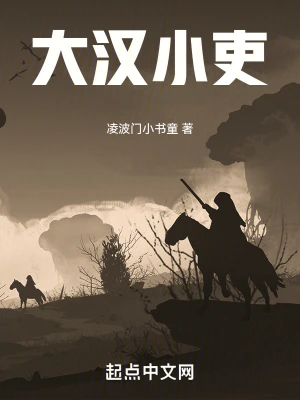
A Low-Ranking Han Official
大汉小吏
- Status
- Ongoing
- Length
- 2.8M Words
- Genre
- Historical
- Subgenre
- Qin-Han & Three Kingdoms
- Updated
- 9mo ago
- Source
- Qidian
Stats
810Chapters
0Votes
110.7kRecs
118.3kFans
Tags
Synopsis
More by this author
Readers also read
 Germany: 1914
 Great Ming: His Father Is Useless, So He Must Summon the Founding Emperor
 A Literary Master in Ancient Greece
 Seizing the Direct Descendant in the Red Mansion
 Hong Kong Films: In Wo Hop To, Uncle Deng Begs Me to Take Charge
 In the Hongwu Era, Starting Out as a Rebel
 The Prosperous Longwan Era
 I’m Not a Suit-Wearing Thug, I’m a Chameleon Actor!
 In Shrouding the Heavens, I Rule All Worlds from a Chat Group
 The Fierce Minister of the Great Song
 The Taiping Records
 How Grand Is the Adviser!
 1789: Bringing Chinese Laborers to Conquer America
 I Am No Han Emperor Hui
Reader comments 29
Google Translate
I can't figure out when it became politically correct to discredit Emperor Wu of the Han Dynasty. They said that Emperor Wu of the Han Dynasty went militarily and defeated the Han Dynasty, but they never mentioned that Emperor Wu of the Han Dynasty destroyed more than 130 countries and tribes, including Yelang (Guizhou), Dian (Yunnan), Pyu (Myanmar), Minyue (Fujian), Nanyue (Guangdong, Guangxi and Vietnam), Dayuan, Korea, etc. In his lifetime. It can be said that except for Jizhou, Qingzhou, Yuzhou, Xuzhou, Chongzhou and Liangzhou, the remaining eighteen provinces in the Han Dynasty were pacified by Emperor Wu of the Han Dynasty and Emperor Xuan of the Han Dynasty. They said that Emperor Wu of the Han Dynasty liked to kill heroes, but Wei Qing and Huo Qubing died of illness, Li Guang committed suicide in shame and anger after getting lost, Zhufu Yan, Sang Hongyang and others died of old age, and Gongsun Hong, Jiang Chong and others were killed or plotted against or involved in the prince's case. It can be said that as long as you did not rebel during the reign of Emperor Wu of the Han Dynasty, you could live well. Even when Li Ling fell to the Huns, Emperor Wu of the Han Dynasty treated him with a state funeral. Of course, when Li Ling became the son-in-law of the Huns, he even risked his life and wrote a letter to Emperor Wu of the Han Dynasty that his home was confiscated. They said that Emperor Wu of the Han Dynasty only respected Confucianism and brought disaster to China. Confucianism is just a theory. If the people who learn it are not good at it, should they blame the school? Besides, Emperor Wu of the Han Dynasty only respected Confucianism, which was Confucian skin, Dharma, and Taoism. Master Fu Yan and others dared to carry swords and go into battle to kill the enemy. Later, the Confucian scholars whose water was too cold were not worthy of carrying their shoes. Can future generations blame their ancestors for not taking over the world?
The protagonist will do whatever it takes to get to the top. He can be a cruel official or a pioneer of reform. In the end, he will definitely not end well. The day of success will be the day of life and death.
Without a backstage and average luck, he would have died long ago. Most of the great people in history were very lucky, and those who were unlucky all died.
Not many people have read this kind of novel about being a feudal emperor's dog. If you look at the top 10 historical novels, either the protagonist starts as an emperor or rebels.
Emperor Qin, Han Wu, Tang Zong, Song Zu
First of all, Qin was in the Spring and Autumn Period and the Warring States Period. One thing that everyone recognized was orthodoxy. Emperor Zhou was still recognized by everyone at that time, but he himself failed, which led to disputes among the princes. Qin's destruction of the six kingdoms was not only the destruction of the country, but also the annihilation of all the princes recognized by everyone. This caused public outrage, but he himself was also orthodox, so Qin Shihuang was also recognized as orthodox. But Liu Bang was different. Liu Bang was born as an ordinary citizen, so the people's support was behind Liu Bang. He was also from Chu, and he also had the White Snake Rebellion in building momentum. Therefore, Liu Bang's establishment of the Han Dynasty was actually not stable. Many places only knew about the Qin Dynasty but not the Han Dynasty. Secondly, the laws of the Qin Dynasty included a lot of corporal punishment and death penalty, but although the Qin laws were strict, there were no big problems, so the Han Dynasty followed the Qin laws. Even the two emperors Wen and Jing of the Han Dynasty did not make major changes to the Qin laws. Even Emperor Wu of the Han Dynasty followed the Qin method of killing enemies and gaining meritorious service. Emperor Wu of the Han Dynasty was recognized, in fact, more because Emperor Wu of the Han Dynasty marched south to reach the same territory as Qin Dynasty and opened up the Silk Road section, allowing the world to understand Chinese civilization. The term Han is also a recognition of China by neighboring countries and Western countries. The same was true for the Tang Dynasty later, and the Song Dynasty also achieved it because of maritime trade. Genghis Khan even shocked the world by conquering Europe, making foreigners think that all China was Mongolian. Looking back at the history of the Han Dynasty, we have to admit how difficult it was for the Han Dynasty to last for 400 years. Even the Tang Dynasty lasted less than 300 years, and the Song Dynasty lasted for more than 300 years. As for the Qin Dynasty, some people complained that it lasted only 15 years. In fact, it was not the case. It took more than 600 years for the Qin Dynasty to unify the world from the princes. This is not simple.
You can tell from the introduction that it's an obscene article. You're welcome to come and slap me in the face.
Here it comes again, this type of person is always indispensable in the comment section of historical novels. They don't care whether your writing is good or not, whether it makes sense or not. The first thing they said was: The protagonist is so strong, the emperor will kill him. This type of words will appear in the comments section of basically every historical auxiliary article where the protagonist is an auxiliary minister. According to what you said, no one should have assisted the emperor in history. Historical novels should no longer have auxiliary texts, time travel should be regarded as a rebellion. They are all time travellers, and they still don't know what to do and what not to do? They are all time travellers, and they still have political disagreements with the emperor. Then confront him? You've already read other people's books, so isn't it someone else's business how to write them? If you want to read rebellion articles, you either have to write them yourself, or you can go and read them! It's not like there are no rebellion articles. There are many books that are mentioned in the introduction as supporting articles, and the outline and other directions are already set. What kind of presence do you come to the comment area to find?
We cannot evaluate historical figures from today's perspective, because today's standards contain their influence, and without these influences, they would not be today's standards. We cannot stand on top of giants and laugh at giants who are shorter than us
Some people think it is easy to rebel and become emperor
Regardless of the background of the times, the economic foundation, the intelligence of the people, production capacity, or the development of the current era, anyone who can say this is a brainless person.
A mature comment section should have idiom solitaire. The first one: Iron tree blooms!