


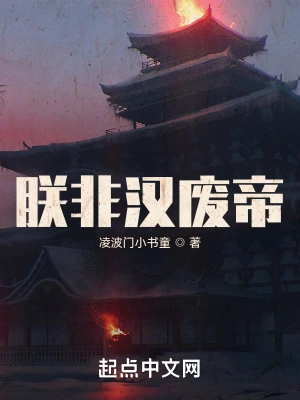
I Am No Han Emperor Hui
朕非汉废帝
- Status
- Completed
- Length
- 1.7M Words
- Genre
- Historical
- Subgenre
- Qin-Han & Three Kingdoms
- Updated
- 2y ago
- Source
- Qidian
Stats
Tags
Synopsis
More by this author
In booklists 5
Shennong Samples Every Herb O_o
If you're out of books to read, take a look. My tastes are pretty niche and all over the place, so I can't guarantee everyone will like these. P.S. If there's a novel you want to read but are afraid might be toxic, recommend it to me. I'm a modern-day Shennong, the legendary taste-tester!
Historical Novels
Recommended historical novels, both rigorous and entertaining, all set in ancient dynasties
Huangliang in the New Kitchen's Reading List
Some books I've read and personally thought were good.
The River of History
Five thousand years of culture, and so many, many regrets.
Historical Fiction Recommendations for a Reading Slump
History is magnificent. The heroes and great leaders of every age have been brought to life in different styles by different authors, inspiring countless generations to come. Their stories urge us to rise above ourselves. When it comes to great figures, look no further than today.
Readers also read
 Daming: Asking for the Throne at the Beginning, Lao Zhule Went Crazy
 My Father Is Wen Tianxiang, and We Win the Battle of Yashan from the Start
 My Only Method: I Will Add More Points to Become Stronger at the End of Ming Dynasty
 A Guide to Building Civilization in a Primitive Tribe
 Great Tang: You’re All Forcing Me to Become Emperor!
 Northern Qi: My Father Is Emperor Wenxuan
 The Great Ming Dynasty 959
 I Studied Abroad in the Modern Era
 My Father Is the Yongzheng Emperor, So Am I the Qianlong Emperor?
 War, Court Intrigue, and Lap Pillows: Austria’s Divine Destiny
 The Wily Qin
 Is the Son of Heaven Born to Rule?
 1789: Bringing Chinese Laborers to Conquer America
 A Low-Ranking Han Official
Reader comments 37
Google Translate
When the Duke of Zhou feared the message, and Wang Mang was humble and did not usurp it, the sanctity of the Emperor of the Han Dynasty had been initially established through Emperor Wu's manipulations. The legitimacy of Huo Guang's own rule also came from Emperor Wu's diagram of Duke Zhou, and the previous generation of Han officials could usurp it. There are almost no successful ones. The remaining power of Emperor Wu and the inertia of the Han Dynasty for nearly a hundred years are still there (common ministers, old and new military nobles? For the time being, there are military nobles... They really only recognize the old Liu family). Huo Guang himself has another wave of great fortunes. After Emperor Zhao, All the emperor needs to do is wait for Huo Guang to die and not allow the rights of the Huo Guang family to continue (the descendants are indeed fw), and it is almost impossible to lose (I am not very clear about the military power at this time. According to the history books, when Huo Guang was around, it can be said that he had complete control over the palace ban, but he always Death can perfectly proclaim the emperor and immediately capture them all, including local military power, Great Wall troops and garrison troops. It can only be said that the core of the Huo Party is only Huo Guang). Finally, Emperor Wu is really awesome and has a really good eye for people. He is worthy of the words of the teacher Qinhuang and Hanwu, and is the template of the top emperors.
Popularization of knowledge, the rank of nobility in the Han Dynasty.
Explain the logic of what the protagonist does. It's just whether inventing various wood tools will attract attention. Scholars, farmers, industry and commerce, workers and merchants are the lowest, especially workers. What Liu He did was trivial compared to the emperor's art. If you don't feed dead soldiers, develop the army, and communicate with important officials in the DPRK, you won't violate taboos. In ancient times, the princes and kings who repaired books, played carpentry, grew vegetables, and played around would not arouse any suspicion, and would even be dismissed. In addition, Changyi Kingdom and Chang'an were thousands of miles apart, so they would not be too conspicuous. If the protagonist is like the later Emperor Xuan of the Han Dynasty and really sticks to the end and does nothing, or if the protagonist is like Liu He in history who plays nonsense to the end, then I don't need to continue this story. The novel only discusses the one in 10,000 possibility, not the 100% inevitability.
I wrote a few thousand words of comments, received a phone call, and it was gone.
As the title says, 🙂 is not in the mood to write a long review. The large land area, complex terrain, and differences in cultural customs all make it naturally suitable for separatism. Qin Shihuang unified the country, and then used violence to enforce "books with the same text, and cars with the same track" (these six words are just pronouns, in fact, the things that need to be "the same" are all aspects), which proved to be a failure. In the early Han Dynasty, there were still feudal princes. After Emperor Gaozu and Empress Lu, most of the princes with different surnames became princes with the same surname. However, the nature of feudalism did not change. Emperor Wen and Emperor Jing continued to weaken the princes with the same surname. For example, during Emperor Wen's period, princes and kings often died "suddenly", so Emperor Wen took advantage of the situation and divided his country among his sons. It was not until Emperor Wu's time that the local princes were not strong enough to confront the central government head-on, so the "Tianfa Order" could be officially implemented. However, administrative unification has been completed, but the large land area, complex terrain, differences in cultural customs, and the resulting tendency of division and separatism still need to be resolved. At this time, Dong Zhongshu proposed "deposing hundreds of schools of thought and respecting Confucianism alone." Anyone who has learned about Confucianism should know that "Confucius is righteous and righteous, Meng is righteous and benevolent 😎". Confucius and Mencius have many different views, not to mention other Confucian schools. I think Brother Dong is "a fusion of hundreds of schools of thought, all called Confucianism". Brother Dong takes "filial piety" as the starting point and foundation (especially In agricultural civilization, "filial piety" is an unavoidable point regardless of cultural customs). Under the promotion of national power, it is easy for people from different regions and different cultural customs to have the same "national identity." From then on, after four hundred years of the Han Dynasty, ideological unification was completely completed. Even though the Jin, Southern and Northern Dynasties, the Five Hus and Sixteen Kingdoms were in chaos for hundreds of years, the core was still "great unification." Comparing "Western" history, the Roman Empire also faced the same problem, so after the division and civil war, when Constantine reunited Rome, he also tried to solve this problem. Coincidentally, he also found Christianity at that time, and then supported Christianity with the authority of the emperor to convene the Council of Nicaea, at which Christianity was first "unified" and then promoted throughout the country. From then on, "the gods were deposed and Christ alone was honored." Unfortunately, this measure was implemented a little late. With the arrival of the "Five Hus and Sixteen Kingdoms", the Roman Empire also fell into division and chaos, and it was never unified again.
Huo Guang really made a bad start. In the past, everyone followed Zhou Gong as an example. After Huo Guang, everyone followed Wang Mang as an example. Huo Guang was the ultimate example of a powerful minister. Deposing an emperor is like eating and drinking.
Does the author still want to let Huo Chengjun continue to be the queen after Huo is overthrown, and let the future prince be a prince whose grandfather and uncle are rebels? What the hell is written
The protagonist traveled through two years and invented one new thing after another. Greatly highlighting his abilities, will Huo Guang still choose the protagonist to be the emperor? The choice of who to choose is highly accidental. The protagonist does so many things every day. Huo Guang is not stupid. He really knows how to choose the protagonist?
I haven't watched it for a long time, and I just realized today that I am still obsessed with the plot of the Huo family, and I am also drunk. There are only two ways to deal with the Huo family. Either Huo Guang honestly surrenders his rights and becomes a wealthy man, or he kills the whole family and leaves one or two dead to show the emperor's magnanimity and serve as the target of subsequent rehabilitation. This has corresponding precedents in Wen, Jing, and Wu. Being criticized for being timid like this now can only be said to be self-inflicted. It is not that you can maintain political balance by taking the overall situation into consideration, but the emperor is the overall situation. Moreover, the emperor's authority had already been established at that time, and it could not be abolished just by saying. Moreover, although the power of the clan was greatly weakened at that time, it was still not displayed locally.
I still don't understand that the author is Mao's admiration for Han knight-errants. Do you like the kind of scoundrels you co-author?
Suggestions to the author: There is no need to kill Huo Guang. The protagonist can treat him as the emperor's teacher and ask him for advice whenever he has something to do. Thinking about Yongzheng, he would be exhausted to death😃After all, Huo Guang is quite old