


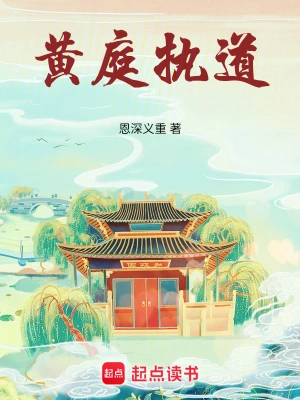
The Way of the Yellow Court
黄庭执道
- Status
- Completed
- Length
- 477k Words
- Genre
- Cultivation
- Subgenre
- Classical Xianxia
- Updated
- 2mo ago
- Source
- Qidian
Stats
Tags
Synopsis
More by this author
In booklists 8


Beyond the Mainstream: Great Reads and Promising Newcomers
Older books and promising new stories that may not be widely known but have the potential to be excellent.
The Scripture Pavilion
Fish leap through the sea, while flowers bloom in a world beyond.

Novels for New Readers
I recommend new authors' books with sound values and reasonable logic. If you like ruthless, decisive protagonists, don't click in, or we might end up arguing over our clashing values. Most importantly, you'll lose the argument.


A Personal Selection of Miscellaneous Reads, Mostly with Long Reviews
The novels here span a variety of genres, covering almost every section. Most were added when they were new, so they're not very long. Most of my reviews are long-form. I share a reader's perspective on the strengths and weaknesses I noticed while reading.


Transmigration Reading List
Transmigration novels worth reading.


Books with Sane Values
No womanizers, no brainless characters, and the characters have sound values. All kinds of genres. I’m a seasoned reader of ten years and test every book for poison, keeping only the good ones.


My Reading List
Books I’ve loved over my twenty years of reading. I never get tired of them.
New Book Recommendations
Promising new books worth checking out.
Readers also read
 A Daily Divination: The Immortal Venerable of Longevity
 Immortal Husk
 Two Worlds: Becoming an Immortal After Failing to Establish My Foundation!
 Heaven's Curse
 A Record of a Mortal's Journey to Immortality: I Earn Immortality by Grinding Achievements for Rewards
 Immortal of Laoshan
 The Mountain and River Gentleman of Qingdu
 Lord Evolution
 A Record of a Mortal's Journey to Immortality: Choosing Hextech in the Chaotic Star Sea
 The Supreme Golden Palace
 A Flying Sword Seeking Immortality
 Cultivation: Beginning with the Five Viscera Contemplation
 A Bard Makes His Way in Showbiz
 I'm a Trainer in One Piece
 A Succubus Sorcerer Makes It in Showbiz
 Cultivation: Starting with a Druid's Calling
Reader comments 32
Google Translate
The first few chapters are actually a good direction to write about self-cultivation and character cultivation. Of course, the writing level of the author is very high and it is very energy-consuming. But there is really no need to write that kind of kindergarten plot. The pig's feet are stupid and stupid to fit the logic of the plot. It's like a person makes a lot of excuses for something and must do it. For the protagonist of the novel, is it a disease? A simple article principle, for example, if I obtain the force in Star Wars, I use the force to crush the hearts of stupid and stupid people, and kill a person effortlessly, my heart will also be unburdened, will it require a crazy number of excuses and justifications to fill the word count? If you write novels in college, just pretend that I didn't say anything about cigarette money!
Sure enough, Xianxia is still suitable for the author
It can be seen that the author has an in-depth understanding of Taoist knowledge. The author of the last book wrote about the changes that Xianxia Kung Fu will bring to the Western fantasy world. However, it may be because the author is used to Xianxia writing methods and did not deal with professional issues well. The Druid book is also a Taoist priest in the skin of a Druid. I personally think that the author is not in a hurry to jump out of the comfort zone. Who says that you must jump out of the comfort zone to become a great god, like Actors, take my favorite iPartment actors as an example. Some people choose variety shows to become famous, such as Chen He, and some choose to jump out of their comfort zone and perform in different styles, such as Deng Jiajia and Wang Chuanjun. I can't say who is right or wrong between the two. In terms of potential, the latter may indeed be higher, but the same is true for writing novels. As long as everyone sees your name and sees that the genre is Xianxia, they will think it will be good. Then you are also a successful author.
I saw Chapter 60 and made a complaint.
1. What is the meaning of Yuyang's existence, just for the sake of water? 2. What is the world view? 3. As a time traveler, shouldn't the male protagonist understand the importance of hugging his thighs better? Why are you so sure that you will live in Peach Blossom Land based on only 2 books? 4. I am very disgusted with the routines of self-created exercises. It's not that it can't be done, but that you, a newcomer, can do this. The entire civilization of cultivating immortals has been developed for so long, just to wait for you?
Good looking, recommended. Hope it will be released soon
The Eight Parts of Vajra in the Eight Parts of Vajra Gong is not a Buddhist term
Let me state in advance that I will not discuss the exercises practiced by the protagonist. I only posted this post in response to some people's posts copying Baidu Encyclopedia without actually understanding it, and some people directly defining Babu and Vajra as Buddhist terms. The Eight Parts of Vajra Kung Fu, what a coincidence, I happened to practice this two years ago (although I only practiced it for a while), and there are videos online. Eight Parts does not refer to the Eight Parts of Heavenly Dragons, but eight chapters in it: Part 1: Putting both hands on the top of the head to benefit the triple energizer Part 2: Strengthening the kidneys and waist with hands and feet front and back Part 3: To regulate the spleen and skin, one lift is required Part 4: The left liver and right lung are like shooting eagles Part 5: Looking back at the feet to remove heart disease Part 6: Five labors and seven injuries, looking back Part 7: The phoenix spreading its wings and body strength Part 8 Don't think it's Babu Tianlong when you see Babu. You can know the meaning of Babu even if you search the video, but some people preconceptionally think it is Babu Tianlong. As for Vajra, Vajra Gong is something to strengthen the body. The word Vajra means that the body is as strong as gold and iron. Taoist Master Zhang Zhishun (who has passed away and was the honorary president of the Hainan Taoist Association and Quanzhen Longmen Zongzong) who practiced this and spread the Diamond Kung Fu lived over a hundred years old. Book friends who have time can look for the video of the Diamond Kung Fu he recorded. In it, the old man in his 90s can still do this thing. He is very energetic. I practiced following the video at that time. In order to prove that this Vajra is really not the so-called Buddhist Dharma Protector Vajra, I will give you a few examples, including those of orthodox and unorthodox Dao Zang: "Huainanzi·Main Technique Training": If the fire is hot, water will destroy it; if the Vajra is strong, it will be destroyed by fire; if the wood is strong, it will be cut down with an ax; if the water flow is contained, it will be suppressed by earth. "Compendium of Materia Medica·Shibu·Diamond": Explanation: Ge Hong's "Baopuzi" says: "Vajra comes out of Funan and grows on the stone at the bottom of the water." "Tiangong Kaiwu·Tao Xie": It was pre-fired in a separate kiln to make a tile circle in the shape of a diamond circle "Book of Jin·Zhi·Chapter 4": Liang Zhe said that the energy of King Kong in the West is strong as a beam, so it is named Yan. The Orthodox Taoist Canon No. 1 "Shangqing Foreign Publishing House Qingtong Neiwen": Go down two billion miles from the golden chestnut swamp to get the diamond swamp. Such as this, Vajra does not refer to the so-called Buddhist Vajra Protector. The original meaning is that gold and iron are strong and hard. Why do some people insist on saying that Vajra is a Buddhist term? Do you understand Taoism better than Taoist Master Zhang Zhishun? Are you more authoritative than orthodox Taoism? Even if I bring up these examples, can he still insist on saying that Vajra is a Buddhist term, without being able to analyze specific issues in detail? Besides, one has to say Quanzhen in order to use Buddhist vocabulary. Zhengyi does not have it. Let me give you another example: The Orthodox Dao Zang Zhengyi's "The Sayings of the Thirty-Generation Celestial Master Xu Jing Zhenjun·Volume 1": Reincarnation in the three realms... Therefore, there are national rewards of heaven and hell, and there is no end of reincarnation in the six paths. Look at this sentence, if I take it out alone, would you think it is a complete Taoist scripture? If you deprive King Kong of his original intention, do you also want to deprive this stranger from the Northern Song Dynasty of his Zhengtianshi? Having said this, if you still think that Vajra and the Eight Parts are Buddhist terms, and that Zhengyi does not have the phenomenon of the convergence of the three religions, and cannot use Buddhist terms, then I wish you a happy life, and please firmly believe that you are right. I and these classics are all nonsense.
The writing is much better than the one written by Druid, and the author's skills already have the potential to compete with the great immortals. The article is beautiful, and the content is re-created based on a large amount of Taoist culture. It is really enjoyable to read. In today's world where fairy spirit stones, levels, and spiritual energy are so popular, it is simply a breath of fresh air!
I just saw Chapter 100
Listeners, why did the protagonist suddenly run away to become someone else's teacher? I have been looking forward to the protagonist slowly running the gym, carrying forward the Taoism, and turning the gym into a blessed place. Why did he inexplicably go to find someone to become his disciple? Or a person I met in the mountains and didn't know anything about in detail.
Buddhism is divided into eight parts: heavens, ghosts, gods and dragons. "Collection of Translation Names." "Eight Parts": "One day, two dragons, three yakshas, four gandharvas, five asuras, six garudas, seven kinnara, and bama huluaga." Because among the eight parts, the two parts of heaven and dragon are the first, it is also called the eight parts of tianlong Vajra, a Chinese vocabulary. Pinyin: jīn gāng. Definition: (name) A powerful warrior who is called the Buddha's attendant in Buddhism. He is named after holding a vajra (ancient Indian weapon) Do you think Taoism will use this name to name the true practice? The Eight-Part Vajra Gong is just a fake exercise mixed with several ancient Chinese fitness tricks. Don't be fooled 😁
The more I read, the less I understand the meaning of the character "Yu Yang". I find that he is responsible for many conflicts, and the protagonist's feelings for him are very strange.
It's only 30 words. I misread it at first glance and thought it was 300,000 😰