


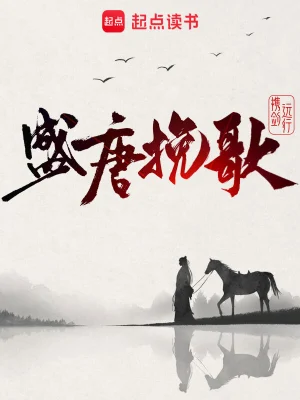
An Elegy for the Prosperous Tang
盛唐挽歌
- Status
- Completed
- Length
- 3.7M Words
- Genre
- Historical
- Subgenre
- Jin-Sui-Tang Dynasties
- Updated
- 1y ago
- Source
- Qidian
Stats
Tags
Synopsis
More by this author
In booklists 55
Explore more →

Mining Gold from a Sea of Poison
I care most about logical storytelling and well-developed characters. Absolutely no harems.

Personal Reading List
Books I'm currently reading or have finished. Qidian's recommendations have a hard time catering to different tastes, so I hope everyone will make more lists of their own. That way, we can share good books and stay out of reading slumps.

Unofficial Rankings: A Cure for a Reading Slump
Level 5 authors and great writers on the path to excellence, along with promising new books that are about to make the grade.
Must-Reads for a Reading Slump, There's Something for Everyone
See if there's anything you like
Lost Manuscripts in a Sea of Clouds
A good book is like a cup of tea, worth savoring slowly. What a delightful read!
Qingshan Yijiu's Reading List: Every Book Read with Care
Fellow readers, let me know what you think of these books. I love reading. Reading makes me happy!!!
Books I'm Testing
These are based on my personal tastes. Most are books I dropped after reading the beginning, so don't click if that bothers you. Rated out of five: 1 means I dropped it right away; 2–3 means it has some bright spots or no major flaws, and made me want to see how the plot unfolds; 4 means it's good in every respect and has standout qualities.

My Reading List
Books I like
Nurture Newcomers, Seek Xianxia Gems, Avoid Toxic Reads
I’ve been an avid reader for ten years and only read the best, though of course, the best books that suit my taste.

Only Recommending Books I Enjoy (I Read Popcorn Fiction)
(If you find a good book that isn't on my list, please recommend it in the comments. Being short on books is miserable.) I only recommend books I enjoy. I only recommend the ones I'm following, so please keep in mind that the list may be out of date. If I show up as a trainee reader and a book has been here for a long time, that means I stopped reading it. I never care much about prose or plot when I read novels. That's too much effort. If I enjoy it, I'll keep reading; if I don't, I won't, no m
Picking Pearls from the Sands of the Ganges
This list is simply a collection of stories I like. They do not even have to be complete, as long as they have something that shines. Though I have grown older in years without gaining much wisdom, I have made peace with myself. Because those who are alive still have to keep moving forward. Sometimes I think about the outlines of stories I would like to write, but my prose is poor and I have no time to write them. It is a great regret.
Old Qin People Never Talk Nonsense
Everyone has different tastes, so I'll keep my recommendations concise and lay out the pros and cons clearly to help you quickly find books you'll enjoy.

Some Books I Think Are Pretty Good
Only books with steady updates and more than 150,000 words. I'm a veteran reader: I enjoy overpowered wish-fulfillment stories and can also appreciate literary little pieces. I've read all kinds of genres on Qidian.


Wind and Cloud Awards
A collection of all the best books out there!

All Great Reads!
The best picks from a decade of reading
Mugong Rendao's Personal Reading List
Just my personal taste. Please don't hate on it.
A Varied Taste, No Limits on Genre
A personal reading list, based mainly on my own taste.

Novels with Incredibly Handsome Male Leads
Favorites
A Book Fit Only for the Heavens
Good reads
Tower of Eternity
Sticking with it
Hidden Gems and Promising New Reads
All great reads
Great Books With Strong Plots and Writing
I have pretty high standards for both plot and writing. I don't like overly simplistic or mindless stories. I hope you enjoy this selection.


Comedy Highlights
Humor takes center stage
New and Noteworthy
Highly recommended
Readers also read
 The Corpse Plague of 1916
 Chronicles of the Red Mansion
 An Important Town in the Residual Tang Dynasty
 In the Ming Dynasty, the Days When the Cows and Horses Turned Over
 League of Legends: I Just Turned Pro, and You're Saying the League Is Dead?
 The Wei and Jin Dynasties Don’t Bow to Zhou
 How Grand Is the Adviser!
 Simultaneous Transmigration: Becoming a Legend Before the Story Begins
 Starting with Saving Manchester United
 The Ming Dynasty Behind the Mask
 The Taiping Records
 Han Descendants of the Jin Court
 A Survival Record of the Northern Dynasties
 Governor, Please Stay
Reader comments 50
Google Translate
Twelve questions about the historical deduction after An Lushan's death
If An Lushan dies, the first question is, have the conflicts at the bottom of the Tang Dynasty been eliminated? My answer is no. Because whether An Lushan rebels or not, whether he dies or not, will not affect the collapse of the Renthutiao. Second question, will Li Longji and the upper class dignitaries of the Tang Dynasty change their extravagant life style? My answer is no. History books have proven this to us. The extravagant desires of the feudal ruling class are not affected by the rise and fall of the dynasty. The third question, will the financial situation be better? Still not. After answering these three points, we have a basic understanding that war will still break out. The fourth question, who caused the war? My answer is that he has a similar background to An Lushan, or it comes from people from the ethnic groups and regions that supported An Lushan the most when he rebelled. The fifth question is, after the war breaks out, will those who once supported An Lushan support the new rebels? My answer is yes. Then the sixth question is answered. That is, how does the new rebellion compare with An Lushan in terms of the territory it occupies, its general strategic guidelines, and its economic and military strength? The answer is pretty much the same. The seventh question is, what impact does the little butterfly of the protagonist and the big butterfly of his father have? My answer is an extreme pasting on the one hand, and a pragmatic overthrow on the other. Why? Judging from the previous article, Fang Youde thought that just killing An Lushan and his group would be enough. His behavior is also very extreme. So what will happen to him when someone still rebels? The first is anger, and the second is that based on his existing knowledge, he promoted famous people like Guo Ziyi to suppress and deposed some incompetent ones. Is it even possible that when he thought everything was fine, new rebels attacked Chang'an, and he died defending the city with his ideals shattered? This had a great shock to the protagonist, prompting him to complete a psychological transformation. The protagonist rises through the ranks during the war and eventually leads the reform of the Tang Empire. But reform must be realistic. I've read too many time-travel history books, but the reform is still the same old thing, and I'm tired of reading it. It is nothing more than new ideas, new technologies, and stronger productivity. The eighth question, if you don't write about reform, what should you write about? I think it's a farmer! In ancient China, there were scholars, farmers, industry and commerce. Starting from Shang Yang's reform, the Qin State's farming war system, to the peasant uprisings in the past dynasties, to the concept of rural areas surrounding cities. There are farmers everywhere. Since the author wants to write a good online article and grasp the historical context, he cannot avoid farmers. The ninth question, how to write about farmers? What aspects do you write about farmers? Writing about farmers, one cannot avoid the land. There are nothing more than two issues surrounding land, one is the issue of production and the other is the issue of production relations. For production issues, more advanced composting technology, more advanced tools, and more productive species can be introduced. What about production relations? Clan, powerful, aristocratic family. How should the protagonist deal with it? The ninth question is internal, and the tenth question is external. Do you want to expand overseas? Fuso, Goguryeo, Ryukyu, Nanzhao. And overseas. In fact, historical articles seem to be very samey because everyone writes about these aspects. But the author wants to write something different, so I want to know how the author will write the external part. These are digressions, let's come back to the issues of war, land and production relations. The Anshi Rebellion was a turning point in the Tang Dynasty's transition from prosperity to decline. The eleventh question, what about the damage caused by the new rebels? As mentioned earlier, the new rebels' economic and military strength in the territory is similar to that of An Lushan. Without the protagonist, the damage to Tang should be similar. But now we have introduced the variable of the protagonist. Assuming that the protagonist is very powerful, this is nonsense, the protagonist must be powerful. So will the protagonist reduce these injuries? The answer is yes, otherwise what else would I write? New problem, how to reduce it? The answer is still the relationship between land and production. My idea is this. First of all, the protagonist should have an opportunity to travel to the Tang Dynasty, get to know the scenery of various places, and know the living conditions of farmers in various places. I really want to see this. Second, the protagonist accumulated military merit and fame in this war and carried out his revolution in the Tang Dynasty. Originally, I wrote it casually in the description of this chapter. I posted it in the book circle at the invitation of the author. I originally wrote it two days ago, but maybe I wrote too much later. I don't know if it triggered sensitive words, so I have to rewrite it again now that it is under review. Personally, I like to see things in more detail and dig out new issues, such as the energy crisis problem that the charcoal seller reacted to. I like to read more about the customs and customs of various places in the Tang Dynasty and the living conditions of scholars, peasants, industrialists and merchants. After thinking about the above ten questions, they are still a bit empty. Let me talk about two more points. If you want to develop the economy, I think there are two actual policies, one is logistics and the other is specialty products. Logistics is very important, but it is rarely mentioned in historical novels. Most of them are about hegemony, palace battles, and wars. But logistics is definitely a top priority for economic development. Logistics is divided into two points, one is the road and the other is the vehicle. If you want to get rich, you must first build roads. Only when the roads are built can the inland economy be revitalized and people can exchange what they need. But few historical writers write about this. Most of them write about water control in the Yellow River, but they rarely mention road construction, how to build it, and how long it will be. The second vehicle is that in ancient times, cattle, horses, and mules were used to pull carts in the inland areas. There were many water systems in the south, and bulk goods were pulled by boats. Not only did the cargo capacity be large, but additional fodder was not consumed. The next step is to develop steam engines, internal combustion engines, and build trains. Second point, specialty products. Why do we say specialty products? First of all, an important role of commerce is to exchange what is needed. Each region has different resource endowments. Even modern economic development requires the development of regional economies based on local conditions. In ancient times, people largely relied on the sky for food. They relied on whatever was in the soil for food. Only by writing these two points well can Datang's economy be revitalized.
The elegy of the prosperous Tang Dynasty, a historical deduction under a large framework, and a practical but not flashy under the small plot
The prosperous Tang Dynasty, an elegy. The prosperous Tang Dynasty refers to the period from Kaiyuan to Tianbao in the Tang Dynasty when the economy, politics, culture, and military reached its peak. Elegies are songs sung before people are buried after death. The meaning of the title of the book is clear at a glance. This book rarely adopts a father-son double-travel mode. His father Da Fang wants to save the Tang Dynasty, and his son Xiao Fang also wants to save the Tang Dynasty (Dongwu). However, the father and son have differences on the great issue of how to save the Tang Dynasty. Dafang believed that saving the Tang Dynasty should start from the military, supplemented by human resources, so Dafang punched the Northeastern minorities, subdued the Bohai Kingdom, destroyed the Turkic Khanate, Zhennanzhao, killed the Yang brothers and sisters and An Lushan, so that the Tang Dynasty would never lose its splendor; Xiao Fang had a different idea. Military alone could not save the Tang Dynasty, so Xiao Fang decided to focus on economic and military , Political multi-faceted approach, the first step is to build the Hexi smuggling network, revitalize the economy of the northwest region of the Tang Dynasty, and reduce the burden on the central finance; the second step, after Li Heng's death, support Li Shen to sit on the throne of the prince, and order the kings to enfeoff around Chang'an, and build a new royal family balance system; the third step, attack the most threatening regime around the Tang Dynasty, the Tubo Empire, and collapse their control over the Longyou River The offensive in the West caused internal strife and the inability to deal with external disputes in the short term; the fourth step was to establish the Jiaozi economic system of the Tang Dynasty, replace precious metal currency and silk currency with paper currency, and leave a large amount of materials vacant as social wealth; the fifth step was to establish farming in the Ili Valley of the Western Regions, making it a new logistics point in the Western Regions of the Tang Dynasty, using Issyk-Kul Lake as waterway transportation, which greatly Relieving the logistical pressure in the Western Regions, step six... (Not yet completed) The author uses two people to leverage history and push the details of history to turn in another direction. While the overall framework of the prosperous Tang Dynasty remains unchanged, small changes are made, making this prosperous age more and more dazzling like fire cooking oil. The Tang Dynasty is convinced by all parties, glorious and great, and stands proudly in the east of the world. At that time, Ji Ge, a world-renowned artist, politician, writer, and Emperor of the Tang Dynasty, commented on this: "My Tang Dynasty is really invincible in the world!" "Comparable to Yao and Shun? Yao and Shun are, after all, human beings, and I am a god, an omnipotent god!" "The Tang Dynasty is a kingdom of gods on earth, and I am the god who rules the Kingdom of God!" The author's plot development within the broad framework is very sophisticated, and shows the characteristics of outstanding historical writing. It still maintains the trend of exerting force even when it is about to reach the critical point of two million words, and there is no lack of stamina. However, it is not difficult to see the author's lack of writing power in the writing. He cannot describe many scenes and shots well, and the descriptions of dialogues and narrations appear "too white". This is also a major flaw of the author. Without gorgeous words, he cannot build up the magnificence of natural treasures. However, the description of the characters is just right, and the characters are not written in a way that is both necessary and necessary, changing day by day, inconsistent in appearance, and useless. This can be regarded as making up for the shortcomings of poor writing, so you don't need to be surprised to see words and phrases that are too close to modernization in the text. The problem is that the author does not have the ability to write better. Please forgive me for the protagonist's somewhat saintly behavior from time to time. For example, the protagonist went all the way to find coal to solve the problem of high energy for the people of Chang'an, or when he was the governor of Shazhou and defied the autumn defense order regardless of his own interests, it can only be said that he wanted to be a human being. , I have read two books by the author. The protagonists both choose to be a modern person with some empathy in the ancient times when class exploitation was severe. It is too difficult to help him, and he will not be like the Holy Mother. He will help him if he can do it easily. If he is successful, he will help the world, and if he is poor, he will help. The idea of being independent is well reflected in the protagonist. He is also trying his best to help the Tang Dynasty overcome the difficulties and seek political power in his position. He still has the most basic professional qualities. He knows that he can marry the daughter of the emperor's adopted son and become an assassin in a state before he is ten years old. History, but at a young age, he served as the governor and military envoy of a place. Who gave him the power to oversee the military and political affairs of a place? He would not do such ungrateful behavior as eating other people's food and smashing other people's bowls. Of course, it is hard to say how long the person who gave the food would live. As the plot progresses, the deeper historical context of the entire Tang Dynasty is revealed, the complex social form of the Tang Dynasty is analyzed, and the relationships between the characters and the political, military, and economic situations are sorted out. Thanks to the author "Taibai"'s writing style, even a person like me who has little reading can understand it. ——"Elegy of the Tang Dynasty" reveals to you the Tang Dynasty, the granary of abundant resources and treasures before the Anshi Rebellion, which was equivalent to the fire dragon burning the granary. Finally, congratulations to Lao Jian for his "Elegy of the Tang Dynasty" being so popular. It's not easy.
Reading here is really about learning skills. I feel like after time travel, every day I think hard and remember the governor, I will be reincarnated in vain. The art of war is like a god. Traveling through the Three Kingdoms, I read Meng Qi's new book, what a joke! Listing the cases of the governors should allow Cao Cao to burn his books. Really, before I saw the sword, I thought I was born Zhuge Liang. It was too easy to travel back in time to just fire, fire, attack and ambush. When I saw the governor, please stay, I really felt the helplessness and admiration of the ancient enemy generals who looked at Sima Yi and Zhuge Liang (exercise version) as a wise general. Damn it, how could the other side use troops like this? If it were me, I wouldn't be able to defeat the opponent even if I open the map. This elegy of the prosperous Tang Dynasty is even more vivid, with bright and dark lines intertwining, bringing more possibilities to the book. Especially beautiful. When the protagonist uses his methods, his methods are "new" and "clever", and the imaginative strategies are all taken from the long history by the author. They are completely ancient methods but in my opinion "incomparably novel". After all, it is a self-created plot from beginning to end, not a "remake" like other authors' plot cakes written by other authors, covered with a layer of chocolate jam. The most important thing is that this novel plot is really practical, so the sense of immersion is particularly realistic. Unexpected strategies and policies have achieved natural results. The feeling of the plot is really a hearty burst of waves of exhilaration. As a Shennong who has taken countless "ancient medicines" and "precious medicines", it is true that the jelly grass written by a rational author is of the "magic medicine" level. You can read both books, and they will allow you to regain the joy of "new" reading and relive your second life.
Let's talk about the history of taking the blame and looking at development. Management of fruit and place management can be simply compared to planting trees. There are those who plant trees and those who pick fruits. Because the process is long, there is a high probability that they are not the same person. The sweet fruit you eat may be because the tree planter planted it well, the fruit picking time may be good, or you may eat a bunch of rotten fruit. But as long as the fruit is sweet, everyone has contributed and everything is in peace. Let's focus on the situation when the fruit is not sweet. There are many angles on how to divide the pot at this time. A relatively simple and crude way of dividing the pot is: this fruit picker is not good enough, so I will fire him and step down. It is indeed possible that the fruit is picked too early and becomes sour, or that it is picked too late and rots. There is also a more rational point of view: Is there something wrong with the fruit transportation process? Or left it for too long? The most difficult thing to discuss is the issue of planting trees. Are the seeds chosen correctly? How were the pests treated during the growth process? These problems often require long-term testing, and when it comes to testing, everyone will focus on the person who picked the fruit. Whoever picked the fruit or detonated the powder keg will take the blame. If you view history as a continuous development, then your focus is different from that of ordinary people. Then you have to search for a lot of information that most people do not pay attention to to confirm your point of view. Because of the information gap, it is very difficult for such a point of view to be recognized. This is where the truth is difficult. The biggest difference between people is the way they think. There is a big difference between patting one's head and long-term planning. This is why some people say that choice is more important than hard work, so I think choice is linked to your vision, which includes the information you collect and your analytical ability. This also proves that people can only make money within the scope of their own cognition. An Lushan may not be the fruit picker. Let's define him as the tree cutter. So the question is, are there only disadvantages to cutting down trees? There is a concept in forestry called canopy closure. Too dense and tall trees may block light and suffocate relatively low vegetation. At this time, it is necessary to manually cut off the branches of the big tree, or even cut down some trees. Of course, some people cut down trees too roughly and hurt many innocent people, but they indirectly made the entire forest live longer, even a little bit longer. Of course, his original intention may have been to cut down the forest, but his strength did not allow it, and he died of exhaustion after only cutting half of it. What I mean is that what you want to do subjectively may end up with the opposite result. Then what the public sees is only what you want to do subjectively, and the conclusion drawn by the public is that if you don't cut down the trees, the forest will live longer, because this is obvious. But experts sometimes give conclusions that are contrary to our common sense
A little bit of my humble opinion on dropping my book bag (please improve it)
I have read many books, starting from the history of Tang Zhuan's pitfall, and my thinking ability has become stronger and stronger. From the initial comfort of saving the turning point, this book is not so much about time travel, but more about witnessing and struggling. There are too many lucidities, which will always break my dreams. However, this book is true, and it is the bloody reality written by Lu Xun. It is not just the class that determines the position, but also a true people's view of history. The general trend of history will never depend on individuals. When going upstream, there may be forks and crossroads, but there will never be a way back. Every life living behind the dim pages is the ballast stone of this big ship. History has never belonged to nobles and nobles, let alone emperors and gods. Maybe it will The master of the ZTE is just a reflection of the social body. Each people is small enough, but large enough. The unfilled stomach and shrinking land are natural enemies. The hungry mouths will devour everyone who does not know their own capabilities. The heroic view of history that you and I are obsessed with will always be an unquenchable fire in our hearts. They can be generous, they can be Yun Zheng, they can be Fang Xing, they can be Wei Heifu, it doesn't matter who they are. People who can't fill their stomachs can't see the dawn of the future. So among the common people, they are Zhang Xun who bucked the trend. Kaishen of 45 years will sooner or later be burned by Chen Sheng and Wu Guang, lighting up the light of reality. But for novels, we must recognize their artistry, so their popularity is not without reason. This is also the reason why I like this book. Its artistry lies in being able to truly reveal the core of history, the real general trend, and spread these in a popular way. Great, I have to say, this is a rare work of art. Here, I briefly record my insignificant subjective feelings in words. If it goes against the opinions of friends, please bear with me. Water has various flavors, but people are different. No matter how high or low, everyone has their own opinions, and the Tao is in it. {"TopicId":"933770901756641280","TopicName":"What are the truths that reading novels can make you understand"}
Seeing that the author wants to move the capital and immigrate, I will say more. To solve the problem of population migration, the passive price is human lives, and the active price is money and food + human lives. It is difficult to achieve the purpose of immigration by relying on economic incentives alone. On the contrary, it will easily lead to emotional abuse and achieve half the result with twice the effort. Modern people can defraud subsidies and guarantees, make things out of nothing, borrow chickens to lay eggs, and ancient people can do the same. Forced military villages and semi-forced civilian villages are both indispensable. As the Han immigrants moved south, the happier their lives became, the more miserable the local aborigines became. There is no need to deny this. The development process of Jiangnan is the process of Han people invading the local indigenous people. Whether it is the integration of ethnic groups or the lighting of the fire of civilization, the Han people enjoy the fruits, but the cost of their lives is by no means limited to the Han people. Dredging the canal is a good idea. It organizes large-scale manpower to participate in large projects, and it is also a hidden way of immigration (rewarded with land). However, large-scale crowd gatherings are also prone to bad things. See Jialu and Tuotuo River Repair in the late Yuan Dynasty. This means that when organizing large projects, you must have sufficient authority or credibility, otherwise it is better to engage in small projects with controllable risks. A canal is never a single river, and canal management is also very troublesome. Weir or gate? It depends on the canal's traffic volume and economic value. The greater the traffic volume, the higher the economic value, and the more worthy it is to repair the gate. The construction and maintenance costs of locks are higher than that of weirs, and the advantage is that the passage of ships is convenient. Historically, the Grand Canal used weirs in the Tang Dynasty, and the locks were changed from the weirs to locks in the early Song Dynasty until the weirs were completed in the reign of Emperor Huizong. The Grand Canal's capacity is limited. The upper limits of tanker traffic between the Sui-Tang Grand Canal and the Beijing-Hangzhou Grand Canal are similar, with no significant difference. In the Song Dynasty, weirs were converted into locks, and the Grand Canal's canal traffic volume was usually 6 to 7 million Song Shi. In the Ming Dynasty, the Beijing-Hangzhou Grand Canal started from the Chenghua quota, and the water tanker traffic was 4 million Song Shi. If converted into tons, it was about 384,000 tons (6.5 Million tons) in the Song Dynasty. After the Chenghua quota in the Ming Dynasty, it was about 364,000 tons. Transportation exceeding this amount is an unsustainable contingency. Immigration to the south, how the shipping capacity is allocated will also test the level of governance. Another way to expand the canal traffic is to extend the traffic time. The Grand Canal Tongji Canal (Bianhe River) has to be closed in winter due to ice in the Yellow River, which will lead to a lack of water supply and a drop in water level (the transport capacity will also be reduced, because large ships cannot be used and need to be transshipped). It generally lasts more than 200 days. The historical solution was to divert the Luo River to the Bianhe River and build a pitang (which can be simply understood as a reservoir) system to ensure the water level of the Bianhe River in winter. Of course, the canal network is a better way. Guangji River (connects to central and western Shandong), Cai River (connects to southern Henan and northern Anhui), and Tang River (connects to southwestern Henan, but how to connect with Jinshui River and Cai River is difficult and has not been done historically). If the river traffic from Henan to Hubei could be reopened, it would be very beneficial to the development of Dongting Lake, but this has not been done historically. Developing Jiangnan cannot be without economic returns. Relying solely on land output is too slow. Opening up maritime trade, developing handicrafts (to absorb more people) and commerce are essential. There are two or three people in a household in the south of the Yangtze River. When the commodity economy is active, labor force is more important than money. Whether it is the implementation of the two-tax law or the implementation of the labor service system, it is more likely to succeed. At least there will be no opposition like the big families in the north (on average, when there are five or six people in a household. The labor force is not valuable, and it is easier to accept the labor service system out of profit considerations). When Jiangnan and Huguang can provide economic support, there will inevitably be demands for political status. If you do not plan to abolish the imperial examination system, then you must be prepared to separate the tracks or the north-south list system. The longer-term plan is to develop education in the south. Whether it is forcing temples to provide money and land to set up academies, or encouraging celebrities to open academies, the long-term status of Jiangnan depends on the popularity of education, not just the economy, because the economy can make Jiangnan strong, and education can make Jiangnan and the court work together. There is a problem that needs to be solved in setting up an academy, which is the problem that people in the Tang Dynasty valued their family rather than their teachers. Being ashamed of being a teacher can never be covered up by Mencius' "The trouble with people is that it is good to be a teacher." This is the legacy of the Wei and Jin Dynasties, and it is also one of the reasons why the imperial examination system is hated by the powerful. The most thorough way to solve it is force. Historically, this was achieved through the ten kingdoms of the late Tang Dynasty, Five Dynasties, and eight out of ten of the population. I am looking forward to how the author can solve this problem without resorting to force. Too much nonsense, sorry. Have a good weekend.
"Elegy of the Tang Dynasty" examines the best balance between party and plot flow.
Recommendation index: five stars➕ Reason for recommendation: It has the elegance of the Moon Shadow Sycamore, with detailed historical research, but does not pile up allusions. As the plot progresses, the picture of the prosperous Tang Dynasty is slowly unfolded, subtly allowing readers to feel the vivid warmth of historical details. At the same time, the plot is unconventional. The decline of the Tang Dynasty was not caused by one or two people. It had its inherent social causes of disintegration, so it was not possible to continue it with one or two clever tricks. The author repeatedly reminds us not to underestimate the wisdom of the ancients. Many methods are not unexpected, but have objective resistance that conflicts with the social framework of the time. As for the protagonist, he will not waste his whole life just for his own enjoyment, nor will he consider himself a savior in an attempt to change the world. About how he struggled to move forward and lived a wonderful life in the false peace before the chaos of the prosperous Tang Dynasty, please read chapter by chapter, each chapter is worth subscribing. Recommended by 10-year-old bookworms, please don't miss it if you are a history fan or an old reader who is tired of white prose.
Continuing to discuss the Grand Canal of the Tang and Song Dynasties - water transportation and salt administration
The new chapter (658) saw that Liu Yan was in charge of financial planning, and happened to turn to a story about Liu Yan, taking the opportunity to talk about water transportation and salt administration in parts of the Tang and Song Dynasties. This story is called Liu Yan buying millet and knowing the price immediately. It comes from Shen Kuo's "Mengxi Bi Tan·Guan Zheng Yi". Shen Kuo also heard people mention it. Liu Yan was responsible for the financial planning of the southeast (he held several envoy posts), with the most important focus on water transportation. Water transportation is not only transportation, but more importantly, it is to raise grain and fodder, and it is to pay for millet (buy grain), not to force conscription. Liu Yan was preparing to transport grain, and did not wait for the local government to report grain prices before making overall arrangements for the purchase. Instead, counties in grain-producing areas with convenient transportation (Duosu Tongtu Counties) were selected and asked to report the prices and quantities of local grain purchased in the previous decades. The superior agencies sorted the products into five categories based on the prices and quantities reported by these counties. Before the grain harvest that year, Liu Yan would order preparations for purchase. The first-class purchase price (the highest purchase price in previous years) is matched with the fifth-class purchase quantity (the lowest purchase quantity in previous years), and the second-class purchase price is matched with the fourth-class purchase quantity. And so on. In short, the higher the purchase price level, the smaller the pre-order volume, and conversely, the higher the pre-order volume. Local officials can arrange for the grain to be stored in the warehouse after collecting the grain according to the pre-purchase amount. If the pre-purchase volume for the current year is more than needed, then reduce the purchase volume from counties with high purchase price. If the pre-purchase volume is less than expected, then increase the purchase volume from counties with low purchase price. This method of pre-purchase + post-adjustment avoids losses caused by fluctuations in grain prices when the local government reports grain prices and then distributes rice. The Song Dynasty suffered this loss. After Shen Kuo heard about it, he applied this method to the shipping department at that time. The effect was very good and "everyone got what he wanted". Liu Yan, with his outstanding talents and conduct, as well as his lucky independence (the prime minister delegated power and did not interfere), reorganized the canals and water transportation for the Tang Dynasty after the Anshi Rebellion, and managed it properly, successfully renewing the Tang Dynasty's finances. One of the most important points is the salt policy reform. Whether Liu Yan buys rice, raises the ship price, pays the actual freight, or even builds a patrol hospital, it is impossible to make a living without rice. Salt policy is Liu Yan's management of water transportation capital. The official salt is first determined and then handed over to merchants for sale. Under the leadership of Liu Yan, the Tang government did not directly participate in the sale of salt, but was like a shareholder waiting for dividends. The merchants sold salt to make profits and distributed it to Tang Ting (Liu Yan). These salt profits gave Liu Yan the confidence to dare to spend money and know how to spend money. In addition, Liu Yan gave official salt merchants a special privilege. They sold salt in the market tax-free (actually a tax reform benefit). As for whether these businessmen will do anything else by taking advantage of their tax-free privileges, that is another matter. At least Liu Yan completed the task beyond expectations. Back to the salt policy. The reason why Liu Yan's salt policy reform will have immediate results is related to the special status of salt. As a daily necessity and important seasoning, salt is needed by almost everyone. As long as it is official salt, whether it is official or commercial, there is no distinction between salt tax and salt profit. As a government revenue, it is close to a poll tax. After the Anshi Rebellion, the Tang Dynasty lost a large number of registered households, and the tax-paying system based on household registration existed in name only. This was the main reason for the Tang Dynasty's fiscal bankruptcy crisis - it could not find so many people to collect taxes (in 755, more than 8.91 Million households; in 760, more than 2.93 Million households). These lost household registrations may be dead or may have escaped. Regardless of the dead, the living must always eat salt, even if they are not in the official register. The government may not be able to sell salt to runaways and hermits, but salt merchants can. Amid internal and external troubles such as the separatist feudal rule in Hebei and the intrusion of Tubo Uighurs, Tang Ting had no energy to reorganize household registration. Liu Yan's salt policy reform allowed Tang Ting to restore some of its connections with the lost population. In terms of income, Tang Ting barely survived the bankruptcy crisis, which was a success for Liu Yan. But this kind of success is just giving Datang painkillers. Liu Yan may have had far-sighted ideas, but history did not give him time. He could not be saved by using Yong, and it would be difficult for the Tang Dynasty to revive. After Liu Yan, the Tang Dynasty's control over the canal gradually declined, and the water transport operation also declined. Successors failed to recreate Liu Yan's legend. First, Liu Yan's achievements were accidental (the right time, place, and people), and second, the power, talent, character, and autonomy of his successors were not comparable to Liu Yan's. The person closest to Liu Yan was Pei Du, a native of Xianzong. He maintained his integrity, could deter lawlessness, reversed the decline of water transportation, and accumulated 1.2 Million shi of surplus grain for the Tang court in three years. It's a pity that after Pei Du, the Tang Dynasty's water transport was corrupt and hopeless. The decline of water transportation and the weakness of salt administration always occur at the same time. Because the salt policy has the characteristics of a "poll tax", the government's additional taxes have become more and more excessive. The price of official salt is high, and private salt has been banned repeatedly. Private salt is rampant, and the salt administration is weak. The less resources there are, the more difficult it is to operate water transport, and the more unscrupulous water transport workers and officials become. There will never be another "Southeast God of Wealth" like Liu Yan in the Song Dynasty. For the sake of "security of the country", Zhao Song had many restrictions on local officials, local finances, and local troops. Local supervisory powers must be divided between transshipment envoys and punishment envoys. It is even more impossible to entrust water transportation operations to one person, not even to a yamen. Water transportation in the Song Dynasty actually consisted of two yamen. One is the shipping envoy, and the other is the transshipment envoy. The Shipping Department is responsible for transporting Caoliang from Zhuanbancang to the capital, and the Transshipment Department is responsible for transporting Caoliang from local grain depots to Zhuanbancang. The transfer warehouse originates from the transfer method, that is, the segmented transportation method. Pei Yaoqing initiated it and Liu Yan carried it forward. In addition to the warehouse set up by Pei Yaoqing in Biankou, Liu Yan also set up Zhuanbancang in Yangzhou and Sizhou. Originally, the southern ship was transported to Biankou and returned. Since then, it has been transported to Yangzhou and returned, and then the northern ship has been transported to Sizhou and Bianzhou (Biankou) in sections. The Song Dynasty further subdivided it and added Chuzhou (between Sizhou and Yangzhou) and Zhenzhou (between Yangzhou and the Yangtze River). There are seven Zhuanbancang places in Zhenyangchusi, three of which are in Yangzhou. Because Zhuanbancang is the boundary, the shipping department must ensure the water transportation needs of the capital, so the shipping department rarely waits until grain arrives from various routes before shipping. In order to ensure that rice can be shipped in a timely manner, you must buy rice. The cost of buying rice is the shipping cost (a one-time allocation from the central government). Because most of the Huaihe River areas are grain-producing areas, relying on good harvests and poor harvests, the shipping company's stock can gradually grow without supplementation. Even if there are setbacks (such as the aforementioned fluctuations in grain prices that cause losses in rice), it will not damage the fundamentals (it will not affect the shipment of rice). Each transshipment department is subject to local financial restrictions, and water transportation is hard work. However, because the Song Dynasty insisted on the official ban on salt (except for Hebei), the revenue from the salt administration supplemented the grain freight of each transshipment department (Shen Kuo recorded that for every 100 miles of salt transportation, the land transportation was 4 Wen/jin, and the ship transportation was 1 Wen/jin). Some water ships would directly transport salt back to Yangzhou (discounted for the freight). Because it is profitable, or the local finance does not suffer much, various transshipment departments are more concerned about water transportation, and will actively build and update water ships. Until Cai Jing reformed the salt policy and promoted salt banknotes (a delivery voucher and securities). It is detailed and will not be repeated. Cai Jing's reforms also took advantage of the situation and wanted to be a paper framer for Huizong's finances. But it did lead to the collapse of water transportation in the late Northern Song Dynasty. A transshipment envoy filed a complaint, saying that such-and-such road was unreasonable, that he did not build a ship or hire water workers, and that he would stop the ship when it returned and force him to carry it. The key was that he would not be paid, and it would be a pure expropriation. This is because after Cai Jing implemented salt banknotes, all the salt in the world belonged to salt banknote holders, while the income from selling salt banknotes went to the central government and Huizong. The local finances could not get the money, and there was no offset for freight charges, so they had to "find their own way out." Coincidentally, the shipping company was also corrupted at the same time. A shipping envoy who was appreciated by Huizong and Cai Jing handed over the money to Huizong as the profit from the rice. Huizong was overjoyed and promoted him to the position of Minister of Household Affairs. As soon as this example was opened, the shipment made Si Bianben unable to continue. Cai Jing also acted as a paper poster, directly abolishing the transfer method, and following Huizong's preference, changed it to the direct method - the transshipment envoy directly transported grain to Beijing. This further increases the financial burden on local governments. The direct method has always been useful in the Song Dynasty, but only for light and valuable items such as gold, silver, silk, incense and medicine. The direct method has been implemented for two years, with losses and losses exceeding one million stones. The difficulties caused by water transportation operations were similar to those after Pei Du left office in the Tang Dynasty. The Grand Canal water transport in the Tang and Song Dynasties was similar in that it was mainly grain and salt-based. The difference is that in the Tang Dynasty, if the salt administration was improper, water transportation could not be saved. Song Dynasty's salt administration was improper, but it could be relieved by fragrant medicine, tea and wine.
Post the population distribution map of the Tang Tianbao period that I saw recently. It seems that Tang Ting has been pressing Hebei, which means that it has placed a super bomb in the heart. If An Lushan dies, I believe there will be countless An Lushan who will succeed him.
If Li Longji had died twenty years earlier, he would definitely have been very high in the ranking of Chinese emperors. But his mistake was that he lived too long. Together with his golden partner Li Linfu, this pair of monarchs and ministers would be ranked first in the ranking of cowardly kings and treacherous ministers throughout history.