


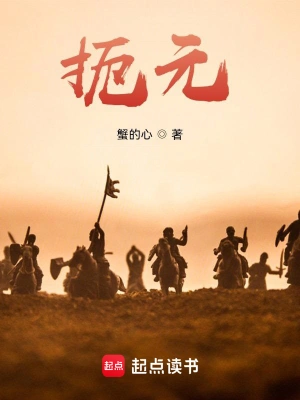
Seizing the Yuan
扼元
- Status
- Ongoing
- Length
- 3.0M Words
- Genre
- Historical
- Subgenre
- Song-Yuan-Ming Dynasties
- Updated
- 1y ago
- Source
- Qidian
Stats
Tags
Synopsis
More by this author
In booklists 45
Explore more →

A Reasonable Reader's Picks: The Logic Should Mostly Hold Up, with a Bit of Everything
I've been an avid reader for almost ten years, so my tastes are pretty varied. I recommend books for readers who want something beyond simplistic fiction: fewer tired tropes, fewer saintly characters, and fewer mindless face-slapping scenes. I also like books with relatable protagonists. More precisely, these characters act in ways that feel human. They can be good or bad, but their choices have to make sense. P.S. Please save and like the list so I can see what you enjoy. The list has reached
The Best in Every Genre
The best-written novels in every genre
My Reading List 🔥
Different strokes for different folks. I'm not into light entertainment, and I avoid romance and urban fiction, with a few exceptions. I dropped some of these books later on, but they still have something worth reading. I hope you find one that suits you.


Li Xiaoyao's Pocket-Sized Reading List~\(≧▽≦)/~
Books I'm currently following. I'll add more from time to time; they're all great reads.

Upon's Personal Journey Through Web Novels
A record of the books I’ve read during each period of my life. Each has a personal rating out of 10.


Recommendations from a 20-Year Veteran Bookworm: Unique and Toxin-Free
Mainly historical, urban, xianxia, and sports fiction. Sensible plots, excellent writing, no characters losing their wits, and no pretentious literary posturing.

【Brilliant Stars】That Summer Night, We Gazed at the Milky Way
👌☝🖐 Every novel worth recognizing is a thrilling vortex leading to a real world, capturing a moment of glory as its author ascends to godhood. A good novel should be a vivid world that runs on its own, with an internally consistent logic. These fictional worlds are like stars of varying brightness, shining across the heavens. This list gathers a selection from that galaxy for your consideration. The most important criterion for evaluating a novel here is its 【world-building completeness】. For no
Bowing to the Swaying Shadows of Flowers
I want it all!
Currently Following and Previously Read Books I Enjoyed
Books I'm currently following, along with ones I've finished and would like to read again. Popular or niche, they only make the list if I can keep reading them.
Zheng Anjun's Little Book Nook
* ( ) ( ) ✨ ( ' - ' ) 🌟 o(0🎀0)**************o These are novels I've read and enjoyed. I add more every month. If you find a book you like, please remember to leave a like and a comment, fellow readers. ✨ Many thanks for your support! _(:з」∠)_

#Not a Fake-Review Shill# Mostly Recommending Veteran Authors, Anti-Clichés, and Wild Ideas. Archive 1#
Except for the first three, everything else is from past lists.

Only Recommending Books I Enjoy (I Read Popcorn Fiction)
(If you find a good book that isn't on my list, please recommend it in the comments. Being short on books is miserable.) I only recommend books I enjoy. I only recommend the ones I'm following, so please keep in mind that the list may be out of date. If I show up as a trainee reader and a book has been here for a long time, that means I stopped reading it. I never care much about prose or plot when I read novels. That's too much effort. If I enjoy it, I'll keep reading; if I don't, I won't, no m

Ah, Holy Light, This List Is Worth Saving!
Updated weekly. Every book has been read by the list maker, so remember to bookmark it!
Books That Have Kept Me Company Through the Years
My tastes are pretty eclectic, and I feel like I've become pickier over the years. These are novels I've stuck with for a long time, along with a few that hold a special place in my heart.
Personal History-Themed Reading List
Mostly historical fiction, but I'll add other books I like too

My Personal Reading List
I've only added novels I've fully subscribed to and enjoyed. From now on, I'll only add completed novels to this list. The list is ongoing, but I'm pretty lazy, so updates will be irregular. Sorry about that 😂
One Look and You Know
A few thoughts on some books, both good and bad.

A Veteran Reader’s Shelf Picks
Wish-fulfillment stories that I can actually get into and enjoy.
Haitian's Reading List
Fantasy, transmigration, history, technology, farming.
All Worth a Read (Ongoing Series, Recommended by a 20-Year Bookworm)
Books I think are pretty good and worth getting into. (I deleted the first dozen or so older books. The ones I'm recommending now are mostly still updating.)
A Reading List for the Twenty-Four Solar Terms
Works I've read and really enjoyed. I hope we can share these unusual stories and discuss the questions they raise. I won't give specific ratings, since different readers will reach different conclusions. It's better to see for yourself than to rely on what others say. I'll add recommended books if I've read them and think they're good. If a book isn't on the list, it just doesn't suit my current tastes. For now, the list is mostly historical and xianxia web novels, with a few science fiction, w




Twenty Years as a Veteran Reader, with a Keen Eye for Good Books
I've read countless protagonists and seen every familiar trope. Now that I'm middle-aged, I just want to find good books that make me happy.
Currently Following!
The last one kept failing review, so I deleted it.
Books I Read
Some books still on my bookshelf
Readers also read
 Seizing the Direct Descendant in the Red Mansion
 A Literary Master in Ancient Greece
 Germany: 1914
 Great Ming: His Father Is Useless, So He Must Summon the Founding Emperor
 Hong Kong Films: In Wo Hop To, Uncle Deng Begs Me to Take Charge
 The Great Bandit
 The Age of the Yellow Sky
 I’m Not a Suit-Wearing Thug, I’m a Chameleon Actor!
 In Shrouding the Heavens, I Rule All Worlds from a Chat Group
 Han Descendants of the Jin Court
 The Taiping Records
 The Wily Qin
 The Primarch: From the World of Superheroes to the Sea of Stars
 A Powerful Warlord at the End of the Jin Dynasty
 The Han Dynasty's Lingering Smoke
Reader comments 46
Google Translate
I feel that everything in this book is good and to my liking, but it exaggerates too much the combat effectiveness of the Mongolian army. This level of command and control, combat effectiveness... In fact, the Mongolian army in history is one who is not afraid of death, two who absorbs technology and culture from Genghis Khan, and who is rotten in the Song and Jin Dynasties. Don't be too deified. It makes me uncomfortable to read it.
Mongolia is strong, but not that strong. He can conquer the world simply because he is the Taicai of the Song Dynasty. The geographical advantages of northern China were divided by the four kingdoms of Liao, Jin, Xia and Song, resulting in no suppression of the grassland. In fact, the most important thing is that the Jin and Song Dynasties were too bad, and the Mongolian tribes were suppressed by the Liao Dynasty. The Song, Liao, Jin, Xia, Mongolia, and Vietnam combined together make the Tang Dynasty The combat effectiveness of the Han and Tang armies during the same period may have been stronger than that of Mongolia, but Mongolia's logistics made up for its final shortcoming. It was rolled out in East Asia, with men and horses equipped with armor, and a whole body of iron cans. It is certainly not a problem to defeat the whole world. It is equivalent to shortening the distance, directly to the world martial arts competition, Mongolia took the first place. You also competed in the world during the peak period of the founding of the Han, Tang and Ming Dynasties, and you were still ranked first.
Hello comrades! Hello Guo Jiedu!
Let's talk about the Battle of Kaifeng First of all, the map of Kaifeng City in the Jin Dynasty is as follows I spent seven days reading the updated version of this book. This book is very well written, with slight flaws in the front but they are innocuous. It can be regarded as an excellent historical text. However, I really can't understand the recently updated version of The Great Fire of Kaifeng. I have a few questions. Why should Li Ting enter from the south gate when he comes from the north? Is it to block the Song army from entering the city? If so, why not control Nanxunmen? Why keep rushing forward with your head down? Is it to rush in and kill people? There were still 17,000 defenders in the city. He was too bold. He led 7,000 to 8,000 people into the city. The road was filled with flammable objects on both sides and was very narrow. The team was stretched. Wasn't he afraid that the Song army behind him would join the Jin army to strangle him? After he entered the city, why didn't he send troops to explore both sides of Yudao Street? Aren't we afraid of Jin soldiers ambushing both sides if the team is so long? It is about 2 kilometers from Nanxun Gate to Fengyi Gate. Yudao Street is 200 steps wide and is about 120 meters. The residents were driven away. This was a military restricted area and the spies couldn't see it. But the trap was set up in early July. It's now July 20th. If the residents were driven away so suddenly to demarcate the restricted area, wouldn't the spies report it? The road is 12 wide. 0 Meters, firewood is piled on both sides of the road. If the middle is too spacious, no one can be burned. It must be filled with oiled firewood and only a 30 to 40 meter path is left. Such an obvious trap cannot be seen by Song Jun and Li Ting who entered the city? In the final analysis, this fire was written too deliberately. The author may not be in a good state recently. I think the updates are intermittent. I hope the author can take a good rest, clear his mind, and think about how to write this paragraph. Finally, although I am very unhappy about this fire, I have already read this book and will continue to read it. I hope the author can adjust his condition and continue to write well. Come on!
The two ends are not people: the problem of Youyan and Haner in the Two Song Dynasties represented by Guo Ning
1. Attitude of You Yan Han'er towards the Liao regime 1. Towards Liao (early period): In the early days when they were forced to be included in the territory of the Liao Dynasty, Yan Yun Han'er still had a strong sense of identity with the Central Plains and held a resistant attitude towards the Khitan people from the northern part of the Great Wall. The Yan people during this period "were not happy to attach themselves to the Khitan, and wanted to think about Chinese teachings." However, the newly established Liao Dynasty did not understand the management methods of the Han area, and often directly applied the rough methods of ruling other small ethnic groups to Yanyun, and discriminated against the Han people in the formulation of laws. The Khitan lords also blatantly embezzled the Han people's property in the Yanyun area, triggering many Yanyun Han people uprisings. During this period, Yanyun Haner also eagerly hoped that the army of his southern compatriots could come to rescue him. Therefore, when Emperor Taizong of the Song Dynasty launched his Northern Expedition in 979, the Song army entered Yan and was warmly welcomed by the local people. "When Wang Shi entered the north, many of his cities surrendered to the Song Dynasty." The Han officials and generals who served the Liao Dynasty, such as Liu Yansu, the prefect of Shunzhou, and Liu Shousi, the prefect of Jizhou, also surrendered. This is the ironclad evidence that Yanyun Han'er still wanted to go to the Central Plains at this time. 2. Against Liao (late period): However, after the two large-scale Northern Expeditions in the Northern Song Dynasty ended in failure, the final Song-Liao War also ended in the form of the Chanyuan Alliance. In this context,Yan Yunhan'er gradually gave up hope of returning to the Central Plains and adapted to the rule of the Liao Dynasty. The Liao government also recognized the importance of winning the hearts and minds of the Han people in Yanyun at the suggestion of some Han officials. For example, during the Daozong period of the Liao Dynasty, Han Prime Minister Liu Liufu left his last words before his death: "Yan Yun is truly the foundation of the Liao Dynasty. We are willing to win the hearts of the people and make Mengnan miss you.", Liao Dynasty. The rulers of the DPRK actively accepted advice and kept pace with the times. On the one hand, they promoted the sinicization of the Khitan people, and on the other hand, they reduced the taxes and corvee on the Yanyun Han'er. "The taxation was quite light, and the Han people were different from the supply." This series of measures has greatly eased the ethnic conflicts in Yanyun area. The Liao Dynasty also implemented the North-South official system and promoted the imperial examination, which gave the Yanyun Han'er the opportunity to enter the ruling class of the Liao Dynasty as officials. For example, the members of the Han, Liu, and Cheng families of the Yanyun Han'er family have all held important positions in the Liao Dynasty for a long time. They were highly used by the Khitan rulers and had already become the upper class. Under their leadership, Yanyun Haner's identification with the Liao Dynasty continued to deepen, and he became increasingly alienated from the Song Dynasty. "The land of Yanji has been a captive for hundreds of years, but has no intention of looking south." In 1122, the Song Dynasty envoy Ma Kuo went to the Liao Dynasty. The Han'er officials who received Ma Kuo said to him: "Every time the Southern Dynasties say that the Yan people miss the Han, they don't think that they have been part of the Khitan for nearly two hundred years. How can they not have the feeling of a monarch and his father and his son?" The feelings of Yan Yun and Han'er towards the Liao Dynasty are evident. 2. The Song people's rejection of the Han people in Yanyun 1. Northern Song Dynasty (Exclusion): The Song people had various names for the Han people in the Yanyun area. In addition to the traditional "Han people" and "Han people", there were also "Yan people", "people who surrendered", "people who returned to the imperial court", "people who returned to the right way", "people who returned to the Ming Dynasty", etc. In the eyes of most people in the Song Dynasty, these Han people who live in an "enemy territory", wear "Hu clothes", use "Hu rituals", and practice "Hu customs" are completely alien to our own country and must be discriminated against and excluded. At the end of the Northern Song Dynasty, after Xuanhe failed to conquer Liao, Song Huizong redeemed the sixteen states of Yanyun from the Jin Dynasty through redemption. (Society and people's livelihood) In the early days of the return to the Song Dynasty, the officials and people of Yanyun welcomed the Song army's takeover with considerable enthusiasm after experiencing the devastation of the Jin army's war to destroy the Liao Dynasty. "The people of Yan were very happy" but the Song Dynasty quickly poured cold water on them. During the Song Taizong period, the Northern Expeditionary Army of the Song Dynasty could still regulate military discipline in the Yanyun area and protect the Han people in Yanyun from moving inward.But at this time, the corrupt and short-sighted Northern Song Dynasty court was not able to manage Yanyun well. The officials of the Northern Song Dynasty who were sent to govern Yanyun were very happy with their achievements. Iron and other important supplies were turned into official forced buying and selling. In addition, the people's houses and properties were forcibly confiscated for use by the "Changsheng Army" of the Han'er Army who surrendered to the Song Dynasty (most of the Changsheng Army later surrendered to the Jin Dynasty). As a result, the people of Yanyun were under pressure to survive, and finally they were reduced to "no home." "There will be no career". (Destructive consequences)For the Yanyun Haner officials who surrendered, the Song court only "given them official duties, but gave orders but did not manage affairs" and did not give them real power. This made many Haner officials feel resentful and often defected to the Jin Dynasty's ruling areas and instigated the Jin people to move south. The invasion laid a huge foundation for the Jingkang Rebellion. The poor rule of the Yanyun area by the Northern Song Dynasty for more than two years brought the Yanyun economy to the edge of collapse. In 1125, on the eve of the war between the Song and Jin Dynasties,historical records record that "there was a great famine in Yanshan, and the parents ate their children, and even sick and dead bodies were put on the market and people sold them for food." "The Song court did not care about such a tragic situation, and finally lost the hearts of Yanyun. Later, Xu Cai of the Song Dynasty concluded in "The Chronicles of the Fall of Yan": "Three people lost the hearts of the Yanyun people: the first was changing officials, the second was granting land, and the third was the Salt Law. Changing officials will lose the hearts of scholars, conferring land will lose the hearts of the people, and salt law will lose the hearts of the scholars and the people. " 2. Southern Song Dynasty (Reduced somewhat): After the establishment of the Southern Song Dynasty, out of the need to fight against the Jin Dynasty, the Song court began to bring order to the chaos. When Emperor Gaozong of the Song Dynasty heard that Yanyun Haner was imprisoned in various prefectures and counties, he believed that "all of us are innocent, and we treat them differently when we happen to be born in the border areas. How can we treat them the same as the captives?" The Jin people fought with me, beating innocent people, and then led the people of other countries to risk their lives and cut their livers and brains to pieces. How can innocent people deserve it?" He issued an edict to release all of them and reinstate their officials. At the same time, they actively recruited Han soldiers in the Jin army. This move has achieved good results. "There are people from Kyushu who return to China every day. The Han'er of the dynasty were reorganized and joined the Song army to fight according to the "valor and effectiveness". For example, Liu Guangshi, the general of the Southern Song Dynasty, extensively recruited Han'er from the North for his own use. He had two Han'er armies, Qibing and Chixin, commanded by Liu Yan and other Han'er generals, and they repeatedly made military exploits in battles with the Jin army. (Total ruin) :When Qin Hui came to power, he implemented the infamous policy of "southerns return to the south and northerners return to the north". A considerable number of Yanyun Han'er officials and soldiers were sent back to the Jin Dynasty. Most of their fates are unknown. Even so, some Yanyun Han'er remained in the Southern Song Dynasty. In 1136, an edict from Song Gaozong mentioned that "one hundred and sixty-four returned to the imperial court and two hundred and eighty-four returned to the Ming Dynasty. Their loyalty is commendable."Although the situation of the Han children of Yanyun who stayed in the Song Dynasty gradually improved, the fundamental situation of long-term rejection by the Han people in the south has not changed. In 1162, King Hailing of the Jin Dynasty led an army to attack the Southern Song Dynasty. At that time, there were still seventy or eighty Yan people in Caizhou City in the Southern Song Dynasty. "Reenacted the tragedy of the massacre during the Jingkang period. 3: The embarrassment of Yanyun Han'er 1. Two-sided exclusion: As an embarrassing ethnic group during the Great Split, Yanyun Han'er has always faced the dilemma of "the two ends are not human beings". In the eyes of the Song people, they were "Fan people" in the Liao and Jin Dynasties, but in the eyes of the Khitan and Jurchens, they were all Han people. Just as Li Yu, a young minister of the Jin Dynasty who was born in Yanyun, complained when receiving the Song envoys: "The Jurchens, Khitans, and Xi were all from the same dynasty, but the Han'er was not good. Northerners call them Han'ers, but Southerners call them Fans. "The Jin Dynasty appointed officials "First Jurchen, then Bohai, then Khitan, then Han'er", and never treated Yanyun and Han'er equally. The "Eternal Victory Army" that surrendered to the Jin Dynasty was later demobilized. Most of the soldiers were massacred by Jin Army cavalry on the way to the demobilization. The chief general of the Evervictorious Army, Guo Yaoshi, was deprived of his official position. 2 . Have no choice but to do it: half-Chinese and half-Barbarian in culture, and the discrimination between the northern and southern regimes, Yanyun Han'er gradually formed a wallowing style in the process of political change. Not completely loyal to one party, everything is focused on preserving Yanyun's homeland. The people in Yanyun area are strong, and the people are mostly martial arts "Learning to ride and shoot, and they are hardworking. Before giving up, the people among them fought with the Yi and Di, and the outcome was even." This made the Han'er group a high-quality source of soldiers that Song, Liao, and Jin all actively strived for. Their own utilization value, coupled with Yanyun Han'er's tact in traveling among various political powers, made Yanyun "not corrupt despite repeated changes. "Broken". But such a style of doing things obviously cannot be respected. Until the middle of the Jin Dynasty, Jin Shizong still commented on Yan Yun Han'er with sarcasm: "The Yan people have been loyal and upright since ancient times. When the Liao soldiers arrived, they came from the Liao Dynasty, when the Song Dynasty arrived, they came from the Song Dynasty, and when the current dynasty came, they came from this dynasty. Their customs follow and come naturally. " 3. Conclusion After the Jin Dynasty occupied the Central Plains, the Han people in Shandong, Shanxi, Henan, Hebei, Shaanxi and other places in the Northern Song Dynasty gradually merged with the Yanyun Han'er and became the "Han people" in the Jin and Yuan Dynasties. The people in the Southern Song Dynasty's ruling area were called "Southerners", which was more like "fighting from the south instead of the north, fighting from the north." It was a helpless move under the trend of the times, rather than a sincere surrender. However, the separation of the northern and southern Han people and the Huhua situation of the northern Han people continued to deepen. It was not until Yanyun experienced hundreds of years of stable rule by the Ming Dynasty that the title "Han'er" was gradually forgotten, and the local people reintegrated into the Han family.
The price of mutton in the Song Dynasty is not fabricated by the author.
Chapter 640: When Zhang Peng was buying sheep, he talked about the price of mutton. When mutton was expensive in the Southern Song Dynasty, it cost 900 yuan per catty. Some people in the comment area did not believe it. In fact, the author did not fabricate it out of thin air. Now post its possible source, hope you can give me some advice! At the end of Shaoxing... The price of sheep in Wuzhong was extremely high. A catty of meat costs nine hundred. At that time, the county governor went to Zhecao to serve as an official, and Lin An lived in Ren and took charge of the affairs of the government. He was a generous but stingy person, and he thought that those who bought mutton would be greedy. He checked the items he asked for, and judged Shen Du Gongya, and told Shi Lu: "People from the north of the country will inevitably eat this, and they will change it. Don't be trapped by the government officials." Shi Lu smiled and thanked Shen before saying. He also said: "I also tried to imitate his body." A quatrain said: "Pingjiang has nine hundred and one kilograms of sheep. How can I dare to buy it if my salary is so small? I only eat fish and shrimp for two meals, and my belly is now a small pond." Everyone who heard it laughed. — "Yi Jian Zhi·Ding Zhi" Volume 17 "Sanya Town" A pound of mutton costs 900 yuan. This is in the south, and it was the early Southern Song Dynasty. There was social unrest and mutton was so expensive that some officials could not afford it. In peacetime, mutton is not that expensive. The following is the price of meat in Chang'an in the Northern Song Dynasty. Of course, it is a special case because there are many local copper coins and it is very cheap. Shao Bowen wrote about Jia Yan's family biography and said: "At the end of the Zhiping period, money was abundant in Chang'an and things were cheap. Rice and wheat were worth less than a hundred yuan, millet and beans were half, and pork and mutton were thirty or forty yuan a pound." Of course, the price of mutton is not so high in all places. In addition, in Jingzhou in the first year of Shaoding (1228), which is similar to the era of this book, the price of mutton was eighty or ninety yuan per catty. Jingzhou was remote and prices were low. Friends who are interested in prices in the Song Dynasty can read Mr. Cheng Minsheng's "Research on Prices in the Song Dynasty". Regarding meat prices, his research is shown in the figure below.
Are there any historical novels like Ji Yuan that are serious, low-key, pragmatic and not exaggerated?
The best destination for Yang Miaozhen is death. Guo has no shortage of generals. Being a woman has no value to Guo.
When nomads move from tribes to nations, this is when they are at their strongest and when civil strife begins. Because their systems do not match the fundamental system of the country, they are destined to have power conflicts. Not to mention, Yelu Abaoji began to Chineseize and changed the leader election system in order to inherit power, and a rebellion broke out among his brothers. After his death, Shulu Ping launched another round of killings in order to fight for power. The Jin Kingdom's Bojilie system promoted military democracy at the top, but allowed brothers to succeed in the succession system. However, I did not expect that Jin Taizu's brothers died so quickly. Wanyan Zonghan not only allowed Wanyan Zonghan to dominate Shanxi, but also dared to spank Jin Taizong in the court. He also used loopholes in the system to force Jin Taizong into the palace, making Jin Xizong, his grandnephew, the heir, and then took the opportunity to monopolize power. When Jin Xizong came to power, he began to liquidate Zong Han, and also took advantage of capable and capable close clan members like Wanyan Xiyin. Wan Yanliang and Wan Yanyong, you learn from him and I learn from you. It caused chaos for two generations If Genghis Khan's prestige is destroyed, it is basically concluded that civil strife will inevitably break out in the era when Mongolia begins to transform into a country.
In fact, I think some comrades are a little too fearful of Mongolia. Mongolia is very powerful, but it is not invincible. They carry one head on two shoulders, so what are they afraid of? Many people seem to simply assume that cold weapons cannot win against troops one to one. Why can't they win? Are the Mongolian brothers stronger and physically stronger than the Han and Manchu brothers? The Mongolian Plateau has a harsh climate, so Mongolians are the most resistant? The Huns, Xianbei, and Turks did not rise on the Mongolian Plateau. What was the result? Could it be that the Mongolian Plateau in the 1200s was worse than the two thousand years before and after? Mongolia is strong, but the degree of being ahead of the times may not be better than the strong armies of the past and present. There is no need to give yourself a cold weapon first, the strongest shackles of others. To put it bluntly, who among the Xiongnu, Xianbei, Liao, Jin, Ming and Qing Dynasties did not suppress Mongolia (although there was no Mongolia before them, there must be Mongolian ancestors)? Afraid of a ball!