


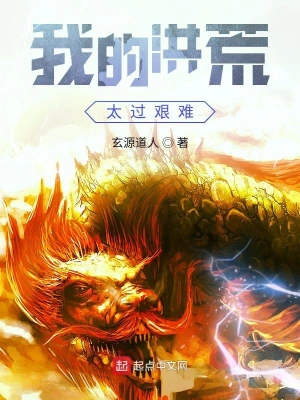
My Journey Through Honghuang Is Far Too Difficult
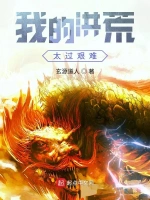
我的洪荒太过艰难
- Status
- Completed
- Length
- 2.0M Words
- Genre
- Cultivation
- Subgenre
- Mythic Cultivation
- Updated
- 3y ago
- Source
- Qidian
Stats
575Chapters
0Votes
15.3kRecs
90.8kFans
Tags
Synopsis
More by this author
In booklists 6
Inkstone Attic
The kind with fresh ideas!
31Books69Follows11moUpdated
Industrial Technology, Business, Games, Foreign Works, Dragon Ball, DNF, Logic, Intelligence
Themes and scope, immersive prose, logical thinking, plot and setting Characterization, writing style and length, update schedule and completion, a satisfying beginning and end
94Books167Follows1yUpdated
My Book Nook
I made this list for myself to browse. It's pretty good, too.
47Books6Follows1yUpdated
Seedling Kindergarten
This list is here to nurture promising new books and recommend good stories that haven't caught on yet.
43Books71Follows1yUpdated
My Reading List
Here are some books I like, shared with everyone.
10Books6Follows4yUpdated
I've Spent These Years Reading Books Whenever I Had Nothing Else to Do
Novels that left a lasting impression on me
56Books7Follows4yUpdated
Readers also read
 Heaven's Curse
 A Daily Divination: The Immortal Venerable of Longevity
 Two Worlds: Becoming an Immortal After Failing to Establish My Foundation!
 Immortal Husk
 Slaughtering My Way Through the Marvel Universe: Starting with The Boys
 A Journey Through the Heavens, Beginning with the Investiture of the Gods
 Journey to the West: The Treasure Vase of the Great Dao
 The Road Less Traveled
 The World of the Extreme Path: Tempering My Body Through Terror
 Honghuang: Starting with Jingwei Filling the Sea
 Journey to the West Begins with the Immortal Qin
 Honghuang: The Innate Gourd Vine Dismembers Itself
 A Mage’s Journey Begins as a Follower of the Sun God Cult
 Honghuang: Chaos, the Ferocious Beast, Founds the Abyss
 Kunpeng’s Chronicle of Honghuang
 The Starwatcher of Great Qian
Reader comments 41
Google Translate
Slowly, it started to take on the flavor of a prehistoric novel. In fact, our Chinese mythological novels have something very distinctive about our national culture. are to "become an immortal and obtain the Tao" and "to attain the Tao and become an immortal". There is a difference between the two. The prehistoric novel writes about "becoming an immortal and attaining the Tao", because "in the prehistoric era, great people roamed the earth, and golden immortals were not as good as dogs." Immortals are easy to become, and most of them are born with the ability to live forever. Therefore, we must pursue a higher level of "Tao". Cultivation novels are about "achieving the Tao and becoming an immortal". Different "planes" and "worlds" have different upper limits, so there is "ascension". And this "getting the way" should actually be said to be "getting the method", the method of cultivation. Then they ascend one level at a time in order to be able to ascend to the "immortal world", "become an immortal", and finally "immortal". This is more like our society. The "rich" have no worries about food and drink, so they pursue spiritual civilization more. The "poor" can only find food and drink in the "spiritual civilization" pursued by the "rich". (Maybe this metaphor is inappropriate) Therefore, it is difficult to write Honghuang literature, and it is difficult to grasp the sense of proportion. It is written in what the "rich" want to read. The "poor" feels "not enough". In fact, we have too many "poor" and "the gap between the rich and the poor is getting wider and wider." For Riba people under the snow in the spring, this is a problem we have to consider. This has a lot to do with our own culture, our Taoist thought, Confucian culture, and various schools of thought. It is very different from the West. Our dragons can fly without wings, while those in the West need wings. Our "gods soar into the clouds and ride on the mist." The "Superman" in the West wears underwear, makes a fist with his right hand, and flies lying down like a bullet. This is the difference between Eastern and Western cultures. Our culture is more emotional and idealistic, so we are a "family" culture. Western culture is more rational and materialistic, so they are a "me" culture. That is to say, we pay more attention to the collective, while the West cares more about the individual. , In fact, Honghuang novel is a novel about "seeking the Tao and obtaining the Tao". First of all, we need to know what "Tao" is? "Tao" is "one", "Tao" is "being" and "Tao" is "empty" or "nothing". So "something comes from nothing". "Nothing" means "chaos" and "emptiness", and "you" means "Hunyuan" and "Tai Chi". Therefore, "Wuji gives birth to Tai Chi, Tai Chi gives birth to Liang Yi, Liang Yi gives birth to Four Symbols, and Four Symbols gives birth to Bagua." That is, "Wuji, Tai Chi, Liang Yi, Three Talents, Four Images, Five Elements, Liuhe, Seven Stars, Bagua, and Nine Palaces". It is the process of "0 to 9" and "9 to 0". No matter you practice "Five Elements or Bagua", you must eventually achieve "Hunyuan" and then "transcend chaos". Just like our life, no matter you are "rich" or "poor", no matter how you live or what you pursue. It's all "from birth to death", "from beginning to end". It's just that in this process, what kind of "Tao" are you seeking, and whether you have obtained the "Tao". Only you know this. In fact, our culture is very advanced. People thousands of years ago knew that Hongmeng was chaotic and void. Nothing. It is "wu, emptiness", and then there are "Pangu", "you", "wuji", "Pangu axe, Taiji string". Then Pangu created heaven and earth, "Tai Chi", "Liang Yi" and "Four Symbols". Then there were "all things", and in the end all evolution returned to ruins and returned to the chaos of Hongmeng. Waiting for the next chaotic Pangu to look at the world again, and so on. In fact, as in the West, the universe has a point, then a big bang, and slowly expands, in the process producing various material "all things". Then it expands to a peak and then starts to shrink, and finally shrinks to a point again. Then it explodes and expands, shrinks and returns to the original point, and the cycle continues. This shows that our culture is tenable, tested and logical. Therefore, whether it is "Ancient Literature" or "Xiuzhen Literature", you still need to refer to it appropriately. Properly understand the "Book of Changes", "Tao Te Ching", "Huang Ting Jing", "Huang Di Nei Jing" and "Huainan Zi" including Taoist rituals. Combined with some of our classical masterpieces, mythological novels, and folk stories. Only in this way can the novel have flesh and blood, a sense of three-dimensionality, and withstand logical reasoning. It can also help the "rich" get their "spiritual" needs and the "poor" feel "full". It can also carry forward and spread our traditional culture.
This is what the fuck is called a novel, this is what the fuck is spiritual practice, this is what the fuck is the real struggle between the great ways, I have been reading books for fifteen years, and I have read a lot in the prehistoric times. This book is the best, even if it is not as popular as Gou Ge, but it does not prevent me from fully agreeing with the views of this book.
This introduction is outrageous. Wasn't the Dragon Clan strong during the prehistoric times?
Summarize the age of the protagonist (please improve it)
I read a book and someone said that one hundred years is too slow, so I got the idea of calculating the age of the protagonist The previous numbers are chapters, and the content of 54 chapters so far is: 18 Tens of thousands of years + one hundred years + several decades 19 Two thousand years + nearly ten thousand years 21 Thousands of years 22 I don't know how long it has been 23 One hundred years + one thousand years 24 Thousands of years 29 Thousands of years 31 Three years 32 One hundred thousand years + thousands of years 36 Two thousand years 39 Two hundred thousand years 41 One hundred years + five hundred years 42 Decades 46 Tens of thousands of years I counted nearly ten thousand years as 9,000 years. I don't know how long it has passed and counted it as ten thousand years. Thousands of years counted as 8,000 years. Tens of thousands of years counted as 80,000 years... The total adds up to 508,863 years. The protagonist has lived for more than 500,000 years. The first tribulation of dragon and phoenix is calculated as an immeasurable tribulation. Infinite tribulation = 50,000 Yuanhui, and one Yuanhui = 129,600 years. The protagonist has experienced almost 4 Yuanhui. The protagonist was not the first to be born in the prehistoric era, and can only be counted as the second batch. Therefore, I don't know how many years have passed before the protagonist was born. Now the Dragon Clan has just been established, and preparations have just begun to kill the ferocious beasts. It is still early for the three tribes to weaken...
When I saw Taishan Fengchan, I really couldn't help complaining. When the protagonist was fighting with Luo Hu, he disliked the dragon clan and backed away. He forgot that he was a member of the dragon clan. Without the luck bonus of the Dragon Han Tribulation, can you use your current achievements? For those who forget their righteousness, Human Emperor Fuxi was granted Zen status at Mount Tai. You have forgotten your identity as a human race in your previous life. Have you protected the human race from its birth to now? Have you ever been educated? For the sake of luck, I didn't hesitate to threaten Fuxi. I'm just so hehe. I forgot my ancestors and betrayed my ancestors.
The Dragon Clan was not a soft persimmon in the prehistoric times.
What are you writing about? ? ? Innate gods and demons are born as heavenly father and earthly mother. Return to the Dragon Clan, are you stupid? According to your logic, the Sanqing, Nuwa and other innate gods and demons are all monsters, and they are all under the control of Taiyi.
I hope that after the human race is born, the pig's feet will not instantly become intelligent and turn into nannies. Like other prehistoric novels, it is too disgusting. Modern people believe in the theory of evolution: humans are transformed from monkeys, and have nothing to do with being shaped by almighty forces using mud and water. Hundreds of millions of years have passed on a dog! Baffling.
To be honest, the protagonist feels like he is touching Pangu's body step by step, not sparing any inch of skin and flesh. So the question is, what kind of blessed land has Pangu's asshole turned into?
It's boring to eat, but it's a pity to throw it away. Most of each chapter explains why the protagonist does what he does