


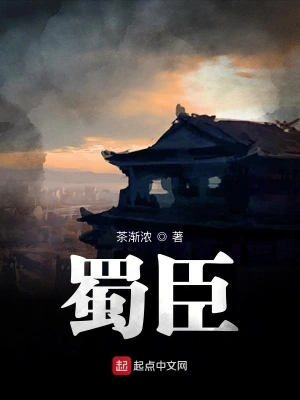
Shu Minister
蜀臣
- Status
- Completed
- Length
- 1.6M Words
- Genre
- Historical
- Subgenre
- Qin-Han & Three Kingdoms
- Updated
- 3y ago
- Source
- Qidian
Stats
Tags
Synopsis
More by this author
In booklists 31
Explore more →
A Quiet Moment with a Book 📖
Updated whenever I continue reading 📖 Stocking up on quality fare...



New-Release Fanatic (Also Recommending Older Books; Please Favorite and Follow~)
As long as I live, I'll keep testing books. As long as Qidian stays open, I'll keep updating this list. I haven't been reading much lately, and I'm pretty picky. My reviews may be slow too, ✍🏻️, but every book I recommend is still carefully chosen. Sometimes, when people look for something to read, they notice something strange: everyone's out of books, yet they still ask each other for recommendations. Isn't this way of huddling together for warmth kind of fun~ I think it's the words that br
🎄💜 Dreamy Historical Fiction 💜🎄
💜 Historical Fiction List 💜 🔔 I don't have much time to read, so my reviews are pretty brief. Please bear with me~(•́ω•̀ ٥) 💜 Advertisers are welcome to leave their ads. Books I like will get at least a week of promotion; books I don't like will be removed. Please don't post duplicate ads! 🛎 Promotion terms for books that suit my taste: 💜 Under 100,000 words: promoted for one week~ 💜 Over 100,000 words: promoted for two weeks~ 💜 Published books with steady updates will get longer promotion~ 🔔 No

Upon's Personal Journey Through Web Novels
A record of the books I’ve read during each period of my life. Each has a personal rating out of 10.
Nurture Newcomers, Seek Xianxia Gems, Avoid Toxic Reads
I’ve been an avid reader for ten years and only read the best, though of course, the best books that suit my taste.
Imperial Ambitions
When autumn comes on the eighth day of the ninth month, my flowers will bloom and all others will die. A thousand miles of rivers and mountains, a scene of grandeur: how many heroes have come and gone? Thrones are built on bones, imperial roads on yellow sand. The history books record them all in a few simple strokes. Three Kingdoms: Empire of the Realm, by Xiaoxiao Majia No. 1 Three Kingdoms of Immortals and Warriors, by Baiyin Longma
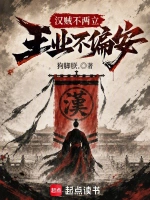
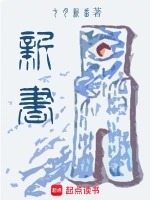
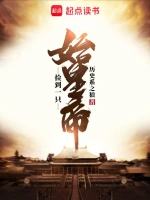
Historical Fiction Recommendations: The Three Kingdoms, Power Struggles, the Warring States, and the Sui, Tang, Song, Yuan, Ming, and Qing Dynasties
The great river flows east, washing away the ages and all their heroes... I enjoy historical fiction, especially stories set in the Three Kingdoms era, so here's a simple list of recommendations. ಥ_ಥ You can't please everyone, but I hope you'll like what I like. 💕You're welcome to recommend books here. If I see something interesting, I'll give it a read. (P.S. This list is only for books in the historical fiction category.) … Follow 🌟🌟🌟 and save the list! Please send flowers, likes, saves, a
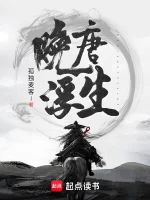


I Like All Kinds of Transmigration Stories, but Not Fantasy or Alternate History. I Especially Love Historical and Anime Stories
Mostly transmigration stories. I've read every book here from start to finish before recommending it, so updates will be slow

Beautifully Written
Mainly anime-related, supernatural, and historical books, along with some other genres. They may not all be exceptional, but at least they are all pretty good.

Over a Decade of Web Fiction: Weird and Wonderful Books Without Major Flaws
Just for fun, don't take it too seriously. Ongoing list, updated whenever.

A Hidden Gem Reading Room
Great novels I've read or am currently reading, helping you discover hidden gems

Reader's Block? 🔥 If You're Out of Books, Start Here! System! Myriad Worlds! Ruthless Protagonists!
👑👑 Ten years of reading, and I really have read far and wide. ❤❤ Once you’ve read enough, you’ve seen every trope, and reading fatigue inevitably sets in. So here are some books I think are worth your time. 🙏🙏 Most importantly: I don’t recommend books I haven’t read.

Chu Qiu's Reading List
Writing: Simply put, this refers to an author's basic command of language and ability to tell a story. Themes: This means the ideas and messages traditionally found in literary works. Web novels do have their own peculiarities, of course, but I venture to say that a web novel's themes can generally be judged from two angles. First, the issues the author seeks to examine, along with the ideas and emotions conveyed through the work. Second, the perspective from which the work approaches its subjec

When You’re Hungry, Don’t Call Mom
We eat to live, and read for pleasure. A few bites of food that go down easily, a few chapters of a novel that catch the eye: such is the ordinary rhythm of life. But ordinary doesn't mean dull. Life is about experience and reflection. The wonderful journeys and brilliant ideas are all there in books. Fame and fortune are nothing but dust; the joys and sorrows of life fill a thousand volumes. A good book is food for the soul. Are you hungry?
Slow-Burning Gems That Reward a Patient Read
A record of classics from years past: cool-headed, rational protagonists, intelligent supporting characters, exciting plots, and books that reward the reader.

Books I Couldn't Put Down, Part 3
All kinds of genres
Book List
Nobody's going to read this anyway, so do whatever you want.
Books I Enjoy
A personal collection of easy-reading comfort food. Most are decent reads. Anything marked “rap sheet” is usually something I read without thinking, out of sheer desperation when I couldn't find anything better.
✨Those Stunning Qin and Han Dynasty Novels We Loved Back Then🦖
🎉 Web novels have been around for 20 years, but I've only been reading for eight. 🎈 ❤️ As everyone knows, there are countless web novels, and the era-defining ones are remembered for generations. 💛 As a reader who's not quite old but not exactly young, I believe sharing joy is better than keeping it to yourself. So here I've gathered a few Qin- and Han-era novels that I found especially impressive. 👣 💚 As the saying goes, even the finest wine can go unnoticed if the alley is too deep. It's hard


I Can't Believe Someone Actually Followed My List
I can’t believe someone actually followed my book list! I’m updating it to share some of the excellent novels I’m following now and have read in the past. Mostly historical, xianxia, and fantasy, with a few gems from other genres mixed in.

Here, Some Great Books for You
My taste, my perspective.
Recommended Historical Novels About Shu Han in the Three Kingdoms Era
Half a lifetime adrift, two years an emperor, yet never restoring the Han. Yiling's flames burn, dragon scales turn to ash, and weary sleep claims me in Baidi's halls. The eastern wind makes its promise, Shu Han seeks peace, the southern tribes expand, and the north campaigns against our foes. Our deeds shine bright, but the stars fall before our long-held wish can come true. Three kingdoms, three dynasties, the histories of an age, fate turns the calamity of the Three Kingdoms around. My trus
A Bookworm's Daily Reads
What this ten-year veteran reader usually reads


Good Reads for a Reading Slump
Promising works, in my opinion. Yep, that’s it.
Readers also read
 Chronicles of the Red Mansion
 The Corpse Plague of 1916
 An Important Town in the Residual Tang Dynasty
 In the Ming Dynasty, the Days When the Cows and Horses Turned Over
 League of Legends: I Just Turned Pro, and You're Saying the League Is Dead?
 The Age of the Yellow Sky
 I Found the First Emperor
 Simultaneous Transmigration: Becoming a Legend Before the Story Begins
 Starting with Saving Manchester United
 I Found a Book of the Three Kingdoms
 Han Descendants of the Jin Court
 The Han and the Traitor Cannot Coexist, the Royal Cause Will Not Cower in a Corner
 The Wei Traitor
 Praise
Reader comments 50
Google Translate
This book is a dream to inherit the romance of the Shu Han Dynasty, and a love letter to Prime Minister Zhuge. The writing style is smooth, the plot is compact, and there is almost no idle writing. It can only be seen that the original intention is still there, and it has a somewhat serious literary spirit. What's even more rare is that the protagonist's element as a time traveler is very light. Apart from copying a thousand-character essay and giving the protagonist a motivation, there are almost no actions that are obviously contrary to the laws of history, which adds a lot of historical weight and makes the work more serious. Due to the compact structure, there are fewer paragraphs of lyrical descriptions of scenes, but they are all of high quality. Especially in the section of "Stars Falling", the description of the combination of virtuality and reality, layer by layer, overflowing with emotions, gradually turning virtuality into reality, completely indistinguishable, so in the last section, virtuality is replaced by reality, and the words are few but full of meaning, the emotion is deep and the rhyme is meaningful. If there is any shortcoming, it is that the author's writing style makes the reading threshold slightly higher. The author does not devote too much text to the supporting characters, so the image of most of the supporting characters depends on the readers' understanding of history-and many characters in the late Three Kingdoms are not as familiar as those in the late Han Dynasty. Similarly, if there is a lack of understanding of the specific place names and topography of the Liang and Long regions during the Three Kingdoms' campaigns, it will be difficult to convey the interest of many military battle arrangements in this book to readers. In other words, half of the fun of the military war plot in this book depends on the reader's historical and geographical accumulation. The more you understand, the better you can follow the author's ideas. Otherwise, it will feel a little dry and boring. In addition, the mixed writing style is slightly inconsistent in some transitions, and some classical expressions are also slightly repetitive. But in the end, the flaws do not hide the virtues. This book is a must-read for those who are interested in the Three Kingdoms, those who are unwilling to accept the Shu Han, especially those who have always hated the sky and the prime minister.
A good batch of Qingliu novels did not start from the end of the Eastern Han Dynasty, which has become a bad trend in historical literature. Instead, they took a unique approach and started from the death of Liu Bei, who was rarely mentioned, and the vitality of the Shu Kingdom was seriously damaged. Zhuge Liang established the government and started to govern. It feels like you are trying to turn the tide when the building is about to collapse. Anyone who has read the Chronicle of the Three Kingdoms knows that after the Shu Kingdom lost Jingzhou, it only had a chance when it left Qishan Mountain. Later, many Northern Expeditions only used offense instead of defense. , And just waiting for the opportunity, the road to Shu is difficult to transport food, and the Wei army only needs to hold on, and when the Shu army runs out of food, it will naturally retreat. Under such a disparity in strength, it is not only Prime Minister Zhuge who is the reincarnation of the military immortal Bai There is probably no way to resurrect, and the protagonist seizes this only chance of life through the wings of a butterfly. It is refreshing to read, and unlike the previous Three Kingdoms writers, the author of this book has really worked hard and knows the geography of the Three Kingdoms period very well.
On October 8, 234 AD, the star fell from Wuzhangyuan On October 8, 2022, the author issued a large chapter and returned it to the old capital. The prime minister finally got what he wanted, and he lived up to the burden of trust. The author is determined
Zhuge Liang is known as one of the six great politicians in China. During Zhuge Liang's rule in Shu: Connected with Soochow on the outside and pacified South Vietnam on the inside. "The Biography of Zhuge Liang") When Liang governed Shu, [fields were opened, warehouses were solid, weapons and equipment were sharp, reserves were abundant, court gatherings were not luxurious, and roads were not intoxicating]. ("Three Kingdoms" quoted from "Yuan Zi") [There are points for governing the country, there are laws for guarding the army, accumulation of merits and achievements, and things are done in the right way. There is no spare power when entering, and there is surplus food when going out] (Jin Dynasty's "Physical Theory") Spiritual civilization construction: "Huayang Guozhi" Liang Nai appointed officials, revised the legal system, and built a high platform south of Chengdu to attract people from all directions. The reading desk is located one mile south of the county. When Zhuge Liang came to Shu, he built a platform to gather the Confucian scholars and to entertain the wise men from all over. It was called the Reading Platform, and it was located on the west side of Zhangchengmen Road. It is now called Chengyan Temple. This is the record related to Shu during the Zhuge Liang period. It seemed to be a prosperous and healthy country, a land of abundance. [Shu brocade] was sold to all countries in the world by Zhuge Liang. The most developed era of Chinese Shu brocade was Zhuge Liang's period. Zhuge Liang also personally improved the [fire well salt control technology], which improved people's living standards and developed productivity. Moreover, Zhuge Liang was also one of the founders of Legalism. He formulated the "Shu Ke", insisted on governing the country according to law, and made outstanding contributions to the advancement of legal society In comparison, the ratio of soldiers and civilians in Cao Wei was higher than that of Ji Han, and their economy later abolished currency, bartered, and injected water into pork [Cao Wei recruited new people to open fields, and the people were unhappy and fled. The people are hungry] "The Biography of Yuan Huan in the Three Kingdoms" Let's talk about Zhuge Liang's military achievements: Ten sages in the martial arts temples of all dynasties, and the only two military strategists in the Three Kingdoms period in the modern large-scale dictionary. The military school textbook "A Brief History of Chinese Military History" rated him as the pinnacle of military theory in the Three Kingdoms period. To briefly summarize, in history, Zhuge Liang made great contributions when he went to Chengdu and settled Hanzhong. The first expedition was divided into five groups, setting up [Suspicious soldiers, Guanzhong trembled], controlled the three counties, and obtained [More than a thousand families in West County, according to the proportion of Cao Wei's household registration, there may be 10,000 people]. (Zhuge Liang's Biography) The second and third expeditions were carried out together, attacking in the east and west, detouring and intercepting Guo Huai with Chen Shi, and Guo Huai retreated. Finally, Wudu and Yinping were included in the Shuhan territory. According to "Huayang Guozhi", the households were 20,000 and the two counties had a population of about 100,000. During this period, the famous general of Cao Wei, Wang Shuang, was killed. (Zhuge Liang's Biography) In the Fourth Expedition, the scale of the Battle of Lucheng was larger than that of Guandu. When Sima Yi's troops were much higher than his own, and he was still attacking from two sides for a sneak attack, he planned to defeat Sima Yi ["three thousand in armor" and five thousand in black armor] ("Zi Zhi Tong Jian"). Sima Yi faced Zhuge Liang for the only time in his life and was defeated miserably. Later, because Li Yan lied about the military situation, he withdrew his troops. During the withdrawal, he set up an ambush [killing Zhang He and his subordinate pursuers]. (Biography of Zhang He) After half a year of fighting in the Five Expeditions, he succeeded in controlling the Wugong River of the Wei River. He easily crossed the Weishui River to attack Guo Huai on the north bank of the Wei River. He also gained a foothold on the east bank of the Wugong River and successfully suppressed Sima Yi. Unfortunately, he was overworked. So before his death, he planned a marching schedule, kept secrets of mourning, and safely withdrew his troops. "The Collection of Zhuge Liang" Li Jing, who was also one of the Ten Philosophers of the Martial Temple, said that he was familiar with Zhuge Liang's tactics. He had won both the battles of Zhuge Liang and others in the past. He also improved the Eight Formation Diagram, which shows that Zhuge Liang's military theory was also very influential and he had many ingenious inventions. Zhuge Liang also made many cultural contributions. For example, the plan to maintain Dujiangyan has been used and is strictly implemented today after 1800. He also united the southern ethnic groups, taught ethnic minorities to grow rice and scented tea, and invented some traditional dishes, such as steamed buns, steamed buns, and pickled mustard. He was a hero who united the ethnic minorities in southern China. The words he left behind, such as dedicating oneself to the utmost, dying till death, being indifferent and clearing one's ambitions, being peaceful and far-reaching, etc., Have been regarded as life creeds by countless people.
As a senior fan of the Three Kingdoms, I am actually more and more indifferent to romance novels (especially after reading "Romance of the Three Kingdoms" and "Pei Songzhi's Notes on the Chronicle of the Three Kingdoms", the romance fan fiction of the Three Kingdoms is really a mess). I am more fascinated by the Three Kingdoms novels that are more historically based. Thinking about it, this should be a common problem for every senior fan of the Three Kingdoms. I checked out all the novels about the Three Kingdoms that I could find, and "The Minister of Shu" is the novel that I admire the most, and I can't wait to make the author my confidant. The author must not listen to the words of those who are ignorant and have bad intentions, nor should he try to speed up the update for small profits and fail in vain. You should encourage him. I have already foreseen that the day "Shu Chen" is written, it will be regarded as the standard of Three Kingdoms novels.
This book is the only book I have read in the past ten years in which the protagonist worked hard and died of exhaustion in the army. It is the only book in which a time traveler died at the age of 54. It is also the only book that accompanies the Prime Minister to fulfill his long-cherished wish little by little. How lucky I am to come across such a book. What an honor to have such an author write about the world in the book and make a dream come true for readers.
Changes in the official position of the protagonist Zheng Pu in this article
Changes in official positions of the protagonist (I have sorted it out a little. If there are any mistakes, please bring them up. I welcome criticism and correction. I hope I can do better, thank you!) 1 In the second year of Jianxing, 224 AD, Prime Minister Zhuge Liang was appointed as the Secretary of the Prime Minister's Office. During the expedition against Zhu Bao, he was changed to the Secretary of the Prime Minister's Office to temporarily supervise the army, assist in military affairs on behalf of the court, and supervise the generals. 2 In the fourth year of Jianxing, in AD 226, Zheng Pu, the acting supervisor of the army, was promoted to participate in the military affairs of Ma Zhong, and he was in charge of the prime minister's office and the assistant as before. He also had the responsibility of caring for the people. He was worshiped as General Tulu. 3 In the fifth year of Jianxing (AD 227), Zheng Pu was appointed as the Prime Minister's Army Joiner and General of the Pursuit of Lu (Miscellaneous General). In the sixth year of Jianxing (AD 228), he and Prime Minister Zhuge Liang and other large armies set off for the Northern Expedition and made a surprise attack on Longyou. 4 In the sixth year of Jianxing, in April 228 AD, Zheng Pu won his first meritorious service due to his success in the Battle of Longyou. He also recorded his achievements in the Battle of Xicheng and the Battle of Xiaoguandao, and was conferred the title of Marquis of Guannei. He was sent back to the Hanzhong Army and reorganized his headquarters. Continue to join the army and hold military positions in the prime minister's office. He concurrently served as a minister, and had the responsibility to criticize and promote justice 5 In the winter of December in the eighth year of Jianxing, 230 AD, Zheng Pu moved to Pingbei General, and still served as the Prime Minister's Mansion to join the army, and served as a minister 6 In the ninth year of Jianxing, 231 AD, Zheng Pu moved In the 13th year of Jianxing, in 235 AD, Zheng Pu went to Soochow as an envoy. After returning to Shu, he moved to the post of military advisor. His duties and powers could include detailed state affairs, supervise military expeditions, and be granted leave in case of emergency. 8 In the 14th year of Jianxing, in 236 AD, the title of General Zheng Pu was removed and transferred to Prime Minister Sizhi, with a ratio of two thousand stones. From then on, Zheng Pu was designated as the only assistant to the government after the second most important minister in the Han Dynasty. Moreover, Zheng Pu's official position was the highest among the ministers' assistants. 9 In the first year of Shaowu (AD 238), Zheng Pu, who was awarded the official position of Prime Minister, voluntarily resigned from his post and was transferred to the post of General Zhenxi, responsible for maintaining integrity and supervising the military affairs of Liangzhou. Supervise the battle in Hexi and prepare to attack Guanzhong. And destroyed the Wei army in Helan Mountain. 10 In the fifth year of Shaowu (AD 242), Sima Yi died (179-242) and the Wei army was completely destroyed. Chang'an was recovered, and in September, Guanzhong was recovered. In September of the same year, Zhuge Liang, the prime minister of the Han Dynasty, died in Chengdu and was buried in Huiling. He was 62 years old. Emperor Zhaowu discussed the matter of moving the capital with Zheng Pu, Xiang Lang, Jiang Wan, Dong Yun and Chen Zhi. 11 In the sixth year of Shaowu (238th year of the first year of Shaowu), in 243 AD, Emperor Zhaowu entered Guanzhong and rewarded the soldiers of the Northern Expedition. He worshiped Pu as a former general, increased the number of households by 800, and led the Sili school captain to care for Guanzhong. 12 In November of the ninth year of Shaowu (AD 246), the palaces in Weiyang were completed. Emperor Zhaowu Liu Chan then moved the capital to Chang'an and changed the Yuan Dynasty to Fuyan. That is, the first year of Fuyan (246 years) 13 In the seventh year of Fuyan, in 252 AD, Emperor Zhaowu worshiped Zheng Pu as the Grand Sima, but Zheng Pu refused. Later he was awarded the rank of General. He appointed Zheng Pu as the central protector and supervised the seven armies of Jiang Wei, Wang Ping, Gou Fu, Liu Yin, Fu Qian, Jiang Shu and Huang Chong to attack Hedong. 11 In March of the 11th year of Fuyan, in 256 AD, Emperor Zhaowu Liu Chan worshiped General Zheng Pu as the Grand Governor, and used Huang Yue to lead all internal and external armies to attack Wei. Zheng Pu took Jiang Wei as his separate governor and oversaw Wang Ping, Liu Yin, Gofu, and Fu Qian's army to attack Cao Wei. In August of the 13th year of Fuyan, in 258 AD, the Wei capital Yecheng was destroyed. Zheng Pu, the general and governor of the Han Dynasty, died of illness in Chaoge at the age of fifty-four.
It feels like a breath of fresh air in historical literature. More than 90% of current historical literature is about fighting for hegemony. The most disgusting thing is that some of the literature especially claims that the protagonists will be just ordinary people in later generations, but they always crush famous historical generals and celebrities. Since the protagonist, as a time traveler, can instigate the trajectory of history, why won't others change the trajectory of history because of this? Why can travelers change the course of history without authorization, while indigenous people can only move forward according to the wheel of history? Personally, I feel that historical figures are much smarter than modern people, and time-travelers just have more knowledge than those in books for thousands of years. I feel that many historical articles should be classified as military, as most readers are avid war enthusiasts.
This is the best historical novel I have read this year. It is so well written. I really like this style of writing.
Zheng Lang of Sangyuan entered the officialdom for the first time