


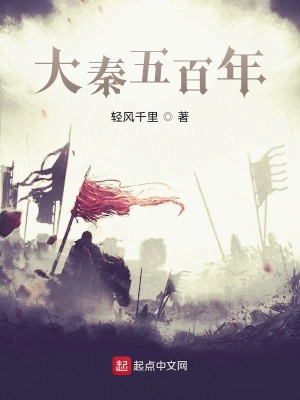
Five Hundred Years of Qin
大秦五百年
- Status
- Completed
- Length
- 1.3M Words
- Genre
- Historical
- Subgenre
- Qin-Han & Three Kingdoms
- Updated
- 4y ago
- Source
- Qidian
Stats
Tags
Synopsis
More by this author
In booklists 7
🎄💜 Dreamy Historical Fiction 💜🎄
💜 Historical Fiction List 💜 🔔 I don't have much time to read, so my reviews are pretty brief. Please bear with me~(•́ω•̀ ٥) 💜 Advertisers are welcome to leave their ads. Books I like will get at least a week of promotion; books I don't like will be removed. Please don't post duplicate ads! 🛎 Promotion terms for books that suit my taste: 💜 Under 100,000 words: promoted for one week~ 💜 Over 100,000 words: promoted for two weeks~ 💜 Published books with steady updates will get longer promotion~ 🔔 No
Imperial Ambitions
When autumn comes on the eighth day of the ninth month, my flowers will bloom and all others will die. A thousand miles of rivers and mountains, a scene of grandeur: how many heroes have come and gone? Thrones are built on bones, imperial roads on yellow sand. The history books record them all in a few simple strokes. Three Kingdoms: Empire of the Realm, by Xiaoxiao Majia No. 1 Three Kingdoms of Immortals and Warriors, by Baiyin Longma
A Reading List
I share the books I like with everyone. Most are classic completed novels I’ve read myself, along with interesting new books. There will be all kinds of genres, mainly fantasy, transmigration, supernatural, and xianxia. More genres will gradually be added in the future. I hope everyone enjoys them, and remember to bookmark this list!

With Gratitude to All the Readers of the World
I love learning and often read meaningful books. I enjoy stories with twists and turns that keep you on the edge of your seat and move you to tears. Books have souls, and it's easy to get drawn into one. They seem to transport you to another world, making you feel as if you're right there in the story.


The Finest Survive
Recommending books I personally think are worth a read! I'm not recommending the ones everyone already knows.
Becoming Emperor 🌸 Emperor 🌸 Founding a Country Overseas 🌸 Han Chinese
We descendants of Yan and Huang are invincible under heaven! Let’s write a story of pride for the Han people, and may the Han people endure forever! Lately, I don’t like stories where someone transmigrates and immediately becomes emperor, then gets all kinds of golden fingers and the plot makes no sense. A transmigrator’s greatest advantage isn’t knowing history by heart. It’s that we’ve all had a modern education and know some basic physics and math. Even just being literate could earn you a hi




Underrated Gems Worth Reading, No Cheap Drama or Clichés
I've been reading for over ten years, and there really aren't many books left that I can enjoy
Readers also read
 My Father Is Wen Tianxiang, and We Win the Battle of Yashan from the Start
 A Guide to Building Civilization in a Primitive Tribe
 Daming: Asking for the Throne at the Beginning, Lao Zhule Went Crazy
 My Only Method: I Will Add More Points to Become Stronger at the End of Ming Dynasty
 Slaughtering My Way Through the Marvel Universe: Starting with The Boys
 The Age of the Yellow Sky
 Transmigrated to the Ming Dynasty to Become a Tyrant
 The Road Less Traveled
 The World of the Extreme Path: Tempering My Body Through Terror
 The Sun and Moon Endure Forever
 My Big Brother Is Called Zhu Chongba
 Back to the Three Kingdoms to Fight the Five Barbarians
 The Ming Dynasty’s Most Ruthless General
Reader comments 38
Google Translate
It is indeed possible for Da Qin to make a comeback. As long as the homeland is not lost and the great pass is not broken, the nobles and rebels of the six countries are not monolithic.
It's been a long time since I've seen a normal historical novel. Now when I search for the word Da Qin in Qidian. Com, most of them are anime-style novels like Qin Shi Mingyue. I'm getting tired of reading them all.
The book is fairly normal, with a good plot, but there are areas for improvement: 1. The author did not make enough use of the lobbyists during the Warring States Period, and the counselors around him did not create an image. They were too superficial and relied too much on themselves. 2. For weak political use, at least a formal edict should be issued that is known to all the world, to politically dismantle the hatred of the six countries and boost the morale of the people of Qin. Instead of taking the initiative to tell the opponent that I am in power when the opponent does not know, it is a bit childish. 3. I am relatively stingy about rewards. I am often busy with performances to win people's hearts. I only give them to a few officials at most, but I don't give big rewards to encourage them. 4. The neglect of Lingnan forces cannot be tolerated. At the very least, lobbyists or envoys should be sent to win over Zhao Tuo to contain Chu. 5. The war mobilization system of Qin is still not explored enough. 6. When will the technology tree light up? At least gunpowder should come out to defend the city, right? Why do you have the nerve to call yourself a science guy? 7. How to receive Korean letters? How to dig into the corners of the six countries and drive a wedge between them. Disgrace Liu Bang and Xiang Yu? At least solve these problems, and good book clubs will become popular.
Seriously, if you let Liu Bang and other traitors of the Xiang family go like this, they will make trouble again when something goes wrong. Isn't Qin Shihuang's lesson enough? What's the use of just talking about kindness in these troubled times? If you don't use some iron-fisted measures, you will only make them push forward. The protagonist you write does not look like a king at all.
I have always believed that no matter how wise an emperor was during his lifetime and how great his achievements were, as long as he chose the wrong successor, I don't think he was such a powerful wise emperor, such as Ying Zheng Yang Jian.
You are so awesome and you deleted my comment. What's wrong with me, a person who paid to subscribe, to express my opinion? Why do I have to spend money to support you?
The Qin Dynasty's ancient empire was destroyed by treacherous ministers in just three years. It can be seen that the rebellious and powerful traitors are the culprits of the country...
Popular science about the official positions of the Qin Dynasty. Today's update of the Three Gongs and Nine Ministers Central Official System 1. San Gong prime minister The prime minister is the highest chief executive, receiving the emperor's orders from above, commanding hundreds of officials below, and taking charge of government affairs. Sometimes alone, sometimes separated on the left and right. Sometimes it is also called Xiangbang. Prime Minister, granted the title of Marquis. The prime minister is in charge of all government affairs, and his subordinates include lieutenants, nine ministers, etc. Taiwei The prime minister was the highest military officer, but there was actually no one in the Qin Dynasty. All military power belonged to the emperor, who directly commanded the generals. [This is also one of the reasons for the demise of the Qin Dynasty. Censor doctor The deputy prime minister, who is under the prime minister, is in charge of the affairs of the left prime minister. [Probably when there was only one prime minister, the imperial censor was equivalent to the left prime minister. Before the Han Dynasty, the right was respected. Liu Bang was a native of the Chu State. Since ancient times, the Chu State has respected the left and regarded the right as inferior. The imperial censor has two main responsibilities, one is to assist the prime minister, and the other is to supervise the officials. There are two subordinate officials: one is the Yushi Cheng, who is the deputy to the official; the other is the Yushi Zhongcheng. Since Zhongcheng, the censor, was in charge of the imperial censors and the censors of all counties, he could order the censor to correct all officials according to the rules, so he had particularly powerful power. [Among the three princes, the prime minister is the eldest, followed by the Taiwei, and the imperial censor is the youngest. 2. Jiuqing and others Jiuqing The nine ministers are all under the control of the prime minister and are responsible for specific affairs. In ancient times, the family and the country were integrated. The Jiuqing of the Qin Dynasty were not only responsible for national affairs, but also for the emperor's food, clothing and daily life. Jiuqing refers to Weiwei, Langzhongling, Taipu, Tingwei, Dianke, Fengchang, Zongzheng, Shaofu, and the governor of Su Neishi. Jiuqing rank [Salary] Two thousand stones [Zhong means full, stone is a unit of weight. That is to say, for a person who earns more than 2,000 shi, the monthly salary is 180 hu, and the annual salary is 2,160 hu millet, which is 2,160 shi, 1 shi = 250 catties. Of course, the amount of 1 stone is different in different periods. I am not a party to verify this, so please forgive me. ①. Fengchang Feng Chang, in charge of the sacrificial etiquette of the ancestral temple. The subordinate officials include Tai Le, who is responsible for the music of the palace; Tai Zhu, who is responsible for the sacrificial affairs of the Imperial Ancestral Temple; Da Zai, who is responsible for the emperor's diet and sacrificial food offerings; the imperial physician, who is responsible for managing the witch doctors; the Tai Shi, who is responsible for observing the weather and stars and serving as the royal historian; and the Tai Di, who is responsible for performing divination in response to the emperor's orders. ②. Lang Zhongling Lang Zhongling, the manager of all personnel on duty in the corridor, is roughly equivalent to today's chief of staff. The subordinate officials of Lang Zhongling include the officials who are responsible for discussion; the visitors who are responsible for welcoming guests and accepting the ministers' presentations; the princes who serve the palace and are waiting to be appointed; and the imperial guards such as Qimen and Yulin. ③, Weiwei Guardsmen, also known as guard captains, are responsible for the security of the gates of the capital. The subordinate officials include the commanding officer of the official car and the commanding officer of the guard. The official chariot commanding officer is responsible for the deployment of public chariots and horses. Guard order, commanding the guards at the palace gates. ④. Tai servant Taipu, an official in the Zhou Dynasty, was placed along the Qin Dynasty, and was in charge of the royal chariots and horses. Zhao Gao held this post before taking up the post of Lang Zhongling. ⑤, Tingwei Tingwei, the highest judicial officer, has the same powers as today's Minister of Justice. The subordinate official is Ting Wei Cheng. There is a prison in the Tingwei Department, which is called Tingwei Prison. If the minister is guilty, he will go to Tingwei Prison. ⑥, Dianke Dianke was in charge of the pilgrimage affairs of princes and leaders of ethnic minority tribes, and received the officials of various counties and counties. There are travelers who belong to the officials and are ready to be dispatched to distant places at short notice. ⑦, Zong Zheng Zong Zheng, also known as Zong Ling, is in charge of royal relatives and registration of family genealogy. If the royal family is guilty, their membership will be extinguished. The subordinate official is Zong Zhengcheng. ⑧. Treat the internal history of millet. In charge of the internal history of millet, in charge of the storage of grains, gold and jade, and equivalent to the treasurer of the treasury. The subordinate officials include Taicang Ling and Taicang Cheng, who are in charge of the storage of grain in the treasury; there are Pingzhun Ling and Pingzhun Cheng, who are in charge of prices in the capital and counties. [The chief officer is called Ling, and the adjutant is called Cheng. Some adjutants in other government offices are called Pushe, which is derived from the archers on ancient chariots] ⑨, Shaofu The Shaofu is in charge of the emperor's private property and takes care of the emperor's daily life. Officials include: · Yufu Ling and Yufu Cheng were in charge of the weaving and storage of the emperor's clothing; ·Shang Guanling and Shang Guancheng hold the crowns required for the emperor's various attires; ·Shang Yi Ling, Shang Yi Cheng, in charge of serving the emperor in changing clothes; ·Shang Shi Ling, Shang Shi Cheng, responsible for serving the emperor's diet; ·Shang Muling and Shang Mucheng were in charge of the emperor's bathing; ·Shang Xi Ling and Shang Xi Cheng were in charge of the emperor's bedding utensils; ·Shang Shuling, Shangshu Cheng, and Shangshu Pushe are in charge of issuing Chinese documents in the palace and submitting them to the emperor; ·Tai Guan Ling and Tai Guan Cheng are in charge of cooking the emperor's food; in charge of the royal family's meals; ·The eunuch orders and controls the eunuchs in the palace; · Zhongshu Ye Zhizhi Ling, Zhongshu Ye Zhe Cheng, in charge of guidance, reception, ceremonies, etc. In the palace, and are filled with eunuchs; ·The Imperial Physician Ling and the Imperial Physician Cheng are in charge of medicine for the emperor and the harem; ·Du Shuichang and Du Shuicheng are in charge of water conservancy affairs in various counties and counties, and have official offices stationed in all important water systems; ·Yuefu Ling and Yuefu Cheng are in charge of the rehearsal, performance, and arrangement of court music, as well as the management of musical artists; ·The Yongxiang Order governs the lives of the eunuchs and maids in the harem, as well as the punishment of crimes committed by palace residents. [Among these subordinate officials of the Shaofu, the two official offices of Shangshu and Zhongshu Yezhe had a profound impact on the political development of various dynasties in later generations, and were also the origins of Shangshu Sheng and Zhongshu Sheng. The remaining "shangs" later became female officials.
Local official positions are updated today 3. Local official system During the Warring States Period, the system of prefectures and counties was generally implemented in the vassal states. The establishment of counties in the Qin State began with Shang Yang's Reform in the twelfth year of Qin Xiaogong. In the twenty-sixth year of Qin Shihuang's reign, the country was officially divided into thirty-six counties, which were later gradually added to more than forty counties. Internal history Xianyang is the seat of the capital. It does not have a county guard but is under the direct jurisdiction of the imperial court. Its chief is the internal history officer, who has the same position as Jiuqing and can participate in government affairs [mayor of Beijing]. The internal history officials include: ·Du Shuichang, Du Shuicheng, in charge of water conservancy; ·Tieguanchang and Tieguancheng are responsible for metallurgy and manufacturing agricultural equipment; · Linxi Ling and Linxi Cheng were in charge of grain warehouses and the shepherding of sacrificial livestock. County system As a first-level administrative place, the county governs both the military and civilians. The county has three main officials who are not subordinate to each other: the county guard, the censor, and the county captain. 1. Sheriff Sheriff, the chief of the county, mostly military generals in the border areas, and Lang Guan in the interior, with silver seal and green ribbon [symbol], rank of two thousand shi [which means almost two thousand shi, annual salary is only 1440 dendrobium]. The power of the county governors in the Qin Dynasty was very great. Except for the county magistrates and county magistrates who were directly appointed and removed by the court, the censors responsible for supervising the county administration, and the county lieutenants responsible for commanding the garrison and managing public security, other officials in the county were appointed and removed by the county governors themselves. The adjutant is the county magistrate, and the border county has a chief history officer to manage the military and military affairs. 2. Supervisor and Censor The censor is subordinate to the censor Zhongcheng and is responsible for supervising the county governor and other officials. Equivalent to today's Provincial Discipline Inspection Commission Secretary. 3. County Lieutenant A county lieutenant is in charge of the county garrison, in charge of public security and detecting thieves. He has a silver seal and green ribbon, and a rank of two thousand shi [monthly salary of 100 dendrobium, annual salary of 1,200 dendrobium]. The county lieutenants were directly under the jurisdiction of the imperial court and were in conflict with the county governors. There is a chancellor for the subordinate officials of a county lieutenant. Each county in the interior has one chancellor, and a large county has two chancellors. The frontier fortress counties have one captain every hundred miles, and the captain oversees two Shishi and two Weishi, and is in charge of the border fortress garrison. The Guandu Lieutenant is responsible for handling the pass, and all of them are subordinate to the county captain. Xiangting Townships were built below the county level, pavilions were built below the country level, and leys were built below the pavilions. These are people's autonomous organizations with clans as the core. ①. Three elders The three elders are those with high moral character and prestige in the township, who are responsible for education and education. Families with so-called filial piety, benevolence and righteousness can apply to the county for commendation, and can recommend outstanding children to serve as county officials. ②. A man of rank and stingy In a township with a population of more than 5,000 people, the county appoints one person to be a rank [salary]; in a township with a population of less than 5,000 people, the county appoints one person to be a miser. Both have the same responsibilities, which are to mediate neighborhood disputes, help the government collect taxes, and arrange corvee labor. ③, Travel Youyou is a type of corvee, responsible for patrolling places and hunting down thieves. ④. Pavilion chief Pavilion chief, official position, is also a type of corvee. The pavilion chief's subordinates are the pavilion father and Qiu Thief. The former is responsible for cleaning the pavilion, and the latter is responsible for chasing the thieves. [Autonomy is implemented in the countryside and the clan's appeal is strong, so there are many core figures of the proud and powerful clan, such as pavilion chiefs, who cannot be held by ordinary people. Although Liu Bang was born in a commoner family, his family was not necessarily poor. The difference between Liu Bang and Xiang Yu is, firstly, bloodline, which was still very important at that time; secondly, family population. Xiang Yu was an aristocrat of the Chu Kingdom, and his family had been accumulated for hundreds of years. Liu Bang's family was definitely not as good as him, but it did not mean that Liu Bang was a so-called grassroots. Liu Bang's victory symbolized the rise of the emerging wealthy landlord family, while Xiang Yu's decline symbolized the decline of the traditional aristocratic landlords. Although there were man-made reasons for Liu Sheng's defeat, it was indeed beyond human power to stop it.
Personally, I suggest the author to study the war model of Qin Dynasty. In addition, the author seriously underestimated the combat effectiveness of soldiers when the Qin Dynasty was not destroyed. In particular, Chengjian's combat operations are the best in the world. Da Qin of that era would definitely dare to say this. When the protagonist traveled to the past, the core main force of Da Qin still existed, and these young people were still young people with a martial spirit. Due to the words and deeds of the older generation, most people know the simple way to coordinate military formations. How to coordinate with each other is often practiced in the village in their free time, or it is spontaneous. As long as you go into battle, you will be a qualified soldier immediately, without much practice. In defensive counterattack, besides Wei Wu soldiers, it is the Qin army. Attacking, the Qin Dynasty can defeat thousands of troops; defending, the Qin Dynasty's thousands of armies are difficult to defeat. Do you know what it means to be a world-famous pass like Hangu Pass? A thousand soldiers of the Qin Dynasty can be worth a hundred thousand soldiers. It's such an exaggeration. There is no way to lay out military formations there, so we can only attack the city in small numbers. The trebuchets cannot hit the city walls, and it is difficult to hit people with arrows from that angle. When the Soldier Fairy comes, we can only attack the city honestly. Without such natural danger, Da Qin could not stop the armies of the Six Kingdoms. Later, why did Xiang Yu and Liu Bang have such good soldiers, and why Liu Bang wiped out all the enemies so quickly? It was precisely because they had the foundation of the Qin Dynasty, including these excellent sources of soldiers, endless food, enlightened policies, etc.