Library
Browse and search books
2,317 novels found

"World History and Culture Series"

I Heard About You
Literature风闻有你
(u. S.) Joni Erkeson Tada Steve Esty
"Where is God" made Joni and her story familiar to Chinese readers. Joni was disabled for some reason and paralyzed when she was a teenager, but she gradually recovered from the pain and disappointment. Not only did she face life positively, but more importantly, the global disability aid business she launched has benefited thousands of disabled people around the world, both physically and mentally. As a woman who has been confined to a wheelchair since she was young, Joni has a rich experience and unique perspective on suffering. This book is the crystallization of her life thinking. Everyone avoids suffering like the plague, but who can really avoid it? Is it really a good thing if you avoid it? Suffering is our only path to the eternal kingdom. On the scale of suffering, some people have a higher scale and experience heavier sufferings; some people have a lower scale and experience lighter sufferings. But whether it is light or heavy, as long as they are dealt with properly, it will become a good thing that is of great benefit to themselves and others. Joni's thinking and understanding of suffering are completely credible. She is fully qualified to talk about suffering, and she is also fully qualified to encourage people around the world who are in similar situations to her.
"Where is God" made Joni and her story familiar to Chinese readers. Joni was disabled for some reason and paralyzed when she was a teenager, but she gradually recovered from the pain and disappointment. Not only did she face life positively, but more importantly, the global disability aid business she launched has benefited thousands of disabled people around the world, both physically and mentally. As a woman who has been confined to a wheelchair since she was young, Joni has a rich experience and unique perspective on suffering. This book is the crystallization of her life thinking. Everyone avoids suffering like the plague, but who can really avoid it? Is it really a good thing if you avoid it? Suffering is our only path to the eternal kingdom. On the scale of suffering, some people have a higher scale and experience heavier sufferings; some people have a lower scale and experience lighter sufferings. But whether it is light or heavy, as long as they are dealt with properly, it will become a good thing that is of great benefit to themselves and others. Joni's thinking and understanding of suffering are completely credible. She is fully qualified to talk about suffering, and she is also fully qualified to encourage people around the world who are in similar situations to her.

Coffee on the Terraces
Literature梯田上的咖啡
Graydon
The Kalinga people live in the northern Philippines. In the 1970s, the Bruces came to a tribe of Kalinga people and lived with them, translating the New Testament into the local language. They also summarized the grammatical rules of local languages and compiled pinyin tables for them. The Bruces have lived and worked in the Philippines for 16 years. Their children also grew up there and have established deep friendships with the locals. The Philippine government appreciates their efforts and speaks highly of the literacy campaign they launched.
The Kalinga people live in the northern Philippines. In the 1970s, the Bruces came to a tribe of Kalinga people and lived with them, translating the New Testament into the local language. They also summarized the grammatical rules of local languages and compiled pinyin tables for them. The Bruces have lived and worked in the Philippines for 16 years. Their children also grew up there and have established deep friendships with the locals. The Philippine government appreciates their efforts and speaks highly of the literacy campaign they launched.
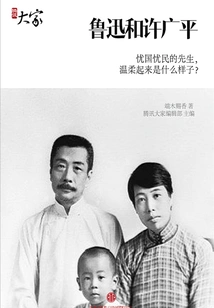
鲁迅和许广平:忧国忧民的先生,温柔起来是什么样子?
Tencent Editorial Department
"Lu Xun and Xu Guangping" details the legendary love story between Lu Xun and Xu Guangping. How did Xu Guangping and Lu Xun get together? This book mainly uses "A Book of Two Places" as the main line to sort out how the teacher and student fell in love, eloped and moved to live together. Xu Guangping is by no means a "beautiful" woman. Judging from her knowledge, character, temperament and actual situation, she should be said to belong to what people today call a "strong woman". She is his student, career partner, and soul destination. In 1934, Lu Xun gave Xu Guangping a sincere and affectionate poem, which goes like this: For ten years we have shared hardships hand in hand, and it is also sad to wet each other with foam. Chatting and drawing pictures soothe the tired eyes, and the heart knows the joys and sorrows. There is no doubt that the love song composed by the two of them is not only touching but also passionate and romantic. From the perspective of love, marriage and daily life, this book tells the development and changes of the relationship between Lu Xun and Xu Guangping, touching on the past and present events behind Lu Xun. This highlights Lu Xun's side as an ordinary person and greatly shortens the distance between Lu Xun and readers.
"Lu Xun and Xu Guangping" details the legendary love story between Lu Xun and Xu Guangping. How did Xu Guangping and Lu Xun get together? This book mainly uses "A Book of Two Places" as the main line to sort out how the teacher and student fell in love, eloped and moved to live together. Xu Guangping is by no means a "beautiful" woman. Judging from her knowledge, character, temperament and actual situation, she should be said to belong to what people today call a "strong woman". She is his student, career partner, and soul destination. In 1934, Lu Xun gave Xu Guangping a sincere and affectionate poem, which goes like this: For ten years we have shared hardships hand in hand, and it is also sad to wet each other with foam. Chatting and drawing pictures soothe the tired eyes, and the heart knows the joys and sorrows. There is no doubt that the love song composed by the two of them is not only touching but also passionate and romantic. From the perspective of love, marriage and daily life, this book tells the development and changes of the relationship between Lu Xun and Xu Guangping, touching on the past and present events behind Lu Xun. This highlights Lu Xun's side as an ordinary person and greatly shortens the distance between Lu Xun and readers.

Front
Literature前线
China
There is no smoke on the front line of the fight against SARS, but this front line is no less than a war-torn battlefield. In this battlefield, life and death, dirt and tiredness, gain and loss, honor and humiliation... All of these are constantly testing every participant and shaping their souls. Normally, they are weak-looking angels in white, but now they have become selfless and fearless warriors! What is the strength that supports their weak bodies? What spirit inspires them to move forward bravely? How did a group of seemingly ordinary souls become great and noble? Read this true report from a nurse who participated in the fight against SARS. You, me, him (her) and more souls of our nation may undergo a rare baptism like the white warriors who participated in the war!
There is no smoke on the front line of the fight against SARS, but this front line is no less than a war-torn battlefield. In this battlefield, life and death, dirt and tiredness, gain and loss, honor and humiliation... All of these are constantly testing every participant and shaping their souls. Normally, they are weak-looking angels in white, but now they have become selfless and fearless warriors! What is the strength that supports their weak bodies? What spirit inspires them to move forward bravely? How did a group of seemingly ordinary souls become great and noble? Read this true report from a nurse who participated in the fight against SARS. You, me, him (her) and more souls of our nation may undergo a rare baptism like the white warriors who participated in the war!

Miserable Rescue
Literature凄苦营救
Liu Tao
The Qingdao Fire Brigade rushed to Yingxiu Town, the hardest-hit area by the earthquake in Sichuan. Some officers and soldiers carried out rescue work in the ruins of the office building of Yingxiuwan Power Plant. Sergeant Chen Chen was responsible for talking to the woman buried in the rubble to relieve the woman's mental pressure. This woman's name is Yu Jinhua, and she stayed in the ruins for 150 hours. When CCTV broadcast live footage of her rescue, it called it a "miracle of life."
The Qingdao Fire Brigade rushed to Yingxiu Town, the hardest-hit area by the earthquake in Sichuan. Some officers and soldiers carried out rescue work in the ruins of the office building of Yingxiuwan Power Plant. Sergeant Chen Chen was responsible for talking to the woman buried in the rubble to relieve the woman's mental pressure. This woman's name is Yu Jinhua, and she stayed in the ruins for 150 hours. When CCTV broadcast live footage of her rescue, it called it a "miracle of life."

Zhongguancun Standard Story
Literature中关村标准故事
Editor-in-chief Liang Hongbing
This book shows the story behind the standards and describes the legend of technological innovation. This book reflects Zhongguancun's successful models and practices in standard creation, application, and promotion in recent years from different aspects. It shows the eye-catching innovation achievements in many fields of strategic emerging industries, involving electronic information, biomedicine, energy conservation and environmental protection, new energy and many other fields. It continuously promotes technological innovation, promotes the formulation of standards, and helps companies go abroad. Little-known stories.
This book shows the story behind the standards and describes the legend of technological innovation. This book reflects Zhongguancun's successful models and practices in standard creation, application, and promotion in recent years from different aspects. It shows the eye-catching innovation achievements in many fields of strategic emerging industries, involving electronic information, biomedicine, energy conservation and environmental protection, new energy and many other fields. It continuously promotes technological innovation, promotes the formulation of standards, and helps companies go abroad. Little-known stories.

Fear Without Love
Literature恐惧无爱
He Jianming
Because they really need your love so much, I think everyone should understand the fact that if you want another person to love you, then you should at least love your own relatives, otherwise the love you get from others will eventually be lost, because you don't really understand what love is. As independent people, we can lose our marriage, our family, our wealth, our reputation, and everything, but we cannot live without family affection. Without family affection, human beings will stop reproducing and will be quickly and completely destroyed...
Because they really need your love so much, I think everyone should understand the fact that if you want another person to love you, then you should at least love your own relatives, otherwise the love you get from others will eventually be lost, because you don't really understand what love is. As independent people, we can lose our marriage, our family, our wealth, our reputation, and everything, but we cannot live without family affection. Without family affection, human beings will stop reproducing and will be quickly and completely destroyed...

Life is Picturesque
Literature人生如画
Yang Shiyun
Feng Zhangchu's home falls under the jurisdiction of the "Sanhe Neighborhood Committee". Neighborhood committee cadres all know that there is a pair of retired elderly people named Feng Zhangchu and Yu Jinmei in their jurisdiction. They are particularly caring and have used their royalties to help the poor many times. Once, when the old couple was reading the newspaper, they found that a migrant worker was in trouble and needed help, so they immediately made a donation. But the cadres did not know his colorful life experience. Suddenly one day, an article titled "A good harvest always belongs to the hard-working - the anecdotes of the old model worker and painter Feng Zhangchu" in the "Shanghai Senior News" with a circulation of nearly one million caught the attention of the neighborhood committee cadres.
Feng Zhangchu's home falls under the jurisdiction of the "Sanhe Neighborhood Committee". Neighborhood committee cadres all know that there is a pair of retired elderly people named Feng Zhangchu and Yu Jinmei in their jurisdiction. They are particularly caring and have used their royalties to help the poor many times. Once, when the old couple was reading the newspaper, they found that a migrant worker was in trouble and needed help, so they immediately made a donation. But the cadres did not know his colorful life experience. Suddenly one day, an article titled "A good harvest always belongs to the hard-working - the anecdotes of the old model worker and painter Feng Zhangchu" in the "Shanghai Senior News" with a circulation of nearly one million caught the attention of the neighborhood committee cadres.

Public Cafeteria
Literature公共食堂
Feng Xintai
Regardless of whether the two prerequisites for the socialization of large-scale industry and housework are met or not, allowing women to choose between collective agricultural labor and housework is in line with Engels's view of choosing between the two. The sudden rise of the large-scale public canteen movement in 1958 involuntarily freed women from housework such as three meals a day. It can not but be said to be a great miracle since the birth of the human family. This year, I passed a confusing exam and became the first student of Mishan Junior High School. On a Saturday afternoon, I passed the Mishan tea shed and headed north along the newly built dirt road to go home. When I passed the intersection that forked into Xia Fengzhuang, I found a pile of various cast iron cooking utensils collected by ordinary people on the roadside, which seemed to be sold as scrap iron. According to the recent recollection of clan brother An Sheng, when he was finishing primary school in Nanzhuzhuang, he also saw these cooking utensils collected from various families piled up on both sides of the road in the village.
Regardless of whether the two prerequisites for the socialization of large-scale industry and housework are met or not, allowing women to choose between collective agricultural labor and housework is in line with Engels's view of choosing between the two. The sudden rise of the large-scale public canteen movement in 1958 involuntarily freed women from housework such as three meals a day. It can not but be said to be a great miracle since the birth of the human family. This year, I passed a confusing exam and became the first student of Mishan Junior High School. On a Saturday afternoon, I passed the Mishan tea shed and headed north along the newly built dirt road to go home. When I passed the intersection that forked into Xia Fengzhuang, I found a pile of various cast iron cooking utensils collected by ordinary people on the roadside, which seemed to be sold as scrap iron. According to the recent recollection of clan brother An Sheng, when he was finishing primary school in Nanzhuzhuang, he also saw these cooking utensils collected from various families piled up on both sides of the road in the village.

Dr. Gordon
Literature戈登医生
Wang Ruiyun
Reading your two novels, I felt a long-lost sense of fulfillment. Enrichment is a common-sense concept, far from profound, and even a bit cliché. It is nothing more than a rhetoric that is meaningful and true to feelings, which some "new" writers and critics disdain. Acknowledging literary common sense is sometimes like dancing with shackles, and it is not as easy as flying wildly and imaginatively. Especially today when the hollowing out of literature is packaged with slogans that eliminate meaning and content and become fashionable, it is often easier to get applause and cheers by pretending to be sophisticated while avoiding reality. The media's competition for kitsch and writers' pursuit of fame and fortune have quietly eroded the poetic character of novels. There is no romance, no imagination, and no passion. More and more things called novels are actually just bar flirting guides and shopping mall textbooks, with nothing but desire.
Reading your two novels, I felt a long-lost sense of fulfillment. Enrichment is a common-sense concept, far from profound, and even a bit cliché. It is nothing more than a rhetoric that is meaningful and true to feelings, which some "new" writers and critics disdain. Acknowledging literary common sense is sometimes like dancing with shackles, and it is not as easy as flying wildly and imaginatively. Especially today when the hollowing out of literature is packaged with slogans that eliminate meaning and content and become fashionable, it is often easier to get applause and cheers by pretending to be sophisticated while avoiding reality. The media's competition for kitsch and writers' pursuit of fame and fortune have quietly eroded the poetic character of novels. There is no romance, no imagination, and no passion. More and more things called novels are actually just bar flirting guides and shopping mall textbooks, with nothing but desire.

The Truth About Food Revealed
Literature食品真相大揭秘
(japan) Abe Department
Disaster comes from the mouth, and disease enters from the mouth. Reality seems to increasingly confirm this. Food is the most important thing for the people. There is a saying that "the ears are filled with wonderful sounds, and the tongue is filled with delicious food". However, with the development today, is the "superior taste" we pursue still the "superior taste" mentioned in ancient times? Do you believe it when a basin of pork bone soup is brought to you? It has no pork bones and only uses "white powder"? When you taste the delicious instant meatballs with relish, have you ever thought that what you swallowed in your stomach is all sticky "waste meat", which the manufacturer painstakingly used 20 or 30 kinds of additives to accumulate. When excessive intake of chemical additives makes you feel unwell, do you want to know the "underlying" of food? Do you want to know? ...
Disaster comes from the mouth, and disease enters from the mouth. Reality seems to increasingly confirm this. Food is the most important thing for the people. There is a saying that "the ears are filled with wonderful sounds, and the tongue is filled with delicious food". However, with the development today, is the "superior taste" we pursue still the "superior taste" mentioned in ancient times? Do you believe it when a basin of pork bone soup is brought to you? It has no pork bones and only uses "white powder"? When you taste the delicious instant meatballs with relish, have you ever thought that what you swallowed in your stomach is all sticky "waste meat", which the manufacturer painstakingly used 20 or 30 kinds of additives to accumulate. When excessive intake of chemical additives makes you feel unwell, do you want to know the "underlying" of food? Do you want to know? ...

狮城探儿记
Qingqing
I said, son, just know the differences between China and foreign countries. For example, Singapore is a highly welfare society. People have no worries about life, old age, illness and death. Of course, they can become a "money earner"! As for the Chinese, housing, medical care, and children's education alone will overwhelm you. I don't know why you want to give up your white-collar job here and want to go back to China and live an ordinary life. You think it's hard here, but it's even harder back home! You know how difficult it is to find a job in China, right? Have you ever heard that finding a job is more difficult than finding a wife? If you don't have a good job, you won't be able to keep a wife. ...
I said, son, just know the differences between China and foreign countries. For example, Singapore is a highly welfare society. People have no worries about life, old age, illness and death. Of course, they can become a "money earner"! As for the Chinese, housing, medical care, and children's education alone will overwhelm you. I don't know why you want to give up your white-collar job here and want to go back to China and live an ordinary life. You think it's hard here, but it's even harder back home! You know how difficult it is to find a job in China, right? Have you ever heard that finding a job is more difficult than finding a wife? If you don't have a good job, you won't be able to keep a wife. ...

Survival and Safety
Literature生存与安然
Wang Xiaoni
It took about three full days from Hyrule before I adapted to everything in my original life. It is estimated that it takes three days for a sheep from the grassland to adapt to the city from panic to peace. The train started to move south, and the world was in the south. I felt like I was slipping back into that thick and familiar pocket. In the past half month, I have unexpectedly received the kindness, calmness, generosity and comfort of the land of Hulunbuir. I am a happy person.
It took about three full days from Hyrule before I adapted to everything in my original life. It is estimated that it takes three days for a sheep from the grassland to adapt to the city from panic to peace. The train started to move south, and the world was in the south. I felt like I was slipping back into that thick and familiar pocket. In the past half month, I have unexpectedly received the kindness, calmness, generosity and comfort of the land of Hulunbuir. I am a happy person.

Solidity in Tranquility
Literature宁静中的沉实
Wang Zhaosheng
Influenced by Yu Qiuyu's historical and cultural prose, Chinese prose began to turn its attention to "history", and then discovered the connotation of culture from the "depths of history", which became the collective consciousness and unconsciousness of essayists. From one aspect, this is valuable; but from another aspect, it also brings about a problem, that is, the writer's ignorance, blindness or even numbness towards the times. In other words, history has become a great magnet that attracts essayists, thus leading to the writer's "absence" and "indifference" to the current era. In recent years, especially in 2009, Chinese prose has gradually become alienated from "history" and turned its attention to reality, which has become particularly penetrating to the times.
Influenced by Yu Qiuyu's historical and cultural prose, Chinese prose began to turn its attention to "history", and then discovered the connotation of culture from the "depths of history", which became the collective consciousness and unconsciousness of essayists. From one aspect, this is valuable; but from another aspect, it also brings about a problem, that is, the writer's ignorance, blindness or even numbness towards the times. In other words, history has become a great magnet that attracts essayists, thus leading to the writer's "absence" and "indifference" to the current era. In recent years, especially in 2009, Chinese prose has gradually become alienated from "history" and turned its attention to reality, which has become particularly penetrating to the times.

Facing the Sea
Literature面对大海的诉说
Chao Yu
The outline of Kaishan Island finally appeared, but there was only a simple pier on the island, and the ship could not anchor due to strong winds and waves. The fishery administration boat was tossed around by huge waves and could not dock at all. Looking from a distance, Wang Jicai and Wang Shihua, who had been waiting on the pier for a long time, were constantly using their hands to navigate. Waves several meters high occasionally obscured their figures. Half an hour passed, but the fishery administration boat, which was quarreling left and right, was still unable to dock. The helpless Captain Zhou said: It's no longer reliable, so safety should come first. Ordered to return. Only then did I realize for myself the fact that Wang Jicai had stated to me many times - no ship could dock in the event of strong winds and waves. When I got back to the hotel, I had vomited so much that I passed out. The service staff put me on the bed and slept for more than five hours.
The outline of Kaishan Island finally appeared, but there was only a simple pier on the island, and the ship could not anchor due to strong winds and waves. The fishery administration boat was tossed around by huge waves and could not dock at all. Looking from a distance, Wang Jicai and Wang Shihua, who had been waiting on the pier for a long time, were constantly using their hands to navigate. Waves several meters high occasionally obscured their figures. Half an hour passed, but the fishery administration boat, which was quarreling left and right, was still unable to dock. The helpless Captain Zhou said: It's no longer reliable, so safety should come first. Ordered to return. Only then did I realize for myself the fact that Wang Jicai had stated to me many times - no ship could dock in the event of strong winds and waves. When I got back to the hotel, I had vomited so much that I passed out. The service staff put me on the bed and slept for more than five hours.

East No. 8 Boundary Monument
Literature东八号界碑
Zhou Zhonggui
On the long border between China and Vietnam, starting from Ping'er River near Friendship Pass, it extends east to Dongxing and west to Yunnan. It is divided into east road and west road, and there are countless boundary monuments. These boundary monuments engraved with the words "Guangxi, China" have been baptized by subtropical winds and rains and influenced by the smoke of war. The bright red handwriting is still very eye-catching because they symbolize the country's dignity and territorial sovereignty. Under normal circumstances, the border is quiet and tranquil, with the whirling canopy of the betel nut tree swaying in the subtropical monsoon. Border residents who have had the custom of intermarriage for generations move freely around, and birds and animals appear suddenly, creating a peaceful and peaceful scene. However. On the afternoon of April 20, 2005, on our side of the boundary pillar No. 8 On East Road, crossfire consisting of sniper rifles, pistols, and "56" submachine guns, mixed with the deafening explosions of grenades, tore through the tranquility of the border.
On the long border between China and Vietnam, starting from Ping'er River near Friendship Pass, it extends east to Dongxing and west to Yunnan. It is divided into east road and west road, and there are countless boundary monuments. These boundary monuments engraved with the words "Guangxi, China" have been baptized by subtropical winds and rains and influenced by the smoke of war. The bright red handwriting is still very eye-catching because they symbolize the country's dignity and territorial sovereignty. Under normal circumstances, the border is quiet and tranquil, with the whirling canopy of the betel nut tree swaying in the subtropical monsoon. Border residents who have had the custom of intermarriage for generations move freely around, and birds and animals appear suddenly, creating a peaceful and peaceful scene. However. On the afternoon of April 20, 2005, on our side of the boundary pillar No. 8 On East Road, crossfire consisting of sniper rifles, pistols, and "56" submachine guns, mixed with the deafening explosions of grenades, tore through the tranquility of the border.

Fourth Pole (part 2)
Literature第四极(下)
Xu Chen
It was one day in the early spring of 1912 AD. A five-man Antarctic expedition led by British Captain Robert Scott finally successfully reached the South Pole after months of hellish journeys. Just when they were about to cheer for victory, they suddenly discovered that the Norwegian Amundsen had planted their flag here four weeks ago. In a contest to reach the South Pole, Scott failed. "The worst thing has happened." Scott, who was both angry and sad, wrote in his diary: "Goodbye, all my dreams. My God! This is really a terrible place. We tried our best, but we couldn't get the honor of being the first person... Now we are going home. It will be a hard struggle. I don't know if we can go back." His worries were not unnecessary.
It was one day in the early spring of 1912 AD. A five-man Antarctic expedition led by British Captain Robert Scott finally successfully reached the South Pole after months of hellish journeys. Just when they were about to cheer for victory, they suddenly discovered that the Norwegian Amundsen had planted their flag here four weeks ago. In a contest to reach the South Pole, Scott failed. "The worst thing has happened." Scott, who was both angry and sad, wrote in his diary: "Goodbye, all my dreams. My God! This is really a terrible place. We tried our best, but we couldn't get the honor of being the first person... Now we are going home. It will be a hard struggle. I don't know if we can go back." His worries were not unnecessary.

Diaoyutai Florist
Literature钓鱼台花师
Tang Xiong
An ordinary gardener from Suzhou, from the late 1950s to the early 1990s, worked in Diaoyutai under the Ministry of Foreign Affairs and the Chinese embassies in Japan, Greece, Turkey, Russia and Switzerland for nearly half his life. In his life, he not only met many senior leaders of the Central Committee of the Communist Party of China, but also had many little-known legendary experiences, leaving behind many beautiful and precious memories. Being able to work in Beijing in the 1950s was definitely an enviable thing, not to mention that the transfer order came from the Ministry of Foreign Affairs of the country! Therefore, when Shang Jinsheng, a 22-year-old gardener from the Humble Administrator's Garden in Suzhou, was ordered to come to the Suzhou Foreign Affairs Office (today's Suzhou Foreign Affairs Office) and heard the leader ask him if he was willing to work at the Ministry of Foreign Affairs in Beijing, he was so excited that he could not speak.
An ordinary gardener from Suzhou, from the late 1950s to the early 1990s, worked in Diaoyutai under the Ministry of Foreign Affairs and the Chinese embassies in Japan, Greece, Turkey, Russia and Switzerland for nearly half his life. In his life, he not only met many senior leaders of the Central Committee of the Communist Party of China, but also had many little-known legendary experiences, leaving behind many beautiful and precious memories. Being able to work in Beijing in the 1950s was definitely an enviable thing, not to mention that the transfer order came from the Ministry of Foreign Affairs of the country! Therefore, when Shang Jinsheng, a 22-year-old gardener from the Humble Administrator's Garden in Suzhou, was ordered to come to the Suzhou Foreign Affairs Office (today's Suzhou Foreign Affairs Office) and heard the leader ask him if he was willing to work at the Ministry of Foreign Affairs in Beijing, he was so excited that he could not speak.

金融理论与实践若干问题研究:宁夏金融学会成立30周年优秀论文选编
Ningxia Finance Society
In order to commemorate the 30th anniversary of the establishment of the Ningxia Finance Society and fully demonstrate the academic and scientific research achievements of the financial system in recent years, the society organized an outstanding paper selection event, collecting a total of 195 academic and research articles from the region's financial system and colleges and universities since 2001, and selected 65 outstanding papers and compiled them into a volume. These papers involve many fields such as social economy and finance, financial innovation and financial stability, international finance and foreign exchange management, financial services and management, rural economy and finance, currency credit and financial markets, industrial development and finance, etc. Most of the results have been published in the journal "Ningxia Finance" and core journals. Some have received instructions from the party and government leaders of the head offices and autonomous regions, some have received provincial and ministerial awards, and some have been used as important basis in the policy formulation process of relevant departments... Ningxia's financial system research work is playing an increasingly important role in supporting local economic and financial practices.
In order to commemorate the 30th anniversary of the establishment of the Ningxia Finance Society and fully demonstrate the academic and scientific research achievements of the financial system in recent years, the society organized an outstanding paper selection event, collecting a total of 195 academic and research articles from the region's financial system and colleges and universities since 2001, and selected 65 outstanding papers and compiled them into a volume. These papers involve many fields such as social economy and finance, financial innovation and financial stability, international finance and foreign exchange management, financial services and management, rural economy and finance, currency credit and financial markets, industrial development and finance, etc. Most of the results have been published in the journal "Ningxia Finance" and core journals. Some have received instructions from the party and government leaders of the head offices and autonomous regions, some have received provincial and ministerial awards, and some have been used as important basis in the policy formulation process of relevant departments... Ningxia's financial system research work is playing an increasingly important role in supporting local economic and financial practices.

The Power of Disclosure
Literature公开的力量
Yang Shu
This is a work about the construction of clean government and the democratic process at the grassroots level in rural areas. It is trivial on the surface, but it contains an in-depth understanding of rural policies and shows extraordinary operability. It has demonstration significance and reference value for promoting the openness of rural government affairs, cultivating democratic awareness and developing grassroots democracy. Nowadays, we all hate the corruption of grassroots cadres in rural areas, but if the sunshine of Shanxi Yuncheng Rural Integrity Network can be promoted and shine on every corner of rural areas across the country, where can corruption hide? Yuncheng, located at the southern tip of Shanxi Province, has beautiful mountains and rivers, fertile land, and a long history of farming civilization. Now it is an important grain, cotton and fruit production base in Shanxi Province and has become a world-famous agricultural city. At the same time, there is a "laurel crown" that follows us like a shadow and lingers. This "laurel crown" is the "petition city" of Shanxi Province. Over the years, the overall number of letters and calls in Yuncheng, especially those related to agriculture, has remained high.
This is a work about the construction of clean government and the democratic process at the grassroots level in rural areas. It is trivial on the surface, but it contains an in-depth understanding of rural policies and shows extraordinary operability. It has demonstration significance and reference value for promoting the openness of rural government affairs, cultivating democratic awareness and developing grassroots democracy. Nowadays, we all hate the corruption of grassroots cadres in rural areas, but if the sunshine of Shanxi Yuncheng Rural Integrity Network can be promoted and shine on every corner of rural areas across the country, where can corruption hide? Yuncheng, located at the southern tip of Shanxi Province, has beautiful mountains and rivers, fertile land, and a long history of farming civilization. Now it is an important grain, cotton and fruit production base in Shanxi Province and has become a world-famous agricultural city. At the same time, there is a "laurel crown" that follows us like a shadow and lingers. This "laurel crown" is the "petition city" of Shanxi Province. Over the years, the overall number of letters and calls in Yuncheng, especially those related to agriculture, has remained high.

警惕日本诡道后遗症
Liu Junjie
This year marks the 80th anniversary of the Chinese nation's War of Resistance and the Marco Polo Bridge Incident. Japan in the first half of the 20th century was like a red-eyed gambler, a mad dog that bit people everywhere. First North Korea, then China, gained huge strategic benefits, which further stimulated the selfish ambitions of the Japanese chaebols. Their selfish desires expanded and they pointed their swords at various countries. After Germany succeeded in Europe, the Japanese government lost its reason and pointed its finger at the British and American powers in order to seize war benefits and dominate the world. Although Japan ultimately suffered a disastrous defeat in World War II, it has never truly repented or reflected on its history in World War II. The far-right forces headed by current Prime Minister Abe even insist on lifting Japan's right to collective self-defense. What is the reason?
This year marks the 80th anniversary of the Chinese nation's War of Resistance and the Marco Polo Bridge Incident. Japan in the first half of the 20th century was like a red-eyed gambler, a mad dog that bit people everywhere. First North Korea, then China, gained huge strategic benefits, which further stimulated the selfish ambitions of the Japanese chaebols. Their selfish desires expanded and they pointed their swords at various countries. After Germany succeeded in Europe, the Japanese government lost its reason and pointed its finger at the British and American powers in order to seize war benefits and dominate the world. Although Japan ultimately suffered a disastrous defeat in World War II, it has never truly repented or reflected on its history in World War II. The far-right forces headed by current Prime Minister Abe even insist on lifting Japan's right to collective self-defense. What is the reason?

Clove, Clove
Literature丁香,丁香
Chen Weiwen
Chen Weiwen, female, born in July 1974, is from Lanxi, Zhejiang. She works in the media. He has published millions of words of novels, prose and essays in magazines such as "Novel Monthly", "Tianya", "Shanghai Literature", "Essays" and "Essays-Overseas Edition". Published a collection of essays "Sailing with Paper" (2001, China United Press). Collection of essays "More Than Attraction" (2004, Shanghai Oriental Publishing Center), "Emotional Materials" (2005, January, Shanghai Wenhui Publishing House). Counting Duan Dingxiang in a polyester knitting factory with more than 300 female workers, she is not beautiful in terms of facial features, and she is not tall in terms of figure, but she has something that other women don't have.
Chen Weiwen, female, born in July 1974, is from Lanxi, Zhejiang. She works in the media. He has published millions of words of novels, prose and essays in magazines such as "Novel Monthly", "Tianya", "Shanghai Literature", "Essays" and "Essays-Overseas Edition". Published a collection of essays "Sailing with Paper" (2001, China United Press). Collection of essays "More Than Attraction" (2004, Shanghai Oriental Publishing Center), "Emotional Materials" (2005, January, Shanghai Wenhui Publishing House). Counting Duan Dingxiang in a polyester knitting factory with more than 300 female workers, she is not beautiful in terms of facial features, and she is not tall in terms of figure, but she has something that other women don't have.

Discover Binhai (part 2)
Literature发现滨海(下)
Jiang Chengjuan
In April 1938, Gao Shuxun, the new sixth division of the 69th Army of the Kuomintang, stationed in Ju County. At this time, the Japanese army evacuated from Juxian, Yishui, Rizhao and other places in order to participate in the Taierzhuang Battle. A group of Communist Party members entered the work of the New Sixth Division, and the New Sixth Division began to be respected. At that time, Juxian was the period when the relationship between the Kuomintang and the Communist Party was at its best. At this time, in the name of the New Sixth Division and the Kuomintang Juxian government, a training course for field cadres in Juxian was opened. Lu Yuting, the director of the training class, is a member of the Communist Party. He is a classmate of Xu Shusheng, the Kuomintang county magistrate, so he serves as the director of the political department of the Juxian guerrillas. Of course, Xu Shusheng did not know that his classmate was a member of the Communist Party. Military training was conducted in the New Sixth Division. The lecturer was Zhong Hui, director of the Political Department. He talked about the Long March of the Red Army and the snow-capped mountains and grasslands. Everyone was transfixed and looked for books about the Red Army after class.
In April 1938, Gao Shuxun, the new sixth division of the 69th Army of the Kuomintang, stationed in Ju County. At this time, the Japanese army evacuated from Juxian, Yishui, Rizhao and other places in order to participate in the Taierzhuang Battle. A group of Communist Party members entered the work of the New Sixth Division, and the New Sixth Division began to be respected. At that time, Juxian was the period when the relationship between the Kuomintang and the Communist Party was at its best. At this time, in the name of the New Sixth Division and the Kuomintang Juxian government, a training course for field cadres in Juxian was opened. Lu Yuting, the director of the training class, is a member of the Communist Party. He is a classmate of Xu Shusheng, the Kuomintang county magistrate, so he serves as the director of the political department of the Juxian guerrillas. Of course, Xu Shusheng did not know that his classmate was a member of the Communist Party. Military training was conducted in the New Sixth Division. The lecturer was Zhong Hui, director of the Political Department. He talked about the Long March of the Red Army and the snow-capped mountains and grasslands. Everyone was transfixed and looked for books about the Red Army after class.

Tour the Forbidden City
Literature游走故宫
Xu Depei
I had the honor to visit the Palace Museum in Beijing in the early autumn of 2006. Entering from Tiananmen, you will face Duanmen. The dictionary explains that "Duanmen" refers to the south main entrance of the palace. Why is the south main gate of the palace also called Duanmen? This comes from the ancients' understanding of celestial bodies and their imagination of the relationship between heaven and man. In order to deify the imperial power, palace buildings in the past dynasties all used these understandings and imaginations as the design concepts. The same is naturally true for the construction of the Forbidden City. The three-layer structure of the palace city, the imperial city and the capital city symbolizes the three walls of Ziwei, Taiwei and Tianshi. Ziwei Yuan (North Pole) is located in the center, surrounded by stars, and remains unchanged forever. It is considered to be the residence of the Emperor of Heaven. The palace city on the ground is located in the center, which reflects that the emperor, as the "Son of Heaven", has his imperial power entrusted to the sky and is supreme. Its position corresponds to Ziwei Yuan where the Emperor of Heaven lives, and the Forbidden City got its name from this. Taiwei Yuan is located in the south of Ziwei Yuan. "Book of Jin Astronomical Records" says: "Taiwei is the court of the emperor", and the space between the two stars of Nanfan is called Duanmen. It can be seen that the end gate of the palace corresponds to the end gate in the star position.
I had the honor to visit the Palace Museum in Beijing in the early autumn of 2006. Entering from Tiananmen, you will face Duanmen. The dictionary explains that "Duanmen" refers to the south main entrance of the palace. Why is the south main gate of the palace also called Duanmen? This comes from the ancients' understanding of celestial bodies and their imagination of the relationship between heaven and man. In order to deify the imperial power, palace buildings in the past dynasties all used these understandings and imaginations as the design concepts. The same is naturally true for the construction of the Forbidden City. The three-layer structure of the palace city, the imperial city and the capital city symbolizes the three walls of Ziwei, Taiwei and Tianshi. Ziwei Yuan (North Pole) is located in the center, surrounded by stars, and remains unchanged forever. It is considered to be the residence of the Emperor of Heaven. The palace city on the ground is located in the center, which reflects that the emperor, as the "Son of Heaven", has his imperial power entrusted to the sky and is supreme. Its position corresponds to Ziwei Yuan where the Emperor of Heaven lives, and the Forbidden City got its name from this. Taiwei Yuan is located in the south of Ziwei Yuan. "Book of Jin Astronomical Records" says: "Taiwei is the court of the emperor", and the space between the two stars of Nanfan is called Duanmen. It can be seen that the end gate of the palace corresponds to the end gate in the star position.

Interview with Self
Literature对自我的采访
Ma Xinchao
I have interviewed many people. Tonight, I am going to interview myself. When I wrote this topic, I was at a loss. The interviewer could not find the interviewee. Where am I? I don't know, I started searching, and what I could find about myself was actually just some shadows of myself, some echoes, or just some impressions. My body, soul, and mind are all tightly wrapped, and no one else can enter, not even myself. I can't find myself. Once, I was walking on the street, and an acquaintance suddenly saw me. I hurriedly went to identify it, and it turned out to be just an illusion. I went to the future to look for it, and in that strange land, I didn't exist at all; and what about the past? The past no longer exists, and the handwriting engraved in time has been blurred and cannot be read.
I have interviewed many people. Tonight, I am going to interview myself. When I wrote this topic, I was at a loss. The interviewer could not find the interviewee. Where am I? I don't know, I started searching, and what I could find about myself was actually just some shadows of myself, some echoes, or just some impressions. My body, soul, and mind are all tightly wrapped, and no one else can enter, not even myself. I can't find myself. Once, I was walking on the street, and an acquaintance suddenly saw me. I hurriedly went to identify it, and it turned out to be just an illusion. I went to the future to look for it, and in that strange land, I didn't exist at all; and what about the past? The past no longer exists, and the handwriting engraved in time has been blurred and cannot be read.

Twenty Years
Literature二十年
Older Than Head
Jun Xiao opened his eyes and saw a few colorful clouds floating in the sky through the clear tiles on the roof. Recalling the dream just now, I swallowed six meat buns raw in one breath, and the pillow when I woke up was soaked with saliva. He got up and went to the kitchen. There were four solid dumplings left in the big iron pot. He picked up the chopsticks, poked the dumplings directly, stuffed them into his mouth one after another, threw away the chopsticks and walked out the door. Feeling that my eyes were sticky, I turned around and went to the washbasin, squirted water with my hands, rolled out a handful of noodles, chewed the dumplings, and went out wet, and went straight to Jin Mei's house, thinking to myself: It must be too late. The sky was truly blue and the sun was shining brightly. The path was crisp and fluffy, and the trees along the road were sparse and tall. I became familiar with the soldiers who lined up to welcome me, and I could call them by their names. In front of Jinmei's entrance, the place was full of people, and those who were not seated were standing. I guess everyone from the village was here.
Jun Xiao opened his eyes and saw a few colorful clouds floating in the sky through the clear tiles on the roof. Recalling the dream just now, I swallowed six meat buns raw in one breath, and the pillow when I woke up was soaked with saliva. He got up and went to the kitchen. There were four solid dumplings left in the big iron pot. He picked up the chopsticks, poked the dumplings directly, stuffed them into his mouth one after another, threw away the chopsticks and walked out the door. Feeling that my eyes were sticky, I turned around and went to the washbasin, squirted water with my hands, rolled out a handful of noodles, chewed the dumplings, and went out wet, and went straight to Jin Mei's house, thinking to myself: It must be too late. The sky was truly blue and the sun was shining brightly. The path was crisp and fluffy, and the trees along the road were sparse and tall. I became familiar with the soldiers who lined up to welcome me, and I could call them by their names. In front of Jinmei's entrance, the place was full of people, and those who were not seated were standing. I guess everyone from the village was here.

婚礼,没有如期举行
Hu Nianbang
Tian Min, 24 years old; Xu Tang, 23 years old. In the Mood for Love, the country is destroyed and the family is destroyed; the faithful love faces a long-term test. Two lurkers of our Party, with different life experiences and common revolutionary ideals, have been together all their lives, but they separated again when the wedding was about to take place... On December 23, 2007, I attended a family banquet to celebrate the 60th wedding anniversary of the two elderly people. I have known them for over 40 years. I always feel that they are not old people, but still as young and energetic as when I first met them.
Tian Min, 24 years old; Xu Tang, 23 years old. In the Mood for Love, the country is destroyed and the family is destroyed; the faithful love faces a long-term test. Two lurkers of our Party, with different life experiences and common revolutionary ideals, have been together all their lives, but they separated again when the wedding was about to take place... On December 23, 2007, I attended a family banquet to celebrate the 60th wedding anniversary of the two elderly people. I have known them for over 40 years. I always feel that they are not old people, but still as young and energetic as when I first met them.

穿行在澳大利亚的北部地区
(evenki) Ureltu
In July 2007, at the invitation of Australia's Northern Territory Tourism Bureau and Australia's WDW Company, I accompanied the film crew and some photographers from the Central News Record Film Studio to the Arnhem Land Reserve in northern Australia. I conducted an in-depth visit to that magical land and appreciated the unique natural scenery and unforgettable customs there. Tower-shaped ant hill in the jungle The station wagon is speeding through the endless wilderness of the Arnhem Land Reserve in northern Australia. At a glance, both sides of the road are dotted with iconic plant communities of tropical climates. They are dominated by eucalyptus families of varying thicknesses, forming a unique plant paradise in this ancient land.
In July 2007, at the invitation of Australia's Northern Territory Tourism Bureau and Australia's WDW Company, I accompanied the film crew and some photographers from the Central News Record Film Studio to the Arnhem Land Reserve in northern Australia. I conducted an in-depth visit to that magical land and appreciated the unique natural scenery and unforgettable customs there. Tower-shaped ant hill in the jungle The station wagon is speeding through the endless wilderness of the Arnhem Land Reserve in northern Australia. At a glance, both sides of the road are dotted with iconic plant communities of tropical climates. They are dominated by eucalyptus families of varying thicknesses, forming a unique plant paradise in this ancient land.

Trivial Notes of a Floating Life 1979
Literature浮生琐记之一九七九
Hu Qinchu
Hu Qinchu was born in Jingzhou, Hubei Province in 1932. Graduated from Hubei Branch of Central South Military and Political University in 1950. He successively served in the Security Section of the Political Department of the Yunyang Military Region, the Staff Section of the Xiangyang Military Region, the Equipment Planning Division and the Military Affairs Division of the Wuhan Military Region Headquarters. In 1958, the officers of the Sixth Infantry Reserve Division were collectively transferred to Hulin No. 858 Farm of Mudanjiang Agricultural Reclamation Bureau in Heilongjiang Province. He successively served as officer company squad leader, platoon leader, statistician, branch and general field assistant, brigade party branch secretary, deputy secretary of the Supervisory Committee of Hulin County Committee of the Communist Party of China, secretary of the county discipline inspection committee, deputy director and deputy secretary of the party group of the county People's Congress Standing Committee, and representative of the Seventh People's Congress of Heilongjiang Province. A task force was convened to study the current situation of the Two Strike Movement in cities and towns, and three groups were organized to visit 137 grassroots units to inspect and understand the specific situation of the development of the movement. I went to the Finance and Trade Office, the Commercial Section, the County Supply and Marketing Cooperative and other units to get a general understanding. Two dozen work teams or liaison officers from various rural communes will focus on reporting and learning today.
Hu Qinchu was born in Jingzhou, Hubei Province in 1932. Graduated from Hubei Branch of Central South Military and Political University in 1950. He successively served in the Security Section of the Political Department of the Yunyang Military Region, the Staff Section of the Xiangyang Military Region, the Equipment Planning Division and the Military Affairs Division of the Wuhan Military Region Headquarters. In 1958, the officers of the Sixth Infantry Reserve Division were collectively transferred to Hulin No. 858 Farm of Mudanjiang Agricultural Reclamation Bureau in Heilongjiang Province. He successively served as officer company squad leader, platoon leader, statistician, branch and general field assistant, brigade party branch secretary, deputy secretary of the Supervisory Committee of Hulin County Committee of the Communist Party of China, secretary of the county discipline inspection committee, deputy director and deputy secretary of the party group of the county People's Congress Standing Committee, and representative of the Seventh People's Congress of Heilongjiang Province. A task force was convened to study the current situation of the Two Strike Movement in cities and towns, and three groups were organized to visit 137 grassroots units to inspect and understand the specific situation of the development of the movement. I went to the Finance and Trade Office, the Commercial Section, the County Supply and Marketing Cooperative and other units to get a general understanding. Two dozen work teams or liaison officers from various rural communes will focus on reporting and learning today.

Brother-in-law
Literature恩兄义弟
Li Lin
On the eleventh day of the first lunar month in 2008, the spirit of the Spring Festival was in full swing. However, Wang Guojun, the president of Wanglong Group in Ningbo, Zhejiang, braved the cold air of southern ice and snow, endured infinite grief, and rushed decisively to the Taoshan Coal Mine in Qitaihe, Heilongjiang to pay homage to his relatives who had been deceased for seventeen years. The grateful action of the Royal Army was like a bouquet of bright fireworks rising into the sky, bringing a noisy spring atmosphere to the frozen land of Longjiang.
On the eleventh day of the first lunar month in 2008, the spirit of the Spring Festival was in full swing. However, Wang Guojun, the president of Wanglong Group in Ningbo, Zhejiang, braved the cold air of southern ice and snow, endured infinite grief, and rushed decisively to the Taoshan Coal Mine in Qitaihe, Heilongjiang to pay homage to his relatives who had been deceased for seventeen years. The grateful action of the Royal Army was like a bouquet of bright fireworks rising into the sky, bringing a noisy spring atmosphere to the frozen land of Longjiang.

Give Me Back the World
Literature还我大千世界
Li Lusun
Forests are the main body of terrestrial ecology and are related to human survival and the future of the earth. In the "Convention on Climate Change" and the "Convention on Biological Diversity" formulated by the World Conference on "Environment and Development", both "given forestry a primary status". We humans should have the courage to listen carefully to both carols and tragedies, and rationally analyze and absorb the reasonable parts. Otherwise, humans may still be singing hymns for their own ignorance on the eve of extinction! As the saying goes: "Forefathers plant trees, future generations will enjoy the shade." The current situation is: "We plant trees, and future generations will suffer."
Forests are the main body of terrestrial ecology and are related to human survival and the future of the earth. In the "Convention on Climate Change" and the "Convention on Biological Diversity" formulated by the World Conference on "Environment and Development", both "given forestry a primary status". We humans should have the courage to listen carefully to both carols and tragedies, and rationally analyze and absorb the reasonable parts. Otherwise, humans may still be singing hymns for their own ignorance on the eve of extinction! As the saying goes: "Forefathers plant trees, future generations will enjoy the shade." The current situation is: "We plant trees, and future generations will suffer."

Long Farewell
Literature漫长的告别
Chen Qian
In the past twenty-eight years when this news was not confirmed, I had been mentally prepared for it, but when I finally saw the dust settle, I felt sad when I faced the luxuriant branches of the hibiscus tree in the corner of the backyard that had been washed green by the winter rain in Northern California. I subconsciously crossed my fingers: Yu Qing died in 2008; in May of that year, a tragic earthquake occurred in Wenchuan, Sichuan, killing more than 200,000 people; and in August of that year, Yu Qing's hometown Beijing held the Olympic Games. Between these important points in time, Yu Qing left quietly and unconsciously, just like the moment she was pushed onto the plane in the heavy snow in the northwest of the United States in the winter of twenty-eight years ago. The world in 2008 has actually broken away from her relationship of 18 years. I lowered my head and read Jin's text message again, and my eyes stopped at the last sentence: "Her mother stayed with her until she left." By that moment, her mother had been by her bedside for eighteen years.
In the past twenty-eight years when this news was not confirmed, I had been mentally prepared for it, but when I finally saw the dust settle, I felt sad when I faced the luxuriant branches of the hibiscus tree in the corner of the backyard that had been washed green by the winter rain in Northern California. I subconsciously crossed my fingers: Yu Qing died in 2008; in May of that year, a tragic earthquake occurred in Wenchuan, Sichuan, killing more than 200,000 people; and in August of that year, Yu Qing's hometown Beijing held the Olympic Games. Between these important points in time, Yu Qing left quietly and unconsciously, just like the moment she was pushed onto the plane in the heavy snow in the northwest of the United States in the winter of twenty-eight years ago. The world in 2008 has actually broken away from her relationship of 18 years. I lowered my head and read Jin's text message again, and my eyes stopped at the last sentence: "Her mother stayed with her until she left." By that moment, her mother had been by her bedside for eighteen years.

East Wind
Literature东边的风
Li Xianghua
As soon as I came out of prison, I received a call from Li Xianglong. Li Xianglong said: Brother, where have you been hiding this time? Why can't I get through the phone? I said I was in jail, but Li Xianglong didn't believe me. Li Xianglong said: If you said you killed someone, wouldn't there be no one to look for you? I said: I really went to jail, believe it or not. Li Xianglong asked me: Chunlan, a girl from my hometown, also works in Jinhai. Do you know her? I said: We know each other, she is still our cousin. Li Xianglong said: Really? This cousin is really promising. I heard that she became a singer and got rich. Is this true? I said: It should probably be considered true. Li Xianglong said: She really brought glory to the people of our hometown. I said: Li Xianglong, what exactly are you going to say? Can you just say it directly? Li Xianglong said: OK.
As soon as I came out of prison, I received a call from Li Xianglong. Li Xianglong said: Brother, where have you been hiding this time? Why can't I get through the phone? I said I was in jail, but Li Xianglong didn't believe me. Li Xianglong said: If you said you killed someone, wouldn't there be no one to look for you? I said: I really went to jail, believe it or not. Li Xianglong asked me: Chunlan, a girl from my hometown, also works in Jinhai. Do you know her? I said: We know each other, she is still our cousin. Li Xianglong said: Really? This cousin is really promising. I heard that she became a singer and got rich. Is this true? I said: It should probably be considered true. Li Xianglong said: She really brought glory to the people of our hometown. I said: Li Xianglong, what exactly are you going to say? Can you just say it directly? Li Xianglong said: OK.

Man in Armor
Literature穿铠甲的人
Yao Emei
When I was twelve years old, my mother married Yang Qingchun. This is her third marriage. This time there was no procession to send off the bride, Yang Qingchun walked in front, and my mother dragged me behind. I whispered, let go, I won't run away. She glanced at me and pulled me tighter. I regret very much that I should never have told her about staying alone, farming at home, or going out to work. Otherwise, I would not have been slapped by her last night, and I will not be held in her hands like a prisoner now.
When I was twelve years old, my mother married Yang Qingchun. This is her third marriage. This time there was no procession to send off the bride, Yang Qingchun walked in front, and my mother dragged me behind. I whispered, let go, I won't run away. She glanced at me and pulled me tighter. I regret very much that I should never have told her about staying alone, farming at home, or going out to work. Otherwise, I would not have been slapped by her last night, and I will not be held in her hands like a prisoner now.

Sixty Years of Anti-gang Operations
Literature打黑行动六十年
Huang Xiaobo
At around 9 a. M. On August 7, 2009, Wen Qiang, director of the Chongqing Municipal Justice Bureau, had just stepped off the plane at Jiangbei Airport when he was taken into a riot vehicle by a group of plainclothes policemen. That night, the relevant person in charge of the Chongqing Municipal Commission for Discipline Inspection came forward to confirm that Wen Qiang was suspected of serious disciplinary violations and was under investigation by the organization. This "anti-crime hero" who served as deputy director of the Chongqing Municipal Public Security Bureau for 16 years was investigated for "criminal involvement." In the eyes of some people, this is just a common case of "the dismissal of individual officials", but more people regard this as the collapse of "Chongqing's largest black umbrella" and a sign of "the destruction of Chongqing's gangs". "Worship the Pier" Culture Chongqing is not only a mountain city, but also a water pier.
At around 9 a. M. On August 7, 2009, Wen Qiang, director of the Chongqing Municipal Justice Bureau, had just stepped off the plane at Jiangbei Airport when he was taken into a riot vehicle by a group of plainclothes policemen. That night, the relevant person in charge of the Chongqing Municipal Commission for Discipline Inspection came forward to confirm that Wen Qiang was suspected of serious disciplinary violations and was under investigation by the organization. This "anti-crime hero" who served as deputy director of the Chongqing Municipal Public Security Bureau for 16 years was investigated for "criminal involvement." In the eyes of some people, this is just a common case of "the dismissal of individual officials", but more people regard this as the collapse of "Chongqing's largest black umbrella" and a sign of "the destruction of Chongqing's gangs". "Worship the Pier" Culture Chongqing is not only a mountain city, but also a water pier.

Big Banker
Literature大银行家
Zhao Baitian
The cherry blossoms in Kyoto and Osaka are in full bloom at the end of March. The further north you go, the later the flowering period becomes. In Hokkaido, it is common to bloom in May. For a month and a half, first in Okinawa in the south, and then gradually to the north, the parks everywhere, like snow piled under the cherry blossom bushes on the branches, were crowded with tourists from morning to night. In the spring of 1926, a tour group from China was on a half-month cherry blossom viewing trip in Japan. This is a relaxing trip. The more than 20 people who came with the group were paid 500 yuan each for the entire trip, and they could stay at various scenic spots, drink wine and look at the flowers. The wind and sun are very good, and I feel happy. The person who facilitated this trip was Chen Guangfu, a banking tycoon and president of Shanghai Commercial and Savings Bank.
The cherry blossoms in Kyoto and Osaka are in full bloom at the end of March. The further north you go, the later the flowering period becomes. In Hokkaido, it is common to bloom in May. For a month and a half, first in Okinawa in the south, and then gradually to the north, the parks everywhere, like snow piled under the cherry blossom bushes on the branches, were crowded with tourists from morning to night. In the spring of 1926, a tour group from China was on a half-month cherry blossom viewing trip in Japan. This is a relaxing trip. The more than 20 people who came with the group were paid 500 yuan each for the entire trip, and they could stay at various scenic spots, drink wine and look at the flowers. The wind and sun are very good, and I feel happy. The person who facilitated this trip was Chen Guangfu, a banking tycoon and president of Shanghai Commercial and Savings Bank.

prisoner's" Redemption
Literature“囚犯”的救赎
Wang Jingdong
This is an original story without any adulteration. On a snowy night last winter, the author and several lawyer friends gathered in a restaurant in Beijing. While we were drinking, a question that had been lingering for a long time came to mind. The author boldly asked: "Everyone, you are all insiders. How many unjust, false and wrong cases are there today?" Friends were stunned at first, and then rushed to answer without thinking. Lawyer A: "I haven't made any statistics, but I have defended most of the nearly 100 cases in more than 10 years." Lawyer B: "I have almost all of them!" "Lawyer C:" Mine is the same! "
This is an original story without any adulteration. On a snowy night last winter, the author and several lawyer friends gathered in a restaurant in Beijing. While we were drinking, a question that had been lingering for a long time came to mind. The author boldly asked: "Everyone, you are all insiders. How many unjust, false and wrong cases are there today?" Friends were stunned at first, and then rushed to answer without thinking. Lawyer A: "I haven't made any statistics, but I have defended most of the nearly 100 cases in more than 10 years." Lawyer B: "I have almost all of them!" "Lawyer C:" Mine is the same! "

Notes on the Yellow River
Literature黄河手记
Li Li
Please do not doubt that this is true, these are real stories happening around us. There are the extraordinary experiences of ordinary people and the extraordinary things about ordinary people. We are shocked by them. We can't take our eyes away, and we want more people to pay attention to this kind of life! This passage is written in the notes to the "Attention" column of "Under the Banyan Tree". It was precisely because of this passage that I made up my mind to hand over these documentary words and pictures to "Under the Banyan Tree". Yes, don't doubt its authenticity. Those of us who live in cities, live in superiority, or live in confusion due to prosperity, would not have imagined that there is such a group of people and such a group of children beside the Yellow River. They are struggling for survival and hunger, and they are struggling for knowledge and hopelessness. Yes, when I cast my eyes on them inadvertently, I could no longer take my eyes off them.
Please do not doubt that this is true, these are real stories happening around us. There are the extraordinary experiences of ordinary people and the extraordinary things about ordinary people. We are shocked by them. We can't take our eyes away, and we want more people to pay attention to this kind of life! This passage is written in the notes to the "Attention" column of "Under the Banyan Tree". It was precisely because of this passage that I made up my mind to hand over these documentary words and pictures to "Under the Banyan Tree". Yes, don't doubt its authenticity. Those of us who live in cities, live in superiority, or live in confusion due to prosperity, would not have imagined that there is such a group of people and such a group of children beside the Yellow River. They are struggling for survival and hunger, and they are struggling for knowledge and hopelessness. Yes, when I cast my eyes on them inadvertently, I could no longer take my eyes off them.

Yellow Earth Folks
Literature黄土地 乡亲们
Zhang Ren
From May 1970 to October 1975, I spent five and a half years working in the queue in southeastern Shanxi. Those five and a half years allowed me to get to know Chinese society and the lower level of life, which laid the foundation for my future life and left me with the most unforgettable memories in my life. I always believe that without that period of life experience and tempering, there would be no me and my life later. What is described here is the reality of the countryside where I live. It can be said to be a microcosm of China's rural areas in the 1970s. If it is used as a sample, it may help people today understand that era. For understandable reasons, I have concealed the names of certain places and people, and at the same time, I have written as little as possible about the life of educated youths that has little to do with rural reality. However, the people and events described here are real, and many of them are based on the diaries or letters I left back then.
From May 1970 to October 1975, I spent five and a half years working in the queue in southeastern Shanxi. Those five and a half years allowed me to get to know Chinese society and the lower level of life, which laid the foundation for my future life and left me with the most unforgettable memories in my life. I always believe that without that period of life experience and tempering, there would be no me and my life later. What is described here is the reality of the countryside where I live. It can be said to be a microcosm of China's rural areas in the 1970s. If it is used as a sample, it may help people today understand that era. For understandable reasons, I have concealed the names of certain places and people, and at the same time, I have written as little as possible about the life of educated youths that has little to do with rural reality. However, the people and events described here are real, and many of them are based on the diaries or letters I left back then.

Eagle Spreads Its Wings
Literature雏鹰展翅
Zhang Ziying
In the memory of the Chinese people, the first official public appearance of the Chinese People's Liberation Army Air Force was at the military parade ceremony of the founding ceremony of the People's Republic of China. On October 1, 1949, Beijing held a world-famous founding ceremony. Mao Zedong and other party and state leaders all appeared on the Tiananmen Gate. Nearly 300,000 people of all ethnic groups gathered in Tiananmen Square. Through the five-star red flag flying high above their heads, they witnessed the massive founding parade. The climax of the military parade was: when the ground artillery unit and the car and tank unit passed the rostrum, a phalanx of aircraft appeared in the sky at the same time. A total of 26 aircraft of various types of the People's Air Force flew over Tiananmen Square. People who know a little about the history of the Air Force will know that the People's Air Force was officially established on November 11, 1949, which means it was officially established one month after the founding ceremony of the People's Republic of China.
In the memory of the Chinese people, the first official public appearance of the Chinese People's Liberation Army Air Force was at the military parade ceremony of the founding ceremony of the People's Republic of China. On October 1, 1949, Beijing held a world-famous founding ceremony. Mao Zedong and other party and state leaders all appeared on the Tiananmen Gate. Nearly 300,000 people of all ethnic groups gathered in Tiananmen Square. Through the five-star red flag flying high above their heads, they witnessed the massive founding parade. The climax of the military parade was: when the ground artillery unit and the car and tank unit passed the rostrum, a phalanx of aircraft appeared in the sky at the same time. A total of 26 aircraft of various types of the People's Air Force flew over Tiananmen Square. People who know a little about the history of the Air Force will know that the People's Air Force was officially established on November 11, 1949, which means it was officially established one month after the founding ceremony of the People's Republic of China.

Chronicle of Receiving Troops
Literature接兵纪事
Zhang Guoyan
Going to college and serving in the military were once two popular choices in life. Even today with various employment opportunities, serving in the military is still very popular. However, what do military recruiters look for most in applicants? What kind of person can put on the military uniform as he wishes? After the candidates pass the test and are confirmed to join the army, what other stories or even accidents will happen? Faced with all kinds of applicants and all kinds of interpersonal relationships, how do the army cadres who take over the army respond? --This reportage with fresh themes, rich content and vivid writing will take you into an unfamiliar society and life field... It is said that the foundation of the army lies in the soldiers. Where is the foundation of the soldiers? Recruiting. This is like selecting seeds first when raising seedlings, then receiving troops - selecting seeds is the beginning of troops. Receive troops means to receive new soldiers.
Going to college and serving in the military were once two popular choices in life. Even today with various employment opportunities, serving in the military is still very popular. However, what do military recruiters look for most in applicants? What kind of person can put on the military uniform as he wishes? After the candidates pass the test and are confirmed to join the army, what other stories or even accidents will happen? Faced with all kinds of applicants and all kinds of interpersonal relationships, how do the army cadres who take over the army respond? --This reportage with fresh themes, rich content and vivid writing will take you into an unfamiliar society and life field... It is said that the foundation of the army lies in the soldiers. Where is the foundation of the soldiers? Recruiting. This is like selecting seeds first when raising seedlings, then receiving troops - selecting seeds is the beginning of troops. Receive troops means to receive new soldiers.

国民党首要战犯改造秘档(一)
Shi Wen
To study the history of Qincheng Prison, we must first start with Gongdelin Prison, which is the predecessor of Qincheng Prison. Gongdelin Prison was once used as a management center for war criminals in Beijing, where the first batch of war criminals of the People's Republic of China, namely the Kuomintang war criminals, were imprisoned. The saying that Qincheng Prison is a special prison originated in 1960. The first batch of special prisoners moved from Gongdelin to Qincheng and became the first batch of prisoners in Qincheng. Since then, Qincheng Prison has begun its special mission as the first prison in China. Gongdelin Prison Gongdelin Prison is the predecessor of Qincheng Prison. It is located outside Deshengmen in the north of Beijing. It is said that the reason why it is called "Gongdelin" is because there once was a temple called "Gongdelin" in the local area. During the Guangxu period, a capital training center was set up in the Gongdelin ancient temple, called "Xiyi". It was actually a place to house criminals and let them practice arts.
To study the history of Qincheng Prison, we must first start with Gongdelin Prison, which is the predecessor of Qincheng Prison. Gongdelin Prison was once used as a management center for war criminals in Beijing, where the first batch of war criminals of the People's Republic of China, namely the Kuomintang war criminals, were imprisoned. The saying that Qincheng Prison is a special prison originated in 1960. The first batch of special prisoners moved from Gongdelin to Qincheng and became the first batch of prisoners in Qincheng. Since then, Qincheng Prison has begun its special mission as the first prison in China. Gongdelin Prison Gongdelin Prison is the predecessor of Qincheng Prison. It is located outside Deshengmen in the north of Beijing. It is said that the reason why it is called "Gongdelin" is because there once was a temple called "Gongdelin" in the local area. During the Guangxu period, a capital training center was set up in the Gongdelin ancient temple, called "Xiyi". It was actually a place to house criminals and let them practice arts.

The First Hijacking Case in the Republic
Literature共和国劫机第一案
Tian Yongyuan
This is an old case that has been covered in dust for 26 years. Opening this thick historical file, the forgotten first hijacking case that occurred after the founding of New China, which once shocked the international community, and the sad fate of those hijackers emerged again... On May 5, 1983, a British-made "Trident" aircraft quietly parked at Shenyang Airport. Wang Yixuan, captain of the flight team and captain of Flight 296, was responsible for the flight from Shenyang to Shanghai that day. There were ninety-six passengers on the plane, three of whom were Japanese and the rest were Chinese. This flight also has another mission, which is to inspect a captain named He Changlin.
This is an old case that has been covered in dust for 26 years. Opening this thick historical file, the forgotten first hijacking case that occurred after the founding of New China, which once shocked the international community, and the sad fate of those hijackers emerged again... On May 5, 1983, a British-made "Trident" aircraft quietly parked at Shenyang Airport. Wang Yixuan, captain of the flight team and captain of Flight 296, was responsible for the flight from Shenyang to Shanghai that day. There were ninety-six passengers on the plane, three of whom were Japanese and the rest were Chinese. This flight also has another mission, which is to inspect a captain named He Changlin.

公诉成克杰幕后新闻
Sea sword
The case of former Vice Chairman of the National People's Congress Cheng Kejie is by far the most influential official crime case in Chinese society. As far as public prosecution work is concerned, it is also a classic case... Following the prosecutor's narrative and through the thick files that have not been sealed, we seem to have walked into the task force and approached Cheng Kejie. At nine o'clock in the morning on April 11, 2000, the Office of the Chief Prosecutor of the Beijing Municipal People's Procuratorate. This is an emergency meeting. Among the participants were Xu Haifeng, Secretary of the Party Leadership Group of the Beijing Municipal Procuratorate, Deputy Prosecutor General Liu Zhangnan, Ye Shangshi, Secretary of the Party Leadership Group of the Beijing Procuratorate No. 1 Branch and Prosecutor General, Fang Gong, Deputy Prosecutor General, Jiang Wei, Director of the Public Prosecution Department of the State Supreme Procuratorate, and other heavyweights in the prosecutorial circle in the capital.
The case of former Vice Chairman of the National People's Congress Cheng Kejie is by far the most influential official crime case in Chinese society. As far as public prosecution work is concerned, it is also a classic case... Following the prosecutor's narrative and through the thick files that have not been sealed, we seem to have walked into the task force and approached Cheng Kejie. At nine o'clock in the morning on April 11, 2000, the Office of the Chief Prosecutor of the Beijing Municipal People's Procuratorate. This is an emergency meeting. Among the participants were Xu Haifeng, Secretary of the Party Leadership Group of the Beijing Municipal Procuratorate, Deputy Prosecutor General Liu Zhangnan, Ye Shangshi, Secretary of the Party Leadership Group of the Beijing Procuratorate No. 1 Branch and Prosecutor General, Fang Gong, Deputy Prosecutor General, Jiang Wei, Director of the Public Prosecution Department of the State Supreme Procuratorate, and other heavyweights in the prosecutorial circle in the capital.

Gambling Oath
Literature赌誓
Yixi Danzeng
There were 1,500 British troops carrying British rifles, of which 1,000 were hired Gurkhas. The Gurkhas were not as tall as the British, but they were agile and able to endure hardships, which satisfied the British. This army began to invade China's Tibet in November 1903. The central Qing government that administered Tibet was in its twilight years and was unable to send troops to Tibet to stop the invading British army. As a result, the British army invaded from the Yadong Port on the border of Tibet to Pali Dzong, and then to Gulu, a valley in Tibet. This is March 23, 1904. There is a row of stone walls spanning three kilometers in the Gulu Valley. The walls are about 1.2 Meters high and about 40 to 50 centimeters thick. They are all made of stones. Behind the wall are hundreds of black cow-hair tents, large and small. These are the gathering points for the manor troops sent from each manor in Tibet, referred to as the Tibetan Army.
There were 1,500 British troops carrying British rifles, of which 1,000 were hired Gurkhas. The Gurkhas were not as tall as the British, but they were agile and able to endure hardships, which satisfied the British. This army began to invade China's Tibet in November 1903. The central Qing government that administered Tibet was in its twilight years and was unable to send troops to Tibet to stop the invading British army. As a result, the British army invaded from the Yadong Port on the border of Tibet to Pali Dzong, and then to Gulu, a valley in Tibet. This is March 23, 1904. There is a row of stone walls spanning three kilometers in the Gulu Valley. The walls are about 1.2 Meters high and about 40 to 50 centimeters thick. They are all made of stones. Behind the wall are hundreds of black cow-hair tents, large and small. These are the gathering points for the manor troops sent from each manor in Tibet, referred to as the Tibetan Army.

Dogo Files: You Have One Too
Literature杜高档案:你也有一份
Du Gao Chen Xiaonan
This interview is a transcript of Mr. Chen Xiaonan's interview with Mr. Du Gao, the host of Phoenix TV Chinese Channel's "Oral History". It is also a transcript of the lines of the "Oral History" and "Du Gao Files" programs. The interview took place on March 16, 2005. This text was provided to this publication by Mr. Dugo. The title was drafted by the editor, and it has two meanings: first, as long as social life is abnormal and the Dogo disaster is caused, you also have a share of responsibility; second, you may also have such a file, so the Dogo incident did not lead to it. It can only be said to be a fluke, not inevitable. As for time, of course it refers to the era that has passed. Chen Xiaonan: In mainland China, everyone has his or her own file. What is recorded in the file is the "organization's" identification and evaluation of a person's growth process. And everyone's files are stored and retained according to level, system, etc.
This interview is a transcript of Mr. Chen Xiaonan's interview with Mr. Du Gao, the host of Phoenix TV Chinese Channel's "Oral History". It is also a transcript of the lines of the "Oral History" and "Du Gao Files" programs. The interview took place on March 16, 2005. This text was provided to this publication by Mr. Dugo. The title was drafted by the editor, and it has two meanings: first, as long as social life is abnormal and the Dogo disaster is caused, you also have a share of responsibility; second, you may also have such a file, so the Dogo incident did not lead to it. It can only be said to be a fluke, not inevitable. As for time, of course it refers to the era that has passed. Chen Xiaonan: In mainland China, everyone has his or her own file. What is recorded in the file is the "organization's" identification and evaluation of a person's growth process. And everyone's files are stored and retained according to level, system, etc.

Go to Work
Literature奔赴岗位
Yu Wenguo
After writing these ten days' diary, I returned to Beijing from the earthquake area for a temporary rest as arranged by the editorial department. Today, when I sorted out the diary of the ten days of earthquake resistance, my self-evaluation was: a written portrait of a photojournalist rushing to work after the earthquake. I thought that after the Wenchuan earthquake, the position of photojournalists must be at the forefront of the disaster area, not elsewhere. So, I had to be there at all costs or I would be remiss in my duty. In fact, like me, whether they arrived at the scene first or arrived later, there are still hundreds of people who are still running around in every corner of the earthquake relief and conducting arduous interviews.
After writing these ten days' diary, I returned to Beijing from the earthquake area for a temporary rest as arranged by the editorial department. Today, when I sorted out the diary of the ten days of earthquake resistance, my self-evaluation was: a written portrait of a photojournalist rushing to work after the earthquake. I thought that after the Wenchuan earthquake, the position of photojournalists must be at the forefront of the disaster area, not elsewhere. So, I had to be there at all costs or I would be remiss in my duty. In fact, like me, whether they arrived at the scene first or arrived later, there are still hundreds of people who are still running around in every corner of the earthquake relief and conducting arduous interviews.

北平抗战纪实
Sun Jingyan
In the glorious history of the Chinese nation's Anti-Japanese War, the "Victory at Pingxingguan", "Victory at Taierzhuang", "Battle of Songhu" and "Battle of Changsha" have all been vividly described, but what about our ancient capital of Peiping? When the Japanese artillery fire opened the door to our country, when the Japanese army launched a full-scale war of aggression against China at Marco Polo Bridge in Peiping, what happened to Peiping? How are the people of Peking? 2015 Marks the 70th anniversary of the victory of the Chinese People's War of Resistance Against Japanese Aggression. The whole world is paying attention to this date. As a writer who has lived in Beijing for more than 50 years, when I looked around, I found that Xiyuan Primary School in Beijing, where I studied, was the former site of the Xiyuan Concentration Camp of the Japanese invaders. The Fangshan Military Camp where I lived when I was a recruit was surrounded by the sites of many tragedies caused by the Japanese invaders. The People's Liberation Army No. 309 Hospital in Heishanhu, where I worked for many years, was the site of the Anti-Japanese War where the "National Anti-Japanese Army" used machine guns to shoot down Japanese aircraft.
In the glorious history of the Chinese nation's Anti-Japanese War, the "Victory at Pingxingguan", "Victory at Taierzhuang", "Battle of Songhu" and "Battle of Changsha" have all been vividly described, but what about our ancient capital of Peiping? When the Japanese artillery fire opened the door to our country, when the Japanese army launched a full-scale war of aggression against China at Marco Polo Bridge in Peiping, what happened to Peiping? How are the people of Peking? 2015 Marks the 70th anniversary of the victory of the Chinese People's War of Resistance Against Japanese Aggression. The whole world is paying attention to this date. As a writer who has lived in Beijing for more than 50 years, when I looked around, I found that Xiyuan Primary School in Beijing, where I studied, was the former site of the Xiyuan Concentration Camp of the Japanese invaders. The Fangshan Military Camp where I lived when I was a recruit was surrounded by the sites of many tragedies caused by the Japanese invaders. The People's Liberation Army No. 309 Hospital in Heishanhu, where I worked for many years, was the site of the Anti-Japanese War where the "National Anti-Japanese Army" used machine guns to shoot down Japanese aircraft.