Library
Browse and search books
895 novels found
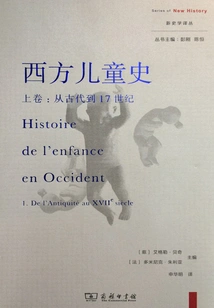
西方儿童史(上卷)
(french) Dominique Giulia (italian) Aigler Betsy
"History of Western Children" is a treatise with the theme of children's research. It is divided into two volumes in chronological order. The first volume starts from ancient times to the 17th century, and the second volume starts from the 18th century to the present. On the one hand, the book forms a complete framework of children's history from the perspective of society's different definitions and treatment of children in different periods, changes in age divisions, social roles of children of different genders or different ages, children's etiquette, family environment, learning plans, activity venues, etc.; On the other hand, in the form of a detailed and well-argued thematic history, the book studies issues such as modern abandoned children, migrant children, and disabled children, deepening thinking on important themes in Western children's history.
"History of Western Children" is a treatise with the theme of children's research. It is divided into two volumes in chronological order. The first volume starts from ancient times to the 17th century, and the second volume starts from the 18th century to the present. On the one hand, the book forms a complete framework of children's history from the perspective of society's different definitions and treatment of children in different periods, changes in age divisions, social roles of children of different genders or different ages, children's etiquette, family environment, learning plans, activity venues, etc.; On the other hand, in the form of a detailed and well-argued thematic history, the book studies issues such as modern abandoned children, migrant children, and disabled children, deepening thinking on important themes in Western children's history.
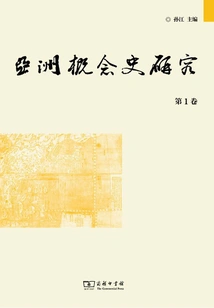
亚洲概念史研究(第1卷)
Sun Jiang
This book is the first volume of the academic magazine "Research on Asian Conceptual History". This book collects a total of eleven papers and one conference minutes. It promotes the study of the history of Asian concepts in four parts: "Translation Concept", "History Writing", "Knowledge Archeology" and "Methodological Turn". It attempts to examine how Western concepts are translated into Chinese character concepts from the perspective of East-West comparison, as well as the interactive relationship between concepts in different countries and regions within the Chinese character circle, thereby revealing the similarities and differences of modernity in the East Asian circle.
This book is the first volume of the academic magazine "Research on Asian Conceptual History". This book collects a total of eleven papers and one conference minutes. It promotes the study of the history of Asian concepts in four parts: "Translation Concept", "History Writing", "Knowledge Archeology" and "Methodological Turn". It attempts to examine how Western concepts are translated into Chinese character concepts from the perspective of East-West comparison, as well as the interactive relationship between concepts in different countries and regions within the Chinese character circle, thereby revealing the similarities and differences of modernity in the East Asian circle.
欧亚学刊(新5辑)
Yu Taishan Editor-in-chief Li Jinxiu
"Journal of Eurasia" edited by Yu Taishan and Li Jinxiu is an irregular and continuous academic journal. All thematic (or data) research papers in the field of inland Eurasian history and culture, with substantial content, a certain breadth and depth, are included in the collection. Each volume contains about 300,000 words and more than 20 color pictures of archaeological history. This book is the fifth new volume. It brings together the greatest results of archaeological, historical, cultural and documentary research in inland Eurasia. This collection includes the papers "Prehistoric Archeology in the Hami Region", "A Study on the Origin of the Early Royal Lineage of Silla", "Thirteen Parts of Jamuhe", "Records Concerning the Hephthalites in Byzantine Historical Works", "History of the Yuan Dynasty Volume 3, Xianzong Chronicles 2", "Noma dism, Barbarism and Civilization: EuropeanEighteenthCenturyApproachestoCentralAsianhistory", "Anjuyeni" Examination", "StubbornlyChinese?" Clothing Styles and the Question of Tang Loyalismin Ninth-Century Dunhuang", "Moses and Rus-paNgo-snu: Tibetan Xixia Founding Myth", "Cloister of the Uzbek Sufis in Jerusalem", "Sanskrit "Selected Interpretations of Words from the Sarvastivada Vinaya in the Chinese Version", two book reviews "William Hanichechi "Inner Asia and Imperial Spatial Politics: Archeology, Mobility and Cultural Contact"" and "Exploring the Secrets and Striving for Excellence". The relevant research in "Journal of Eurasia" is not only of academic interest, but also the need to create a favorable surrounding environment for building socialism with Chinese characteristics, and therefore also has important practical political significance.
"Journal of Eurasia" edited by Yu Taishan and Li Jinxiu is an irregular and continuous academic journal. All thematic (or data) research papers in the field of inland Eurasian history and culture, with substantial content, a certain breadth and depth, are included in the collection. Each volume contains about 300,000 words and more than 20 color pictures of archaeological history. This book is the fifth new volume. It brings together the greatest results of archaeological, historical, cultural and documentary research in inland Eurasia. This collection includes the papers "Prehistoric Archeology in the Hami Region", "A Study on the Origin of the Early Royal Lineage of Silla", "Thirteen Parts of Jamuhe", "Records Concerning the Hephthalites in Byzantine Historical Works", "History of the Yuan Dynasty Volume 3, Xianzong Chronicles 2", "Noma dism, Barbarism and Civilization: EuropeanEighteenthCenturyApproachestoCentralAsianhistory", "Anjuyeni" Examination", "StubbornlyChinese?" Clothing Styles and the Question of Tang Loyalismin Ninth-Century Dunhuang", "Moses and Rus-paNgo-snu: Tibetan Xixia Founding Myth", "Cloister of the Uzbek Sufis in Jerusalem", "Sanskrit "Selected Interpretations of Words from the Sarvastivada Vinaya in the Chinese Version", two book reviews "William Hanichechi "Inner Asia and Imperial Spatial Politics: Archeology, Mobility and Cultural Contact"" and "Exploring the Secrets and Striving for Excellence". The relevant research in "Journal of Eurasia" is not only of academic interest, but also the need to create a favorable surrounding environment for building socialism with Chinese characteristics, and therefore also has important practical political significance.
欧亚学刊(新4辑)
Yu Taishan Editor-in-chief Li Jinxiu
"Journal of Eurasia" (new 4th edition) is edited by Yu Taishan and Li Jinxiu. Each edition brings together the results of archaeological, historical, cultural and documentary research in inland Eurasia. This collection includes, for example, the migration of the Central Asian peoples around the first millennium B. C. - A phased study of the Saenyi and Vigarik cemeteries, the Bronze Age culture of the Kazakh steppes - the Bigaze-Dandbai culture: and a discussion of the cultural nature of Adun Qiaolu's tomb in the Bortala Mongol Autonomous Prefecture of Xinjiang, the "History of the Yuan Dynasty" Volume 3 "Zong Ji" Notes, "The Passion of St. George" and "The Curse of Gith", etc.
"Journal of Eurasia" (new 4th edition) is edited by Yu Taishan and Li Jinxiu. Each edition brings together the results of archaeological, historical, cultural and documentary research in inland Eurasia. This collection includes, for example, the migration of the Central Asian peoples around the first millennium B. C. - A phased study of the Saenyi and Vigarik cemeteries, the Bronze Age culture of the Kazakh steppes - the Bigaze-Dandbai culture: and a discussion of the cultural nature of Adun Qiaolu's tomb in the Bortala Mongol Autonomous Prefecture of Xinjiang, the "History of the Yuan Dynasty" Volume 3 "Zong Ji" Notes, "The Passion of St. George" and "The Curse of Gith", etc.
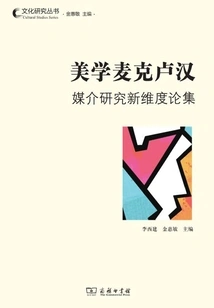
美学麦克卢汉:媒介研究新维度论集
Li Xijian Jin Huimin
McLuhan was a master of media theory in the 20th century. His concepts and propositions such as "global village" and "medium is the message" have long been well-known to everyone. However, what is often overlooked is that he was also a master of aesthetics. We believe that there is not only a "media McLuhan", such as Levinson's "digital McLuhan", but also an "aesthetic McLuhan". And more importantly, McLuhan's media research methodology is aesthetic research. As he himself admitted, his media research is "applied Joyce". Therefore, to understand McLuhan, aesthetics is an excellent entry point. However, the purpose of editing this paper is not just to restore the true content of McLuhan's media studies. We are more interested in opening up a path of aesthetics research in media studies, and at the same time, opening up a path of media studies in aesthetics research, so that media studies and aesthetics research can learn from each other and gain from each other. The authors of the collection of papers are all McLuhan research experts, including Professor Dunant, Director of the McLuhan Research Department at the University of Toronto, Professor Lambert at the University of Bologna, etc.
McLuhan was a master of media theory in the 20th century. His concepts and propositions such as "global village" and "medium is the message" have long been well-known to everyone. However, what is often overlooked is that he was also a master of aesthetics. We believe that there is not only a "media McLuhan", such as Levinson's "digital McLuhan", but also an "aesthetic McLuhan". And more importantly, McLuhan's media research methodology is aesthetic research. As he himself admitted, his media research is "applied Joyce". Therefore, to understand McLuhan, aesthetics is an excellent entry point. However, the purpose of editing this paper is not just to restore the true content of McLuhan's media studies. We are more interested in opening up a path of aesthetics research in media studies, and at the same time, opening up a path of media studies in aesthetics research, so that media studies and aesthetics research can learn from each other and gain from each other. The authors of the collection of papers are all McLuhan research experts, including Professor Dunant, Director of the McLuhan Research Department at the University of Toronto, Professor Lambert at the University of Bologna, etc.
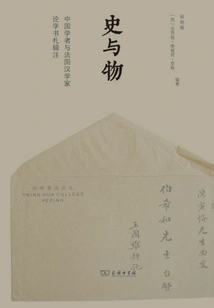
History and Things
History史与物
Zu Yanfu (west)dacia Viejo-ross
"History and Objects" contains thirty-eight letters written by Chinese scholars and academic institutions to the French sinologist Pelliot from 1909 to the 1930s, as well as thirteen related attachments. They are relevant historical materials collected for the purpose of studying the origins of modern Chinese academics and the migration and movement of ideas covering the Eurasian continent over the past two centuries, and the expansion of research based on these historical materials. The book's summary review of Sinology, Chinese Studies, and the encounter between Sinology and Chinese Studies will be used as a background statement to put these precious letters back to the scene at that time; while history and objects are the editor's analysis and display of the letters, and the academic flourishes and academic interactions between China and foreign countries in the early days of the Chinese humanities and social sciences knowledge body that can be traced back to the letters.
"History and Objects" contains thirty-eight letters written by Chinese scholars and academic institutions to the French sinologist Pelliot from 1909 to the 1930s, as well as thirteen related attachments. They are relevant historical materials collected for the purpose of studying the origins of modern Chinese academics and the migration and movement of ideas covering the Eurasian continent over the past two centuries, and the expansion of research based on these historical materials. The book's summary review of Sinology, Chinese Studies, and the encounter between Sinology and Chinese Studies will be used as a background statement to put these precious letters back to the scene at that time; while history and objects are the editor's analysis and display of the letters, and the academic flourishes and academic interactions between China and foreign countries in the early days of the Chinese humanities and social sciences knowledge body that can be traced back to the letters.
史学丛考(增订本)
Chai Degeng
This book collects nearly thirty historical treatises published by Mr. Chai Dergen in newspapers and magazines during the thirty years from 1931 to 1956. The author has been engaged in historical research and teaching for many years, and is highly regarded by Mr. Chen Yuan. He is good at textual research and has done extensive research on Chinese history. The research scope covered in this article ranges from the history of the Five Dynasties, the Song Dynasty, the Qing Dynasty to the history of the Revolution of 1911, and he has made many discoveries about the issues studied. In addition, the collection also includes some research on local historical records and the author's review articles on his teacher, the famous historian Mr. Chen Yuan, and his works.
This book collects nearly thirty historical treatises published by Mr. Chai Dergen in newspapers and magazines during the thirty years from 1931 to 1956. The author has been engaged in historical research and teaching for many years, and is highly regarded by Mr. Chen Yuan. He is good at textual research and has done extensive research on Chinese history. The research scope covered in this article ranges from the history of the Five Dynasties, the Song Dynasty, the Qing Dynasty to the history of the Revolution of 1911, and he has made many discoveries about the issues studied. In addition, the collection also includes some research on local historical records and the author's review articles on his teacher, the famous historian Mr. Chen Yuan, and his works.
清朝兴起时期中朝政治秩序变迁研究
Wang Zhen
When the Ming and Qing (later Jin) regimes changed, the changes in the traditional political order of China's feudal dynasty and the Korean dynasty experienced a process of change, from the initial stability of the political order containing crises, to being shaken by shocks, to profound changes leading to fission, and then to the reconstruction of a new political order in China and North Korea centered on the Qing Dynasty. During this process, the tributary object of the tributary country North Korea changed, from the long-term "most sincere and important" to the Ming Dynasty, to "two-sided diplomacy" between the Ming Dynasty and the Later Jin Dynasty, and even to "semi-subordinate" to the Later Jin Dynasty, and finally officially became a "subordinate state" of the Qing Dynasty. This book takes the 60 years from 1583 to 1643, the rise of the Qing Dynasty, as the research limit. It is divided into four stages, using political events and diplomatic relations as the entry point, and the evolution of tributary relations as the main line of research. It uses interdisciplinary research methods and uses a large number of original Chinese and Korean documents to explore the transformation trajectory, development rules and regional impact of the political orders of the Qing (Later Jin), late Ming and Korean dynasties, and explain and define the characteristics, regularity and nature of the evolution of the political order in China and North Korea.
When the Ming and Qing (later Jin) regimes changed, the changes in the traditional political order of China's feudal dynasty and the Korean dynasty experienced a process of change, from the initial stability of the political order containing crises, to being shaken by shocks, to profound changes leading to fission, and then to the reconstruction of a new political order in China and North Korea centered on the Qing Dynasty. During this process, the tributary object of the tributary country North Korea changed, from the long-term "most sincere and important" to the Ming Dynasty, to "two-sided diplomacy" between the Ming Dynasty and the Later Jin Dynasty, and even to "semi-subordinate" to the Later Jin Dynasty, and finally officially became a "subordinate state" of the Qing Dynasty. This book takes the 60 years from 1583 to 1643, the rise of the Qing Dynasty, as the research limit. It is divided into four stages, using political events and diplomatic relations as the entry point, and the evolution of tributary relations as the main line of research. It uses interdisciplinary research methods and uses a large number of original Chinese and Korean documents to explore the transformation trajectory, development rules and regional impact of the political orders of the Qing (Later Jin), late Ming and Korean dynasties, and explain and define the characteristics, regularity and nature of the evolution of the political order in China and North Korea.
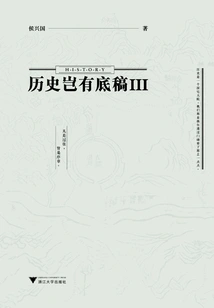
历史岂有底稿Ⅲ
Hou Xingguo
Reading history is like drinking. First, you have to taste it, secondly, you have to enjoy it slowly, and thirdly, don't overdo it. A tipsy state is best. This book is the third volume in the same series of the author's historical essay collection "History Has No Manuscript". From Han Feizi to Kant, from Wang Zhaojun to Nalan Rongruo, from Song of Everlasting Sorrow to Charlotte's Sorrow, it takes you through the tunnel of time and experiences the dust of history. History is like a deep mansion, and we all occasionally see a little bit through the cracks in the door.
Reading history is like drinking. First, you have to taste it, secondly, you have to enjoy it slowly, and thirdly, don't overdo it. A tipsy state is best. This book is the third volume in the same series of the author's historical essay collection "History Has No Manuscript". From Han Feizi to Kant, from Wang Zhaojun to Nalan Rongruo, from Song of Everlasting Sorrow to Charlotte's Sorrow, it takes you through the tunnel of time and experiences the dust of history. History is like a deep mansion, and we all occasionally see a little bit through the cracks in the door.
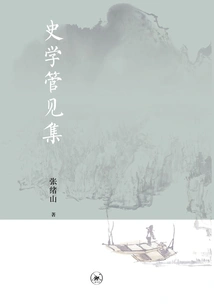
史学管见集
Zhang Xushan
"Collection of Historical Insights" consists of three parts: "European Medieval History and Annals School", "Ancient China and the Greco-Roman World", and "Historical Essays and Essays". It was written over thirty years ago. Throughout the book, "Historical Insights Collection" reflects the author's academic history and achievements over the years in a concentrated way. As the author said: "Scholars make a living based on academics. Each scholar's interests and talents are different, which determines that they choose different academic paths, become associated with different academic objects, and leave different academic trajectories. I have never imagined that my words can be hidden in the mountains and passed down to future generations. I only hope that they can prove the personalized existence of my life."
"Collection of Historical Insights" consists of three parts: "European Medieval History and Annals School", "Ancient China and the Greco-Roman World", and "Historical Essays and Essays". It was written over thirty years ago. Throughout the book, "Historical Insights Collection" reflects the author's academic history and achievements over the years in a concentrated way. As the author said: "Scholars make a living based on academics. Each scholar's interests and talents are different, which determines that they choose different academic paths, become associated with different academic objects, and leave different academic trajectories. I have never imagined that my words can be hidden in the mountains and passed down to future generations. I only hope that they can prove the personalized existence of my life."
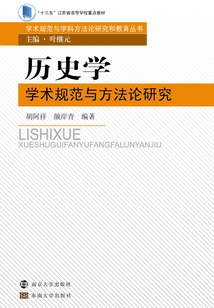
历史学学术规范与方法论研究
Hu Axiang Yan Anqing
This book focuses on the nature of the historical discipline and basic issues of the discipline, combing the academic history of specific disciplines, so as to completely and clearly sort out the development of the discipline, and present the emergence, development, changes and influence of different schools and schools in the development process of the discipline. It introduces the "Overview of Historical Academic Standards", "Basic Research Standards in History", "Historical Research Procedure Standards", "Historical Writing Standards", "Historical Citation Standards", "Historical Achievement Publication Standards", "Historical Academic Criticism and Academic Evaluation Standards", "Theories and Methods of Historical Research", etc.
This book focuses on the nature of the historical discipline and basic issues of the discipline, combing the academic history of specific disciplines, so as to completely and clearly sort out the development of the discipline, and present the emergence, development, changes and influence of different schools and schools in the development process of the discipline. It introduces the "Overview of Historical Academic Standards", "Basic Research Standards in History", "Historical Research Procedure Standards", "Historical Writing Standards", "Historical Citation Standards", "Historical Achievement Publication Standards", "Historical Academic Criticism and Academic Evaluation Standards", "Theories and Methods of Historical Research", etc.
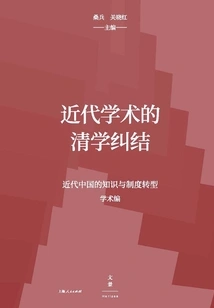
近代学术的清学纠结
Sang Bing Editor-in-chief Guan Xiaohong
Taking Western learning, Eastern learning, and Chinese learning as the fulcrum, we break the limitations of separate scholarship, do not regard change as evolution, and do not regard the present as modernity. From a multidisciplinary perspective, we use non-disciplinary conceptual methods to comprehensively explore the entire process and various aspects of the transformation of concepts, ideas, disciplines, and systems in China since modern times, connect ancient and modern times with China and the outside world, and analyze the significance of Western learning and Eastern learning in understanding Chinese history and culture. Society, reconstruct China's own discourse system and organizational context, deeply understand the process, status and limitations of the formation of the Chinese nation's new intelligence generation and operation mechanism, understand the uniqueness of East Asian civilizations in the process of world integration and the value of providing diverse choices for human development, strive for and maintain the initiative and leading position of Chinese historical and cultural interpretations that are increasingly important to the development of world civilization. The tangle of Qing studies in modern scholarship reflects the dilemma that the entire modern China encountered in the conflict and integration of Chinese and foreign cultures. Through the current routine, one can vaguely see the transformation from the previous labor pains. In this process, it seems to be eclectic, but in fact the input of foreign theories inevitably leads to superficial deformation, and the original status of the nation is often lost.
Taking Western learning, Eastern learning, and Chinese learning as the fulcrum, we break the limitations of separate scholarship, do not regard change as evolution, and do not regard the present as modernity. From a multidisciplinary perspective, we use non-disciplinary conceptual methods to comprehensively explore the entire process and various aspects of the transformation of concepts, ideas, disciplines, and systems in China since modern times, connect ancient and modern times with China and the outside world, and analyze the significance of Western learning and Eastern learning in understanding Chinese history and culture. Society, reconstruct China's own discourse system and organizational context, deeply understand the process, status and limitations of the formation of the Chinese nation's new intelligence generation and operation mechanism, understand the uniqueness of East Asian civilizations in the process of world integration and the value of providing diverse choices for human development, strive for and maintain the initiative and leading position of Chinese historical and cultural interpretations that are increasingly important to the development of world civilization. The tangle of Qing studies in modern scholarship reflects the dilemma that the entire modern China encountered in the conflict and integration of Chinese and foreign cultures. Through the current routine, one can vaguely see the transformation from the previous labor pains. In this process, it seems to be eclectic, but in fact the input of foreign theories inevitably leads to superficial deformation, and the original status of the nation is often lost.
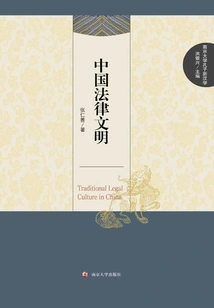
Chinese Legal Civilization
History中国法律文明
Zhang Renshan
The content of this book is to explain the modern transformation of China's traditional legal civilization from the institutional and value levels, and to conduct an in-depth and insightful discussion of its origins to show the development of Chinese law. The book is divided into seven chapters, respectively discussing ritual civilization, criminal civilization, legal concept civilization, legal system civilization, contract civilization, mediation civilization, and judicial civilization, which have both practical and theoretical significance.
The content of this book is to explain the modern transformation of China's traditional legal civilization from the institutional and value levels, and to conduct an in-depth and insightful discussion of its origins to show the development of Chinese law. The book is divided into seven chapters, respectively discussing ritual civilization, criminal civilization, legal concept civilization, legal system civilization, contract civilization, mediation civilization, and judicial civilization, which have both practical and theoretical significance.
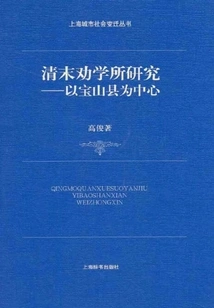
清末劝学所研究:以宝山县为中心(上海城市社会变迁丛书)
Gao Jun
The system of encouraging students to study was an important reform measure of the New Deal in the late Qing Dynasty. It was a symbol of the establishment of the local education administrative system and an aspect worthy of attention when examining the social transformation process of modern China. The author went to the Northeast, Northwest and other places to consult local archives related to the Encouraging Institute for Learning, and compiled the most systematic and complete information at present, which is the "A List of Academic Affairs" successively compiled and printed by the Encouraging Institute in Baoshan County, Jiangsu Province (today's Baoshan District, Shanghai City) in the late Qing Dynasty from 1907 to 1911. This collection of data has never been discovered and used because it is "not for sale", so it has great research value. Compared with other states and counties at that time, the Baoshan County Education Encouragement Center was the best in terms of its own system setup and the management of local academic affairs. Many people from Baoshan who participated in the construction of the education center later became leaders in the education sector, such as Yuan Xitao, who served as the director-general of education for the Beiyang government in the early years of the Republic of China. The many achievements made by the Baoshan School Encouragement Office in supervising local academic affairs provide valuable material for studying the system of the School Encourage School in the late Qing Dynasty. "Research on the Encouragement Institute in the Late Qing Dynasty - Focusing on Baoshan County" focuses on the Encourage Institute and the various characteristics of the Encourage Institute in other places. It can not only clarify the origin of the Encourage Institute and its functional attributes, but also reveal the various factors that led to the changes in its institutional functions. It also helps to understand why the Encourage Institute became a "fruit" of the New Deal reform in the late Qing Dynasty and continued to exist until the Republic of China.
The system of encouraging students to study was an important reform measure of the New Deal in the late Qing Dynasty. It was a symbol of the establishment of the local education administrative system and an aspect worthy of attention when examining the social transformation process of modern China. The author went to the Northeast, Northwest and other places to consult local archives related to the Encouraging Institute for Learning, and compiled the most systematic and complete information at present, which is the "A List of Academic Affairs" successively compiled and printed by the Encouraging Institute in Baoshan County, Jiangsu Province (today's Baoshan District, Shanghai City) in the late Qing Dynasty from 1907 to 1911. This collection of data has never been discovered and used because it is "not for sale", so it has great research value. Compared with other states and counties at that time, the Baoshan County Education Encouragement Center was the best in terms of its own system setup and the management of local academic affairs. Many people from Baoshan who participated in the construction of the education center later became leaders in the education sector, such as Yuan Xitao, who served as the director-general of education for the Beiyang government in the early years of the Republic of China. The many achievements made by the Baoshan School Encouragement Office in supervising local academic affairs provide valuable material for studying the system of the School Encourage School in the late Qing Dynasty. "Research on the Encouragement Institute in the Late Qing Dynasty - Focusing on Baoshan County" focuses on the Encourage Institute and the various characteristics of the Encourage Institute in other places. It can not only clarify the origin of the Encourage Institute and its functional attributes, but also reveal the various factors that led to the changes in its institutional functions. It also helps to understand why the Encourage Institute became a "fruit" of the New Deal reform in the late Qing Dynasty and continued to exist until the Republic of China.
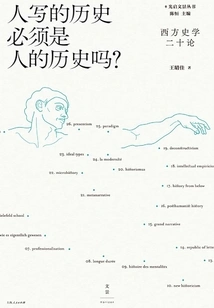
人写的历史必须是人的历史吗?:西方史学二十论
Wang Qingjia
"Does history written by people have to be people's history?" "Twenty Essays on Western Historiography" is a new work by the famous historian Mr. Wang Qingjia. The book contains 20 of his Chinese papers, covering a wide range of topics, ranging from ancient Greek history, reflections on Ranke's school, and Michel Foucault's historical thought, to recent research on the history of emotion, new cultural history, and "posthuman history" that aims to look forward to the future. "Does history written by people have to be people's history?" " Is divided into two parts. The first part deals with the tradition and transformation of Western historiography. The second part explores the development trend of Western historiography after the war, especially since the 1960s. The whole book provides an in-depth explanation of the emergence, characteristics and development of the modern historical tradition, and at the same time shows the new trend of current historical research.
"Does history written by people have to be people's history?" "Twenty Essays on Western Historiography" is a new work by the famous historian Mr. Wang Qingjia. The book contains 20 of his Chinese papers, covering a wide range of topics, ranging from ancient Greek history, reflections on Ranke's school, and Michel Foucault's historical thought, to recent research on the history of emotion, new cultural history, and "posthuman history" that aims to look forward to the future. "Does history written by people have to be people's history?" " Is divided into two parts. The first part deals with the tradition and transformation of Western historiography. The second part explores the development trend of Western historiography after the war, especially since the 1960s. The whole book provides an in-depth explanation of the emergence, characteristics and development of the modern historical tradition, and at the same time shows the new trend of current historical research.
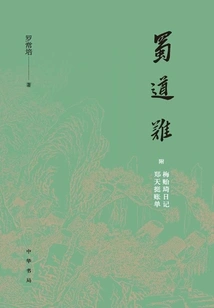
蜀道难(附梅贻琦日记、郑天挺账单)
Compiled By Luo Changpei And Yu Guolin
In May 1941, Mei Yiqi, chairman of the Standing Committee of the Southwest Associated General Assembly, Zheng Tianting, general administrator, and Luo Changpei, director of the Chinese Department and Chinese Language Department of the Normal University, flew from Kunming to Chongqing to begin a three-month academic and cultural inspection in Sichuan. During the difficult journey, he dragged himself through mud and water, wore a moon cloak, cut roads through mountains, built bridges across rivers, and hurriedly escaped several warnings. He went through the pains of traveling during the Anti-Japanese War. During the journey, he "studied academics, enjoyed the scenery, interviewed folk customs, and expressed condolences to friends." Luo Changpei wrote his experiences along the way into a diary-like travelogue - "The Difficult Road to Shu", which is a true record of the actual journey, academic status, and character dynamics at a certain time and place on the Shu Road during the middle period of the Anti-Japanese War. Mei Yiqi, Zheng Tianting, and Luo Changpei all originally kept diaries during their trip. Today, only Mei Yiqi's diary has been preserved. Zheng Tianting, as the financial manager of the trip, also left a list of accounts, recording in detail the prices of transportation, accommodation, meals, theater and other items of that era. Now that this part of Mei Yiqi's diary and Zheng Tianting's bills are attached to the relevant chapters of "The Difficulties of the Road to Shu", the three people read the materials together, showing a vivid picture that makes people feel like they are personally there.
In May 1941, Mei Yiqi, chairman of the Standing Committee of the Southwest Associated General Assembly, Zheng Tianting, general administrator, and Luo Changpei, director of the Chinese Department and Chinese Language Department of the Normal University, flew from Kunming to Chongqing to begin a three-month academic and cultural inspection in Sichuan. During the difficult journey, he dragged himself through mud and water, wore a moon cloak, cut roads through mountains, built bridges across rivers, and hurriedly escaped several warnings. He went through the pains of traveling during the Anti-Japanese War. During the journey, he "studied academics, enjoyed the scenery, interviewed folk customs, and expressed condolences to friends." Luo Changpei wrote his experiences along the way into a diary-like travelogue - "The Difficult Road to Shu", which is a true record of the actual journey, academic status, and character dynamics at a certain time and place on the Shu Road during the middle period of the Anti-Japanese War. Mei Yiqi, Zheng Tianting, and Luo Changpei all originally kept diaries during their trip. Today, only Mei Yiqi's diary has been preserved. Zheng Tianting, as the financial manager of the trip, also left a list of accounts, recording in detail the prices of transportation, accommodation, meals, theater and other items of that era. Now that this part of Mei Yiqi's diary and Zheng Tianting's bills are attached to the relevant chapters of "The Difficulties of the Road to Shu", the three people read the materials together, showing a vivid picture that makes people feel like they are personally there.
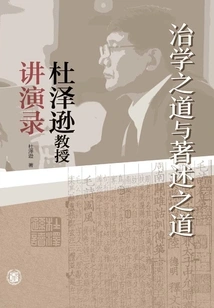
治学之道与著述之道:杜泽逊教授讲演录
Du Zexun
As a prolific philologist and dean of the School of Liberal Arts of Shandong University, Professor Du Zexun's outstanding achievements in the fields of academic research and teaching are obvious to all. This book collects 35 of his speeches, divided into four parts: 1. For young students, they have their own path to study, share their experiences, and also give sincere suggestions to students on how to study and how to behave. 2. To teachers, think about how to cultivate talents, how to build disciplines, and have practical action records. 3. Academic keynote speeches, including achievement reports and experience summaries of large-scale academic projects such as "A General Catalog of Qing Dynasty Writings", "Annotations and Compilations of Thirteen Classics", "A General Catalog of Chinese Ancient Books Collected in Japan", are all Professor Du Zexun's most prestigious fields. 4. Others. His speeches at other academic conferences also contained a large amount of information.
As a prolific philologist and dean of the School of Liberal Arts of Shandong University, Professor Du Zexun's outstanding achievements in the fields of academic research and teaching are obvious to all. This book collects 35 of his speeches, divided into four parts: 1. For young students, they have their own path to study, share their experiences, and also give sincere suggestions to students on how to study and how to behave. 2. To teachers, think about how to cultivate talents, how to build disciplines, and have practical action records. 3. Academic keynote speeches, including achievement reports and experience summaries of large-scale academic projects such as "A General Catalog of Qing Dynasty Writings", "Annotations and Compilations of Thirteen Classics", "A General Catalog of Chinese Ancient Books Collected in Japan", are all Professor Du Zexun's most prestigious fields. 4. Others. His speeches at other academic conferences also contained a large amount of information.
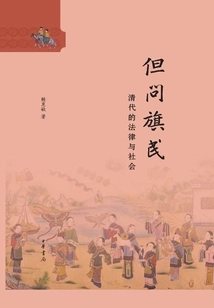
但问旗民:清代的法律与社会(精装)
Lai Huimin
"Asking the Banner People: Law and Society in the Qing Dynasty" is another masterpiece about Qing history by researcher Lai Huimin after "Emperor Qianlong's Purse". "But ask the banner people", which means "there is no distinction between Manchu and Han people, but ask the banner people", is an expression used by the rulers of the Qing Dynasty to distinguish between the banner people and the people (Han people) in terms of political and social status through legal means. This book focuses on the differences in the treatment of ethnic groups and genders in the laws of the Qing Dynasty. It starts from the dualistic social characteristics of the banner people in the Qing Dynasty, takes the relationship between law and society as the central axis, and systematically compares the differences of banner women in the fields of family status, family disputes, property rights, legal proceedings, family forms, and social organizations from three aspects: administrative organization, ethnic group and law, gender, and judicial trials. It truly reproduces the social life of women in the Qing Dynasty.
"Asking the Banner People: Law and Society in the Qing Dynasty" is another masterpiece about Qing history by researcher Lai Huimin after "Emperor Qianlong's Purse". "But ask the banner people", which means "there is no distinction between Manchu and Han people, but ask the banner people", is an expression used by the rulers of the Qing Dynasty to distinguish between the banner people and the people (Han people) in terms of political and social status through legal means. This book focuses on the differences in the treatment of ethnic groups and genders in the laws of the Qing Dynasty. It starts from the dualistic social characteristics of the banner people in the Qing Dynasty, takes the relationship between law and society as the central axis, and systematically compares the differences of banner women in the fields of family status, family disputes, property rights, legal proceedings, family forms, and social organizations from three aspects: administrative organization, ethnic group and law, gender, and judicial trials. It truly reproduces the social life of women in the Qing Dynasty.
《史记》地名族名词典
Compiled By Guo Shengbo
This dictionary collects, categorizes and briefly describes the place names contained in the revised version of "Historical Records". The book contains 2,752 entries on place names and clan terms, totaling about 500,000 words. The collected entries sort out the historical changes of place names and clan names, and compare them with current place names. Each entry is merged and classified. A total of ten major categories and 49 subcategories are combined (excluding two entries that cannot be classified). They are arranged in the order of strokes. The phonetic sequence and classification index are attached at the back of the book to facilitate readers' inspection. It is an indispensable reference book for historical geographical research and "Historical Records" research. It is also a cultural popularization reference book that facilitates readers to trace the origins of historical place names.
This dictionary collects, categorizes and briefly describes the place names contained in the revised version of "Historical Records". The book contains 2,752 entries on place names and clan terms, totaling about 500,000 words. The collected entries sort out the historical changes of place names and clan names, and compare them with current place names. Each entry is merged and classified. A total of ten major categories and 49 subcategories are combined (excluding two entries that cannot be classified). They are arranged in the order of strokes. The phonetic sequence and classification index are attached at the back of the book to facilitate readers' inspection. It is an indispensable reference book for historical geographical research and "Historical Records" research. It is also a cultural popularization reference book that facilitates readers to trace the origins of historical place names.
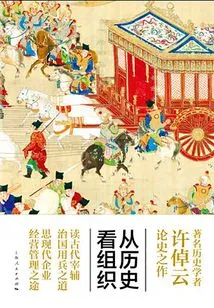
从历史看组织
Xu Zhuoyun
The book "Looking at Organization from History" is an oral record of the famous scholar Xu Zhuoyun talking about the organizational system in Chinese history and the merits and deeds of various dynasties. It covers the period from the pre-Qin Dynasty to the Qing Dynasty. The author uses easy-to-understand language to explain the organizational experience and management techniques of various dynasties. As a book that connects the past and the present, by reading this book, we can draw reference and experience from the history of ancient country governance, and it is also of great benefit to today's business operators and managers.
The book "Looking at Organization from History" is an oral record of the famous scholar Xu Zhuoyun talking about the organizational system in Chinese history and the merits and deeds of various dynasties. It covers the period from the pre-Qin Dynasty to the Qing Dynasty. The author uses easy-to-understand language to explain the organizational experience and management techniques of various dynasties. As a book that connects the past and the present, by reading this book, we can draw reference and experience from the history of ancient country governance, and it is also of great benefit to today's business operators and managers.
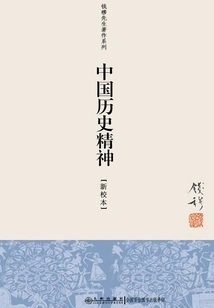
Chinese Historical Spirit
History中国历史精神
Qian Mu
This book is based on the historical spirit and methods described by Mr. Qian Mu, seven topics on politics, national defense, education, geography and characters, and moral spirit in Chinese history, and was revised by Mr. Qian himself. Mr. Qian Mu uses his profound historical knowledge and keen analytical ability to enable readers to gain a glimpse of the mysteries of Chinese history and culture.
This book is based on the historical spirit and methods described by Mr. Qian Mu, seven topics on politics, national defense, education, geography and characters, and moral spirit in Chinese history, and was revised by Mr. Qian himself. Mr. Qian Mu uses his profound historical knowledge and keen analytical ability to enable readers to gain a glimpse of the mysteries of Chinese history and culture.
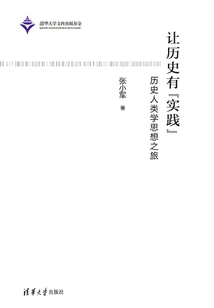
让历史有“实践”:历史人类学思想之旅
Zhang Xiaojun
"Historical anthropology" originated from the third generation of scholars of the French Annales School in the 1970s. It is an interdisciplinary field that draws on theoretical methods from anthropology and other disciplines to conduct historical research. It entered China in the 1990s and influenced the historical research on regional society in South China. This book sorts out the theoretical methods of historical anthropology and some of its theoretical contributions in South China studies, summarizes the theoretical framework of historical substantive theory, subject theory, process theory, and practice theory, and attempts to think about historical research from the perspective of anthropological "practical theory." The content of this book involves historical agents and their active practices, capital and symbolic practices in historical construction, and the co-subjective practice of "literary revival".
"Historical anthropology" originated from the third generation of scholars of the French Annales School in the 1970s. It is an interdisciplinary field that draws on theoretical methods from anthropology and other disciplines to conduct historical research. It entered China in the 1990s and influenced the historical research on regional society in South China. This book sorts out the theoretical methods of historical anthropology and some of its theoretical contributions in South China studies, summarizes the theoretical framework of historical substantive theory, subject theory, process theory, and practice theory, and attempts to think about historical research from the perspective of anthropological "practical theory." The content of this book involves historical agents and their active practices, capital and symbolic practices in historical construction, and the co-subjective practice of "literary revival".
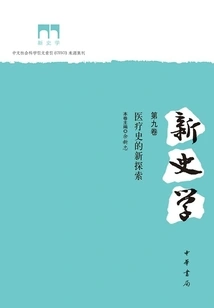
新史学(第九卷):医疗史的新探索
Editor-in-chief Yu Xinzhong
We use the corner of "New Historiography" to compile an album of medical history, and call it "New Exploration of Medical History". On the one hand, we certainly hope to use this to show the academic circles at home and abroad the new progress and achievements in the study of Chinese medical history, and to better attract more researchers, especially young talents, to join this research team. At the same time, we also hope to promote the continuous development of this research by showing the new pursuit and new orientation of this emerging research and elucidating its significance and value. There are 6 monographs and 2 academic reviews included here. Although the content and methods may not be exactly as we mentioned above, they can be classified into the relatively typical category of "life history". But compared with most traditional studies, calling it a new exploration of Chinese medical history should be well deserved. These studies basically have the perspective of social and cultural history, and are rich in the history of daily life, material culture, body history and gender history. Not only that, but most of them are related to our advocacy of paying attention to life in history in the context of daily life. Although the ultimate goal of Zhou Qirong's "Healing the Public: Public and Charitable Medical Services in the Qing Dynasty's Scholar-Merchant Society" is to demonstrate the characteristics of the Qing Dynasty's scholar-merchant society through the discussion of charitable medical treatment in the Ming and Qing Dynasties, the many specific discussions in his article actually provide the possibility for us to better understand and understand the medical field, behavior and methods of the society at that time.
We use the corner of "New Historiography" to compile an album of medical history, and call it "New Exploration of Medical History". On the one hand, we certainly hope to use this to show the academic circles at home and abroad the new progress and achievements in the study of Chinese medical history, and to better attract more researchers, especially young talents, to join this research team. At the same time, we also hope to promote the continuous development of this research by showing the new pursuit and new orientation of this emerging research and elucidating its significance and value. There are 6 monographs and 2 academic reviews included here. Although the content and methods may not be exactly as we mentioned above, they can be classified into the relatively typical category of "life history". But compared with most traditional studies, calling it a new exploration of Chinese medical history should be well deserved. These studies basically have the perspective of social and cultural history, and are rich in the history of daily life, material culture, body history and gender history. Not only that, but most of them are related to our advocacy of paying attention to life in history in the context of daily life. Although the ultimate goal of Zhou Qirong's "Healing the Public: Public and Charitable Medical Services in the Qing Dynasty's Scholar-Merchant Society" is to demonstrate the characteristics of the Qing Dynasty's scholar-merchant society through the discussion of charitable medical treatment in the Ming and Qing Dynasties, the many specific discussions in his article actually provide the possibility for us to better understand and understand the medical field, behavior and methods of the society at that time.
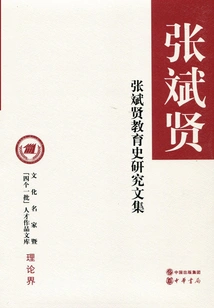
张斌贤教育史研究文集
Zhang Binxian
This book contains 30 papers completed by the author from 1986 to present. The book is divided into three parts: the first part is a study of the history of education, the second part is a study of the history of Western universities, and the third part is a study of the history of American school education. It basically reflects the author's research results of more than 30 years of hard work in the field of foreign education history.
This book contains 30 papers completed by the author from 1986 to present. The book is divided into three parts: the first part is a study of the history of education, the second part is a study of the history of Western universities, and the third part is a study of the history of American school education. It basically reflects the author's research results of more than 30 years of hard work in the field of foreign education history.
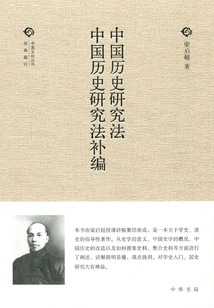
中国历史研究法:中国历史研究法补编(中国文化丛书·第二辑)
Liang Qichao
"The Supplement to Chinese Historical Research Methods" is one of the classic works of modern Chinese historical theory. It comprehensively reflects the academic thoughts of Liang Qichao, the pioneer of new history, and has a huge influence on Chinese historical research. The book is divided into six chapters. The first chapter discusses the definition, significance and scope of history; the second chapter reviews and evaluates China's old historiography; the third chapter talks about how to transform the old historiography and establish a new historiography; the fourth and fifth chapters focus on historical materials; the sixth chapter elaborates on the connection between historical facts. "Supplement to Chinese Historical Research Methods" was a lecture delivered by Liang Qichao at Tsinghua University from October 1926 to May 1927.
"The Supplement to Chinese Historical Research Methods" is one of the classic works of modern Chinese historical theory. It comprehensively reflects the academic thoughts of Liang Qichao, the pioneer of new history, and has a huge influence on Chinese historical research. The book is divided into six chapters. The first chapter discusses the definition, significance and scope of history; the second chapter reviews and evaluates China's old historiography; the third chapter talks about how to transform the old historiography and establish a new historiography; the fourth and fifth chapters focus on historical materials; the sixth chapter elaborates on the connection between historical facts. "Supplement to Chinese Historical Research Methods" was a lecture delivered by Liang Qichao at Tsinghua University from October 1926 to May 1927.
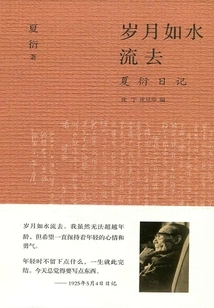
岁月如水流去:夏衍日记
Xia Yan Shen Ning Shen Danhua
This book is one of Xia Yan's autobiography series. Collects Xia Yan's diaries from various periods, including "Japanese Diary", "Singapore Diary", "Beijing Diary", "Beijing Diary", "Su Xing's Miscellaneous Notes", "Traveler's Miscellaneous Notes", "Four Qing Dynasty" Diary, "Early Spring Notes of 1967", "Cultural Revolution" Diary, etc., From 1925 to 1969 By the end of the year, it involves Xia Yan's experience of studying in Japan, participating in the founding ceremony of the People's Republic of China, visiting Suzhou and Germany, and participating in the "Four Cleanups" movement in rural areas in Jiexiu, Shanxi Province, and being investigated by the "Cultural Revolution" task force in a regiment and traffic cadre school in the Dahongmen Garrison District. It is a precious first-hand information to understand Xia Yan's life and understand the changes in Chinese society in the 20th century.
This book is one of Xia Yan's autobiography series. Collects Xia Yan's diaries from various periods, including "Japanese Diary", "Singapore Diary", "Beijing Diary", "Beijing Diary", "Su Xing's Miscellaneous Notes", "Traveler's Miscellaneous Notes", "Four Qing Dynasty" Diary, "Early Spring Notes of 1967", "Cultural Revolution" Diary, etc., From 1925 to 1969 By the end of the year, it involves Xia Yan's experience of studying in Japan, participating in the founding ceremony of the People's Republic of China, visiting Suzhou and Germany, and participating in the "Four Cleanups" movement in rural areas in Jiexiu, Shanxi Province, and being investigated by the "Cultural Revolution" task force in a regiment and traffic cadre school in the Dahongmen Garrison District. It is a precious first-hand information to understand Xia Yan's life and understand the changes in Chinese society in the 20th century.
历史的证伪:波普历史非决定论思想研究
Zhao Qingyuan
Popper is one of the most famous and influential philosophers of science in the 20th century, and an important representative of modern Western historical philosophy. The fusion of the amphibious identities of a philosopher of science and a philosopher of history gives Popper's historical philosophy a very different characteristic from the thoughts of other historical philosophers. This is its more distinctive empirical explanation derived from the development of natural science and its philosophical interpretation based on reflection on natural science. This characteristic of Popper's philosophy of history and the purpose of enriching and perfecting Popper's historical philosophy and consolidating the historical determinism of historical materialism through the study of Popper's historical philosophy set the logical direction of our critical research. This is his historical indeterminism. Here, we first give a brief explanation of Popper's life, philosophical thoughts and the contemporary value of criticizing Popper's historical indeterminism.
Popper is one of the most famous and influential philosophers of science in the 20th century, and an important representative of modern Western historical philosophy. The fusion of the amphibious identities of a philosopher of science and a philosopher of history gives Popper's historical philosophy a very different characteristic from the thoughts of other historical philosophers. This is its more distinctive empirical explanation derived from the development of natural science and its philosophical interpretation based on reflection on natural science. This characteristic of Popper's philosophy of history and the purpose of enriching and perfecting Popper's historical philosophy and consolidating the historical determinism of historical materialism through the study of Popper's historical philosophy set the logical direction of our critical research. This is his historical indeterminism. Here, we first give a brief explanation of Popper's life, philosophical thoughts and the contemporary value of criticizing Popper's historical indeterminism.
Dandan Qingchuan
History澹澹清川
Yang Nianqun
Mr. Dai Yi is the founder of Qing history research in New China and the founder of the history discipline and Qing history major at Renmin University of China. He currently serves as the director of the National Qing History Compilation Committee and is working diligently on the compilation of the new "Qing History", the largest cultural project since the founding of the People's Republic of China. On the one hand, he has inherited the tradition of research on Qing history since the Republic of China, and has profound and original insights into the politics, economy, ideology, culture, and border ethnic issues of the Qing Dynasty. On the other hand, he is also committed to grasping the macro trend of Qing history from a new perspective. He has put forward the important insight that the rise and fall is the overall evolution law of the Qing Dynasty, which has profoundly affected the development direction of Qing history research. On the occasion of his 90th birthday, disciples who have studied under him and colleagues from the Institute of Qing History at Renmin University of China have written articles to express their birthday wishes. The content of the collection covers the Qing Dynasty's unique institutional structure, state governance strategy, border management, foreign relations, cultural thoughts and other aspects. It strives to comprehensively analyze the major issues currently faced in the study of Qing history. It also reflects Mr. Wang's unique thinking in the study of Qing history from the perspective of long-term development. The birthday paper contains both microscopic details and macroscopic theoretical analysis. The coverage attempts to cover several important historical dimensions and phenomena in the early, middle and late Qing Dynasties, effectively respond to the increasingly international trend of new Qing history exploration, and try to panoramically demonstrate the Chinese style and scholarly style of Qing history research under Mr.'S influence and guidance.
Mr. Dai Yi is the founder of Qing history research in New China and the founder of the history discipline and Qing history major at Renmin University of China. He currently serves as the director of the National Qing History Compilation Committee and is working diligently on the compilation of the new "Qing History", the largest cultural project since the founding of the People's Republic of China. On the one hand, he has inherited the tradition of research on Qing history since the Republic of China, and has profound and original insights into the politics, economy, ideology, culture, and border ethnic issues of the Qing Dynasty. On the other hand, he is also committed to grasping the macro trend of Qing history from a new perspective. He has put forward the important insight that the rise and fall is the overall evolution law of the Qing Dynasty, which has profoundly affected the development direction of Qing history research. On the occasion of his 90th birthday, disciples who have studied under him and colleagues from the Institute of Qing History at Renmin University of China have written articles to express their birthday wishes. The content of the collection covers the Qing Dynasty's unique institutional structure, state governance strategy, border management, foreign relations, cultural thoughts and other aspects. It strives to comprehensively analyze the major issues currently faced in the study of Qing history. It also reflects Mr. Wang's unique thinking in the study of Qing history from the perspective of long-term development. The birthday paper contains both microscopic details and macroscopic theoretical analysis. The coverage attempts to cover several important historical dimensions and phenomena in the early, middle and late Qing Dynasties, effectively respond to the increasingly international trend of new Qing history exploration, and try to panoramically demonstrate the Chinese style and scholarly style of Qing history research under Mr.'S influence and guidance.
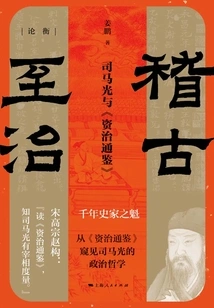
稽古至治:司马光与《资治通鉴》
Jiang Peng
"Zi Zhi Tong Jian" is known as the "Emperor's Textbook". This is a masterpiece of history that condenses the political operation and power laws of ancient China. It is also a must-read book for ancient emperors to be able to govern in light of the past. So how should we understand "Zi Zhi Tong Jian" a thousand years later? The famous historian Jiang Peng advocates using the method of intellectual history to deconstruct and understand "Zi Zhi Tong Jian", to explore the hidden value of historical materials, to understand the Samadhi, and to discover the philosophy behind historical phenomena.
"Zi Zhi Tong Jian" is known as the "Emperor's Textbook". This is a masterpiece of history that condenses the political operation and power laws of ancient China. It is also a must-read book for ancient emperors to be able to govern in light of the past. So how should we understand "Zi Zhi Tong Jian" a thousand years later? The famous historian Jiang Peng advocates using the method of intellectual history to deconstruct and understand "Zi Zhi Tong Jian", to explore the hidden value of historical materials, to understand the Samadhi, and to discover the philosophy behind historical phenomena.
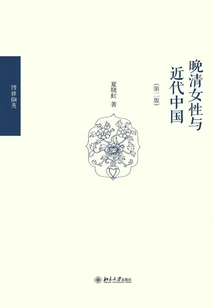
晚清女性与近代中国(第二版)
Xia Xiaohong
This book selects three perspectives: female society, female models, and female death from emerging newspaper texts in the late Qing Dynasty. Through an investigation of the lives and concepts of women in the late Qing Dynasty, this book specifically explores the complex entanglements between women in the late Qing Dynasty and the development of modern Chinese society and thought. The author attempts to shift the reading perspective from the official to the private sector by entering newspapers and periodicals, and thereby return to the scene. This effort is concretely implemented in this book through the analysis of ten cases and the meticulous processing of historical materials, in order to vividly display a certain scene in late Qing society, and thereby reveal the various cultural dynamics hidden therein. Previous article\
This book selects three perspectives: female society, female models, and female death from emerging newspaper texts in the late Qing Dynasty. Through an investigation of the lives and concepts of women in the late Qing Dynasty, this book specifically explores the complex entanglements between women in the late Qing Dynasty and the development of modern Chinese society and thought. The author attempts to shift the reading perspective from the official to the private sector by entering newspapers and periodicals, and thereby return to the scene. This effort is concretely implemented in this book through the analysis of ten cases and the meticulous processing of historical materials, in order to vividly display a certain scene in late Qing society, and thereby reveal the various cultural dynamics hidden therein. Previous article\
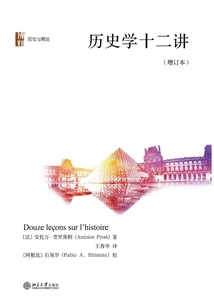
历史学十二讲(增订本)
(france) Antoine Prost
This book is an introductory book on historical research that is easy to understand. History is extremely developed in France, especially since the 20th century, the Annales School has led the trend of world history. The author has taught "Introduction to Historical Research" to undergraduates in the history department at the Sorbonne University for many years, and this book is the culmination of his lecture notes. The author starts from how to do history in France, using simple and vivid language to describe the key issues of history. This is a history textbook with French characteristics. It is a talk about the experience of French historians in conducting history. It embodies the rich accumulation of French historiography. It is a rare and portable handbook for readers in the Chinese-speaking world. History is extremely developed in France, especially since the 20th century, the Annales School has led the trend of world history. The author has taught "Introduction to Historical Research" to undergraduates in the history department at the Sorbonne University for many years, and this book is the culmination of his lecture notes. The author starts from how to do history in France, using simple and vivid language to describe the key issues of history. This is a history textbook with French characteristics. It is a talk about the experience of French historians in conducting history. It embodies the rich accumulation of French historiography. It is a rare and portable handbook for readers in the Chinese-speaking world. The first edition was well received by the academic community, with hundreds of people commenting on Douban, with a rating of 8.9.
This book is an introductory book on historical research that is easy to understand. History is extremely developed in France, especially since the 20th century, the Annales School has led the trend of world history. The author has taught "Introduction to Historical Research" to undergraduates in the history department at the Sorbonne University for many years, and this book is the culmination of his lecture notes. The author starts from how to do history in France, using simple and vivid language to describe the key issues of history. This is a history textbook with French characteristics. It is a talk about the experience of French historians in conducting history. It embodies the rich accumulation of French historiography. It is a rare and portable handbook for readers in the Chinese-speaking world. History is extremely developed in France, especially since the 20th century, the Annales School has led the trend of world history. The author has taught "Introduction to Historical Research" to undergraduates in the history department at the Sorbonne University for many years, and this book is the culmination of his lecture notes. The author starts from how to do history in France, using simple and vivid language to describe the key issues of history. This is a history textbook with French characteristics. It is a talk about the experience of French historians in conducting history. It embodies the rich accumulation of French historiography. It is a rare and portable handbook for readers in the Chinese-speaking world. The first edition was well received by the academic community, with hundreds of people commenting on Douban, with a rating of 8.9.
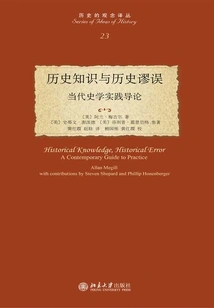
历史知识与历史谬误:当代史学实践导论
(us) Alan Megill
This book focuses on what historians know and how much they know about the past. The author is a famous American historiography theorist and a professor of history at the University of Virginia. The book is divided into four themes, namely memory, narrative and knowledge, objectivity and speculation, and fragmentation. Through rigorous argumentation and vivid case analysis, a series of historical epistemological issues are discussed: narrative, objectivity, and memory issues in historical compilation, the tasks of historical writing, consistency in historical research, how to avoid historical fallacies, etc. It is the author's theoretical thinking on the limitations and conditions of historical knowledge. The author reflects on the practice of historical epistemology from Herodotus to contemporary historians, which has reference value for both beginners of history and historical practitioners.
This book focuses on what historians know and how much they know about the past. The author is a famous American historiography theorist and a professor of history at the University of Virginia. The book is divided into four themes, namely memory, narrative and knowledge, objectivity and speculation, and fragmentation. Through rigorous argumentation and vivid case analysis, a series of historical epistemological issues are discussed: narrative, objectivity, and memory issues in historical compilation, the tasks of historical writing, consistency in historical research, how to avoid historical fallacies, etc. It is the author's theoretical thinking on the limitations and conditions of historical knowledge. The author reflects on the practice of historical epistemology from Herodotus to contemporary historians, which has reference value for both beginners of history and historical practitioners.
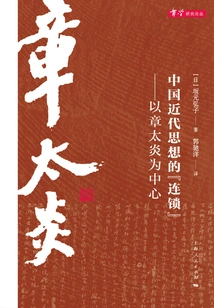
中国近代思想的“连锁”:以章太炎为中心
(japan) Hiroko Sakamoto
From the end of the 19th century to the first half of the 20th century, China faced a huge impact from the West. Many intellectuals used Japan, which had experienced "modernization" after the "Meiji Restoration", as a medium to face Western European culture. This book mainly examines how Tan Sitong, Zhang Taiyan, Xiong Shili, Liang Shuming and the artist Li Shutong (Master Hongyi) constructed Chinese national thought and philosophy in the face of contemporary issues and the impact of Western European thought, as well as their spiritual trajectories in the process, with special emphasis on the connection between their thoughts and Buddhism. In addition, these intellectuals who struggled with Buddhist philosophy all suffered from "neurosis". Therefore, this book will also explain that thinking about their concerns about Buddhism and "neurosis" from the perspective of psychosomatic medicine is also an important theme that we must face when reflecting on "modern times".
From the end of the 19th century to the first half of the 20th century, China faced a huge impact from the West. Many intellectuals used Japan, which had experienced "modernization" after the "Meiji Restoration", as a medium to face Western European culture. This book mainly examines how Tan Sitong, Zhang Taiyan, Xiong Shili, Liang Shuming and the artist Li Shutong (Master Hongyi) constructed Chinese national thought and philosophy in the face of contemporary issues and the impact of Western European thought, as well as their spiritual trajectories in the process, with special emphasis on the connection between their thoughts and Buddhism. In addition, these intellectuals who struggled with Buddhist philosophy all suffered from "neurosis". Therefore, this book will also explain that thinking about their concerns about Buddhism and "neurosis" from the perspective of psychosomatic medicine is also an important theme that we must face when reflecting on "modern times".
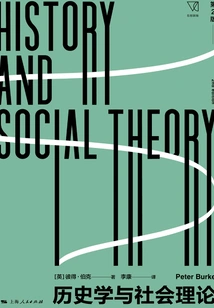
历史学与社会理论(第2版)
(uk) Peter Burke
What use is social theory to a historian? What use is history to the social theorist? As an outstanding cultural historian, Burke provides clear, powerful and far-reaching answers to these two seemingly simple questions in this book. In this revised and updated second edition of this classic text, Burke reexamines the relationship between the two fields of history and the social sciences and their initial convergence in recent decades. This second edition of History and Social Theory will continue to inspire students and scholars to cross disciplinary boundaries by challenging current perceptions of the roles of history and the social sciences.
What use is social theory to a historian? What use is history to the social theorist? As an outstanding cultural historian, Burke provides clear, powerful and far-reaching answers to these two seemingly simple questions in this book. In this revised and updated second edition of this classic text, Burke reexamines the relationship between the two fields of history and the social sciences and their initial convergence in recent decades. This second edition of History and Social Theory will continue to inspire students and scholars to cross disciplinary boundaries by challenging current perceptions of the roles of history and the social sciences.
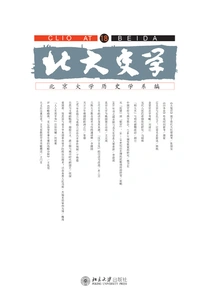
Peking University History 18
History北大史学18
Department Of History, Peking University
This book is a collection of academic papers edited by the Department of History of Peking University. It includes excellent academic papers on Chinese history, world history, historical theory, book reviews and other topics. This issue includes articles such as "A Study of Jin Sejong's Name", "Four Translations and Interpretations of the Letters of Saint-Remy, Archbishop of Reims", "How to Interpret the Interpretation of All Human Beings Are Created Equal", "Imaginations of Nature and Civilization: Transcendentalism, Boston and Gardening in the Urban Era".
This book is a collection of academic papers edited by the Department of History of Peking University. It includes excellent academic papers on Chinese history, world history, historical theory, book reviews and other topics. This issue includes articles such as "A Study of Jin Sejong's Name", "Four Translations and Interpretations of the Letters of Saint-Remy, Archbishop of Reims", "How to Interpret the Interpretation of All Human Beings Are Created Equal", "Imaginations of Nature and Civilization: Transcendentalism, Boston and Gardening in the Urban Era".
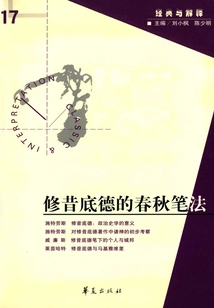
修昔底德的春秋笔法(“经典与解释”第17期)
Liu Xiaofeng Chen Shaoming
Thucydides (ca. 471-Ca. 400), Ancient Greek historian. The treatises included in this book provide in-depth explanations and discussions on the historical significance of Thucydides' works, the gods in his works, and his writing style.
Thucydides (ca. 471-Ca. 400), Ancient Greek historian. The treatises included in this book provide in-depth explanations and discussions on the historical significance of Thucydides' works, the gods in his works, and his writing style.
《晏子春秋》研究史
Liu Wenbin
"Yan Zi Chun Qiu" is a collection of biographical materials about Yan Ying, a famous Prime Minister of Qi during the Spring and Autumn Period. "Research History" provides a systematic and comprehensive review of the book's editing, compilation, examination and research status over the past two thousand years. It makes as scientific and pertinent a review and explanation as possible of the general process, main results, various academic issues and important insights of the study of "Yanzi Chunqiu" since the Western Han Dynasty, and clarifies a relatively clear development path, provides academic accumulation and experience lessons for future research, and collects a large amount of information for reference.
"Yan Zi Chun Qiu" is a collection of biographical materials about Yan Ying, a famous Prime Minister of Qi during the Spring and Autumn Period. "Research History" provides a systematic and comprehensive review of the book's editing, compilation, examination and research status over the past two thousand years. It makes as scientific and pertinent a review and explanation as possible of the general process, main results, various academic issues and important insights of the study of "Yanzi Chunqiu" since the Western Han Dynasty, and clarifies a relatively clear development path, provides academic accumulation and experience lessons for future research, and collects a large amount of information for reference.
清流文化与唐帝国
Lu Yang
This book consists of a series of closely related but independent papers. This paper re-observes the political culture from the late Tang Dynasty to the Five Dynasties by combining the history of mentality, culture history and institutional history. It focuses on the imperial power politics and Qingliu culture in the late Tang Dynasty and attempts to provide a new understanding framework for the transformation of the Tang Dynasty and the Five Dynasties. This book emphasizes understanding the monopoly and self-perpetuation of Qingliu culture and its representative groups in the society of the late Tang and Five Dynasties from the perspective of the special political mentality and cultural imagination of the Tang Dynasty, to capture the various invisible forces that contributed to these phenomena, and to explain how the two levels of the new political culture of the Tang Dynasty interacted and produced a new political pattern. At the same time, it also made the political and cultural concepts of the Tang Empire increasingly influential while ironically weakening the Tang Empire's own ability to exist.
This book consists of a series of closely related but independent papers. This paper re-observes the political culture from the late Tang Dynasty to the Five Dynasties by combining the history of mentality, culture history and institutional history. It focuses on the imperial power politics and Qingliu culture in the late Tang Dynasty and attempts to provide a new understanding framework for the transformation of the Tang Dynasty and the Five Dynasties. This book emphasizes understanding the monopoly and self-perpetuation of Qingliu culture and its representative groups in the society of the late Tang and Five Dynasties from the perspective of the special political mentality and cultural imagination of the Tang Dynasty, to capture the various invisible forces that contributed to these phenomena, and to explain how the two levels of the new political culture of the Tang Dynasty interacted and produced a new political pattern. At the same time, it also made the political and cultural concepts of the Tang Empire increasingly influential while ironically weakening the Tang Empire's own ability to exist.
法国史学革命
Q
This book is a critical history of the French Annals School, examining the sixty-year development history of this historical research group since the founding of the Annals magazine in 1929. There is no doubt that the Annales School was the most influential historical innovation movement in the 20th century. In the development process of the so-called "new history", it is the most important driving force. The Yearbook Group combines traditional history with geography, economics, linguistics, psychology, anthropology and other social sciences, expanding the field of history to a vast field of human activities, and creating a series of new methods, such as problem-oriented history, comparative history, historical psychology, geographical history, long-term history, serial history, historical anthropology, etc. Peter Burke distinguished three generations of scholars in the development of the Annales School. The first generation included the founders Lucien Fevere and Marc Bloch, who waged war against the traditional historiography system and created the magazine Annales to encourage interdisciplinary collaboration. The second generation was dominated by Braudel, who was already regarded as the most outstanding historian of his generation. The third generation includes famous contemporary historians such as Dupuy, Le Goff, and Leroy Ladurie. Burke's analysis is thorough and concise, and the key classics and branches of the Annales movement are clearly visible. This book was published by our company in 2006. Due to its concise and clear narrative and beautiful and smooth translation, it has become a must-read for introductory reading about the French Annales School, and has also become a classic recommendation in the history classes of major universities.
This book is a critical history of the French Annals School, examining the sixty-year development history of this historical research group since the founding of the Annals magazine in 1929. There is no doubt that the Annales School was the most influential historical innovation movement in the 20th century. In the development process of the so-called "new history", it is the most important driving force. The Yearbook Group combines traditional history with geography, economics, linguistics, psychology, anthropology and other social sciences, expanding the field of history to a vast field of human activities, and creating a series of new methods, such as problem-oriented history, comparative history, historical psychology, geographical history, long-term history, serial history, historical anthropology, etc. Peter Burke distinguished three generations of scholars in the development of the Annales School. The first generation included the founders Lucien Fevere and Marc Bloch, who waged war against the traditional historiography system and created the magazine Annales to encourage interdisciplinary collaboration. The second generation was dominated by Braudel, who was already regarded as the most outstanding historian of his generation. The third generation includes famous contemporary historians such as Dupuy, Le Goff, and Leroy Ladurie. Burke's analysis is thorough and concise, and the key classics and branches of the Annales movement are clearly visible. This book was published by our company in 2006. Due to its concise and clear narrative and beautiful and smooth translation, it has become a must-read for introductory reading about the French Annales School, and has also become a classic recommendation in the history classes of major universities.
俄罗斯汉学的基本方向及其问题
(russia) Mamaeva
This book is co-written by a number of Sinologists from the Institute of Far Eastern Studies of the Russian Academy of Sciences. It is divided into chapters and describes the new development of Russian Sinology from the post-Soviet era to the present day from different angles. The main issues involved include: the comparison of the political systems, laws, economic status and economic reforms of China and Russia; the characteristics of Chinese philosophical tradition, culture and education in the eyes of Russian scholars; China's development model and modernization issues, etc. The whole book uses a historical perspective and through a series of summaries and reviews, demonstrates the profound tradition of "Russian research on this Eastern country that has entered an important position in the world." After the book was published in Russia, it had a great influence among Russian researchers on China issues. This translation and introduction to China is the most authoritative material for our country to understand the development status of modern and contemporary Russian Sinology.
This book is co-written by a number of Sinologists from the Institute of Far Eastern Studies of the Russian Academy of Sciences. It is divided into chapters and describes the new development of Russian Sinology from the post-Soviet era to the present day from different angles. The main issues involved include: the comparison of the political systems, laws, economic status and economic reforms of China and Russia; the characteristics of Chinese philosophical tradition, culture and education in the eyes of Russian scholars; China's development model and modernization issues, etc. The whole book uses a historical perspective and through a series of summaries and reviews, demonstrates the profound tradition of "Russian research on this Eastern country that has entered an important position in the world." After the book was published in Russia, it had a great influence among Russian researchers on China issues. This translation and introduction to China is the most authoritative material for our country to understand the development status of modern and contemporary Russian Sinology.
《山海经》注译
Han Gaonian
This book is one of the "National Reading Classics" (paperback). There are eighteen chapters in the "Shan Hai Jing", which mainly cover geographical knowledge in folklore, including mountains, rivers, roads, ethnic groups, products, medicines, sacrifices, witch doctors, etc. It also preserves many popular ancient myths, legends and fables, including Kuafu chasing the sun, Nuwa patching up the sky, Jingwei reclaiming the sea, and Dayu controlling the floods. This book is an annotation of the full text of "The Classic of Mountains and Seas". The annotations are concise and the translation is popular and fluent. It is an excellent reader of "The Classic of Mountains and Seas".
This book is one of the "National Reading Classics" (paperback). There are eighteen chapters in the "Shan Hai Jing", which mainly cover geographical knowledge in folklore, including mountains, rivers, roads, ethnic groups, products, medicines, sacrifices, witch doctors, etc. It also preserves many popular ancient myths, legends and fables, including Kuafu chasing the sun, Nuwa patching up the sky, Jingwei reclaiming the sea, and Dayu controlling the floods. This book is an annotation of the full text of "The Classic of Mountains and Seas". The annotations are concise and the translation is popular and fluent. It is an excellent reader of "The Classic of Mountains and Seas".
Hidden Corners of History
History历史的隐秘角落
Peng Zhixiang
Napoleon, Hitler, Franco... What kind of images would these seemingly certain historical figures look like in the writings of a medical professor? Peng Zhixiang, a medical professor who has studied abroad, taught and lived in Europe and the United States for many years, traveled thousands of miles to visit the historical scenes involving the above-mentioned figures, and unexpectedly unearthed a series of surprising historical events. It turns out that the Third Reich was not monolithic, and Hitler was almost killed in assassinations by his subordinates many times. The tragic Battle of Leningrad is well-known for its magnificence, but its tragedy is far more than jaw-dropping. During World War II, dictator Franco's incomprehensible actions unexpectedly paved the way for Spain to embark on the track of democracy. ...Here, the complexity of history is vividly displayed, and the inevitable accidents of individual life are lamentable. Professor Peng Zhixiang's discussion and thinking on the values of different human civilizations are even more profound.
Napoleon, Hitler, Franco... What kind of images would these seemingly certain historical figures look like in the writings of a medical professor? Peng Zhixiang, a medical professor who has studied abroad, taught and lived in Europe and the United States for many years, traveled thousands of miles to visit the historical scenes involving the above-mentioned figures, and unexpectedly unearthed a series of surprising historical events. It turns out that the Third Reich was not monolithic, and Hitler was almost killed in assassinations by his subordinates many times. The tragic Battle of Leningrad is well-known for its magnificence, but its tragedy is far more than jaw-dropping. During World War II, dictator Franco's incomprehensible actions unexpectedly paved the way for Spain to embark on the track of democracy. ...Here, the complexity of history is vividly displayed, and the inevitable accidents of individual life are lamentable. Professor Peng Zhixiang's discussion and thinking on the values of different human civilizations are even more profound.
明清史评论(第一辑)
Department Of History, Fudan University
"Review of the History of the Ming and Qing Dynasties" (first series) is compiled by the History Department of Fudan University and is published as a book. It is expected to be published in one volume in the next six months. This collection contains a total of 15 articles, including 1 publication, 8 monographs, 1 historical reading notes, 2 book reviews, 2 doctoral thesis abstracts, and 1 conference review. The authors are all famous figures and experts at home and abroad in the field of Ming and Qing history research. The article not only focuses on hot topics, but also contains new discoveries and developments. It represents the cutting-edge level of current academic circles in this field, especially the Ming and Qing history research centered on Jiangnan.
"Review of the History of the Ming and Qing Dynasties" (first series) is compiled by the History Department of Fudan University and is published as a book. It is expected to be published in one volume in the next six months. This collection contains a total of 15 articles, including 1 publication, 8 monographs, 1 historical reading notes, 2 book reviews, 2 doctoral thesis abstracts, and 1 conference review. The authors are all famous figures and experts at home and abroad in the field of Ming and Qing history research. The article not only focuses on hot topics, but also contains new discoveries and developments. It represents the cutting-edge level of current academic circles in this field, especially the Ming and Qing history research centered on Jiangnan.
资治通鉴启示录(全二册)
Zhang Guogang
"Zi Zhi Tong Jian" "collects great wealth, has a large body and a refined mind". Mao Zedong read it seventeen times during his lifetime and praised it as a rare and good book. Professor Zhang Guogang repeatedly studied "Zi Zhi Tong Jian" and gained a deep understanding of its essence. He made a comprehensive and detailed interpretation of the fate of important figures and the ins and outs of major historical events in the book, and deeply excavated the historical wisdom and modern revelations about self-cultivation, governance, conduct, selection and employment, family tradition and tutoring, etc., And formed "Zi Zhi Tong Jian Revelation". "Zizhi Tongjian Revelation" not only systematically presents the glory of the great unification of the Qin and Han Dynasties, the Sui and Tang Dynasties, and the twists and turns of the divisions and chaos in the Warring States, Wei, Jin, Southern and Northern Dynasties, and the Five Dynasties and Ten Kingdoms, but also deeply analyzes the rigidity and flexibility in reform, advancement and retreat in life and work, oddity and righteousness in military struggle, lightness and weight in the balance of power, leniency and strictness in controlling subordinates, squareness and roundness in political career... It is a must-read for all stages of life growth. The book is divided into eight parts: "Zhou Ji", "Qin Ji", "Han Ji", "Wei Ji? The author also extracted some inspiring sentences from the article about self-cultivation, conduct, governance, etc., Totaling 122 items, and placed them in a gray bottom frame on the right side of the page, so that readers can better understand the modern value of "Zi Zhi Tong Jian".
"Zi Zhi Tong Jian" "collects great wealth, has a large body and a refined mind". Mao Zedong read it seventeen times during his lifetime and praised it as a rare and good book. Professor Zhang Guogang repeatedly studied "Zi Zhi Tong Jian" and gained a deep understanding of its essence. He made a comprehensive and detailed interpretation of the fate of important figures and the ins and outs of major historical events in the book, and deeply excavated the historical wisdom and modern revelations about self-cultivation, governance, conduct, selection and employment, family tradition and tutoring, etc., And formed "Zi Zhi Tong Jian Revelation". "Zizhi Tongjian Revelation" not only systematically presents the glory of the great unification of the Qin and Han Dynasties, the Sui and Tang Dynasties, and the twists and turns of the divisions and chaos in the Warring States, Wei, Jin, Southern and Northern Dynasties, and the Five Dynasties and Ten Kingdoms, but also deeply analyzes the rigidity and flexibility in reform, advancement and retreat in life and work, oddity and righteousness in military struggle, lightness and weight in the balance of power, leniency and strictness in controlling subordinates, squareness and roundness in political career... It is a must-read for all stages of life growth. The book is divided into eight parts: "Zhou Ji", "Qin Ji", "Han Ji", "Wei Ji? The author also extracted some inspiring sentences from the article about self-cultivation, conduct, governance, etc., Totaling 122 items, and placed them in a gray bottom frame on the right side of the page, so that readers can better understand the modern value of "Zi Zhi Tong Jian".
明清江南乡镇文人群体研究
Li Zhengai
This book takes the literati group in the rural society of Jiangnan in the Ming and Qing Dynasties as the research object, and explores the main structure type of the literati group and the basic characteristics of cultural interpersonal relationships from the perspective of social interpersonal relationships and literary friendships. Based on this, the general characteristics and main demands of the literary communication activities of the literati groups in Jiangnan towns in the Ming and Qing dynasties were discussed from the perspectives of literati associations, artists, resident literati, and female literati. This book also explores the interactive relationship between social literati groups in Jiangnan townships and the construction of local cultural aesthetics in the Ming and Qing Dynasties based on the characteristics of literati group activities.
This book takes the literati group in the rural society of Jiangnan in the Ming and Qing Dynasties as the research object, and explores the main structure type of the literati group and the basic characteristics of cultural interpersonal relationships from the perspective of social interpersonal relationships and literary friendships. Based on this, the general characteristics and main demands of the literary communication activities of the literati groups in Jiangnan towns in the Ming and Qing dynasties were discussed from the perspectives of literati associations, artists, resident literati, and female literati. This book also explores the interactive relationship between social literati groups in Jiangnan townships and the construction of local cultural aesthetics in the Ming and Qing Dynasties based on the characteristics of literati group activities.
《史学史研究》文选:中国古代史学卷 (下)
Editor-in-chief Xiang Yannan
The anthology series "Research on Historiography" is compiled based on academic papers published over the years in the magazine "Research on Historiography" edited by the School of History of Beijing Normal University. "Volume of Ancient Chinese History" is one of the selected volumes of "Historical Research". It is compiled from important research papers in the ancient Chinese history section of the "Historical Research" magazine. The authors include Bai Shouyi, Hou Wailu and other historians, which has important academic value. This volume mainly contains research papers on the history of historiography from the Sui and Tang Dynasties to the Qing Dynasty. The research focus of this period is to highlight the important research results and debates in Chinese historiography before the Wei, Jin, Southern and Northern Dynasties. It is a valuable material for the study of ancient Chinese history.
The anthology series "Research on Historiography" is compiled based on academic papers published over the years in the magazine "Research on Historiography" edited by the School of History of Beijing Normal University. "Volume of Ancient Chinese History" is one of the selected volumes of "Historical Research". It is compiled from important research papers in the ancient Chinese history section of the "Historical Research" magazine. The authors include Bai Shouyi, Hou Wailu and other historians, which has important academic value. This volume mainly contains research papers on the history of historiography from the Sui and Tang Dynasties to the Qing Dynasty. The research focus of this period is to highlight the important research results and debates in Chinese historiography before the Wei, Jin, Southern and Northern Dynasties. It is a valuable material for the study of ancient Chinese history.
《史学史研究》文选:人物志卷 (上)
Editor-in-chief Wang Gaoxin
"Historical History Research" is a specialized journal that publishes research results on historical theory, historical education, historical philology, and historiography. It is the main theoretical position for studying historical theory and historiography history in China. By publishing high-quality historical theory and historiographic history papers, "Historical History Research" has become an important reference material for universities and scientific research units across the country to engage in the teaching and research of historical theory and historiographic history, and an important platform for publishing academic opinions. "Character Volume" is a volume in the "Historical Research" anthology series. It mainly compiles exclusive interviews with figures published in historical research, trying to completely restore the views of many historians on certain types of historical issues, as well as their daily research processes, and show the rigorous working attitude of historian researchers. Among them, the first volume mainly contains exclusive interviews with famous historians such as Yang Xiangkui and Cai Shangsi. It is a condensed version of the development history of New China's historiography.
"Historical History Research" is a specialized journal that publishes research results on historical theory, historical education, historical philology, and historiography. It is the main theoretical position for studying historical theory and historiography history in China. By publishing high-quality historical theory and historiographic history papers, "Historical History Research" has become an important reference material for universities and scientific research units across the country to engage in the teaching and research of historical theory and historiographic history, and an important platform for publishing academic opinions. "Character Volume" is a volume in the "Historical Research" anthology series. It mainly compiles exclusive interviews with figures published in historical research, trying to completely restore the views of many historians on certain types of historical issues, as well as their daily research processes, and show the rigorous working attitude of historian researchers. Among them, the first volume mainly contains exclusive interviews with famous historians such as Yang Xiangkui and Cai Shangsi. It is a condensed version of the development history of New China's historiography.
《史学史研究》文选:中国古代史学卷(上)
Editor-in-chief Wang Gaoxin
The "Historical History Research" anthology series is a specialized publication that publishes research results on historical theory, historical education, historical philology and historiography. It is compiled from academic papers published over the years in the "Historical Historical Research" magazine edited by the School of History of Beijing Normal University. "Volume of Ancient Chinese History" is one of the selected volumes of "Historical Research". It is compiled from important research papers in the ancient Chinese history section of the "Historical Research" magazine. The authors include Bai Shouyi, Hou Wailu and other historians, and it has important academic value. This volume mainly contains research papers on the history of history before the Wei, Jin, Southern and Northern Dynasties. The research focus of this period is to highlight the important research results and debates in Chinese history before the Wei, Jin, Southern and Northern Dynasties. It is a valuable material for the study of ancient Chinese history.
The "Historical History Research" anthology series is a specialized publication that publishes research results on historical theory, historical education, historical philology and historiography. It is compiled from academic papers published over the years in the "Historical Historical Research" magazine edited by the School of History of Beijing Normal University. "Volume of Ancient Chinese History" is one of the selected volumes of "Historical Research". It is compiled from important research papers in the ancient Chinese history section of the "Historical Research" magazine. The authors include Bai Shouyi, Hou Wailu and other historians, and it has important academic value. This volume mainly contains research papers on the history of history before the Wei, Jin, Southern and Northern Dynasties. The research focus of this period is to highlight the important research results and debates in Chinese history before the Wei, Jin, Southern and Northern Dynasties. It is a valuable material for the study of ancient Chinese history.
Selected Articles from "research on the History of Historiography": Historiography Theory Vol
History《史学史研究》文选:史学理论卷
Editor-in-chief Dong Lihe
By publishing high-quality historical theory and historiographic history papers, "Historical History Research" has become an important reference material for universities and scientific research units across the country to engage in the teaching and research of historical theory and historiographic history, and an important platform for publishing academic opinions. "Historical Theory Volume" is an important volume on historical theory in the anthology of "Historical Research". It focuses on research papers on historical theory over the past few decades. These contents provide an important basis for quantitative and qualitative analysis issues in the definition of history. It also involves specific research methods, which has an important enlightening effect on current historical researchers. Theory is an important method for studying problems, and this volume is a summary and sublimation of the laws of historical research.
By publishing high-quality historical theory and historiographic history papers, "Historical History Research" has become an important reference material for universities and scientific research units across the country to engage in the teaching and research of historical theory and historiographic history, and an important platform for publishing academic opinions. "Historical Theory Volume" is an important volume on historical theory in the anthology of "Historical Research". It focuses on research papers on historical theory over the past few decades. These contents provide an important basis for quantitative and qualitative analysis issues in the definition of history. It also involves specific research methods, which has an important enlightening effect on current historical researchers. Theory is an important method for studying problems, and this volume is a summary and sublimation of the laws of historical research.