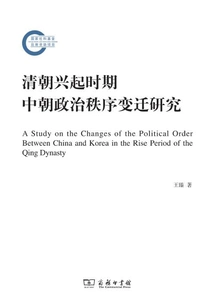
Research on the Changes in the Political Order of China and North Korea During the Rise of the Qing Dynasty
by Wang Zhen
About This Novel
When the Ming and Qing (later Jin) regimes changed, the changes in the traditional political order of China's feudal dynasty and the Korean dynasty experienced a process of change, from the initial stability of the political order containing crises, to being shaken by shocks, to profound changes leading to fission, and then to the reconstruction of a new political order in China and North Korea centered on the Qing Dynasty. During this process, the tributary object of the tributary country North Korea changed, from the long-term "most sincere and important" to the Ming Dynasty, to "two-sided diplomacy" between the Ming Dynasty and the Later Jin Dynasty, and even to "semi-subordinate" to the Later Jin Dynasty, and finally officially became a "subordinate state" of the Qing Dynasty. This book takes the 60 years from 1583 to 1643, the rise of the Qing Dynasty, as the research limit. It is divided into four stages, using political events and diplomatic relations as the entry point, and the evolution of tributary relations as the main line of research. It uses interdisciplinary research methods and uses a large number of original Chinese and Korean documents to explore the transformation trajectory, development rules and regional impact of the political orders of the Qing (Later Jin), late Ming and Korean dynasties, and explain and define the characteristics, regularity and nature of the evolution of the political order in China and North Korea.
Official Sources
What Readers Think
Rating
Community(0)
Rating
Community(0)