Library
Browse and search books
2,823 novels found
精神生态与散文演变(1976—2010)
Zhou Hongli
Research is a value presupposition. Tracking and investigating the evolution of Chinese prose in the past thirty years, the deeper meaning is an in-depth investigation of the people's life, mental state, national soul, and personality thoughts during the transformation of China's society in the past thirty years. It is also a correction of the relative marginalization and limitation of contemporary Chinese prose research. "Spiritual ecology" is the field of prose evolution confirmed by the author, and he explores the ideological state of the creative subject, that is, the intellectual group, the related social existence and the fission of cultural thoughts from the six dimensions of "spiritual dimension", "spiritual expression", "spiritual return", "spiritual diversity", "spiritual watch" and "spiritual fragments". During the research process, the author organically integrated the history of contemporary thought and the history of prose genres in the form of a study of period genre history, and extracted specific prose forms relevant to this study, such as "New Enlightenment" prose and "witness" prose, old writers' prose, "multiple" prose period and cultural prose, Jiangnan garden prose, and little woman prose. , "Non-fiction" prose and presenceist prose, ideological essays, new rural prose, etc.; In addition, attention is also paid to "new" creative prose (such as new prose), regional prose, and women's prose, effectively constructing the logic of the relationship between the evolution of prose and the spiritual ecology of intellectuals, which constitutes the main content of the research.
Research is a value presupposition. Tracking and investigating the evolution of Chinese prose in the past thirty years, the deeper meaning is an in-depth investigation of the people's life, mental state, national soul, and personality thoughts during the transformation of China's society in the past thirty years. It is also a correction of the relative marginalization and limitation of contemporary Chinese prose research. "Spiritual ecology" is the field of prose evolution confirmed by the author, and he explores the ideological state of the creative subject, that is, the intellectual group, the related social existence and the fission of cultural thoughts from the six dimensions of "spiritual dimension", "spiritual expression", "spiritual return", "spiritual diversity", "spiritual watch" and "spiritual fragments". During the research process, the author organically integrated the history of contemporary thought and the history of prose genres in the form of a study of period genre history, and extracted specific prose forms relevant to this study, such as "New Enlightenment" prose and "witness" prose, old writers' prose, "multiple" prose period and cultural prose, Jiangnan garden prose, and little woman prose. , "Non-fiction" prose and presenceist prose, ideological essays, new rural prose, etc.; In addition, attention is also paid to "new" creative prose (such as new prose), regional prose, and women's prose, effectively constructing the logic of the relationship between the evolution of prose and the spiritual ecology of intellectuals, which constitutes the main content of the research.
儿童文学:讲述主体与对象主体
He Jiahuan
The 1980s to 2010s were 30 years of rapid growth and development for children's literature in China. During this period, children's literature became richer and more mature in content and form, and a huge conceptual change occurred in creation. This book's investigation of childhood narratives in children's literature is placed in the historical and cultural context of Chinese society from the 1980s to the 2010s. It takes the different development stages of childhood narratives in children's literature as clues, focuses on the spiritual vision of writers at different stages and the construction of children's subjects and the construction of literary dialogue relationships, and examines it from the perspectives of history, culture and aesthetics. He examines the creation of Chinese children's literature in four periods: the early 1980s, the mid-to-late 1980s, the 1990s, and the beginning of the new century to the present. It presents the differences in childhood narratives in children's literature in different periods, analyzes the impact of different discourses on writers' construction of children's subjects, and looks for clues and trajectories of the changes in dialogue relationships in children's literature in different periods.
The 1980s to 2010s were 30 years of rapid growth and development for children's literature in China. During this period, children's literature became richer and more mature in content and form, and a huge conceptual change occurred in creation. This book's investigation of childhood narratives in children's literature is placed in the historical and cultural context of Chinese society from the 1980s to the 2010s. It takes the different development stages of childhood narratives in children's literature as clues, focuses on the spiritual vision of writers at different stages and the construction of children's subjects and the construction of literary dialogue relationships, and examines it from the perspectives of history, culture and aesthetics. He examines the creation of Chinese children's literature in four periods: the early 1980s, the mid-to-late 1980s, the 1990s, and the beginning of the new century to the present. It presents the differences in childhood narratives in children's literature in different periods, analyzes the impact of different discourses on writers' construction of children's subjects, and looks for clues and trajectories of the changes in dialogue relationships in children's literature in different periods.
谷崎润一郎短篇小说艺术研究
Zhang Nengquan
This book is based on Tanizaki's short stories, takes the artistic research of his short stories as the object, and uses text close reading as the basic method. From six aspects, the artistic characteristics of Tanizaki's short stories are deeply and systematically explained, the dominant artistic style of Tanizaki's short stories is revealed, and his artistic creation path of "combining East and West with the East as the main focus" is presented, thereby presenting the unique artistic charm of Tanizaki's short stories.
This book is based on Tanizaki's short stories, takes the artistic research of his short stories as the object, and uses text close reading as the basic method. From six aspects, the artistic characteristics of Tanizaki's short stories are deeply and systematically explained, the dominant artistic style of Tanizaki's short stories is revealed, and his artistic creation path of "combining East and West with the East as the main focus" is presented, thereby presenting the unique artistic charm of Tanizaki's short stories.
四十年代自由主义文学研究
Wang Jun
In the 1940s, Chinese liberal literature entered a new stage of development. This book attempts to place liberal literature in a specific historical context, examining the pressures and challenges it faced in the 1940s, how it positioned itself in different political environments, and how it adjusted the relationship between writers, literature, society, eras, and even nations. This book attempts to transcend the binary opposition between literature and politics, clarify the literary thoughts and political ideals of liberal writers in the 1940s from a historical and aesthetic standpoint, analyze the complex relationship between liberal literature and left-wing literature, and reveal the complexity of liberal literature in the 1940s.
In the 1940s, Chinese liberal literature entered a new stage of development. This book attempts to place liberal literature in a specific historical context, examining the pressures and challenges it faced in the 1940s, how it positioned itself in different political environments, and how it adjusted the relationship between writers, literature, society, eras, and even nations. This book attempts to transcend the binary opposition between literature and politics, clarify the literary thoughts and political ideals of liberal writers in the 1940s from a historical and aesthetic standpoint, analyze the complex relationship between liberal literature and left-wing literature, and reveal the complexity of liberal literature in the 1940s.
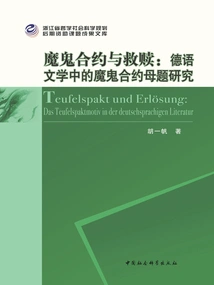
Devil's Contract and Redemption: a Study of the Devil's Contract Motif in German Literature
Literature魔鬼合约与救赎:德语文学中的魔鬼合约母题研究
Hu Yifan
The devil's contract as a literary motif has existed before the Middle Ages and can be traced back to certain chapters of the Bible. The devil's contract motif keeps pace with the times and remains timeless. It is active in literary creation in Germany and other countries around the world across time and space. On the basis of referring to existing literature, this book conducts a comprehensive study on the Devil's Contract motif: on the one hand, it looks at the changes of the motif itself from the origin and development of the Devil's Contract, and makes a horizontal comparison of Devil's Contract texts in the same literary period, exploring the diversity of the same motif under the interpretation of different writers; on the other hand, This book takes Goethe's "Faust", Chamiso's "The Adventures of Peter Schlemiel" and Gotthelf's "The Black Spider" as examples to analyze and interpret the basic elements of the devil's contract: the image of the devil, the signer, the content of the contract, the form of the contract, the ending of the contract, etc., Focusing on the topic of redemption in the story of the devil's contract.
The devil's contract as a literary motif has existed before the Middle Ages and can be traced back to certain chapters of the Bible. The devil's contract motif keeps pace with the times and remains timeless. It is active in literary creation in Germany and other countries around the world across time and space. On the basis of referring to existing literature, this book conducts a comprehensive study on the Devil's Contract motif: on the one hand, it looks at the changes of the motif itself from the origin and development of the Devil's Contract, and makes a horizontal comparison of Devil's Contract texts in the same literary period, exploring the diversity of the same motif under the interpretation of different writers; on the other hand, This book takes Goethe's "Faust", Chamiso's "The Adventures of Peter Schlemiel" and Gotthelf's "The Black Spider" as examples to analyze and interpret the basic elements of the devil's contract: the image of the devil, the signer, the content of the contract, the form of the contract, the ending of the contract, etc., Focusing on the topic of redemption in the story of the devil's contract.
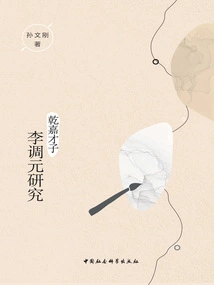
乾嘉才子李调元研究
Sun Wengang
As a famous Sichuan poet, literary theorist, and folklorist Li Tiaoyuan who lived roughly in the same era as Yuan Mei, Zhao Yi, Jiang Shiquan, Wang Wenzhi, Yao Nai and other famous Qianjia figures, academic research on him has not been sufficient. Based on this consideration, this book conducts a relatively comprehensive study and evaluation of Li Tiaoyuan from the aspects of his life story, poetry creation, poetic theory, opera aesthetics, folklore, etc., And classifies the relevant materials and documents related to his study at that time and in later generations. The content of this book has certain reference value for contemporary scholars engaged in research on Qing Dynasty academic culture, literature and art.
As a famous Sichuan poet, literary theorist, and folklorist Li Tiaoyuan who lived roughly in the same era as Yuan Mei, Zhao Yi, Jiang Shiquan, Wang Wenzhi, Yao Nai and other famous Qianjia figures, academic research on him has not been sufficient. Based on this consideration, this book conducts a relatively comprehensive study and evaluation of Li Tiaoyuan from the aspects of his life story, poetry creation, poetic theory, opera aesthetics, folklore, etc., And classifies the relevant materials and documents related to his study at that time and in later generations. The content of this book has certain reference value for contemporary scholars engaged in research on Qing Dynasty academic culture, literature and art.
乾嘉情文理论研究
Yang Ziyan
"The person who writes the text is moved by emotion and then quits writing, and the person who reads the text writes the text to be emotional." The relationship between emotion and text is the most basic and core issue in literary research, and exists in all aspects of literary activities. Important theories such as poetry expressing ambition, innocent thoughts, observing people's resentment, gentleness and sincerity, "motivating from emotion, stopping from etiquette and justice", writing books with great enthusiasm, Yuanqingqiluxi, theory of human nature, etc. Are all elucidation of the relationship between love and literature from various angles. As the final period of Chinese traditional culture, the Qianjia period systematically summarized and developed the theory of love literature. This book conducts in-depth research on the Qianjia love literature theory from multiple perspectives such as sex and reason, emotion and illusion, temperament and style, emotion and fiction.
"The person who writes the text is moved by emotion and then quits writing, and the person who reads the text writes the text to be emotional." The relationship between emotion and text is the most basic and core issue in literary research, and exists in all aspects of literary activities. Important theories such as poetry expressing ambition, innocent thoughts, observing people's resentment, gentleness and sincerity, "motivating from emotion, stopping from etiquette and justice", writing books with great enthusiasm, Yuanqingqiluxi, theory of human nature, etc. Are all elucidation of the relationship between love and literature from various angles. As the final period of Chinese traditional culture, the Qianjia period systematically summarized and developed the theory of love literature. This book conducts in-depth research on the Qianjia love literature theory from multiple perspectives such as sex and reason, emotion and illusion, temperament and style, emotion and fiction.
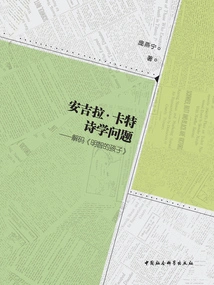
安吉拉·卡特诗学问题:解码《明智的孩子》
Pang Yanning
This book is produced based on the revision of my doctoral thesis "The "Anti-Logocentrism" Poetics of "The Wise Child"". This book is the first monograph in China that conducts a poetic study of Angela Carter's "The Wise Child" and explains its anti-logocentrism connotation, which has the value of filling in the gaps. The innovation of this work is also reflected in: 1. The new style of "The Wise Child" was investigated, and based on a large number of materials, it was identified as a classical Zhuangxiong style, and its anti-logocentrism spiritual essence was further revealed. 2. Using the method of cultural poetics, based on the examination of cultural history, this paper summarizes the new non-blood kinship family view in the novel, and conducts an in-depth discussion of its constructive role in anti-logos poetics.
This book is produced based on the revision of my doctoral thesis "The "Anti-Logocentrism" Poetics of "The Wise Child"". This book is the first monograph in China that conducts a poetic study of Angela Carter's "The Wise Child" and explains its anti-logocentrism connotation, which has the value of filling in the gaps. The innovation of this work is also reflected in: 1. The new style of "The Wise Child" was investigated, and based on a large number of materials, it was identified as a classical Zhuangxiong style, and its anti-logocentrism spiritual essence was further revealed. 2. Using the method of cultural poetics, based on the examination of cultural history, this paper summarizes the new non-blood kinship family view in the novel, and conducts an in-depth discussion of its constructive role in anti-logos poetics.
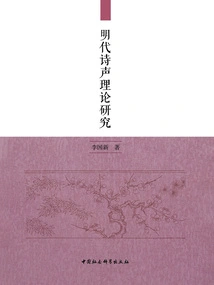
明代诗声理论研究
Li Guoxin
The theoretical study of poetic sound is an important dimension in the interpretation of Chinese poetics. It is a microscopic, deep and precise study. It is closely related to the evolution and development of the joy and separation of traditional Chinese poetry. The sound of poetry is the sound of poetry, mainly rhythm. It is mainly formed at six levels: rhyme, rhythm, calligraphy, syntax, composition, and style, and is mainly presented as natural sounds and man-made sounds. The theory of poetic sound in the Ming Dynasty was rich. The Ming Dynasty connected poetics with philosophy, aesthetics, etc., And discussed it from several aspects such as the relationship between sound and breath, the relationship between sound and meaning, the relationship between sound and emotion, and the relationship between sound and shape. The theory of poetic sound in the Ming Dynasty not only tended to return to traditional poetics, but also further developed to the highest realm of poetics - Shen Yun. In short, the theory of poetic sound in the Ming Dynasty and the corresponding practice of poetry creation are quite distinctive and valuable. The author first carefully examines the prosperity of poetic voice in the Ming Dynasty and its reasons from a diachronic perspective, then extracts some main propositions from the scattered and complicated poetic materials of the Ming Dynasty to explore the general appearance of the poetic voice theory in the Ming Dynasty in a case-by-case manner, and finally discusses the main issues concerned by the poetic voice theory in the Ming Dynasty and its poetic achievements.
The theoretical study of poetic sound is an important dimension in the interpretation of Chinese poetics. It is a microscopic, deep and precise study. It is closely related to the evolution and development of the joy and separation of traditional Chinese poetry. The sound of poetry is the sound of poetry, mainly rhythm. It is mainly formed at six levels: rhyme, rhythm, calligraphy, syntax, composition, and style, and is mainly presented as natural sounds and man-made sounds. The theory of poetic sound in the Ming Dynasty was rich. The Ming Dynasty connected poetics with philosophy, aesthetics, etc., And discussed it from several aspects such as the relationship between sound and breath, the relationship between sound and meaning, the relationship between sound and emotion, and the relationship between sound and shape. The theory of poetic sound in the Ming Dynasty not only tended to return to traditional poetics, but also further developed to the highest realm of poetics - Shen Yun. In short, the theory of poetic sound in the Ming Dynasty and the corresponding practice of poetry creation are quite distinctive and valuable. The author first carefully examines the prosperity of poetic voice in the Ming Dynasty and its reasons from a diachronic perspective, then extracts some main propositions from the scattered and complicated poetic materials of the Ming Dynasty to explore the general appearance of the poetic voice theory in the Ming Dynasty in a case-by-case manner, and finally discusses the main issues concerned by the poetic voice theory in the Ming Dynasty and its poetic achievements.
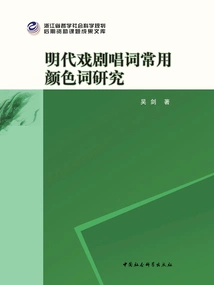
明代戏剧唱词常用颜色词研究
Wu Jian
This book takes the eight commonly used color words "white, black, red, purple, green, green, yellow, and green" in Ming Dynasty drama libretto as the main research object. It describes their semantic system, calculates their semantic significance and generality, examines their pragmatic characteristics, and on this basis shows the unique value of commonly used color words in Ming Dynasty drama libretto.
This book takes the eight commonly used color words "white, black, red, purple, green, green, yellow, and green" in Ming Dynasty drama libretto as the main research object. It describes their semantic system, calculates their semantic significance and generality, examines their pragmatic characteristics, and on this basis shows the unique value of commonly used color words in Ming Dynasty drama libretto.
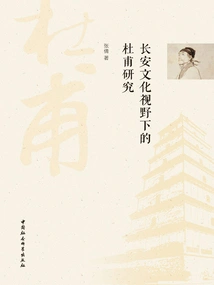
长安文化视野下的杜甫研究
Zhang Qian
This book mainly examines the relationship between Du's poetry and Chang'an culture. The first chapter outlines the significance of Chang'an culture in the development of Tang poetry, the second chapter summarizes the relationship between Chang'an culture and Du's poetry, and the third to fifth chapters specifically discuss the connotation of Chang'an culture in different periods and its impact on Du's poetry to show the significance of the Chang'an cultural spirit in the development of Du's poetry.
This book mainly examines the relationship between Du's poetry and Chang'an culture. The first chapter outlines the significance of Chang'an culture in the development of Tang poetry, the second chapter summarizes the relationship between Chang'an culture and Du's poetry, and the third to fifth chapters specifically discuss the connotation of Chang'an culture in different periods and its impact on Du's poetry to show the significance of the Chang'an cultural spirit in the development of Du's poetry.
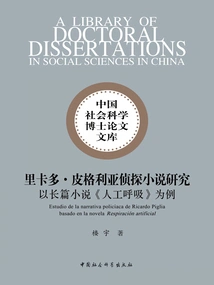
里卡多·皮格利亚侦探小说研究:以长篇小说《人工呼吸》为例
Building
Argentinian writer Ricardo Piglia has won important awards such as the Spanish "Literary Criticism Award", the "Romulo Gallegos International Novel Award" and the "Argentine Writers Association Highest Honor Award", and occupies an important position in the contemporary Argentine literary world and even the Spanish literary world. The novel "Artificial Respiration" was published in 1980. It is Piglia's most representative work and is known as one of the 10 most outstanding novels in contemporary Argentina. For more than 30 years, literary critics have conducted multi-dimensional interpretations of the novel, mainly focusing on historical perspectives, postmodern literature, and metafiction. After carefully studying previous research results, we tried to find a unique way to interpret "Artificial Respiration" from the perspective of postmodern detective novels. Through text analysis of this work, we explained the creative characteristics of Piglia's detective novels. We believe that "Artificial Respiration" subverts the traditional detective novel model in terms of mystery setting, images of detectives and criminals, and narrative structure. It is a work with the characteristics of postmodern detective novels. In addition, "Artificial Respiration" is also a literary vehicle for Piglia to display his creative concepts such as "two stories", "literary detective" and "detective reader", focusing on the unique charm of the author's detective novel creation.
Argentinian writer Ricardo Piglia has won important awards such as the Spanish "Literary Criticism Award", the "Romulo Gallegos International Novel Award" and the "Argentine Writers Association Highest Honor Award", and occupies an important position in the contemporary Argentine literary world and even the Spanish literary world. The novel "Artificial Respiration" was published in 1980. It is Piglia's most representative work and is known as one of the 10 most outstanding novels in contemporary Argentina. For more than 30 years, literary critics have conducted multi-dimensional interpretations of the novel, mainly focusing on historical perspectives, postmodern literature, and metafiction. After carefully studying previous research results, we tried to find a unique way to interpret "Artificial Respiration" from the perspective of postmodern detective novels. Through text analysis of this work, we explained the creative characteristics of Piglia's detective novels. We believe that "Artificial Respiration" subverts the traditional detective novel model in terms of mystery setting, images of detectives and criminals, and narrative structure. It is a work with the characteristics of postmodern detective novels. In addition, "Artificial Respiration" is also a literary vehicle for Piglia to display his creative concepts such as "two stories", "literary detective" and "detective reader", focusing on the unique charm of the author's detective novel creation.
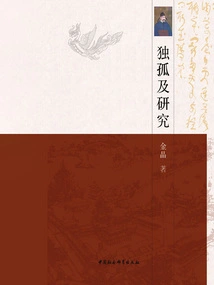
Dugu and Research
Literature独孤及研究
Jin Jing
This book discusses Dugu Ji's ideological and literary status from five aspects, and points out that Dugu Ji is the epitome of a practical scholar in his era who promoted Confucianism and focused the Confucian ideas on paper into specific affairs. Dugu Ji's reasoned and energetic memorial writing style, his exquisite narrative writing skills in his prefaces and narratives, his realistic features of deposed epigraphs, his theme of resentment and the lyrical feature of "taking place due to circumstances" all make him a "major" writer of Tang literary works. The characteristics of some of his poems "using text as poetry" show that the poet's interest in recording life far exceeds the pursuit of poetic taste, while the characteristics of some of his poems as "high ancient style" reflect his efforts to consciously transcend the "Chinese customs" of the Dali period and seek a balance between quality and text. Finally, the book discusses Dugu and his relationship with the "Ancient Prose Movement" and questions the popular notion in academic circles that he is regarded as "one of the pioneers of the Ancient Prose Movement". He pointed out that the parallel prose he criticized, which only has the beauty of sound and form but no real content, is by no means synonymous with the commonly known parallel prose. It is true that compared to the writers of the Six Dynasties and his contemporaries, he did create a certain number of essays that narrate people and express his personality. However, this is actually closely related to the awakening of "humanity" and the rise of "humanity" at the turn of the prosperous Tang Dynasty.
This book discusses Dugu Ji's ideological and literary status from five aspects, and points out that Dugu Ji is the epitome of a practical scholar in his era who promoted Confucianism and focused the Confucian ideas on paper into specific affairs. Dugu Ji's reasoned and energetic memorial writing style, his exquisite narrative writing skills in his prefaces and narratives, his realistic features of deposed epigraphs, his theme of resentment and the lyrical feature of "taking place due to circumstances" all make him a "major" writer of Tang literary works. The characteristics of some of his poems "using text as poetry" show that the poet's interest in recording life far exceeds the pursuit of poetic taste, while the characteristics of some of his poems as "high ancient style" reflect his efforts to consciously transcend the "Chinese customs" of the Dali period and seek a balance between quality and text. Finally, the book discusses Dugu and his relationship with the "Ancient Prose Movement" and questions the popular notion in academic circles that he is regarded as "one of the pioneers of the Ancient Prose Movement". He pointed out that the parallel prose he criticized, which only has the beauty of sound and form but no real content, is by no means synonymous with the commonly known parallel prose. It is true that compared to the writers of the Six Dynasties and his contemporaries, he did create a certain number of essays that narrate people and express his personality. However, this is actually closely related to the awakening of "humanity" and the rise of "humanity" at the turn of the prosperous Tang Dynasty.
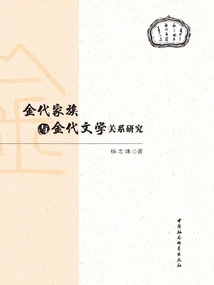
金代家族与金代文学关系研究
Yang Zhongqian
This book chooses to enter from the perspective of family research, and examines the fate and achievements of Jin Dynasty literary families in the process of social life changes, national cultural integration and cultural transformation in the Jin Dynasty. It explains the changes in the status of family literature caused by the exchanges and interactions between northern nomadic culture and Confucian farming culture, the changes in Han family literary concepts and literary styles, and the contributions of literary families of different nationalities to the formation of the overall pattern and cultural construction of Jin Dynasty literature.
This book chooses to enter from the perspective of family research, and examines the fate and achievements of Jin Dynasty literary families in the process of social life changes, national cultural integration and cultural transformation in the Jin Dynasty. It explains the changes in the status of family literature caused by the exchanges and interactions between northern nomadic culture and Confucian farming culture, the changes in Han family literary concepts and literary styles, and the contributions of literary families of different nationalities to the formation of the overall pattern and cultural construction of Jin Dynasty literature.
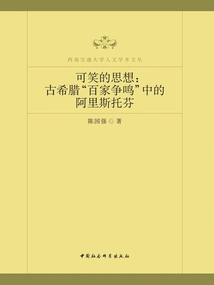
可笑的思想:古希腊“百家争鸣”中的阿里斯托芬
Chen Guoqiang
When interpreting the ancient Greek "political comedy" poet Aristophanes, this book attempts to go beyond the usual "micro-historical determinism" interpretation method used by classical scholars - using the historical conditions before and after the performance of each comedy as the decisive guiding clue for understanding each of Aristophanes' comedies. It is believed that the schism between Aristophanes and Socrates was the schism between wisdom and philosophy. Just as Mozi was an outlier among the thinkers of the pre-Qin period in China, Aristophanes was also an outlier among the thinkers of the classical Greek period. The essence of "a hundred schools of thought contending" lies in the cultural transformation and the ideological relationship between the interlocutors. Based on relevant ancient Greek texts, this book mainly discusses Aristophanes' responses to topics such as education, war and peace, Panhellenism, and theodicy from the perspective of "intellectual history", and preliminarily discusses the basic situation of "nomenclature" reflected in Aristophanes' plays.
When interpreting the ancient Greek "political comedy" poet Aristophanes, this book attempts to go beyond the usual "micro-historical determinism" interpretation method used by classical scholars - using the historical conditions before and after the performance of each comedy as the decisive guiding clue for understanding each of Aristophanes' comedies. It is believed that the schism between Aristophanes and Socrates was the schism between wisdom and philosophy. Just as Mozi was an outlier among the thinkers of the pre-Qin period in China, Aristophanes was also an outlier among the thinkers of the classical Greek period. The essence of "a hundred schools of thought contending" lies in the cultural transformation and the ideological relationship between the interlocutors. Based on relevant ancient Greek texts, this book mainly discusses Aristophanes' responses to topics such as education, war and peace, Panhellenism, and theodicy from the perspective of "intellectual history", and preliminarily discusses the basic situation of "nomenclature" reflected in Aristophanes' plays.
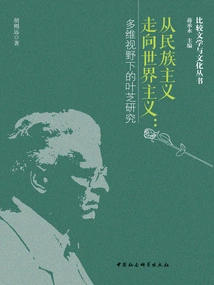
从民族主义走向世界主义:多维视野下的叶芝研究
Hu Zeyuan
People are all familiar with Yeats's touching love poem "When You Are Old," but when Yeats first became known to the Chinese in the 1920s, he was a member of the Irish National Renaissance Movement and deeply influenced China's modern drama movement and poetry creation. The multifaceted Yeats requires multi-dimensional perspectives to examine. This book interprets and studies Yeats's poetry, drama and literary theory from multi-dimensional perspectives such as postcolonial cultural theory, postcolonial translation theory, postcolonial ecocriticism, postcolonial feminism, Orientalism, cosmopolitanism and comparative literature, presenting to readers Yeats who is a poet, dramatist and cultural nationalism fighter. Through this investigation, Yeats's diverse creations have a unified point of observation, and his well-known works also take on new meanings.
People are all familiar with Yeats's touching love poem "When You Are Old," but when Yeats first became known to the Chinese in the 1920s, he was a member of the Irish National Renaissance Movement and deeply influenced China's modern drama movement and poetry creation. The multifaceted Yeats requires multi-dimensional perspectives to examine. This book interprets and studies Yeats's poetry, drama and literary theory from multi-dimensional perspectives such as postcolonial cultural theory, postcolonial translation theory, postcolonial ecocriticism, postcolonial feminism, Orientalism, cosmopolitanism and comparative literature, presenting to readers Yeats who is a poet, dramatist and cultural nationalism fighter. Through this investigation, Yeats's diverse creations have a unified point of observation, and his well-known works also take on new meanings.
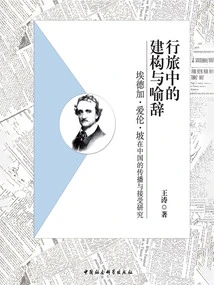
Construction and Metaphor in Travel: a Study of the Spread and Reception of Edgar Allan Poe in China
Literature行旅中的建构与喻辞:埃德加·爱伦·坡在中国的传播与接受研究
Wang Tao
As one of the earliest American writers translated into my country, Edgar Allan Poe's spread and acceptance in China involves rich and complex research content. His influence on China is part of his global influence. The study of Edgar Allan Poe's spread and acceptance in China is one of the important contents of international "Poe studies". However, research related to this topic at home and abroad began in the late 1980s, and was not fully developed, with not many scholars participating. This book is the first comprehensive and systematic study of this topic at home and abroad. It is a cutting-edge academic topic and is groundbreaking.
As one of the earliest American writers translated into my country, Edgar Allan Poe's spread and acceptance in China involves rich and complex research content. His influence on China is part of his global influence. The study of Edgar Allan Poe's spread and acceptance in China is one of the important contents of international "Poe studies". However, research related to this topic at home and abroad began in the late 1980s, and was not fully developed, with not many scholars participating. This book is the first comprehensive and systematic study of this topic at home and abroad. It is a cutting-edge academic topic and is groundbreaking.
叙事学研究:多重视角
Tan Junqiang
Since the new century, narrative research at home and abroad has shown a diversified development situation, with some eye-catching developments and changes in research objects, research scope, and research paradigms. This book covers the author's latest concerns in narratology research in recent years, including discussions on aesthetic cultural narratology, comparative narratology, poetic narratology, etc. Relevant discussions strive to carry out cross-research, comparative research, cross-genre and cross-disciplinary research in different disciplines under the multiple perspectives of narratology, and conduct theoretical discussions based on textual practice, in order to provide a reasonable explanation of the discussed issues based on the combination of theory and practice.
Since the new century, narrative research at home and abroad has shown a diversified development situation, with some eye-catching developments and changes in research objects, research scope, and research paradigms. This book covers the author's latest concerns in narratology research in recent years, including discussions on aesthetic cultural narratology, comparative narratology, poetic narratology, etc. Relevant discussions strive to carry out cross-research, comparative research, cross-genre and cross-disciplinary research in different disciplines under the multiple perspectives of narratology, and conduct theoretical discussions based on textual practice, in order to provide a reasonable explanation of the discussed issues based on the combination of theory and practice.
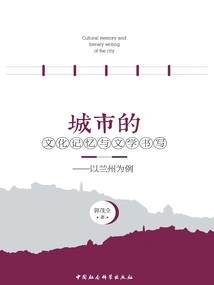
城市的文化记忆与文学书写:以兰州为例
Guo Maoquan
Literary works are important carriers for constructing urban cultural memory. The image of the city in literary works is an important part of the urban cultural spirit and an important resource that forms people's urban cultural experience. The city images of Lanzhou in novels, essays, and poems have very different aesthetic qualities, but also have the same spiritual appeal. This book shows the lineup of writers who wrote about Lanzhou's urban culture, sorted out the artistic expression of Lanzhou's urban cultural memory in novels, essays, and poems, interpreted many writers' personalized urban aesthetic concepts, and also clarified the positive role of literary works in the cohesion of urban cultural spirit. This is the first academic work that specifically explores the relationship between Lanzhou's urban cultural memory and literary writing. Its views have certain implications for current urban cultural construction and urban literature research.
Literary works are important carriers for constructing urban cultural memory. The image of the city in literary works is an important part of the urban cultural spirit and an important resource that forms people's urban cultural experience. The city images of Lanzhou in novels, essays, and poems have very different aesthetic qualities, but also have the same spiritual appeal. This book shows the lineup of writers who wrote about Lanzhou's urban culture, sorted out the artistic expression of Lanzhou's urban cultural memory in novels, essays, and poems, interpreted many writers' personalized urban aesthetic concepts, and also clarified the positive role of literary works in the cohesion of urban cultural spirit. This is the first academic work that specifically explores the relationship between Lanzhou's urban cultural memory and literary writing. Its views have certain implications for current urban cultural construction and urban literature research.
新时期以来小说暴力叙事研究
Zhou Jianhua
Violence has never appeared as a negative image in the eyes of the public or readers. However, this situation has changed in the creation of novels since the late 1970s. This book uses time as the continuum, social history and cultural psychology as the dimension, novel creation as the entry point, and typical violent narrative texts and writers in typical novels as the basic object of interpretation. It tells readers how "violence" can take on the inherent image of the past and turn ugliness into beauty or beauty out of ugliness. Violence is not just an event, but also a method, a concept, and a value. From the "standard configuration" of supporting roles and negative images in novel creation in the past to the historical trajectory of the main body, neutrality and even being criticized in today's text expressions, this change has actually hinted at the development of contemporary social values and cultural psychology.
Violence has never appeared as a negative image in the eyes of the public or readers. However, this situation has changed in the creation of novels since the late 1970s. This book uses time as the continuum, social history and cultural psychology as the dimension, novel creation as the entry point, and typical violent narrative texts and writers in typical novels as the basic object of interpretation. It tells readers how "violence" can take on the inherent image of the past and turn ugliness into beauty or beauty out of ugliness. Violence is not just an event, but also a method, a concept, and a value. From the "standard configuration" of supporting roles and negative images in novel creation in the past to the historical trajectory of the main body, neutrality and even being criticized in today's text expressions, this change has actually hinted at the development of contemporary social values and cultural psychology.
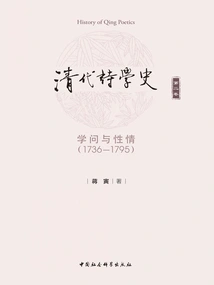
清代诗学史·第二卷:学问与性情(1736—1795)
Jiang Yin
This volume discusses the evolution of poetics during the Qianlong dynasty, taking the poetic world's backlash against Wang Yuyang's poetic poetry and its acceptance of Ye Xie's poetics as a logical starting point, and unfolds in chronological order the changes and changes in poetic trends in the past sixty years. It discusses Shen Deqian's new style poetics and Ji Xiaolan's test poems in sequence. The basic concepts, theoretical innovations, critical achievements and interactive influences of Yuan Mei's spiritual poetry, Weng Fanggang's scholar's poetry, Tongcheng School's poetics and Gaomi School's poetics. Under the theme of conflict and integration of knowledge and temperament, the similarities and differences of their ideas and their influence on later poetics are identified. The whole book adheres to the academic concept of "entering the process" and strives to unfold the internal differences of various schools of poetics through diachronic observation, so that the history of poetics in the Qianlong Dynasty not only presents its unprecedented richness, but also reveals a clear context and overall pattern. In short, whether it is the overall understanding of Qianlong's poetics or the specific interpretation and evaluation of each poetics, this volume puts forward a new conclusion that is different from the academic theory.
This volume discusses the evolution of poetics during the Qianlong dynasty, taking the poetic world's backlash against Wang Yuyang's poetic poetry and its acceptance of Ye Xie's poetics as a logical starting point, and unfolds in chronological order the changes and changes in poetic trends in the past sixty years. It discusses Shen Deqian's new style poetics and Ji Xiaolan's test poems in sequence. The basic concepts, theoretical innovations, critical achievements and interactive influences of Yuan Mei's spiritual poetry, Weng Fanggang's scholar's poetry, Tongcheng School's poetics and Gaomi School's poetics. Under the theme of conflict and integration of knowledge and temperament, the similarities and differences of their ideas and their influence on later poetics are identified. The whole book adheres to the academic concept of "entering the process" and strives to unfold the internal differences of various schools of poetics through diachronic observation, so that the history of poetics in the Qianlong Dynasty not only presents its unprecedented richness, but also reveals a clear context and overall pattern. In short, whether it is the overall understanding of Qianlong's poetics or the specific interpretation and evaluation of each poetics, this volume puts forward a new conclusion that is different from the academic theory.
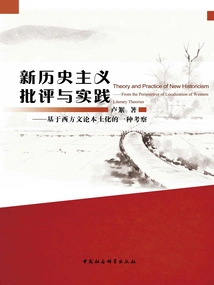
新历史主义批评与实践:基于西方文论本土化的一种考察
Lu Xu
Based on China's local cultural context and literary soil, this book examines the criticism and practical experience of New Historicism in China from multiple aspects. It includes both vertical historical clues and horizontal comparative studies of Chinese and Western literary theories. It also includes interpretations of specific writers and works. The whole book attempts to analyze the localization process and influence of New Historicism in China from a macro perspective.
Based on China's local cultural context and literary soil, this book examines the criticism and practical experience of New Historicism in China from multiple aspects. It includes both vertical historical clues and horizontal comparative studies of Chinese and Western literary theories. It also includes interpretations of specific writers and works. The whole book attempts to analyze the localization process and influence of New Historicism in China from a macro perspective.
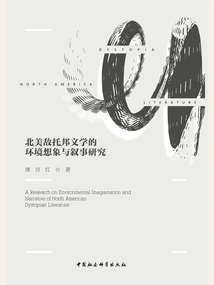
北美敌托邦文学的环境想象与叙事研究
Tan Yanhong
This book systematically sorts out the development trajectory of North American dystopian literature, and strives to display the environmental imagination and writing strategies in North American dystopian literature from multiple dimensions, so that readers can have a certain understanding of the classic works of North American dystopian literature and its environmental narratives. The book explores the ecological ideas contained in Margaret Atwood's classics "The Handmaid's Tale," "Oryx and Crake," and "Waterless Flood." It analyzes the environmental narratives in works such as "The Hunger Games" and "The Ugly Man" from the perspective of teenagers, revealing the beautiful value of nature and humanity under the rule of technology.
This book systematically sorts out the development trajectory of North American dystopian literature, and strives to display the environmental imagination and writing strategies in North American dystopian literature from multiple dimensions, so that readers can have a certain understanding of the classic works of North American dystopian literature and its environmental narratives. The book explores the ecological ideas contained in Margaret Atwood's classics "The Handmaid's Tale," "Oryx and Crake," and "Waterless Flood." It analyzes the environmental narratives in works such as "The Hunger Games" and "The Ugly Man" from the perspective of teenagers, revealing the beautiful value of nature and humanity under the rule of technology.
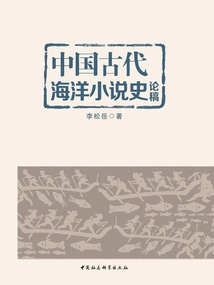
中国古代海洋小说史论稿
Li Songyue
This book collects vast information, starting from ancient myths and legends to late Qing literature. It carefully examines the historical changes of ancient Chinese maritime novels from their inception, formation, maturity to final completion, as well as the internal and external factors of various changes. The main purpose of this book is to reveal the narrative mode, artistic characteristics and national style of ancient Chinese ocean novels around the propositions of fate and chance, wandering and crisis, desire and pursuit, retreat and progress, this life and the next life, and on this basis, highlight the thinking form and emotional value orientation of ancient Chinese people, especially the evolution of concepts in natural cognition, that is, to use the mirror of the ocean to reflect the historical process of continuous creation and renewal of the human spirit, and seek its enlightenment significance for the construction of contemporary culture.
This book collects vast information, starting from ancient myths and legends to late Qing literature. It carefully examines the historical changes of ancient Chinese maritime novels from their inception, formation, maturity to final completion, as well as the internal and external factors of various changes. The main purpose of this book is to reveal the narrative mode, artistic characteristics and national style of ancient Chinese ocean novels around the propositions of fate and chance, wandering and crisis, desire and pursuit, retreat and progress, this life and the next life, and on this basis, highlight the thinking form and emotional value orientation of ancient Chinese people, especially the evolution of concepts in natural cognition, that is, to use the mirror of the ocean to reflect the historical process of continuous creation and renewal of the human spirit, and seek its enlightenment significance for the construction of contemporary culture.
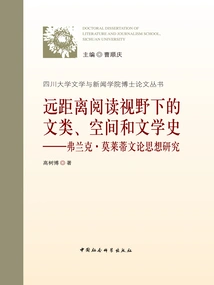
远距离阅读视野下的文类、空间和文学史:弗兰克·莫莱蒂文论思想研究
Gao Shubo
Italian scholar Frank Moretti draws nourishment from the natural sciences and attempts to bridge the gap between the humanities and the natural sciences, thus bringing a breath of fresh air to literary research. Specifically, he integrated literature with knowledge resources from biology, history, sociology, geography, statistics, philosophy and other disciplines, and proposed the theory of "distance reading". Long-distance reading is a method of systematically using charts, maps, and tree models to analyze literary phenomena-charts come from quantitative history, maps come from geography, and tree models belong to the field of evolution. Based on this theory, Moretti is committed to thinking about the relationship between literary form and society, the relationship between genre and space, and the writing of literary history. His thinking framework has obvious Marxist characteristics.
Italian scholar Frank Moretti draws nourishment from the natural sciences and attempts to bridge the gap between the humanities and the natural sciences, thus bringing a breath of fresh air to literary research. Specifically, he integrated literature with knowledge resources from biology, history, sociology, geography, statistics, philosophy and other disciplines, and proposed the theory of "distance reading". Long-distance reading is a method of systematically using charts, maps, and tree models to analyze literary phenomena-charts come from quantitative history, maps come from geography, and tree models belong to the field of evolution. Based on this theory, Moretti is committed to thinking about the relationship between literary form and society, the relationship between genre and space, and the writing of literary history. His thinking framework has obvious Marxist characteristics.
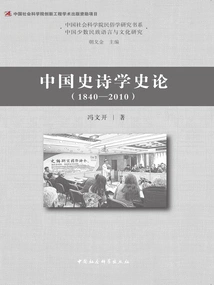
中国史诗学史论(1840—2010)
Feng Wenkai
"History of Chinese Epic Studies (1840-2010)" takes scholars who are generally recognized in the field of Chinese epic studies, have unique opinions and have lasting influence as cases, and analyzes their epic concepts, academic interests, problem awareness and research paradigms, so as to It outlines a certain aspect of the academic history of Chinese epic over the past century, expounds the inheritance and innovation of Chinese epic researchers in academic ideas, research methods and research fields, reflects on the academic turn and new pattern of Chinese epic, and summarizes the characteristics of the formation and development of Chinese epic.
"History of Chinese Epic Studies (1840-2010)" takes scholars who are generally recognized in the field of Chinese epic studies, have unique opinions and have lasting influence as cases, and analyzes their epic concepts, academic interests, problem awareness and research paradigms, so as to It outlines a certain aspect of the academic history of Chinese epic over the past century, expounds the inheritance and innovation of Chinese epic researchers in academic ideas, research methods and research fields, reflects on the academic turn and new pattern of Chinese epic, and summarizes the characteristics of the formation and development of Chinese epic.
暧昧的现代性追求:晚清翻新小说研究
Wu Zequan
This book comprehensively uses a variety of methods to study the late Qing novels that have long been ignored by literary history. On the basis of fully possessing the literature and materials, this book restores the creative aspects of the renovation novels, analyzes the creative motivations of the renovation novels, and re-evaluates the status of the renovation novels in the history of modern literature. The above work has the significance of filling academic gaps. The basic idea of this book is to understand the renovation novels in the specific era context of novel changes and social and cultural changes in the late Qing Dynasty. The main point of this book is to argue that renovated novels are a trend of creative thought that emerged in response to the "New Novel" movement in the late Qing Dynasty. Renovated novels subversively rewrite classical novels in terms of themes, themes and language narratives. What this rewriting expresses is a modern pursuit of breaking inheritance and pursuing innovation and change. However, due to the constraints of various factors, this pursuit of modernity always presents a contradictory and ambiguous color.
This book comprehensively uses a variety of methods to study the late Qing novels that have long been ignored by literary history. On the basis of fully possessing the literature and materials, this book restores the creative aspects of the renovation novels, analyzes the creative motivations of the renovation novels, and re-evaluates the status of the renovation novels in the history of modern literature. The above work has the significance of filling academic gaps. The basic idea of this book is to understand the renovation novels in the specific era context of novel changes and social and cultural changes in the late Qing Dynasty. The main point of this book is to argue that renovated novels are a trend of creative thought that emerged in response to the "New Novel" movement in the late Qing Dynasty. Renovated novels subversively rewrite classical novels in terms of themes, themes and language narratives. What this rewriting expresses is a modern pursuit of breaking inheritance and pursuing innovation and change. However, due to the constraints of various factors, this pursuit of modernity always presents a contradictory and ambiguous color.
英语世界的巴金研究
Wang Miaomiao
This book provides a comprehensive and systematic detailed explanation and comparative analysis of Ba Jin research in the English-speaking world, and sorts out the basic development history of Ba Jin research in the English-speaking world. It hopes to allow Chinese scholars to learn more about the status of Ba Jin's translation and research in the English-speaking world, draw on the "other's perspective" of scholars in the English-speaking world, provide useful inspiration for Ba Jin research in China, and build a bridge between Eastern and Western literary research and cultural exchanges. In addition, this book also compares and contrasts the research on Ba Jin in China and the research on Ba Jin in the English-speaking world, in order to provide a certain reference for the research on Ba Jin in China.
This book provides a comprehensive and systematic detailed explanation and comparative analysis of Ba Jin research in the English-speaking world, and sorts out the basic development history of Ba Jin research in the English-speaking world. It hopes to allow Chinese scholars to learn more about the status of Ba Jin's translation and research in the English-speaking world, draw on the "other's perspective" of scholars in the English-speaking world, provide useful inspiration for Ba Jin research in China, and build a bridge between Eastern and Western literary research and cultural exchanges. In addition, this book also compares and contrasts the research on Ba Jin in China and the research on Ba Jin in the English-speaking world, in order to provide a certain reference for the research on Ba Jin in China.
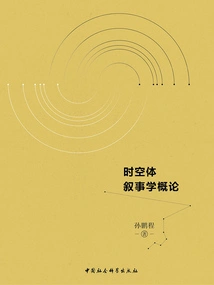
时空体叙事学概论
Sun Pengcheng
The academic goal of "Introduction to Chronotemporal Narratology" is to establish a historical cognitive narratology in addition to structuralist narratology. This is an extremely difficult and neglected academic field, and one must be brave enough to dare to step into it. The author starts from the linguistic model of poetics, that is, the model of historical linguistics and cognitive linguistics, and goes deep into the inner texture of the chronotope theory. By extracting the basic principles of historical cognitive science in the linguistic model, the author makes an in-depth analysis of the chronotope theory. Starting from the most basic elements of chronotope theory, the author successively analyzes the interactive relationship between narrative semantics and narrative grammar, the interactive cognition of "narration" and "things", reveals the inherent social and historical factors and the potential of narratology, highlights the idea of historical cognitive narratology in comparison with structuralist narratology, reveals the embryonic form of historical cognitive narratology contained in it, and then summarizes it into several principles for constructing historical cognitive narratology. It should be said that in "Introduction to Chronotemporal Narratology", the author's thinking is profound and meticulous. If narratology wants to break through its own dilemma, it must find another way out. New narratology that focuses on context is an important way out of this dilemma. Therefore, the theoretical choice made by the author is in line with the needs of academic development.
The academic goal of "Introduction to Chronotemporal Narratology" is to establish a historical cognitive narratology in addition to structuralist narratology. This is an extremely difficult and neglected academic field, and one must be brave enough to dare to step into it. The author starts from the linguistic model of poetics, that is, the model of historical linguistics and cognitive linguistics, and goes deep into the inner texture of the chronotope theory. By extracting the basic principles of historical cognitive science in the linguistic model, the author makes an in-depth analysis of the chronotope theory. Starting from the most basic elements of chronotope theory, the author successively analyzes the interactive relationship between narrative semantics and narrative grammar, the interactive cognition of "narration" and "things", reveals the inherent social and historical factors and the potential of narratology, highlights the idea of historical cognitive narratology in comparison with structuralist narratology, reveals the embryonic form of historical cognitive narratology contained in it, and then summarizes it into several principles for constructing historical cognitive narratology. It should be said that in "Introduction to Chronotemporal Narratology", the author's thinking is profound and meticulous. If narratology wants to break through its own dilemma, it must find another way out. New narratology that focuses on context is an important way out of this dilemma. Therefore, the theoretical choice made by the author is in line with the needs of academic development.
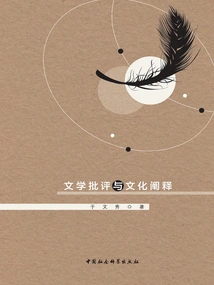
文学批评与文化阐释
Yu Wenxiu
In recent years, there have been many cutting-edge and hot issues in literature and culture, which urgently require timely responses from the critical community. This book is a reflection, criticism and exploration of several hot issues in modern and contemporary literature and cultural trends of thought. It consists of four parts: the topic of modern and contemporary literature, literature and literary history as a cultural phenomenon, hot issues of contemporary Western cultural trends, and humanistic thoughts of observation and criticism, each with its own emphasis but echoing each other. This book places modern and contemporary literature in the perspective of Chinese and Western cultures to consider and study, and re-examines the positioning and writing of writers in the context of literary history writing. At the same time, it makes a more in-depth analysis of the current hot cultural trends in the West, showing a relatively broad research horizon and keen academic exploration ability.
In recent years, there have been many cutting-edge and hot issues in literature and culture, which urgently require timely responses from the critical community. This book is a reflection, criticism and exploration of several hot issues in modern and contemporary literature and cultural trends of thought. It consists of four parts: the topic of modern and contemporary literature, literature and literary history as a cultural phenomenon, hot issues of contemporary Western cultural trends, and humanistic thoughts of observation and criticism, each with its own emphasis but echoing each other. This book places modern and contemporary literature in the perspective of Chinese and Western cultures to consider and study, and re-examines the positioning and writing of writers in the context of literary history writing. At the same time, it makes a more in-depth analysis of the current hot cultural trends in the West, showing a relatively broad research horizon and keen academic exploration ability.
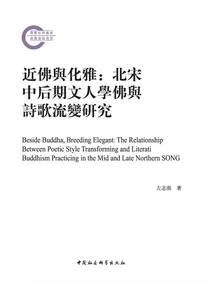
近佛与化雅:北宋中后期文人学佛与诗歌流变研究
Zuo Zhinan
This book strives to further deepen the study of the evolution of poetry in the middle and late Northern Song Dynasty by combining case analysis and overall research, taking into account diachronic sorting and synchronic comparison. This book selects the relationship between the literati's study of Buddhism and the evolution of poetry in this period as the research object. Starting from the analysis of Buddhist allusions and borrowed Buddhist terms used in poetry, combined with the investigation of the relationship between literati and Buddhism at that time, it explores the logical sequence of literati's acceptance of Buddhist ideas and the construction and generation of the Buddhist ideological system. It also analyzes the characteristics of the knowledge composition and evolution of scholar-officials in this period, and deepens the study of the causes and processes of the evolution of poetry in this period. In terms of specific structure, this book mainly studies the inner relationship between the study of Buddhist theory and literary creation by representatives such as Wang Anshi, Su Shi, and Huang Tingjian. It makes appropriate use of relevant theoretical methods to analyze and compare in detail the three people's paths of learning Buddhism, the impact of learning Buddhism on their use of poetic language, and the penetration of learning Buddhism into their thinking on poetry creation. It generally outlines the relationship between the changes in scholar-officials' learning of Buddhism and the evolution of poetry in this period. As an extension of the thesis, this book also examines the relationship between the study of Buddhism by Jiangxi poets in the late Northern Song Dynasty and the formation and evolution of their poetry creation and poetic theory.
This book strives to further deepen the study of the evolution of poetry in the middle and late Northern Song Dynasty by combining case analysis and overall research, taking into account diachronic sorting and synchronic comparison. This book selects the relationship between the literati's study of Buddhism and the evolution of poetry in this period as the research object. Starting from the analysis of Buddhist allusions and borrowed Buddhist terms used in poetry, combined with the investigation of the relationship between literati and Buddhism at that time, it explores the logical sequence of literati's acceptance of Buddhist ideas and the construction and generation of the Buddhist ideological system. It also analyzes the characteristics of the knowledge composition and evolution of scholar-officials in this period, and deepens the study of the causes and processes of the evolution of poetry in this period. In terms of specific structure, this book mainly studies the inner relationship between the study of Buddhist theory and literary creation by representatives such as Wang Anshi, Su Shi, and Huang Tingjian. It makes appropriate use of relevant theoretical methods to analyze and compare in detail the three people's paths of learning Buddhism, the impact of learning Buddhism on their use of poetic language, and the penetration of learning Buddhism into their thinking on poetry creation. It generally outlines the relationship between the changes in scholar-officials' learning of Buddhism and the evolution of poetry in this period. As an extension of the thesis, this book also examines the relationship between the study of Buddhism by Jiangxi poets in the late Northern Song Dynasty and the formation and evolution of their poetry creation and poetic theory.
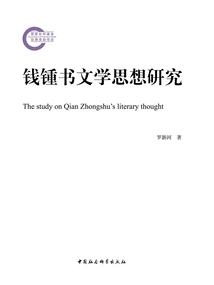
钱锺书文学思想研究
Luoxinhe
The unswerving exploration and pursuit of the common "poetic heart" and "literary heart" of mankind run through Qian Zhongshu's theoretical texts, forming a broad and profound ideological system. This achievement is an overall observation and research on this, mainly using aesthetics as a clue, and focusing on the nature, text, creation, development and interpretation of literature, to specifically sort out and analyze Qian Zhongshu's understanding, attitude, methods and intentions on these issues, as well as the historical and cultural context and academic genealogy of their formation, paying special attention to its characteristics of bridging China and the West, integrating ancient and modern times, and then using this to detect and grasp the causes, characteristics and significance of Qian Zhongshu's unique literary choices and ideological tendencies.
The unswerving exploration and pursuit of the common "poetic heart" and "literary heart" of mankind run through Qian Zhongshu's theoretical texts, forming a broad and profound ideological system. This achievement is an overall observation and research on this, mainly using aesthetics as a clue, and focusing on the nature, text, creation, development and interpretation of literature, to specifically sort out and analyze Qian Zhongshu's understanding, attitude, methods and intentions on these issues, as well as the historical and cultural context and academic genealogy of their formation, paying special attention to its characteristics of bridging China and the West, integrating ancient and modern times, and then using this to detect and grasp the causes, characteristics and significance of Qian Zhongshu's unique literary choices and ideological tendencies.
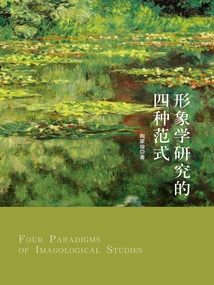
Four Paradigms of Imageology Research
Literature形象学研究的四种范式
Tao Jiajun
This book takes hermeneutics as the starting point, modern philology, Freudian psychoanalysis, and phenomenology as the fulcrum, and focuses on four types of image research paradigms: historical image, cross-cultural image, psychological image, and symbolic image. The core arguments include: the core of imageology research is the value appeal and spiritual movement involved in identity; it originated from the three major sources of romance literature, Freudian psychoanalysis, and phenomenology; it constantly breaks through and reconstructs literary boundaries and disciplinary boundaries, and transcends geographical and cultural barriers; it aims to inherit On the basis of this, we must enrich and improve the Western hermeneutic tradition; the poetic revolution of iconography is deeply embedded in the texture of literary and ideological modernity; we must adhere to the necessity of enlightenment and redemption of people in historical circumstances, adhere to the refinement of cultural value elements, the support of cultural norms, and the shaping of cultural character.
This book takes hermeneutics as the starting point, modern philology, Freudian psychoanalysis, and phenomenology as the fulcrum, and focuses on four types of image research paradigms: historical image, cross-cultural image, psychological image, and symbolic image. The core arguments include: the core of imageology research is the value appeal and spiritual movement involved in identity; it originated from the three major sources of romance literature, Freudian psychoanalysis, and phenomenology; it constantly breaks through and reconstructs literary boundaries and disciplinary boundaries, and transcends geographical and cultural barriers; it aims to inherit On the basis of this, we must enrich and improve the Western hermeneutic tradition; the poetic revolution of iconography is deeply embedded in the texture of literary and ideological modernity; we must adhere to the necessity of enlightenment and redemption of people in historical circumstances, adhere to the refinement of cultural value elements, the support of cultural norms, and the shaping of cultural character.
Petofi Research
Literature裴多菲研究
Feng Zhisheng
Petofi Sandor (1823-1849) was a famous Hungarian revolutionary patriotic poet in the 19th century, well-known in the world of poetry. This book presents the poet's short revolutionary life and major achievements in poetry creation from a new perspective. The book is composed of three parts. Through theoretical analysis, elaboration and comments, it reproduces the true and tall image of a revolutionary patriotic poet in a way that combines reality and reality. In an ideological sense, Petofi and his poetry creation embody a high degree of national democratic revolutionary spirit: in terms of artistic creation, Petofi is famous for his bold, fresh, bright and delicate poetic style, which is highly artistically appealing and has a huge impact on later generations.
Petofi Sandor (1823-1849) was a famous Hungarian revolutionary patriotic poet in the 19th century, well-known in the world of poetry. This book presents the poet's short revolutionary life and major achievements in poetry creation from a new perspective. The book is composed of three parts. Through theoretical analysis, elaboration and comments, it reproduces the true and tall image of a revolutionary patriotic poet in a way that combines reality and reality. In an ideological sense, Petofi and his poetry creation embody a high degree of national democratic revolutionary spirit: in terms of artistic creation, Petofi is famous for his bold, fresh, bright and delicate poetic style, which is highly artistically appealing and has a huge impact on later generations.
唐代园林与文学之关系研究
Wang Shuyan
It mainly starts from the historical development of gardens in the Tang Dynasty, examines the evolution of the literati's view of nature in the Tang Dynasty and the reflection of garden consciousness in literary creation, and then conducts specific research on the relationship between gardens and literature from garden activities related to literati such as garden banquets, garden construction, and garden chanting, presenting the creative landscape of garden literature in the Tang Dynasty. Finally, it will be placed in the macroscopic view of the entire Tang Dynasty literature, examine the impact of garden writing on literary concepts and creative theories, and deeply explore the interactive relationship between gardens and literature. The author communicates gardens and literature, uses interdisciplinary research methods, combines microscopic argumentation and macro interpretation, strives to expand new thinking and new fields in the study of Tang Dynasty literature, and explores new paths for the current research on Tang Dynasty gardens and literature.
It mainly starts from the historical development of gardens in the Tang Dynasty, examines the evolution of the literati's view of nature in the Tang Dynasty and the reflection of garden consciousness in literary creation, and then conducts specific research on the relationship between gardens and literature from garden activities related to literati such as garden banquets, garden construction, and garden chanting, presenting the creative landscape of garden literature in the Tang Dynasty. Finally, it will be placed in the macroscopic view of the entire Tang Dynasty literature, examine the impact of garden writing on literary concepts and creative theories, and deeply explore the interactive relationship between gardens and literature. The author communicates gardens and literature, uses interdisciplinary research methods, combines microscopic argumentation and macro interpretation, strives to expand new thinking and new fields in the study of Tang Dynasty literature, and explores new paths for the current research on Tang Dynasty gardens and literature.
明末清初散文探微
Zhang Zetong
This book is a collection of the results of the author's research on prose in the late Ming and early Qing dynasties in the past ten years. The first part explores the spiritual outlook of the literati during this period, especially the poetic presentation of the literati's soul, through a series of close readings and annotations inside and outside the text of a series of prose works in the late Ming and early Qing dynasties. Among them, there are many achievements in the interpretation of chapters such as "Looking at the Snow in the Pavilion at the Heart of the Lake" and "Half of July on the West Lake". The second part selects representative cultural intermediaries, writers and groups in the late Ming and early Qing dynasties for in-depth research, explores the diverse trends and vivid landscapes of the evolution of prose in the late Ming and early Qing dynasties, and rewrites the relatively simple description of the evolution of prose during this period in literary history books.
This book is a collection of the results of the author's research on prose in the late Ming and early Qing dynasties in the past ten years. The first part explores the spiritual outlook of the literati during this period, especially the poetic presentation of the literati's soul, through a series of close readings and annotations inside and outside the text of a series of prose works in the late Ming and early Qing dynasties. Among them, there are many achievements in the interpretation of chapters such as "Looking at the Snow in the Pavilion at the Heart of the Lake" and "Half of July on the West Lake". The second part selects representative cultural intermediaries, writers and groups in the late Ming and early Qing dynasties for in-depth research, explores the diverse trends and vivid landscapes of the evolution of prose in the late Ming and early Qing dynasties, and rewrites the relatively simple description of the evolution of prose during this period in literary history books.
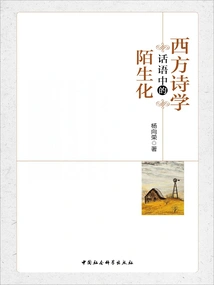
西方诗学话语中的陌生化
Yang Xiangrong
Based on the intersection of aesthetics, literary theory, cultural sociology and other disciplines, this book conducts a systematic study and critical discussion of the theory of "defamiliarization" at two different levels - diachronic and synchronic. The author strives to portray the theory of "defamiliarization" from a three-dimensional and multi-dimensional perspective, and the ultimate goal is to present the theory of "defamiliarization" in front of readers in a defamiliarized way through the theoretical sorting out of the "diachronic" dimension and the theoretical explanation of the "synchronic" dimension.
Based on the intersection of aesthetics, literary theory, cultural sociology and other disciplines, this book conducts a systematic study and critical discussion of the theory of "defamiliarization" at two different levels - diachronic and synchronic. The author strives to portray the theory of "defamiliarization" from a three-dimensional and multi-dimensional perspective, and the ultimate goal is to present the theory of "defamiliarization" in front of readers in a defamiliarized way through the theoretical sorting out of the "diachronic" dimension and the theoretical explanation of the "synchronic" dimension.
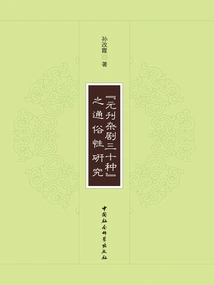
《元刊杂剧三十种》之通俗性研究
Sun Gaixia
"Thirty Types of Yuan Zaju" is the earliest and most important Yuan Zaju script collection among the existing Yuan Zaju, and its appearance is also closest to the real situation of Yuan Zaju. "Thirty Types of Yuanjian Zaju" has extremely high historical and academic value in terms of the history of opera creation, performance, and publishing. Compared with the Ming Dynasty Yuan Dynasty Zaju and the Ming Dynasty Copying Yuan Zaju, "Thirty Types of Yuan Kan Zaju" is obviously more popular, fresher and more lively. Therefore, "popularity" is a major feature of "Yuan Kan Zaju Thirty Types". So if you want to understand the popularity of Yuan Dynasty Zaju, you need to conduct a comprehensive study on the performance, reasons and significance of its popularity. This book systematically studies the subtle manifestations of the popularity of "Thirty Types of Yuankan Zaju" in five aspects such as printing, language, science, music, and perspective. On this basis, it compares the differences in popularity between "Thirty Types of Yuankan Zaju" and "Selected Songs of the Yuan Dynasty". Finally, it deeply explores the reasons for the popularity of "Thirty Types of Yuankan Zaju" and the significance of studying the popularity. Through research, it is proposed that the core of popularity is seeking novelty, difference and change, so that it can be fresh and not corrupt. From the perspective of popularity, it is reflected that one of the reasons why the current opera is difficult to prosper is "more elegance but not enough vulgarity". Therefore, the reform of opera should be based on the audience, and popularization factors should be added from all aspects of opera in order to achieve new prosperity.
"Thirty Types of Yuan Zaju" is the earliest and most important Yuan Zaju script collection among the existing Yuan Zaju, and its appearance is also closest to the real situation of Yuan Zaju. "Thirty Types of Yuanjian Zaju" has extremely high historical and academic value in terms of the history of opera creation, performance, and publishing. Compared with the Ming Dynasty Yuan Dynasty Zaju and the Ming Dynasty Copying Yuan Zaju, "Thirty Types of Yuan Kan Zaju" is obviously more popular, fresher and more lively. Therefore, "popularity" is a major feature of "Yuan Kan Zaju Thirty Types". So if you want to understand the popularity of Yuan Dynasty Zaju, you need to conduct a comprehensive study on the performance, reasons and significance of its popularity. This book systematically studies the subtle manifestations of the popularity of "Thirty Types of Yuankan Zaju" in five aspects such as printing, language, science, music, and perspective. On this basis, it compares the differences in popularity between "Thirty Types of Yuankan Zaju" and "Selected Songs of the Yuan Dynasty". Finally, it deeply explores the reasons for the popularity of "Thirty Types of Yuankan Zaju" and the significance of studying the popularity. Through research, it is proposed that the core of popularity is seeking novelty, difference and change, so that it can be fresh and not corrupt. From the perspective of popularity, it is reflected that one of the reasons why the current opera is difficult to prosper is "more elegance but not enough vulgarity". Therefore, the reform of opera should be based on the audience, and popularization factors should be added from all aspects of opera in order to achieve new prosperity.
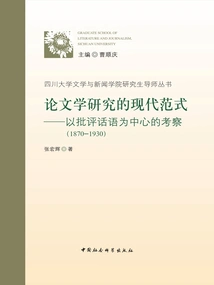
论文学研究的现代范式:以批评话语为中心的考察(1870—1930)
Zhang Honghui
The inherent kink and conspiracy between modern "academic paradigms" and "critical discourse" constitute some deep-seated problems in the overall activities of modern Chinese and Western literary research. At the same time, they shape the phenomenon of "the century of literary criticism" and inherently represent the core of the proposition of modernity. Specifically, the "knowledge downward trend" and "cultural rescue" from the 1870s to the 1930s, these two era circumstances, jointly promoted the modern transformation of the literary research paradigm. The "humanity" characteristics of the overall intellectual and cultural space that they jointly formed determined the fundamental quality of the modern transformation and reconstruction of the literary research paradigm during the period. The "modern establishment of literature", as a product inherent in this intellectual and cultural space, not only directly initiated the modern transformation of Chinese and Western literary research paradigms, but also structurally contributed to the "historical pattern" of modern literary research in China and the "theoretical pattern" in the West. These two patterns inherently shaped the paradigmatic direction of historiography or theorization in modern literary research activities. Modern "critical discourse" is intrinsically and structurally produced in the "modern establishment of literature", and has acquired basic institutional qualities and active humanistic characteristics, and has widely penetrated into the modern pattern of historiographic or theoretical literary research, exerting a core influence on the modern research paradigm of literature.
The inherent kink and conspiracy between modern "academic paradigms" and "critical discourse" constitute some deep-seated problems in the overall activities of modern Chinese and Western literary research. At the same time, they shape the phenomenon of "the century of literary criticism" and inherently represent the core of the proposition of modernity. Specifically, the "knowledge downward trend" and "cultural rescue" from the 1870s to the 1930s, these two era circumstances, jointly promoted the modern transformation of the literary research paradigm. The "humanity" characteristics of the overall intellectual and cultural space that they jointly formed determined the fundamental quality of the modern transformation and reconstruction of the literary research paradigm during the period. The "modern establishment of literature", as a product inherent in this intellectual and cultural space, not only directly initiated the modern transformation of Chinese and Western literary research paradigms, but also structurally contributed to the "historical pattern" of modern literary research in China and the "theoretical pattern" in the West. These two patterns inherently shaped the paradigmatic direction of historiography or theorization in modern literary research activities. Modern "critical discourse" is intrinsically and structurally produced in the "modern establishment of literature", and has acquired basic institutional qualities and active humanistic characteristics, and has widely penetrated into the modern pattern of historiographic or theoretical literary research, exerting a core influence on the modern research paradigm of literature.
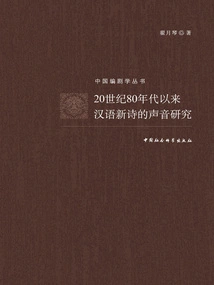
20世纪80年代以来汉语新诗的声音研究
Zhai Yueqin
The sound issue of new Chinese poetry has been a hot topic in poetics since the 1980s. Sound initially refers to the musical attribute of poetry, but since music itself is not poetry, musicality cannot encompass the aesthetic characteristics of current new Chinese poetry. Therefore, it is more effective to adopt the word sound. In addition, there are differences between sounds, pointing to different aspects of the same problem. Sound in poetry mainly refers to the rules related to music, mainly written language, while sound focuses on the comprehensive effect produced through musical accompaniment or other oral methods. This book takes the new Chinese poetry since the 1980s as the research object, and studies the sound issues of new Chinese poetry from multiple dimensions. This book is divided into five chapters. It is based on a close reading of the texts of new Chinese poetry since the 1980s, and integrates research in literary history, cultural history, and linguistics. It not only displays the richness of sounds in new Chinese poetry since the 1980s, but also attempts to open up new research paths for the study of sounds in new Chinese poetry.
The sound issue of new Chinese poetry has been a hot topic in poetics since the 1980s. Sound initially refers to the musical attribute of poetry, but since music itself is not poetry, musicality cannot encompass the aesthetic characteristics of current new Chinese poetry. Therefore, it is more effective to adopt the word sound. In addition, there are differences between sounds, pointing to different aspects of the same problem. Sound in poetry mainly refers to the rules related to music, mainly written language, while sound focuses on the comprehensive effect produced through musical accompaniment or other oral methods. This book takes the new Chinese poetry since the 1980s as the research object, and studies the sound issues of new Chinese poetry from multiple dimensions. This book is divided into five chapters. It is based on a close reading of the texts of new Chinese poetry since the 1980s, and integrates research in literary history, cultural history, and linguistics. It not only displays the richness of sounds in new Chinese poetry since the 1980s, but also attempts to open up new research paths for the study of sounds in new Chinese poetry.
再现、批判、诗性:“后9·11”小说诗学伦理叙事研究
Wu Ronglan
This book is the final result of the 2015-2016 Zhejiang Provincial University Humanities and Social Sciences Major Research Project. It mainly studies the classic "post-9/11" novels in British and American literature in the 21st century. It adopts the method of combining text close reading and historical criticism, focusing on the "post-9/11" The three core elements in literature: the representation of trauma, rational criticism and poetic ethical redemption, in order to show the unique ethical value and aesthetic significance of the aesthetic mechanism of "post-911" literature, a special literary category that combines "eulogy", "critique" and "redemption" into one.
This book is the final result of the 2015-2016 Zhejiang Provincial University Humanities and Social Sciences Major Research Project. It mainly studies the classic "post-9/11" novels in British and American literature in the 21st century. It adopts the method of combining text close reading and historical criticism, focusing on the "post-9/11" The three core elements in literature: the representation of trauma, rational criticism and poetic ethical redemption, in order to show the unique ethical value and aesthetic significance of the aesthetic mechanism of "post-911" literature, a special literary category that combines "eulogy", "critique" and "redemption" into one.
回归古典:新世纪伊格尔顿文论研究
Yinzhike
In the past twenty years, Eagleton's discussions on basic issues such as the nature of literature, literature and fiction, literary aesthetics, and ethics have shown a tendency to return to the classics, especially to Aristotle: Eagleton clearly "appropriated" Aristotle's poetics, ethics, and metaphysics. This book attempts to examine his return from a totalizing perspective.
In the past twenty years, Eagleton's discussions on basic issues such as the nature of literature, literature and fiction, literary aesthetics, and ethics have shown a tendency to return to the classics, especially to Aristotle: Eagleton clearly "appropriated" Aristotle's poetics, ethics, and metaphysics. This book attempts to examine his return from a totalizing perspective.
自我认同与青春叙事:“80后”作家研究
Qi Chunfeng
This book conducts a systematic academic study of the youth narratives of "post-80s" writers from the perspective of self-identity theory, taking "post-80s" writers such as Han Han, Guo Jingming, Chun Shu, Zhang Yueran, Zhou Jianing, Di An, Zhang Yiwei, Wen Zhen, Yan Ge, Fu Yuehui and other "post-80s" writers as typical cases. , Analyzes the reasons for the emergence of the "post-80s" youth narrative trend, focusing on the changes in narrative themes: first, the "rebellious" self-retreat in adolescence, second, self-reconstruction in ethical changes, third, the pursuit of family group identity, and fourth, cultural identity in the process of urbanization. Finally, the book reflects on the value and limitations of youth narratives of the "post-80s" generation as a whole.
This book conducts a systematic academic study of the youth narratives of "post-80s" writers from the perspective of self-identity theory, taking "post-80s" writers such as Han Han, Guo Jingming, Chun Shu, Zhang Yueran, Zhou Jianing, Di An, Zhang Yiwei, Wen Zhen, Yan Ge, Fu Yuehui and other "post-80s" writers as typical cases. , Analyzes the reasons for the emergence of the "post-80s" youth narrative trend, focusing on the changes in narrative themes: first, the "rebellious" self-retreat in adolescence, second, self-reconstruction in ethical changes, third, the pursuit of family group identity, and fourth, cultural identity in the process of urbanization. Finally, the book reflects on the value and limitations of youth narratives of the "post-80s" generation as a whole.
遗产·认同·表述:文学与人类学的跨界议题
Li Fei
This collection of essays compiles the author's relevant results in cultural heritage research and literary anthropology research from an anthropological perspective using an interdisciplinary approach. The first part, "Cultural Heritage Research," focuses on important theoretical issues of intangible cultural heritage. Among them, the revelation of the hidden Western text-centrism discourse in the knowledge form of intangible cultural heritage is not only the starting point of reflection, but also the basic context for research development. Relevant papers are guided by this innovative perspective and carry out detailed and in-depth discussions on cultural heritage artifacts, images, memory, physical practices and other issues. The second part, "Literary and Anthropological Research," focuses on the expression issues of literary texts and cultural texts, running through the investigation clues of ethnic identity, historical memory, and cultural expression, emphasizing the close integration of theoretical thinking and case analysis, and also represents some of the author's gains from continuous exploration in this field.
This collection of essays compiles the author's relevant results in cultural heritage research and literary anthropology research from an anthropological perspective using an interdisciplinary approach. The first part, "Cultural Heritage Research," focuses on important theoretical issues of intangible cultural heritage. Among them, the revelation of the hidden Western text-centrism discourse in the knowledge form of intangible cultural heritage is not only the starting point of reflection, but also the basic context for research development. Relevant papers are guided by this innovative perspective and carry out detailed and in-depth discussions on cultural heritage artifacts, images, memory, physical practices and other issues. The second part, "Literary and Anthropological Research," focuses on the expression issues of literary texts and cultural texts, running through the investigation clues of ethnic identity, historical memory, and cultural expression, emphasizing the close integration of theoretical thinking and case analysis, and also represents some of the author's gains from continuous exploration in this field.
Research on Contemporary Textual Poetics
Literature当代文本诗学研究
Dong Xiwen
Based on the perspective of modernity, this book provides an in-depth and detailed analysis of the existence and evolution of Western textual poetics in the 20th century. On this basis, it explores the basic theoretical propositions of various forms of textual poetics and their complex interrelationships, and further analyzes the existing problems and development trends in the current development process of Chinese textual poetics. This study is of great enlightening value for in-depth exploration of contemporary Western literary theory and standardization of current Chinese literary research. It can effectively avoid the unhealthy criticism trend of "detaching from the text and going straight to the theme".
Based on the perspective of modernity, this book provides an in-depth and detailed analysis of the existence and evolution of Western textual poetics in the 20th century. On this basis, it explores the basic theoretical propositions of various forms of textual poetics and their complex interrelationships, and further analyzes the existing problems and development trends in the current development process of Chinese textual poetics. This study is of great enlightening value for in-depth exploration of contemporary Western literary theory and standardization of current Chinese literary research. It can effectively avoid the unhealthy criticism trend of "detaching from the text and going straight to the theme".
明清之际名教爱情剧研究
Cui Wujie
Romance dramas by famous teachers were an important part of legendary creations during the Ming and Qing Dynasties. On the basis of describing the love and marriage between men and women, they reflected the broad picture of social life at that time. This book takes more than 50 famous romantic dramas as the research object, and combines the characteristics of the times during the Ming and Qing Dynasties to study the love and marriage, imperial examinations, current political affairs, and opera creation concepts in the dramas. Specifically, the first is to summarize the marriage model and arrangement principles in the play and analyze the historical and practical reasons for its formation; the second is to summarize the basic characteristics of official appointments in the play and explore the era roots of its emergence; the third is to examine the relationship between the social reality of the Qing Dynasty and the description of current affairs and worldly affairs in the play, and to analyze the literary role of the description of current affairs and worldly affairs in the play; the fourth is to study the inner relationship between the creation of famous religious love dramas and the changes in the literary ethos of the times by sorting out the evolution of the creation concepts of famous religious love dramas.
Romance dramas by famous teachers were an important part of legendary creations during the Ming and Qing Dynasties. On the basis of describing the love and marriage between men and women, they reflected the broad picture of social life at that time. This book takes more than 50 famous romantic dramas as the research object, and combines the characteristics of the times during the Ming and Qing Dynasties to study the love and marriage, imperial examinations, current political affairs, and opera creation concepts in the dramas. Specifically, the first is to summarize the marriage model and arrangement principles in the play and analyze the historical and practical reasons for its formation; the second is to summarize the basic characteristics of official appointments in the play and explore the era roots of its emergence; the third is to examine the relationship between the social reality of the Qing Dynasty and the description of current affairs and worldly affairs in the play, and to analyze the literary role of the description of current affairs and worldly affairs in the play; the fourth is to study the inner relationship between the creation of famous religious love dramas and the changes in the literary ethos of the times by sorting out the evolution of the creation concepts of famous religious love dramas.
范晔及其史传文学
Cheng Fangyong
Fan Ye had some talent, but was killed because he was involved in the internal strife of the Liu Song royal family. The south dynasty where it is located has a flourishing history. Influenced by his family studies, his "Book of the Later Han Dynasty" emphasized Confucianism, respected kingship, respected benevolent governance, praised loyalty and integrity, and wanted to "rectify the gains and losses of a generation." The style and characters of the whole book are inherited from "Dongguan Han Ji" and other historical works of the later Han Dynasty. Fan Ye absorbed the achievements of his predecessors and turned them into his own, and established a new type of biography. The richness of character types and the appeal of the characters' images are close to those in "Historical Records"; he adopted the "involvement method" to make the joint biography more like a whole; although the biographies are complicated, they are related and not messy. The narrative language is dense in simplicity, and beautiful in simplicity. The preface and argument are written by himself, tending to be parallel and concise, with a graceful and rhythmic charm. This is quite consistent with the literary atmosphere and style of the early Song Dynasty, reflecting the mutual influence and reference between the literary and historical creations of the Southern Dynasties.
Fan Ye had some talent, but was killed because he was involved in the internal strife of the Liu Song royal family. The south dynasty where it is located has a flourishing history. Influenced by his family studies, his "Book of the Later Han Dynasty" emphasized Confucianism, respected kingship, respected benevolent governance, praised loyalty and integrity, and wanted to "rectify the gains and losses of a generation." The style and characters of the whole book are inherited from "Dongguan Han Ji" and other historical works of the later Han Dynasty. Fan Ye absorbed the achievements of his predecessors and turned them into his own, and established a new type of biography. The richness of character types and the appeal of the characters' images are close to those in "Historical Records"; he adopted the "involvement method" to make the joint biography more like a whole; although the biographies are complicated, they are related and not messy. The narrative language is dense in simplicity, and beautiful in simplicity. The preface and argument are written by himself, tending to be parallel and concise, with a graceful and rhythmic charm. This is quite consistent with the literary atmosphere and style of the early Song Dynasty, reflecting the mutual influence and reference between the literary and historical creations of the Southern Dynasties.
休闲文化与中国闲适散文:奠基篇
Li Mantian
Leisure is the ideal state of human existence and also the basic life pursuit of people in today's society. This book takes ancient Chinese culture as the background, and explores the ideological roots and basic characteristics of Chinese leisure culture by sorting out leisure concepts based on Confucianism and Taoism. Different from the general purely theoretical arguments or descriptions of social phenomena on leisure, this book strives to discuss leisure and literature together, especially through the analysis of prose texts, to explore the cultural implications of leisure in prose, and to explore the impact of leisure culture on prose, especially leisure prose. Due to space limitations, this book's discussion of Chinese leisure culture and leisure prose is limited to before the Tang Dynasty. In fact, leisure prose appeared in large numbers after the Tang Dynasty, especially during the Ming and Qing Dynasties. However, the concept of leisure in ancient China has been basically formed in the pre-Tang Dynasty, so we regard it as a basic part of Chinese leisure culture.
Leisure is the ideal state of human existence and also the basic life pursuit of people in today's society. This book takes ancient Chinese culture as the background, and explores the ideological roots and basic characteristics of Chinese leisure culture by sorting out leisure concepts based on Confucianism and Taoism. Different from the general purely theoretical arguments or descriptions of social phenomena on leisure, this book strives to discuss leisure and literature together, especially through the analysis of prose texts, to explore the cultural implications of leisure in prose, and to explore the impact of leisure culture on prose, especially leisure prose. Due to space limitations, this book's discussion of Chinese leisure culture and leisure prose is limited to before the Tang Dynasty. In fact, leisure prose appeared in large numbers after the Tang Dynasty, especially during the Ming and Qing Dynasties. However, the concept of leisure in ancient China has been basically formed in the pre-Tang Dynasty, so we regard it as a basic part of Chinese leisure culture.
中国当代少数民族文学的文化寻根
Yang Hong
The Chinese nation is a multi-ethnic community. In the long history of human development, all ethnic groups have jointly created a splendid Chinese culture. As an important part of Chinese culture, Chinese literature naturally contains multi-ethnicity. But for a long time, the multi-ethnic nature of Chinese literature has been ignored. This book aims at the lack of minority literature in the "cultural roots" phenomenon of contemporary Chinese literature. It specifically takes the "cultural roots" of ethnic minority literature as the research object, focusing on exploring its occurrence context and development trajectory. It also selects the literary writings of Tibetan new novels by Tibetan writers, the modern poetry group of the Liangshan Yi people, and The anthropological writing phenomenon of ethnic minority literature is used as a case study to explain the different paths and meanings of the "cultural roots" of ethnic minority literature, in order to highlight the importance of ethnic minority literature's "cultural roots" to the "cultural roots" of contemporary Chinese literature, and to highlight the importance of multi-ethnicity to the development of Chinese literature.
The Chinese nation is a multi-ethnic community. In the long history of human development, all ethnic groups have jointly created a splendid Chinese culture. As an important part of Chinese culture, Chinese literature naturally contains multi-ethnicity. But for a long time, the multi-ethnic nature of Chinese literature has been ignored. This book aims at the lack of minority literature in the "cultural roots" phenomenon of contemporary Chinese literature. It specifically takes the "cultural roots" of ethnic minority literature as the research object, focusing on exploring its occurrence context and development trajectory. It also selects the literary writings of Tibetan new novels by Tibetan writers, the modern poetry group of the Liangshan Yi people, and The anthropological writing phenomenon of ethnic minority literature is used as a case study to explain the different paths and meanings of the "cultural roots" of ethnic minority literature, in order to highlight the importance of ethnic minority literature's "cultural roots" to the "cultural roots" of contemporary Chinese literature, and to highlight the importance of multi-ethnicity to the development of Chinese literature.