Library
Browse and search books
115 novels found
史记选(人文经典文库)
J
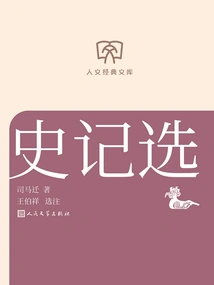
"Historical Records" is a general history written by Sima Qian of the Western Han Dynasty. It records a history of more than 3,000 years from the legendary Yellow Emperor to the first year of Yuanshou, Emperor Wu of the Han Dynasty. The whole book consists of twelve chronicles, thirty families, seventy biographies, ten tables, and eight books, with a total of 130 chapters and more than 500,000 words. It is the first biographical general history in Chinese history. Its pioneering biographical style was followed by the "official histories" of subsequent dynasties and has far-reaching influence. The book is also an excellent literary work, and Lu Xun praised it as "the historian's swan song, the rhymeless "Li Sao"". "Selected Historical Records" selects 10 famous works from the chronicles and biographies, and annotates the difficult words and regulations in them, which is very helpful for reading and understanding the book.
"Historical Records" is a general history written by Sima Qian of the Western Han Dynasty. It records a history of more than 3,000 years from the legendary Yellow Emperor to the first year of Yuanshou, Emperor Wu of the Han Dynasty. The whole book consists of twelve chronicles, thirty families, seventy biographies, ten tables, and eight books, with a total of 130 chapters and more than 500,000 words. It is the first biographical general history in Chinese history. Its pioneering biographical style was followed by the "official histories" of subsequent dynasties and has far-reaching influence. The book is also an excellent literary work, and Lu Xun praised it as "the historian's swan song, the rhymeless "Li Sao"". "Selected Historical Records" selects 10 famous works from the chronicles and biographies, and annotates the difficult words and regulations in them, which is very helpful for reading and understanding the book.
史记:简体全译版(全六册)
(western Han Dynasty) Sima Qian
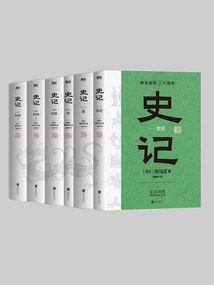
This book was translated in full by Mr. Yu Zhanghua, an authoritative scholar and vice-president of the Historical Records Research Association. The original text is based on the palace version, while absorbing the strengths of the Baiyin version and the bookstore version. The vernacular translation also refers to the research results of "Historical Records" by previous and present people. On the premise of ensuring the accuracy of knowledge points, this book is created to be a popular text suitable for zero-level public readers and young students.
This book was translated in full by Mr. Yu Zhanghua, an authoritative scholar and vice-president of the Historical Records Research Association. The original text is based on the palace version, while absorbing the strengths of the Baiyin version and the bookstore version. The vernacular translation also refers to the research results of "Historical Records" by previous and present people. On the premise of ensuring the accuracy of knowledge points, this book is created to be a popular text suitable for zero-level public readers and young students.
O
O
O
O
O
O
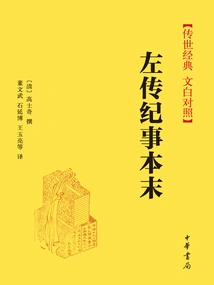
左传纪事本末(全三册)
(qing Dynasty) Written By Gao Shiqi
"The Chronicles of Zuo Zhuan", written by Gao Shiqi (1645-1704) of the Qing Dynasty. The author summarized and extracted 53 important historical events from the 254-year historical records of "Zuo Zhuan" and compiled it into 53 volumes. Each volume is centered on a historical event, and each event is compiled in chronological order. Among them, there are four volumes involving Zhou matters, eleven volumes of Lu, seven volumes of Qi, eleven volumes of Jin, three volumes of Song, four volumes of Wei, four volumes of Zheng, four volumes of Chu, three volumes of Wu, one volume of Qin, and one volume of various states. In addition to the biography, five annotations such as "Supplementing Yiyi", "Testing Differences", "Critical Research", "Distinguishing Errors" and "Invention" are also added as well as Gao Shiqi's own historical comments. Each story is complete from beginning to end, showing the complicated historical process of major historical events such as the decline of the Zhou royal family, the struggle for hegemony among princes, annexation wars, usurpation and murder, the rise and fall of noble families, and the rule of officials during the Spring and Autumn Period. It has high historical material value for scholars who study history, and it is an introductory book for history lovers to understand the historical context of the Spring and Autumn Period.
"The Chronicles of Zuo Zhuan", written by Gao Shiqi (1645-1704) of the Qing Dynasty. The author summarized and extracted 53 important historical events from the 254-year historical records of "Zuo Zhuan" and compiled it into 53 volumes. Each volume is centered on a historical event, and each event is compiled in chronological order. Among them, there are four volumes involving Zhou matters, eleven volumes of Lu, seven volumes of Qi, eleven volumes of Jin, three volumes of Song, four volumes of Wei, four volumes of Zheng, four volumes of Chu, three volumes of Wu, one volume of Qin, and one volume of various states. In addition to the biography, five annotations such as "Supplementing Yiyi", "Testing Differences", "Critical Research", "Distinguishing Errors" and "Invention" are also added as well as Gao Shiqi's own historical comments. Each story is complete from beginning to end, showing the complicated historical process of major historical events such as the decline of the Zhou royal family, the struggle for hegemony among princes, annexation wars, usurpation and murder, the rise and fall of noble families, and the rule of officials during the Spring and Autumn Period. It has high historical material value for scholars who study history, and it is an introductory book for history lovers to understand the historical context of the Spring and Autumn Period.
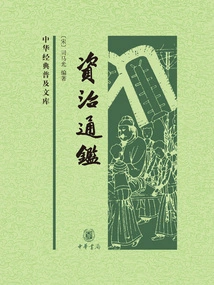
资治通鉴(全四册)
Compiled By Sima Guang
"Tongjian" is a chronological general history compiled by Sima Guang based on a large number of historical materials with the full cooperation of his assistants Liu Xun, Fan Zuyu, Liu Shu and others. It records a history of 1,362 years starting from the 23rd year of King Weilie of the Zhou Dynasty (403 BC) to the 6th year of Xiande reign of Emperor Shizong of the Later Zhou Dynasty (959). The book depicts the historical development from the Warring States Period to the Five Dynasties, and explores the reasons for the rise and fall of the unified dynasties such as Qin, Han, Jin, Sui, and Tang, as well as the Seven Heroes of the Warring States Period, the Three Kingdoms of Wei, Shu, Wu, the Five Hus and Sixteen Kingdoms, the Northern and Southern Dynasties, and the Five Dynasties and Ten Kingdoms. It vividly depicts the emperors, generals, and ministers' way of governing the country and dealing with people, as well as their joys and sorrows of life and death in the whirlpool of history. To this day, "Zi Zhi Tong Jian" is still a must-read book for understanding and studying Chinese history.
"Tongjian" is a chronological general history compiled by Sima Guang based on a large number of historical materials with the full cooperation of his assistants Liu Xun, Fan Zuyu, Liu Shu and others. It records a history of 1,362 years starting from the 23rd year of King Weilie of the Zhou Dynasty (403 BC) to the 6th year of Xiande reign of Emperor Shizong of the Later Zhou Dynasty (959). The book depicts the historical development from the Warring States Period to the Five Dynasties, and explores the reasons for the rise and fall of the unified dynasties such as Qin, Han, Jin, Sui, and Tang, as well as the Seven Heroes of the Warring States Period, the Three Kingdoms of Wei, Shu, Wu, the Five Hus and Sixteen Kingdoms, the Northern and Southern Dynasties, and the Five Dynasties and Ten Kingdoms. It vividly depicts the emperors, generals, and ministers' way of governing the country and dealing with people, as well as their joys and sorrows of life and death in the whirlpool of history. To this day, "Zi Zhi Tong Jian" is still a must-read book for understanding and studying Chinese history.
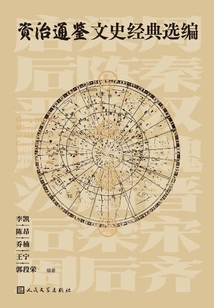
资治通鉴文史经典选编
Compiled By Li Kai Et Al.
"Zizhi Tongjian" is a chronological general history masterpiece, edited by Sima Guang of the Northern Song Dynasty. It has 294 volumes and tells the historical development trajectory from the Spring and Autumn Period and the Warring States Period to the establishment of the Song Dynasty in 1362 years. Sima Guang and his team compiled it and summarized many experiences and lessons for rulers to learn from. Emperor Shenzong of the Song Dynasty believed that this book was "qualified for governing Taoism in view of past events" and named it "Zi Zhi Tong Jian". "Zi Zhi Tong Jian Selected Literature and History Reader" selects parts of the original text of "Zi Zhi Tong Jian" such as the strategist's role, the style of famous teachers, reforms and innovations, and the chaos of the Seven Kingdoms, and also matches the corresponding vernacular texts.
"Zizhi Tongjian" is a chronological general history masterpiece, edited by Sima Guang of the Northern Song Dynasty. It has 294 volumes and tells the historical development trajectory from the Spring and Autumn Period and the Warring States Period to the establishment of the Song Dynasty in 1362 years. Sima Guang and his team compiled it and summarized many experiences and lessons for rulers to learn from. Emperor Shenzong of the Song Dynasty believed that this book was "qualified for governing Taoism in view of past events" and named it "Zi Zhi Tong Jian". "Zi Zhi Tong Jian Selected Literature and History Reader" selects parts of the original text of "Zi Zhi Tong Jian" such as the strategist's role, the style of famous teachers, reforms and innovations, and the chaos of the Seven Kingdoms, and also matches the corresponding vernacular texts.
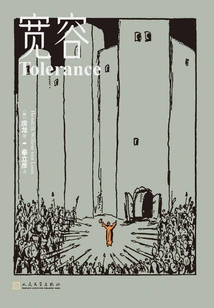
Tolerant
History宽容
Fanglong
"Tolerance" is a classic work on the history of world philosophy by Fang Long, a famous historical scholar and humanistic enlightenment writer. It was selected by Amazon China as one of the "100 Must-Read Books in Life". This book was first published in 1925 and has since been translated into many languages and published worldwide. Yu Dafu, a master of modern literature, once praised Fang Long's pen as having "a kind of magic power". "When he writes about dry and tasteless scientific knowledge, everyone who reads his books, whether adults or children, will feel fascinated and forgetful." In "Tolerance", Fang Long tells the long history of the development of human thought in vivid and wise language. Based on major events and important figures in history, and whether society and people are tolerant as a yardstick, he reveals the truth in a relaxed way, advocates tolerance and peace, and advocates ideological emancipation.
"Tolerance" is a classic work on the history of world philosophy by Fang Long, a famous historical scholar and humanistic enlightenment writer. It was selected by Amazon China as one of the "100 Must-Read Books in Life". This book was first published in 1925 and has since been translated into many languages and published worldwide. Yu Dafu, a master of modern literature, once praised Fang Long's pen as having "a kind of magic power". "When he writes about dry and tasteless scientific knowledge, everyone who reads his books, whether adults or children, will feel fascinated and forgetful." In "Tolerance", Fang Long tells the long history of the development of human thought in vivid and wise language. Based on major events and important figures in history, and whether society and people are tolerant as a yardstick, he reveals the truth in a relaxed way, advocates tolerance and peace, and advocates ideological emancipation.
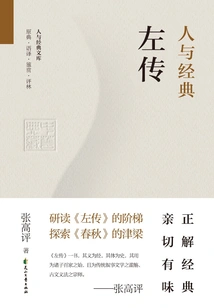
人与经典·左传
Zhang Gaoping
"Zuo Zhuan" is my country's first chronological history book. The author, Professor Zhang Gaoping, has studied "Zuo Zhuan" for more than 40 years and has accumulated countless academic experiences. Now he has extracted the essence and used it in general, and has selected twenty-four famous chapters of "Zuo Zhuan". It is divided into three major units: narrative, rhetoric, and argumentation. The original name of the book is "Zuo Zhuan Yinghua", which means "Han Ying Zui Hua" in Han Yu's "Jinxue Jie". It is now included in the "People and Classics" series of Daoshan Culture Company and is named after the original classic. The book has a clear context and suitable difficulty level. It is actually a step for beginners to study "Zuo Zhuan" and explore the "Spring and Autumn".
"Zuo Zhuan" is my country's first chronological history book. The author, Professor Zhang Gaoping, has studied "Zuo Zhuan" for more than 40 years and has accumulated countless academic experiences. Now he has extracted the essence and used it in general, and has selected twenty-four famous chapters of "Zuo Zhuan". It is divided into three major units: narrative, rhetoric, and argumentation. The original name of the book is "Zuo Zhuan Yinghua", which means "Han Ying Zui Hua" in Han Yu's "Jinxue Jie". It is now included in the "People and Classics" series of Daoshan Culture Company and is named after the original classic. The book has a clear context and suitable difficulty level. It is actually a step for beginners to study "Zuo Zhuan" and explore the "Spring and Autumn".
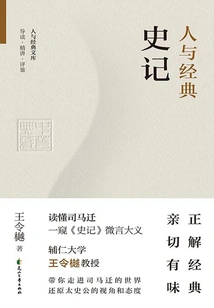
人与经典·史记
Wang Lingyue
This book is one of the series of books "People and Classics Library". "Historical Records" plays an extremely important role in the history of Chinese history and literature. The author of this book is Wang Lingyue, a professor at Fu Jen Catholic University in Taiwan and a famous scholar. You Chengjia is an expert in the study of "Historical Records", "Hanshu", ancient Chinese parallel prose, and Han Dynasty latitudinal studies. He explained the style and purpose of "Historical Records", Sima Qian's family background, academic background and life experience in a simple and easy-to-understand way, and carefully selected multiple chapters for detailed interpretation. This book allows readers to enter the historical world of "Historical Records", know the key points of "Historical Records", and understand its subtleties. It will help readers deeply understand the process of writing "Historical Records" and the value of "Historical Records" itself, and appreciate the elegance, robustness and depth of "Historical Records". It is an excellent general reading for ordinary readers.
This book is one of the series of books "People and Classics Library". "Historical Records" plays an extremely important role in the history of Chinese history and literature. The author of this book is Wang Lingyue, a professor at Fu Jen Catholic University in Taiwan and a famous scholar. You Chengjia is an expert in the study of "Historical Records", "Hanshu", ancient Chinese parallel prose, and Han Dynasty latitudinal studies. He explained the style and purpose of "Historical Records", Sima Qian's family background, academic background and life experience in a simple and easy-to-understand way, and carefully selected multiple chapters for detailed interpretation. This book allows readers to enter the historical world of "Historical Records", know the key points of "Historical Records", and understand its subtleties. It will help readers deeply understand the process of writing "Historical Records" and the value of "Historical Records" itself, and appreciate the elegance, robustness and depth of "Historical Records". It is an excellent general reading for ordinary readers.
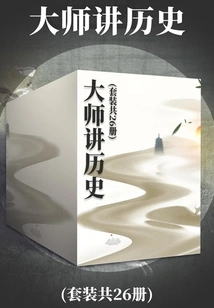
大师讲历史(套装共26册)
Wu Han Jiang Tingfu Fan Wenlan (france) René Grusset (germany) Josim Backhansen
This is a grand brief history of mankind. Reading it will make you sigh, be excited, and think deeply; it is a historical drama with flesh and blood. You can overlook the endless flow of the river of history, and you can also observe the wonder and beauty of each wave. This set of books includes "A Minimalist History of China", "A Compendium of General History of China", "A General History of China for Everyone", "A General History of China for Everyone", "Modern History of China: 1840~1937", "A Short History of Chinese Philosophy", "Grassland Empire", "Modern History of China", "The World Conquest of the Mongol Empire", "The Biography of Zhu Yuanzhang" and "A Brief Introduction to the History of the Ming Dynasty" "Mirror of History" "Notes on Reading History" "Seven Hundred Years of the Hun Empire" "General History of India for Everyone" "General History of Japan for Everyone" "Romance of Northern and Southern History (Part 1 and 2)" "Romance of Tang History" "Romance of Five Dynasties" "Romance of Song Dynasty" "Romance of Yuan History" "Romance of Ming History" "Romance of Qing History" "Romance of the Republic of China (Part 1 and 2) >>.
This is a grand brief history of mankind. Reading it will make you sigh, be excited, and think deeply; it is a historical drama with flesh and blood. You can overlook the endless flow of the river of history, and you can also observe the wonder and beauty of each wave. This set of books includes "A Minimalist History of China", "A Compendium of General History of China", "A General History of China for Everyone", "A General History of China for Everyone", "Modern History of China: 1840~1937", "A Short History of Chinese Philosophy", "Grassland Empire", "Modern History of China", "The World Conquest of the Mongol Empire", "The Biography of Zhu Yuanzhang" and "A Brief Introduction to the History of the Ming Dynasty" "Mirror of History" "Notes on Reading History" "Seven Hundred Years of the Hun Empire" "General History of India for Everyone" "General History of Japan for Everyone" "Romance of Northern and Southern History (Part 1 and 2)" "Romance of Tang History" "Romance of Five Dynasties" "Romance of Song Dynasty" "Romance of Yuan History" "Romance of Ming History" "Romance of Qing History" "Romance of the Republic of China (Part 1 and 2) >>.
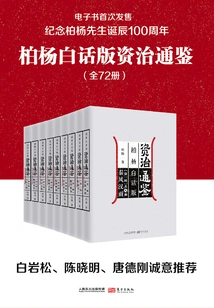
柏杨白话版资治通鉴(全72册)
Bo Yang
Take history as a mirror to know the ups and downs and understand the gains and losses. Bo Yang spent ten years translating "Zi Zhi Tong Jian" into modern languages, allowing a history book that was originally only read by emperors and generals to fly into the homes of ordinary people. The book contains more than 1,500 maps and palace maps, allowing readers to understand history from the pictures. Bo Yang consulted historical books, supplemented the comments on relevant events by famous historical figures in the past dynasties, and independently wrote "Bo Yang said" from a modern point of view, allowing ancient and modern dialogues, collisions of speculation, and multi-faceted and multi-angle interpretations of historical events. Historical allusions, cultural common sense, and current place names are included with the text to help readers understand the vast masterpiece from scratch. Chen Xiaoming, vice president of the Chinese Contemporary Literature Research Association and director of the Chinese Department of Peking University, Bai Yansong, the famous host of CCTV, and Tang Degang, the famous historian, sincerely recommend it.
Take history as a mirror to know the ups and downs and understand the gains and losses. Bo Yang spent ten years translating "Zi Zhi Tong Jian" into modern languages, allowing a history book that was originally only read by emperors and generals to fly into the homes of ordinary people. The book contains more than 1,500 maps and palace maps, allowing readers to understand history from the pictures. Bo Yang consulted historical books, supplemented the comments on relevant events by famous historical figures in the past dynasties, and independently wrote "Bo Yang said" from a modern point of view, allowing ancient and modern dialogues, collisions of speculation, and multi-faceted and multi-angle interpretations of historical events. Historical allusions, cultural common sense, and current place names are included with the text to help readers understand the vast masterpiece from scratch. Chen Xiaoming, vice president of the Chinese Contemporary Literature Research Association and director of the Chinese Department of Peking University, Bai Yansong, the famous host of CCTV, and Tang Degang, the famous historian, sincerely recommend it.
史记(第二辑)
F
The latter, Queen Mother Lu, was also the concubine of Emperor Gaozu Weishi, and gave birth to Emperor Xiaohui and the Queen Mother Lu Yuan. When Emperor Gaozu became the king of Han, he married Tao Qiji, who loved her and gave birth to King Zhao Yin Ruyi. Xiaohui was kind and weak, and Gaozu thought he was not like me, so he often wanted to depose the prince and establish Qi Jizi as Ruyi, who was like me. Qi Jixing often traveled to Guandong from above, crying day and night, and wanted to make her son the crown prince. Empress Lu is older and often stays behind. She hopes to see her and is more sparse. If you want to be the queen of Zhao, there will be countless princes in several generations. It depends on the ministers to fight for it, and to stay in the marquis policy, the prince will not be abolished.
The latter, Queen Mother Lu, was also the concubine of Emperor Gaozu Weishi, and gave birth to Emperor Xiaohui and the Queen Mother Lu Yuan. When Emperor Gaozu became the king of Han, he married Tao Qiji, who loved her and gave birth to King Zhao Yin Ruyi. Xiaohui was kind and weak, and Gaozu thought he was not like me, so he often wanted to depose the prince and establish Qi Jizi as Ruyi, who was like me. Qi Jixing often traveled to Guandong from above, crying day and night, and wanted to make her son the crown prince. Empress Lu is older and often stays behind. She hopes to see her and is more sparse. If you want to be the queen of Zhao, there will be countless princes in several generations. It depends on the ministers to fight for it, and to stay in the marquis policy, the prince will not be abolished.
史记(第三辑)
(western Han Dynasty) Sima Qian
The ancestor of Chu came from Emperor Zhuanxu Gaoyang. Gaoyang is the grandson of Huangdi and the son of Changyi. Gao Yang gave birth to a title, a title gave birth to Juanzhang, and Juanzhang gave birth to Chongli. Chongli served as Emperor Ku, and Gaoxin lived in Huozheng. He was very meritorious and could bring light to the world. Emperor Ku ordered him to be Zhurong. The Gonggong family rebelled, and the emperor's envoy Chongli continued to punish them. The emperor executed Chongli on Gengyin day, and after his younger brother Wu Hui became Chongli, he returned to Huozheng and became Zhurong.
The ancestor of Chu came from Emperor Zhuanxu Gaoyang. Gaoyang is the grandson of Huangdi and the son of Changyi. Gao Yang gave birth to a title, a title gave birth to Juanzhang, and Juanzhang gave birth to Chongli. Chongli served as Emperor Ku, and Gaoxin lived in Huozheng. He was very meritorious and could bring light to the world. Emperor Ku ordered him to be Zhurong. The Gonggong family rebelled, and the emperor's envoy Chongli continued to punish them. The emperor executed Chongli on Gengyin day, and after his younger brother Wu Hui became Chongli, he returned to Huozheng and became Zhurong.
史记(第一辑)
F
"Historical Records" is the first great historical work in Chinese history, and it is also a great masterpiece of biographical literature. It has a profound influence on the history and literature of later generations of China. It was born in the Western Han Dynasty in my country in the 1st century BC. It records the development of politics, economy, culture, history and other aspects for 3,000 years from ancient my country to the Western Han Dynasty. It is my country's first biographical general history centered on writing about characters, and it also pioneered Chinese biographical literature.
"Historical Records" is the first great historical work in Chinese history, and it is also a great masterpiece of biographical literature. It has a profound influence on the history and literature of later generations of China. It was born in the Western Han Dynasty in my country in the 1st century BC. It records the development of politics, economy, culture, history and other aspects for 3,000 years from ancient my country to the Western Han Dynasty. It is my country's first biographical general history centered on writing about characters, and it also pioneered Chinese biographical literature.
史记(第五辑)
G
Zhang Yi is from Wei. For the first time, he and Su Qin worked together with Mr. Guigu, and Su Qin thought he was not as good as Zhang Yi in academics.
Zhang Yi is from Wei. For the first time, he and Su Qin worked together with Mr. Guigu, and Su Qin thought he was not as good as Zhang Yi in academics.
史记(第四辑)
G
Liu Jiao, King of Chu Yuan Dynasty, was the younger half-brother of the great ancestor, also named You.
Liu Jiao, King of Chu Yuan Dynasty, was the younger half-brother of the great ancestor, also named You.
Life of Constantine
History君士坦丁传
(ancient Rome) Eusebius
This book is an important historical work written by Eusebius. It records the history of Constantine for about 30 years after he ascended the throne. It involves many aspects of the Byzantine Empire, especially Constantine's attitude towards Christianity and his actions. Although most of it is about praising Constantine, as a contemporary author, the value of the book's historical data cannot be ignored.
This book is an important historical work written by Eusebius. It records the history of Constantine for about 30 years after he ascended the throne. It involves many aspects of the Byzantine Empire, especially Constantine's attitude towards Christianity and his actions. Although most of it is about praising Constantine, as a contemporary author, the value of the book's historical data cannot be ignored.
源平合战:日本武士的崛起
(japan) Ise Sanae
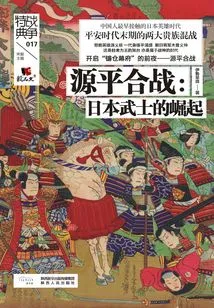
This book is one of a series of special war books. It begins with the "Taipei Tenkei Rebellion" and introduces how the samurai family rose up in the government and the opposition and entered the historical stage under the background of the rise of the manor system in the Heian period. After entering the historical stage, why did the two samurai families of the Minamoto and Taira antagonize each other and finally compete in the world. Ise Sanae has loved Japanese culture and Japanese history since childhood. After studying abroad, he has studied Japanese medieval history for several years and read dozens of primary sources and historical books related to Japanese history. Inspired by the works of scholars such as Amino Yoshihiko and Uesugi Kazuhiko, he has unique views and insights on Japanese medieval history, and has made certain achievements in popularizing Japanese medieval history and correcting misunderstandings.
This book is one of a series of special war books. It begins with the "Taipei Tenkei Rebellion" and introduces how the samurai family rose up in the government and the opposition and entered the historical stage under the background of the rise of the manor system in the Heian period. After entering the historical stage, why did the two samurai families of the Minamoto and Taira antagonize each other and finally compete in the world. Ise Sanae has loved Japanese culture and Japanese history since childhood. After studying abroad, he has studied Japanese medieval history for several years and read dozens of primary sources and historical books related to Japanese history. Inspired by the works of scholars such as Amino Yoshihiko and Uesugi Kazuhiko, he has unique views and insights on Japanese medieval history, and has made certain achievements in popularizing Japanese medieval history and correcting misunderstandings.
資治通鑑·繁體豎排版(胡三省注)294卷全(資治通鑑 胡注繁體直排本)
Ai
Ao
Ao
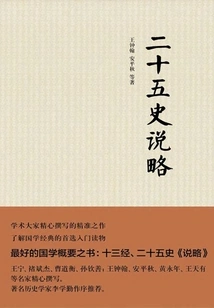
二十五史说略
Wang Zhonghan An Pingqiu Et Al.
This book comprehensively, concisely and accurately introduces the origin, compilation process, publication and circulation, content characteristics, academic achievements, ideological influence, research status and other aspects of each book in the Twenty-Five Histories; each article has a recommended reference list to provide guidance. This book is the first choice introductory book for understanding Chinese history. It is an accurate work carefully written by academic experts such as Wang Zhonghan, An Pingqiu, Huang Yongnian, and Wang Tianyou. Li Xueqin praised: "Each chapter in the book contains both systematic narration and unique insights. The writing pays more attention to explaining the profound things in simple terms to facilitate students."
This book comprehensively, concisely and accurately introduces the origin, compilation process, publication and circulation, content characteristics, academic achievements, ideological influence, research status and other aspects of each book in the Twenty-Five Histories; each article has a recommended reference list to provide guidance. This book is the first choice introductory book for understanding Chinese history. It is an accurate work carefully written by academic experts such as Wang Zhonghan, An Pingqiu, Huang Yongnian, and Wang Tianyou. Li Xueqin praised: "Each chapter in the book contains both systematic narration and unique insights. The writing pays more attention to explaining the profound things in simple terms to facilitate students."
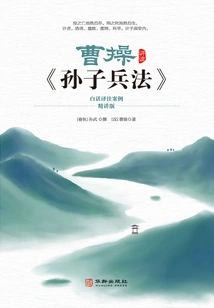
曹操讲读《孙子兵法》
Cao Cao
This book collects the original text of "The Art of War" by Sun Tzu, the original text of Cao Cao's annotations, and the annotated translations of the above two original texts. The annotated translation is detailed, all important concepts and allusions are explained, and the translation strives to be concise and accurate. This book more creatively combines the cases of the Three Kingdoms War, mainly with Cao Cao, to explain the key points of "Sun Tzu's Art of War" and Cao Cao. It uses cases to explain the classics and systematically describes "Sun Tzu's Art of War" so that readers can better understand the military philosophies of Sun Tzu and Cao Cao. This book is not only an interpretation of "The Art of War" by Sun Tzu, but also a historical work that interprets the military wars of the Three Kingdoms.
This book collects the original text of "The Art of War" by Sun Tzu, the original text of Cao Cao's annotations, and the annotated translations of the above two original texts. The annotated translation is detailed, all important concepts and allusions are explained, and the translation strives to be concise and accurate. This book more creatively combines the cases of the Three Kingdoms War, mainly with Cao Cao, to explain the key points of "Sun Tzu's Art of War" and Cao Cao. It uses cases to explain the classics and systematically describes "Sun Tzu's Art of War" so that readers can better understand the military philosophies of Sun Tzu and Cao Cao. This book is not only an interpretation of "The Art of War" by Sun Tzu, but also a historical work that interprets the military wars of the Three Kingdoms.
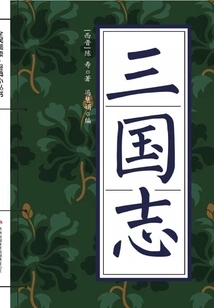
Three Kingdoms
History三国志
(western Jin Dynasty) Written By Chen Shou Edited By Feng Huijuan
"Three Kingdoms" is a chronicle of the three kingdoms of Wei, Shu and Wu compiled by Chen Shou of the Jin Dynasty. It records in detail the sixty-year history from the first year of Huangchu (220 AD) of Emperor Wen of Wei to the first year of Taikang (280 AD) of Emperor Wu of Jin Dynasty. Among them, "Book of Wei" has thirty volumes, "Shu" has fifteen volumes, and "Wu Shu" has twenty volumes, totaling sixty-five volumes. On the basis of respecting historical facts, the author uses concise and beautiful language to draw portraits of the characters of the Three Kingdoms for us. Due to space limitations, it is difficult for the editor to include all the texts of "Three Kingdoms" in one book. In fact, if it is not specifically for the purpose of writing history, there is no need for readers to read the whole article. They only need to chew the essence and use it as a way to see the leopard in the tube, which is enough to "see the past and present in a moment, and care about the world in an instant." "Three Kingdoms" was originally written in classical Chinese. For the convenience of reading, it is now supplemented by vernacular Chinese. If readers can benefit from opening the book, the editor's purpose will be achieved.
"Three Kingdoms" is a chronicle of the three kingdoms of Wei, Shu and Wu compiled by Chen Shou of the Jin Dynasty. It records in detail the sixty-year history from the first year of Huangchu (220 AD) of Emperor Wen of Wei to the first year of Taikang (280 AD) of Emperor Wu of Jin Dynasty. Among them, "Book of Wei" has thirty volumes, "Shu" has fifteen volumes, and "Wu Shu" has twenty volumes, totaling sixty-five volumes. On the basis of respecting historical facts, the author uses concise and beautiful language to draw portraits of the characters of the Three Kingdoms for us. Due to space limitations, it is difficult for the editor to include all the texts of "Three Kingdoms" in one book. In fact, if it is not specifically for the purpose of writing history, there is no need for readers to read the whole article. They only need to chew the essence and use it as a way to see the leopard in the tube, which is enough to "see the past and present in a moment, and care about the world in an instant." "Three Kingdoms" was originally written in classical Chinese. For the convenience of reading, it is now supplemented by vernacular Chinese. If readers can benefit from opening the book, the editor's purpose will be achieved.
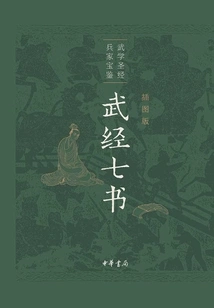
武经七书(插图版)
Translation And Annotation By Pian Yuqian, Li Jiemin, Sheng Dongling And Others
"Zuo Zhuan" says: "The great affairs of the country lie in worship and military service." War and army construction have been valued by rulers of all dynasties. In order to meet the needs of military struggle, teaching, and military examinations at that time, in the third year of Yuanfeng (1080), Emperor Shenzong of the Song Dynasty ordered Zhu Fu, the director of the Imperial Academy, and He Qufei, a doctor of martial arts, to select and compile military books. They selected seven military books from more than 340 ancient Chinese military books that were popular at the time: "Sun Tzu's Art of War", "Wu Zi's Art of War", "Sima's Art", "Huang Shigong's Three Strategies", "Wei Liaozi", "Six Tao" and "Tang Taizong Li Weigong's Questions", a total of 25 volumes, as martial arts classics, and designated them as must-read martial arts textbooks. This is the famous "Seven Books of Martial Arts". The compilation and promulgation of the "Seven Books of Martial Arts" was a contribution of the Northern Song Dynasty court to the construction of military theory. It expounds a series of military strategic thoughts and tactical principles, and embodies the insightful insights of ancient Chinese people's understanding of war. Whether in military theory or in war practice, it has had a profound impact on later generations and even the world. Emperor Gaozong of the Southern Song Dynasty also designated the "Seven Books of Martial Arts" as the content of the examination for selecting generals. Zhu Yuanzhang, the founder of the Ming Dynasty, advocated that "officers' descendants should read martial arts books". In view of the urgent need for military struggle and teaching, he ordered the Ministry of War to engrave the "Seven Books of Martial Arts" and distribute it to relevant officials, senior generals and their descendants for study. Since the 17th century, many reprints and translated and annotated editions have appeared in Japan, while "The Art of War" and "The Art of War by Wu Zi" have become more widely circulated in Europe, Asia and the United States. It is not only the spiritual wealth of the Chinese nation, but also the common spiritual wealth of the people of the world. In this publication, ancient literature scholars and experts were invited to annotate and translate the entire "Seven Books of Military Classics" with brief annotations and simplified translations to assist reading of the original text. We hope that more readers can read and understand "Seven Books of Military Classics" and grasp the ideological connotation and value of Chinese military books.
"Zuo Zhuan" says: "The great affairs of the country lie in worship and military service." War and army construction have been valued by rulers of all dynasties. In order to meet the needs of military struggle, teaching, and military examinations at that time, in the third year of Yuanfeng (1080), Emperor Shenzong of the Song Dynasty ordered Zhu Fu, the director of the Imperial Academy, and He Qufei, a doctor of martial arts, to select and compile military books. They selected seven military books from more than 340 ancient Chinese military books that were popular at the time: "Sun Tzu's Art of War", "Wu Zi's Art of War", "Sima's Art", "Huang Shigong's Three Strategies", "Wei Liaozi", "Six Tao" and "Tang Taizong Li Weigong's Questions", a total of 25 volumes, as martial arts classics, and designated them as must-read martial arts textbooks. This is the famous "Seven Books of Martial Arts". The compilation and promulgation of the "Seven Books of Martial Arts" was a contribution of the Northern Song Dynasty court to the construction of military theory. It expounds a series of military strategic thoughts and tactical principles, and embodies the insightful insights of ancient Chinese people's understanding of war. Whether in military theory or in war practice, it has had a profound impact on later generations and even the world. Emperor Gaozong of the Southern Song Dynasty also designated the "Seven Books of Martial Arts" as the content of the examination for selecting generals. Zhu Yuanzhang, the founder of the Ming Dynasty, advocated that "officers' descendants should read martial arts books". In view of the urgent need for military struggle and teaching, he ordered the Ministry of War to engrave the "Seven Books of Martial Arts" and distribute it to relevant officials, senior generals and their descendants for study. Since the 17th century, many reprints and translated and annotated editions have appeared in Japan, while "The Art of War" and "The Art of War by Wu Zi" have become more widely circulated in Europe, Asia and the United States. It is not only the spiritual wealth of the Chinese nation, but also the common spiritual wealth of the people of the world. In this publication, ancient literature scholars and experts were invited to annotate and translate the entire "Seven Books of Military Classics" with brief annotations and simplified translations to assist reading of the original text. We hope that more readers can read and understand "Seven Books of Military Classics" and grasp the ideological connotation and value of Chinese military books.
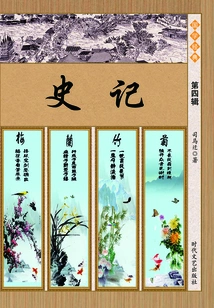
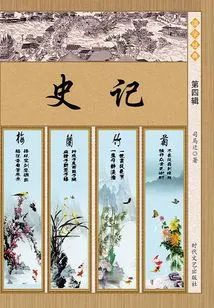
史记·第四辑
Sima Qian
"Historical Records" is a biographical history book written by Sima Qian, a famous historian in the Western Han Dynasty. It is the first biographical general history in Chinese history and is listed as the first of the Twenty-Four Histories. The whole book records about three thousand years of history from the legendary Yellow Emperor to Emperor Wu of the Han Dynasty. It is known as "the swansong of historians and the unrhymed "Li Sao"".
"Historical Records" is a biographical history book written by Sima Qian, a famous historian in the Western Han Dynasty. It is the first biographical general history in Chinese history and is listed as the first of the Twenty-Four Histories. The whole book records about three thousand years of history from the legendary Yellow Emperor to Emperor Wu of the Han Dynasty. It is known as "the swansong of historians and the unrhymed "Li Sao"".

驿路心灯:金水河畔谈历史人物
Li Ziyu
"Taking history as a mirror" has become a tradition in our country's historiography. The so-called "Yin Jian is not far away, in the time of Queen Xia", and the so-called "Never forget the past is the teacher of the future" are all talking about this truth. History has proven time and again that whoever thinks he or she can escape from the constraints of the laws of historical development will surely end up being ridiculed by history.
"Taking history as a mirror" has become a tradition in our country's historiography. The so-called "Yin Jian is not far away, in the time of Queen Xia", and the so-called "Never forget the past is the teacher of the future" are all talking about this truth. History has proven time and again that whoever thinks he or she can escape from the constraints of the laws of historical development will surely end up being ridiculed by history.
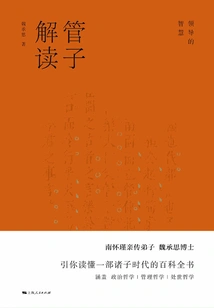
管子解读:领导的智慧
Wei Chengsi
"Guanzi", as one of the Chinese classical classics, describes Guan Zhong's metaphysical philosophical thoughts as well as his metaphysical ideas and practical measures for using the world and governing the country. This book is the result of the author Wei Chengsi's many years of research on "Guanzi" and is compiled based on his lecture recordings. The author uses 150 details to thoroughly explain the governance, economy, management, spiritual cultivation, and life in "Guanzi" in an easy-to-understand way. It combines a large number of real-life examples and connects Chinese history with social reality. It is both academic and suitable for public reading.
"Guanzi", as one of the Chinese classical classics, describes Guan Zhong's metaphysical philosophical thoughts as well as his metaphysical ideas and practical measures for using the world and governing the country. This book is the result of the author Wei Chengsi's many years of research on "Guanzi" and is compiled based on his lecture recordings. The author uses 150 details to thoroughly explain the governance, economy, management, spiritual cultivation, and life in "Guanzi" in an easy-to-understand way. It combines a large number of real-life examples and connects Chinese history with social reality. It is both academic and suitable for public reading.
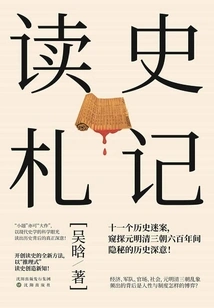
Reading Historical Notes
History读史札记
Wu Han
Here, there are many historical facts that will subvert your understanding: the name of the country "Da Ming" actually comes from the "Mingjiao" in "The Legend of Heaven and Sword of the Dragon"; in the Imperial College, those who contradicted the teacher may not only be imprisoned, but may even have their heads displayed in public; in the early Ming Dynasty, many constructions were carried out The Ming Dynasty Guards, who made extraordinary achievements, were considered to be only able to do hard work after only a hundred years;... Here, you can gain a new way of reading history: history is not boring at all: there are not only novel historical facts, but also many hidden clues waiting for you to explore. Wu Han, a master of history, tells you in a new way of reading history: It turns out that history can be like a mystery novel, exploring the hidden truth under the clues!
Here, there are many historical facts that will subvert your understanding: the name of the country "Da Ming" actually comes from the "Mingjiao" in "The Legend of Heaven and Sword of the Dragon"; in the Imperial College, those who contradicted the teacher may not only be imprisoned, but may even have their heads displayed in public; in the early Ming Dynasty, many constructions were carried out The Ming Dynasty Guards, who made extraordinary achievements, were considered to be only able to do hard work after only a hundred years;... Here, you can gain a new way of reading history: history is not boring at all: there are not only novel historical facts, but also many hidden clues waiting for you to explore. Wu Han, a master of history, tells you in a new way of reading history: It turns out that history can be like a mystery novel, exploring the hidden truth under the clues!
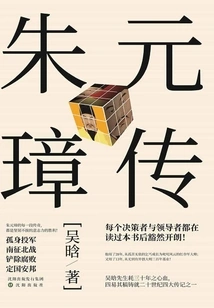
Biography of Zhu Yuanzhang
History朱元璋传
Wu Han
Here, you will see a grassroots inspirational myth: at the age of 16, his family was destroyed by the plague, and he barely survived by begging; at the age of 28, he gradually grew from a grassroots soldier to a red scarf army commander, and became a leader of the anti-Yuan Dynasty; at the age of 41, he officially announced the birth of the Ming Dynasty, and the great cause of "conquering China" was finally realized after hundreds of years! Every legend of Zhu Yuanzhang is a victory of perseverance and willpower! Here, you will also see a multi-faceted emperor that is completely beyond imagination: he joined the army alone and fought in north and south. What supported his immortal achievements was his unyielding willpower! Suspicious, authoritarian and cruel, why would a hero of the people transform into a moody tyrant? Watch a master of Ming history restore a Zhu Yuanzhang you have never read about!
Here, you will see a grassroots inspirational myth: at the age of 16, his family was destroyed by the plague, and he barely survived by begging; at the age of 28, he gradually grew from a grassroots soldier to a red scarf army commander, and became a leader of the anti-Yuan Dynasty; at the age of 41, he officially announced the birth of the Ming Dynasty, and the great cause of "conquering China" was finally realized after hundreds of years! Every legend of Zhu Yuanzhang is a victory of perseverance and willpower! Here, you will also see a multi-faceted emperor that is completely beyond imagination: he joined the army alone and fought in north and south. What supported his immortal achievements was his unyielding willpower! Suspicious, authoritarian and cruel, why would a hero of the people transform into a moody tyrant? Watch a master of Ming history restore a Zhu Yuanzhang you have never read about!
吴晗讲历史(套装共4册)
Wu Han
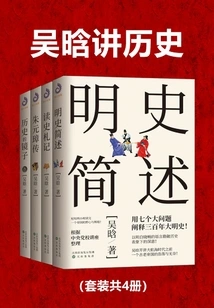
"Wu Han Tells History (set of 4 volumes)" includes "A Brief Introduction to the History of the Ming Dynasty", "Notes on Reading History", "The Biography of Zhu Yuanzhang" and "The Mirror of History". Here, you can gain a new way of reading history: history is not boring at all: there are not only novel historical facts, but also many hidden clues waiting for you to explore. How should we read history? Wu Han, a master of history, tells you in a new way of reading history: It turns out that history can be like a mystery novel, exploring the hidden truth under the clues! Wu Han uses a new historian's thinking to transform the traditional "historical theory" style, and reveals to you with sharp writing: reading history is by no means a simple pursuit of novelties, but to explore the commonalities between history and reality through the layering of historical materials.
"Wu Han Tells History (set of 4 volumes)" includes "A Brief Introduction to the History of the Ming Dynasty", "Notes on Reading History", "The Biography of Zhu Yuanzhang" and "The Mirror of History". Here, you can gain a new way of reading history: history is not boring at all: there are not only novel historical facts, but also many hidden clues waiting for you to explore. How should we read history? Wu Han, a master of history, tells you in a new way of reading history: It turns out that history can be like a mystery novel, exploring the hidden truth under the clues! Wu Han uses a new historian's thinking to transform the traditional "historical theory" style, and reveals to you with sharp writing: reading history is by no means a simple pursuit of novelties, but to explore the commonalities between history and reality through the layering of historical materials.
汉中历史文化丛书:汉上烟云
Yang Ming Wang Shuxin
This book collects and organizes myths, legends and historical stories mainly derived from the land of Hanzhong. Each article is followed by a conclusion, which provides an ideological summary of the entire article, appropriately interspersed with pictures, and annotations on the characters and dialects in the book, further demonstrating the characteristics of Hanzhong culture in the development and evolution of Hanzhong culture and cultural competition, allowing readers to appreciate the historical legends of Hanzhong while also seeing through the cultural essence and value pursuits behind them, thereby having a deeper and more comprehensive understanding of Hanzhong culture.
This book collects and organizes myths, legends and historical stories mainly derived from the land of Hanzhong. Each article is followed by a conclusion, which provides an ideological summary of the entire article, appropriately interspersed with pictures, and annotations on the characters and dialects in the book, further demonstrating the characteristics of Hanzhong culture in the development and evolution of Hanzhong culture and cultural competition, allowing readers to appreciate the historical legends of Hanzhong while also seeing through the cultural essence and value pursuits behind them, thereby having a deeper and more comprehensive understanding of Hanzhong culture.
文史通义新编新注(全两册)
(qing Dynasty) Editor's Notes By Zhang Xuecheng And Cang Xiuliang
Zhang Xuecheng's "General Meanings of Literature and History" is a masterpiece of traditional Chinese history. Zhang Xuecheng had only a few works during his lifetime, and his friend Wang Zongyan compiled his works on his behalf. The editions handed down from generation to generation vary greatly in the number of editions and the number of chapters. Mr. Cang Xiuliang worked hard for thirty years to recover Zhang's posthumous writings and compiled "New Edition and New Notes on the General Meanings of Literature and History", which has 176 more articles than Ye Ying's version of "General Meanings of Literature and History" which is currently the most widely circulated. He can be regarded as a hero of Zhang's family. On the basis of fully absorbing the research results of Hu Shi, Qian Mu and other sages, "New Edition and New Notes on the Tongyi of Literature and History" examines the writing dates of the articles included in "General Meanings of Literature and History" in detail, providing an important reference for us to deeply understand the evolution of Zhang Xuecheng's academic thoughts.
Zhang Xuecheng's "General Meanings of Literature and History" is a masterpiece of traditional Chinese history. Zhang Xuecheng had only a few works during his lifetime, and his friend Wang Zongyan compiled his works on his behalf. The editions handed down from generation to generation vary greatly in the number of editions and the number of chapters. Mr. Cang Xiuliang worked hard for thirty years to recover Zhang's posthumous writings and compiled "New Edition and New Notes on the General Meanings of Literature and History", which has 176 more articles than Ye Ying's version of "General Meanings of Literature and History" which is currently the most widely circulated. He can be regarded as a hero of Zhang's family. On the basis of fully absorbing the research results of Hu Shi, Qian Mu and other sages, "New Edition and New Notes on the Tongyi of Literature and History" examines the writing dates of the articles included in "General Meanings of Literature and History" in detail, providing an important reference for us to deeply understand the evolution of Zhang Xuecheng's academic thoughts.
希腊史:详注修订本
U
"History of Greece" is a chronological history written by the ancient Greek historian Xenophon. It mainly records the history of Greece for nearly half a century from the autumn of 411 BC to the summer of 362 BC. The first two volumes are a continuation of Thucydides' unfinished work "History of the Peloponnesian War", while the last five volumes continue to narrate important historical events such as the establishment of the anti-Spartan alliance, the Corinthian War, the rise of Thebes, the "Great King's Peace Edict", and the Battle of Mantinea. The content of the book reflects the evolution of the Greek world from "order" to "disorder", as well as the budding and initial development of the crisis in the city-state system. "History of Greece" is Xenophon's longest and most important historical work, and it is also the work of his most mature period of thought. Because of this book, Xenophon, Herodotus and Thucydides are known as the three major historians of ancient Greece.
"History of Greece" is a chronological history written by the ancient Greek historian Xenophon. It mainly records the history of Greece for nearly half a century from the autumn of 411 BC to the summer of 362 BC. The first two volumes are a continuation of Thucydides' unfinished work "History of the Peloponnesian War", while the last five volumes continue to narrate important historical events such as the establishment of the anti-Spartan alliance, the Corinthian War, the rise of Thebes, the "Great King's Peace Edict", and the Battle of Mantinea. The content of the book reflects the evolution of the Greek world from "order" to "disorder", as well as the budding and initial development of the crisis in the city-state system. "History of Greece" is Xenophon's longest and most important historical work, and it is also the work of his most mature period of thought. Because of this book, Xenophon, Herodotus and Thucydides are known as the three major historians of ancient Greece.
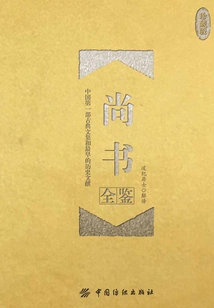
尚书全鉴(珍藏版)
Taoist Layman
"Shangshu", also known as "Book" and "Shu Jing", is a collection of documents in multiple genres and has long been considered the earliest existing history book in China. During the Warring States period, it was generally called "Book", and in the Han Dynasty it was renamed "Shang Shu", which is the "book of ancient times". Because it is one of the Five Classics of Confucianism, it is also called the Book of Books. It is mainly a political order issued by the king when he appoints officials or rewards princes. The text in "Shang Shu" is very ancient and extremely difficult to read. To this end, we have carefully compiled the book "Shangshu Quanjian (Collector's Edition)" and made a smooth and easy-to-understand vernacular translation of the full text to help readers understand the meaning of "Shangshu" and grasp the thoughts in "Shangshu".
"Shangshu", also known as "Book" and "Shu Jing", is a collection of documents in multiple genres and has long been considered the earliest existing history book in China. During the Warring States period, it was generally called "Book", and in the Han Dynasty it was renamed "Shang Shu", which is the "book of ancient times". Because it is one of the Five Classics of Confucianism, it is also called the Book of Books. It is mainly a political order issued by the king when he appoints officials or rewards princes. The text in "Shang Shu" is very ancient and extremely difficult to read. To this end, we have carefully compiled the book "Shangshu Quanjian (Collector's Edition)" and made a smooth and easy-to-understand vernacular translation of the full text to help readers understand the meaning of "Shangshu" and grasp the thoughts in "Shangshu".
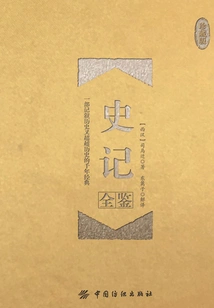
史记全鉴(珍藏版)
Chi Shuangming
Because "Historical Records" was written a long time ago, it contains many uncommon words and difficult-to-understand sentence structures. Therefore, based on the original text of "Historical Records", "Historical Records (Collector's Edition)" has made some simple annotations on some of the words and sentences to help everyone understand better. "Historical Records" is the first biographical general history in Chinese history. Mr. Lu Xun once praised "Historical Records" as "the swansong of historians, a rhymeless lisao". The first sentence spoke highly of the historical value of "Historical Records", and the latter sentence spoke highly of the literary value of "Historical Records". Reading "Historical Records" can not only enrich historical knowledge, but most importantly, you can use history as a mirror to explore the laws, experiences and lessons of social development and the rise and fall of countries, and find coordinates on the road of life.
Because "Historical Records" was written a long time ago, it contains many uncommon words and difficult-to-understand sentence structures. Therefore, based on the original text of "Historical Records", "Historical Records (Collector's Edition)" has made some simple annotations on some of the words and sentences to help everyone understand better. "Historical Records" is the first biographical general history in Chinese history. Mr. Lu Xun once praised "Historical Records" as "the swansong of historians, a rhymeless lisao". The first sentence spoke highly of the historical value of "Historical Records", and the latter sentence spoke highly of the literary value of "Historical Records". Reading "Historical Records" can not only enrich historical knowledge, but most importantly, you can use history as a mirror to explore the laws, experiences and lessons of social development and the rise and fall of countries, and find coordinates on the road of life.
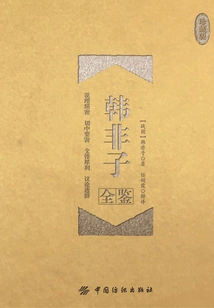
韩非子全鉴(珍藏版)
Chi Shuangming
"Han Feizi" is a work by Han Fei, a famous thinker in ancient China. It contains fifty-five articles. The style of his articles is severe, sharp, and sharp. It is unique among the prose of pre-Qin scholars and is a masterpiece of Legalism. From the perspective of its main body, the book is a masterpiece of political commentary. It focuses on the theory of rule of law that combines law, technique, and power. Its purpose is to provide positive ideas for the autocratic monarch, reaching the highest peak of pre-Qin legalist theory. To this day, "Han Feizi" still has strong reference significance for us to understand China's social politics, ideological culture.
"Han Feizi" is a work by Han Fei, a famous thinker in ancient China. It contains fifty-five articles. The style of his articles is severe, sharp, and sharp. It is unique among the prose of pre-Qin scholars and is a masterpiece of Legalism. From the perspective of its main body, the book is a masterpiece of political commentary. It focuses on the theory of rule of law that combines law, technique, and power. Its purpose is to provide positive ideas for the autocratic monarch, reaching the highest peak of pre-Qin legalist theory. To this day, "Han Feizi" still has strong reference significance for us to understand China's social politics, ideological culture.
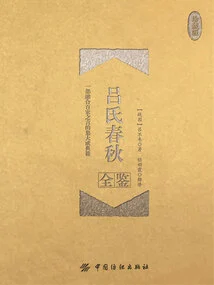
吕氏春秋全鉴(珍藏版)
Ren Juanxia
"Lu Shi Chun Qiu" is a work with a very complete structural system, which is unique among pre-Qin works. "Lu's Spring and Autumn Annals (Collector's Edition)" extracts the most exciting chapters of "Lu's Spring and Autumn" and strives to approach "Lu's Spring and Autumn" with a new interpretation method and easy-to-understand language, so that you can better read the essence of Chinese studies and perceive the wisdom of the sages. "Lu's Spring and Autumn Annals" records a lot of ancient historical news, ancient people's words, anecdotes from ancient books, as well as some ancient astronomical calendar, medical and other scientific knowledge, many of which are not found in other books. Therefore, this book is an extremely precious material for studying pre-Qin humanities and history. "Lu Shi Chun Qiu" has high historical value. Sima Qian called it "a matter of preparing all things in the world, both ancient and modern". In "Bao Ren An Shu", it is even compared with "Book of Changes", "Spring and Autumn", "Guoyu", "Li Sao", etc.
"Lu Shi Chun Qiu" is a work with a very complete structural system, which is unique among pre-Qin works. "Lu's Spring and Autumn Annals (Collector's Edition)" extracts the most exciting chapters of "Lu's Spring and Autumn" and strives to approach "Lu's Spring and Autumn" with a new interpretation method and easy-to-understand language, so that you can better read the essence of Chinese studies and perceive the wisdom of the sages. "Lu's Spring and Autumn Annals" records a lot of ancient historical news, ancient people's words, anecdotes from ancient books, as well as some ancient astronomical calendar, medical and other scientific knowledge, many of which are not found in other books. Therefore, this book is an extremely precious material for studying pre-Qin humanities and history. "Lu Shi Chun Qiu" has high historical value. Sima Qian called it "a matter of preparing all things in the world, both ancient and modern". In "Bao Ren An Shu", it is even compared with "Book of Changes", "Spring and Autumn", "Guoyu", "Li Sao", etc.
Historical Records Stories
History史记故事
Qingwan
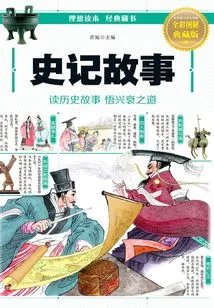
This book selects the most acclaimed and essential chapters from the "Historical Records", including the epochs, aristocratic families, and biographies, and organizes and compiles them in chronological order. Through scientific style and innovative forms, this masterpiece of Chinese civilization is presented to readers from multiple aspects, new perspectives, and multiple levels, striving to reach a new height in terms of authenticity, interest, and inspiration.
This book selects the most acclaimed and essential chapters from the "Historical Records", including the epochs, aristocratic families, and biographies, and organizes and compiles them in chronological order. Through scientific style and innovative forms, this masterpiece of Chinese civilization is presented to readers from multiple aspects, new perspectives, and multiple levels, striving to reach a new height in terms of authenticity, interest, and inspiration.
熊逸:纸上的精神旅行(春秋大义+正义从哪里来)
Xiong Yi
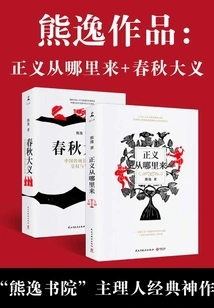
Obtained a collection of works by the director of "Xiong Yi Academy", a total of two volumes. "Where Does Justice Come From": Greed, violence, corruption... Who has stolen our justice? From wars and social disputes to interpersonal disputes and ethical issues, this is a world full of contradictions. Therefore, from ancient times to the present, people are so thirsty for justice, and issues related to justice have always deeply troubled the most outstanding intellectuals. However, from the Hundred Schools of Thought in ancient China to utilitarianism, liberalism, and communitarianism in the Western world, the concept of justice has always been chaotic and vague. Xiong Yi focused on the topic of justice and elaborated on it from different aspects in chapters: happiness or justice, what is justice, the dilemma of free will, the dilemma of original sin, Kant's mistakes, great jealousy... With careful thinking, he integrated the relevant thoughts of representative philosophers from ancient and modern times at home and abroad, such as Chinese Confucianism, Taoism, Mohists, as well as Socrates, Plato, Aristotle, Montaigne, Spinoza, Rousseau, Adam Smith, Russell, Kant, Hayek, Fromm, Rawls, etc. In the West; and listed a large number of historical cases and literary classics to explore in depth what justice is, where it originates and how to realize justice. This heart-stirring work uses popular, vivid and even literary language to take us into a carefully laid out intellectual labyrinth. In the process of dialogue with sages, we can gain the pleasure of speculation and the enlightenment of wisdom. "Spring and Autumn Days: Imperial Power and Academics in the Traditional Chinese Context": "Spring and Autumn" has long been revered as the supreme holy book of political philosophy in ancient China, and is considered to be the only Confucian classic compiled by Confucius himself. However, the "Spring and Autumn Annals" uses subtle words and great meanings to hide praise and criticism, which is very difficult to understand, especially as it has become more and more complicated after interpretations by classics scholars of the past dynasties. So how did "Spring and Autumn" and related classics play a practical role in an authoritarian society for two thousand years, and even influence the wind and rain? What kind of existence is the Spring and Autumn Period, which has always been regarded as the Chinese spirit? Xiong Yi starts from a murder case in the Tang Dynasty. Through a large number of vivid historical cases, using detailed textual research and meticulous logic, he reveals layer by layer how Chinese classic culture dating back to the Spring and Autumn Period, including "Spring and Autumn", "One Classic and Three Transmissions", "The Analects" and "Laozi", were distorted into tools of power under imperial politics. Xiong Yi plucked thousands of years of historical facts and classics at his fingertips, and allowed emperors, sages, dignitaries, generals, scribes and other people from different eras to have conversations across the air. When readers are immersed in his written world, a clue that stretches for more than two thousand years gradually emerges.
Obtained a collection of works by the director of "Xiong Yi Academy", a total of two volumes. "Where Does Justice Come From": Greed, violence, corruption... Who has stolen our justice? From wars and social disputes to interpersonal disputes and ethical issues, this is a world full of contradictions. Therefore, from ancient times to the present, people are so thirsty for justice, and issues related to justice have always deeply troubled the most outstanding intellectuals. However, from the Hundred Schools of Thought in ancient China to utilitarianism, liberalism, and communitarianism in the Western world, the concept of justice has always been chaotic and vague. Xiong Yi focused on the topic of justice and elaborated on it from different aspects in chapters: happiness or justice, what is justice, the dilemma of free will, the dilemma of original sin, Kant's mistakes, great jealousy... With careful thinking, he integrated the relevant thoughts of representative philosophers from ancient and modern times at home and abroad, such as Chinese Confucianism, Taoism, Mohists, as well as Socrates, Plato, Aristotle, Montaigne, Spinoza, Rousseau, Adam Smith, Russell, Kant, Hayek, Fromm, Rawls, etc. In the West; and listed a large number of historical cases and literary classics to explore in depth what justice is, where it originates and how to realize justice. This heart-stirring work uses popular, vivid and even literary language to take us into a carefully laid out intellectual labyrinth. In the process of dialogue with sages, we can gain the pleasure of speculation and the enlightenment of wisdom. "Spring and Autumn Days: Imperial Power and Academics in the Traditional Chinese Context": "Spring and Autumn" has long been revered as the supreme holy book of political philosophy in ancient China, and is considered to be the only Confucian classic compiled by Confucius himself. However, the "Spring and Autumn Annals" uses subtle words and great meanings to hide praise and criticism, which is very difficult to understand, especially as it has become more and more complicated after interpretations by classics scholars of the past dynasties. So how did "Spring and Autumn" and related classics play a practical role in an authoritarian society for two thousand years, and even influence the wind and rain? What kind of existence is the Spring and Autumn Period, which has always been regarded as the Chinese spirit? Xiong Yi starts from a murder case in the Tang Dynasty. Through a large number of vivid historical cases, using detailed textual research and meticulous logic, he reveals layer by layer how Chinese classic culture dating back to the Spring and Autumn Period, including "Spring and Autumn", "One Classic and Three Transmissions", "The Analects" and "Laozi", were distorted into tools of power under imperial politics. Xiong Yi plucked thousands of years of historical facts and classics at his fingertips, and allowed emperors, sages, dignitaries, generals, scribes and other people from different eras to have conversations across the air. When readers are immersed in his written world, a clue that stretches for more than two thousand years gradually emerges.
中国通史:精装插图本
Lu Simian
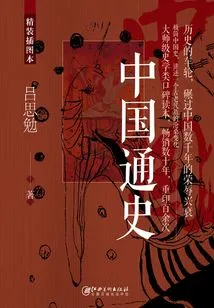
"General History of China" is divided into upper and lower parts. The upper part focuses on cultural phenomena, while the lower part connects them in historical order, sorting out historical knowledge more systematically while sorting out the rise and fall. Mr. Lu wrote this book during the Anti-Japanese War, and it was written to meet the needs of university teaching at that time. Now it seems that this special style is still very helpful for beginners to systematically grasp all aspects of history. The book has been continuously reprinted since its publication, which is enough to show people's recognition of Mr. Lu and his writing of general history in vernacular.
"General History of China" is divided into upper and lower parts. The upper part focuses on cultural phenomena, while the lower part connects them in historical order, sorting out historical knowledge more systematically while sorting out the rise and fall. Mr. Lu wrote this book during the Anti-Japanese War, and it was written to meet the needs of university teaching at that time. Now it seems that this special style is still very helpful for beginners to systematically grasp all aspects of history. The book has been continuously reprinted since its publication, which is enough to show people's recognition of Mr. Lu and his writing of general history in vernacular.
中国通史简编
Fan Wenlan
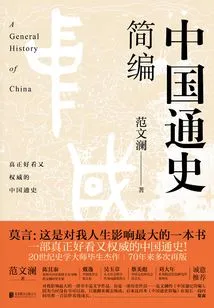
This book is written from the primitive communes to the Opium War. It selects real materials from a vast sea of historical books to completely outline the life of the ancient people. It provides a panoramic overview of the economic issues behind worker and peasant production and the tax system, accurately analyzes the gains and losses of ancient politics and military, and clearly clarifies the confrontation and inheritance of academic thought and religious philosophy. In addition, it also provides a unique and incisive analysis of the development of literature, art, diplomacy and other aspects. This book is full of citations, easy-to-understand, and interesting to read. It leads readers to see clearly the root causes of the success and failure of Chinese civil and military affairs in past dynasties, reveals the basic laws of ancient social development, and injects fresh wisdom into the development of modern society.
This book is written from the primitive communes to the Opium War. It selects real materials from a vast sea of historical books to completely outline the life of the ancient people. It provides a panoramic overview of the economic issues behind worker and peasant production and the tax system, accurately analyzes the gains and losses of ancient politics and military, and clearly clarifies the confrontation and inheritance of academic thought and religious philosophy. In addition, it also provides a unique and incisive analysis of the development of literature, art, diplomacy and other aspects. This book is full of citations, easy-to-understand, and interesting to read. It leads readers to see clearly the root causes of the success and failure of Chinese civil and military affairs in past dynasties, reveals the basic laws of ancient social development, and injects fresh wisdom into the development of modern society.
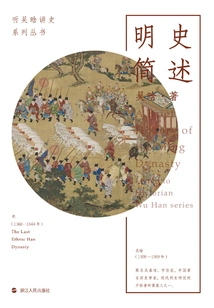
听吴晗讲史:明史简述
Wu Han
This book is divided into upper and lower parts. The first part is "A Brief Introduction to the History of Ming Dynasty" and the second part is "Details of Ming Dynasty Society". The above part is a transcript of an academic lecture delivered by Wu Han at the Central Advanced Party School. It briefly and clearly summarizes the history of the Ming Dynasty and analyzes some of the most critical issues in the history of the Ming Dynasty. The second part selects Wu Han's important articles on the history of the Ming Dynasty. The content covers the study of all social strata in the Ming Dynasty and restores every detail of the life and production process from the Ming Dynasty bureaucrats to ordinary people. The upper and lower volumes jointly present a three-dimensional picture of China in the Ming Dynasty.
This book is divided into upper and lower parts. The first part is "A Brief Introduction to the History of Ming Dynasty" and the second part is "Details of Ming Dynasty Society". The above part is a transcript of an academic lecture delivered by Wu Han at the Central Advanced Party School. It briefly and clearly summarizes the history of the Ming Dynasty and analyzes some of the most critical issues in the history of the Ming Dynasty. The second part selects Wu Han's important articles on the history of the Ming Dynasty. The content covers the study of all social strata in the Ming Dynasty and restores every detail of the life and production process from the Ming Dynasty bureaucrats to ordinary people. The upper and lower volumes jointly present a three-dimensional picture of China in the Ming Dynasty.
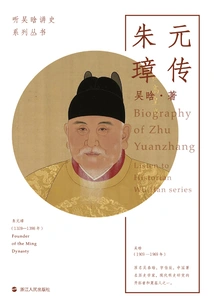
听吴晗讲史:朱元璋传
Wu Han
This book is the biography of Zhu Yuanzhang, the founder of the Ming Dynasty. The famous historian Wu Han uses meticulous research and sharp writing to tell the legendary story of Zhu Chongba, a poor farmer who started from scratch from the bottom of society, fought back all the way, founded the Ming Dynasty, and became Zhu Yuanzhang, the founder of the Ming Dynasty. In the first half of his career, Zhu Yuanzhang struggled to start a business, and he was a foresighted and resolute hero. In the second half of his career, he personally formulated the basic political and social system of the Ming Dynasty. At the same time, he was also famous for his harsh punishments and high-pressure politics.
This book is the biography of Zhu Yuanzhang, the founder of the Ming Dynasty. The famous historian Wu Han uses meticulous research and sharp writing to tell the legendary story of Zhu Chongba, a poor farmer who started from scratch from the bottom of society, fought back all the way, founded the Ming Dynasty, and became Zhu Yuanzhang, the founder of the Ming Dynasty. In the first half of his career, Zhu Yuanzhang struggled to start a business, and he was a foresighted and resolute hero. In the second half of his career, he personally formulated the basic political and social system of the Ming Dynasty. At the same time, he was also famous for his harsh punishments and high-pressure politics.
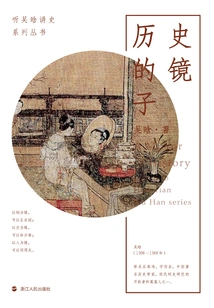
听吴晗讲史:历史的镜子
Wu Han
This book is divided into two parts. The first part is "Mirror of History" and the second part is "Dengxia Collection". They are both collections of historical essays selected by Wu Han when he was still alive. Historian Wu Han has used his astonishing academic ability to survey thousands of years of ancient Chinese history. He has made observations from all angles and levels, presenting all aspects of ancient Chinese dynasties.
This book is divided into two parts. The first part is "Mirror of History" and the second part is "Dengxia Collection". They are both collections of historical essays selected by Wu Han when he was still alive. Historian Wu Han has used his astonishing academic ability to survey thousands of years of ancient Chinese history. He has made observations from all angles and levels, presenting all aspects of ancient Chinese dynasties.
Three Kingdoms
History三国志
(jin Dynasty) Chen Shou (southern Dynasty Song Dynasty) Pei Songzhi
"Three Kingdoms" was written by Chen Shou of the Western Jin Dynasty. It has a total of sixty-five volumes, including thirty volumes of "Book of Wei", fifteen volumes of "Book of Shu", and twenty volumes of "Book of Wu". It mainly describes the history of the Three Kingdoms period, and is called the "First Four Histories" together with "Shi Ji", "Han Shu" and "Hou Han Shu". Pei Song of the Southern Song Dynasty annotated it and quoted more than 200 writings by people from the Wei and Jin Dynasties, enriching the text itself of Chen Shou's "Three Kingdoms".
"Three Kingdoms" was written by Chen Shou of the Western Jin Dynasty. It has a total of sixty-five volumes, including thirty volumes of "Book of Wei", fifteen volumes of "Book of Shu", and twenty volumes of "Book of Wu". It mainly describes the history of the Three Kingdoms period, and is called the "First Four Histories" together with "Shi Ji", "Han Shu" and "Hou Han Shu". Pei Song of the Southern Song Dynasty annotated it and quoted more than 200 writings by people from the Wei and Jin Dynasties, enriching the text itself of Chen Shou's "Three Kingdoms".