Library
Browse and search books
25 novels found
历史的局外人:在文学与历史之间游荡
Zhang Hongjie
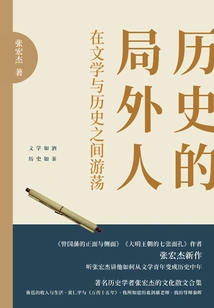
This book is a collection of cultural essays by the famous historian Zhang Hongjie. The author personally sorted out all his works from the early days of writing and compiled them into one volume. These works revolve around the two clues of literature and history. Literature is like wine and history is like tea. They are both indispensable parts of the author's life. History is written through words and life is explored through history. The first part of the book, "Masters", is the writers and historians who inspired the author to write, such as Lu Xun, Huang Renyu, etc. The writing style and way of thinking of these masters have influenced the author to this day. The second part, "My Literary Youth Career," records how the author transformed from a literary lover to a "professional writer." The third part, "Me and Historical Writing," explains how the author embarked on the path of professional historical research, and records the teachers who guided and guided him along the way, including Dai Yi, Ge Jianxiong, Qin Hui, etc.
This book is a collection of cultural essays by the famous historian Zhang Hongjie. The author personally sorted out all his works from the early days of writing and compiled them into one volume. These works revolve around the two clues of literature and history. Literature is like wine and history is like tea. They are both indispensable parts of the author's life. History is written through words and life is explored through history. The first part of the book, "Masters", is the writers and historians who inspired the author to write, such as Lu Xun, Huang Renyu, etc. The writing style and way of thinking of these masters have influenced the author to this day. The second part, "My Literary Youth Career," records how the author transformed from a literary lover to a "professional writer." The third part, "Me and Historical Writing," explains how the author embarked on the path of professional historical research, and records the teachers who guided and guided him along the way, including Dai Yi, Ge Jianxiong, Qin Hui, etc.
Millennium Paradox
History千年悖论
Zhang Hongjie
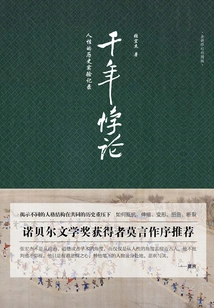
"The Millennium Paradox" is the first book published by Zhang Hongjie. This book is a newly revised edition of "The Millennium Paradox", which contains most of the author's excellent "historical and cultural prose" works in the early writing period, as well as two interviews about historical writing in his early years, and is accompanied by exquisite illustrations. In the book, the author uses different perspectives to observe and narrate famous historical figures such as Wu Sangui, Zeng Guofan, Cixi, and Zhu Yuanzhang who have been written and commented on many times by history and others, as well as historical events such as China's imperial examination system, cruel torture, the Sinicization of the Manchus, and the truth about the hermits. He explores human nature in a specific period, giving people a fresh reading experience and thought-provoking thinking. Regarding the narration of historical figures, Zhang Hongjie has his own unique sensory structure on the basis of respecting historical facts. With his calm and meticulous brushwork and penetrating portrayal, he writes about the ups and downs of various characters who live in the same era under the fission of the same era, and explores the ups and downs of human nature in the historical theater. It is thought-provoking and also makes people have more understanding and compassion for labeled historical figures.
"The Millennium Paradox" is the first book published by Zhang Hongjie. This book is a newly revised edition of "The Millennium Paradox", which contains most of the author's excellent "historical and cultural prose" works in the early writing period, as well as two interviews about historical writing in his early years, and is accompanied by exquisite illustrations. In the book, the author uses different perspectives to observe and narrate famous historical figures such as Wu Sangui, Zeng Guofan, Cixi, and Zhu Yuanzhang who have been written and commented on many times by history and others, as well as historical events such as China's imperial examination system, cruel torture, the Sinicization of the Manchus, and the truth about the hermits. He explores human nature in a specific period, giving people a fresh reading experience and thought-provoking thinking. Regarding the narration of historical figures, Zhang Hongjie has his own unique sensory structure on the basis of respecting historical facts. With his calm and meticulous brushwork and penetrating portrayal, he writes about the ups and downs of various characters who live in the same era under the fission of the same era, and explores the ups and downs of human nature in the historical theater. It is thought-provoking and also makes people have more understanding and compassion for labeled historical figures.
张宏杰:历史的正面与侧面(全7册)
Zhang Hongjie
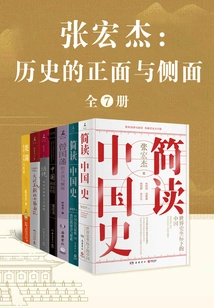
This set is a series of brief readings of Chinese history by the well-known historian Zhang Hongjie. "A Brief Reading of Chinese History: China in the Coordination of World History": This book puts Chinese history into the context of world history, clarifies the development of Chinese history, and hopes that readers can establish an overall concept of Chinese history in a short time. At the same time, it uses a "long-term, long-distance, wide-view" interpretation method to comprehensively present the internal logic and rules of the game behind the cycle of chaos in Chinese history. "A Brief Reading of Chinese History: Power and Finance Behind the Corruption in Chinese History": Power games and financial rules, systems and checks and balances, top-level designs and the naked humanity behind bad rules are real and cruel. The root cause of corruption in China's past dynasties is absolute power control. It is impossible to solve the corruption problem without solving the foundation of the power structure. The history of imperial rule and the history of official corruption have always been inseparable. The author focuses on the Han, Tang, Song, Yuan, Ming and Qing dynasties, makes horizontal and vertical comparisons, explores the imperial rule and official ecology of ancient Chinese society, and clearly presents a multi-angle context of Chinese history to readers. "Qianlong: Politics, Love and Character": A politician, a scholar, a poet, a traveler, a hunter, the politics, harem and life of the most complicated emperor in Chinese history. "Bad Rules: Corruption and Anti-Corruption in the Ming and Qing Dynasties": This book focuses on the Ming and Qing Dynasties, and uses clear logic and vivid details to completely tell the beginning and end of the anti-corruption efforts of Zhu Yuanzhang, Hongli and others. Taking "bad regulations", a phenomenon of corruption that ran through the Ming and Qing dynasties, as an entry point, it reproduces the imperial institutional structure and officialdom ecology at that time, deeply explores the root causes of the decline of the Ming and Qing dynasties, and puts forward reflections that transcend the times. "The Evolution of Chinese National Character": A general history of China from a new perspective, exploring the past and future of the national character, and fundamentally understanding and changing the thoughts and behaviors of the Chinese people! "The Front and Side of Zeng Guofan": From an angry youth to a successful official, how he "reborn" after experiencing five humiliations. Zeng Guofan, who was completely different around the age of 30, showed the majority of young people how a young man moves from ideal to reality, which is of great practical significance. "Seven Faces of the Ming Dynasty": an emperor: Zhu Yuanzhang; a usurper: Zhu Di; an upright official: Hai Rui; an eunuch: Wei Zhongxian; a rebel: Zhang Xianzhong; a traitor: Wu Sangui; and a loyal minister: Zheng Chenggong. Seven people and seven profiles form a complete picture of the autocratic centralization system of the Ming Dynasty and the spiritual enslavement of the Chinese people.
This set is a series of brief readings of Chinese history by the well-known historian Zhang Hongjie. "A Brief Reading of Chinese History: China in the Coordination of World History": This book puts Chinese history into the context of world history, clarifies the development of Chinese history, and hopes that readers can establish an overall concept of Chinese history in a short time. At the same time, it uses a "long-term, long-distance, wide-view" interpretation method to comprehensively present the internal logic and rules of the game behind the cycle of chaos in Chinese history. "A Brief Reading of Chinese History: Power and Finance Behind the Corruption in Chinese History": Power games and financial rules, systems and checks and balances, top-level designs and the naked humanity behind bad rules are real and cruel. The root cause of corruption in China's past dynasties is absolute power control. It is impossible to solve the corruption problem without solving the foundation of the power structure. The history of imperial rule and the history of official corruption have always been inseparable. The author focuses on the Han, Tang, Song, Yuan, Ming and Qing dynasties, makes horizontal and vertical comparisons, explores the imperial rule and official ecology of ancient Chinese society, and clearly presents a multi-angle context of Chinese history to readers. "Qianlong: Politics, Love and Character": A politician, a scholar, a poet, a traveler, a hunter, the politics, harem and life of the most complicated emperor in Chinese history. "Bad Rules: Corruption and Anti-Corruption in the Ming and Qing Dynasties": This book focuses on the Ming and Qing Dynasties, and uses clear logic and vivid details to completely tell the beginning and end of the anti-corruption efforts of Zhu Yuanzhang, Hongli and others. Taking "bad regulations", a phenomenon of corruption that ran through the Ming and Qing dynasties, as an entry point, it reproduces the imperial institutional structure and officialdom ecology at that time, deeply explores the root causes of the decline of the Ming and Qing dynasties, and puts forward reflections that transcend the times. "The Evolution of Chinese National Character": A general history of China from a new perspective, exploring the past and future of the national character, and fundamentally understanding and changing the thoughts and behaviors of the Chinese people! "The Front and Side of Zeng Guofan": From an angry youth to a successful official, how he "reborn" after experiencing five humiliations. Zeng Guofan, who was completely different around the age of 30, showed the majority of young people how a young man moves from ideal to reality, which is of great practical significance. "Seven Faces of the Ming Dynasty": an emperor: Zhu Yuanzhang; a usurper: Zhu Di; an upright official: Hai Rui; an eunuch: Wei Zhongxian; a rebel: Zhang Xianzhong; a traitor: Wu Sangui; and a loyal minister: Zheng Chenggong. Seven people and seven profiles form a complete picture of the autocratic centralization system of the Ming Dynasty and the spiritual enslavement of the Chinese people.
饥饿的盛世:乾隆时代的得与失(珍藏版)
Zhang Hongjie
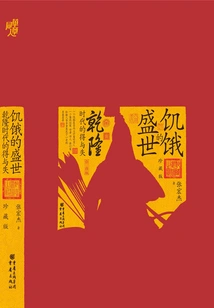
The content of this book mainly writes about the gains and losses of the Qianlong era. Through the deconstruction of the Qianlong era, the author paints a colorful picture of the "prosperous age" for readers, and at the same time profoundly reveals the lost secrets of modern China. China under Qianlong's rule was the most populous and most powerful period in China's thousands of years of history. Horizontally, it was the most powerful and wealthy country in the world at that time. It is no exaggeration to call it the greatest prosperous era in Chinese history. The Qianlong era created unprecedented political stability, supported an unprecedented population, and established today's territory. However, the author sees from a deeper level that behind the superficial prosperity is a huge crisis. Qianlong's sixty-year reign coincided with Britain going through the entire process of the industrial revolution. In the thirteenth year of Qianlong's reign (1748), Montesquieu published his famous work "The Spirit of the Laws". In the forty-first year of Qianlong's reign (1776), the United States declared independence. In the fifty-fourth year of Qianlong's reign (1789), the Bourgeois Revolution broke out in France. On the other side of the earth, Emperor Qianlong was immersed in the dream of a "prosperous age" and could not extricate himself, trying every means to maintain his feudal rule. It can be said that during this period, China missed the opportunity to contact world civilizations and failed to catch up with the tide of world development. This directly led to China's continued decline and even its status as the "sick man of East Asia." In addition, this book also introduces Qianlong's origin, personal life, personality, etc.
The content of this book mainly writes about the gains and losses of the Qianlong era. Through the deconstruction of the Qianlong era, the author paints a colorful picture of the "prosperous age" for readers, and at the same time profoundly reveals the lost secrets of modern China. China under Qianlong's rule was the most populous and most powerful period in China's thousands of years of history. Horizontally, it was the most powerful and wealthy country in the world at that time. It is no exaggeration to call it the greatest prosperous era in Chinese history. The Qianlong era created unprecedented political stability, supported an unprecedented population, and established today's territory. However, the author sees from a deeper level that behind the superficial prosperity is a huge crisis. Qianlong's sixty-year reign coincided with Britain going through the entire process of the industrial revolution. In the thirteenth year of Qianlong's reign (1748), Montesquieu published his famous work "The Spirit of the Laws". In the forty-first year of Qianlong's reign (1776), the United States declared independence. In the fifty-fourth year of Qianlong's reign (1789), the Bourgeois Revolution broke out in France. On the other side of the earth, Emperor Qianlong was immersed in the dream of a "prosperous age" and could not extricate himself, trying every means to maintain his feudal rule. It can be said that during this period, China missed the opportunity to contact world civilizations and failed to catch up with the tide of world development. This directly led to China's continued decline and even its status as the "sick man of East Asia." In addition, this book also introduces Qianlong's origin, personal life, personality, etc.
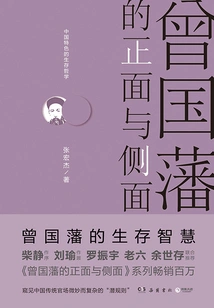
Zeng Guofan's Front and Side
History曾国藩的正面与侧面
Zhang Hongjie
"The Front and Side of Zeng Guofan" tells the ups and downs of Zeng Guofan's life, revealing many unknown details: the five major setbacks he encountered in his life; his entanglement and friendship with Zuo Zongtang; his lifetime income and expenditure; how to treat Feng Shui, fortune telling, destiny, etc. The author shows us a diligent, pragmatic and self-disciplined "Wen Zhenggong" Zeng Guofan, a contradictory and struggling career official embedded in the core of the system. Through Zeng Guofan, readers can get a glimpse of the subtle and complex "hidden rules" of traditional Chinese officialdom and the unique survival philosophy of the system with Chinese characteristics.
"The Front and Side of Zeng Guofan" tells the ups and downs of Zeng Guofan's life, revealing many unknown details: the five major setbacks he encountered in his life; his entanglement and friendship with Zuo Zongtang; his lifetime income and expenditure; how to treat Feng Shui, fortune telling, destiny, etc. The author shows us a diligent, pragmatic and self-disciplined "Wen Zhenggong" Zeng Guofan, a contradictory and struggling career official embedded in the core of the system. Through Zeng Guofan, readers can get a glimpse of the subtle and complex "hidden rules" of traditional Chinese officialdom and the unique survival philosophy of the system with Chinese characteristics.
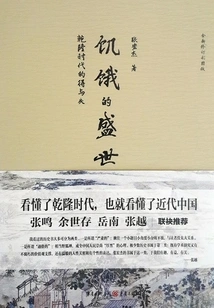
饥饿的盛世:乾隆时代的得与失
Zhang Hongjie
The content of this book mainly writes about the gains and losses of the Qianlong era. Through the deconstruction of the Qianlong era, the author paints a colorful picture of the "prosperous age" for readers, and at the same time profoundly reveals the lost secrets of modern China. China under Qianlong's rule was the most populous and most powerful period in China's thousands of years of history. Horizontally, it was the most powerful and wealthy country in the world at that time. It is no exaggeration to call it the greatest prosperous era in Chinese history. The Qianlong era created unprecedented political stability, supported an unprecedented population, and established today's territory. However, the author sees from a deeper level that behind the superficial prosperity is a huge crisis. Qianlong's sixty-year reign coincided with Britain going through the entire process of the industrial revolution.
The content of this book mainly writes about the gains and losses of the Qianlong era. Through the deconstruction of the Qianlong era, the author paints a colorful picture of the "prosperous age" for readers, and at the same time profoundly reveals the lost secrets of modern China. China under Qianlong's rule was the most populous and most powerful period in China's thousands of years of history. Horizontally, it was the most powerful and wealthy country in the world at that time. It is no exaggeration to call it the greatest prosperous era in Chinese history. The Qianlong era created unprecedented political stability, supported an unprecedented population, and established today's territory. However, the author sees from a deeper level that behind the superficial prosperity is a huge crisis. Qianlong's sixty-year reign coincided with Britain going through the entire process of the industrial revolution.
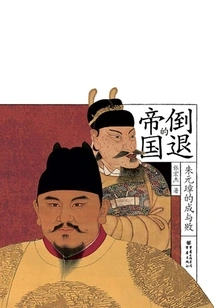
倒退的帝国:朱元璋的成与败
Zhang Hongjie
In 1368 AD, the forty-year-old Zhu Yuanzhang proclaimed himself emperor in Yingtian Mansion after defeating various peasant uprising armies, and established the last huge empire ruled by the Han people. He also became the only true "peasant emperor" in Chinese history. As Zhao Yi of the Qing Dynasty said: "Gai Mingzu is a man who is a sage, a hero, and a thief." He is good at winning people's hearts, treats intellectuals favorably, has an excellent view of the overall situation, and has decisiveness. Zhu Yuanzhang's "sage" qualities that are different from those of the powerful in the late Yuan Dynasty helped him ascend to the high position. When Zhu Yuanzhang defeated all the heroes and ascended to the throne, he showed his green face and fangs, overthrew the eight hundred years of traditional political system with cruel and terrifying means of massacre, took autocratic politics to the extreme, deposed the prime minister, slaughtered meritorious officials arbitrarily, established a royal guard, despised civil servants, implemented a strict Lijia system to force people to migrate, interfered with people's freedom of employment, strictly restricted foreign trade, etc. What's more important is that Zhu Yuanzhang injected poison refined from the think tanks of past dynasties into the people's brains, paralyzing the nerves of the entire China into a vegetative state, fundamentally killing everyone's individuality, initiative, and creativity, and domesticating them into obedient people who specialize in providing food. Zhu Yuanzhang's success and failure are both inseparable from the cultural soil of "China". This book puts Zhu Yuanzhang into the context of Chinese culture and makes a detailed analysis, trying to present a multi-dimensional Zhu Yuanzhang to readers.
In 1368 AD, the forty-year-old Zhu Yuanzhang proclaimed himself emperor in Yingtian Mansion after defeating various peasant uprising armies, and established the last huge empire ruled by the Han people. He also became the only true "peasant emperor" in Chinese history. As Zhao Yi of the Qing Dynasty said: "Gai Mingzu is a man who is a sage, a hero, and a thief." He is good at winning people's hearts, treats intellectuals favorably, has an excellent view of the overall situation, and has decisiveness. Zhu Yuanzhang's "sage" qualities that are different from those of the powerful in the late Yuan Dynasty helped him ascend to the high position. When Zhu Yuanzhang defeated all the heroes and ascended to the throne, he showed his green face and fangs, overthrew the eight hundred years of traditional political system with cruel and terrifying means of massacre, took autocratic politics to the extreme, deposed the prime minister, slaughtered meritorious officials arbitrarily, established a royal guard, despised civil servants, implemented a strict Lijia system to force people to migrate, interfered with people's freedom of employment, strictly restricted foreign trade, etc. What's more important is that Zhu Yuanzhang injected poison refined from the think tanks of past dynasties into the people's brains, paralyzing the nerves of the entire China into a vegetative state, fundamentally killing everyone's individuality, initiative, and creativity, and domesticating them into obedient people who specialize in providing food. Zhu Yuanzhang's success and failure are both inseparable from the cultural soil of "China". This book puts Zhu Yuanzhang into the context of Chinese culture and makes a detailed analysis, trying to present a multi-dimensional Zhu Yuanzhang to readers.
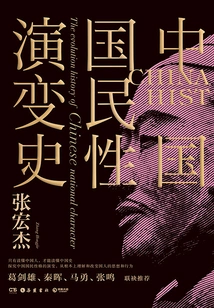
中国国民性演变史
Zhang Hongjie
This book aims to explore the evolution of Chinese national character. The author believes that national character is not static. From the Spring and Autumn Period to the Tang and Song Dynasties, and then to the Ming and Qing Dynasties, the character of the Chinese people is like a waterfall, flowing down and getting worse. It is the backward system that has caused the bad nature of the Chinese people. From the dual perspectives of space and time, this book can be said to be an alternative general history of China, and it also seeks a real way out for China's future transformation and development.
This book aims to explore the evolution of Chinese national character. The author believes that national character is not static. From the Spring and Autumn Period to the Tang and Song Dynasties, and then to the Ming and Qing Dynasties, the character of the Chinese people is like a waterfall, flowing down and getting worse. It is the backward system that has caused the bad nature of the Chinese people. From the dual perspectives of space and time, this book can be said to be an alternative general history of China, and it also seeks a real way out for China's future transformation and development.
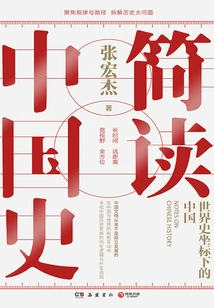
简读中国史:世界史坐标下的中国
Zhang Hongjie
Chinese civilization has never developed in isolation. From the moment it emerged, it has been influenced by factors from other civilizations in the world. However, these external factors did not change the essence of Chinese civilization, but instead highlighted the uniqueness of Chinese civilization. This book puts Chinese history into the context of world history and clarifies the development of Chinese history, hoping that readers can establish an overall concept of Chinese history in a short time. At the same time, it uses a "long-term, long-distance, wide-view" interpretation method to comprehensively present the internal logic and game rules behind the cycle of chaos in China's history.
Chinese civilization has never developed in isolation. From the moment it emerged, it has been influenced by factors from other civilizations in the world. However, these external factors did not change the essence of Chinese civilization, but instead highlighted the uniqueness of Chinese civilization. This book puts Chinese history into the context of world history and clarifies the development of Chinese history, hoping that readers can establish an overall concept of Chinese history in a short time. At the same time, it uses a "long-term, long-distance, wide-view" interpretation method to comprehensively present the internal logic and game rules behind the cycle of chaos in China's history.
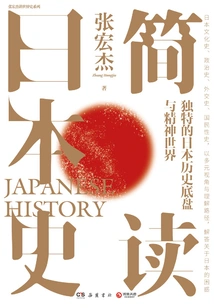
简读日本史
Zhang Hongjie
Japan is a special country. Its cultural core is extremely stable but its appearance is extremely changeable, making the world unpredictable. Only by understanding the uniqueness of Japanese history and the spiritual world of the Japanese can we understand Japan's influence on East Asia and even the direction of world history. This book presents readers with a three-dimensional and rich history of Japan from four dimensions. The first part starts with the unique Japanese sexual concepts and analyzes the uniqueness of Japanese history and culture; the second part briefly describes the history from the Jomon period to the Meiji Restoration in chronological order, focusing on analyzing why Japan carried out the Taika Reform and why the Taika Reform failed, and comparing the similarities between Japan's historical trajectory and China; the third part analyzes the Japanese world concept and the historical Sino-Japanese relations; the fourth part summarizes the causes and characteristics of Japan's national character. This book uses multiple perspectives and understanding paths to answer confusions about Japan, and also provides a reference for understanding the uniqueness of Chinese civilization.
Japan is a special country. Its cultural core is extremely stable but its appearance is extremely changeable, making the world unpredictable. Only by understanding the uniqueness of Japanese history and the spiritual world of the Japanese can we understand Japan's influence on East Asia and even the direction of world history. This book presents readers with a three-dimensional and rich history of Japan from four dimensions. The first part starts with the unique Japanese sexual concepts and analyzes the uniqueness of Japanese history and culture; the second part briefly describes the history from the Jomon period to the Meiji Restoration in chronological order, focusing on analyzing why Japan carried out the Taika Reform and why the Taika Reform failed, and comparing the similarities between Japan's historical trajectory and China; the third part analyzes the Japanese world concept and the historical Sino-Japanese relations; the fourth part summarizes the causes and characteristics of Japan's national character. This book uses multiple perspectives and understanding paths to answer confusions about Japan, and also provides a reference for understanding the uniqueness of Chinese civilization.
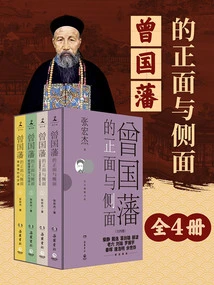
Zeng Guofan's Front and Side (4 Volumes in Total)
General Fiction曾国藩的正面与侧面(全4册)
Zhang Hongjie
This is not only a personal life history of Zeng Guofan, but also a political and social history of the late Qing Dynasty. Through this book, you can not only understand a more comprehensive Zeng Guofan, but also understand the operating rules of traditional Chinese social politics. The set consists of 4 volumes, focusing on the life experiences and methods of life of Zeng Guofan, a famous official in the late Qing Dynasty. The first part tells about Zeng Guofan's career as an official and his principles, thereby exploring Zeng Guofan's inner world and career success or failure as a typical feudal official; the second part mainly tells about Zeng Guofan's family tradition and family management, through the analysis of his relationship with his parents and brothers. , The way of getting along with children, showing the ethical relationships in typical official and gentry families in the late Qing Dynasty; the third part mainly tells the cooperative and conflicting relationship between Zeng Guofan and his colleagues and subordinates, in-depth analysis of the interpersonal communication patterns and various undercurrents of separation and separation in the officialdom of the late Qing Dynasty, and more three-dimensionally reproduces the era environment and social environment in which Zeng Guofan lived. By observing his economic life, the fourth part can provide a glimpse into a little-known aspect of the last saint in traditional society. His "sincerity" and "hypocrisy", his principled yet realistic and tactful attitude in the face of the temptation of money, present the various subtle and complex "rules" of the officialdom of the late Qing Dynasty.
This is not only a personal life history of Zeng Guofan, but also a political and social history of the late Qing Dynasty. Through this book, you can not only understand a more comprehensive Zeng Guofan, but also understand the operating rules of traditional Chinese social politics. The set consists of 4 volumes, focusing on the life experiences and methods of life of Zeng Guofan, a famous official in the late Qing Dynasty. The first part tells about Zeng Guofan's career as an official and his principles, thereby exploring Zeng Guofan's inner world and career success or failure as a typical feudal official; the second part mainly tells about Zeng Guofan's family tradition and family management, through the analysis of his relationship with his parents and brothers. , The way of getting along with children, showing the ethical relationships in typical official and gentry families in the late Qing Dynasty; the third part mainly tells the cooperative and conflicting relationship between Zeng Guofan and his colleagues and subordinates, in-depth analysis of the interpersonal communication patterns and various undercurrents of separation and separation in the officialdom of the late Qing Dynasty, and more three-dimensionally reproduces the era environment and social environment in which Zeng Guofan lived. By observing his economic life, the fourth part can provide a glimpse into a little-known aspect of the last saint in traditional society. His "sincerity" and "hypocrisy", his principled yet realistic and tactful attitude in the face of the temptation of money, present the various subtle and complex "rules" of the officialdom of the late Qing Dynasty.
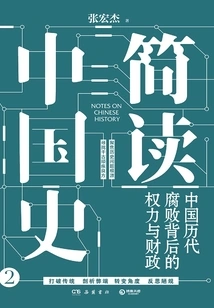
简读中国史:中国历代腐败背后的权力与财政
Zhang Hongjie
The naked humanity revealed behind power games and financial rules, systems and checks and balances, top-level designs and bad rules are real and cruel. The root cause of corruption in China's past dynasties is absolute power control. It is impossible to solve the corruption problem without solving the foundation of the power structure. The history of imperial rule and the history of official corruption have always been inseparable. The author focuses on the Han, Tang, Song, Yuan, Ming and Qing dynasties, makes horizontal and vertical comparisons, explores the imperial rule and official ecology of ancient Chinese society, and clearly presents a multi-angle context of Chinese history to readers.
The naked humanity revealed behind power games and financial rules, systems and checks and balances, top-level designs and bad rules are real and cruel. The root cause of corruption in China's past dynasties is absolute power control. It is impossible to solve the corruption problem without solving the foundation of the power structure. The history of imperial rule and the history of official corruption have always been inseparable. The author focuses on the Han, Tang, Song, Yuan, Ming and Qing dynasties, makes horizontal and vertical comparisons, explores the imperial rule and official ecology of ancient Chinese society, and clearly presents a multi-angle context of Chinese history to readers.
张宏杰“简读中国史”系列(共2册)
Zhang Hongjie
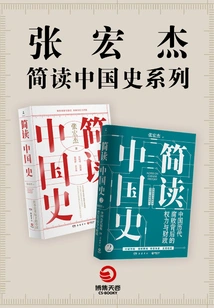
This set is a series of brief readings of Chinese history by the well-known historian Zhang Hongjie. "A Brief Reading of Chinese History: China in the Coordinates of World History": Chinese civilization has never developed in isolation. From the moment it emerged, it has been influenced by factors from other civilizations in the world. However, these external factors did not change the essence of Chinese civilization, but instead highlighted the uniqueness of Chinese civilization. This book puts Chinese history into the context of world history and clarifies the development of Chinese history, hoping that readers can establish an overall concept of Chinese history in a short time. At the same time, it uses a "long-term, long-distance, wide-view" interpretation method to comprehensively present the internal logic and rules of the game behind the cycle of chaos in Chinese history. "A Brief Reading of Chinese History. The Power and Finance Behind the Corruption in Chinese History": power games and financial rules, systems and checks and balances, top-level designs and the naked humanity behind bad rules are real and cruel. The root cause of corruption in China's past dynasties is absolute power control. It is impossible to solve the corruption problem without solving the foundation of the power structure. The history of imperial rule and the history of official corruption have always been inseparable. The author focuses on the Han, Tang, Song, Yuan, Ming and Qing dynasties, makes horizontal and vertical comparisons, explores the imperial rule and official ecology of ancient Chinese society, and clearly presents a multi-angle context of Chinese history to readers.
This set is a series of brief readings of Chinese history by the well-known historian Zhang Hongjie. "A Brief Reading of Chinese History: China in the Coordinates of World History": Chinese civilization has never developed in isolation. From the moment it emerged, it has been influenced by factors from other civilizations in the world. However, these external factors did not change the essence of Chinese civilization, but instead highlighted the uniqueness of Chinese civilization. This book puts Chinese history into the context of world history and clarifies the development of Chinese history, hoping that readers can establish an overall concept of Chinese history in a short time. At the same time, it uses a "long-term, long-distance, wide-view" interpretation method to comprehensively present the internal logic and rules of the game behind the cycle of chaos in Chinese history. "A Brief Reading of Chinese History. The Power and Finance Behind the Corruption in Chinese History": power games and financial rules, systems and checks and balances, top-level designs and the naked humanity behind bad rules are real and cruel. The root cause of corruption in China's past dynasties is absolute power control. It is impossible to solve the corruption problem without solving the foundation of the power structure. The history of imperial rule and the history of official corruption have always been inseparable. The author focuses on the Han, Tang, Song, Yuan, Ming and Qing dynasties, makes horizontal and vertical comparisons, explores the imperial rule and official ecology of ancient Chinese society, and clearly presents a multi-angle context of Chinese history to readers.
张宏杰历史作品集(共4册)
Zhang Hongjie
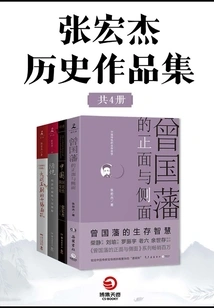
A single book includes: The front and side of Zeng Guofan, Bad Rules: Corruption and Anti-corruption in the Ming and Qing Dynasties, The History of the Evolution of Chinese National Character, and The Seven Faces of the Ming Dynasty
A single book includes: The front and side of Zeng Guofan, Bad Rules: Corruption and Anti-corruption in the Ming and Qing Dynasties, The History of the Evolution of Chinese National Character, and The Seven Faces of the Ming Dynasty
朝贡圈:传统中国的世界秩序
Zhang Hongjie
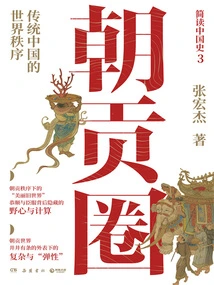
Tribute Circle - the key to understanding the ancient history of East Asia! Historian Zhang Hongjie's new work in the "Brief Reading of Chinese History" series! Understanding the tribute system is the key to understanding the history of China and East Asia. For more than two thousand years, the East Asian cultural circle with Chinese civilization as its core has established a unique etiquette system - tribute. Through this tribute system, various countries maintained frequent exchanges with China, and the Chinese-style political system and cultural concepts were slowly spread. This world, which originally had different customs and languages, was gradually woven into a "civilized" world with a unified script and unified values over more than a thousand years. Showing the "beautiful old world" under the tributary order, the ambitions and calculations hidden behind obedience and surrender. This book deeply analyzes the unique tributary system of ancient China and reproduces the glory of "common master". By detailing nine different tribute types including Korea, Ryukyu, Japan, and Vietnam, it presents readers with the inner operating mechanism of the longest-lasting international order in human history. The well-known historian Zhang Hongjie has devoted five years to present a panoramic view of traditional China's world order - the tributary system - with rich and detailed historical materials. The book shows the international environment in East Asia and the actual operation of the tributary system over the past two thousand years, and reveals the waves and turbulence under the calm surface in multiple centers in the unified system!
Tribute Circle - the key to understanding the ancient history of East Asia! Historian Zhang Hongjie's new work in the "Brief Reading of Chinese History" series! Understanding the tribute system is the key to understanding the history of China and East Asia. For more than two thousand years, the East Asian cultural circle with Chinese civilization as its core has established a unique etiquette system - tribute. Through this tribute system, various countries maintained frequent exchanges with China, and the Chinese-style political system and cultural concepts were slowly spread. This world, which originally had different customs and languages, was gradually woven into a "civilized" world with a unified script and unified values over more than a thousand years. Showing the "beautiful old world" under the tributary order, the ambitions and calculations hidden behind obedience and surrender. This book deeply analyzes the unique tributary system of ancient China and reproduces the glory of "common master". By detailing nine different tribute types including Korea, Ryukyu, Japan, and Vietnam, it presents readers with the inner operating mechanism of the longest-lasting international order in human history. The well-known historian Zhang Hongjie has devoted five years to present a panoramic view of traditional China's world order - the tributary system - with rich and detailed historical materials. The book shows the international environment in East Asia and the actual operation of the tributary system over the past two thousand years, and reveals the waves and turbulence under the calm surface in multiple centers in the unified system!
张宏杰漫画简读中国史
Zhang Hongjie
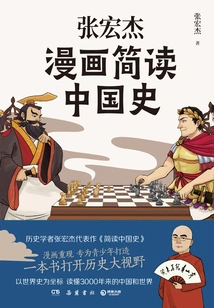
Using world history as a coordinate, understand China and the world over the past 3,000 years! If you don't read Chinese history, you don't know the greatness of China; if you don't read world history, you don't know the characteristics of China! Review 20 special topics on Chinese history from a global perspective, with a grand perspective and many subversive views! This book brings world history and Chinese history into the same time and space, and uses comics to reproduce the colorful picture of mutual learning and exchange between China and the world in history. What are the world factors in the origin of Chinese civilization? Why could the Roman Empire not be reunited after it split? What are the unique historical cycles between the Central Plains and the grasslands? Why is it said that the Chinese nation is united in diversity? These key issues in history are presented one by one through witty cartoons, supplemented by in-depth and easy-to-understand text explanations, allowing you to understand Chinese history while laughing, and gain a comprehensive understanding of historical laws from a bird's-eye perspective.
Using world history as a coordinate, understand China and the world over the past 3,000 years! If you don't read Chinese history, you don't know the greatness of China; if you don't read world history, you don't know the characteristics of China! Review 20 special topics on Chinese history from a global perspective, with a grand perspective and many subversive views! This book brings world history and Chinese history into the same time and space, and uses comics to reproduce the colorful picture of mutual learning and exchange between China and the world in history. What are the world factors in the origin of Chinese civilization? Why could the Roman Empire not be reunited after it split? What are the unique historical cycles between the Central Plains and the grasslands? Why is it said that the Chinese nation is united in diversity? These key issues in history are presented one by one through witty cartoons, supplemented by in-depth and easy-to-understand text explanations, allowing you to understand Chinese history while laughing, and gain a comprehensive understanding of historical laws from a bird's-eye perspective.
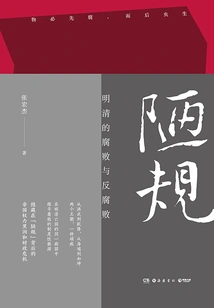
陋规:明清的腐败与反腐败
Zhang Hongjie
History is continuous. During the dynasty changes from the Ming to the Qing, the basic structure of the power structure has always maintained a strong inertia. Corruption is the entrance to analyzing this power structure. This book focuses on the Ming and Qing Dynasties, and uses clear logic and vivid details to completely tell the whole story of Zhu Yuanzhang, Hongli and others' anti-corruption efforts. By elaborating on their background, process, outcome and impact, it focuses on the various difficulties that caused the Ming and Qing dynasties to be trapped in the quagmire of corruption. Taking "bad regulations", a phenomenon of corruption that ran through the Ming and Qing dynasties, as an entry point, it reproduces the imperial institutional structure and officialdom ecology at that time, deeply explores the root causes of the decline of the Ming and Qing dynasties, and puts forward reflections that transcend the times.
History is continuous. During the dynasty changes from the Ming to the Qing, the basic structure of the power structure has always maintained a strong inertia. Corruption is the entrance to analyzing this power structure. This book focuses on the Ming and Qing Dynasties, and uses clear logic and vivid details to completely tell the whole story of Zhu Yuanzhang, Hongli and others' anti-corruption efforts. By elaborating on their background, process, outcome and impact, it focuses on the various difficulties that caused the Ming and Qing dynasties to be trapped in the quagmire of corruption. Taking "bad regulations", a phenomenon of corruption that ran through the Ming and Qing dynasties, as an entry point, it reproduces the imperial institutional structure and officialdom ecology at that time, deeply explores the root causes of the decline of the Ming and Qing dynasties, and puts forward reflections that transcend the times.
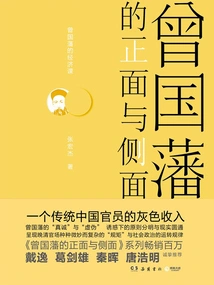
曾国藩的正面与侧面4
Zhang Hongjie
The fourth part of "The Front and Side of Zeng Guofan", Zeng Guofan's "sincerity" and "hypocrisy", interprets the gray income of a traditional Chinese official. Comprehensively interpret Zeng Guofan's "sincerity" and "hypocrisy", his clear principles and reality under temptation; present the various subtle and complex "rules" of the officialdom of the late Qing Dynasty and the operating rules of social politics. This book is not only a research work on Zeng Guofan, but also a research work on the political and social history of the late Qing Dynasty. Observing the economic life of Zeng Guofan from a unique perspective and with exquisite conception, it analyzes the economic status of officials in the late Qing Dynasty and further restores a more three-dimensional and vivid late Qing dynasty. It is a window and a key to unlock the mystery of the economic ecology and the actual operation of the administrative system of the late Qing political circles. "The Front and Side of Zeng Guofan" tells the ups and downs of Zeng Guofan's life and reveals many unknown details. The author shows us a diligent, pragmatic and self-disciplined "Wen Zhenggong" Zeng Guofan, a contradictory and struggling career official embedded in the core of the system. Through Zeng Guofan, readers can get a glimpse of the subtle and complex "hidden rules" of traditional Chinese officialdom and the unique philosophy of survival with Chinese characteristics.
The fourth part of "The Front and Side of Zeng Guofan", Zeng Guofan's "sincerity" and "hypocrisy", interprets the gray income of a traditional Chinese official. Comprehensively interpret Zeng Guofan's "sincerity" and "hypocrisy", his clear principles and reality under temptation; present the various subtle and complex "rules" of the officialdom of the late Qing Dynasty and the operating rules of social politics. This book is not only a research work on Zeng Guofan, but also a research work on the political and social history of the late Qing Dynasty. Observing the economic life of Zeng Guofan from a unique perspective and with exquisite conception, it analyzes the economic status of officials in the late Qing Dynasty and further restores a more three-dimensional and vivid late Qing dynasty. It is a window and a key to unlock the mystery of the economic ecology and the actual operation of the administrative system of the late Qing political circles. "The Front and Side of Zeng Guofan" tells the ups and downs of Zeng Guofan's life and reveals many unknown details. The author shows us a diligent, pragmatic and self-disciplined "Wen Zhenggong" Zeng Guofan, a contradictory and struggling career official embedded in the core of the system. Through Zeng Guofan, readers can get a glimpse of the subtle and complex "hidden rules" of traditional Chinese officialdom and the unique philosophy of survival with Chinese characteristics.
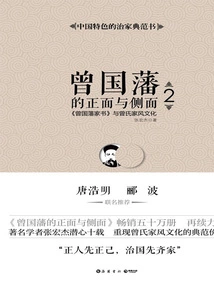
曾国藩的正面与侧面2
Zhang Hongjie
The second part of "The Front and Side of Zeng Guofan" takes a closer look at the "Zeng family", learns about Zeng Guofan from the family culture and the situation of the Zeng family with Zeng Guofan as the core, and leads readers to interpret this model book of family governance with Chinese characteristics - "Zeng Guofan Family Letter". "Rectify oneself first, and govern the country before one's family." As a Confucian, Zeng Guofan's life was based on the logical structure of "The Great Learning". Therefore, he only did four things in his life: self-cultivation, ordering the family, governing the country, and bringing peace to the world. Zeng Guofan's way of managing the family has four points: 1. A strong sense of responsibility for the family, "teaching all my brothers what I know"; 2. Being truthful and frank with the family, sharing his own life experience; 3. The principles are simple and have been verified by his own thinking and verification; 4. Teaching according to people. Of course, if we read "Zeng Guofan Family Letters" in depth, we will also find that no one is perfect, and Zeng Guofan, a famous minister of his generation, also has his shortcomings. "The Front and Side of Zeng Guofan" tells the ups and downs of Zeng Guofan's life and reveals many unknown details. The author shows us a diligent, pragmatic and self-disciplined "Wen Zhenggong" Zeng Guofan, a contradictory and struggling career official embedded in the core of the system. Through Zeng Guofan, readers can get a glimpse of the subtle and complex "hidden rules" of traditional Chinese officialdom and the unique philosophy of survival with Chinese characteristics.
The second part of "The Front and Side of Zeng Guofan" takes a closer look at the "Zeng family", learns about Zeng Guofan from the family culture and the situation of the Zeng family with Zeng Guofan as the core, and leads readers to interpret this model book of family governance with Chinese characteristics - "Zeng Guofan Family Letter". "Rectify oneself first, and govern the country before one's family." As a Confucian, Zeng Guofan's life was based on the logical structure of "The Great Learning". Therefore, he only did four things in his life: self-cultivation, ordering the family, governing the country, and bringing peace to the world. Zeng Guofan's way of managing the family has four points: 1. A strong sense of responsibility for the family, "teaching all my brothers what I know"; 2. Being truthful and frank with the family, sharing his own life experience; 3. The principles are simple and have been verified by his own thinking and verification; 4. Teaching according to people. Of course, if we read "Zeng Guofan Family Letters" in depth, we will also find that no one is perfect, and Zeng Guofan, a famous minister of his generation, also has his shortcomings. "The Front and Side of Zeng Guofan" tells the ups and downs of Zeng Guofan's life and reveals many unknown details. The author shows us a diligent, pragmatic and self-disciplined "Wen Zhenggong" Zeng Guofan, a contradictory and struggling career official embedded in the core of the system. Through Zeng Guofan, readers can get a glimpse of the subtle and complex "hidden rules" of traditional Chinese officialdom and the unique philosophy of survival with Chinese characteristics.
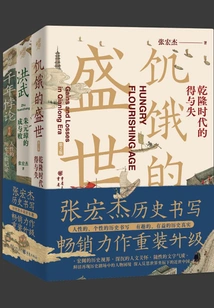
张宏杰作品集(全三册)
Zhang Hongjie
This set includes three works by Zhang Hongjie: "Hongwu: The Successes and Failures of Zhu Yuanzhang", "The Hungry Age: Gains and Losses in the Qianlong Era" and "Millennium Paradox: Records of Historical Experiments on Human Nature". Zhang Hongjie is a master of writing history. When reading his books, I feel that "history is better than novels." However, "good-looking history" has never been the starting point of Zhang Hongjie's writing, but to focus on how the past princes and generals influenced the historical development at that time and later. Some people say that from a cultural perspective, Zhang Hongjie has only written about three people so far: Zhu Yuanzhang, Qianlong and Zeng Guofan. In this writing process, Zhang Hongjie has always paid attention to culture and human nature, which is especially reflected in the work "Hongwu: The Success and Failure of Zhu Yuanzhang". Zhang Hongjie compared the history of the early Ming Dynasty vertically and horizontally from the two dimensions of global history and Chinese culture, and deeply analyzed Zhu Yuanzhang's success and failure. The book "The Prosperous Age of Hungry: Gains and Losses in the Qianlong Era" mainly writes about the gains and losses of the Qianlong Era. Through the deconstruction of the Qianlong Era, the author paints a colorful picture of the "prosperous age" for readers, and at the same time profoundly reveals the lost secrets of modern China. "The Millennium Paradox" is the first book published by Zhang Hongjie. This book is a newly revised edition of "The Millennium Paradox", which contains most of the author's excellent "historical and cultural prose" works in the early writing period, as well as two interviews about historical writing in his early years, and is accompanied by exquisite illustrations.
This set includes three works by Zhang Hongjie: "Hongwu: The Successes and Failures of Zhu Yuanzhang", "The Hungry Age: Gains and Losses in the Qianlong Era" and "Millennium Paradox: Records of Historical Experiments on Human Nature". Zhang Hongjie is a master of writing history. When reading his books, I feel that "history is better than novels." However, "good-looking history" has never been the starting point of Zhang Hongjie's writing, but to focus on how the past princes and generals influenced the historical development at that time and later. Some people say that from a cultural perspective, Zhang Hongjie has only written about three people so far: Zhu Yuanzhang, Qianlong and Zeng Guofan. In this writing process, Zhang Hongjie has always paid attention to culture and human nature, which is especially reflected in the work "Hongwu: The Success and Failure of Zhu Yuanzhang". Zhang Hongjie compared the history of the early Ming Dynasty vertically and horizontally from the two dimensions of global history and Chinese culture, and deeply analyzed Zhu Yuanzhang's success and failure. The book "The Prosperous Age of Hungry: Gains and Losses in the Qianlong Era" mainly writes about the gains and losses of the Qianlong Era. Through the deconstruction of the Qianlong Era, the author paints a colorful picture of the "prosperous age" for readers, and at the same time profoundly reveals the lost secrets of modern China. "The Millennium Paradox" is the first book published by Zhang Hongjie. This book is a newly revised edition of "The Millennium Paradox", which contains most of the author's excellent "historical and cultural prose" works in the early writing period, as well as two interviews about historical writing in his early years, and is accompanied by exquisite illustrations.
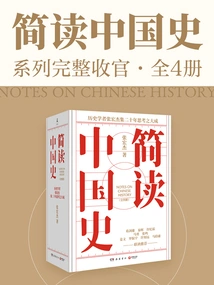
简读中国史(全4册)
Zhang Hongjie
This is the end of a brief reading of all 4 volumes of Chinese history. They are "A Brief Reading of Chinese History", "A Brief Reading of Chinese History: The Power and Finance Behind the Corruption in Chinese History", "Tribute Circle" and "The Evolution of Chinese National Character". Chinese civilization has never developed in isolation. From the moment it emerged, it has been influenced by factors from other civilizations in the world. The first book helps readers establish an overall concept of Chinese history by comparing Chinese history with world history. The second book runs through the Han, Tang, Song, Yuan, Ming and Qing dynasties, restoring the true ecology of ancient Chinese officials. The third book gives a panoramic description of the foreign relations under China's leadership in ancient East Asia. The last book explores the past and future of Chinese national character, and then understands the core of ancient China. Each is independent and complements each other from four aspects, fully presenting the development context of China's thousand-year history.
This is the end of a brief reading of all 4 volumes of Chinese history. They are "A Brief Reading of Chinese History", "A Brief Reading of Chinese History: The Power and Finance Behind the Corruption in Chinese History", "Tribute Circle" and "The Evolution of Chinese National Character". Chinese civilization has never developed in isolation. From the moment it emerged, it has been influenced by factors from other civilizations in the world. The first book helps readers establish an overall concept of Chinese history by comparing Chinese history with world history. The second book runs through the Han, Tang, Song, Yuan, Ming and Qing dynasties, restoring the true ecology of ancient Chinese officials. The third book gives a panoramic description of the foreign relations under China's leadership in ancient East Asia. The last book explores the past and future of Chinese national character, and then understands the core of ancient China. Each is independent and complements each other from four aspects, fully presenting the development context of China's thousand-year history.
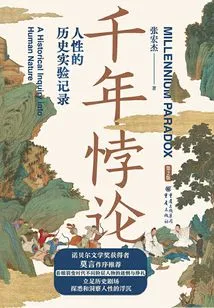
千年悖论:人性的历史实验记录
Zhang Hongjie
"Human is an animal that is too complex, and its complexity sometimes makes humans themselves dumbfounded." Historical figures who have been labeled with various labels are especially difficult to write about. The well-known historian Zhang Hongjie has a unique approach: "He neither criticizes nor looks up to. He just has compassion, puts himself in the shoes of the characters he writes, and shares the joys and sorrows." Historical figures such as Wu Sangui, Zeng Guofan, Cixi, and Zhu Yuanzhang who are familiar to the public have been stripped of all kinds of bizarre labels, showing that in the entanglement of good and evil, they struggled to break free from the shackles of the times, but in the end they could not escape the "paradox" of their destined ending. Historical events such as China's imperial examination system, the Sinicization of the Manchus, and the truth about the hermits also present the alienation and distortion of human nature on multiple levels. "The Millennium Paradox" is Zhang Hongjie's first work, and the origins of the conception of his subsequent wonderful works are included in it. Perhaps some of the content subverts our previous understanding, but it is undeniable that Zhang Hongjie writes about the complexity and richness of human nature, presents the rich background of historical figures, and brings readers more useful thoughts.
"Human is an animal that is too complex, and its complexity sometimes makes humans themselves dumbfounded." Historical figures who have been labeled with various labels are especially difficult to write about. The well-known historian Zhang Hongjie has a unique approach: "He neither criticizes nor looks up to. He just has compassion, puts himself in the shoes of the characters he writes, and shares the joys and sorrows." Historical figures such as Wu Sangui, Zeng Guofan, Cixi, and Zhu Yuanzhang who are familiar to the public have been stripped of all kinds of bizarre labels, showing that in the entanglement of good and evil, they struggled to break free from the shackles of the times, but in the end they could not escape the "paradox" of their destined ending. Historical events such as China's imperial examination system, the Sinicization of the Manchus, and the truth about the hermits also present the alienation and distortion of human nature on multiple levels. "The Millennium Paradox" is Zhang Hongjie's first work, and the origins of the conception of his subsequent wonderful works are included in it. Perhaps some of the content subverts our previous understanding, but it is undeniable that Zhang Hongjie writes about the complexity and richness of human nature, presents the rich background of historical figures, and brings readers more useful thoughts.
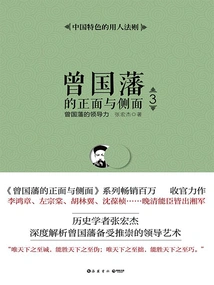
曾国藩的正面与侧面3
Zhang Hongjie
The third part of "The Front and Side of Zeng Guofan" analyzes Zeng Guofan's leadership and the employment rules with Chinese characteristics! "Only the most sincerity in the world can defeat the most hypocritical in the world; only the most clumsy in the world can defeat the most skillful in the world." In the minds of many people, Zeng Guofan is often synonymous with "power and conspiracy", and they feel that Zeng Guofan is a scheming and even cunning person. It should be said that this is a big misunderstanding. Zeng Guofan's principle of treating others is not Machiavellian. When Zeng Guofan dealt with the internal relations of the Hunan Army Group, he followed the principle of "clumsy and sincerity", advocating clumsiness and sincerity. The first characteristic of his treatment of colleagues and subordinates is that he does not use power. The second characteristic is that "if you want to establish yourself, you can help others, and if you want to reach yourself, you can help others." The third characteristic is the word "forgiveness", which means accepting people with a broad mind. "The Front and Side of Zeng Guofan" tells the ups and downs of Zeng Guofan's life and reveals many unknown details. The author shows us a diligent, pragmatic and self-disciplined "Wen Zhenggong" Zeng Guofan, a contradictory and struggling career official embedded in the core of the system. Through Zeng Guofan, readers can get a glimpse of the subtle and complex "hidden rules" of traditional Chinese officialdom and the unique philosophy of survival with Chinese characteristics.
The third part of "The Front and Side of Zeng Guofan" analyzes Zeng Guofan's leadership and the employment rules with Chinese characteristics! "Only the most sincerity in the world can defeat the most hypocritical in the world; only the most clumsy in the world can defeat the most skillful in the world." In the minds of many people, Zeng Guofan is often synonymous with "power and conspiracy", and they feel that Zeng Guofan is a scheming and even cunning person. It should be said that this is a big misunderstanding. Zeng Guofan's principle of treating others is not Machiavellian. When Zeng Guofan dealt with the internal relations of the Hunan Army Group, he followed the principle of "clumsy and sincerity", advocating clumsiness and sincerity. The first characteristic of his treatment of colleagues and subordinates is that he does not use power. The second characteristic is that "if you want to establish yourself, you can help others, and if you want to reach yourself, you can help others." The third characteristic is the word "forgiveness", which means accepting people with a broad mind. "The Front and Side of Zeng Guofan" tells the ups and downs of Zeng Guofan's life and reveals many unknown details. The author shows us a diligent, pragmatic and self-disciplined "Wen Zhenggong" Zeng Guofan, a contradictory and struggling career official embedded in the core of the system. Through Zeng Guofan, readers can get a glimpse of the subtle and complex "hidden rules" of traditional Chinese officialdom and the unique philosophy of survival with Chinese characteristics.
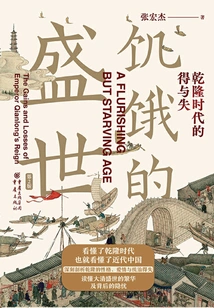
饥饿的盛世:乾隆时代的得与失
Zhang Hongjie
Qianlong's rule occupied most of the 18th century and pushed the prosperity of Kangxi and Qianlong to its peak. In addition to the good foundation laid by Kangxi and Yongzheng, Qianlong's strong self-control, diligence, decisiveness and speed in dealing with problems, good at absorbing the gains and losses of previous dynasties, relatively dedicated emotional life, health and longevity are important factors for Qianlong's success in creating a prosperous age. China under Qianlong's rule was the most populous and most powerful period in China's thousands of years of history. Horizontally, it was the most powerful and wealthy country in the world at that time. However, behind Qianlong was the collapse of the prosperous age and the gradual decline of the Qing Dynasty. The massive White Lotus Rebellion broke out in Qianlong's later years; less than half a century after his death, the Opium War broke out. Qianlong was successful, and his achievements were enough to rank him among the greatest emperors in Chinese history; Qianlong was also a failure, and the development of world history in the 18th century made his rule seem to have nothing new. From the Macartney mission's visit to China, we can see that the historical development of China and the West during the Qianlong period was experiencing another "great divergence".
Qianlong's rule occupied most of the 18th century and pushed the prosperity of Kangxi and Qianlong to its peak. In addition to the good foundation laid by Kangxi and Yongzheng, Qianlong's strong self-control, diligence, decisiveness and speed in dealing with problems, good at absorbing the gains and losses of previous dynasties, relatively dedicated emotional life, health and longevity are important factors for Qianlong's success in creating a prosperous age. China under Qianlong's rule was the most populous and most powerful period in China's thousands of years of history. Horizontally, it was the most powerful and wealthy country in the world at that time. However, behind Qianlong was the collapse of the prosperous age and the gradual decline of the Qing Dynasty. The massive White Lotus Rebellion broke out in Qianlong's later years; less than half a century after his death, the Opium War broke out. Qianlong was successful, and his achievements were enough to rank him among the greatest emperors in Chinese history; Qianlong was also a failure, and the development of world history in the 18th century made his rule seem to have nothing new. From the Macartney mission's visit to China, we can see that the historical development of China and the West during the Qianlong period was experiencing another "great divergence".
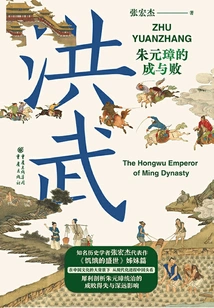
洪武:朱元璋的成与败
Zhang Hongjie
"Hongwu" is the reign name used by Zhu Yuanzhang, the founding emperor of the Ming Dynasty. In Chinese history, Zhu Yuanzhang is a unique existence. For Zhu Yuanzhang personally, going from abject poverty to emperor is an almost impossible event with a small probability. The peasant uprising at the end of the Yuan Dynasty pushed Zhu Yuanzhang out of the bottom of society. Zhu Yuanzhang successfully ascended to the throne by virtue of his ability to win over people's hearts, his preferential treatment of intellectuals, and his excellent outlook on the overall situation. In traditional China, the ruler's personality, experience, cultural level, etc. Often determine his ruling style. On the one hand, Zhu Yuanzhang's life experience at the bottom made him particularly sympathetic to farmers. He did light corvee and low taxes, created and implemented various welfare systems, and created a long period of peace. On the other hand, he had a strong cultural background in managing the country, with arbitrary and rigid thinking: he deposed the prime minister, slaughtered the meritorious officials, and monopolized power; he set up literary prisons and massacred civil servants; he set up royal guards to monitor the subjects; he suppressed commerce, closed the country, and restricted foreign trade; he forced immigration and interfered in all aspects of people's lives... Zhu Yuanzhang's ruling model made the Hongwu period and even the entire Ming Dynasty show a distinct introversion, closedness, and backwardness. Due to the Qing Dynasty and the Meiji Dynasty, this pattern of rule actually lasted for five to six hundred years. This book vividly narrates Zhu Yuanzhang's legendary experience from beggar to emperor, puts him into the context of Chinese culture, and deeply analyzes the successes and failures of his rule as well as his profound impact on Chinese culture and society.
"Hongwu" is the reign name used by Zhu Yuanzhang, the founding emperor of the Ming Dynasty. In Chinese history, Zhu Yuanzhang is a unique existence. For Zhu Yuanzhang personally, going from abject poverty to emperor is an almost impossible event with a small probability. The peasant uprising at the end of the Yuan Dynasty pushed Zhu Yuanzhang out of the bottom of society. Zhu Yuanzhang successfully ascended to the throne by virtue of his ability to win over people's hearts, his preferential treatment of intellectuals, and his excellent outlook on the overall situation. In traditional China, the ruler's personality, experience, cultural level, etc. Often determine his ruling style. On the one hand, Zhu Yuanzhang's life experience at the bottom made him particularly sympathetic to farmers. He did light corvee and low taxes, created and implemented various welfare systems, and created a long period of peace. On the other hand, he had a strong cultural background in managing the country, with arbitrary and rigid thinking: he deposed the prime minister, slaughtered the meritorious officials, and monopolized power; he set up literary prisons and massacred civil servants; he set up royal guards to monitor the subjects; he suppressed commerce, closed the country, and restricted foreign trade; he forced immigration and interfered in all aspects of people's lives... Zhu Yuanzhang's ruling model made the Hongwu period and even the entire Ming Dynasty show a distinct introversion, closedness, and backwardness. Due to the Qing Dynasty and the Meiji Dynasty, this pattern of rule actually lasted for five to six hundred years. This book vividly narrates Zhu Yuanzhang's legendary experience from beggar to emperor, puts him into the context of Chinese culture, and deeply analyzes the successes and failures of his rule as well as his profound impact on Chinese culture and society.