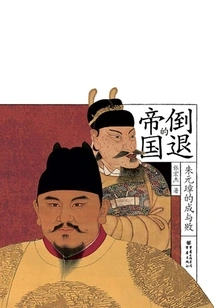
The Retrograde Empire: Zhu Yuanzhang's Success and Failure
About This Novel
In 1368 AD, the forty-year-old Zhu Yuanzhang proclaimed himself emperor in Yingtian Mansion after defeating various peasant uprising armies, and established the last huge empire ruled by the Han people. He also became the only true "peasant emperor" in Chinese history. As Zhao Yi of the Qing Dynasty said: "Gai Mingzu is a man who is a sage, a hero, and a thief." He is good at winning people's hearts, treats intellectuals favorably, has an excellent view of the overall situation, and has decisiveness. Zhu Yuanzhang's "sage" qualities that are different from those of the powerful in the late Yuan Dynasty helped him ascend to the high position. When Zhu Yuanzhang defeated all the heroes and ascended to the throne, he showed his green face and fangs, overthrew the eight hundred years of traditional political system with cruel and terrifying means of massacre, took autocratic politics to the extreme, deposed the prime minister, slaughtered meritorious officials arbitrarily, established a royal guard, despised civil servants, implemented a strict Lijia system to force people to migrate, interfered with people's freedom of employment, strictly restricted foreign trade, etc. What's more important is that Zhu Yuanzhang injected poison refined from the think tanks of past dynasties into the people's brains, paralyzing the nerves of the entire China into a vegetative state, fundamentally killing everyone's individuality, initiative, and creativity, and domesticating them into obedient people who specialize in providing food. Zhu Yuanzhang's success and failure are both inseparable from the cultural soil of "China". This book puts Zhu Yuanzhang into the context of Chinese culture and makes a detailed analysis, trying to present a multi-dimensional Zhu Yuanzhang to readers.
Official Sources
What Readers Think
Rating
Community(0)
Official(4)Scraped 2mo ago
unique and novel point of view
The author breaks away from the narrative tradition of traditional historians and uses multiple comparisons to evaluate the system created by Zhu Yuanzhang and the various measures taken during his reign with a satirical and affirmative attitude.
This book can be regarded as a simplified version of Zhu Yuanzhang's biography.
This book describes Zhu Yuanzhang's life in a semi-academic and semi-vernacular style. The writing is fluent and the narrative is clear. I agree with some of the author's views. For example, I believe that Zhu Yuanzhang was a gangster farmer, and the Zhu Ming Dynasty he founded was a big step back compared to the previous Song Dynasty. The shortcomings of this book are mainly reflected in: first, some of the views are somewhat outdated, for example, it is taken for granted that Zhu Yuanzhang never forgot the peasants; second, there are too many comments from Westerners, and these comments inevitably make people feel that they are flattering and underestimating; third, some historical materials cited and some historical facts stated may be wrong, such as the killings of the harem, the occurrence of certain literary prisons, etc.
This book is not good, this book is not good,
Looking at the world objectively, history worth having
Looking at the world objectively, history worth having
Rating
Community(0)
Official(4)Scraped 2mo ago
unique and novel point of view
The author breaks away from the narrative tradition of traditional historians and uses multiple comparisons to evaluate the system created by Zhu Yuanzhang and the various measures taken during his reign with a satirical and affirmative attitude.
This book can be regarded as a simplified version of Zhu Yuanzhang's biography.
This book describes Zhu Yuanzhang's life in a semi-academic and semi-vernacular style. The writing is fluent and the narrative is clear. I agree with some of the author's views. For example, I believe that Zhu Yuanzhang was a gangster farmer, and the Zhu Ming Dynasty he founded was a big step back compared to the previous Song Dynasty. The shortcomings of this book are mainly reflected in: first, some of the views are somewhat outdated, for example, it is taken for granted that Zhu Yuanzhang never forgot the peasants; second, there are too many comments from Westerners, and these comments inevitably make people feel that they are flattering and underestimating; third, some historical materials cited and some historical facts stated may be wrong, such as the killings of the harem, the occurrence of certain literary prisons, etc.
This book is not good, this book is not good,
Looking at the world objectively, history worth having
Looking at the world objectively, history worth having
