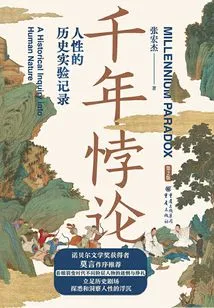
The Millennium Paradox: a Historical Experiment on Human Nature
About This Novel
"Human is an animal that is too complex, and its complexity sometimes makes humans themselves dumbfounded." Historical figures who have been labeled with various labels are especially difficult to write about. The well-known historian Zhang Hongjie has a unique approach: "He neither criticizes nor looks up to. He just has compassion, puts himself in the shoes of the characters he writes, and shares the joys and sorrows." Historical figures such as Wu Sangui, Zeng Guofan, Cixi, and Zhu Yuanzhang who are familiar to the public have been stripped of all kinds of bizarre labels, showing that in the entanglement of good and evil, they struggled to break free from the shackles of the times, but in the end they could not escape the "paradox" of their destined ending. Historical events such as China's imperial examination system, the Sinicization of the Manchus, and the truth about the hermits also present the alienation and distortion of human nature on multiple levels. "The Millennium Paradox" is Zhang Hongjie's first work, and the origins of the conception of his subsequent wonderful works are included in it. Perhaps some of the content subverts our previous understanding, but it is undeniable that Zhang Hongjie writes about the complexity and richness of human nature, presents the rich background of historical figures, and brings readers more useful thoughts.
Official Sources
What Readers Think
Rating
Community(0)
Official(1)Scraped 2mo ago
After reading this book, I have a new understanding of Wu Sangui, Zhu Yuanzhang, and Cixi, and a new understanding and understanding of Han culture.
Rating
Community(0)
Official(1)Scraped 2mo ago
After reading this book, I have a new understanding of Wu Sangui, Zhu Yuanzhang, and Cixi, and a new understanding and understanding of Han culture.
