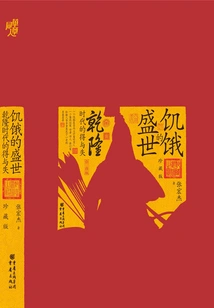
The Age of Hungry: Gains and Losses in the Qianlong Era (collector's Edition)
About This Novel
The content of this book mainly writes about the gains and losses of the Qianlong era. Through the deconstruction of the Qianlong era, the author paints a colorful picture of the "prosperous age" for readers, and at the same time profoundly reveals the lost secrets of modern China. China under Qianlong's rule was the most populous and most powerful period in China's thousands of years of history. Horizontally, it was the most powerful and wealthy country in the world at that time. It is no exaggeration to call it the greatest prosperous era in Chinese history. The Qianlong era created unprecedented political stability, supported an unprecedented population, and established today's territory. However, the author sees from a deeper level that behind the superficial prosperity is a huge crisis. Qianlong's sixty-year reign coincided with Britain going through the entire process of the industrial revolution. In the thirteenth year of Qianlong's reign (1748), Montesquieu published his famous work "The Spirit of the Laws". In the forty-first year of Qianlong's reign (1776), the United States declared independence. In the fifty-fourth year of Qianlong's reign (1789), the Bourgeois Revolution broke out in France. On the other side of the earth, Emperor Qianlong was immersed in the dream of a "prosperous age" and could not extricate himself, trying every means to maintain his feudal rule. It can be said that during this period, China missed the opportunity to contact world civilizations and failed to catch up with the tide of world development. This directly led to China's continued decline and even its status as the "sick man of East Asia." In addition, this book also introduces Qianlong's origin, personal life, personality, etc.
Official Sources
What Readers Think
Rating
Community(0)
Official(1)Scraped 1mo ago
A very good work that completely changed my impression of Emperor Qianlong. Before reading this book, Qianlong gave me the impression that he was an arrogant and romantic king in film and television works. After reading it, I realized that the previous impression was too outrageous. How could a man who had been an emperor for sixty years have no problems with party strife, eunuchs taking power, or relatives intervening in politics during his reign? How could he be a simple emperor?
Rating
Community(0)
Official(1)Scraped 1mo ago
A very good work that completely changed my impression of Emperor Qianlong. Before reading this book, Qianlong gave me the impression that he was an arrogant and romantic king in film and television works. After reading it, I realized that the previous impression was too outrageous. How could a man who had been an emperor for sixty years have no problems with party strife, eunuchs taking power, or relatives intervening in politics during his reign? How could he be a simple emperor?