Library
Browse and search books
30 novels found
Resurrection Grass
General Fiction还魂草
Ba Jin
This is a collection of short stories by Ba Jin. The representative work "The Resurrection Grass" directly describes Ba Lao's life upstairs in Shapingba Husheng Bookstore. This book brings together many of Ba Jin's novels. From here you can learn more about Ba Jin's artistic style and writing characteristics. The author's works are selected: Revenge; The Silent Grand Piano; Dog; Sudi; Moonlight Night; General; Sinking; The Day the Snow Melts; Ghost; Resurrection Plant; Pigs and Chickens; Under the Window; Resting Garden, etc.
This is a collection of short stories by Ba Jin. The representative work "The Resurrection Grass" directly describes Ba Lao's life upstairs in Shapingba Husheng Bookstore. This book brings together many of Ba Jin's novels. From here you can learn more about Ba Jin's artistic style and writing characteristics. The author's works are selected: Revenge; The Silent Grand Piano; Dog; Sudi; Moonlight Night; General; Sinking; The Day the Snow Melts; Ghost; Resurrection Plant; Pigs and Chickens; Under the Window; Resting Garden, etc.
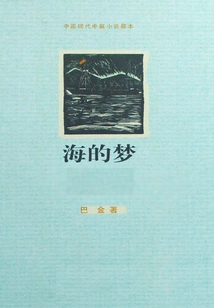
Dream of the Sea
General Fiction海的梦
Ba Jin
"Dream of the Sea" was written in the second year after the September 18th Incident, when Japan continued to accelerate its invasion of China, at a time of national crisis. Ba Jin constructed a strange fairy tale-like story in the novel, which seemed true and false, dreamlike and illusory, but truly reflected reality. The structure of the novel is unique. The first half, through the oral narration of the heroine Rina, reproduces the heroic feats of "Yang" and the child who led the island slaves to resist the invaders; the second half, through Rina's diary, shows her rich inner world.
"Dream of the Sea" was written in the second year after the September 18th Incident, when Japan continued to accelerate its invasion of China, at a time of national crisis. Ba Jin constructed a strange fairy tale-like story in the novel, which seemed true and false, dreamlike and illusory, but truly reflected reality. The structure of the novel is unique. The first half, through the oral narration of the heroine Rina, reproduces the heroic feats of "Yang" and the child who led the island slaves to resist the invaders; the second half, through Rina's diary, shows her rich inner world.
Autumn in Spring
General Fiction春天里的秋天
Ba Jin
"Autumn in Spring" is a novel written by Ba Jin based on the social reality of Quanzhou at that time. It tells a sad and touching love story: a middle school teacher named Lin fell in love with his female student Zheng Peirong in Quanzhou. However, they were strongly opposed by the girl's father and they fled to Gulangyu Island in Xiamen. However, their love could not be tolerated by feudal ethics. After a short period of happiness, Zheng Peirong returned to Quanzhou at the urging of his mother. From then on, there was no news, and he finally died in a marriage arranged by his parents.
"Autumn in Spring" is a novel written by Ba Jin based on the social reality of Quanzhou at that time. It tells a sad and touching love story: a middle school teacher named Lin fell in love with his female student Zheng Peirong in Quanzhou. However, they were strongly opposed by the girl's father and they fled to Gulangyu Island in Xiamen. However, their love could not be tolerated by feudal ethics. After a short period of happiness, Zheng Peirong returned to Quanzhou at the urging of his mother. From then on, there was no news, and he finally died in a marriage arranged by his parents.
寒夜(现当代长篇小说典藏插图本)
Ba Jin
"Cold Night" writes about life in Chongqing, the so-called "wartime capital" from 1944 to 1945. In this novel, the author writes about a poor clerk's family. The gap between the mother and his wife and the economic oppression caused the family tragedy. The wife left and the husband died of lung disease. By the time the wife returned to Chongqing, her mother-in-law had already moved away with her grandson to an unknown location. When the hero died, the streets were filled with gongs and drums, and people were celebrating victory and burning dragon lanterns with fireworks...
"Cold Night" writes about life in Chongqing, the so-called "wartime capital" from 1944 to 1945. In this novel, the author writes about a poor clerk's family. The gap between the mother and his wife and the economic oppression caused the family tragedy. The wife left and the husband died of lung disease. By the time the wife returned to Chongqing, her mother-in-law had already moved away with her grandson to an unknown location. When the hero died, the streets were filled with gongs and drums, and people were celebrating victory and burning dragon lanterns with fireworks...
Journey Communication
Literature旅途通讯
Ba Jin
This book collects the author's writings from the second half of 1938 to January 1939. It is a record of the author's life in various places under bombing by enemy planes in the early days of the Anti-Japanese War. Ba Jin said: "These are all ordinary letters. But each letter was written under the threat of the shadow of death. These days, when I see the sun in the morning, I wonder where I will sleep at night. Maybe when I close my eyes, I will enter 'eternity.'" Only in this way can these words have extraordinary power. Life and death, joy and pain, misfortune and peace, in a great era, the songs, tears, blood and tears of a group of people's lives are all in them. When first published, this book was divided into two volumes. It was published by Cultural Life Publishing House in March and April 1939. It is now typed according to the "Complete Works of Ba Jin".
This book collects the author's writings from the second half of 1938 to January 1939. It is a record of the author's life in various places under bombing by enemy planes in the early days of the Anti-Japanese War. Ba Jin said: "These are all ordinary letters. But each letter was written under the threat of the shadow of death. These days, when I see the sun in the morning, I wonder where I will sleep at night. Maybe when I close my eyes, I will enter 'eternity.'" Only in this way can these words have extraordinary power. Life and death, joy and pain, misfortune and peace, in a great era, the songs, tears, blood and tears of a group of people's lives are all in them. When first published, this book was divided into two volumes. It was published by Cultural Life Publishing House in March and April 1939. It is now typed according to the "Complete Works of Ba Jin".
Fire
General Fiction火
Ba Jin
This book is the first part of the "Fire Trilogy" written by Ba Jin. The "Fire Trilogy" is also called the "Anti-Japanese War Trilogy". The second part is "Feng Wenshu" and the third part is "Tian Huishi". The "Fire" trilogy is not Ba Jin's only work that describes the theme of the Anti-Japanese War, but it is his most important work on the subject of the Anti-Japanese War. The "Fire" trilogy not only expresses the author's strong nationalistic and patriotic sentiments, but also clearly reveals the author's anarchist ideological beliefs.
This book is the first part of the "Fire Trilogy" written by Ba Jin. The "Fire Trilogy" is also called the "Anti-Japanese War Trilogy". The second part is "Feng Wenshu" and the third part is "Tian Huishi". The "Fire" trilogy is not Ba Jin's only work that describes the theme of the Anti-Japanese War, but it is his most important work on the subject of the Anti-Japanese War. The "Fire" trilogy not only expresses the author's strong nationalistic and patriotic sentiments, but also clearly reveals the author's anarchist ideological beliefs.
Dead Sun
General Fiction死去的太阳
Ba Jin
"Dead Sun" is based on the May 30th Massacre. The protagonist Wu Yangqing witnessed the massacre on Nanjing Road. His blood boiled and he was filled with righteous indignation. He was appointed by the Shanghai Student Union to carry out activities in Nanjing. Workers and students in Nanjing went on strike. He met his childhood sweetheart Cheng Qingfen at a Nanjing diplomatic support party. After seven years of separation, Cheng was engaged to someone else. It was only after this reunion that the two discovered that they loved each other deeply. Cheng died of depression in pain, but Wu Yangqing survived the emotional turmoil. The workers educated him, and the sacrificial spirit of revolutionaries such as Wang Xueli moved him. He matured in practical struggles. He feels that Wang Xueli has not died, he is just a dead sun, "will still rise with the dawn of the next day, shining on the world with its new brilliance."
"Dead Sun" is based on the May 30th Massacre. The protagonist Wu Yangqing witnessed the massacre on Nanjing Road. His blood boiled and he was filled with righteous indignation. He was appointed by the Shanghai Student Union to carry out activities in Nanjing. Workers and students in Nanjing went on strike. He met his childhood sweetheart Cheng Qingfen at a Nanjing diplomatic support party. After seven years of separation, Cheng was engaged to someone else. It was only after this reunion that the two discovered that they loved each other deeply. Cheng died of depression in pain, but Wu Yangqing survived the emotional turmoil. The workers educated him, and the sacrificial spirit of revolutionaries such as Wang Xueli moved him. He matured in practical struggles. He feels that Wang Xueli has not died, he is just a dead sun, "will still rise with the dawn of the next day, shining on the world with its new brilliance."
Sand Cubes
General Fiction砂丁
Ba Jin
This book shows a tragic but promising picture of the future by describing the life of "Sardin", a worker in a tin mining company. At the end of the Qing Dynasty and the beginning of the Republic of China, the miners in Gejiu tin mines were called
This book shows a tragic but promising picture of the future by describing the life of "Sardin", a worker in a tin mining company. At the end of the Qing Dynasty and the beginning of the Republic of China, the miners in Gejiu tin mines were called
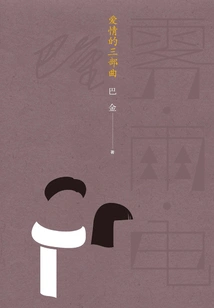
The Trilogy of Love: Fog·rain·electricity
General Fiction爱情的三部曲:雾·雨·电
Ba Jin
This book contains three coherent novellas: "Fog", "Rain" and "Electricity". The three novels originally had separate volumes. When they were published together in 1936, they were collectively titled "A Trilogy of Love". The trilogy takes the love entanglements of intellectual youths such as Zhou Rushui, Wu Renmin, and Li Peizhu as the lead, focusing on their ideological, character, and psychological states in their struggles against reality. The author Ba Jin regards it as one of his favorite works.
This book contains three coherent novellas: "Fog", "Rain" and "Electricity". The three novels originally had separate volumes. When they were published together in 1936, they were collectively titled "A Trilogy of Love". The trilogy takes the love entanglements of intellectual youths such as Zhou Rushui, Wu Renmin, and Li Peizhu as the lead, focusing on their ideological, character, and psychological states in their struggles against reality. The author Ba Jin regards it as one of his favorite works.
Bit
Literature点滴
Ba Jin
This book collects the author's essays and miscellaneous thoughts from 1934 to February 1935. Most of the works were written while the author was living in Japan. The author said that here are his "bits and pieces of blood" and "the words of a living modern young man." During his stay in Japan, the fascist clouds were looming, and the country was experiencing internal and external troubles, all of which were reflected in the author's writings. When compiling the book in his later years, the author thought that the two articles "About Translation" and "A Few Respectful Words" contained some unfair remarks, so they were moved to appendices. This book was first published by Kaiming Bookstore in April 1935, and is now printed based on the "The Complete Works of Ba Jin".
This book collects the author's essays and miscellaneous thoughts from 1934 to February 1935. Most of the works were written while the author was living in Japan. The author said that here are his "bits and pieces of blood" and "the words of a living modern young man." During his stay in Japan, the fascist clouds were looming, and the country was experiencing internal and external troubles, all of which were reflected in the author's writings. When compiling the book in his later years, the author thought that the two articles "About Translation" and "A Few Respectful Words" contained some unfair remarks, so they were moved to appendices. This book was first published by Kaiming Bookstore in April 1935, and is now printed based on the "The Complete Works of Ba Jin".
Collection of Accusations
Literature控诉集
Ba Jin
This is Ba Jin's bitter indictment when the country and nation were invaded by foreign enemies. It contains poems and essays from the "January 28th" Incident in 1932 to the fierce fighting of the Songhu Anti-Japanese War in 1937. He said: "There are naturally cries here, but the main thing is accusations. Regarding violence that endangers justice and humanity, I make my voice: 'I accuse!'"
This is Ba Jin's bitter indictment when the country and nation were invaded by foreign enemies. It contains poems and essays from the "January 28th" Incident in 1932 to the fierce fighting of the Songhu Anti-Japanese War in 1937. He said: "There are naturally cries here, but the main thing is accusations. Regarding violence that endangers justice and humanity, I make my voice: 'I accuse!'"
Selected Works of Ba Jin
Literature巴金作品精选
Ba Jin
"Selected Works of Ba Jin" includes works such as "Open Garden", "Bird's Paradise" and "Remembering Xiao Shan", showing the thoughts, feelings and life traces of this centenarian at different stages of his life. From these affectionate words, we can see Ba Jin's joy and sorrow, frustration and pursuit, as well as his deep love and thinking about the world.
"Selected Works of Ba Jin" includes works such as "Open Garden", "Bird's Paradise" and "Remembering Xiao Shan", showing the thoughts, feelings and life traces of this centenarian at different stages of his life. From these affectionate words, we can see Ba Jin's joy and sorrow, frustration and pursuit, as well as his deep love and thinking about the world.
雨(人文阅读与收藏·良友文学丛书)
Ba Jin
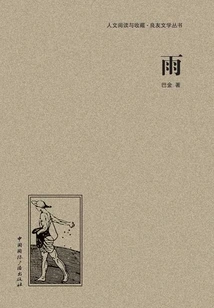
Two years later in Shanghai, Wu Renmin's wife had died of illness, and Chen Zhen was hit and killed by a car. At this time, Zhang Ruolan was married to a university professor, and Zhou Rushui fell in love with another petty bourgeois woman, Li Peizhu. Wu Renmin ridiculed Zhou, but soon fell in love himself. He fell in love with Xiong Zhijun, a female student he had helped before. But Wu Renmin soon discovered that Xiong Zhijun's best friend was his former lover Yuwen. She had abandoned him because of her love for glory and wealth, and now she wanted to renew her relationship with him because of loneliness. Wu Renmin painfully rejected her.
Two years later in Shanghai, Wu Renmin's wife had died of illness, and Chen Zhen was hit and killed by a car. At this time, Zhang Ruolan was married to a university professor, and Zhou Rushui fell in love with another petty bourgeois woman, Li Peizhu. Wu Renmin ridiculed Zhou, but soon fell in love himself. He fell in love with Xiong Zhijun, a female student he had helped before. But Wu Renmin soon discovered that Xiong Zhijun's best friend was his former lover Yuwen. She had abandoned him because of her love for glory and wealth, and now she wanted to renew her relationship with him because of loneliness. Wu Renmin painfully rejected her.
Ba Jin Selected Works 1: Home
General Fiction巴金选集1:家
Ba Jin
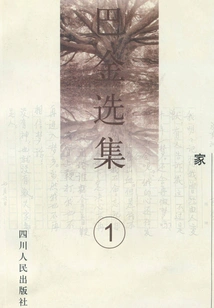
The novel describes the decline of a feudal bureaucratic landlord family, represented by several young people such as Juexin, Juemin, and Juehui. It shows their different ideological personalities and life paths, and criticizes feudal ethics and arranged marriages through their living conditions. It has a strong anti-feudal flavor.
The novel describes the decline of a feudal bureaucratic landlord family, represented by several young people such as Juexin, Juemin, and Juehui. It shows their different ideological personalities and life paths, and criticizes feudal ethics and arranged marriages through their living conditions. It has a strong anti-feudal flavor.
雾(人文阅读与收藏·良友文学丛书)
Ba Jin
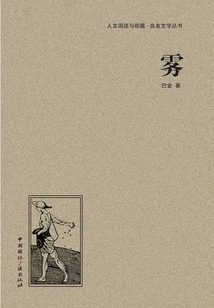
"Humanities Reading and Collection·Liangyou Literature Series: Fog" is one of Ba Jin's "Love Trilogy". This time it is reprinted based on the Liangyou edition. The protagonist of the novel is Zhou Rushui, who returned from studying in Japan. With the rural construction ideal of "returning to the land", he happened to meet Zhang Ruolan, a beautiful and gentle "petty bourgeois woman" whom he had admired in the past, at Haibin Hotel. They had a mutual affection for each other. Zhou Rushui didn't have the courage to confess. He had an ugly, loveless wife in his hometown, whom his parents married for him when he was seventeen. For this reason, he rejected possible happiness several times. Zhou's good friend, Chen Zhen, who left the family and lived an ascetic life, told Zhang Ruolan the truth and encouraged her to take the initiative to confess to Zhou and help him get rid of the shackles of the family. At this time, Zhou Rushui received a letter from his father, asking him to go back and become an official. The weak Zhou Rushui finally rejected Zhang Ruolan's love, but he did not have the courage to go home.
"Humanities Reading and Collection·Liangyou Literature Series: Fog" is one of Ba Jin's "Love Trilogy". This time it is reprinted based on the Liangyou edition. The protagonist of the novel is Zhou Rushui, who returned from studying in Japan. With the rural construction ideal of "returning to the land", he happened to meet Zhang Ruolan, a beautiful and gentle "petty bourgeois woman" whom he had admired in the past, at Haibin Hotel. They had a mutual affection for each other. Zhou Rushui didn't have the courage to confess. He had an ugly, loveless wife in his hometown, whom his parents married for him when he was seventeen. For this reason, he rejected possible happiness several times. Zhou's good friend, Chen Zhen, who left the family and lived an ascetic life, told Zhang Ruolan the truth and encouraged her to take the initiative to confess to Zhou and help him get rid of the shackles of the family. At this time, Zhou Rushui received a letter from his father, asking him to go back and become an official. The weak Zhou Rushui finally rejected Zhang Ruolan's love, but he did not have the courage to go home.
Ba Jin Selected Works 3: Autumn
General Fiction巴金选集3:秋
Ba Jin
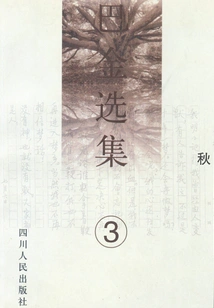
: Hui's coffin has been parked in the temple for more than a year, and her husband is busy renewing the coffin. Hui's father did not want to admit that his son Mei was sick and was busy marrying him. His wife had a bad temper. Mei died soon after the marriage, leaving his wife and the fetus in her belly. The four-bedroom and five-bedroom family wanted to sell the mansion and separate their families. Keming left his pregnant wife in depression and died. Gao's mansion was sold and the Gao family was torn apart. Juexin married the maid Cuihuan and treated her as his wife. Juemin and Qin also held a new-style wedding according to their wishes and were about to go out to work.
: Hui's coffin has been parked in the temple for more than a year, and her husband is busy renewing the coffin. Hui's father did not want to admit that his son Mei was sick and was busy marrying him. His wife had a bad temper. Mei died soon after the marriage, leaving his wife and the fetus in her belly. The four-bedroom and five-bedroom family wanted to sell the mansion and separate their families. Keming left his pregnant wife in depression and died. Gao's mansion was sold and the Gao family was torn apart. Juexin married the maid Cuihuan and treated her as his wife. Juemin and Qin also held a new-style wedding according to their wishes and were about to go out to work.
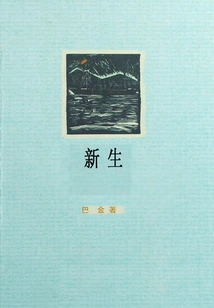
Newborn
General Fiction新生
Ba Jin
"Rebirth" is the companion piece to Ba Jin's "Destruction". It describes the protagonist Li Leng's ambivalent mentality and difficult journey before and after joining the revolution. The work vividly describes the depression and hesitation of young people during the May Fourth Movement, as well as their desire and pursuit of love and revolution. The author writes freely and emotionally, and all his narratives and descriptions are written in lyrical language, which is very contagious.
"Rebirth" is the companion piece to Ba Jin's "Destruction". It describes the protagonist Li Leng's ambivalent mentality and difficult journey before and after joining the revolution. The work vividly describes the depression and hesitation of young people during the May Fourth Movement, as well as their desire and pursuit of love and revolution. The author writes freely and emotionally, and all his narratives and descriptions are written in lyrical language, which is very contagious.
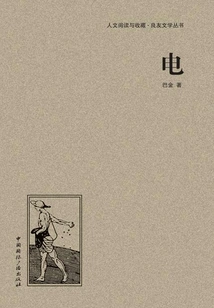
电(人文阅读与收藏·良友文学丛书)
Ba Jin
"Humanities Reading and Collection·Liangyou Literature Series: Electricity" is the last part of the "Love Trilogy" and the seventeenth book in the Liangyou Literature Series. The story follows "Fog" and "Rain", telling that Li Peizhu and her friends formed a revolutionary group, and Wu Renmin also came here. At this time, he had become a mature revolutionary, and love developed between him and Li Peizhu. But soon, the revolutionary cause suffered a heavy blow, and members were constantly arrested and killed. At this time, Peizhu's father disappeared in Shanghai. She entrusted Wu Renmin to return to Shanghai to search for him, while she stayed to continue her friend's unfinished business.
"Humanities Reading and Collection·Liangyou Literature Series: Electricity" is the last part of the "Love Trilogy" and the seventeenth book in the Liangyou Literature Series. The story follows "Fog" and "Rain", telling that Li Peizhu and her friends formed a revolutionary group, and Wu Renmin also came here. At this time, he had become a mature revolutionary, and love developed between him and Li Peizhu. But soon, the revolutionary cause suffered a heavy blow, and members were constantly arrested and killed. At this time, Peizhu's father disappeared in Shanghai. She entrusted Wu Renmin to return to Shanghai to search for him, while she stayed to continue her friend's unfinished business.
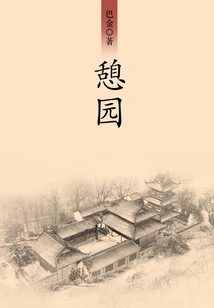
Qiyuan
Literature憩园
Ba Jin
"Open Garden" was created in 1944. It was based on the author's impressions of returning to his hometown in Chengdu twice during the Anti-Japanese War. It can be regarded as a sequel to "The Torrent Trilogy", telling what happened after the decline of the big family. This novel uses the clues of a mansion to tell the unfortunate story of two owners in the old society. Unearned money has become the cause of family disaster and an opportunity for descendants to fall. Hong Kong literary historian Sima Changfeng once commented on "Open Garden": "In terms of precision, it can compete with Lu Xun, in terms of elegance, it can compete with Shen Congwen, in terms of vividness, it cannot surpass Lao She, and in terms of lingering, it cannot compare with Yu Dafu. However, in terms of the moderation and purity of art, the balance and harmony of plot and character, interest and technique, as well as the crystal roundness of the entire work, if it is viewed just right from all angles, it is far superior to everyone else."
"Open Garden" was created in 1944. It was based on the author's impressions of returning to his hometown in Chengdu twice during the Anti-Japanese War. It can be regarded as a sequel to "The Torrent Trilogy", telling what happened after the decline of the big family. This novel uses the clues of a mansion to tell the unfortunate story of two owners in the old society. Unearned money has become the cause of family disaster and an opportunity for descendants to fall. Hong Kong literary historian Sima Changfeng once commented on "Open Garden": "In terms of precision, it can compete with Lu Xun, in terms of elegance, it can compete with Shen Congwen, in terms of vividness, it cannot surpass Lao She, and in terms of lingering, it cannot compare with Yu Dafu. However, in terms of the moderation and purity of art, the balance and harmony of plot and character, interest and technique, as well as the crystal roundness of the entire work, if it is viewed just right from all angles, it is far superior to everyone else."
Accuse
Literature控诉
Ba Jin
This is Ba Jin's bitter indictment when the country and nation were invaded by foreign enemies. It contains poems and essays from the "January 28th" Incident in 1932 to the fierce fighting of the Songhu Anti-Japanese War in 1937. He said: "There are naturally cries in this, but the main thing is accusations. Regarding violence that endangers justice and humanity, I send out my cry: 'I accuse!'" This book was first published by Fenghuo Society in November 1937, and is now typed according to the "Complete Works of Ba Jin".
This is Ba Jin's bitter indictment when the country and nation were invaded by foreign enemies. It contains poems and essays from the "January 28th" Incident in 1932 to the fierce fighting of the Songhu Anti-Japanese War in 1937. He said: "There are naturally cries in this, but the main thing is accusations. Regarding violence that endangers justice and humanity, I send out my cry: 'I accuse!'" This book was first published by Fenghuo Society in November 1937, and is now typed according to the "Complete Works of Ba Jin".
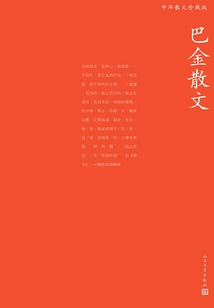
Ba Jin's Prose
Literature巴金散文
Ba Jin
"Chinese Prose Collection: Ba Jin's Prose" selects several articles of Ba Jin's prose, showing the centenarian's thoughts, feelings and life traces at different stages of his life. This book has been marketed for many years and has a wide influence among readers.
"Chinese Prose Collection: Ba Jin's Prose" selects several articles of Ba Jin's prose, showing the centenarian's thoughts, feelings and life traces at different stages of his life. This book has been marketed for many years and has a wide influence among readers.
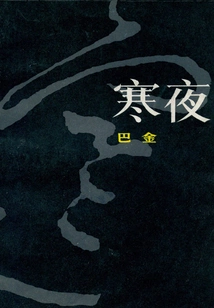
Cold Night
General Fiction寒夜
Ba Jin
The protagonists of the novel, Wang Wenxuan and Zeng Shusheng, are a couple who graduated from the university's education department. When I was young, I had weaved many beautiful ideals, hoping to use my knowledge and strength to set up a "rural, family-oriented" school and do something useful for the country and the people. But after the outbreak of the Anti-Japanese War, they fled to Chongqing. Wang Wenxuan worked as a proofreader in a semi-official and semi-commercial book and stationery company, and Zeng Shusheng worked as a "vase" at Dachuan Bank. In order to reduce her son's living burden, Wang Wenxuan's mother came to take care of the housework. However, Wang's mother had a bad relationship with Zeng Shusheng's mother-in-law and daughter-in-law. Wang Wenxuan was caught in the middle and suffered from lung disease. The family's finances were very tight. Finally, Zeng Shusheng followed the young bank manager to Lanzhou by plane. Wang Wenxuan died of illness amidst the sound of firecrackers celebrating the victory of the Anti-Japanese War. Wang's mother took her grandson Xiaoxuan back to her hometown in Kunming. Two months later, Zeng Shusheng returned to Chongqing from Lanzhou, but his life had changed and he was very sad.
The protagonists of the novel, Wang Wenxuan and Zeng Shusheng, are a couple who graduated from the university's education department. When I was young, I had weaved many beautiful ideals, hoping to use my knowledge and strength to set up a "rural, family-oriented" school and do something useful for the country and the people. But after the outbreak of the Anti-Japanese War, they fled to Chongqing. Wang Wenxuan worked as a proofreader in a semi-official and semi-commercial book and stationery company, and Zeng Shusheng worked as a "vase" at Dachuan Bank. In order to reduce her son's living burden, Wang Wenxuan's mother came to take care of the housework. However, Wang's mother had a bad relationship with Zeng Shusheng's mother-in-law and daughter-in-law. Wang Wenxuan was caught in the middle and suffered from lung disease. The family's finances were very tight. Finally, Zeng Shusheng followed the young bank manager to Lanzhou by plane. Wang Wenxuan died of illness amidst the sound of firecrackers celebrating the victory of the Anti-Japanese War. Wang's mother took her grandson Xiaoxuan back to her hometown in Kunming. Two months later, Zeng Shusheng returned to Chongqing from Lanzhou, but his life had changed and he was very sad.
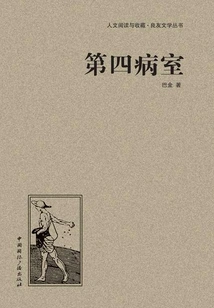
第四病室(人文阅读与收藏·良友文学丛书)
Ba Jin
"Humanities Reading and Collection·Liangyou Literature Series: The Fourth Ward" uses a patient's eighteen-day diary to truly reproduce the living conditions of small people in the suffering and complex real life of old China. In the fourth ward, if you have money, you can enjoy privileges. If you don't have money, you can only wail in the hospital bed and wait to die. Inpatients have to spend their own money to buy medicines and daily necessities. The workers are indifferent and callous. Even if the doctor has superb medical skills, he cannot save the patient's life without special medicines. The patient's survival dilemma is nakedly reflected... And the fourth ward with such indifference and harsh environment still has a constant flow of customers. The book is mainly based on the conversations of patients in the fourth ward, conveying the author's questioning of life and humanitarian compassion. Just like the author said at the end of the book: Each of us "should become kind, pure, and useful to others."
"Humanities Reading and Collection·Liangyou Literature Series: The Fourth Ward" uses a patient's eighteen-day diary to truly reproduce the living conditions of small people in the suffering and complex real life of old China. In the fourth ward, if you have money, you can enjoy privileges. If you don't have money, you can only wail in the hospital bed and wait to die. Inpatients have to spend their own money to buy medicines and daily necessities. The workers are indifferent and callous. Even if the doctor has superb medical skills, he cannot save the patient's life without special medicines. The patient's survival dilemma is nakedly reflected... And the fourth ward with such indifference and harsh environment still has a constant flow of customers. The book is mainly based on the conversations of patients in the fourth ward, conveying the author's questioning of life and humanitarian compassion. Just like the author said at the end of the book: Each of us "should become kind, pure, and useful to others."
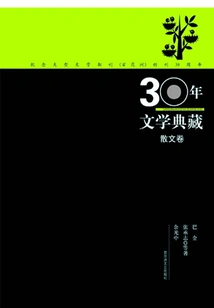
30年文学典藏散文卷
Ba Jin
In order to commemorate the 30th anniversary of the founding of "Baihuazhou", the four-volume "30 Years of Literary Collection" is grandly launched. It is created by many famous writers. Thirty years of precipitation and thirty years of essence highlight the evolution trajectory of "Baihuazhou" and also reflect the changes in social life and culture in the past thirty years. These familiar and intimate words have established a lasting connection between the present and history. For today's literary reading and writing, they are undoubtedly an irreplaceable reference for the soul.
In order to commemorate the 30th anniversary of the founding of "Baihuazhou", the four-volume "30 Years of Literary Collection" is grandly launched. It is created by many famous writers. Thirty years of precipitation and thirty years of essence highlight the evolution trajectory of "Baihuazhou" and also reflect the changes in social life and culture in the past thirty years. These familiar and intimate words have established a lasting connection between the present and history. For today's literary reading and writing, they are undoubtedly an irreplaceable reference for the soul.
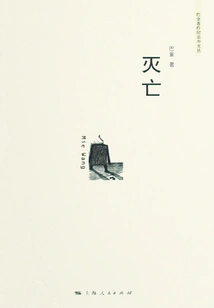
Perish
Literature灭亡
Ba Jin
The novel "Destruction" is set in Shanghai, which was stained with "red blood" under the rule of the Beiyang warlords. It describes the depression and struggle of some intellectual youths who were inspired by the new ideological trend of the May Fourth Movement and sought the road to social liberation. What echoes throughout the book is the cry: "Anyone who has ever built his happiness on the pain of others should perish." This is also the theme of the novel. The protagonist Du Daxin has the determination "for the sake of my beloved oppressed compatriots, I am willing to perish." In the end, he heroically sacrificed his life for his "faith."
The novel "Destruction" is set in Shanghai, which was stained with "red blood" under the rule of the Beiyang warlords. It describes the depression and struggle of some intellectual youths who were inspired by the new ideological trend of the May Fourth Movement and sought the road to social liberation. What echoes throughout the book is the cry: "Anyone who has ever built his happiness on the pain of others should perish." This is also the theme of the novel. The protagonist Du Daxin has the determination "for the sake of my beloved oppressed compatriots, I am willing to perish." In the end, he heroically sacrificed his life for his "faith."
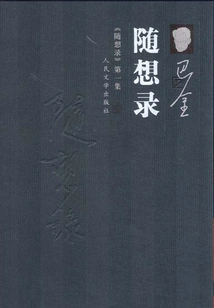
Random Thoughts (five Volumes in Total)
Literature随想录(全五册)
Ba Jin
Ba Jin faced the disaster brought about by the "Cultural Revolution" and the distortion of his personality. He is willing to use real writing to fill the spiritual void that once appeared. In his later years, he finally wrote "Random Thoughts", which had a huge impact on contemporary China, in order to fulfill the historical responsibility of an intellectual and thus reach the final peak of literature and thought. This book is a great book. This is Ba Jin's creation with all his life experience. Without the pursuit of beautiful ideals, the pursuit of perfect personality, and a highly serious historical attitude, the old Ba Jin would not have written. In the book, he recalls painful memories; in the book, he reflects deeply; in the book, he restarts the pursuit of his youth; in the book, he completes the shaping of a real personality.
Ba Jin faced the disaster brought about by the "Cultural Revolution" and the distortion of his personality. He is willing to use real writing to fill the spiritual void that once appeared. In his later years, he finally wrote "Random Thoughts", which had a huge impact on contemporary China, in order to fulfill the historical responsibility of an intellectual and thus reach the final peak of literature and thought. This book is a great book. This is Ba Jin's creation with all his life experience. Without the pursuit of beautiful ideals, the pursuit of perfect personality, and a highly serious historical attitude, the old Ba Jin would not have written. In the book, he recalls painful memories; in the book, he reflects deeply; in the book, he restarts the pursuit of his youth; in the book, he completes the shaping of a real personality.
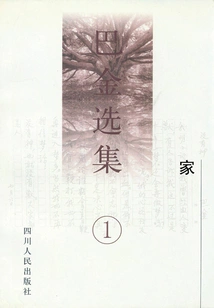
Ba Jin Selected Works 1: Home
General Fiction巴金选集1:家
Ba Jin
The novel describes the decline of a feudal bureaucratic landlord family, represented by several young people such as Juexin, Juemin, and Juehui. It shows their different ideological personalities and life paths, and criticizes feudal ethics and arranged marriages through their living conditions. It has a strong anti-feudal flavor.
The novel describes the decline of a feudal bureaucratic landlord family, represented by several young people such as Juexin, Juemin, and Juehui. It shows their different ideological personalities and life paths, and criticizes feudal ethics and arranged marriages through their living conditions. It has a strong anti-feudal flavor.
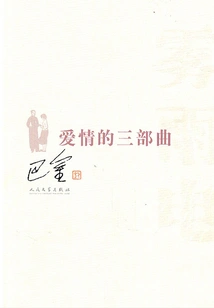
Love Trilogy
General Fiction爱情的三部曲
Ba Jin
In the love trilogy: "Fog·Rain·Lightning", the author mainly writes about people and characters. He mainly wanted to use love to express some people's characters. Just like Peizhu, she is much better than the previous two people. However, "Electricity" is different from "Rain", and even more different from "Fog". There are many clues in "Electricity", which is suitable for this title. It is indeed like several electric lights shining in the sky one after another. The short story "Thunder" is just a small episode. The story takes place between "Rain" and "Electricity". Because several characters in "Electricity" such as Hui, Min, Ming, Bi, and Ying have all appeared in "Thunder", I now put "Thunder" in front of "Electricity".
In the love trilogy: "Fog·Rain·Lightning", the author mainly writes about people and characters. He mainly wanted to use love to express some people's characters. Just like Peizhu, she is much better than the previous two people. However, "Electricity" is different from "Rain", and even more different from "Fog". There are many clues in "Electricity", which is suitable for this title. It is indeed like several electric lights shining in the sky one after another. The short story "Thunder" is just a small episode. The story takes place between "Rain" and "Electricity". Because several characters in "Electricity" such as Hui, Min, Ming, Bi, and Ying have all appeared in "Thunder", I now put "Thunder" in front of "Electricity".
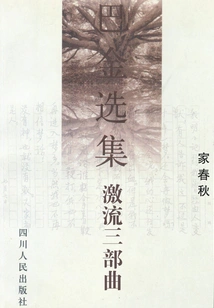
The Riptide Trilogy: Home, Spring and Autumn
General Fiction激流三部曲:家、春、秋
Ba Jin
This book is set in the Chengdu area of Sichuan in the early 1920s after the May 4th Movement. It describes the history of the collapse of a large feudal family (the Gao family) in the new revolutionary period. The work unfolds the entire family life of a feudal bureaucrat and ruthlessly exposes the decadence of the feudal landlord class and the hypocrisy and cruelty of feudal ethics. The author creates the images of feudal housewives such as Mei, Hui and Ruijue. Their pain and tragic death are a bloody and tearful indictment of the feudal marriage system and old ethics. The deaths of "servants" such as Mingfeng and Qianer more profoundly exposed the social reality of class discrimination and oppression. The work does not stop at exposing the sins of this "family" and revealing its inevitable collapse, but further describes the awakening and rebellious generation represented by Jue Hui. From one aspect, it shows the characteristics of the times during the May Fourth Movement, "declaring the death penalty of an unreasonable system."
This book is set in the Chengdu area of Sichuan in the early 1920s after the May 4th Movement. It describes the history of the collapse of a large feudal family (the Gao family) in the new revolutionary period. The work unfolds the entire family life of a feudal bureaucrat and ruthlessly exposes the decadence of the feudal landlord class and the hypocrisy and cruelty of feudal ethics. The author creates the images of feudal housewives such as Mei, Hui and Ruijue. Their pain and tragic death are a bloody and tearful indictment of the feudal marriage system and old ethics. The deaths of "servants" such as Mingfeng and Qianer more profoundly exposed the social reality of class discrimination and oppression. The work does not stop at exposing the sins of this "family" and revealing its inevitable collapse, but further describes the awakening and rebellious generation represented by Jue Hui. From one aspect, it shows the characteristics of the times during the May Fourth Movement, "declaring the death penalty of an unreasonable system."
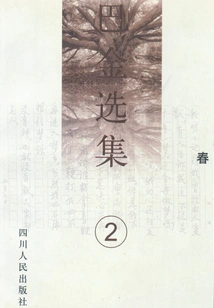
Ba Jin Selected Works 2: Spring
General Fiction巴金选集2:春
Ba Jin
The natal family of Jue Xin's brother's stepmother Zhou came to Chengdu to marry Jue Xin's cousin Hui. Hui is a smart and beautiful girl, but she was promised to the dissolute Chen family by her stubborn father. Everyone felt sorry for her. Juexin saw the shadow of Mei and Jue in her, but was unable to help. At this time, Juexin's beloved son Haier unfortunately died of illness, and he lost confidence in life. Juemin and Qin actively participated in the student movement and encouraged their younger siblings to go out of the family. Shuying, a third-bedroom girl, was promised to the Feng family by her father. She tried her best to escape her unfortunate fate and even thought about imitating Mingfeng and dying. Juemin and Qin were determined to help her leave the family and go to Shanghai to find Juehui. Hui lived an unhappy life after her marriage, and soon fell ill. Because her husband's family refused to ask for Western medicine, treatment was delayed, and she died silently. Hui's death once again stimulated Juexin, and he began to support Juemin and others' plans. Finally, Shuying was escorted to Shanghai with the help of Juemin and others.
The natal family of Jue Xin's brother's stepmother Zhou came to Chengdu to marry Jue Xin's cousin Hui. Hui is a smart and beautiful girl, but she was promised to the dissolute Chen family by her stubborn father. Everyone felt sorry for her. Juexin saw the shadow of Mei and Jue in her, but was unable to help. At this time, Juexin's beloved son Haier unfortunately died of illness, and he lost confidence in life. Juemin and Qin actively participated in the student movement and encouraged their younger siblings to go out of the family. Shuying, a third-bedroom girl, was promised to the Feng family by her father. She tried her best to escape her unfortunate fate and even thought about imitating Mingfeng and dying. Juemin and Qin were determined to help her leave the family and go to Shanghai to find Juehui. Hui lived an unhappy life after her marriage, and soon fell ill. Because her husband's family refused to ask for Western medicine, treatment was delayed, and she died silently. Hui's death once again stimulated Juexin, and he began to support Juemin and others' plans. Finally, Shuying was escorted to Shanghai with the help of Juemin and others.