
Synopsis
More by this author


In booklists 13



Historical BL
My personal reading log. It has a bit of everything, so please do not attack me if you dislike it.


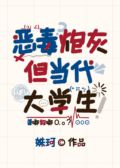
Fully Purchased, Rated 9 or Above: Bottom-Protagonist Stories, Part 1
It's been so long since I read many of these that I don't remember the plots, so I'm filling in the ratings first. I'll add comments as I reread them, though they'll be extremely subjective ramblings. I generally don't read alternate-universe stories.


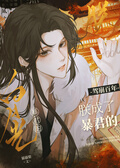
Stories with Emperors as the Bottom
I like stories with an emperor as the shou. The shou-over-gong dynamic is the most delicious.


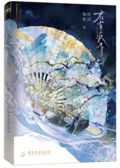
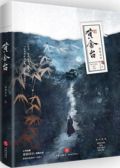
Historical Danmei Collection
Ancient-setting danmei novels I've reread countless times.

Underrated Historical BL with Dominant Emperors
Emperor gong. I don't mind any content warnings and can accept anything. 1v1, happy ending.


Favorites
Let's recommend stories to each other



VVH
dfn



Tasks
1


Lunar New Year Event
Lunar New Year event


Historical BL Novels So Good I Can Only Bring Myself to Read Them Once a Year
Books I think are good. I like couples who are both pure and strong (one can be physically weaker, but they should be mentally strong), evenly matched, and smart.


Owned in Full
Organized for my own reference, with no recommendation intended. I will continue organizing it when I have time.


Historical BL
Recommendations for some lesser-known historical danmei novels.



Green Top Picks
To read later
Reader comments 36
Translated by Google Translate
Why bother? Lin Mingzhang is indeed capable of governing the world, but his "ability" is assisted by many people, such as Liu You. He is not a perfect man. The world puts him on the altar, and he can no longer be stained. Once stained, it seems that his ability to govern the world is also fake. The world loves to create gods and destroy gods, all because they can't see that no one is perfect.
How can everything in this world go as planned? This article is very well written. I actually like Yan Xiang the most. What he did is not worthy of this ending. At least he is not the type of traitorous minister. He still did a lot of practical things for Daqi and turned the tide. In my eyes, the merits outweigh the faults. But from the perspective of the protagonist, Yan Xiang is indeed a stumbling block. This ending is still too miserable for Yan Xiang.
Finished spreading flowers! It is truly a rare masterpiece. The power and strategies often surprise and open up the pattern. The characters are fully described and are not divided into good and evil. The plot and emotions are hearty and full of tension. I love the two protagonists and their love very much. Yilang and Apu are destined soulmates, lingering lovers, and two sincere people walking in troubled times with magnanimity. I hope you get what you want, stay together forever, and be safe every year. Looking forward to my wife's new work!
Actually, as long as the deputy CP is not mentioned, I feel that I can still regard the two as a monarch and a minister, as a teacher and a student. But after saying that, it is really weird how to look at it, but aside from this point, it is actually quite good for them to support each other. I really regard the deputy CP as a teacher and student, but when I think of them as CP, I really feel uncomfortable.
Let me tell you something quietly, madam, what you write is really better than many other articles that are more popular than yours. Why isn't it popular yet?
It's hard to describe in one word. The plot line is rare (it crushes all the novices), and the emotional scenes are very boring. I think they are sudden and greasy, but the setting is really difficult for the writer. It was the success of the first half of the character Yan Xiang that kept me reading, and I look forward to better works from my wife!
The tragic background of Lin Jingpu lies precisely in the fact that he is not an ordinary prisoner, but an orthodox old-dynasty hope carrying the pain of country subjugation and the responsibility of the world. However, caught between power and desire, responsibility and emotion, he has lived his life into the most contradictory and saddest existence. 1. He is like "forbidden love", but it hurts more than forbidden love - The ultimate humiliation of identity: He was the emperor of the previous dynasty, but was imprisoned and possessed by the new emperor Wei Yi. From being a noble person to being a prisoner in a cage, the trampling on dignity caused by this status gap is more hurtful than simple imprisonment. - The tear between desire and disgust: He hates being controlled and imprisoned, and hates this relationship that started with a power game, but he is addicted to Wei Yi's possession, tenderness and only understanding in getting along with each other again and again. The body surrenders, the spirit resists, the desire sinks, the soul wakes up. This feeling of tearing is the core of his pain. - The imbalance between giving and receiving: He surrendered his body, trust, and even put down part of his obsession with restoration, and cooperated with Wei in performing the drama of "Fake Prisoners and True Love" to help him eliminate powerful officials and stabilize the government. But what he got in the end was that his country would remain subjugated, his homeland could never be returned, and his status would always be that of a "remnant of the previous dynasty." Haiyan and Heqing were Wei Yi's prosperous times, not his. - The emptiness of ideals: His ideal is "the world is stable and the people are happy." This ideal is the responsibility of the emperor, but the way he realizes his ideal is to rely on the enemies who will destroy the country and plot in a cage. In the end, the world was peaceful, but he was still a "prisoner" of the new dynasty. His ideal was realized, but he himself became the loneliest outsider in the prosperous age. 2. His sorrow is the double superposition of "the sorrow of the emperor" + "the sorrow of love" 1. The sorrow of a country's subjugation has no solution He was the last emperor of the Yin Dynasty, and the country's subjugation was an established fact. It was not that he was not good enough, but that it was the general trend. He shouldered the responsibility of restoration, but he knew that restoration would only plunge the world into war again, so he could only repeatedly pull between "restoring the country" and "pacifying the people", and finally chose to sacrifice his own country to bring peace to the world - this was the pattern of an emperor, and it was also his most painful compromise. 2. The sorrow of love cannot be controlled by oneself The love between him and Wei Yi was marked by a power imbalance from the beginning: Wei Yi was the one in control, and he was the imprisoned. Even though they later trusted each other and joined forces, the undertone of power never disappeared. His love is like a flower that blooms in a cage. No matter how beautiful it is, it still bears the mark of shackles; his delivery is like a sinking with humiliation. No matter how affectionate it is, it cannot erase the passivity of being "possessed". 3. All the plans are in vain, only scars remain. He seeks stability in the world, but he cannot return to his homeland; he seeks equal love, but love will always bear the mark of imprisonment; he seeks dignity, but from the moment of the country's subjugation, dignity becomes a luxury product. He was delivered countless times, but his soul never found a place to rest. In the end, he lived as a "subjugated king" in the prosperous age. Even his sorrow could only be hidden in the dignity of the emperor. 3. Sober sorrow" actually makes the character more touching. His sorrow is not pure abuse, but sober pain - he knows his situation, the nature of this relationship, and his ending, but he still chooses to sink, choose to give, and choose to stick to his ideals. This kind of tenacity of "knowing that nothing can be done but doing it", coupled with the ending of "all his plans are in vain", make his tragedy more profound and more heart-wrenching. To put it simply, he is not a prisoner, he is an "imprisoned emperor" with the dignity of the emperor, the order of the world, and the pain of his country's subjugation. His sorrow is a rare extreme tragedy in ancient times that combines the righteousness of the family and the country with personal love, sobriety and sinking.
So beautiful! The plot lines above are so well written! It just feels like the ending is a bit rushed
After reading it, at first I thought Wei Yi was like a pig teammate, a not-so-smart puppet of the emperor, but after reading the second half, I saw that he prepared things well in advance every time, some of which even A Pu did not expect. He could understand A Pu's ideas and strategies, or even not. I was wondering, did Wei Yi really not grow up when he formed an alliance with A Pu in the early stage? Or are you deliberately trying to test Ah Pu?
Wooooooooooooooooooooooooooooooooooooooooooooooooooooooooooooooooooooooooooooooooooooooooooo It just ended too hastily and I feel like I haven't seen enough. I also want to see their daily life after marriage (?) And the daily life of raising a baby (?) By the way, I don't know if there are any specific settings for their appearance. I'm ready to make a fan of them...