Fanqie library
Browse
- Titles
- 1.6k
Every Fanqie book we index, searchable by title, author or tag.
-
 Luoyang Jinshen's Old News
"Old News of Luoyang Jinshen" is a miscellaneous work of notes of great interest and historical value during the Northern Song Dynasty. Zhang Qixian, courtesy name Shiliang, was a native of Caozhou. He later moved to Luoyang. He was a Jinshi and a tired official until he came to Tongzhongshu's family, Pingzhangshi. He wrote this book to record the old customs of Luocheng. The book consists of five volumes and contains about 21 chapters. The content covers the noble families, official affairs, da
6Reads8.7Score—Shelves
Luoyang Jinshen's Old News
"Old News of Luoyang Jinshen" is a miscellaneous work of notes of great interest and historical value during the Northern Song Dynasty. Zhang Qixian, courtesy name Shiliang, was a native of Caozhou. He later moved to Luoyang. He was a Jinshi and a tired official until he came to Tongzhongshu's family, Pingzhangshi. He wrote this book to record the old customs of Luocheng. The book consists of five volumes and contains about 21 chapters. The content covers the noble families, official affairs, da
6Reads8.7Score—Shelves
-
 Taoist Efficacy Notes
The book is based on the Taoist ethical thought of retribution for sins and blessings, and narrates the efficacious and inspiring deeds of history, characters, temples, scriptures, images, and heavenly masters, in order to advise the world to do good and avoid evil. The book preserves a large number of Taoist historical materials from the Han and Wei dynasties to the Sui and Tang Dynasties, and is of reference value for studying Taoist historical events, temples, talismans, and ritual rituals.
5Reads8.1Score—Shelves
Taoist Efficacy Notes
The book is based on the Taoist ethical thought of retribution for sins and blessings, and narrates the efficacious and inspiring deeds of history, characters, temples, scriptures, images, and heavenly masters, in order to advise the world to do good and avoid evil. The book preserves a large number of Taoist historical materials from the Han and Wei dynasties to the Sui and Tang Dynasties, and is of reference value for studying Taoist historical events, temples, talismans, and ritual rituals.
5Reads8.1Score—Shelves
-
 The Three-Hole Talisman
Chinese classical religious classics are shining classics and outstanding works in the treasure house of Chinese traditional culture. They are expressed in various forms and reflect the glorious picture of Chinese classical literary works.
5Reads8.2Score—Shelves
The Three-Hole Talisman
Chinese classical religious classics are shining classics and outstanding works in the treasure house of Chinese traditional culture. They are expressed in various forms and reflect the glorious picture of Chinese classical literary works.
5Reads8.2Score—Shelves
-
 Supreme Xuanyuan Santian Yutang Dharma
"Supreme Xuanyuan Santian Yutang Dafa" is a Taoist book compiled by Lu Shizhong in the early Southern Song Dynasty. Thirty volumes. This book teaches the orthodox Taoist method of talismans, and it is said that its method came from Yujing Mountain, so it is called "Yutang Dafa". The content is very comprehensive, including many spells, statues of gods, as well as many spells to suppress evil spirits, ward off evil spirits, cure diseases, etc. Its main purpose is to emphasize the inner cultivatio
5Reads8.6Score—Shelves
Supreme Xuanyuan Santian Yutang Dharma
"Supreme Xuanyuan Santian Yutang Dafa" is a Taoist book compiled by Lu Shizhong in the early Southern Song Dynasty. Thirty volumes. This book teaches the orthodox Taoist method of talismans, and it is said that its method came from Yujing Mountain, so it is called "Yutang Dafa". The content is very comprehensive, including many spells, statues of gods, as well as many spells to suppress evil spirits, ward off evil spirits, cure diseases, etc. Its main purpose is to emphasize the inner cultivatio
5Reads8.6Score—Shelves
-
 Jade Qing Nei Shu
This book is a public book and is not subject to copyright restrictions. Chinese civilization has a long history and its traditional culture is as bright as stars. These classic works condense the wisdom of doing things for thousands of years and bring together the essence of human thought. They are specially processed and organized to facilitate readers' reading and communication.
5Reads8.4Score—Shelves
Jade Qing Nei Shu
This book is a public book and is not subject to copyright restrictions. Chinese civilization has a long history and its traditional culture is as bright as stars. These classic works condense the wisdom of doing things for thousands of years and bring together the essence of human thought. They are specially processed and organized to facilitate readers' reading and communication.
5Reads8.4Score—Shelves
-
 Yellow Books (Free Public Edition Books)
Written in 1656, it is the author's early political work. Through commenting on history, the author's patriotism is elucidated. It put forward the principle that national interests are above all else, and explained benevolence and righteousness as "loving others with benevolence, not giving them control but fulfilling their selfish interests. Using righteousness to control me, not loving others selfishly but respecting their doubts." ("Appointment of Officials") The highest significance of benev
5Reads8.7Score—Shelves
Yellow Books (Free Public Edition Books)
Written in 1656, it is the author's early political work. Through commenting on history, the author's patriotism is elucidated. It put forward the principle that national interests are above all else, and explained benevolence and righteousness as "loving others with benevolence, not giving them control but fulfilling their selfish interests. Using righteousness to control me, not loving others selfishly but respecting their doubts." ("Appointment of Officials") The highest significance of benev
5Reads8.7Score—Shelves
-
 Theory of Class
This work "Lei Shuo" is written by Zeng Zhen
5Reads8.0Score—Shelves
Theory of Class
This work "Lei Shuo" is written by Zeng Zhen
5Reads8.0Score—Shelves
-
 Dabaoji Sutra
This work "Dabao Ji Sutra" is written by an unknown person
5Reads8.3Score—Shelves
Dabaoji Sutra
This work "Dabao Ji Sutra" is written by an unknown person
5Reads8.3Score—Shelves
-
 Qiju Dubu Dharma
The Buddhist Tripitaka. It is a shining classic and excellent work in the treasure house of Chinese traditional culture, and embodies the glorious picture of Chinese classical literature.
5Reads8.0Score—Shelves
Qiju Dubu Dharma
The Buddhist Tripitaka. It is a shining classic and excellent work in the treasure house of Chinese traditional culture, and embodies the glorious picture of Chinese classical literature.
5Reads8.0Score—Shelves
-
 Beauty Book
Chinese traditional cultural thoughts have a long history and are highly original, original and literary. The early ideological forms were very distinctive, with extensive and profound contents such as religious theology, Chinese medicine classics, ancient military art, Confucianism, Taoism, Buddhism and hundreds of schools of thought, Feng Shui metaphysics, Twenty-Four Histories, customs and geography, etc. This series of "Original Books on Classic Chinese Studies and Essence Culture" retains t
5Reads8.3Score—Shelves
Beauty Book
Chinese traditional cultural thoughts have a long history and are highly original, original and literary. The early ideological forms were very distinctive, with extensive and profound contents such as religious theology, Chinese medicine classics, ancient military art, Confucianism, Taoism, Buddhism and hundreds of schools of thought, Feng Shui metaphysics, Twenty-Four Histories, customs and geography, etc. This series of "Original Books on Classic Chinese Studies and Essence Culture" retains t
5Reads8.3Score—Shelves
-
 Disease Checkup Guide
This book mainly explains pulse theory, and also includes diagnostic methods such as listening to sounds, observing color, and examining taste. It is an early and systematic diagnostic monograph in my country. Shi took "Nei Jing", "Difficult Classic", "Jia Yi Jing" and other treatises on pulse diagnosis methods, and compared them with each other. Based on clinical practice, he divided the pulse conditions that had diagnostic value and were relevant for practical use into categories and compiled
4Reads8.4Score—Shelves
Disease Checkup Guide
This book mainly explains pulse theory, and also includes diagnostic methods such as listening to sounds, observing color, and examining taste. It is an early and systematic diagnostic monograph in my country. Shi took "Nei Jing", "Difficult Classic", "Jia Yi Jing" and other treatises on pulse diagnosis methods, and compared them with each other. Based on clinical practice, he divided the pulse conditions that had diagnostic value and were relevant for practical use into categories and compiled
4Reads8.4Score—Shelves
-
 Zhuangzi
This book selects 100 classic famous sentences from "Zhuangzi" and provides detailed annotations. It also includes the origin of the famous sentences, background stories, and modern situational applications.
4Reads9.1Score—Shelves
Zhuangzi
This book selects 100 classic famous sentences from "Zhuangzi" and provides detailed annotations. It also includes the origin of the famous sentences, background stories, and modern situational applications.
4Reads9.1Score—Shelves
-
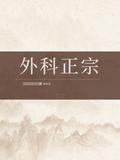 Authentic Surgery
Ancient Chinese medicine books are a shining pearl in the treasure house of Chinese medicine. They have high guiding significance and practical value, and have made significant contributions and far-reaching influences on the development of medicine in later generations.
4Reads8.6Score—Shelves
Authentic Surgery
Ancient Chinese medicine books are a shining pearl in the treasure house of Chinese medicine. They have high guiding significance and practical value, and have made significant contributions and far-reaching influences on the development of medicine in later generations.
4Reads8.6Score—Shelves
-
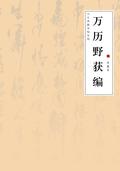 Wanliye Was Compiled
"Wanli Yehuobian" is an important notebook-style history book written by Shen Defu (also known as Jingqian) in the Ming Dynasty. It has a total of thirty volumes and four sequels. It was written between the 34th and 35th volumes of Wanli, and was supplemented in the 47th year of Wanli. The content is comprehensive and detailed. It is one of the important classics for studying the social style and historical events of the Ming Dynasty. Shen Defu inherited his family education at a young age and w
4Reads8.2Score—Shelves
Wanliye Was Compiled
"Wanli Yehuobian" is an important notebook-style history book written by Shen Defu (also known as Jingqian) in the Ming Dynasty. It has a total of thirty volumes and four sequels. It was written between the 34th and 35th volumes of Wanli, and was supplemented in the 47th year of Wanli. The content is comprehensive and detailed. It is one of the important classics for studying the social style and historical events of the Ming Dynasty. Shen Defu inherited his family education at a young age and w
4Reads8.2Score—Shelves
-
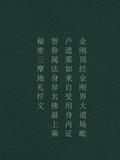 Vajra Crown Sutra Vairocana, the Great Path of the Vajra World
4Reads8.1Score—Shelves
Vajra Crown Sutra Vairocana, the Great Path of the Vajra World
Vajra Crown Sutra Vairocana, the Great Path of the Vajra World
4Reads8.1Score—Shelves
-
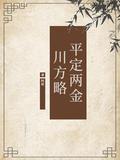 Strategies to Pacify Liang Jinchuan
This work "Strategy for the Peace of Liangjinchuan" is written by Agui
4Reads8.0Score—Shelves
Strategies to Pacify Liang Jinchuan
This work "Strategy for the Peace of Liangjinchuan" is written by Agui
4Reads8.0Score—Shelves
-
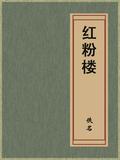 Hongfenlou (Free Public Edition Book)
There have always been two ways to manage chaos in the country: loyalty and evil. Being loyal means forgetting one's own interests for the sake of the public, forgetting one's family for the sake of the country, always thinking of serving the king, and always putting wealth and fame aside.
4Reads8.7Score—Shelves
Hongfenlou (Free Public Edition Book)
There have always been two ways to manage chaos in the country: loyalty and evil. Being loyal means forgetting one's own interests for the sake of the public, forgetting one's family for the sake of the country, always thinking of serving the king, and always putting wealth and fame aside.
4Reads8.7Score—Shelves
-
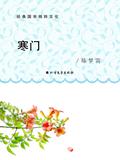 Poor Family
Chinese traditional cultural thoughts have a long history and are highly original, original and literary. The early ideological forms were very distinctive, with extensive and profound contents such as religious theology, Chinese medicine classics, ancient military art, Confucianism, Taoism, Buddhism and hundreds of schools of thought, Feng Shui metaphysics, Twenty-Four Histories, customs and geography, etc. This series of "Original Books on Classic Chinese Studies and Essence Culture" retains t
4Reads7.9Score—Shelves
Poor Family
Chinese traditional cultural thoughts have a long history and are highly original, original and literary. The early ideological forms were very distinctive, with extensive and profound contents such as religious theology, Chinese medicine classics, ancient military art, Confucianism, Taoism, Buddhism and hundreds of schools of thought, Feng Shui metaphysics, Twenty-Four Histories, customs and geography, etc. This series of "Original Books on Classic Chinese Studies and Essence Culture" retains t
4Reads7.9Score—Shelves
-
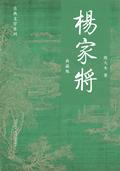 Yang Family General (Collector's Edition)
"Generals of the Yang Family" by Ming Dynasty novelist Xiong Damu is a heroic legend lit up in the embers of real history. Different from the brief records of official history, the author uses vigorous pen and ink to lay out the magnificent picture from Yang Ye's return to the Song Dynasty to the Western Expedition of the twelve female generals of the Yang family. The book not only contains the brutality and tragedy of the bloody battle on the Golden Beach, but also profoundly reveals the helple
3Reads8.0Score—Shelves
Yang Family General (Collector's Edition)
"Generals of the Yang Family" by Ming Dynasty novelist Xiong Damu is a heroic legend lit up in the embers of real history. Different from the brief records of official history, the author uses vigorous pen and ink to lay out the magnificent picture from Yang Ye's return to the Song Dynasty to the Western Expedition of the twelve female generals of the Yang family. The book not only contains the brutality and tragedy of the bloody battle on the Golden Beach, but also profoundly reveals the helple
3Reads8.0Score—Shelves
-
 The Theory of Transformation of Consciousness (From the Theory of Formlessness)
There are two types of knowledge transfer. Once transformed into a living being. Two turns into law. All objects cannot come from these two. These two things really don't exist. But consciousness is transformed into two appearances. There are three kinds of conditions for secondary enlightenment. One fruit repays knowledge. That is Ariya consciousness. Second knowledge. That is Adhana consciousness. Three dust consciousness. That is the six consciousnesses. The person who knows the result is cau
3Reads8.1Score—Shelves
The Theory of Transformation of Consciousness (From the Theory of Formlessness)
There are two types of knowledge transfer. Once transformed into a living being. Two turns into law. All objects cannot come from these two. These two things really don't exist. But consciousness is transformed into two appearances. There are three kinds of conditions for secondary enlightenment. One fruit repays knowledge. That is Ariya consciousness. Second knowledge. That is Adhana consciousness. Three dust consciousness. That is the six consciousnesses. The person who knows the result is cau
3Reads8.1Score—Shelves
-
 A Brief Introduction to Ditianxui
It is said that "Didi Tianxui Shanwei" was written by Jing Tu in the Song Dynasty. It was annotated by Ren Tieqiao during the Daoguang period of the Qing Dynasty, and the additional annotations were compiled by Yuan Shushan. "Didi Tianxui Shanwei" is a study of numerology with a long history. The ancient sayings about destiny are simple and concise. Therefore, Pao Xi calls it the correct destiny, Zhongni calls it the destiny, and Lao Dan calls it the restoration of destiny. All of them are based
3Reads8.0Score—Shelves
A Brief Introduction to Ditianxui
It is said that "Didi Tianxui Shanwei" was written by Jing Tu in the Song Dynasty. It was annotated by Ren Tieqiao during the Daoguang period of the Qing Dynasty, and the additional annotations were compiled by Yuan Shushan. "Didi Tianxui Shanwei" is a study of numerology with a long history. The ancient sayings about destiny are simple and concise. Therefore, Pao Xi calls it the correct destiny, Zhongni calls it the destiny, and Lao Dan calls it the restoration of destiny. All of them are based
3Reads8.0Score—Shelves
-
 The Buddha Said the Sutra on the Soul of the Prince's Tomb
At that time, the Buddha only had a solitary garden in Savatthi State. Tell the monks. In the past there was a king whose name was Parana. The king has a prince named Tomb Po. There is infinite clarity in life. There is no comparison in uprightness and cleanliness. My parents looked at me with extraordinary support. When it grows up, it should be called Lizi.
3Reads8.1Score—Shelves
The Buddha Said the Sutra on the Soul of the Prince's Tomb
At that time, the Buddha only had a solitary garden in Savatthi State. Tell the monks. In the past there was a king whose name was Parana. The king has a prince named Tomb Po. There is infinite clarity in life. There is no comparison in uprightness and cleanliness. My parents looked at me with extraordinary support. When it grows up, it should be called Lizi.
3Reads8.1Score—Shelves
-
 Bodhisattva Sutra
This sutra explains in detail the expedients of the Mahayana Bodhisattva's practice. The content is divided into three parts: initial expedients, secondary expedients, and final expedients, totaling twenty-seven levels. Because it contains Mahayana precepts, this sutra has been highly valued since ancient times. (The second volume of the Tripitaka Collection, the third volume of the Internal Canon of the Tang Dynasty, the third volume of the Ancient and Modern Translation of Sutras, the fourth v
3Reads8.3Score—Shelves
Bodhisattva Sutra
This sutra explains in detail the expedients of the Mahayana Bodhisattva's practice. The content is divided into three parts: initial expedients, secondary expedients, and final expedients, totaling twenty-seven levels. Because it contains Mahayana precepts, this sutra has been highly valued since ancient times. (The second volume of the Tripitaka Collection, the third volume of the Internal Canon of the Tang Dynasty, the third volume of the Ancient and Modern Translation of Sutras, the fourth v
3Reads8.3Score—Shelves
-
 The Great Cave of the Shangqing Dynasty, the Nine Microscopic Eight Paths of Great Sutra, Is a Wonderful Treasure
Chinese classical religious classics are shining classics and outstanding works in the treasure house of Chinese traditional culture. They are expressed in various forms and reflect the glorious picture of Chinese classical literary works.
3Reads8.0Score—Shelves
The Great Cave of the Shangqing Dynasty, the Nine Microscopic Eight Paths of Great Sutra, Is a Wonderful Treasure
Chinese classical religious classics are shining classics and outstanding works in the treasure house of Chinese traditional culture. They are expressed in various forms and reflect the glorious picture of Chinese classical literary works.
3Reads8.0Score—Shelves
-
 Ten Books on Cultivation: Panshan Quotations Volume
"Ten Books on Cultivation" is compiled from the Taoist Alchemy Sutra. It collects dozens of works from the late Tang, Five Dynasties, Song and Yuan Dynasties, most of which are monographs on inner alchemy. The book collects dozens of alchemy and health-preserving works from the Sui, Tang and Song dynasties, describing all aspects of the theories and practices of alchemy, health-preservation, and guidance before the Yuan Dynasty. It is extremely rich in content and is a major collection of Taoist
3Reads8.3Score—Shelves
Ten Books on Cultivation: Panshan Quotations Volume
"Ten Books on Cultivation" is compiled from the Taoist Alchemy Sutra. It collects dozens of works from the late Tang, Five Dynasties, Song and Yuan Dynasties, most of which are monographs on inner alchemy. The book collects dozens of alchemy and health-preserving works from the Sui, Tang and Song dynasties, describing all aspects of the theories and practices of alchemy, health-preservation, and guidance before the Yuan Dynasty. It is extremely rich in content and is a major collection of Taoist
3Reads8.3Score—Shelves
-
 Haiguo Chunqiu
This book describes how Zhao Kuangyin wore a yellow robe and surrendered to the court. Only Han Tong's family was martyred, and Li Jun raised an army to rebel but was defeated and committed suicide. Han Tong's younger brother Han Su and Li Jun's guest Lu Qiu Zhongqing defected to the Southern Tang Dynasty for revenge. The monarchs and ministers of the Southern Tang Dynasty did not think about seeking the country but instead thought about flattering the enemy. Han and Luqiu left the Tang Dynasty
3Reads8.6Score—Shelves
Haiguo Chunqiu
This book describes how Zhao Kuangyin wore a yellow robe and surrendered to the court. Only Han Tong's family was martyred, and Li Jun raised an army to rebel but was defeated and committed suicide. Han Tong's younger brother Han Su and Li Jun's guest Lu Qiu Zhongqing defected to the Southern Tang Dynasty for revenge. The monarchs and ministers of the Southern Tang Dynasty did not think about seeking the country but instead thought about flattering the enemy. Han and Luqiu left the Tang Dynasty
3Reads8.6Score—Shelves
-
 Selected Poems of Lu Zhaolin
Lu Zhaolin, a poet in the early Tang Dynasty. His courtesy name was Shengzhi, and his nickname was Youyouzi. He was a Han nationality from Fanyang, Youzhou (now Zhuozhou City, Hebei Province). His birth and death dates are unknown. Lu Zhaolin was born in a prominent family. There are 7 volumes of "The Collection of Lu Sheng" and "The Collection of Youyouzi" compiled and annotated by Zhang Xie in the Ming Dynasty. Lu Zhaolin's poems are composed of parallel prose, which is best in the form of son
3Reads8.7Score—Shelves
Selected Poems of Lu Zhaolin
Lu Zhaolin, a poet in the early Tang Dynasty. His courtesy name was Shengzhi, and his nickname was Youyouzi. He was a Han nationality from Fanyang, Youzhou (now Zhuozhou City, Hebei Province). His birth and death dates are unknown. Lu Zhaolin was born in a prominent family. There are 7 volumes of "The Collection of Lu Sheng" and "The Collection of Youyouzi" compiled and annotated by Zhang Xie in the Ming Dynasty. Lu Zhaolin's poems are composed of parallel prose, which is best in the form of son
3Reads8.7Score—Shelves
-
 Facts About Dong and Huan Officials Copied by Civilians
"Facts about Dong Huan" is a historical note-type work written by an anonymous author in the Ming Dynasty. It is a compilation of folk documents and historical materials of the Ming Dynasty. The book focuses on the various behaviors and causes and consequences of a key figure, Dong Huan, and his father and son in society. By recording folk criticism, stories and related facts about them, it reflects the conflicts between certain social strata, official figures and the common people in the Ming D
3Reads8.1Score—Shelves
Facts About Dong and Huan Officials Copied by Civilians
"Facts about Dong Huan" is a historical note-type work written by an anonymous author in the Ming Dynasty. It is a compilation of folk documents and historical materials of the Ming Dynasty. The book focuses on the various behaviors and causes and consequences of a key figure, Dong Huan, and his father and son in society. By recording folk criticism, stories and related facts about them, it reflects the conflicts between certain social strata, official figures and the common people in the Ming D
3Reads8.1Score—Shelves
-
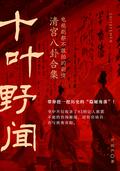 Ten Leaves Wild Stories (A Collection of Qing Palace Gossip, a Plot That Even TV Dramas Dare Not Film)
This "Collection of Qing Palace Gossips" can be called the "Library of Palace Fighting Scripts" from a hundred years ago. The author Xu Zhiyan is a colleague of Lu Xun. In the early years of the Republic of China, he was known as the "master of anecdotal novels". His pen is full of anecdotes and anecdotes from the ten dynasties of the Qing Dynasty. There are 43 chapters in the book, ranging from the extravagant secrets of Empress Dowager Cixi, to Li Lianying's greed and cunning, to the details o
2Reads7.9Score—Shelves
Ten Leaves Wild Stories (A Collection of Qing Palace Gossip, a Plot That Even TV Dramas Dare Not Film)
This "Collection of Qing Palace Gossips" can be called the "Library of Palace Fighting Scripts" from a hundred years ago. The author Xu Zhiyan is a colleague of Lu Xun. In the early years of the Republic of China, he was known as the "master of anecdotal novels". His pen is full of anecdotes and anecdotes from the ten dynasties of the Qing Dynasty. There are 43 chapters in the book, ranging from the extravagant secrets of Empress Dowager Cixi, to Li Lianying's greed and cunning, to the details o
2Reads7.9Score—Shelves
-
 Collected Works of Li Zhiyi
Li Zhiyi (1048~1117) was a poet in the Northern Song Dynasty. His courtesy name is Uncle Duan, and his nickname is Guxi layman and Guxi old farmer. Han nationality, from Wudi (Qingyun County), Cangzhou. Zhezong Yuanyou was the editor of the Privy Council at the beginning, and he was responsible for judging Yuanzhou. At the end of Yuanyou's reign, he followed Su Shi in the Dingzhou shogunate and advocated rewards day and night. In the incense and medicine storehouse of Yuanfu Zhongjian, Shi Yu, t
2Reads8.5Score—Shelves
Collected Works of Li Zhiyi
Li Zhiyi (1048~1117) was a poet in the Northern Song Dynasty. His courtesy name is Uncle Duan, and his nickname is Guxi layman and Guxi old farmer. Han nationality, from Wudi (Qingyun County), Cangzhou. Zhezong Yuanyou was the editor of the Privy Council at the beginning, and he was responsible for judging Yuanzhou. At the end of Yuanyou's reign, he followed Su Shi in the Dingzhou shogunate and advocated rewards day and night. In the incense and medicine storehouse of Yuanfu Zhongjian, Shi Yu, t
2Reads8.5Score—Shelves
-
 Mr. Lu's Daomen Keluo
Mr. Lu's Taoist philosophy. Written by Lu Xiujing, a Taoist priest of the Liu and Song Dynasties in the Southern Dynasties. One roll. Original source: "Orthodox Taoist Canon" Taiping Department.
2Reads7.8Score—Shelves
Mr. Lu's Daomen Keluo
Mr. Lu's Taoist philosophy. Written by Lu Xiujing, a Taoist priest of the Liu and Song Dynasties in the Southern Dynasties. One roll. Original source: "Orthodox Taoist Canon" Taiping Department.
2Reads7.8Score—Shelves
-
 The Dharma of Turning the Wheel of Falun Dafa to Destroy Demons and Resentful Enemies
Then the Bodhisattva who destroyed the demons and resentments. Talk to the Buddha about the World Honored One. Each of the Bodhisattvas has spoken secret mantras and teachings. World-Honored One, I am here to wish for the end of the Dharma in the future. To protect the king and protect all sentient beings in the country. Talk about secret honey, secret victory, the most secret method of destroying demons and resentful enemies. I only hope that the World-Honored One will listen with sympathy. The
2Reads8.0Score—Shelves
The Dharma of Turning the Wheel of Falun Dafa to Destroy Demons and Resentful Enemies
Then the Bodhisattva who destroyed the demons and resentments. Talk to the Buddha about the World Honored One. Each of the Bodhisattvas has spoken secret mantras and teachings. World-Honored One, I am here to wish for the end of the Dharma in the future. To protect the king and protect all sentient beings in the country. Talk about secret honey, secret victory, the most secret method of destroying demons and resentful enemies. I only hope that the World-Honored One will listen with sympathy. The
2Reads8.0Score—Shelves
-
 Collection of Warding Off Evil Spirits
Collection of warding off evil spirits
2Reads7.9Score—Shelves
Collection of Warding Off Evil Spirits
Collection of warding off evil spirits
2Reads7.9Score—Shelves
-
 Taishang Sanyuan Flying Star Crown Forbidden Gold Book and Jade Urn Picture
Taishang Sanyuan Flying Star Crown Banned Gold Book and Jade Urn Picture. No author. One roll. Original source: "Orthodox Taoist Canon" Dongshen Department Spiritual Picture Category.
2Reads8.1Score—Shelves
Taishang Sanyuan Flying Star Crown Forbidden Gold Book and Jade Urn Picture
Taishang Sanyuan Flying Star Crown Banned Gold Book and Jade Urn Picture. No author. One roll. Original source: "Orthodox Taoist Canon" Dongshen Department Spiritual Picture Category.
2Reads8.1Score—Shelves
-
 Romance of the Song Palace and Eighteen Dynasties (Free Public Edition Book)
This book begins with the birth of Zhao Kuangyin, the "sweet child" in Jiama Camp, and ends with Zhao Bing's death at sea when Lu Xiufu takes over Song Huaizong. It narrates more than three hundred years of Chinese history. The first half focuses on the secrets of the palace, and the second half focuses on military and state affairs. The content is not limited to the "Song Palace", but also includes Meng Mengchang, the Lord of Shu, Li Yu of the Southern Tang Dynasty, Liu Yuan of the Southern Han
2Reads8.6Score—Shelves
Romance of the Song Palace and Eighteen Dynasties (Free Public Edition Book)
This book begins with the birth of Zhao Kuangyin, the "sweet child" in Jiama Camp, and ends with Zhao Bing's death at sea when Lu Xiufu takes over Song Huaizong. It narrates more than three hundred years of Chinese history. The first half focuses on the secrets of the palace, and the second half focuses on military and state affairs. The content is not limited to the "Song Palace", but also includes Meng Mengchang, the Lord of Shu, Li Yu of the Southern Tang Dynasty, Liu Yuan of the Southern Han
2Reads8.6Score—Shelves
-
 Chronicles of Jingkang (Free Public Edition Book)
Also known as "The Record of Lonely Minister Crying Blood". Miscellaneous History. The incident started from the beginning of November of the first year of Jingkang (1126), when the Wu Jin people invaded the capital, and ended on the first day of May of the following year when King Kang ascended the throne in Nanjing. The author happened to be in Bianjing at that time, deploring the loss of the capital and the relocation of the two emperors. He wrote this book to arouse the hearts of loyal minis
2Reads8.7Score—Shelves
Chronicles of Jingkang (Free Public Edition Book)
Also known as "The Record of Lonely Minister Crying Blood". Miscellaneous History. The incident started from the beginning of November of the first year of Jingkang (1126), when the Wu Jin people invaded the capital, and ended on the first day of May of the following year when King Kang ascended the throne in Nanjing. The author happened to be in Bianjing at that time, deploring the loss of the capital and the relocation of the two emperors. He wrote this book to arouse the hearts of loyal minis
2Reads8.7Score—Shelves
-
 Essentials of Materia Medica
"Compendium of Materia Medica Must-Read Series-Essentials of Materia Medica (Volume 1 and 2)" is an official Materia Medica edition of the Ming Dynasty. It was compiled by Liu Wentai, the judge of Taiyuan Hospital, and others under the orders of the Ming Dynasty. This book is based on the "Zhenglei Materia Medica", removing the complex and redundant, and making additions to keep it concise and concise. The book has 42 volumes, including 1 volume of table of contents, containing 1815 medicines an
2Reads8.4Score—Shelves
Essentials of Materia Medica
"Compendium of Materia Medica Must-Read Series-Essentials of Materia Medica (Volume 1 and 2)" is an official Materia Medica edition of the Ming Dynasty. It was compiled by Liu Wentai, the judge of Taiyuan Hospital, and others under the orders of the Ming Dynasty. This book is based on the "Zhenglei Materia Medica", removing the complex and redundant, and making additions to keep it concise and concise. The book has 42 volumes, including 1 volume of table of contents, containing 1815 medicines an
2Reads8.4Score—Shelves
-
 Gaozhai Comics
"Gao Zhai Man Lu" is a wonderful work of interesting notes written by Zeng Zhe, a scholar in the Song Dynasty. The whole book records court anecdotes, literati anecdotes, poetic anecdotes and common people's stories. It can be said that one volume shows the life of scholars in the Song Dynasty. The book is full of history, emotion, reason and fun. Zeng Zheng recorded that after Taizu pacified Hebei, he wanted to attack Youyan in the north. Zhao Pu said, "The gain is little, the loss is much", wh
2Reads7.9Score—Shelves
Gaozhai Comics
"Gao Zhai Man Lu" is a wonderful work of interesting notes written by Zeng Zhe, a scholar in the Song Dynasty. The whole book records court anecdotes, literati anecdotes, poetic anecdotes and common people's stories. It can be said that one volume shows the life of scholars in the Song Dynasty. The book is full of history, emotion, reason and fun. Zeng Zheng recorded that after Taizu pacified Hebei, he wanted to attack Youyan in the north. Zhao Pu said, "The gain is little, the loss is much", wh
2Reads7.9Score—Shelves
-
 Collected Works of Fan Zengxiang
Fan Zengxiang (1846-1931) was an official and writer in the Qing Dynasty. His original name was Fan Jia, also known as Fan Zeng, also known as Jiafu, alias Fanshan, nicknamed Yunmen, and later nicknamed Tianqin Laoren. He was a native of Zitong Lane, Xizheng Street, Liujiaoting Street, Enshi City, Hubei Province. A Jinshi of Guangxu, he served successively as the magistrate of Weinan, the chief envoy of Shaanxi, and the governor of Liangjiang. When the Revolution of 1911 broke out, he took refug
2Reads8.1Score—Shelves
Collected Works of Fan Zengxiang
Fan Zengxiang (1846-1931) was an official and writer in the Qing Dynasty. His original name was Fan Jia, also known as Fan Zeng, also known as Jiafu, alias Fanshan, nicknamed Yunmen, and later nicknamed Tianqin Laoren. He was a native of Zitong Lane, Xizheng Street, Liujiaoting Street, Enshi City, Hubei Province. A Jinshi of Guangxu, he served successively as the magistrate of Weinan, the chief envoy of Shaanxi, and the governor of Liangjiang. When the Revolution of 1911 broke out, he took refug
2Reads8.1Score—Shelves
-
 Bodhisattva's Pregnancy Sutra
2Reads8.2Score—Shelves
Bodhisattva's Pregnancy Sutra
Bodhisattva's Pregnancy Sutra
2Reads8.2Score—Shelves
-
 Bodhisattva's Dharma of Sexual Desire
This book is a public book and is a work published by writers, artists and other individuals who are not restricted by copyright laws, and is available for readers to read and communicate. Aggregation of licensed electronic rights.
2Reads7.9Score—Shelves
Bodhisattva's Dharma of Sexual Desire
This book is a public book and is a work published by writers, artists and other individuals who are not restricted by copyright laws, and is available for readers to read and communicate. Aggregation of licensed electronic rights.
2Reads7.9Score—Shelves
-
 Bodhisattva's Sutra
This book is a public book and is a work published by writers, artists and other individuals who are not restricted by copyright laws, and is available for readers to read and communicate. Aggregation of licensed electronic rights.
2Reads8.2Score—Shelves
Bodhisattva's Sutra
This book is a public book and is a work published by writers, artists and other individuals who are not restricted by copyright laws, and is available for readers to read and communicate. Aggregation of licensed electronic rights.
2Reads8.2Score—Shelves
-
 Dafa Drum Sutra
2Reads8.4Score—Shelves
Dafa Drum Sutra
Dafa Drum Sutra
2Reads8.4Score—Shelves
-
 Qi Huan Tu Jing
"Zhongtianzhu Sheweiguo Qiuhuan Temple Illustration" (hereinafter referred to as "Qihuan Temple Illustration") is an important work of the eminent monk Daoxuan (596-667) of the Tang Dynasty in his later years. The Illustrated Scripture uses text and illustrations (attached to Daoxuan's work of the same year, "The Illustrated Scripture on the Establishment of the Precepts Altar in Guanzhong"...
2Reads7.9Score—Shelves
Qi Huan Tu Jing
"Zhongtianzhu Sheweiguo Qiuhuan Temple Illustration" (hereinafter referred to as "Qihuan Temple Illustration") is an important work of the eminent monk Daoxuan (596-667) of the Tang Dynasty in his later years. The Illustrated Scripture uses text and illustrations (attached to Daoxuan's work of the same year, "The Illustrated Scripture on the Establishment of the Precepts Altar in Guanzhong"...
2Reads7.9Score—Shelves
-
 Erchengwaishu
This work "Er Cheng Waishu" was written by Zhu Xi
2Reads8.2Score—Shelves
Erchengwaishu
This work "Er Cheng Waishu" was written by Zhu Xi
2Reads8.2Score—Shelves
-
 Chronicles of the Imperial Peace of Taiwan (Free Public Edition Book)
In the fifty-third year of Qianlong's reign in the Qing Dynasty (1788), it was compiled under the order of Emperor Gaozong. At the end of the 51st year of Qianlong's reign, the massive Lin Shuangwen Uprising broke out in Changhua, Taiwan and other places. This was also an unprecedented armed anti-Qing struggle in the history of the Tiandihui, which greatly shocked the ruling class of the Qing Dynasty. The limit of this book is: from the beginning of the Lin Shuangwen Uprising in Taiwan, reported
2Reads8.5Score—Shelves
Chronicles of the Imperial Peace of Taiwan (Free Public Edition Book)
In the fifty-third year of Qianlong's reign in the Qing Dynasty (1788), it was compiled under the order of Emperor Gaozong. At the end of the 51st year of Qianlong's reign, the massive Lin Shuangwen Uprising broke out in Changhua, Taiwan and other places. This was also an unprecedented armed anti-Qing struggle in the history of the Tiandihui, which greatly shocked the ruling class of the Qing Dynasty. The limit of this book is: from the beginning of the Lin Shuangwen Uprising in Taiwan, reported
2Reads8.5Score—Shelves
-
 Medical Insights
Ancient Chinese medicine books are a shining pearl in the treasure house of Chinese medicine. They have high guiding significance and practical value, and have made significant contributions and far-reaching influences on the development of medicine in later generations.
2Reads8.2Score—Shelves
Medical Insights
Ancient Chinese medicine books are a shining pearl in the treasure house of Chinese medicine. They have high guiding significance and practical value, and have made significant contributions and far-reaching influences on the development of medicine in later generations.
2Reads8.2Score—Shelves
-
 Strategy
Military Family Books
2Reads8.1Score—Shelves
Strategy
Military Family Books
2Reads8.1Score—Shelves
-
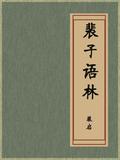 Pei Ziyulin (Free Public Edition Book)
It is a collection of aspirational novels written in the style of Shishuoxinyu, which mainly records the words, deeds, and anecdotes of characters in the Han, Wei and Jin dynasties. The book covers many well-known figures, showing their personalities, talents and demeanor through vivid and interesting stories, reflecting the social scene, cultural atmosphere and the spiritual world of scholars at that time, and has certain reference value for later generations of literary creation and historical
2Reads8.3Score—Shelves
Pei Ziyulin (Free Public Edition Book)
It is a collection of aspirational novels written in the style of Shishuoxinyu, which mainly records the words, deeds, and anecdotes of characters in the Han, Wei and Jin dynasties. The book covers many well-known figures, showing their personalities, talents and demeanor through vivid and interesting stories, reflecting the social scene, cultural atmosphere and the spiritual world of scholars at that time, and has certain reference value for later generations of literary creation and historical
2Reads8.3Score—Shelves
-
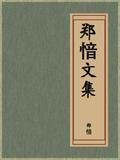 Collected Works of Zheng Min
Zheng Min (? - 710) Tang poet. The courtesy name is Wenjing, a native of Cang County (belonging to Cangzhou), Hebei Province. He died in the first year of Jingyun, Emperor Ruizong of Tang Dynasty. He was promoted to Jinshi at the age of seventeen. During the reign of Empress Wu, Zhang Yi's brother recommended him as a censor in the palace. After Zhang Yi stepped down, he was demoted to the position of chief minister of Xuanzhou. During the reign of Emperor Zhongzong of the Tang Dynasty, he serve
2Reads8.5Score—Shelves
Collected Works of Zheng Min
Zheng Min (? - 710) Tang poet. The courtesy name is Wenjing, a native of Cang County (belonging to Cangzhou), Hebei Province. He died in the first year of Jingyun, Emperor Ruizong of Tang Dynasty. He was promoted to Jinshi at the age of seventeen. During the reign of Empress Wu, Zhang Yi's brother recommended him as a censor in the palace. After Zhang Yi stepped down, he was demoted to the position of chief minister of Xuanzhou. During the reign of Emperor Zhongzong of the Tang Dynasty, he serve
2Reads8.5Score—Shelves