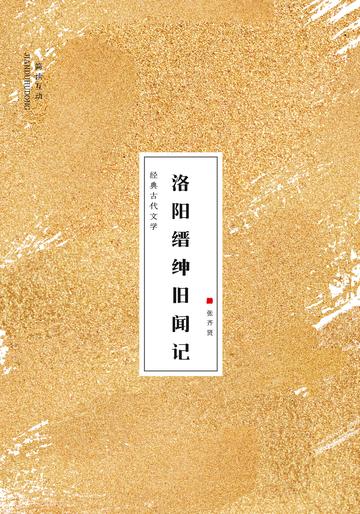
"Old News of Luoyang Jinshen" is a miscellaneous work of notes of great interest and historical value during the Northern Song Dynasty. Zhang Qixian, courtesy name Shiliang, was a native of Caozhou. He later moved to Luoyang. He was a Jinshi and a tired official until he came to Tongzhongshu's family, Pingzhangshi. He wrote this book to record the old customs of Luocheng.
The book consists of five volumes and contains about 21 chapters. The content covers the noble families, official affairs, daily anecdotes, and strange events in the Luoyang area from the Southern Liang Dynasty and the Tang Dynasty to the Five Dynasties and Ten Kingdoms.
In these chapters, you will see a scene like this: a once-prominent Luoyang nobleman lost his power in the court but returned to his hometown. The people in the village immediately said that he was "a young master who feigned madness". Volume Two contains the article "Master Li's Wife", which describes the death of the Khitan king "Dong Dan" who was suspected to have been harmed by the imperial court.
In addition, the book also contains strange and supernatural things among the people: such as "Luoyang dyer saw his wronged ghost", a certain Jiao Sheng met his dead wife at night, and gods descended on a certain Tiantian Taiwei Hou's house at night... Although these entries are legendary, they also reflect the society's perspectives and desires on cause and effect, etiquette, and human relationships at that time.
Reading "Old News of the Jin Gentry in Luoyang" is like walking into a corner of the ancient capital of Luoyang and hearing civil servants debating scriptures in the courtyard, nobles whispering in the teahouse, mourning coming from the dyeing workshop, and people disappearing after the night banquet. The author does not deliberately describe sensational events, but uses the attitude of "old news" to collect the intertwined pictures of daily life, the fringe, the powerful, and the people, allowing you to see the light and shadow of the times in the fragments.
If you are interested in the micro-life, scholar culture, power changes and humanistic sophistication of Luoyang society during the Five Dynasties and Ten Kingdoms and the Early Song Dynasty, this book will be an attractive entry.