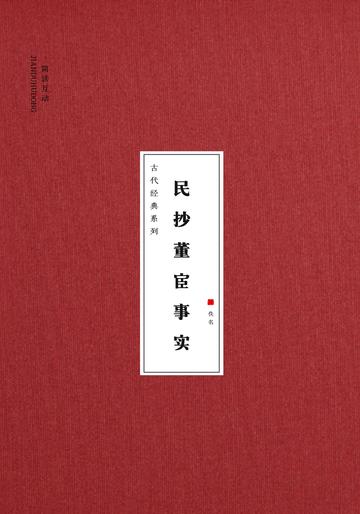
"Facts about Dong Huan" is a historical note-type work written by an anonymous author in the Ming Dynasty. It is a compilation of folk documents and historical materials of the Ming Dynasty. The book focuses on the various behaviors and causes and consequences of a key figure, Dong Huan, and his father and son in society. By recording folk criticism, stories and related facts about them, it reflects the conflicts between certain social strata, official figures and the common people in the Ming Dynasty, and presents a unique picture of the interweaving of officialdom and private opinion. Its content is not an official history, but focuses on narratives and records from a folk perspective. It is a precious material for understanding the social dynamics and people's perceptions of the Ming Dynasty.
The writing style of the book is close to the style of historical materials such as notes and miscellaneous records. The recording method is mainly "factual statements" and mostly involves the behavioral details and social repercussions of specific characters. Judging from the existing excerpts, Dong Huan and his son were scolded by the people for exploiting and oppressing the people. Many passages describe their evil deeds and the people's protests. Such records not only reflect the author's concern for social injustice, but also reflect the people's criticism and sentiment about the "abuse of eunuch power" in the Ming Dynasty. Although the content of the work is short, it has a strong sense of reality and critical color. It is a rare grassroots historical material in the study of Ming Dynasty social culture.
As a historical document, "The Facts of Civil Copies of Dong and Officials" has unique value in studying the social structure, official-civilian relations, and expression of public opinion in the Ming Dynasty. For readers interested in ancient Chinese social and cultural history, it can provide a window to understand historical events from a folk perspective, supplement blind spots in official historical records, and make the texture of history more three-dimensional.