Fanqie library
Browse
- Titles
- 1.6k
Every Fanqie book we index, searchable by title, author or tag.
-
 Traditional Chinese Medicine Collection: Medical Insights
Tang Rongchuan, a master of traditional Chinese medicine in the Qing Dynasty, is a work that popularizes medicine and aims to provide basic medical knowledge to novice doctors and non-medical professionals. The content of "Medical Insights" covers physiology, pathology, diagnosis and treatment methods, etc..
—Reads8.3Score—Shelves
Traditional Chinese Medicine Collection: Medical Insights
Tang Rongchuan, a master of traditional Chinese medicine in the Qing Dynasty, is a work that popularizes medicine and aims to provide basic medical knowledge to novice doctors and non-medical professionals. The content of "Medical Insights" covers physiology, pathology, diagnosis and treatment methods, etc..
—Reads8.3Score—Shelves
-
 Traditional Chinese Medicine Collection: the True Story of Medicine
[Clinical Classics of Traditional Chinese Medicine Intangible Cultural Heritage] [Popular in Japan in the 17th century, published in large quantities after 1949] A comprehensive work of traditional Chinese medicine with practical value: it draws on the grand theories and effective prescriptions of medicine from past dynasties, adhering to family traditions, and based on existing ideas. There are eight volumes in total, covering internal medicine, external medicine, gynecology, pediatrics, and or
—Reads8.2Score—Shelves
Traditional Chinese Medicine Collection: the True Story of Medicine
[Clinical Classics of Traditional Chinese Medicine Intangible Cultural Heritage] [Popular in Japan in the 17th century, published in large quantities after 1949] A comprehensive work of traditional Chinese medicine with practical value: it draws on the grand theories and effective prescriptions of medicine from past dynasties, adhering to family traditions, and based on existing ideas. There are eight volumes in total, covering internal medicine, external medicine, gynecology, pediatrics, and or
—Reads8.2Score—Shelves
-
 Introduction to Medicine
Ancient Chinese medicine books are a shining pearl in the treasure house of Chinese medicine. They have high guiding significance and practical value, and have made significant contributions and far-reaching influences on the development of medicine in later generations.
—Reads8.4Score—Shelves
Introduction to Medicine
Ancient Chinese medicine books are a shining pearl in the treasure house of Chinese medicine. They have high guiding significance and practical value, and have made significant contributions and far-reaching influences on the development of medicine in later generations.
—Reads8.4Score—Shelves
-
 Medical Knowledge
This book is a medical treatise and one of the representative works of the warming and tonic school of Ming Dynasty. The book's explanation of the gate of life and the exploration of the water and fire of the kidneys enriched the theory of the warming and tonic school of the Ming Dynasty, and also enriched the theoretical content of traditional Chinese medicine's health care. Overview: Using ancient prescriptions in combination with clinical practice to analyze the diagnosis and treatment of dif
—Reads8.9Score—Shelves
Medical Knowledge
This book is a medical treatise and one of the representative works of the warming and tonic school of Ming Dynasty. The book's explanation of the gate of life and the exploration of the water and fire of the kidneys enriched the theory of the warming and tonic school of the Ming Dynasty, and also enriched the theoretical content of traditional Chinese medicine's health care. Overview: Using ancient prescriptions in combination with clinical practice to analyze the diagnosis and treatment of dif
—Reads8.9Score—Shelves
-
 Talk About Sword Chant
I used to swim on the sea and look eastward at the Three God Mountains. The storm is tens of thousands of miles away, among the vast clouds. Fish and dragons are dancing, and the sun and moon are idle in the sky. There is no trace of the immortals. Xu Fu left and never returned. The spare Penglai Pavilion will be remembered for thousands of years. [1]
—Reads8.1Score—Shelves
Talk About Sword Chant
I used to swim on the sea and look eastward at the Three God Mountains. The storm is tens of thousands of miles away, among the vast clouds. Fish and dragons are dancing, and the sun and moon are idle in the sky. There is no trace of the immortals. Xu Fu left and never returned. The spare Penglai Pavilion will be remembered for thousands of years. [1]
—Reads8.1Score—Shelves
-
 Chronicles of the Ming Dynasty (Free Public Edition)
Ni Zaitian, also named Zixin and Tianfu, nicknamed Tiaocun, was from Jiangdu (now Jiangdu County, Jiangsu Province). Zhu Sheng paid attention to the historical events of the Southern Ming Dynasty and wrote "Yangzhou Imperial Bandits" and so on. "The Chronicles of the Ming Dynasty" is a continuation of "The Chronicles of the Ming Dynasty" and has the same style. Extensive search for historical materials and detailed research. A chronicle of the history of the Southern Ming Dynasty. It is believed
—Reads8.7Score—Shelves
Chronicles of the Ming Dynasty (Free Public Edition)
Ni Zaitian, also named Zixin and Tianfu, nicknamed Tiaocun, was from Jiangdu (now Jiangdu County, Jiangsu Province). Zhu Sheng paid attention to the historical events of the Southern Ming Dynasty and wrote "Yangzhou Imperial Bandits" and so on. "The Chronicles of the Ming Dynasty" is a continuation of "The Chronicles of the Ming Dynasty" and has the same style. Extensive search for historical materials and detailed research. A chronicle of the history of the Southern Ming Dynasty. It is believed
—Reads8.7Score—Shelves
-
 Numerology Promise
The representative work of Chen Su'an, a master of numerology in the Qing Dynasty. A classic work on numerology, the main content includes the basic methods and techniques of horoscope numerology. "Numerology Essay" covers numerology knowledge from basic to advanced, involving the analysis of birth horoscopes, judgment of patterns, selection of gods, etc.; It explains in detail the basic theories of heavenly stems, earthly branches, stems and stems, and stems and conflicts; it also supplements s
—Reads9.5Score—Shelves
Numerology Promise
The representative work of Chen Su'an, a master of numerology in the Qing Dynasty. A classic work on numerology, the main content includes the basic methods and techniques of horoscope numerology. "Numerology Essay" covers numerology knowledge from basic to advanced, involving the analysis of birth horoscopes, judgment of patterns, selection of gods, etc.; It explains in detail the basic theories of heavenly stems, earthly branches, stems and stems, and stems and conflicts; it also supplements s
—Reads9.5Score—Shelves
-
 Jinling Trivia
Miscellaneous notes from the Ming Dynasty. 4 Volumes. By Zhou Hui. Jiao Hong discusses the book in the preface: "The classics of Shangguan are often repeated, and Chugui is included in the journey of Qianxiu. It contains the good words of famous people. When talking in the streets and alleys, there are often things that the saints did not say. Reading can distinguish customs and identify good and bad. The history of the country and the prefectures may be useful, and it is not just a novel." The
—Reads7.8Score—Shelves
Jinling Trivia
Miscellaneous notes from the Ming Dynasty. 4 Volumes. By Zhou Hui. Jiao Hong discusses the book in the preface: "The classics of Shangguan are often repeated, and Chugui is included in the journey of Qianxiu. It contains the good words of famous people. When talking in the streets and alleys, there are often things that the saints did not say. Reading can distinguish customs and identify good and bad. The history of the country and the prefectures may be useful, and it is not just a novel." The
—Reads7.8Score—Shelves
-
 Digital Chinese Studies
This book is named "Numerical Chinese Studies", which uses numerals as entries. The collected words all have special meanings, ranging from ancient times to the late Qing Dynasty, and the content involves ancient literature, art, history, geography, laws, philosophy, medicine and health, etc. The book contains a total of 2,760 entries and more than 3,230 meaning groups. Number words are a cluster of words with distinctive characteristics in Chinese vocabulary. They are rich in meaning, fixed in
—Reads8.4Score—Shelves
Digital Chinese Studies
This book is named "Numerical Chinese Studies", which uses numerals as entries. The collected words all have special meanings, ranging from ancient times to the late Qing Dynasty, and the content involves ancient literature, art, history, geography, laws, philosophy, medicine and health, etc. The book contains a total of 2,760 entries and more than 3,230 meaning groups. Number words are a cluster of words with distinctive characteristics in Chinese vocabulary. They are rich in meaning, fixed in
—Reads8.4Score—Shelves
-
 Similar to Jingtu Wing
"Leijing Tuyi" has 11 volumes and was written by Zhang Jiebin in the Ming Dynasty. Volumes 1 to 2 are the "luck" part, which explains in detail the theories of yin and yang, the five elements, the five movements and the six qi, using diagrams and text explanations. Volumes 3 to 10 are the "meridians" section, which systematically discusses the internal scenery of the internal organs, bone locations, the start and end of the twelve meridians, the eight extraordinary meridians, and the indications
—Reads8.4Score—Shelves
Similar to Jingtu Wing
"Leijing Tuyi" has 11 volumes and was written by Zhang Jiebin in the Ming Dynasty. Volumes 1 to 2 are the "luck" part, which explains in detail the theories of yin and yang, the five elements, the five movements and the six qi, using diagrams and text explanations. Volumes 3 to 10 are the "meridians" section, which systematically discusses the internal scenery of the internal organs, bone locations, the start and end of the twelve meridians, the eight extraordinary meridians, and the indications
—Reads8.4Score—Shelves
-
 Thirteen Chapters of the Book of Chess: the Most Authoritative Work on Go Theory Since the Song Dynasty
"Thirteen Chapters of the Book of Chess" is a work that appeared in the Song Dynasty and occupies a special position in the history of the development of Go in my country. The value of "Thirteen Chapters of the Chess Classic" lies first in its systematic nature.
—Reads9.2Score—Shelves
Thirteen Chapters of the Book of Chess: the Most Authoritative Work on Go Theory Since the Song Dynasty
"Thirteen Chapters of the Book of Chess" is a work that appeared in the Song Dynasty and occupies a special position in the history of the development of Go in my country. The value of "Thirteen Chapters of the Chess Classic" lies first in its systematic nature.
—Reads9.2Score—Shelves
-
 Thirteen Chapters of the Chess Classic (Free Public Edition Book)
This book is a public book, covering the specifications and levels of Go, moral style, terminology, strategies and tactics, etc. It has text but no pictures, and the theory is relatively comprehensive.
—Reads8.6Score—Shelves
Thirteen Chapters of the Chess Classic (Free Public Edition Book)
This book is a public book, covering the specifications and levels of Go, moral style, terminology, strategies and tactics, etc. It has text but no pictures, and the theory is relatively comprehensive.
—Reads8.6Score—Shelves
-
 Authentic Golden Elixir
Ancient Chinese medical works are a shining pearl in the treasure house of Chinese medicine. They have high guiding significance and practical value, and have made significant contributions and far-reaching influences on the development of medicine in later generations.
—Reads8.4Score—Shelves
Authentic Golden Elixir
Ancient Chinese medical works are a shining pearl in the treasure house of Chinese medicine. They have high guiding significance and practical value, and have made significant contributions and far-reaching influences on the development of medicine in later generations.
—Reads8.4Score—Shelves
-
 Compilation of Women's Alchemy Sutra
This book is a public book and is a work published by writers, artists and other individuals who are not restricted by copyright laws, and is available for readers to read and communicate. Aggregation of licensed electronic rights.
—Reads9.1Score—Shelves
Compilation of Women's Alchemy Sutra
This book is a public book and is a work published by writers, artists and other individuals who are not restricted by copyright laws, and is available for readers to read and communicate. Aggregation of licensed electronic rights.
—Reads9.1Score—Shelves
-
 Taiqing Golden Liquid Divine Alchemy Sutra
Three volumes. Not the editor. It was first written in the Han Dynasty and later compiled and edited with a preface. In the 10th year of Ming Zhengtong (1445), it was compiled into "Zhengtong Taoist Canon".
—Reads8.2Score—Shelves
Taiqing Golden Liquid Divine Alchemy Sutra
Three volumes. Not the editor. It was first written in the Han Dynasty and later compiled and edited with a preface. In the 10th year of Ming Zhengtong (1445), it was compiled into "Zhengtong Taoist Canon".
—Reads8.2Score—Shelves
-
 The Secret of Golden Elixir
This book is said to be written by Ji Yangzi and is one of the important classics in the Taoist inner elixir cultivation system. The core of the book is to clarify the steps and mental methods of cultivating inner alchemy, advocating that through methods such as "watching and listening again", "returning to the light" and "concentrating the mind to keep one", one can achieve the state of "refining the Qi, refining the Qi to transform into the spirit, and refining the spirit to return to the void
—Reads8.6Score—Shelves
The Secret of Golden Elixir
This book is said to be written by Ji Yangzi and is one of the important classics in the Taoist inner elixir cultivation system. The core of the book is to clarify the steps and mental methods of cultivating inner alchemy, advocating that through methods such as "watching and listening again", "returning to the light" and "concentrating the mind to keep one", one can achieve the state of "refining the Qi, refining the Qi to transform into the spirit, and refining the spirit to return to the void
—Reads8.6Score—Shelves
-
 Tai Chi Master's Nine Turns of Returning the Alchemy Sutra
The key points of Tai Chi Zhenren's Nine Turns of Returning Alchemy Sutra. There is no author, and it dates back to the Northern and Southern Dynasties. One roll. Original source: "Orthodox Taoist Canon", Dongshen Department's various techniques.
—Reads8.0Score—Shelves
Tai Chi Master's Nine Turns of Returning the Alchemy Sutra
The key points of Tai Chi Zhenren's Nine Turns of Returning Alchemy Sutra. There is no author, and it dates back to the Northern and Southern Dynasties. One roll. Original source: "Orthodox Taoist Canon", Dongshen Department's various techniques.
—Reads8.0Score—Shelves
-
 The Secret of the True Elixir of the Shangqing Jing
The secret of the true elixir of the Shangqing Jing. No author. It seems to be out of simplicity in the Tang Dynasty. One roll. Original source: Method Class of Dongshen Department of "Orthodox Taoist Canon".
—Reads8.1Score—Shelves
The Secret of the True Elixir of the Shangqing Jing
The secret of the true elixir of the Shangqing Jing. No author. It seems to be out of simplicity in the Tang Dynasty. One roll. Original source: Method Class of Dongshen Department of "Orthodox Taoist Canon".
—Reads8.1Score—Shelves
-
 Situation Solution
The Book of Guanzi is a collection of works by Jixia Taoists who respected Guan Zhong, which is the school of Guanzi based on Jixia's learning. "Hanshu·Yiwenzhi" lists it in the Taoist category of Zibu, and "Suishu·Jingjizhi" lists it in the Legalist category. "Sikuquanshu" lists it in the Legalist category of the sub-part. The book is magnificent in length, complex in content, and rich in ideas. It is an important classic for studying the academic and cultural thoughts of ancient China, especia
—Reads8.2Score—Shelves
Situation Solution
The Book of Guanzi is a collection of works by Jixia Taoists who respected Guan Zhong, which is the school of Guanzi based on Jixia's learning. "Hanshu·Yiwenzhi" lists it in the Taoist category of Zibu, and "Suishu·Jingjizhi" lists it in the Legalist category. "Sikuquanshu" lists it in the Legalist category of the sub-part. The book is magnificent in length, complex in content, and rich in ideas. It is an important classic for studying the academic and cultural thoughts of ancient China, especia
—Reads8.2Score—Shelves
-
 Strange Squares
It was copied by Wu Shichang (Banqian), a native of Jiangxia in the Qing Dynasty, and edited by Changbai Eqishan. The "Qifang Class" is divided into twenty-seven categories, mainly covering the head and face, beard and hair, ears and eyes, mouth and nose, teeth, throat, stomach, choking and diaphragm, phlegm, spleen and stomach, blood, bloating, dysentery, malaria, rheumatism, hernia, typhoid, typhoid, hemorrhoids, injuries, sores emergency treatment, maintenance, tonic, women, dabbling and misc
—Reads8.9Score—Shelves
Strange Squares
It was copied by Wu Shichang (Banqian), a native of Jiangxia in the Qing Dynasty, and edited by Changbai Eqishan. The "Qifang Class" is divided into twenty-seven categories, mainly covering the head and face, beard and hair, ears and eyes, mouth and nose, teeth, throat, stomach, choking and diaphragm, phlegm, spleen and stomach, blood, bloating, dysentery, malaria, rheumatism, hernia, typhoid, typhoid, hemorrhoids, injuries, sores emergency treatment, maintenance, tonic, women, dabbling and misc
—Reads8.9Score—Shelves
-
 Seeking Truth in Pulse Theory
Pulsology works. Three volumes. Written by Huang Gongxiu of the Qing Dynasty. Volume 1 is the key points of the new pulse diagnosis method, which introduces the location of pulse diagnosis, the image of various pulses, main diseases, etc.; Volume 2 adds the new Four-Word Pulse Essentials, which is based on the additions and deletions of Cui's "Four-Word Pulse Essentials" contained in "The Doctor's Eyes"; Volume 3 is written by Wang Ang. The Song of the Twelve Meridians and the Song of the Eight
—Reads9.1Score—Shelves
Seeking Truth in Pulse Theory
Pulsology works. Three volumes. Written by Huang Gongxiu of the Qing Dynasty. Volume 1 is the key points of the new pulse diagnosis method, which introduces the location of pulse diagnosis, the image of various pulses, main diseases, etc.; Volume 2 adds the new Four-Word Pulse Essentials, which is based on the additions and deletions of Cui's "Four-Word Pulse Essentials" contained in "The Doctor's Eyes"; Volume 3 is written by Wang Ang. The Song of the Twelve Meridians and the Song of the Eight
—Reads9.1Score—Shelves
-
 Children's Medicine Formula
"Pediatric Medicine Zhijue" is a monograph on traditional Chinese medicine in pediatrics. It was compiled by Yan Xiaozhong, a disciple of Qian Yi in the Northern Song Dynasty, who collected his clinical experience. It was written in the first year of Xuanhe in the Song Dynasty (1119 AD). The book is divided into three volumes: the first, middle and second volumes. The first volume is dedicated to the pulse, causes, syndromes and treatments of children, and contains more than 80 items on common p
—Reads9.3Score—Shelves
Children's Medicine Formula
"Pediatric Medicine Zhijue" is a monograph on traditional Chinese medicine in pediatrics. It was compiled by Yan Xiaozhong, a disciple of Qian Yi in the Northern Song Dynasty, who collected his clinical experience. It was written in the first year of Xuanhe in the Song Dynasty (1119 AD). The book is divided into three volumes: the first, middle and second volumes. The first volume is dedicated to the pulse, causes, syndromes and treatments of children, and contains more than 80 items on common p
—Reads9.3Score—Shelves
-
 Traditional Chinese Medicine Collection: Miraculous Prescriptions to Help the World
[Ancient Medical Prescriptions Book published by the Traditional Chinese Medicine Ancient Books Publishing House in 1991] This book draws on the strengths of many experts and makes its own prescriptions or collects ancient famous prescriptions and folk experience prescriptions. The book is divided into 32 sections and has about 90,000 words. It is rich in content and covers all subjects. A general introduction is listed before each door. Firstly, the cause, pathogenesis and symptoms are discusse
—Reads8.7Score—Shelves
Traditional Chinese Medicine Collection: Miraculous Prescriptions to Help the World
[Ancient Medical Prescriptions Book published by the Traditional Chinese Medicine Ancient Books Publishing House in 1991] This book draws on the strengths of many experts and makes its own prescriptions or collects ancient famous prescriptions and folk experience prescriptions. The book is divided into 32 sections and has about 90,000 words. It is rich in content and covers all subjects. A general introduction is listed before each door. Firstly, the cause, pathogenesis and symptoms are discusse
—Reads8.7Score—Shelves
-
 Secrets of Medical Efficacy
Ancient Chinese medicine books are a shining pearl in the treasure house of Chinese medicine. They have high guiding significance and practical value, and have made significant contributions and far-reaching influences on the development of medicine in later generations.
—Reads8.6Score—Shelves
Secrets of Medical Efficacy
Ancient Chinese medicine books are a shining pearl in the treasure house of Chinese medicine. They have high guiding significance and practical value, and have made significant contributions and far-reaching influences on the development of medicine in later generations.
—Reads8.6Score—Shelves
-
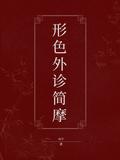 Jian Mo, Xingse Outpatient Clinic
"Jianmo of Xingse Clinic", Diagnostic Works, 2 volumes. Written by Zhou Xuehai (Chen Zhi) in the Qing Dynasty. Published in the 20th year of Guangxu (1894). The first volume is dedicated to looking at the shape, firstly describing the general meaning of shape diagnosis, and then describing the physiological shape (physiological shape), disease shape (pathological shape) and collateral shape, etc.; The second volume is about looking at the color, including complexion, eye color, tongue color, etc
—Reads8.5Score—Shelves
Jian Mo, Xingse Outpatient Clinic
"Jianmo of Xingse Clinic", Diagnostic Works, 2 volumes. Written by Zhou Xuehai (Chen Zhi) in the Qing Dynasty. Published in the 20th year of Guangxu (1894). The first volume is dedicated to looking at the shape, firstly describing the general meaning of shape diagnosis, and then describing the physiological shape (physiological shape), disease shape (pathological shape) and collateral shape, etc.; The second volume is about looking at the color, including complexion, eye color, tongue color, etc
—Reads8.5Score—Shelves
-
 Yulin's Prescription
Ancient Chinese medicine books are a shining pearl in the treasure house of Chinese medicine. They have high guiding significance and practical value, and have made significant contributions and far-reaching influences on the development of medicine in later generations. What is "Yulin"? It must be said: "Yu means Yu. Lin means Qilin, and heir." It is called "Collection of Prescriptions for Pregnating Children". Although it is named Yulin, it is actually a comprehensive collection of medical pre
—Reads9.1Score—Shelves
Yulin's Prescription
Ancient Chinese medicine books are a shining pearl in the treasure house of Chinese medicine. They have high guiding significance and practical value, and have made significant contributions and far-reaching influences on the development of medicine in later generations. What is "Yulin"? It must be said: "Yu means Yu. Lin means Qilin, and heir." It is called "Collection of Prescriptions for Pregnating Children". Although it is named Yulin, it is actually a comprehensive collection of medical pre
—Reads9.1Score—Shelves
-
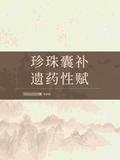 Pearl Sac Addendum Medicinal Properties
"Ode to the Medicinal Properties of Pearl Sac", an ancient pharmaceutical work. This book collects prescriptions from famous experts in the Jin, Yuan and Ming dynasties. It is an ancient pharmaceutical work that has been widely circulated and loved by famous Chinese medicine experts. The book is divided into volume 1, "Ode to the Properties of Medicines", volume 2, "Indications on the Properties of Various Medicinal Products," Volumes 3 and 4 are also "Ode to the Properties of Medicines," and "O
—Reads9.1Score—Shelves
Pearl Sac Addendum Medicinal Properties
"Ode to the Medicinal Properties of Pearl Sac", an ancient pharmaceutical work. This book collects prescriptions from famous experts in the Jin, Yuan and Ming dynasties. It is an ancient pharmaceutical work that has been widely circulated and loved by famous Chinese medicine experts. The book is divided into volume 1, "Ode to the Properties of Medicines", volume 2, "Indications on the Properties of Various Medicinal Products," Volumes 3 and 4 are also "Ode to the Properties of Medicines," and "O
—Reads9.1Score—Shelves
-
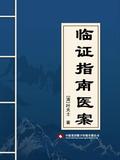 Clinical Guidelines and Medical Records
"Clinical Guidelines and Medical Records" was written in 1746 by Ye Gui of the Qing Dynasty. The book consists of 10 volumes and is divided into 89 sections. Among them, Volumes 1 to 8 cover internal medicine syndromes and miscellaneous syndromes, Volume 9 covers gynecology, and Volume 10 covers pediatrics. This book was called a model of clinical medical records by later generations. The famous names Fang Sang Ju Yin, Yin Qiao Powder, Qing Ying Decoction, and Qing Gong Decoction were adapted fr
—Reads9.2Score—Shelves
Clinical Guidelines and Medical Records
"Clinical Guidelines and Medical Records" was written in 1746 by Ye Gui of the Qing Dynasty. The book consists of 10 volumes and is divided into 89 sections. Among them, Volumes 1 to 8 cover internal medicine syndromes and miscellaneous syndromes, Volume 9 covers gynecology, and Volume 10 covers pediatrics. This book was called a model of clinical medical records by later generations. The famous names Fang Sang Ju Yin, Yin Qiao Powder, Qing Ying Decoction, and Qing Gong Decoction were adapted fr
—Reads9.2Score—Shelves
-
 Continuation of the Drug Collection
Ancient Chinese medicine books are a shining pearl in the treasure house of Chinese medicine. They have high guiding significance and practical value, and have made significant contributions and far-reaching influences on the development of medicine in later generations.
—Reads8.2Score—Shelves
Continuation of the Drug Collection
Ancient Chinese medicine books are a shining pearl in the treasure house of Chinese medicine. They have high guiding significance and practical value, and have made significant contributions and far-reaching influences on the development of medicine in later generations.
—Reads8.2Score—Shelves
-
 Fragments of Machiavellian Strategy
"Fragments of Power Strategy" is a work on power strategy written by Zhang Juzheng in the Ming Dynasty. It is divided into 13 volumes. Listen to his words and observe his actions, observe his appearance and investigate the facts. Those who observe are wise, and those who do not observe are confused; if you observe clearly, you can advance to the whole country, and if you retreat, you can protect yourself. A gentleman should be cautious.
—Reads8.8Score—Shelves
Fragments of Machiavellian Strategy
"Fragments of Power Strategy" is a work on power strategy written by Zhang Juzheng in the Ming Dynasty. It is divided into 13 volumes. Listen to his words and observe his actions, observe his appearance and investigate the facts. Those who observe are wise, and those who do not observe are confused; if you observe clearly, you can advance to the whole country, and if you retreat, you can protect yourself. A gentleman should be cautious.
—Reads8.8Score—Shelves
-
 Yuan Hai Ziping
Numerology works were recorded by Xu Sheng in the Song Dynasty based on the fortune-telling method of Xu Ziping, a famous numerologist at that time. This is the first time that the four-pillar fortune-telling method has been discussed in a relatively complete and systematic manner. It can be said to be a masterpiece of ancient Chinese fortune-telling and is deeply believed by people who study fortune-telling in later generations. The content of this book is very complex and can basically be divi
—Reads9.4Score—Shelves
Yuan Hai Ziping
Numerology works were recorded by Xu Sheng in the Song Dynasty based on the fortune-telling method of Xu Ziping, a famous numerologist at that time. This is the first time that the four-pillar fortune-telling method has been discussed in a relatively complete and systematic manner. It can be said to be a masterpiece of ancient Chinese fortune-telling and is deeply believed by people who study fortune-telling in later generations. The content of this book is very complex and can basically be divi
—Reads9.4Score—Shelves
-
 Add and Delete Divination
This work "Adding and Deleting Divinations" is written by Ding Yaokang
—Reads8.5Score—Shelves
Add and Delete Divination
This work "Adding and Deleting Divinations" is written by Ding Yaokang
—Reads8.5Score—Shelves
-
 Taishang Laojun Explains the Curse Scriptures
"Tao Zang" Cave God Part Text Category. This sutra is based on the pretense of Taishang Laojun teaching Yin Xi the method of relieving curses and evil spirits.
—Reads8.2Score—Shelves
Taishang Laojun Explains the Curse Scriptures
"Tao Zang" Cave God Part Text Category. This sutra is based on the pretense of Taishang Laojun teaching Yin Xi the method of relieving curses and evil spirits.
—Reads8.2Score—Shelves
-
 Yi Yuan
"Yi Yuan", "Zhizhai Shulu Jieti" and "Song History·Yiwenzhi" are all recorded in ten volumes. However, the book has not been published for a long time. In the Qing Dynasty, only three chapters were recorded in Cheng Minzheng's "Xin'an Wenzhi". Siku officials compiled more than a hundred chapters from the "Yongle Dadian". Each chapter was complete from beginning to end, and was reclassified into eight volumes. Volume 1, Treatise on Hetu and Luoshu; Volume 2, Treatise on Eighteen Chapters; Volume
—Reads7.8Score—Shelves
Yi Yuan
"Yi Yuan", "Zhizhai Shulu Jieti" and "Song History·Yiwenzhi" are all recorded in ten volumes. However, the book has not been published for a long time. In the Qing Dynasty, only three chapters were recorded in Cheng Minzheng's "Xin'an Wenzhi". Siku officials compiled more than a hundred chapters from the "Yongle Dadian". Each chapter was complete from beginning to end, and was reclassified into eight volumes. Volume 1, Treatise on Hetu and Luoshu; Volume 2, Treatise on Eighteen Chapters; Volume
—Reads7.8Score—Shelves
-
 Yi Mao (Free Public Edition Book)
"Liangyu Ziyuanru, a native of Shexian County. All discussed in this book are the method of substituting money for water chestnuts. It is said in the preface that when Ming died at the age of five, he studied divination, and initially wrote 50 chapters on the divination category. During Kangxi's reign, Ji Mao was in Chu, and when he met the old man Kupo, he learned his secret decree, so it was added to 90 chapters."
—Reads9.4Score—Shelves
Yi Mao (Free Public Edition Book)
"Liangyu Ziyuanru, a native of Shexian County. All discussed in this book are the method of substituting money for water chestnuts. It is said in the preface that when Ming died at the age of five, he studied divination, and initially wrote 50 chapters on the divination category. During Kangxi's reign, Ji Mao was in Chu, and when he met the old man Kupo, he learned his secret decree, so it was added to 90 chapters."
—Reads9.4Score—Shelves
-
 Qimen Dunjia Tongzong
—Reads8.4Score—Shelves
Qimen Dunjia Tongzong
Qimen Dunjia Tongzong
—Reads8.4Score—Shelves
-
 Sanyi Beiyi
This work "Sanyi Beiyi" is written by Zhu Yuansheng
—Reads7.9Score—Shelves
Sanyi Beiyi
This work "Sanyi Beiyi" is written by Zhu Yuansheng
—Reads7.9Score—Shelves
-
 Talk About Beauty
"Talking about Beauty" is an anonymous work from the Qing Dynasty. It is a collection of essays discussing the theme of "beauty". It unfolds at the intersection of traditional culture and aesthetic concepts. Although there is no specific biography of the person, it constructs the image and state of mind of "beauty" in the classical world through imagery and discussion. The first chapter in the book, "Boudoir," begins with a very graphic metaphor: "The residence of a beauty is like a vase where f
—Reads8.5Score—Shelves
Talk About Beauty
"Talking about Beauty" is an anonymous work from the Qing Dynasty. It is a collection of essays discussing the theme of "beauty". It unfolds at the intersection of traditional culture and aesthetic concepts. Although there is no specific biography of the person, it constructs the image and state of mind of "beauty" in the classical world through imagery and discussion. The first chapter in the book, "Boudoir," begins with a very graphic metaphor: "The residence of a beauty is like a vase where f
—Reads8.5Score—Shelves
-
 Promote Warp Weaving
Chinese traditional cultural thoughts have a long history and are highly original, original and literary. The early ideological forms were very distinctive, with extensive and profound contents such as religious theology, Chinese medicine classics, ancient military art, Confucianism, Taoism, Buddhism and hundreds of schools of thought, Feng Shui metaphysics, Twenty-Four Histories, customs and geography, etc. This series of "Original Books on Classic Chinese Studies and Essence Culture" retains t
—Reads8.0Score—Shelves
Promote Warp Weaving
Chinese traditional cultural thoughts have a long history and are highly original, original and literary. The early ideological forms were very distinctive, with extensive and profound contents such as religious theology, Chinese medicine classics, ancient military art, Confucianism, Taoism, Buddhism and hundreds of schools of thought, Feng Shui metaphysics, Twenty-Four Histories, customs and geography, etc. This series of "Original Books on Classic Chinese Studies and Essence Culture" retains t
—Reads8.0Score—Shelves
-
 Collected Works of Wang Rong
Wang Rong (467-493) was a native of Linyi, Qi Langxie in the Southern Dynasties, with a long character. Wang Sengda Sun. Bo She has literary talent. When a scholar is promoted, he is moved to a prince and sacrifices others. Xiao Ziliang, the king of Jingling, was very friendly with him and was one of the "Eight Friends of the West Palace". In order to start a family business, he wrote to Emperor Wu to ask for a self-examination and moved to Secretary Cheng. The emperor was blessed with a fragran
—Reads8.6Score—Shelves
Collected Works of Wang Rong
Wang Rong (467-493) was a native of Linyi, Qi Langxie in the Southern Dynasties, with a long character. Wang Sengda Sun. Bo She has literary talent. When a scholar is promoted, he is moved to a prince and sacrifices others. Xiao Ziliang, the king of Jingling, was very friendly with him and was one of the "Eight Friends of the West Palace". In order to start a family business, he wrote to Emperor Wu to ask for a self-examination and moved to Secretary Cheng. The emperor was blessed with a fragran
—Reads8.6Score—Shelves
-
 Wang Rong's Selected Poems
Wang Rong (467-493) was a native of Linyi, Qi Langxie in the Southern Dynasties, with a long character. Wang Sengda Sun. Bo She has literary talent. When a scholar is promoted, he is moved to a prince and sacrifices others. Xiao Ziliang, the king of Jingling, was very friendly with him and was one of the "Eight Friends of the West Palace". In order to start a family business, he wrote to Emperor Wu to ask for a self-examination and moved to Secretary Cheng. The emperor was blessed with a fragran
—Reads—Score—Shelves
Wang Rong's Selected Poems
Wang Rong (467-493) was a native of Linyi, Qi Langxie in the Southern Dynasties, with a long character. Wang Sengda Sun. Bo She has literary talent. When a scholar is promoted, he is moved to a prince and sacrifices others. Xiao Ziliang, the king of Jingling, was very friendly with him and was one of the "Eight Friends of the West Palace". In order to start a family business, he wrote to Emperor Wu to ask for a self-examination and moved to Secretary Cheng. The emperor was blessed with a fragran
—Reads—Score—Shelves
-
 Collected Works of Liu Xiang
This collection is part of the "Writings of the Three Ancient Dynasties, Qin, Han, Three Kingdoms and Six Dynasties", compiled by Qing Dynasty scholar Yan Kejun from various documents, covering epigraphic tablets, miscellaneous notes, books, notes, ancient annotations, classics and even Buddhist and Taoist scriptures, etc. Moreover, each author is accompanied by a biography, and the source of the edited text is also indicated, which is of extremely important academic value. This time, Zi'ang Cul
—Reads7.8Score—Shelves
Collected Works of Liu Xiang
This collection is part of the "Writings of the Three Ancient Dynasties, Qin, Han, Three Kingdoms and Six Dynasties", compiled by Qing Dynasty scholar Yan Kejun from various documents, covering epigraphic tablets, miscellaneous notes, books, notes, ancient annotations, classics and even Buddhist and Taoist scriptures, etc. Moreover, each author is accompanied by a biography, and the source of the edited text is also indicated, which is of extremely important academic value. This time, Zi'ang Cul
—Reads7.8Score—Shelves
-
 Zhou Yi Shen Tongqi Ding Utensil Song Mingjing Picture
The Book of Changes can be read in the same poem as the Ding Utensil and the Song of the Mirror. The original title was annotated by Peng Xiao of Hou Shu. One roll. Original source: Taixuan Department of "Orthodox Taoist Canon".
—Reads8.2Score—Shelves
Zhou Yi Shen Tongqi Ding Utensil Song Mingjing Picture
The Book of Changes can be read in the same poem as the Ding Utensil and the Song of the Mirror. The original title was annotated by Peng Xiao of Hou Shu. One roll. Original source: Taixuan Department of "Orthodox Taoist Canon".
—Reads8.2Score—Shelves
-
 Record Strange Things
"Records of Strange Things" is a collection of ancient Chinese novels about strange things. Written by Du Guangdan of the Five Dynasties. "Song Zhi" is recorded in ten volumes, and eight volumes remain. "Chongwen General Catalog", "Suichutang Bibliography" and so on. It is recorded in "Daozang", "Guangji", and "Records of Immortals of Three Cave Groups".
—Reads8.4Score—Shelves
Record Strange Things
"Records of Strange Things" is a collection of ancient Chinese novels about strange things. Written by Du Guangdan of the Five Dynasties. "Song Zhi" is recorded in ten volumes, and eight volumes remain. "Chongwen General Catalog", "Suichutang Bibliography" and so on. It is recorded in "Daozang", "Guangji", and "Records of Immortals of Three Cave Groups".
—Reads8.4Score—Shelves
-
 The Tao De Zhen Jing Shu Er Issued by Emperor Xuanzong of the Tang Dynasty
Name of the Sutra: The Tao De Zhen Jing of Emperor Xuanzong of the Tang Dynasty. Author: Li Longji, Xuanzong of the Tang Dynasty. Ten volumes. Original source: "Orthodox Taoist Canon" Jade Secrets of the Dongshen Department.
—Reads8.1Score—Shelves
The Tao De Zhen Jing Shu Er Issued by Emperor Xuanzong of the Tang Dynasty
Name of the Sutra: The Tao De Zhen Jing of Emperor Xuanzong of the Tang Dynasty. Author: Li Longji, Xuanzong of the Tang Dynasty. Ten volumes. Original source: "Orthodox Taoist Canon" Jade Secrets of the Dongshen Department.
—Reads8.1Score—Shelves
-
 Taihua Xiyizhi
Compiled by Zhang Xia of the Yuan Dynasty. Volume 2. Biography of the Dongzhenbu of "Zhengtong Daozang".
—Reads8.1Score—Shelves
Taihua Xiyizhi
Compiled by Zhang Xia of the Yuan Dynasty. Volume 2. Biography of the Dongzhenbu of "Zhengtong Daozang".
—Reads8.1Score—Shelves
-
 Jin Zhenren's Quotations
One roll. It was compiled by Quanzhen Taoist priests of the Jin Dynasty. Original source: Taixuan Department of "Orthodox Taoist Canon".
—Reads8.2Score—Shelves
Jin Zhenren's Quotations
One roll. It was compiled by Quanzhen Taoist priests of the Jin Dynasty. Original source: Taixuan Department of "Orthodox Taoist Canon".
—Reads8.2Score—Shelves
-
 Mr. Yanling Collects Old and New Qi Sutras
Mr. Yanling collected the old and new Qi Sutras. Also known as "New and Old Confucian Qi Jing". Edited by Mr. Yanling and commented by Duo Yuzi. One roll. The original source comes from the method category of the Dongshen Department of "Orthodox Taoist Canon".
—Reads8.3Score—Shelves
Mr. Yanling Collects Old and New Qi Sutras
Mr. Yanling collected the old and new Qi Sutras. Also known as "New and Old Confucian Qi Jing". Edited by Mr. Yanling and commented by Duo Yuzi. One roll. The original source comes from the method category of the Dongshen Department of "Orthodox Taoist Canon".
—Reads8.3Score—Shelves
-
 Baopuzi Immortal Jinjiang River Channel
It seems to be from the Sui and Tang Dynasties. Three volumes. The first volume talks about the practice and effects of Jin Xiong Huan Dan. The middle and lower volumes are copied from "Baopuzi·Jindanpian". Original source: "Orthodox Taoist Canon", Dongshen Department's Various Techniques Category.
—Reads8.3Score—Shelves
Baopuzi Immortal Jinjiang River Channel
It seems to be from the Sui and Tang Dynasties. Three volumes. The first volume talks about the practice and effects of Jin Xiong Huan Dan. The middle and lower volumes are copied from "Baopuzi·Jindanpian". Original source: "Orthodox Taoist Canon", Dongshen Department's Various Techniques Category.
—Reads8.3Score—Shelves
-
 Lei Gong Pao Medicinal Solution
Chinese medical classics are a shining pearl in the treasure house of Chinese medicine. They have high guiding significance and practical value, and have made significant contributions and far-reaching influences on the development of medicine in later generations.
—Reads9.2Score—Shelves
Lei Gong Pao Medicinal Solution
Chinese medical classics are a shining pearl in the treasure house of Chinese medicine. They have high guiding significance and practical value, and have made significant contributions and far-reaching influences on the development of medicine in later generations.
—Reads9.2Score—Shelves