[Clinical Classics of Traditional Chinese Medicine Intangible Cultural Heritage]
[Popular in Japan in the 17th century, published in large quantities after 1949]
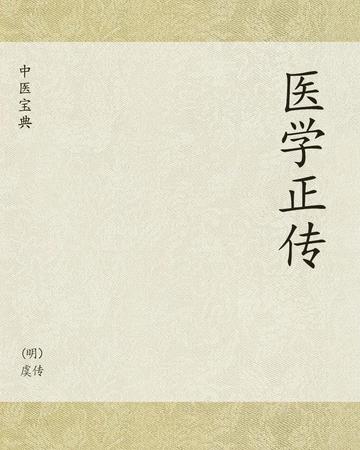
A comprehensive work of traditional Chinese medicine with practical value: it draws on the grand theories and effective prescriptions of medicine from past dynasties, adhering to family traditions, and based on existing ideas. There are eight volumes in total, covering internal medicine, external medicine, gynecology, pediatrics, and oral medicine. It contains nearly a hundred kinds of diseases and syndromes, each disease is a category, and the disease is divided into several items: theory, pulse method, and method. There are rationale, methods, prescriptions, medicines, evidence, and records. His treatment of typhoid fever was attributed to Zhongjing, internal injury was attributed to Dongyuan, and miscellaneous diseases were treated with elixirs. Yu Tuan's ancestors had been practicing medicine for several generations, and he was able to read a lot of books and recite poems and poems when he was young. He turned to medicine because of his mother's illness. He became famous as a doctor after middle age. According to his own statement, most of his medical skills were "taught orally and heart-to-heart by his grandfather". This book's treatment of consumptive fatigue is quite unique. Many theories and experiences can also be used as references for today's clinical practice of traditional Chinese medicine. Let's briefly describe its treatment features as follows. Yu Tuan divides wasted labor into two categories: "deficiency" and "extreme labor".