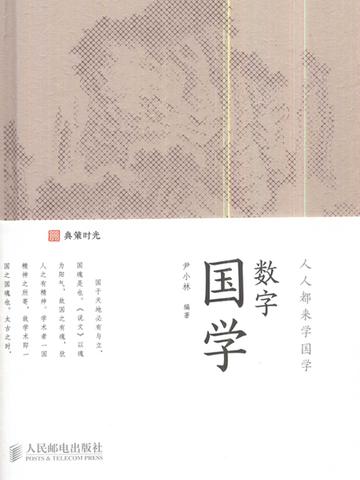
This book is named "Numerical Chinese Studies", which uses numerals as entries. The collected words all have special meanings, ranging from ancient times to the late Qing Dynasty, and the content involves ancient literature, art, history, geography, laws, philosophy, medicine and health, etc. The book contains a total of 2,760 entries and more than 3,230 meaning groups. Number words are a cluster of words with distinctive characteristics in Chinese vocabulary. They are rich in meaning, fixed in meaning, wide in scope, vivid and easy to remember. Based on this point, this book uses "numbers" with specific cultural connotations to guide readers to understand basic Chinese studies knowledge. It is a cultural reading that combines knowledge and interest.
Reader comments
Using digital form to restore Chinese culture to be passed down through the ages, using numerical notes to collect more than 2,000 sets of entries from top to bottom for nearly 5,000 years, this is a booklet with a clear meaning of revival, through the definition and popular science explanation of ancestors, a group of three sects; two saints, two old men and two ministers. The author starts with a number from one to a thousand, and interprets the entries covering astronomy, geography, politics, history and military. It can be said that it is not only broad but also concise and easy to understand. Readers who are interested in Chinese studies must use it for self-examination.
This book uses numerals as entries and covers a long timeline, from ancient times to the late Qing Dynasty. It also covers many fields including ancient literature, art, history, geography, laws, philosophy, and medicine, all of which have certain records and descriptions. It allows us to better understand Chinese culture knowledge, improve skills, and increase our knowledge. At the same time, it is a combination of knowledge and fun, and is a master of culture. The author has clear ideas, categorizes each chapter well, and brings his own emotions at the same time. The logic is clear and the plot is tight. It is an excellent book.
What kind of sparks will be produced when mathematics and Chinese studies collide? This book will reveal the mystery for you. This book compiled by the author Yin Xiaolin brings us a feast of ideas about the integration of traditional culture and modern technology with a profound foundation of Chinese studies and a keen insight into the digital age. I think What makes it unique is that it breaks through the boundaries of traditional Chinese studies and uses digital technology to present Chinese studies knowledge to readers in a more vivid and interactive way. Through charts, animations, interactive simulations and other interesting means, we can more intuitively understand the connotation and essence of Chinese studies.
I especially like the "One Modesty and Four Benefits" mentioned in the book. It's like I regret not studying hard at the beginning before I know the importance of modesty. And seeing "One Ancestor and Three Lineages" reminded me of my favorite poet Du Fu. His poems are really charming. This book is like a treasure. Every number hides an interesting story, which makes me more interested in Chinese studies.
This book is theoretical, interesting and readable. It is an encyclopedia worthy of in-depth study. The author uses numerical words as entries in this book, and the entries included cover a wide range of fields, such as ancient literature, art, history, geography, etc.; At the same time, the time span is also very large, from ancient times to the late Qing Dynasty. In the process of listing and explaining numerical words, the author uses simple and clear language to lower the reading threshold and avoid obscurity. He also uses certain pictures to help understanding, striving to be easy to understand and worthy of recognition.
Using digital form to restore Chinese culture to be passed down through the ages, using numerical notes to collect more than 2,000 sets of entries from top to bottom for nearly 5,000 years, this is a booklet with a clear meaning of revival, through the definition and popular science explanation of ancestors, a group of three sects; two saints, two old men and two ministers. The author starts with a number from one to a thousand, and interprets the entries covering astronomy, geography, politics, history and military. It can be said that it is not only broad but also concise and easy to understand. Readers who are interested in Chinese studies must use it for self-examination.
This book uses numerals as entries and covers a long timeline, from ancient times to the late Qing Dynasty. It also covers many fields including ancient literature, art, history, geography, laws, philosophy, and medicine, all of which have certain records and descriptions. It allows us to better understand Chinese culture knowledge, improve skills, and increase our knowledge. At the same time, it is a combination of knowledge and fun, and is a master of culture. The author has clear ideas, categorizes each chapter well, and brings his own emotions at the same time. The logic is clear and the plot is tight. It is an excellent book.
What kind of sparks will be produced when mathematics and Chinese studies collide? This book will reveal the mystery for you. This book compiled by the author Yin Xiaolin brings us a feast of ideas about the integration of traditional culture and modern technology with a profound foundation of Chinese studies and a keen insight into the digital age. I think What makes it unique is that it breaks through the boundaries of traditional Chinese studies and uses digital technology to present Chinese studies knowledge to readers in a more vivid and interactive way. Through charts, animations, interactive simulations and other interesting means, we can more intuitively understand the connotation and essence of Chinese studies.
I especially like the "One Modesty and Four Benefits" mentioned in the book. It's like I regret not studying hard at the beginning before I know the importance of modesty. And seeing "One Ancestor and Three Lineages" reminded me of my favorite poet Du Fu. His poems are really charming. This book is like a treasure. Every number hides an interesting story, which makes me more interested in Chinese studies.
This book is theoretical, interesting and readable. It is an encyclopedia worthy of in-depth study. The author uses numerical words as entries in this book, and the entries included cover a wide range of fields, such as ancient literature, art, history, geography, etc.; At the same time, the time span is also very large, from ancient times to the late Qing Dynasty. In the process of listing and explaining numerical words, the author uses simple and clear language to lower the reading threshold and avoid obscurity. He also uses certain pictures to help understanding, striving to be easy to understand and worthy of recognition.