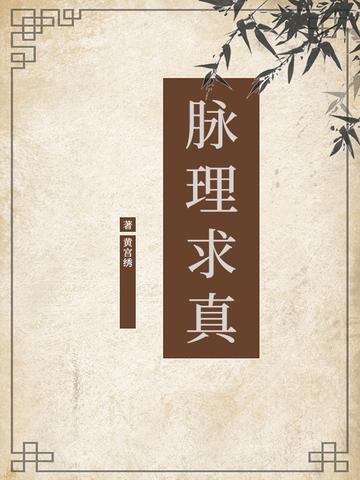
Pulsology works. Three volumes. Written by Huang Gongxiu of the Qing Dynasty. Volume 1 is the key points of the new pulse diagnosis method, which introduces the location of pulse diagnosis, the image of various pulses, main diseases, etc.; Volume 2 adds the new Four-Word Pulse Essentials, which is based on the additions and deletions of Cui's "Four-Word Pulse Essentials" contained in "The Doctor's Eyes"; Volume 3 is written by Wang Ang. The Song of the Twelve Meridians and the Song of the Eight Extraordinary Meridians are appended at the end to make it easy to understand the new pulses. The author synthesizes the discussions of various experts, uses personal experience, describes the pulse theory in conjunction with clinical practice, and briefly analyzes some important issues in the pulse method. This book was originally published as a supplement to "Materia Medica Seeking Truth" and was later published as a separate volume. Several clear editions exist. There is a typesetting version after 1949.
Reader comments
This book is very practical! I especially like the introduction to various pulse conditions, as well as the analysis of the relationship between pulse conditions and diseases, which gave me a deeper understanding of pulse theory in traditional Chinese medicine. And I think the author explains complex pulse knowledge very clearly, just like chatting with friends, making it easy to understand. For example, the book's explanation of the internal organs corresponding to Zuo Cun, Zuo Guan, and Zuo Chi made me understand that the pulse conditions in different parts reflect different physical conditions. I think this book is a good reference book for people studying Chinese medicine.
It is a very good book on pulse theory. It should be based on the actual experience of the ancients. It is a pity that it has not been translated into vernacular and some parts are incomprehensible!
The level of explanation is very high. I am willing to listen and give you a thumbs up.
This book is very practical! I especially like the introduction to various pulse conditions, as well as the analysis of the relationship between pulse conditions and diseases, which gave me a deeper understanding of pulse theory in traditional Chinese medicine. And I think the author explains complex pulse knowledge very clearly, just like chatting with friends, making it easy to understand. For example, the book's explanation of the internal organs corresponding to Zuo Cun, Zuo Guan, and Zuo Chi made me understand that the pulse conditions in different parts reflect different physical conditions. I think this book is a good reference book for people studying Chinese medicine.
It is a very good book on pulse theory. It should be based on the actual experience of the ancients. It is a pity that it has not been translated into vernacular and some parts are incomprehensible!
The level of explanation is very high. I am willing to listen and give you a thumbs up.