


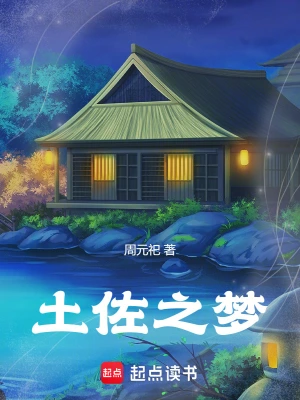
Dreams of Tosa
土佐之梦
- Status
- Completed
- Length
- 1.4M Words
- Genre
- Historical
- Subgenre
- World History
- Updated
- 14y ago
- Source
- Qidian
Stats
Tags
Synopsis
In booklists 38
Explore more →
A Categorized History Reading List
Books I've read and am currently reading
Old Classics, Whatever
Works
The Blue Sea Beneath the Bright Moon
Just my humble opinion: these are great novels, and I hope to share them with you!
A Taste for Ranting
I haven't found a book I've really loved in ages.
Historical Novels That Capture the Spirit of Their Era (Static List, Updates Unlikely)
Some are nourishing, some are mediocre, and some are toxic.
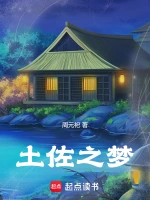

No Beginner-Level Writing, Realistic Style, Mostly Historical
One book, one life, one world. Every character feels real and fully formed, with their own thoughts, ideas, and point of view! Historical fiction, but not focused on technology.
Personally Enjoyed Good Reads
Pretty good
A Personal Reading List to Cure a Reading Slump
Some historical fiction, game fiction, and other good books.
Great Books From the Past, Present, and Future
A veteran reader whose reading age exceeds Qidian's own. Some books vanish while I am following them; some are left to accumulate chapters until I forget them. Rating standards: ★★★★★, masterpiece, highly recommended; ★★★★, excellent work, worth the journey; ★★★, good work, worth a look. ========================== Five-star masterpieces, listed by the time I discovered them: 1. Lord of the Mysteries 2. Chixin Xuntian Four-and-a-half-star near-masterpieces: 1. Shenyou 2. Circle of Inevitability
Recommend Books, Recommend Books, Recommend Books
Book Recommendations
My Bookstore
Personal picks, all fully subscribed. Feels like it's slowly turning into harem stuff~
Distinctive Styles
Distinctive style, smooth prose, captivating storytelling, and fresh subject matter.
Come and Read!
Recommending some books I've read
Masterpieces, Classics, and Promising New Stories
Books I used to like and books I like now, finished or abandoned by their authors.
Books I Love (Mostly Completed)
I'm lazy, so I only write reviews when I feel like it. When my laziness kicks in, I write even less... Anyway, these are all works I personally enjoy. Whether you read them or not, I'm going to.
Fang Tang Studio
Your host, Fang Tang, invites you to listen at your leisure A list curator driven purely by personal interest A list that reflects my personal taste alone 5 candies: Absolute classics 4 candies: Rare finds 3 candies: Worth a read Below 3: Not recommended No brainless fiction. We don't settle! (I'll take a look at ads. I support new authors, but delete them now and then because of my obsessive-compulsive tendencies.)
Imprisoned Souls
A list for an old-fashioned reader with eclectic tastes.
Books I Like to Read
Books I like, not beginner-level
A Reading List for Veteran Readers Who Can't Get Into Mainstream Fantasy
History, science fiction, and fantasy
Cold Weapons, War, Horseback Combat, and Fantasy
A realistic, disgusting stench of blood
Books That Left an Impression
Books that left an impression
Those Addictive Books You Can't Put Down (Slowly Updating)
Books I enjoy. Most are complete, and I'll note the few that aren't. I don't care about genre when I read. Good ideas and good writing are what matter, and the books on this list generally have both. Some older books had very original ideas in their day, though they may seem cliched now after being copied so often. I hope you understand. Also, please follow me. If you found something good to read here, come back and leave a flower too.
Literary Life
Some books are worth a look
A Recommendation List of Foreign Historical and Anti-Japanese War Fiction: Not Quite Masterpieces, but Few Enough to Count
I think I'll only introduce books covering events before the first battle.
Readers also read
 Chronicles of the Red Mansion
 The Corpse Plague of 1916
 In the Ming Dynasty, the Days When the Cows and Horses Turned Over
 An Important Town in the Residual Tang Dynasty
 Greek Mythology: My Name Is Sphinx
 Sengoku Japan: The Rise of the Tiger of Wakasa
 Japan's Warring States: The Crossroads of Glory
 This Adventurer Is Way Too Righteous
 My Years as a Ghostwriter in Taiwan
 I Became a Daimyo in Japan
 Sengoku Japan: The Ruler of Ise
 Japan’s Sengoku Era: From Cannon Fodder to Ruler of All
Reader comments 37
Google Translate
Alas, I read the article. It is heartbreaking that the author no longer writes books.
Each and every one of them spoke of Japan's expansion as justifiable, as if the two-hundred-year ban on the Tokugawa Sea was false. Japan is very large and has a lot of developable areas. There is no such thing as "people will starve to death if they don't invade". At the end of the book, the development of Hokkaido has just begun, which shows that the demand for territory is not large. Invading North Korea, for the upper class, is a desire for luxury caused by pride and arrogance, while for the lower class, it is the habit of expanding territory by relying on military merit. This is caused by the traditional education of the Wu family, because they can do nothing but beat and kill them. It is not a rigid requirement by any means. During World War II, we had to fight even if our families were ruined and we had no food to eat. This was called a necessity. There was no such rigid need during the Warring States Period. The real situation is that after Toyotomi lost power, the Tokugawa shogunate carried forward the family characteristics and locked the country for a while. It was always fun to lock the country. Without the black ships, it might have been locked for hundreds of years. During this period, the civilians were affected by the samurai, the samurai were affected by the feudal lord, and everyone was affected by the shogunate. Without expanding externally, we still live a nourishing life.
To be honest, the writing is good, but writing about Japan is doomed to hit the streets, I understand. I can only die in Japan. Don't think about anything else. If you dare to write about invading the mainland, you will get 404 immediately.
Someone who has been recommended to read this book can tell you whether you can continue reading it. First, there is a plot of giving away a girl in the book. Xiaoxia has been following him and confessing to him, but the protagonist is indifferent. However, it is very surprising that in just one chapter, he falls in love with a girl he has just met and has a child with him. Woman, and fell in love with her. Note that he fell in love with this woman and then fell in love with her. It was all solved in one chapter, and he also asked Sawaki and others to chase Xiaoxia. Oh, Xiaoxia died later Secondly, just like the name of this book, the protagonist cares about y. The ending of this book says that all this is his dream.
I love this book so much that I read it again every year. I hope the author can write another book
The writing is okay, but sometimes a little too indecisive. And why in all the novels about Japan's rebirth, the protagonist clearly knows that the only way for Japan to develop is to expand outwards. However, the protagonist always comes up with various ways to prevent the development of Japan ruled by him because of his Chinese soul. I don't understand. Even if you can't attack Korea and the Ming Dynasty, you can always attack Southeast Asia. As a result, the protagonist treats expansion as a scourge and calls it militarism.
The ending is so good. After reading it, I felt disappointed. I felt regretful because of the dream but tender because of the dream. Although it is explained as a dream, I think that with the magic of Haiyue, we might as well regard the past experience as real, just another timeline, another parallel world. When the false becomes true, the true is also false, and the inaction exists and returns to nothingness. Although I dream about the vicissitudes of life, I also have a long journey home. In the end, Xiao Xia's story about fate and the male protagonist's relief were also well written. Those people and things just flowed away, leaving them alone and undisturbed. Only the clever girl in the cabin was waiting for him. They can play games in the mountains and forests, hunt and fish, return to the countryside, open a vegetable house, and give birth to a bunch of fat babies... The pain is gone.
Hahaha, it's always like a dream, it's always like a dream! The most regrettable thing is that the nights are short and the dreams are long, the storms are ups and downs, and the heroes and heroines and the love between their children are long, and they finally wake up when the rice is ripe. Who can know how much regret and how much obsession there is? 😭
This book is a big failure
After reading more than seventy chapters, the most impressive thing is that the characters in the book change their names at every turn. A promoted minister who is born as a commoner will change his name once to suit his status, and the relationship is complicated. After the family is separated, the branches change their names. After defeating the enemy, the son is forced to adopt the enemy and the son changes his name. After defeating the enemy, he forcibly marries the enemy's daughter and gives birth to a son, and then adopts the enemy to inherit the family business. If he becomes a monk, he changes his name. Changing the names is not the most important thing. The important thing is that the author wrote these in too detail and too verbose. There are a lot of basic chapters describing the relationship between the characters in the book, and some people changed their names several times so that their heads hurt. You must know that I came here to read the story and not to see the relationship between Japanese historical figures. Did the author not consider that the readers are all Chinese? Generally, most authors who have many names like this will choose the most famous one to write about. For example, Picasso, how many of them know the full name?
Alas, I just want to say that after reading this book, all other Japanese war literature will taste the same.