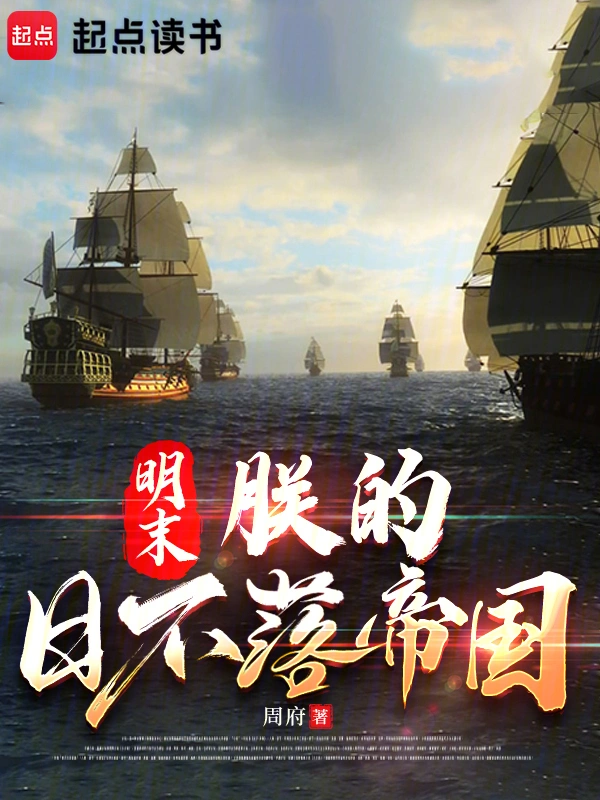
Late Ming Dynasty: My Empire on Which the Sun Never Sets
明末:朕的日不落帝国
- Status
- Completed
- Length
- 82k Words
- Genre
- Historical
- Audience
- Male
- Subgenre
- Song-Yuan-Ming Dynasties
- Updated
- 9mo ago
- Source
- Qidian
Stats
0Monthly votes
413Recommends
45Fans
32Chapters
Tags
Synopsis
Reader comments
Readers also read
 Talker in the Song Dynasty
 In the Red Mansion: Escort Daiyu to Beijing at the Beginning
 Please Call Me Your Majesty the Tsar
 1914 Begins with the Rejection of the Schlieffen Plan
 Never Walk Alone!
 I Want to Revive the Tang Dynasty!
 It's Time to Return to Heaven During the Qingming Festival
 Daming: Have I Become Wanli's Portable Grandfather?
 I Am Drawing a Hot-Blooded Episode in the Zhiyu Episode!
 Jiajing Mingjun
 Overturning the Jin Dynasty: a Comeback
 You Promised to Fight Against the Qing Dynasty and Restore the Ming Dynasty, but You Are Going to Camp in Jintian?
 Three Kingdoms: Ancestor of Hanzhong
 Late Han Dynasty and Zhao Tang Dynasty
 Ji Han Da Sima
 My Father, Liu Bei, Hopes That He Will Become a Dragon.
It's not a bad thing to give up early... Writing several books does make people feel that they are very streamlined.
Your previous book, Ji Han Da Sima, was well written.
Fujian people should choose Fujian to start their own business! Although Fujian is an indisputable place for military strategists throughout the ages, Fujian should have strong soldiers! In the era of cold weapons, strong soldiers really have their own regions! The first is the Qin army in Shaanxi! The second place is Shanxi and Hebei! The third place is Huaixi in the Central Plains! Some places south of the Yangtze River are nothing more than Danyang soldiers! Strong soldiers also appeared in other places, but they were all short-lived! For example, Qin Liangyu's white pole soldiers and Qi Jiajun's Yiwu soldiers! Guangxi Wolf Soldiers, Northeastern Jurchen Tribe, Northeastern Khitan Tribe... I said that there may be strong soldiers in Fujian because the forces that attacked Fujian several times paid a high price. The first record was that Qin Shihuang attacked Fujian after unifying the six countries, and the general died! Only then can we carry out restraint and rule! Later, Emperor Wu of the Han Dynasty also sent people to attack Fujian, but also suffered heavy losses, and also carried out Jisi rule! Some people may have said that it is because Fujian has not been developed due to environmental reasons and there is too much miasma, which has nothing to do with people! During the Five Dynasties and Ten Kingdoms period, the Southern Tang Dynasty attacked Fujian and directly missed the opportunity to capture the Central Plains! At that time, the Central Plains was completely waiting for someone to take over, and those who resisted the Khitan relied on the rebel army! As long as there is a partial division of the Southern Tang faction, the territory will be taken over at will! What was Nan Tang doing at that time? Fighting in Fujian! All the troops were dragged to Fujian! Some people may say that Southern Tang is not strong! In the early Qing Dynasty, the attack on Fujian was strong enough. Didn't it take decades to completely occupy Fujian? So I think Fujian can send strong troops
In the age of great strife, dragons and snakes arise together
Registration form for heroes in the late Ming Dynasty: 🤓 Liu Xingzuo, courtesy name Dehan, was a native of Lingling, Yongzhou Prefecture, after Liu Bei, Emperor Zhaolie of the Han Dynasty. He is eight feet long, has a face like a crown jade, eyes like bright stars, a majestic body, and is good at wielding two swords. He beat a bully in his hometown to death because of an injustice, and lived in Fujian. Later he met Taizu, and he became a founding father of the country.
It's a pity. The subject matter is actually quite special.
Have you read too many novels and always thought that the first element of a strong army is adequate food and pay? Do you think any ancient powerful army had enough food and pay in its early stages? The first element of a strong army is faith. If you don't have faith, you must at least have that energy! Otherwise, everything is in vain! You don't have to rely solely on robbing for money and food. Don't overfeed them after robbing them, otherwise they will decline quickly! Don't think that Fujian can't produce a strong army because it has too many mountains and too little land to support many people! On the contrary, most of the places where strong troops were sent out in ancient times were places with more mountains and less land! If you have no money or food, go grab it! Of course, except the Central Plains! After all, Zhongyuan is either being robbed or on the way to being robbed! So I ranked the Central Plains soldiers in the third class!
Very good, the protagonist is Zheng Zhilong's ecological niche. He made early arrangements and acquired the territory of Taiwan and Xiamen. Relying on trade income, he could arm 30,000 elite army soldiers and a fleet of 80,000 sailors, which could support at least 300 Chinese-style warships. If you maintain a Western-style fleet, you can also maintain about 60 third-class battleships. This strength is enough to sweep across the entire Jiangnan. But if we cross the Yangtze River to the west, we will be invincible at first.
The author's previous heroine was not Cai Wenji, but some historical beauties such as Da Qiao, Xiao Qiao and Zhen Mi. She looked uninteresting and had poor results.
The main heroine is not Cai Wenji, there are some historical beauties such as Da Qiao, Xiao Qiao and Zhen Mi. They look boring and have poor results.
It's a pity. The subject matter is okay, but the early stage was too bland.
Are you writing a book about the Three Kingdoms?
I think you wrote Ji Han Da Sima very well! I watched it three times! ! What you wrote this time about the end of the Ming Dynasty made me a little sleepy, brother.
Character building
This book requires a large number of characters, and book lovers are welcome to create them. Format: name, place of origin, age, expertise, role introduction
Jiangnan slave change
The Jiangnan Slave Rebellion in the late Ming Dynasty was a large-scale riot in the Jiangnan region between 1644 and 1645 (late Ming Dynasty and early Qing Dynasty) when slaves resisted the oppression of landlords. The core demands were to abolish hereditary slave status and seize property. It was accompanied by violent conflicts, which led to the extermination of a large number of gentry families and ultimately accelerated the disintegration of the personal dependence system in the early Qing Dynasty. Background and reasons The slave change was rooted in the solidified personal dependence system and intensified social contradictions in Jiangnan in the late Ming Dynasty: Institutional oppression: slaves (including worldly servants and degraded people) were designated as untouchables by the "Ming Dynasty Law". Imperial examinations and intermarriage were prohibited, and their descendants were hereditary slaves, with extremely low status. Economic collapse: In the late Ming Dynasty, serious land annexation (such as the occupation of land by royal relatives), superimposed "Liao" tax increases and natural disasters, farmers went bankrupt and sold themselves into slavery; landlords pressed for rent like tigers, and slaves "were unable to eat". Impact of the Uprising: Li Zicheng's capture of Beijing (1644) and the Qing army's march south (1645) caused a vacuum of order, and the slaves took the opportunity to rebel. Process and Characteristics The riot centered on Sochi and the seizure of property, and was loosely organized but wide-ranging: Early Sochi: Slaves armed with weapons forced the landlords to return their deeds, such as Zhu Guangdou in Jintan, who "burned dozens of houses." 26 Violence escalates: it develops into robbery and massacre, such as the Jiading "Oolong Club" executed the head of the cruel official family, and 21 members of the Xu family in Jiangyin were exterminated. 24 Organization and Slogan: Groups such as the "Nose Cutting Class" (Jintan) and the "Oolong Society" (Jiading) emerged, proposing to "eliminate the masters and servants, the noble and the lowly, the rich and the poor, and level them all." Scope and scale: It affected the four prefectures of Jiangsu, Zhejiang, Anhui and Jiangxi. In the early years of Shunzhi, more than 170 riots were recorded, and more than 300 gentry households were burned and looted. Impact and Historical Significance Short-term Impact: The gentry economy was severely hit ("three or four out of ten of the land and houses joined the slave party"), and the rule of the Southern Ming Dynasty collapsed due to the collapse of local order. System Change: During the Kangxi period of the Qing Dynasty, the "Regulations on Redemption" were promulgated, allowing slaves to pay silver to leave their citizenship; Emperor Yongzheng abolished the Lehu slave registration, accelerating the demise of the relationship of personal dependence. Historical significance: It reflects the resistance of the lower class to the feudal hierarchy, and its demand for equality has become the epitome of social transformation.
Anyone who wants to see the Southern Song Dynasty can come
Just like the title, I guarantee that there will be no supervision.
What time is the update?😆
Well written, what's the point of raising a widow? She's not a native.
The group, brothers, can't find its home.
🙂🙂🙂😭😭😭😰😰🤓🤓🤓
There is a big gap between the number of subscriptions for the author's last book, The Eunuch, and the first one. The subject matter of this book is very good and the author did a good job writing it.