


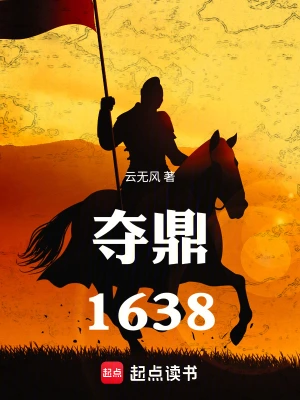
Seizing the Throne: 1638
夺鼎:1638
- Status
- Completed
- Length
- 5.3M Words
- Genre
- Historical
- Subgenre
- Alternate History
- Updated
- 1mo ago
- Source
- Qidian
Stats
873Chapters
3Votes
17.2kRecs
32.6kFans
Tags
Synopsis
More by this author
In booklists 2




A Reading Journal for History and Urban Fiction
I consider myself fairly knowledgeable about urban and historical fiction. The books I recommend have qualities I think are worth recommending. I’m not afraid of flaws, but I do want a story to have something distinctive. Evaluating a book isn’t about nitpicking; it’s about weighing its strengths against its weaknesses. I recommend books whose strengths I personally feel outweigh their flaws. Of course, every reader has their own taste, and a book not being to your liking isn’t something you can
26Books49Follows2moUpdated


Smart Characters, Sound Logic, and Healthy Values
Historical and xuanhuan novels, all with sound values and intelligent characters
34Books23Follows1yUpdated
Readers also read
 Seizing the Direct Descendant in the Red Mansion
 A Literary Master in Ancient Greece
 Great Ming: His Father Is Useless, So He Must Summon the Founding Emperor
 Germany: 1914
 Simultaneous Transmigration: Is Everyone Starting Out in Prison?
 The Taiping Heavenly Kingdom, 1854
 At the End of the Jin Dynasty: From Human Livestock to Emperor
 A Great Industrial Nation, Starting with a Fake Student Abroad
 A Dual Status Panel Descends into the Abyss, and the Assassin's Potion Is Right at the Entrance
 A Charcoal Burner in the Qing Dynasty, 1848
 Sun and Moon: Yongli 1656
 The Great Ming
 The Grand Secretary of the Ming Dynasty
 Cleared: 1795
Reader comments 30
Google Translate
Indeed, at the end of the Ming Dynasty, you could either directly travel and become Emperor Nanming or Emperor Chongzhen, or you could simply rebel, in the name of Ming or Qing, but in fact you were still rebelling, and it was acceptable to fight for the world. To put it bluntly, those who wrote other historical novels as assistants were basically the ones being assisted. The person himself is so popular that even if the protagonist helps him, the readers will not feel humiliated or even feel proud to be involved. At the end of the Ming Dynasty, there were basically no such characters. Maybe those who really liked the Qing Dynasty might assist Huang Taiji, but the problem is that Huang Taiji did not live long after entering the customs.
Why couldn't the Ming army defeat the Qing army?
This is a very confusing topic. To be precise, it should be that in small and medium-sized battles (less than ten thousand people), the Ming and Qing sides were good at winning. In battles of more than ten thousand people, especially those that require the coordination of multiple theaters, the Ming army basically has no chance of winning. Why is this so?
In my personal opinion, Confucianism is a parasite. One dynasty eats it up and replaces it with another. Anyway, they have nothing to lose. What about the royal family, martial arts, and the glory and wealth that you should enjoy? 😁😁😁😁 Those are the people who are selfish and benefit themselves at the expense of others. The governance system does not function as well as them. They rely on history to manage the place and do not allow the descendants of government officials to participate in scientific examinations 😁😁😁
Like a book from more than ten years ago, from chapter title to content
A small comment. Regarding Li Zicheng and Zhang Xianzhong, there are too many plots written. There is no need to write too much about how they internally decided how to attack the city.
There were no good people in the late Ming Dynasty, Southern Ming Dynasty, and early Qing Dynasty. They were all beasts in human skins, except for Guizhou. No matter what moral etiquette or sage theory, regardless of its low morals, it is comparable to the Wuhu period and the Five Dynasties Rebellion. When a military leader kills a person, he draws his sword quickly, and when a gentry kills someone, he shows off his justice? . There are many diodes online now. History must be viewed dialectically. During this period of history, when comparing the Ming and Qing dynasties, no one is much better than the other. Compared with killing people, no one kills less than the other. Do you remember the three massacres in Jiading, the ten days in Yangzhou (the southern massacre in the Qing Dynasty), the massacre in the Central Plains, the refugees in Jingxiang, and the slave rebellion in Jiangnan (the northern massacre in the Ming Dynasty). Of course, I am speaking from the perspective of the head of Guizhou. If anyone wants to speak from the perspective of a gentry, please go away. In the period of peace, the gentry enjoyed themselves and emptied the foundation of the country. In times of trouble, refugees take responsibility and make accusations loudly. Sadly said: What does the country have to do with me? The so-called common man is responsible for the rise and fall of a country. How ridiculous it is to the refugees in this world! Sad? Die? This is shit! He sighed and said: Just begging for a living!
Zuo Mengeng's strategic layout for the whole country is too bad. You know that in history, the Qing army will inevitably attack the Shun army, and the Shun army is not an opponent at all. You have to send messengers to inform the Shun army that the Qing army will attack. This way the Shun army will be prepared. The end result is that both sides will lose. With the Qing army's combat power, the Shun army will still fail, but the Qing army will also suffer heavy losses, which will be beneficial to you in the future against the Qing army!
I always feel like I'm exerting myself a little too hard.
I feel that the more I write, the better, but there are still many hidden dangers in governance. For example, the failure to collect taxes in the late Ming Dynasty was because the gentry class group did not pay taxes. How could the gentry group pay taxes? The second is that Zuo Menggeng did not have children yet, which was a huge long-term hidden danger to the regime at that time and might lead to the disintegration of the regime in the future. It is recommended to marry more women, especially the eight beauties of Qinhuai in the late Ming Dynasty, such as Gu Hengbo, Kou Baimen, and Dong Xiaowan, who were not yet married at that time.
It's too naive to still think about saving Shandong. Zuo Zhen won't get any benefits. Now he should be thinking about getting Anhui, Huaiyang and other places. This is a mature politician, not like the Holy Mother! Historically, Zuo Menggeng wanted to occupy Nanjing, establish a puppet emperor, and establish a new dynasty.