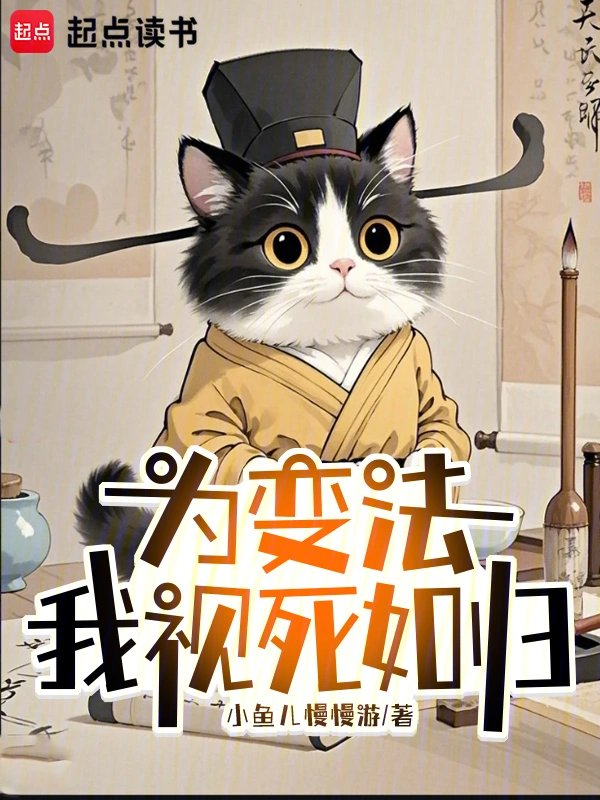
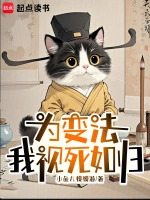
For the Sake of Reform, I Regard Death as Homecoming
为变法,我视死如归
- Status
- Completed
- Length
- 1.5M Words
- Genre
- Historical
- Audience
- Male
- Subgenre
- Song-Yuan-Ming Dynasties
- Updated
- 6mo ago
- Source
- Qidian
Stats
0Monthly votes
38.7kRecommends
114.6kFans
330Chapters
Tags
Synopsis
Reader comments
In booklists 2
Historical Time Travel Novels of Song, Yuan, Ming and Qing Dynasties
Novels that travel through the Song, Yuan, Ming and Qing dynasties
21Books1.2kFollows1yUpdated


Niche Treasure Crystallization Book List
I am a 15-year-old bookworm, and my book list is complex. It mainly focuses on farming, but also includes two dimensions, history, time travel, etc. You can check out those who are short on books or have similar content.
12Books0Follows10moUpdated
Readers also read
 Please Call Me Your Majesty the Tsar
 Talker in the Song Dynasty
 1914 Begins with the Rejection of the Schlieffen Plan
 In the Red Mansion: Escort Daiyu to Beijing at the Beginning
 Never Walk Alone!
 Daming: I, Yan Maoqing, Really Smoked
 Daming: Your Majesty, It's Time to Drink Medicine!
 Daming: Have I Become Wanli's Portable Grandfather?
 I Am Drawing a Hot-Blooded Episode in the Zhiyu Episode!
 Ming Dynasty Veterinary Medicine, Who Saved Zhu Biao's Life at the Beginning
 My Portable Ming Court
 Daming: I Asked You to Die to Remonstrate, Why Are You Really Dead?
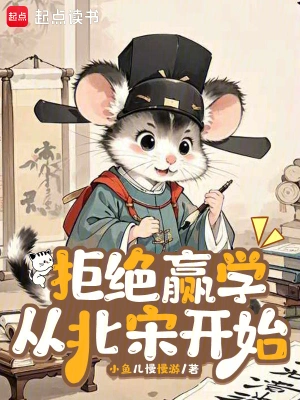 Rejection of Yingxue Began in the Northern Song Dynasty
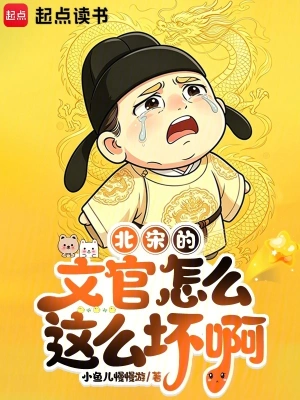 Why Were the Civil Servants in the Northern Song Dynasty so Bad?
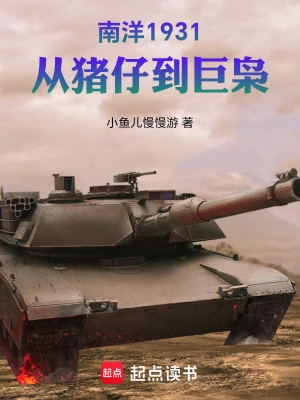 Nanyang 1931, from Piggy to Giant Owl
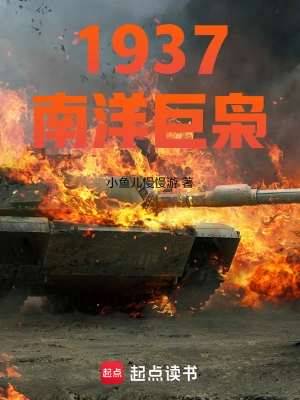 1937, Nanyang Giant Owl
It is very well written. I personally think it is the most thoughtful book since Tang Dynasty. I give the author a thumbs up. By the way, I graduated with a PhD.
As expected, the history circle is still a bad one. The comment section is already noisy, but we can still get together to read the same book 😄
The protagonist feels awkward
In order to support the bourgeoisie, they deliberately tied the bourgeoisie to the army, hoping to replace the landlord class, and even tricked the imperial power and many scholar-bureaucrats into siding with them. But there are several core issues. First, the production relations of capitalism are only more advanced than feudalism, not to mention that in the early stage of capital accumulation, it felt stronger than serfdom, but also limited. Second, if the level of productivity is not reached and capital is transferred by force, exploitation will become even crazier, capital's ability to withstand risks will be even worse, and the conflict with the feudal landlord class will become more acute, which is basically out of the question. Another one that is more disgusting is to form a women's federation. Haha, women's liberation is not the kind of deconstruction and narrative of women's rights. The core of women's liberation is still the class issue, which requires overthrowing three mountains. You support the imperial power, support the capitalists, and even establish a women's federation. To be honest, I am really disgusted. The so-called women's problem in the article is basically that the level of productivity is low. Compared with the core production positions, men must be more cost-effective. Even if the author also writes about the textile industry, if it is so popular, do you think that if male workers do not consume a lot of heavy industry, will the textile industry recruit female workers? Secondly, don't read many articles about so-called patriarchy. The core is actually feudalism, feudal society and feudal thoughts. Don't expect these people to betray their class. Wu Zetian can have female officials, but there is no women's federation.
This kind of book has a problem with its conception!
If you die for your country, you will become an immortal! Let's not talk about how to judge the credibility of the idea that you can become an immortal after death! Judging from the introduction, Pig's Knuckle believes in and wants to realize it as soon as possible, so why would he choose the most troublesome method of reform? ! If you go to suppress the bandits, do you think you are serving the country and the people? If you go to kill the cavalry of the Liao Kingdom and Xixia plundering the border, do you think you are serving the country and the people? Even if you find a corrupt official to assassinate, you are also killing traitors for the country! Wouldn't it be quicker to die than if you offended people by enacting reforms? 🤓
Why should the protagonist, a good man from nine generations, do anything good when talking about cross talk? In the tenth life, I died for the sake of death. I am selfish. I am a pure villain. How can I be considered the best?
If the protagonist does not become the emperor, then the protagonist must carry out comprehensive changes that limit the emperor's rights. It is useless if the protagonist just copies the technology of later generations and adds a few reforms. If a country wants to produce a large number of original inventions and creations, it must carry out systematic changes in ideological foundation, political structure, legal system, social forces and other aspects. The reason why Britain was the first to enter the Industrial Revolution is that after experiencing the ideological changes of the European Renaissance, coupled with the British Glorious Revolution of 1688, the king's rights were further restricted. Britain established the framework of parliamentary sovereignty and the rule of law, and the bourgeoisie, the new aristocracy, and the king formed a check and balance, which allowed British civilians to gain unprecedented freedom. At this time, the degree of freedom of scholars, craftsmen, and farmers in Britain was higher than that of other European countries at the same time, and it was far more liberal than the civilians of China's Ming and Qing dynasties. The high degree of freedom of all British civilians fully inspired everyone's strength. The power of the Chinese emperor was not greatly restricted, and all officials, gentry and landlords were dependent on the imperial power. The freedom of civilians, who account for the vast majority of the country's population, is too low. This system inhibits innovation and hinders social development. China's Zhou Dynasty was a feudal system, and the central government could not control much of the local princes' affairs. The princes competed with each other. During this period, Chinese civilization truly allowed a hundred flowers to bloom. Most of the essence of Chinese civilization came from this period. During the Spring and Autumn Period and the Warring States Period, the "Mo Jing" recorded the principles of optics and mechanics, and the germination of geometry had emerged; the "Gan Shi Xing Jing" recorded astronomical observation data. But from the Qin Dynasty to the Qing Dynasty, there was almost no progress! The institutional innovation of the Spring and Autumn and Warring States periods stagnated after the Qin and Han Dynasties, lacking the ability to dynamically adjust. Since the Qin Dynasty, especially since the Han Dynasty deposed all schools of thought and only respected Confucianism, Chinese civilization has almost stood still and entered a dead end. The Zhou Dynasty and the Spring and Autumn Period and the Warring States Period were similar to the ancient systems of most European countries. They were all feudal systems. Even in successive years of war, less than 10% of the country's total population died directly or indirectly as a result of the war. But from the Qin Dynasty to the Qing Dynasty, every dynasty would kill half or more of the country's population due to war! What is even more tragic is that every time there is a change of dynasty, there is almost no progress in the system and culture! {"NickName":"Restriction and Supervision","UserId":417773267}
I don't understand why the protagonist must become a disciple. This kind of setting usually involves lonely ministers. Wouldn't it be nice to cooperate with others? It's just a mindless and enjoyable article, so why can't it be enjoyed to the end? Get an apprenticeship
If you don't centralize power and don't have soldiers, what is the change? The most convenient way to die for the country is to go to the border. Just charge into any conflict without armor.
It is recommended to charge authors a breathing tax and pool their money to build the country so that authors can be more patriotic.
It's really easy to deal with people like the protagonist. Isn't the protagonist going to be a saint and a blue sky? I am your opponent. I will immediately corrupt his family and friends. The simplest way is to give you the beauty of White Moonlight. Do you want it? If you want it, let the beauty secretly engage in loan sharking, fraud, smuggling, and gambling without telling your family. The simplest way is for the villain to find a girl of his own, and then deliberately arrange for people to cooperate in killing and threatening her. When the protagonist sees it, will he save her? At this time, arrange for the girl to rely on the protagonist's family. You can't guard against this, right? Then let this woman do bad things on purpose. Maybe the protagonist will have servants and friends later on, and there will be various methods of coercion and inducement to trick you, and various traps will be dug, but there will always be one that will fall into your trap, right? I'm going to expose you at this time, the protagonist, what are you going to do? Should you kill your relatives and friends or not?
A classic and mindless novel, the main character is sure to succeed when he wants to do something, and there is also an introduction. Why should I scold Wang Anshi? It's all about praising the protagonist and scorning everyone else.
For a theme like this, you shouldn't make the main character want to die, otherwise it would be somewhat unjustifiable, and you would have to explain a lot of things about it by saying that he wants to die. . . With a slight adjustment, the protagonist wants to engage in a large-scale social experiment. If he dies, he will be guaranteed to become an immortal. It is logical to go out and offend others and carry out reforms. . It's very strange to simply use the death wish as the main plot, but it ends up being so messed up that even after millions of words, the death wish is not successful. . .
Ninth-grade Sesame Official, you can change your ways.
Wang Xiaoxian, what kind of logical name is that?
Why is Ruozhi sent to death again? It's simply another big shithole after system documentation.
The writing is really not good. When I arrested you, you didn't dare to hit me with a knife. How could you be so awesome?
Is the role of family members just to disgust readers?
You didn't lay the groundwork for a long time and co-wrote the protagonist's family to come up against the protagonist, right? When I met Wang Anshi, I almost packed up the protagonist and sold him. He gave me the secret recipe as soon as he was told. Anyway, the secret recipe was invented by the protagonist. He is also the eldest son. You have a daughter and a second son. Before the protagonist expressed his attitude, the two of you rushed to lick it. Without the protagonist, Wang Anshi can talk to you? The parents said there was nothing wrong with the protagonist, but the daughter and second son were like white-eyed wolves, speechless
Putting aside everything else, is the name Pig's Feet Wang Xiaoxian so reasonable? Which serious court do you dare to use? In feudal society, in feudal society, names that are too catchy and ugly are reasons why it is difficult to get hired. Can writing historical articles be a little bit literate? Don't you think it's a show? If you pretend to be a dynasty, no one will criticize you.
I don't really want to read the rest of it, because the more I watch it, the more I feel that the protagonist is actually a double-standard dog. He blindly supports his own sister, but only thinks about himself when it comes to others. It's not that the main character is Mary-like, but there is a strong sense of separation between the previous writing and the following. And to be honest with the protagonist's sister, she is very disgusted. Assuming that his brother is not here in this family, where is her confidence for her repeated actions? Is she in her own right?
The introduction is flashy and the text is mentally retarded like a kindergarten reading book.
There are many methods, such as clearing land and acres, abolishing the poll tax, cutting officials, limiting imperial power, mass (representatives) participating in legislation, and equality between scholars, farmers, industry and commerce... Many policies that benefit the country and the people will never see the light of day as long as the protagonist dares to propose them.
I haven't read it for a long time. The author forcibly instilled his thoughts into the brains of people in the Song Dynasty, and forcibly reduced the intelligence of the people around him in order to give the protagonist a halo. Except for the names of historical figures, all the plots are consensual. All the characters serve and make way for the protagonist. It seems that he has seen himself in an unsatisfactory life, and can only rely on fantasy to calm down 😁
What mistakes are easy to make in historical novels❓
Before the Ming Dynasty, the emperor was not called "Emperor". In the Song Dynasty, he was mostly called "Guanjia", and in other dynasties, he was called "Your Majesty". In the Ming Dynasty, the emperor was occasionally called "Emperor", and in most cases he was called "Your Majesty". After Kangxi of the Qing Dynasty, people began to be generally called "Emperor". Princes and princes call themselves: Princes in the pre-Qin and Han Dynasties can be called "Gu", and a few can be called "Ignores". After the Wei, Jin, Southern and Northern Dynasties, the title of "Ignores" gradually became exclusive to the emperor, and princes, princes and princes can only be called "Gu" or "I". Song, Yuan and Ming called themselves "I" or "I". Before the Qing Dynasty, princes and princes rarely called themselves "this king". Starting from the Kangxi year of the Qing Dynasty, princes generally called themselves "this king". In ancient times, women called themselves: "nujia" was a modest name for women after the Song Dynasty. Women in the Han and Tang Dynasties more often called themselves "concubine", and noble women could call themselves "I" and "I". Before the mid-Ming Dynasty, most dynasties used copper coins for daily transactions, with very little gold and silver. It was only in the mid-to-late Ming Dynasty that silver became the mainstream currency. In the late Ming Dynasty, "meeting votes/deposit checks" appeared among the people. There were no unified rules. Most of them were deposits and withdrawals/exchange receipts from acquaintances or local circulation, and were not legal currency. In the early years of Daoguang in the Qing Dynasty (1823): Rishengchang Bank was established, and private banks began to issue standardized banknotes, focusing on cross-regional exchange. They were only circulated in Shanxi merchant trade circles and major commercial ports, and were not yet popular. In the third year of Xianfeng in the Qing Dynasty (1853): the official issued the Ministry of Revenue official banknotes (official banknotes), which were forced to circulate nationwide. At the same time, the network of private banknotes expanded to the whole country, and official and private banknotes ran parallel. The use of banknotes entered an explosive period and became the "starting point of popularization." High-leg tables and chairs only completely replaced the low tables for sitting on the floor in the Song Dynasty. During the Han and Tang dynasties, people knelt and sat on the tables to eat and discuss matters. The furniture was mainly low tables and couches. The memorial system was only established during the Kangxi period of the Qing Dynasty. Officials in the Tang and Song Dynasties used "memorials", "tables" and "statements" when submitting memorials, while in the Ming Dynasty they used "memorials" and "memorials". There is no such thing as "memo" or "zhezi". In ancient formal occasions, the hand-over gesture was performed with the left hand outside and the right hand inside. The right hand outside was a special "unlucky gift" for funerals. "Better greetings" is a unique etiquette of the Qing Dynasty. It was mostly used by subordinates to superiors and juniors to elders. During the Tang and Song dynasties, people often performed cross-hand salutes and bows to greet greetings when they met, and there was no such thing as "sending greetings". {"NickName":"Restriction and Supervision","UserId":417773267} Before the Yuan Dynasty, subordinate officials rarely called superior officials "adult". In some dynasties, subordinates called eunuchs "adult", and in some dynasties, they called their parents and elders "adult". Beginning in the Yuan Dynasty, lower-level officials would occasionally call officials of second-rank and above "sir". From the middle and late Ming Dynasty, only officials of third-rank and above would be called "sir" by their subordinates. Officials with lower ranks could not be called "sir". However, in the late Ming Dynasty, there began to appear a few cases where officials above the fourth rank were called "adult". Before the mid-Qing Dynasty, following the rules of the Ming Dynasty, only officials of third rank or above would be called "adult". Starting from the mid-Qing Dynasty, calling officials "adult" gradually became common for lower-level officials. Attention! ! ! What is mentioned above is that lower-level officials refer to higher-level officials. No matter which dynasty, it is absolutely impossible for higher-level officials to call lower-level officials "sir". Some novels even write about emperors or nobles calling other officials "sir". This is simply contrary to Tiangang! ! ! Finally, let's talk about the problem of civilians calling officials Before the middle and late Qing Dynasty, civilians in various dynasties and generations called officials differently, and most of them called them "officials" and "masters". From the middle to late Qing Dynasty, civilians also called officials "adult".
There were no civil servants in the Northern Song Dynasty who were killed by the emperor. There were some who had their bodies protruded after death. Unless they rebelled, alas, it was really difficult for civil servants to die in the Song Dynasty.
I admit that the author dares to write about women's awakening in a male channel and has great ideas.
But don't you feel uncomfortable when you read it after writing it yourself? Especially under the premise that the male protagonist also has a harem, using the male protagonist to set off the female partner?
What is reform?
There is no need to regard death as death. Since ancient times, none of the reformers is immortal.
Fraudulent book title
What about lying down, being leisurely, and begging for death? They are all selling sheep over dogs.
The writing is very subversive, and it forcibly reduces everyone's intelligence and cognitive deficiencies.
Let's talk about the land issue. Due to practical reasons, many people have an obsession with state-owned land and then dividing it. The Song Dynasty had developed commerce, which required a large number of unemployed people to work. The development of various trades, factories, and external expansion also required a large number of people. If they farmed, how would the population come? Promoting more efficient planting technology and developing large-scale handicrafts was the path that the Song Dynasty should take. The development of Western industry and the great maritime land annexation were important driving forces. Large-scale planting will lead to faster promotion of planting technology. Land annexation does not mean that food cannot be grown. Giving landless farmers jobs is the right thing to do.
There are too many nonsense private articles, and the writing is not as good as a female channel novel. No wonder female channels in costume dramas are the most popular nowadays.