


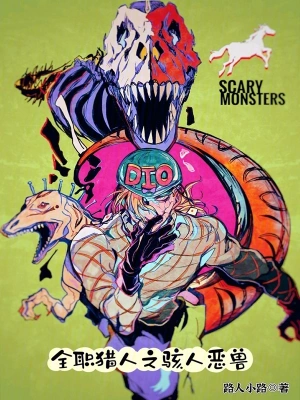
Hunter X Hunter: Terrifying Beasts
全职猎人之骇人恶兽
- Status
- Ongoing
- Length
- 1.4M Words
- Genre
- Light Novel
- Subgenre
- Fan Fiction
- Updated
- 7mo ago
- Source
- Qidian
Stats
Tags
Synopsis
More by this author
In booklists 3

Personal Backup List, Please Don't Follow
.

A Friend's Reading List (Over Ten Years as a Veteran Reader, Quality Guaranteed)
This list only recommends books I've personally read and especially enjoyed. I've been reading for years and know how hard it is to find a good book, so I made this list to share my favorites with fellow readers. My tastes are pretty varied. I like well-developed power systems and unconventional storytelling. I'm not a fan of formulaic or mindless wish-fulfillment novels. I read fantasy, fan fiction, xuanhuan, and plenty of other genres. I especially enjoy summoning stories, farming stories, Pok
Urban Fiction, Eerie Xianxia, and Lots of Fanfiction: Pokemon, One Piece, Naruto, and More
Widely involved You can tell what I like better by looking at my book list. If you want to recommend a book, you can do it. I will read the name if you send me the name. But whether you recommend it or not is purely based on your preference. The rating is random and will be decided later in the book whether to change it. The scoring criteria are determined by myself. I have been a bookworm for 7 years and have been coming to Qidian for several years. I am still a newbie. I will give gkd to boo
Readers also read
 Naruto: A Uchiha Prodigy, but with a Sage Body from the Start
 So You're All Losers Because of Me?
 The Online Friend I Chat With Is My Future Daughter!
 Take Your Mouse to the World
 Simultaneous Transmigration: Is Everyone Starting Out in Prison?
 Hunter X Hunter: Infinite Growth
 Jujutsu Kaisen: The Number One Villain
 A Great Industrial Nation, Starting with a Fake Student Abroad
 A Dual Status Panel Descends into the Abyss, and the Assassin's Potion Is Right at the Entrance
 Hunter X Hunter: Getting the Consolation Prize Every Time Is Nothing to Be Ashamed Of
 A Bizarre Adventure Beginning with Jujutsu Kaisen
 Jujutsu Kaisen: Blessings Upon This Cursed World
 Hunter X Hunter: Killer Queen
 The Monster King of One Piece
 Naruto: My Substitute Abilities Refresh Monthly
 The King's Avatar: Monster Hunter
 Naruto: My Hero Template Is Getting Out of Hand
Reader comments 23
Google Translate
Conjectures about oaths and restrictions
In the chapter on the Sky Tower, Teacher Togashi formally introduced the concept of the Six Elements of Nenhe. Then in the Youke Xincheng chapter, he added oaths and restrictions as variables of mind. At that time, he thought that the addition of this concept was equivalent to adding a way for the character to cheat. However, until the Dark Continent chapter, through this series of plot changes, we can roughly guess the rationality of the oaths and restrictions, as well as their relationship with the six series. Constraint and oath are two variable ways of affecting telekinesis ability. From the perspective of closeness, the lower three systems headed by the trait system are closer and more suitable for gain through the restriction method, and then decrease; while the upper three systems headed by the enhancement system are more suitable for the oath gain method. From a schematic diagram, it appears that restriction and oath are two variable ways to affect Nian ability. Considering the closeness, the lower three series of abilities headed by the trait system are closer and more suitable for the restriction method to gain, and then decrease; while the upper three series, headed by the enhancement system, are more suitable for the oath gain method. First of all, what exactly are oaths and restrictions? Recall the plot, as early as in the Sky Tower chapter, when Gon and Killua first asked Yun Gu about the secret of Nian ability, Yun Gu said what seemed to be a "false answer" in the four major lines: point, tongue, practice, and hair. After the real Four Great Practices (Tangjue Lianfa) were mentioned later, the original "Fake Four Great Practices" were rarely mentioned. But I think the four lines of the original version are exactly the essence of the oath. Point: Gaze at yourself and set goals; Tongue: Convert it into language (equal to self-suggestion to strengthen the goal); Refining: Improve your will; Fa: Put it into practical actions. The result of these four major lines is the entire process of strong goal awareness, self-awareness, will training and execution motivation. The oath is probably driven by self-willpower to approach the target effect (in a straight line distance). I suspect that these four elements are the key to the so-called "Shingen Ryū". The ability of Shingen Ryū also has a relatively strong vow attached. Among the applications of oath, the enhancement system is the most prominent, which is why the enhancement system is placed at the end of the oath on the diagram. Wo Jin's goal is to "punch a punch close to the power of a nuclear explosion", and compared to other members of the brigade, he cares less about things other than improving his abilities. He is a typical example of concentration, and his belief is a kind of oath, which will eventually be directly transformed into powerful destructive power without any other rule restrictions. Similar to Nobunaga's method of using "Zhou" to strengthen weapons, there will also be the use of oaths. For example, when strengthening the sword, formulating a plan similar to "to strengthen a long sword that can cut all objects" and so on. The characteristic of the oath is that it pursues a direct goal, and no matter how exhaustive the imagination is, as long as it can be reached by linear growth, it can continue to be approached through the oath. Therefore, through the blessing of the oath, Wo Jin's super destructive fist cannot really reach the power of a nuclear explosion, but it is terrifying enough. Then let's talk about constraints. The so-called constraints can be understood as rules, chips, risks and costs. Ordinary degree of restriction is common in the abilities of the lower three series. Restriction can be roughly understood as "by limiting and preciseing the boundaries and definitions of the ability itself, and increasing the difficulty of taking effect, thereby greatly increasing the final effect, or making seemingly impossible effects come true." Specific examples of the application of constraints almost all exist in the lower three systems of abilities, headed by the trait system. This is also the reason why the trait system is placed on the restriction side. The trait system takes the leader's thief's ultimate intention as an example. Everyone is familiar with it. I won't go into details here. Whether it is stealing thoughts or actually using the thoughts, the rules of the thief's ultimate intention are extremely complicated and cumbersome, with so many restrictions. That's why it creates such a heaven-defying effect in theory. Almost all operating system abilities have additional prerequisites. The higher the degree of control, the more complex the rules of control, and even the greater the gain to the body after control, it means that the prerequisites and rules are more stringent, and the difficulty of realization is greater. Generally speaking, the simplest restriction is the operation ability that favors the embodiment system. For example, Knight and Ilmi both need to insert (or at least touch) the props into the target before they can start operating. A pure operating system like Fei Jie's requires strict constraints such as "kissing the other person." The constraints of the materialization system, taking Kate as an example, can only choose weapons through the clown's subjective consciousness. He has no right to choose (accidental), and the weapon must be used before it disappears and can be re-selected (mandatory). In my opinion, the difference between restrictions and oaths is that the increase in ability of oaths lies in the harshness of the goal and the strength of willpower, and the goal setting of oaths is absolutely subjective; while the restrictions of restrictions have individual differences, so it is strange that there will be objective fairness. For example, the chameleon's ability is restricted by the need to hold his breath. The restriction of holding his breath means that his ability will not take effect for too long. Assuming that a character like Mo Laowu with incredible lung capacity has this ability, the restriction must not be breath-holding, or if the restriction is just breath-holding, the actual effect will never be absolute invisibility. Since the abilities of the lower three systems are almost inherently constrained, and the lack of sufficient constraints means insufficient power, so the ability users of the lower three systems do need the "exhaustive hypothesis" that Tita said. Strict logic, broad imagination and ability under strict rules will surely achieve powerful results in a short period of time, with minimal dependence on physical conditions. Therefore, this is also the reason why Tita is so afraid of the fourth prince's test of the trait system. At the same time, from the plot setting, if the fourth prince learns so late and still has a place in the plot, then Yoshihiro Togashi will definitely place him in the lower third system, because if the fourth prince is an enhanced system, it is useless. So far, my point of view is very clear: the upper three systems are naturally suitable for oaths, and the lower three systems are naturally suitable for constraints. What if each other uses inappropriate methods? My point of view is: if the upper three series use restraint at the same time, it will inevitably have a negative impact on the fighting style, but there will be a multiple-level gain; while if the lower three series use oath at the same time, there will also be a huge jump-like gain. Using constraints in the above three systems, I used Finks as an example. "Kaitian" is a typical strengthening ability that uses restrictions. His ultimate power is not the product of the oath, and has nothing to do with willpower, but is directly proportional to the number of rotations of his arm. In theory, as long as there is an unlimited number of rotations, he can directly hit a power that surpasses Wo Jinchao's destructive punch. But its limitation lies in the long chanting time, and the length of chanting time is directly proportional to the power. If fighting as a group, he will have no problem under the cover of others, but if it is a one-on-one battle, this lack of rhythm and fluency is simply unreasonable. Therefore, although Finks is also a reinforcement type, he may play the role of a gunner in team combat, rather than a commando like Wojin and Nobunaga. Commandos need to fight quickly and have continuous and stable power output, and Oath will be more suitable for them. In fact, if the upper three series use restraint and oath at the same time, there is another possibility, which is the situation of blackening Xiaojie. Driven by a huge oath (to grow enough to defeat Catwoman immediately), he added huge constraints (it doesn't matter even if there is no future), so he directly squeezed life and became a hero without affecting the smoothness of the battle. But in fact, the consequences of his restriction are too great to be calculated. Although Mr. Togashi finally used the plot to trick him and save him, in fact, his use of restrictions and oaths this time has gone too far. Kurapika is the most appropriate example of using oaths in the lower three series. He has very strict restrictions on his own abilities, and this harshness is highly consistent with his own will and oaths. So in the end, what he has is not a single ability, but an ability system. The abilities of the five fingers complement each other. Under the restrictive ability of "absolute time" (which has huge side effects), it exerts terrible power. There is another hidden effect of using oath in the lower three series, which is the continuity of abilities. Understandably, the ability to read with powerful oaths can continue after the death of the user, and even become more powerful. Generally speaking, the restriction of the three series of abilities only restricts the activation of the ability, and does not guarantee that it will continue to take effect after death (of course, there are exceptions). As for Kurapika's mixed abilities, considering that the special restriction effect would be enhanced after death due to the oath, Chrollo and his group members even thought that they could not kill him at the time. The above is from an article I have read somewhere before. If there are any errors or problems, please go to the original author.
A misunderstanding among authors who write about Hunter Hunter is that there are too many supporting characters with telekinesis abilities, and even the supporting characters' telekinesis abilities are carefully developed.
Horrifying Beast Abilities
1: Transform yourself into a dinosaur. Transform yourself into a dinosaur, and you can get the dinosaur's physical strength and the ability to practice mind. Two: Dinosaurs transform other people and small animals. Through body damage, various small animals and humans can be transformed into a variety of controllable dinosaurs within three minutes. Just cause damage during battle. Three: Infected dinosaurs are infected. Infected dinosaurs cause harm to other species and can also slowly transform other species into dinosaurs. Four: Leading Dragon Transformation. By transforming those with telekinesis abilities into leading dragons, the number and control accuracy of dinosaurs that can be controlled can be expanded.
The timeline of this book was too rushed, and the battle of wits was very well written. There is also an ant king who loses and a food minister. He forcibly did not kill the ant king instantly, and let the plot advance to kill Nitro. It is one of the failings. It has two shortcomings, and the others are invincible.
The protagonist goes to a country like NGL, and then uses the dinosaur transformation to infect the entire country's people and monsters, then selects powerful individuals to open the sperm pores, and follows the model of the chimera ant disaster to cause the dinosaur disaster. In a very short time, he can create a dinosaur army, and with a few powerful legion leaders, he can build a super power by himself. Even against hunters, chimera ants, Kajin, the five major countries, and the creatures of the dark continent, he has enough power to lay out the layout, and the difficult mode has become an easy mode.
To be honest, the protagonist has been a human being for two lifetimes and has experienced so many storms. He doesn't understand what it means to be emotionless and intangible. He doesn't react like a robot, but when talking to characters who obviously know that the other person has a higher IQ, doesn't he even know how to keep a straight face or a straight face? He would always say a word to the other person, and his face would change slightly, and then he would be suspected and guessed by the other person. It was the same with Chrollo, and it was the same with Pariston. In a world like a hunter, wouldn't it be best to reveal the least information and maintain a sense of mystery? I don't believe that your expression doesn't change from beginning to end. What else can others guess? Others can tell by facial expressions. You can say you're not used to it and you're immature the first time, but what does it mean the second time? Will there be a third time?
Has the author really researched the plot?
When it first came out, the protagonist was defeated by Hisoka and wanted to run away. In the end, he was afraid that the Twelve Princes would be attacked by the Phantom Troupe. Author, please understand that the Phantom Troupe is scum in front of big countries. Let's not talk about whether the Phantom Troupe dares to do this. Even if it dares to attack, the protagonist knows the plot of the Hunter. As a tool for Kajin's sacrifice, how could anything happen to the prince? It's really a mess, and so is the characterization. When it wasn't released, I thought the protagonist had a dark will, but it turned out to be a Madonna character.
I haven't watched Hunter much, but Hunter fans basically help Kurapika unconditionally. Is it just because of his miserable life experience? Most of them are not helping but licking. I don't understand. Is there any answer? As for his potential, the protagonist of the Hunter fanfic seems to be pretty good, right?
After reading dozens of chapters, I can't stand it anymore. The abilities of the protagonist's enemies feel too comprehensive and not at all like what the world of Full-time Hunter should have. Secondly, the protagonist cannot use telekinesis. What ability do you have to dare to go against them? Even if he turns into a dinosaur, Wu Nian's protection will still be weak. It's not like you don't have huge beasts in the Hunter World. Ordinary people dare to touch them I don't want to run away quickly, but I keep investigating. I don't know what the hell is going on. Let alone solving the thoughts after death, I found out in the first fight that I was injured and the thoughts after death will help to recover, and then it will be less. Isn't there a solution? Still taking risks here.
A critical hit at the start
Let's complain about it. He was chased at the beginning and then made a lot of nonsense. He was chased by a phantom even though he had no strength and still fished in troubled waters. This is no joke. Chrollo has so many abilities and can't be tracked.