


Stats
412Chapters
0Votes
7.9kRecs
34.3kFans
Tags
Synopsis
More by this author
In booklists 4
The Best of Entertainment and Period Dramas (Updated July 14, 2026)
A list of entertainment novels I'm following. If you like this genre, give them a try. I often check the rankings. This genre is relatively easy for new authors to write, but competition is fierce too. I update regularly, so keep an eye on changes to the list's title.
97Books867Follows2moUpdated
Todd's Bookshop: Positive, Highly Rated Novels Recommended Here
Sound values, no darkness, no contrived drama, no flirtation, and either one female lead or none. Some are niche, some are gems, and some have wonderfully wild premises. All are worth a read.
19Books19Follows3moUpdated

New Book Review Lab - 1
Public
80Books2.4kFollows1yUpdated
Books I Enjoy
A personal collection of easy-reading comfort food. Most are decent reads. Anything marked “rap sheet” is usually something I read without thinking, out of sheer desperation when I couldn't find anything better.
11Books1Follows2yUpdated
Readers also read
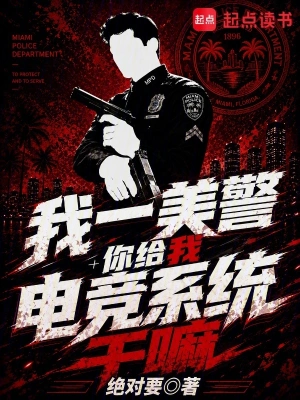 I’m a Cop, Why’d You Give Me an Esports System?
 There’s a Door in My Warehouse
 In the Americas, From Security Guard to Call of Duty
 Hong Kong Tycoon: 1963
 Hong Kong Films: In Wo Hop To, Uncle Deng Begs Me to Take Charge
 Chinese Showbiz: The Age of Genius
 Literary Giant: This Uncle Is Bursting with Talent
 I’m Not a Suit-Wearing Thug, I’m a Chameleon Actor!
 In Shrouding the Heavens, I Rule All Worlds from a Chat Group
 Showbiz 1978: New York, New York
 Generation Z Artist
 I’m Turning Up the Heat on the Japanese Entertainment Industry
 Football: The Old Hand Riding the Wave
 After the Reincarnation System Went Offline, I Had No Choice but to Play Soccer
Reader comments 44
Google Translate
Regarding the recent plot development of this book, I can only evaluate it in four words: self-moved. The author did a good job in revamping Roman Holiday and 1917, so he got carried away and felt that he could do it, so he came up with a series of original scripts. From these scripts, it can be seen that the author really tried his best to write something different, but when we look back out of this self-moved halo, we can only say that the effect is good. I won't talk about the novel's performance. Maybe the author just has high aspirations and doesn't care. Then I'll talk about plot logic. A director who was a bust, transformed after being reborn, and was able to create a good original movie? This is an important question to answer. The magic movie can not only explain this problem, but also give readers a very clear positioning of the movie: what is the quality of the movie, whether it is commercial or literary, what are the highlights, what is its status in the history of movies if it is released, etc. With these general impressions, the subsequent box office and award results of the film make sense. What if it were replaced by an original movie? Not only is it unable to explain the logic of why the protagonist was able to create a good movie in such a short period of time, it is also unable to convey a clear positioning of the movie to the readers. After the release, all the achievements are entirely dependent on the author's words. Even if you praise the movie to the heavens and the earth, no readers can refute it. It is like a castle in the air. It all depends on the author's singing, and the audience in the audience has no sense of participation. Not to mention anything else, let's take Mulan as an example. After reading the author's original plot and the details of the city-building buckle costumes and all the efforts, if the subsequent movie is a big success, can the readers tell you something about the reasons for the success of this movie? But everyone can do the previous Magic City Holiday and 1952. The difference lies here. I have been reading entertainment novels for a long time. In the early years, some directors of entertainment novels tried to create original works. At that time, everyone still had illusions about the United States. The protagonist would often jump to Hollywood after the domestic experience was completed. After the Hollywood experience was also achieved, the finale had to have a sublimated ending, right? Internet articles like "Shading the Sky" claim to be the cultural output of the Chinese people's own special effects blockbusters as the finale. Usually it becomes awkward at this point, not because of the cultural output, but because of the author's logic. The author puts forward a logic in the novel: If the protagonist is down-to-earth and writes a solid script, all the main creators are talented, and the special effects do not cost a lot of money, why is there any reason for the original movie to fail? Yes, the movie is said to be so simple. It seems that as long as every link is taken seriously, done to the extreme, and coupled with a good story, a good movie will be produced. But the realistic logic is that you may get a good movie by doing this, but it may not necessarily be a good movie. The logic of literary and artistic creation is not simply building blocks, especially for movies. The script is just the beginning, and the author attempts to use this beginning to start to compile a successful case in the novel. What is the difference between this and the UC editor who creates a picture and then relies on the whole content to compile it? The original script is the most famous in the world, but his script is entirely from the perspective of an actor. Readers do not need to know what kind of movie this is. It is enough to read it as a novel and take the role of the protagonist. What I agree with more about the director's article is the description in My Hometown Filmmaker. In fact, it is not original. It is a very clever semi-original script that splices the styles of other classic movies. Readers will have a substantial sense of this movie, know what kind of movie it is, and even have specific pictures in their minds. As for this novel, I tried to see the author's clearer positioning of the film in addition to the script in the follow-up to Mulan, but it was a pity. Clothing? What kind of clothing? Is it the style of The Legend of the Demon Cat or the Twelve Hours of Chang'an style? You have to give readers a template. I haven't written about the shots and the like yet, but the author should give a reference template for every aspect of the movie. But after reading the author's adaptation of the love letter, I no longer look forward to the follow-up. If Mulan can be said to be the author's attempt to challenge himself, then the adaptation of Love Letter is completely self-indulgent. The author just builds a building block model: the protagonist's three views are not correct, change them; the perspective is difficult to substitute, change them; the style is not mainstream now, change it. Just like what many major Internet companies are doing now, they collect the favorite points of all target users, avoid their disadvantages, and mix it with mature business models, thinking that they can make a good movie. But unfortunately, everyone in Hollywood can tell you that this method is no longer popular. Times have changed! The reason why love letters are classics is because of the light tone, which extends from first love to life and death, touching the deepest soul of people. You have changed it beyond recognition. What is the difference between you and those current directors who make movie adaptations and think they have made random changes? Everyone thinks that they will not be arrogant and will be solid in script writing, but the reason why the final result is unsatisfactory is because the arrogance is hidden deep in their hearts. Intellectual barriers exist in everyone's heart. Authors who stand in the position of readers are no exception, and the protagonist in the novel is no exception. So even if we exclude things outside the script, can such a reborn protagonist really put aside his intellectual barriers and create a good original script? I'm very skeptical.
The Roman Holiday at the beginning is really well written, and the 1951 that follows is unexpected but makes sense, but what did Mulan make up? From the summary of the story, I know that you, the author, have no screenwriting talent. Stop showing off your script writing ability, and don't regard adaptation as your own creative ability. Putting aside the original work, what talent do you have for original scripts?
The magic-reformed history writes about Guan Gong's battle with Qin Qiong, so don't set up an archway. Hua Mulan is smelly and long, but it turns out it's not a fabrication.
Mulan is so long, but it's not as good as a B-level movie written in the United States. Indeed, Mulan was not destroyed. Is it enough to destroy Wu Zetian? ! When I saw Hua Mulan and Wu Zetian as playmates, I had a question mark on my forehead. Are they from the same dynasty? Could it be that my talents are limited and Wu Zetian was born before the Tang Dynasty? I vaguely remember the harem of the fifth emperor of Wu Zetian. Was the Tang emperor so short-lived? I was so scared that I quickly checked Baidu. Okay, a wave of Guan Gong fighting Qin Qiong. Since Guan Gong is fighting Qin Qiong, let's just turn his fighting spirit into a horse. No matter how you look up Hua Mulan, she is at least from the Northern Wei Dynasty. Being with Wu Zetian is really like me having a date with a zombie. Let yourself be free, why bother to set up a memorial arch and use more than 20 chapters of nonsense to study Mulan? Don't be careful in the front, and don't lose your conscience in the back. After studying for a long time, and then dragging Hua Mulan to the Tang Dynasty, what are you studying for?
Story is the basis of everything
Akira Kurosawa said that he wanted to make a movie based on a pen and a pile of manuscript paper. Many people who want to be a director complain that no matter how talented they are, they need a lot of money. It costs a lot of money, but the plot is about a family going to survive in the wild. The voiceover tells the audience that this is a family that survives a two-month global power outage. It could also be a good movie or even three series. You can shoot two little girls in abandoned buildings and outdoors, and you can find a bunch of cans and pots to put on a rainy day. As long as you create an apocalyptic atmosphere, you can make a touching film. You can set it to the end of the human race after a nuclear war, and the girls are the last two humans, and they finally discovered music. Then edit this at the end of the film. Maybe you may think this is very literary (but you can understand it! This is very different from the kind of movie that is basically made for directors to learn, but is purely for the audience. After a movie, it makes people have a solid sleep in the theater. As for what this movie is about, I fell asleep. I don't know. It cures insomnia) This belongs to the soft science fiction category. There are also strong ones like a few actors in a house, but they can film that it is people from several parallel worlds killing each other. The movie about chatting can be set as the immortal chatting with several university professors before moving. It's all very good science fiction imagination is very important. If you want to make a movie about more than one family and two girls, just make a mockumentary. You don't need a lot of money for equipment. More than once, I have seen a movie that is a perfect movie about a group of people in a room, or even a healing movie where the plot is just three or four people discussing suicide. For a graduation film, all the big scenes and special effects that have nothing to do with the story are a waste of the students' limited funds. Except if, like the Chosen Son, you have a wealthy friend (the above has nothing to do with the plot of the novel)
I still think winning an Oscar in 1951 is too abstract
To be honest, the writing is good, and the first two movies are generally well written and worth watching. But it is a bit outrageous to win an Oscar in 1951. Some people say that the Japanese film about World War II also won an award. That is because the Pacific War Nuts won. You can say whatever you want about the won war. But Peninsula War was a slap in the face to Nuts. How can you let the Oscar judges recognize you? If you have the ability, let me make a movie about Pearl Harbor in my childhood and try to win the prize.
Brother, when this movie Mulan is over, come and kick me
Rt, I don't have the desire to read the outline of this movie script. It's too fairy-like. Remember to call me when you're filming the second part.
Very well written, I like it. Some people say that 1951 is an abandonment point, but it attracts me very much.
Do you know why originality doesn't work on the subject of copywriting?
Regarding the subject of copying, readers have probably read the famous works copied by the protagonist, so when reading the novel, they will automatically make up for the author's lack of description of the work in the novel. Just like fan fiction. Once the protagonist creates an original movie, it depends on the author how awesome the chapters in the novel are. Is it as convincing as the light and shadow effects of the original movie in reality? Moreover, readers look at how the real-life original works show off in another world, not how the protagonist shows off. In other words, the protagonist's show-off is just incidental. And once the copied work is completely regarded as one's own, then it is just pretending to be a sand dollar. The most you can do is repair, complete, magically modify and splice real works, and there is no need to create original works. In addition, you still have a parallel world. The actors in the movie are completely unfamiliar. Plus the original movie, no matter how awesome the work is, it is just floating in the sky.
The author has a showdown, are you the director?
The best director's story this year, and in my personal opinion, the best director's story ever. This is not a boast. In my heart, the quality and status of this book are currently comparable to "The Age of Literature and Art" which turns white when sleeping. They are both the ceiling of entertainment literature. Because I suspect that the author is really a director and is very familiar with the entire production process. He even tried to teach us how to make a good movie after traveling to a parallel world. Especially for the second film, from the collection of ideas, to the formation of the script, to how to prepare the crew, how to arrange the scenes, how to shoot the film, what effects to present, how to train the actors, to editing and promotion, the whole process seemed to have really happened, trying to teach us step by step. When I was reading the book, I wondered more than once: whether the author had traveled to a parallel world, done these things before, or had a dream that lasted a whole life, and retell it in detail. Otherwise, how could it be possible to have such a professional and authentic presentation? The most important thing is: the whole process is not boring. While it is full of professionalism, the eloquent words also give me an immersive feeling when reading. It was as if I had really witnessed a wonderful movie being born in a parallel world. Otherwise, the author should show off his cards, stop pretending. If you are really a director, I will definitely watch the movies you make. Even if it is a short drama! Recommended Audience Highly recommended to book lovers who like entertainment literature, director literature and parallel entertainment. Similar Recommendation The actor does not want to be a eunuch, this actor just wants to test, this actor wants more money, the actor is sincere (I do not recommend the director's article, because this is the best director's article in my mind, there is no one) Excellent analysis Entertainment articles are inevitably "copied", and this book is no exception. But how to copy it well is a great test of the author's background and writing style. I used to think that the method of re-deconstructing classics and then making up for regrets and reappearing them in the literary and artistic era was already the pinnacle of this type of work. But this book starts from another angle. It not only makes magical modifications and secondary creations of classic works, but also completely presents the entire process. I also looked for two movies in the book to watch, and found that the original versions were not as exciting as what was shown in the book. Especially the second part, it can no longer be said to be a magic modification. It is a completely new creation, which even makes me think it is feasible. With an author who is good at telling stories and seems to have very professional qualities, I think it is possible to make a movie out of the book. When I was reading the book, I even fantasized more than once: The author might be an unappreciated director who wrote the book to raise funds to film the good story in his mind. Although I know this is unlikely, I still can't help but look forward to the author's "film and television works". This is why I regard it as a classic and the best director's work. It is obviously a fictional story, but it has the effect of being fake and real! {"TopicId":"804728532092780544","TopicName":"The Book Famine Terminator"}
The writing is very real, and the whole story is about serving tea and water to welcome people and sending them to the world, supplemented by a little bit of filming content, which fully explains what it means that money is hard to make and shit is hard to eat.