


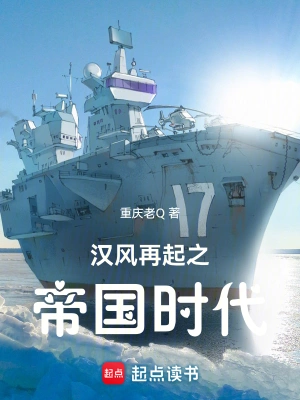
The Han Wind Rises Again: The Age of Empires
汉风再起之帝国时代
- Status
- Ongoing
- Length
- 1.8M Words
- Genre
- Historical
- Subgenre
- Alternate History
- Updated
- 10mo ago
- Source
- Qidian
Stats
Tags
Synopsis
More by this author
In booklists 3





Black Library Backups
A place to put books. The old list didn't have enough room, so here we are. Come see what you think. The focus is on fun reads, especially fantasy involving dragons and the Forgotten Realms. The fantasy section on Qidian has really gone downhill.


History, Reality, and Alternate History
Yanhuang, Yu, Xia, Shang, then Zhou fell to the Warring States age. Qin united the six states, and Ying Zheng became the First Emperor. The Chu-Han divide was marked by Honggou, and Liu Bang won in the end. The Western Han gave rise to Xin under Mang, while the Eastern Han moved its capital to Luoyang. In its final years, the Yellow Turbans arose, and the Three Kingdoms each claimed kingship. The Western Jin became the Eastern Jin, whose capital moved to Jiankang. Tuoba entered the Central Plain




Xiao Yang the Wage Earner's Reading List
A list focused mainly on historical, myriad-worlds, and xianxia novels
Readers also read
 Seizing the Direct Descendant in the Red Mansion
 Great Ming: His Father Is Useless, So He Must Summon the Founding Emperor
 Germany: 1914
 A Literary Master in Ancient Greece
 Hong Kong Films: In Wo Hop To, Uncle Deng Begs Me to Take Charge
 The African Entrepreneurial Saga
 The Winds Rise in North America, 1625
 I’m Not a Suit-Wearing Thug, I’m a Chameleon Actor!
 In Shrouding the Heavens, I Rule All Worlds from a Chat Group
 I Am the Great Powers
 The Persian Empire, 1845
 Transmigrating to 1570: The Rise of South America
 1635: The Han Wind Rises Again
Reader comments 34
Google Translate
Originally, the Jews had their own community in the ancient Roman Empire - the province of Judea. During the reign of Roman Emperor Trajan, the Jews took advantage of the emperor's eastern expedition and mobilized nearby Roman legions, leaving the defense empty and launching a rebellion. This was nothing at all. Provincial rebellions were common during the Roman Empire, but what the Jews did next was absolutely horrifying: After defeating a small number of defenders, the Jews began to massacre innocent civilians of other ethnic groups. From one point on, , I don't feel the "wisdom" of the Jews at all. The Roman historian Dio recorded this tragedy: They even ate the flesh of their victims, cramped their tendons, smeared their bodies with their blood, and wore clothes made of their skins; many people were sawed in half from head to toe. Others were thrown to wild beasts or forced to fight each other like gladiators, and a total of 220,000 people were killed. The Jews carried out massacres in many places, such as Salamis, Cyprus, and Libya. The main residents of these places were not Romans. But the time they chose for the uprising was also considered their retribution, and it happened to coincide with the reign of Trajan, the "Eternal Emperor" of Rome. Trajan only mobilized two legions to return reinforcements. The ferocious Jews were immediately beaten back to their original form. The angry Romans fought from Mesopotamia along the east coast of the Mediterranean all the way to Egypt. The Jews were basically defeated in one blow. In this process, the Jews became street rats. No other nation was willing to help them. Instead, it became a great liquidation of the Jews by all nations. The residents of Cyprus who had been massacred by the Jews began to take revenge: Jews were prohibited from living on the island, and even Jewish survivors of shipwrecks would be executed upon discovery. Since then, the first Jewish uprising was suppressed. A few years later, the Jews had another conflict with the Roman government. The Jews gave money to their church and refused to pay taxes to the government. This time the Jews caught up with Hadrian, another "Five Wise Emperor" after Trajan. After the uprising, the Jews turned the targets of the massacre into Christians. This atrocity was very "absurd". It was originally a conflict between the Jews and the Roman government, but the Jews expanded it into a conflict with pagans. The ancient Roman historian Dio Cassius described these Jews as "crazy people." Hadrian mobilized 7 to 12 Roman legions, totaling 120,000 people, to suppress the rebellion and carry out a massacre. Hadrian learned the lessons of Trajan's period, completely abolished the Jewish province, and dispersed all these Jews. Only then did the Jews begin their history of "wandering in Europe and Asia." During the "Five Good Emperors" period when the Roman Empire was the most powerful, the Jews launched two rebellions in succession and committed inhumane crimes. I don't see how this nation has any great wisdom. Jews have long held thoughts of rejection, hostility, vilification, and destruction of foreign cultures, which is the main reason for their wandering for thousands of years.
Please pin it to the top and map (please type the error in the comment area and modify it when you have time)
Australia Southeast Asia Northeast Asia South Asia South America North America Africa
In my opinion, the biggest problem in this book is that it blindly thinks about win-win cooperation between Qi and Qin, or under the premise that Qi takes the lead. Let me talk about my personal views. When traveling overseas, what everyone likes the most is the British and American model. That is, offshore balancing or the shit-stirring model. It also refers to the vast land and abundant resources. In this book, Qi is located on the Australian continent, which is much better than the United Kingdom, but much worse than the United States. However, if the entire Nanyang Islands were included in the mainland, the gap with the United States might be evened. Although the resources on these lands will greatly increase the lower limit of industry and agriculture. But it is only one of the conditions for achieving world hegemony. The remaining condition is offshore balance. On the surface, offshore balance seems to prevent land powers from developing, but its underlying logic is actually blood-sucking. No matter how much America and Australia are praised in this world, we cannot deny that the Old Continent with Eurasia as the core is the center. The island country is safe, but it is far away from this center. Only the Old Continent can continue to absorb the population and obtain cheap labor, intelligence, capital, and markets through hard work and death. This is how the United Kingdom developed, and this is even more true for the United States. Even today, the United States is still sucking blood. How does Qi, a country in the South Pacific with Chinese culture as its main body, suck blood? Qi State needs a large population to colonize and develop, a large number of workers, a large amount of cheap labor to offset the cost of industrial products, and also requires intelligence and capital. In the short term, many people think that the natives of Nanyang and India will be enough. But in the end, aren't they just alternative American black men and old Mo? Therefore, the contradiction between Qi and Qin is fundamental. One must suck the blood of the East Asian cultural circle for a long time, and the other will not be able to tolerate being sucked in like this after resolving the border issue. Not to mention that in the world, the relationship between the boss and the second child has never been good, it is always confrontation or war. If this is the case, how to solve it? Cracked like the east coast? I'm afraid most book friends won't be able to accept it. Then you can only call back. At least geographically speaking, it is far more reasonable for Qi, who is located in Australia, to return to his hometown than to return to his hometown from the Americas. Some people may think that this is not the original intention of this book, but this is indeed the only solution from a rational perspective. The last step is to discuss whether Qi can return to his hometown. In the current world situation, the Qi-British War is coming to an end. Qi has gained an overwhelming advantage. Britain will not be able to restore its naval strength for at least 10 to 20 years. In particular, Qi is also preparing to bury nails in places such as Gibraltar. The conflict between Britain and Spain may not be small in the next stage. With the British navy weak, both Spain and France may launch challenges to British colonies in the Caribbean and Americas. Persian problem solved. What remains is India's slow encroachment. But this also requires a strong army, otherwise it will have to take its time like the British in history. In this case it is okay to turn your attention to the East. No need to face a two-front battle. (Actually, Qi and Britain can both cooperate and confront each other. In terms of practical affairs on the European continent, they cooperate, but the distribution of overseas interests is the source of conflict between the two countries.) The disadvantage between Qi and Qin is that they cannot rely on simple naval blockades and naval duels to resolve the battle. They must invest a huge army and the entire country. But there are many advantages. First of all, the Qin State has a vast territory. Although it has initially defeated Junggar, it still needs to invest a force in the northwest and north to defend the local area. And when the Northeast War breaks out, the entire north will contain quite a lot of elite armies. However, its coastline is too long, and the richest areas in the country are basically within the landing range of Qi people, so they can only choose important areas to focus on defense. This narrowed the quantitative gap between the two sides in disguise. In addition, Qi has completed preliminary industrialization. Not to mention the United States during the Civil War in the 19th century, at least its mobilization capabilities are stronger than France's during the Napoleonic era. (Actually, the data in Chapter 33 of the book, The Foundation of Great Powers, seems too outrageous. This data is already comparable to that of Britain and the United States in the late 19th century, which only accounted for 40% of the world's industrial output? I'm afraid it's 90%). If we calculate based on the mobilization rates of European countries during the Napoleonic Wars. Qi Guoguang's army, which has a population of 20 million in the mainland alone, can at least maintain more than 80W. Coupled with the cultural and economic ties between Qi and Qin, in the era when nationalism did not rise, a large number of pro-Qi factions could still be found in the southeastern region of Qin. Therefore, Qi actually had an overwhelming advantage in this war. In the end, I still want to say that the brothers will settle the score, let alone the national interests. It is completely wishful thinking to expect a little friendship with the same ethnic group. Qin is in a period of transformation, and the longer it delays, the harder it will be to defeat it. The power to contain Qi in times of collapse cannot be compared to what it is now. On the contrary, for China, it does consume a huge amount of resources in the short term. But a country of immigrants needs to complete its plasticity, and an old nation needs to complete its transformation. Necessary suffering and labor pains are also necessary. Not to mention the British in the early days, they also used all their strength in the battle, and this was how they became the world hegemons in the 19th century. The French and the Germans don't say that. That is the Americans. If there had been no Civil War, they would probably be the South American countries we are today. Only the war between Qi and Qin, a total war lasting more than ten or twenty years, can the people of Qi successfully shape their state. At the same time, through this war, all conservative forces in the homeland can be wiped out or awakened, so that the transformation of the entire nation can be completed.
Qi is destined to be strong
I saw some netizens saying that Qi State could not even complete the second construction and was doomed to decline. I was disgusted 1. Qi State is not only Australia, but also New Zealand and the East Indies 2. Qi State's slave countries only have a small area. Take a look at the map of the previous book for yourself 3. Don't read online and say that Australia is short of water. They have coastal areas. More than 200 square kilometers are livable 4. When the second industrial revolution is completed and the information revolution is completed, do you think the industrial transfer will transfer the iron ore and coal mines to Qin? The East Indies are not short of water and can be built directly next to home 5. Qing's separatism is inevitable. It is far away from an ocean, but it is naturally close to Qi. Recently, just like the United Kingdom and the United States now 6. Balikpapan and Sumatra oil fields at home are enough to complete the second process, and there is no need to go to the Americas to mine 7. The second industrial revolution has begun. The electromagnetic principle was discovered in this book, and now the telegraph has been developed. Except for the United Kingdom, other countries have completed half of the first industrial revolution. They are all agricultural countries, and Qi is the only high-quality cultured country in the world 8. The author has not yet introduced in detail how far the warships have developed, but he mentioned that the warships are iron-clad and steam-driven. Hitting British sails is like hitting a child These conditions will allow Qi to remain the hegemon for hundreds of years
My thoughts on the relationship between Britain and the North American colonies in this book
The author of this book describes the British North American colonies quite objectively, so he will express his thoughts and provide the author with the following materials. What follows may subvert some people's views, so don't criticize if you don't like it. First, let's understand what is the American Revolution? ,,,,,, Therefore, the British's violent expropriation of the North American colonies aroused the resistance of the colonial residents, thus portraying the American War of Independence as a just, great, anti-oppression, and anti-bullying war of national independence and liberation. If you go into that period of real history, you will know that this is simply a shameless lie, just like saying that washing powder is evidence that Iraq is developing chemical weapons, and then beating Iraq to pieces. If you look back at that period of real history, you will also find that the dirty things that the United States has done over the years were actually done during the colonial period. They are inherited from the same origin and are completely the same routine. So the so-called independence of the United States is completely academically speaking, it is a rebellion, the kind without objection. "American Independence" is called a revolution by the United States itself, which is nonsense. What is revolution? Revolution is a rapid, fundamental, and violent domestic change in three aspects: 1) values, 2) political system, and 3) social structure. Revolution only appears in large-scale social transformations, from feudal society to capitalist society, and from capitalist society to socialist society. Therefore, revolutions are very rare in history. They only appear after entering modern times. The time when they appear is usually during the transition from agricultural society to industrial society. The so-called independence in the United States has only changed the political form, but not the social and economic form. Moreover, this movement was launched and led by the upper bourgeoisie. They are farmers in the south and lawyers and businessmen in the north. They hold the real power of the colonies, just like the careerists who are seeking independence in Xinjiang today. They want independence in order to seize greater power and wealth and pursue greater interests, and have nothing to do with the people. The participants are mainly rich people and farmers, and of course local tea smuggling gangs. They are either for power or money. So what the Americans have been doing since the founding of the country has been businessmen coercing the masses into rebellion. This has been done smoothly. What the United States is doing to other countries now is what they used when they rebelled. This is completely different from the French Revolution. The French Revolution was a class revolution, a revolution in which the bourgeoisie united with the common people to overthrow the aristocratic class. American independence has no class struggle. In this sense, it is a movement for the North American colonies to break away from Britain and secession. It is a secession and a rebellion, not a revolution. . In addition, Britain fought long-term wars with other European powers in Europe, North America and Asia during the middle weeks of the "Seven Years' War". As the saying goes, "One cannon blast brings ten thousand taels of gold." At the end of the "Seven Years' War," the British national debt reached 130 million pounds, and North American defense still required an annual expenditure of 400,000 pounds. How to increase revenue to solve the debt problem became a top priority. As a result, Britain's strategy for North America changed. Externally, the British strategy for North America was changed from strategic expansion to strategic maintenance, that is, digesting and absorbing the newly acquired vast land without increasing investment; therefore, the strategy towards the Indians changed from high pressure to reconciliation, and stopped encroaching on the Indians' land. In October 1763, the British government issued a proclamation in the name of the king, announcing the establishment of four new administrative regions in North America and reserving large tracts of western land for the Indians. The introduction of this strategy eased the hostility between the British and the Indians, and the two sides ushered in peace. Internally, the British government changed its previous laissez-faire attitude towards the North American colonies and began to strengthen control in an attempt to solve the shortcomings of the previous North American colonial policy. Self-government has been implemented since the establishment of the colonies, which gave the North American colonies too much freedom. Liberalism spread in the North American colonies and showed a tendency to separate from the mother country. During the French and Indian War, the mother country, Britain, provided money and people and was the main force in the war, while the colonies took an attitude of enjoying the gains during the war. During the war, colonial merchants ignored the interests of the mother country, ignored trade bans, and continued to trade with the enemy. Smuggling activities were even more rampant. From the establishment of the North American colonies to the present, the mother country, Britain, has levied almost no taxes on the colonies. Each colony has long enjoyed super-national treatment but has not shouldered corresponding obligations. After the war, local parliaments and residents no longer cooperated with the garrison from the mother country, and began to directly challenge the authority of the mother country on issues such as justice, personnel, and clergy salaries, showing a tendency to break away from the mother country, Britain. Therefore, the British government requires that while enjoying the dividends of the mother country, it should also fulfill corresponding obligations to alleviate the empire's financial difficulties. These obligations include: 1) Britain will retain a standing army of 10,000 people in North America after the war. According to the "Garrison Regulations" of 1765, the colonies must provide garrison sites and supply designated supplies for British troops stationed in North America. 2) Start taxing the North American colonies and reduce the super-national treatment given to the North American colonies. 3) Strictly manage customs and combat smuggling. These domestic and foreign policies of the United Kingdom are in line with the overall interests of the British Empire, but they have restricted the freedom that the North American colonies have long been accustomed to. The good days of enjoying rights but not fulfilling obligations are coming to an end, which makes the North American colonies feel very uncomfortable. 2. The source of the contradiction At this time, the contradictions between the mother country and the North American colonies and the conflicts between the colonies were mainly reflected in the following three aspects: 1) Economic and trade freedom The industrial planning of the North American colonies was formulated by the British government, that is, what products were encouraged to be produced and what products were discouraged. This is a conventional industrial planning within a country, and the purpose is to avoid internal industrial competition. But the colonies were very dissatisfied with this and wanted to formulate their own industrial plans. This tendency to separate actually began as early as the group of Protestants who established Massachusetts. Although the Puritans were not welcomed by the majority of people due to their radicality and extremity, their sense of independence was preserved. Cooperating with the British government in this kind of industrial planning was the Navigation Regulations promulgated in October 1651. This regulation was the first bill passed by the Parliament of the English Republic led by Cromwell to protect the British domestic maritime trade monopoly. Since then, the bill has been continuously revised and improved. Its core content is: "Only ships owned and manufactured by Britain or its colonies can carry goods from the British colonies. Products manufactured in other countries must pass through the British mainland and cannot be directly shipped to the colonies. It restricts the colonies from producing products that compete with the British mainland, such as textiles." The Navigation Act was changed three times in 1663, 1673 and 1696. It was not abolished in 1854 until after the British Industrial Revolution, when its industry became highly competitive and trade protection barriers were no longer needed. British colonial policy is a routine practice among European metropolitan countries. For example, Spain prohibits colonies from planting crops already owned by the metropolitan country and prohibits trade between colonies. Trade between Spain and the colonies is controlled by merchants in the city of Seville, and colonial residents are not allowed to participate in this trade. This limits the ability of the colonies to develop independently and makes them firmly dependent on the metropolitan country. Why didn't Spain's colonies resist like the North American colonies? Ideology determines behavior, and the religious beliefs of that era are a complete reflection of ideology. Because the state religion of Spain is Catholicism, the Catholic ideology is feudal and obedient. The North American colonies were all Protestant and capitalist. They were born with ideologies and tendencies of liberalism, centrifugal independence, and freedom from royal rule. The mother country, Britain, plans and manages the North American colonies as part of its economic territory, while the North American colonies want to have the economic and trade policy powers that a sovereign country can have. This is a conflict between the British government and the North American colonies on economic and trade freedom. 2) Taxation In order to support the survival and development of the North American colonies, the British government not only gave the colonial immigrants a more relaxed autonomous management model than the natives, and the colonial residents enjoyed more political rights than the British natives, but also gave the colonies super-national treatment in terms of taxation. The colonies paid almost no taxes to the British government. At that time, the North American colonies only paid 1,400 pounds in taxes to the British government every year. During the same period, the annual tax paid by the British mainland was as high as 2 million pounds. The British government spent far more on the North American colonies than the taxes paid by the colonies. It can be said that the British government has been subsidizing the North American colonies for a long time. This tax policy even left British officials in North America with nowhere to receive their salaries. For example, the governor of North Carolina, Gabriel Johnson, wrote in 1746: "My salary is eight years in arrears, and so are the other officers; in North Carolina the British government is forced to pay the governor's salary out of the revenue from the West Indies." When the British government encountered financial difficulties after the "Seven Years' War", it was preparing to start collecting taxes from the colonies that had supported and subsidized it for more than a hundred years to ease its finances. The amount of taxes collected was still far less than that of the British mainland. However, the North American colonies stopped, believing that the British government had violated their rights and was a despotism and tyranny. The British government believes that as citizens of the United Kingdom, it is a matter of course that residents of the North American colonies should bear the country's reasonable taxes. There is no reason to only enjoy rights without assuming obligations. It is a routine operation to cancel the previous super-national treatment and return to normal national treatment, just like a country gives a backward region a preferential tax policy, and when this region develops, it resumes the same taxation as other regions. However, in North America, a land where freedom prevailed, although the colonial residents were wealthy, they could not accept the act of paying taxes to the mother country and were unwilling to shoulder the obligations they owed as British citizens. Paying taxes to the home country is no longer an economic issue, but a political issue. Accepting taxes from the mother country means accepting the rule of the mother country, while refusing to pay taxes to the mother country expresses the ambition to become an independent and sovereign country. 3) Indian Land The history of the development and growth of the North American colonies is closely connected with the continuous occupation of the Indian lands. The history of the development of the early North American colonies is a history of the occupation of the Indians. Land is the greatest wealth. Without the continuous increase of land, the development of the North American colonies would be impossible. Therefore, when the British government announced that it would stop westward expansion and reserve large tracts of western land for the Indians, it was equivalent to prohibiting the colonies from seizing the Indians' land, directly killing the colonies' future development space and source of wealth. Compared with free economic trade and taxation, they could not continue to obtain the Indians' land. This was what the North American colonies were truly intolerable. Of course, this cannot be said on the table. In fact, this contradiction was reflected as early as Bacon's Rebellion in Virginia in 1676, which was also the first uprising of residents of the North American colonies. The reason for the uprising was that the newly arrived immigrants in the colony needed land to survive and develop, so they could only seize the Indians' land, which triggered violent conflicts with the Indians. The upper-class ruling class in Virginia did not want to go to war with the Indians for the land demands of the newly arrived immigrants. After all, even if they grabbed the land, it did not belong to them, so why fight with the Indians for irrelevant interests, so they rejected the requests of the new immigrants. In order to quell the conflict with the Indians, they ordered the armed militia composed of new immigrants headed by Bacon to stop expanding into the Indian territory. The land of the Indians was the source of wealth for the new immigrants. If the source of income was cut off, I would kill anyone who blocked my source of income. Therefore, Bacon led a militia group to rush into and bloodbath Jamestown, the capital of Virginia. Therefore, killing Indians and seizing their land has become a kind of political correctness. Whoever can kill more Indians and seize more Indian land will gain support in the colonies. The representative of this includes the founding father of the United States, George Washington. Therefore, the British government restricted the westward expansion of the colonies in an attempt to reach reconciliation and peace with the Indians, which violated a taboo in the North American colonies. The contradictions between economy and trade are mainly concentrated in the four New England colonies in the north where industry and commerce are developed. The conflicts over Indian land are mainly concentrated in the five colonies in the south where the plantation economy is the mainstay. The issue of the ownership of ruling power implied by the tax contradictions covers all 13 North American colonies. This aggregated the motivations for the North American colonies to rebel against the mother country: the policy of the mother country, Britain, wanted to end the previous policy of laissez-faire towards the North American colonies and integrate the North American colonies into the system of the British Empire; and the colonies had long been accustomed to freedom, accustomed to the freedom of only enjoying rights without fulfilling obligations. The upper bourgeois ruling group in the colonies wanted to gain greater political power and no longer wanted to be bound by the management of the mother country, Britain. They wanted to control the new continent, break away from the mother country, and become an independent subject.
The author writes according to his own ideas and does not listen to others. Thousands of people have different needs, and you can't satisfy everyone's appetite. This is a good beginning, obviously using the growth of a small character to show the rise of an empire.
I have seen two books about fictional world hegemony, such as Ming 1805, which is actually not good-looking 1. It over-strengthens Ming Dynasty. On the surface, it is to cause trouble for Ming Dynasty, but in fact it is too strong. Overall, it is just an assembly line and technology advancement, which is very boring 2. The enemies are stupid, and it is just a cool novel by a brainless novice, but this kind of fictional world hegemony is difficult to write and read. At present, the best novel that deduces the world timeline in an imaginary way is "Fu Sheng" in the late Tang Dynasty. The author made a sand table himself, input data, and objectively deduced it, without engaging in deus ex machina. 3. The world timeline is not reasonably planned, and the plots in various countries around the world are unreasonable 4. Technology is climbing too fast, and there is no rationality. It will be boring after reading the second chapter. 5. In the end, the battle for hegemony is always smooth sailing, overall uneventful and boring.
On the colonial characteristics of Britain, France and the Netherlands, the major colonial countries in Europe
All colonial countries adhere to an iron law in their colonial activities: colonies should avoid bringing financial burdens to the mother country and, if possible, should try to generate revenue. This iron law runs throughout the history of colonialism and is also the basic principle that governs the colonial activities of any country. All colonial empires will implement policies according to local conditions, try to monopolize, build while destroying, and plunder while developing, but different imperial concepts will create some significant differences. 1. Characteristics of Dutch colonialism: strong monopoly, weak empire Among the five Western European colonial countries in the mercantilism era, the Dutch had the best monopoly power. The origin and carrier of Dutch colonialism was monopoly companies, and the understanding of colonialism was mainly based on profits. Commercial considerations trumped any religious and ideological appeals, making Dutch colonial policy at times very flexible and at other times too rigid. ,"",, It was not until the 19th century, forced by the inertia of commercial expansion and intensified colonial competition, that the Netherlands extended its rule to the entire Indonesia. In the first half of the 17th century, the success of the Dutch East India Company (VOC) led the trend of establishing monopoly companies in Western European countries, but no one could match it in two centuries. The organizational strength of the Dutch East India Company was the secret to its success. Within a few decades, it seized the monopoly on the world's spice trade from the Portuguese and held it for a long time. An important reason why the East India Company fell into crisis in the 18th century was the corruption and inefficiency brought about by strong monopoly. Even though the West India Company, which also belongs to the Netherlands, is not that powerful, the Dutch American colonies are not inferior. While Dutch Guiana controlled rum production, Curacao became the most fashionable smuggling stronghold in the Caribbean. The Netherlands is not slow in promoting culture and education. The Dutch New Church is very active (but it finds that it cannot compete with the Catholic Church that does not have official support). In the 20th century, the Netherlands also tried to use discourses such as enlightenment and integration to influence the colonial elite (but the impact is not as good as pan-Islamic nationalism or even Japanese Pan-Asianism). The most obvious manifestation is that during the Anglo-Dutch War, the war bonds issued by the British to raise military expenditures were still widely sought after in the Dutch financial market. Among almost all major colonial countries in modern times, the Dutch imperial concept is almost the weakest. 2. Characteristics of British colonialism: autonomy In other empires, colonialism based on local conditions is of course also common, but the British's autonomy policy undoubtedly amplified these characteristics. "Self-government" also formed the basis of the British imperial concept. It elaborated the meaning of the empire's existence ("white man's burden") in its heyday, and provided plans and explanations for the disintegration of the empire in its decline. As the most successful global empire in modern history, the British colonial system is large and rich, with diverse evolutions, but overall it maintains the main line of "autonomy." The complexity of the internal structure of the British Empire is a reflection of the idea of adapting to local conditions. This complex structure has some significant characteristics: 1. The development of local governments, including local governments and parliaments. (This is also the reason why most of the colonies have more positive evaluations of Britain than negatives after independence) 2. Conflicts between different subjects within the imperial framework, and conflicts within the colonies often occur (for example, the nature of the American Civil War is also a specific manifestation of this kind of conflict) 3. The fluidity of colonial policies and concepts. (Britain is an important disseminator and practitioner of racist ideas. Before the prevalence of racism at the end of the 19th century, it was not particularly cruel to the indigenous people. Compared with the French, Spanish and Portuguese, the British did not like to intermarry, but they still created many mixed-race children in the Caribbean.) In British history, there were four departments involved in the management of colonial affairs, the first was the Colonial Department, the second was the Ministry of Foreign Affairs, the third was various monopoly companies, and the fourth was the Department of Indian Affairs (which succeeded the East India Company and was changed to the Department of India and Burma Affairs after 1937). In addition, the War Department also played a role during certain periods (such as during World War I). The multi-subjectivity of management is a manifestation of colonial pluralism. The British Colonial Department has a long history, but its scope of authority is much smaller than that of the Colonial Departments established by other European empires at the end of the 19th century. Until 1900, the British Colonial Office was responsible only for the administration of colonies based on immigration activities, including the Americas, the African Coast, the Straits Settlements and Oceania. Among them, the Straits Settlements were transferred from India to the Colonial Office in 1867. Within the framework of the British Empire, colonies with large indigenous populations except India (and Burma) were under the jurisdiction of the Ministry of Foreign Affairs. In general, the Colonial Office was responsible for dealing with white settlers, while the Foreign Office was responsible for dealing with Aboriginal people. British monopolies also have a long history. As in the Netherlands, monopolies were the most economical means of managing the colony, but monopolies were ultimately absorbed by the government. The earliest ones were the Virginia Company in America in the 17th century (subject to the Colonial Department), and the East India Company and the Borneo Company in the 19th century (subject to the Department of Indian Affairs and the Colonial Department). In the 20th century, many companies still played a role (such as the Royal Niger Company), or acted as agents of informal colonies (Portuguese Africa was actually in the hands of the British monopoly company). India has a special status within the framework of the British Empire and is managed by a dedicated Ministry of Indian Affairs. After the Indian National Revolt led to the collapse of the East India Company, the Indian Office-the British Government of India became the new governing body, and its status and policies were therefore independent of other colonies that were responsible for the Foreign Office or the Colonial Office. 3. Characteristics of French colonialism: Integration French imperialism advocates integration, which is not only related to French centralization, civil law tradition and Catholic ideology. All colonies basically followed the vertical bureaucracy management "from Paris to the village" (this was not obvious in early colonial activities, but was continuously formed during the dramatic changes in French native ideas, and even so its characteristics were greater than those of other colonial countries). There are also various autonomous bodies within the French Empire, but in the eyes of the French, they are only transitional states or products of compromise, and should be eliminated in the long run. In Shanghai at the beginning of the 20th century, the comparison between the British Concession and the French Concession also reflected the differences in colonialism between the two countries. The basic organization of the British Concession was merchant autonomy, while the French Concession relied on civil servants, doctors and missionaries to rule. In addition, it is also related to the psychological needs of French society. After its defeat in the Franco-Prussian War (1871), France was eager to restore its reputation through colonial undertakings and compete for space in the nationalist competition. Although France's industry is not developed enough, the prosperity of its financial industry allows it to take an advantage in the colonial enterprise (the biggest challenge in colonization is finance and credit). The autonomy strategy is obviously more flexible and economical, but the integration strategy is in line with the psychological expectations of the French Empire during the Third Republic, even if it has to pay a relatively higher price. Among the three Guyanas in South America, French Guiana has the worst economic performance. Although it has a similar economic and social structure to its neighboring countries, its industries are relatively least developed and its attractiveness to immigrants is relatively low. Its position has always been part of the fabric of empire, serving as a penal colony before World War II and today as the rocket science center of the European Union. France's colonial tradition did not make it rich, but also succeeded in keeping it within the empire - this was exactly the goal that France insisted on for most of its colonies during the decolonization process after World War II. In the process of their respective disintegration, France was the two most stubborn empires. Its imperial concepts regarded colonies as an integral part of themselves. This concept cost them a huge economic price, but it also brought back many political and cultural legacies. Just like French Guiana, although it cannot create wealth for the sovereign country, nor can it continue its incense, for the French Republic, it is at least a stable part of itself.
Highlights of this book
The situation that should have been formed in the 18th century was that the west was strong and the east was weak. Due to the rise of Qi, the countries in contact with Qi were forced or took the initiative to improve their scientific and technological levels. In this book, a situation of equal balance between east and west, or even a situation where east is strong and west is weak. I think this is one of the highlights of this book
The New Deal—The Beginning of Qin's Decline
As a country that has only been in existence for more than 50 years, the Qin State should be at the peak of the feudal dynasty according to normal rules. Why did it have such serious financial problems? In addition to the inherent shortcomings of the feudal dynasty. Under the deep-rooted traditional feudal social environment of the Qin State, the forced implementation of a series of new policies was the key. An important aspect of the New Deal is that government-run factories mean a large amount of financial investment. However, the landlords and bureaucrats do not allow people other than them to obtain economic or even political benefits, threatening to shake their interests. Most of the officials who implemented the policy joined the New Deal faction only for political speculation. They themselves did not have this set of ideas or even the corresponding capabilities. New Deal officials were inevitably mixed with all kinds of people, and the official position still played a role. There were many people who acted in a disorderly manner, took advantage of the opportunity to be corrupt, took the opportunity to plunder people's wealth, and used officialdom to invade business. At the same time, the Queen Mother of Qin promoted various new types of education, which cost a lot of money. Not only was the economy unsustainable, but it also caused serious conflicts with landlords and bureaucratic interest groups. And those traditional landlords and bureaucrats are also doing various kinds of secret sabotage, taking the opportunity to use the advantage of public opinion to criticize and criticize the New Deal faction. The Queen Mother's resignation and return to power and the suppression of the Qi School are all related to this. As an autocratic ruler, Emperor Qianyuan certainly knew whether his status was stable or not. If he continued like this, the world might be in chaos immediately. During the New Deal process, Emperor Qianyuan himself may have gradually turned to the conservative side, and even played an important role, causing the New Deal to almost stagnate. And the huge wealth invested by the government was appropriated by traditional landlords and bureaucrats through various means. In the end, the Qin State caused huge financial losses. The failure of the New Deal was precisely due to the fact that the feudal dynasty was at its peak and the ruling class was at its strongest and most reactionary. Moreover, everyone from traditional landlords and bureaucrats to businessmen, craftsmen, and farmers were victims of this New Deal. It lacked a fundamental mass base, and its residual results were even worse than the "Westernization Movement." This New Deal was nothing more than a utopian experiment by the Queen Mother of Qin. The New Deal itself had a very significant impact on Qi: 1. Emperor Qianyuan became increasingly conservative and restricted Qi's commercial power in Qin. In order to avoid economic and political risks, Qi's business forces in Qin further integrated with local bureaucrats. Many compradors became agents, and landlords and bureaucrats gradually became their accomplices and even thugs. 2. A large number of "non-taxable" Qi goods flooded the Qin market. Under the dual influence of Qin's local bureaucracy and Qi's commercial power, a large number of merchants and handicraftsmen went bankrupt. Qin's tax revenue was greatly reduced, foreign trade began to create a deficit, and silver was outflowed in large quantities. 3. A large outflow of trade silver, and a large outflow of wealth from Qin's property owners out of risk aversion, caused Qin's monetary policy to tighten, and Qin's bankruptcies further intensified. (Please refer to the US Silver Act) 4. Qin's internal conflicts gradually intensified, population outflow intensified, and the tax base was destroyed. The less tax revenue, the less able it was to shoulder government responsibilities such as relief, and it fell into a vicious cycle. Studying abroad from the Imperial College has become popular, and studying abroad at one's own expense may even change Qi's foreign student policy. Of course, the above happens slowly and is a gradual process.