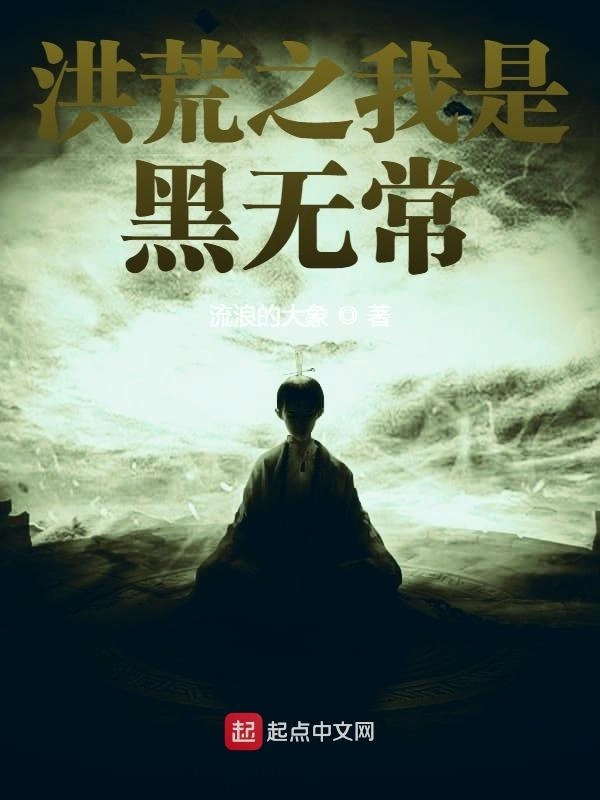
I Am Black and Impermanent in the Prehistoric Times
洪荒之我是黑无常
- Status
- Completed
- Length
- 119k Words
- Genre
- Cultivation
- Audience
- Male
- Subgenre
- Classical Xianxia
- Updated
- 5y ago
- Source
- Qidian
Stats
0Monthly votes
1.4kRecommends
25Fans
60Chapters
Tags
Synopsis
Reader comments
Readers also read
 Cultivation: My Understanding Goes Against the Sky Year by Year
 Xuanjian: the First Saint Taoist Master
 Your Magic Weapon Version Is Too Low!
 Journey to the West: Monkey Brother and I Are Killing Each Other Randomly
 Prehistoric Times: Beginning with Jingwei Reclamation
 Starting from the Ancestors of Montenegro
 Journey to the West Vase
 In Ancient Times, People Transcended the Heavens and Crossed the Road!
 Prehistoric: Be a Steady Emperor, Don't Be a Demon Emperor
 Reborn as a Flat Peach, a Monkey Eavesdropped on Her Heart
 I Am a White-Bone Spirit, a Natural Disaster of the Undead
 Immortal Light
 I Was Playing a Small Role in the Prehistoric Times
 China Entertainment Starts from Bixian
The last one is a bit awkward, forcibly emphasizing being a person in the past life, and having feelings and so on. You were almost killed in the first chapter, and you were drunk. Heaven, earth, and humans refer to all living beings in general. In mythology, humans only refer to the human race? Does it match? Moreover, you are the Impermanent King of the Underworld, and if you cannot even treat all sentient beings equally and fairly, are you worthy of continuing to stay in this position? If a manager of reincarnation has selfish motives for a single race, everything will be in chaos. What future will there be for other races? Either be a human slave forever or destroy this reincarnation. A world where reincarnation is allowed to be manipulated by selfishness will be a world that is forever solidified. The last sentence is that the immortals do whatever they want, and the gods fulfill their duties and are neither fish nor fowl.
The original form of Xihe comes from ancient mythology. In the change of times, she evolved from the original "Sun Mother" to the "Sun Royal". In the subsequent continuous evolution and development, Xihe became a representative figure of sun mythology and astronomical historian. She clearly assumed the functional carrier of culture and was concentrated in the use of ancient poetry in the cultural environment. Some Chinese scholars believe that Xihe and Changyi are the same person. "Xihe and Changxi also have the same name and the same story." [3][4] Therefore, Xihe is also a goddess of the sun and moon. The prototype of Xihe was first seen in "The Classic of Mountains and Seas: The Great Wilderness South Classic": "Beyond the southeast sea, between the sweet waters, there is the country of Xihe. There is a woman named Xihe, who bathed in Ganyuan. The south flows into this mountain. Beyond the East China Sea, between the sweet waters, there is a woman named Xihe, who is bathing the sun in the sweet water. This woman, Xihe, is the wife of Emperor Jun and gave birth to ten suns.) So Xihe first appeared in front of people in the form of the sun mother. She is the creator of human light and the supreme god in sun worship. In the later evolution, there was another sentence in "Chu Ci·Li Sao": "I ordered Xihe to look at Kuanji without being forced." (Translation: "I ordered Xihe to stop his whip and move slowly, and don't let the sun approach the Kuangji Mountain.") "Chu Ci·Tian Wen": "Xi He has not yet flourished, how can Ruohua shine?" Wang Yi Note: "Xihe is also the sun driver. How can the Ruomu shine brightly when the sun has not yet risen?" (Translation: Xihe has not yet traveled to the sun, why do the Ruomu flowers shine? Wang Yi's note: Xihe is the god who drives the sun.) It also evolved into the god who controls the sun, and began to be used in poetry creation for the first time. In the Han Dynasty, the Prime Minister also reported that there was an official named Xihe in ancient times. To inherit the festival of the four seasons. Confer civil service with respect. (Translation: The Prime Minister also reported that there were officials in Xihe in ancient times. They were responsible for taking over the festivals of the four seasons and carefully appointing people's affairs.) (From "Chronicles of the Former Han Dynasty") It also developed into an official position. It is not difficult to see the profound impact of the cultural phenomenon of Xihe on literature and politics. Later, images such as "Xi He whips the sun," "Xi He knocks the sun," "Xi He practices the sun," "Xi He leans on the sun," etc. Emerge in the poetry system. The original image of Xi He has gradually disintegrated from the myth and formed different versions of the image of Xi He. The literati and talented poets extracted the cultural factors from the mythical prototype and used them as the carrier of literary creation, so their personal will changed the original appearance of Xihe. The correlation between the content of Xihe's myth and Xihe's imagery has brought it to the extreme in later literary works. From then on, Xihe began to transition from the wasteland of mythology to the garden of herbs in poetry, and Xihe's imagery began to move towards a new realm. "There is a psychological structure left over from ancient times deep in the human soul, which is inherited through heredity and cultural accumulation. This structure is basically the same among members of various cultures, between modern people and primitive people, so it is called an archetype. An archetype is a subconscious psychological structure. When it emerges into consciousness, it always appears in certain specific forms. Therefore, the prototype also refers to a specific image that expresses a specific psychology. This type of image was once used to express the prototype of the early people, so it is the basic element of mythology - mythical image. "The sun is a particularly typical example of this type of image. The earliest Chinese sun myth prototype can be found in "The Classic of Mountains and Seas". [5] In this sense, Xihe is the mother of the ten suns and a well-deserved sun god. However, "language diseases" (Marcus Muller's words) can also breed new myths. As far as the understanding of the word Xihe is concerned, two mythological systems have been derived, and it shows that "the birth of the birthday myth will inevitably induce the corresponding moon myth." [6] That is to say, Xihe and Chang Xi are regarded as one person, and Mr. Wu Qichang also It is believed that: "Xi He and Chang Xi have the same name and the same story." As for the hidden meaning of Xi He, Mr. Jiang Liangfu believed in "The Modern Translation of Chu Ci" that the original character of "Xi" in Xi He should be "Xi". Jiang said it was true, "Lunheng·Shiying" is written as "Xihe"; "Yupian·Ribu": "Xi, the color of the sun"; "Jiyun·Zhiyun": "Xi, Hexi, sunlight". It can be seen that the original meaning of Xi (xi) refers to the color and sunshine of the sun. Hezi, "Shan Hai Jing·Zhongshan Jing·Zhongci Sanjing" says: "Twenty miles eastward, it is called Heshan. There is no vegetation on it, but there are many Yaobi. It is actually the nine capitals of the river. It is a mountain with five meanders." Guo's note: "There are five kinds of melodies." The so-called Heshan is named after its melodies. This is also the meaning of provability and rotation. In addition, according to the oldest astronomical theory in China, the "Gaitian Theory", it can be inferred that the ancients believed that the sun rose in the east and set in the west in an endless cycle, but in fact it revolves around the Big Dipper. Therefore, the meaning of Xihe is "the rotating sun". The rotating sun The ancients used this to refer to the sun god. Although there are various ambiguities about the theory of "Xihe" based on ancient documents, it is indisputable that her image of the sun mother and her image of controlling the sun are indestructible. Whether it is the sun god or the sun and moon god, she has become the ideal sun worship object in the hearts of primitive humans, creating a beautiful image for people. In the imaginative picture of Royal Sun, Xi He calmly drives the dragon chariot every day, mastering the rhythm of time, driving the sun forward and rising and returning together with the sun. This image is even more brilliant in later literary works. Her prototype has deeply left such a mark on people.
The protagonist has become an innate god and has nothing to do with the human race. How can he form a good relationship with other great gods on behalf of the human race?
A husky shouted in the crowd, "If you offend our human race, you will be punished no matter how far away you are."
This book will definitely not be written until the end
A eunuch? 🙂
It is meaningless, impermanence does not fascinate the soul, and the underworld does not judge, it loses its essence.
I have seen a point that I think is very good. When the reincarnation is divided into six realms, there is actually a class nature, and there is a distinction between high and low. In addition, there are intelligent beings to judge, which itself has a strong subjectivity.
Update ahhhhhhhhhhhhhhhhhhhhhhhhhhhhhhhhhhhhhhhhhhhhhhhhhhhhhhhhhhhhhhhhhhhhhhhhhhhhhhhhhhhhhhhhhhhhhhhhhhhhhhhhhhhhhhhhhhhhhhhhhhhhhh.
There are more newer doors, but there are so few and there are very few people.
This book is not as good as the previous one! Enter the palace quickly! Don't waste time!
Alas, the human race is none of your business. Cheap! ! Gone
Good guy, in the past, the donkeys in the production team didn't dare to rest like this.
Eunuch, I was waiting for you to sit upright, but in the end, there was nothing more.
Such a good book is no longer written.
I'm so tired of following your updates. Bro, please give me more. It's not enough.
It's been a month. I'm afraid it will take me three to five years to write one chapter a day.
Is there a female protagonist?
The first three chapters are quite amazing, but unfortunately it slowly falls into the broad and empty routine of the ancient times.