


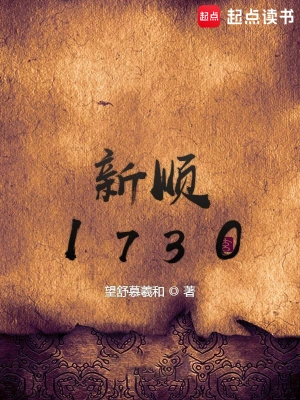
The New Shun, 1730
新顺1730
- Status
- Completed
- Length
- 5.5M Words
- Genre
- Historical
- Subgenre
- Alternate History
- Updated
- 3y ago
- Source
- Qidian
Stats
Tags
Synopsis
More by this author

In booklists 73
Explore more →

Misaka Takeshi's Grass Jelly
These are my subjective opinions. Feel free to add them to your collection 🤣😆 I've removed some books I rated poorly 🤪 Top-tier reads > solid reads > decent reads. Anything below decent doesn't make the list.


Shanmao’s Qidian Book Recommendations
From 2006 to the present, Shancat's history is the history of recommending books.
Alas, the Plants Are Withering; I Fear Beauty Will Fade Too Soon
There are plenty of fine steeds, but few people who can recognize them.
Reviews of Qidian Historical Novels
Reviews of the historical novels I've read. I praise and recommend the good ones, and criticize and mock the bad ones. I value logic and the patterns of history, so I'm not too keen on novice-friendly or wish-fulfillment novels.


Personal Collection of Premium Books I’ve Subscribed To
Handpicked favorites from my subscribed books

Fair and Objective Reviews! A Truly Honest Book List!
My basic requirements for this list: strong writing, a clear outline, an epic feel, good pacing, polished prose, solid craft, skilled technique, and foreshadowing. The story should hold together as a whole and express a certain depth of thought. Personal preferences: innovation, epic scope, transcendence, and philosophical reflection
【The Grand History】My Love Is Called China 🧐
From the Spring and Autumn and Warring States periods to the Republic of China era, including alternate-history twists and reimaginings, you'll find it all here. ️⚛️⚛️⚛️⚛️⚛️⚛️⚛️⚛️⚛️⚛️ Why do we love historical fiction so much? Because every rabbit has a dream of a great nation in its heart. Listen to the mightiest voice of our magnificent China: “Beneath all heaven, all land belongs to the king; at the shores of the realm, all are the king's subjects.” “I shall be the First Emperor. Let my s
Zheng Anjun's Little Book Nook
* ( ) ( ) ✨ ( ' - ' ) 🌟 o(0🎀0)**************o These are novels I've read and enjoyed. I add more every month. If you find a book you like, please remember to leave a like and a comment, fellow readers. ✨ Many thanks for your support! _(:з」∠)_

🌹【Every Genre】 Pin a Rose to Your Hair, and Let It Bloom 🌹
🌹🌹🌹🌹🌹🌹🌹🌹🌹🌹🌹🌹🌹🌹🌹 Life slips away like flowing water. Don't let it become ordinary. What is this list about? Imagination. The vastness of the sky and the breadth of the earth. Lofty mountains and flowing streams, and life beyond our own. The heroes of the past, and romance in the days to come. The rules of the game, and breaking them. The belief that where there's a will, there's a way, and that life goes on, whether the weather is fair or foul. The sunset is free, and beer costs only a f
An Ongoing Record of Novels Read and Currently Reading
I have an idea to write a review of most of the novels I've read over the past ten years, as a record of my reading life and experiences.

Listening to the Wind Pavilion: A Little Book Nook for Great Reads
Please follow and save this list. I'll update it from time to time. Feel free to recommend books and give them a like in the list's discussion section. Thanks! (Some of the novels I'd added recently seem to have had their recommendations removed for some reason.)

The Twelve Great Books
The best of what I've read over twelve years: only works with excellence in writing, plot, and themes make the list
History, Entertainment, and Books I’ve Finished or Am Reading
I like reading history and watching movies. I hate stories that wallow in misery; light and relaxing is best. Please follow! I maintain the books on this list regularly so you won't get burned. I'll add good books when I find them. Feel free to recommend books and share your thoughts in the comments. I'm hopelessly addicted to EU4. The Ming dynasty rules the world! The discussion section has some works that were censored. Only the list owner can see them.
Poison Test Menu 1
Books I've read, mostly completed works

Books I Like
These are all books I personally enjoy.
Beizhi’s General Store
Books I like and think are well written

Ah, Holy Light, This List Is Worth Saving!
Updated weekly. Every book has been read by the list maker, so remember to bookmark it!
Books That Have Kept Me Company Through the Years
My tastes are pretty eclectic, and I feel like I've become pickier over the years. These are novels I've stuck with for a long time, along with a few that hold a special place in my heart.
I'm Done
I've finished or read more than half of every book on this list. Their inclusion here means they're high-quality, distinctive, full of surprises, and have something meaningful to say.
The Road Ahead: Stories About Civilization, Carefully Chosen One by One
Books about the epic history of civilizations.

A Record of Classic, Enjoyable Stories (Just My Personal Opinion)
If a book made it onto this list, the curator must really like it! There are all kinds of genres, for both male- and female-oriented readers~~ Feel free to bookmark it!! Some are complete, some are promising new novels, and some abandoned books are here on display for all to see.
A Few Great Books I've Read
Mostly historical fiction.


Premium Picks: Food for the Soul, Across a Range of Genres. Follow Me!
A good book takes plenty of buildup. It’s like food for the soul, so just pick something from this list to read at night! Most of these are books I’ve read myself, including works by big-name authors and veterans, along with the occasional promising newcomer. Most are complete. I’ve reread some of my top recommendations several times. If you like the list, leave a like. Once it’s full, I’ll remove books that haven’t gotten any likes. Mostly military fiction. Other genres on the side.
No Clichés, Just Original Ideas
I don’t have many strict requirements. These are all books with something distinctive about them that kept me reading until the end. My tastes are pretty broad, with books from all kinds of genres, so there should be something here you’ll enjoy. I like books with solid logic and original ideas, especially ones with grand, intricate, or fantastical worlds. If it’s not a major part of the story or a serious issue, I can put up with a few minor flaws and plot holes. A little about how I pick books
Readers also read
 The Corpse Plague of 1916
 An Important Town in the Residual Tang Dynasty
 Chronicles of the Red Mansion
 In the Ming Dynasty, the Days When the Cows and Horses Turned Over
 Reborn in 1978: Returning to the City from the Countryside
 The Ming Dynasty Behind the Mask
 The Great Bandit
 Transmigrating at the Same Time: Crafting a Persona Until It Becomes Real!
 American Medical Examiner, but with a Food System
 The Prosperous Longwan Era
 The Sun and Moon Endure Forever
 The Ming Dynasty: Starting with Caution
 Fragments of the Old Days
Reader comments 51
Google Translate
The more I read the author's book, the more chilled I became. I used to think that China's missing out on the Age of Discovery was just a historical accident, but now I realize that it is a historical necessity. The problem in China during the Enlightenment was not a question of whether to ban sea trade, but a systemic problem from top to bottom, from land to canals, which would be difficult to solve without a violent revolution. The protagonist in the book also relies on his prophetic ability and noble status to barely maintain the current situation. This dilemma simply suffocates everyone who sees the truth clearly. After reading the author's novel, I can't stand other Mingchuan novels anymore. Just by talking, the navy came, taxes were collected, maritime trade prospered, and Southeast Asia was colonized. It's simply outrageous.
I feel that the author wanted to express this by writing this book: Even if China changes to a Han regime, it will still not be able to develop an industrial revolution and modern technology. In the 19th century, one crow and two crows would also happen, and Japan would rise. I also agree with this. If you are not really hurt, you will not have the motivation to find a way to become rich and powerful. Although Liu Ni changed history on his own in the novel, readers all felt how great the resistance was and how difficult it all was. It took twenty years and a very high starting point to create a budding commercial bourgeoisie, but it is still far from achieving the goal. Another point is that when the author wrote about the chief, he wanted to carry out a proletarian revolution. After being 404, he felt that he had compromised now and would probably end up with a bourgeois revolution.
Did the Manchu Qing destroy the foundation of China?
I won't judge whether it destroys the foundation or not, but I have been paying more attention to the history of technology for a long time. In the history of technology, the Qing Dynasty is a very embarrassing existence. How to say embarrassing? Because when it comes to the history of technology, there is either nothing to say about the Manchu and Qing Dynasties, or it is simply "Ming and Qing mixed together" to let the Qing Dynasty get the glory of the Ming Dynasty, or it is the Ming Dynasty to the early Qing Dynasty, and we will not talk about it later. Because ever since the wheel of history rolled to the Manchu and Qing Dynasties, the history of technology in ancient China has been stuck. It cannot be said that there was no technological development in the Qing Dynasty, but it was really lackluster. Most of them were just improvements in the technology of the previous Ming Dynasty, but there were not many that could be talked about (boasted). Going forward, we can only write about Western technology... Give a few examples He Tangkun's "History of Ancient Chinese Handicraft Engineering Technology" Look at the titles of each dynasty in it: The booming development of handicraft technology in Qin and Han Dynasties Slow development of handicraft technology in Wei, Jin, Southern and Northern Dynasties Sui, Tang and Five Dynasties The development of handicraft technology The prosperity of handicraft technology in the Southern Song Dynasty The difficult development of handicraft technology in the Yuan Dynasty The integrated handicraft technology of the Ming Dynasty The slow development of handicraft technology in the early and mid-Qing Dynasty ... It is not written after the Qing Dynasty. Please read these wordings carefully! Due to frequent wars in the Wei, Jin, Southern and Northern Dynasties, the word "Slow" was used. In the Yuan Dynasty, the Mongols were not good at technology and it was "Difficult". In the Qing Dynasty, it was written that in the early and middle periods, "Slow" was used. Comparing the prosperity of the two Song Dynasties, the Qin and Han Dynasties were "prosperous", while the Ming Dynasty was "gathered"... Read carefully. Wang Zhaochun's "History of Ancient Chinese Military Technology and Engineering" (Song, Yuan, Ming and Qing Dynasties) does not have so much rhetoric, and only writes about the early Qing Dynasty... I won't mention it later. Thinking about the military aspect, there is really nothing to mention. Even in the First Crow (Harmony) War, the Manchu and Qing Dynasties still relied on the military technology of the Ming Dynasty to fight against the foreigners. How can one write about this? There is only one place in the entire book's table of contents where there is rhetoric, "Twists and turns". This is a legacy of the Ming Dynasty in the early period, and people did not write about it at all in the middle period. Later modernized. He Tangkun's "History of Metal Smelting and Processing Engineering Technology in Ancient China" also only covers the early Qing Dynasty. Most of the content of the rhetoric of "Collection" comes from the Ming Dynasty. Others include the mechanical volume of "History of Science and Technology in China". This book is not classified by dynasty but is written according to different mechanical types. However, each category basically ends with Song Yingxing and Xu Guangqi. The Qing Dynasty... Not to mention, there is some involvement. Foreign priests passed on clocks and the Qing Dynasty successfully imitated them. I won't list them all. If you are interested in studying the history of technology, you can read the book. After reading it, go back and carefully appreciate what the Qing Dynasty brought to China. In terms of technological development in ancient China, it basically came to an abrupt halt by the end of the Ming Dynasty. Relying on the huge inertia of the wheel of history, it could barely benefit the early Qing Dynasty (as of Kangxi), and then this wheel came to a standstill. Wait until the Western ships and artillery force smash the Manchu gate. The Qing Dynasty created a gap of one to two hundred years in one fell swoop The picture below is also from Wang Zhaochun's book. Some cleaning fans have to read all the other people's books...
Damn it, finding a good book to read these days is like looking for a needle in a haystack. Brother, write carefully. I'll steal batteries to support you.
Qing fans' highest evaluation of the Qing Dynasty: the most powerful feudal dynasty, the pinnacle of the ancient feudal dynasty. Ironically, modern history begins with the Age of Discovery in the West. High-end players have begun to update the version, and the Qing Dynasty still said "my old version is the best in the world"!
This book is very embarrassing. At the top, there are various works on history and sociology, which are pure dry information, pure theory, and have academic reference value; at the bottom, there are various interesting articles about traveling through history, from the Qin Dynasty to the Qing Dynasty. They are purely to entertain readers, and they know that they have no theoretical basis and no ability to make logical deductions. But "Xinshun 1730" is a book that he can't get up and down. He feels that other pure Shuangwen is not worthy of playing with him. Shuangwen is the most brainless. But he wants to compare with the above works, but he can't get up. He has no choice but to get stuck here. He wanted to develop a whole set of theories but he couldn't do it, so he thought it was not worthwhile to write it as a pure article. I managed to get out of the mud without getting infected, so why do I still fall in? The result is that we are stuck in this position where we cannot move up or down.
Since Dashun inherited the Ming Dynasty, it must be technically superior to the Ming Dynasty. However, the book always feels like an alternative Qing Dynasty. This is a contradiction in the setting of the book. After all, the technology of the Qing Dynasty was more than a little inferior to that of the Ming Dynasty. Because the Qing Dynasty had fewer people, it had to implement a policy of cultural repression to ensure its dominance. Therefore, it banned and destroyed the military books of the previous dynasty on a large scale, which led to a serious technological regression (the Qing army was still using the bowl-mouth cannons that appeared in the early Ming Dynasty that had been eliminated by the Ming army two hundred years ago). The private manufacture of cannons by provincial armies other than the Eight Banners was strictly prohibited. But why is Dashun lagging behind in technology and lacking in artillery? As for the technical level of the ships, it is not yet known, but during the Ming Dynasty, the size of the ships alone was not inferior to the first-class Western battleships of the same period (in 1533, the Ming Dynasty sent a nearly 60-meter-long sealing boat to seal Ryukyu, and in 1633, the Ming Dynasty sent a nearly 70-meter-long sealing boat, and by 171 The Fengzhou sent by the Qing Dynasty in 1899 was only thirty meters long, and by 1800 it had shrunk to twenty meters! ), So Dashun inherited from the Ming Dynasty, and did not have the Qing Dynasty's abnormal policy of banning books and deleting books to control the size of shipbuilding and the number of cannons, so naturally it should not be used as a reference for the technology of the Qing Dynasty. Moreover, there was a breakthrough period in the development of Chinese artillery in the late Ming Dynasty. Since the Qing Dynasty did not appear, this golden period that was originally interrupted should be able to continue. At least the artillery manufacturing technology will not lag too far behind the West in the same period. Moreover, Dashun should vigorously develop the car camp technology. This is the main weapon for the Ming Dynasty to compete with the northern forces for land. Why haven't I heard the author mention it? I also want to see the author write about the chariot unit, and see the "ancient Chinese tanks" showing off their power 😏 The author should mainly study Western history, it feels like there are a lot of Westernized things. To be honest, there is not much difference in technology between the East and the West in the 16th and 17th centuries, they just have different emphasis. The development of Chinese-style firearms pursues lightness and the ability to carry out high-density firepower in field battles, while the West pursues range and power. The French cannon and matchlock gun were also manufactured in China in the early to mid-16th century. The wheel cannons and electric cannons developed as a result highlighted this Chinese tradition. And after two centuries, it feels like Dashun has regressed in technology like the Qing Dynasty? Isn't there already a time traveler in front of me? Of course, the book written by the author is also very good. It can be clearly seen from the article that the author has put in a lot of hard work. As a newcomer, it can be said that it is very good to be able to write at this level. I hope the author will continue to maintain it!
😭Come back and see Shu Xihe😭 🌟My most proud belief🌟 ⚡Xinshun is still fresh in my mind⚡ 😭Tears are flowing inexplicably😭 💥Vaguely remember the careerist💥 👍and the awesome chief👍 ⚡Kill off all the procrastination⚡ ✨It's not tiring to read another book✨
The "Kangxi Prosperity" was the beginning of the decline of Chinese science
Academician Xi Zezong: The "Kangxi Prosperity" was the beginning of the decline of science in China ——Conversation with Academician Xi Zezong Author: Former President Fang of the University of Science and Technology of China Source of the article: "Zhengming" magazine Old friend Academician Xi Zezong is in sight. It was possible to meet him in Berlin this year because the MG11 conference invited him to give a report on the Millennium Review of Supernova 1006. Brother Zezong has been famous in academic circles for half a century for his "New Table of Ancient Supernovae" (1955). The following is a record of multiple phone calls over a three-month period, from August to November 2006. Omitting comments about current events and past events, I will only record Professor Xi's fine remarks on the history of science, especially the history of Chinese science. F: I read your article about Kangxi, and your conclusion is that Chinese science did not really begin to decline until the Kangxi dynasty in the early Qing Dynasty. X: Yes. F:Among the Qing emperors, Kangxi seemed to be the most fond of natural science. He asked missionaries to teach him Western science. He has considerable knowledge of arithmetic and astronomy. You say he is "stifling the people's wisdom." What is the basis for this? X: The theory that Kangxi "stifled the people's wisdom" was first proposed by Liang Qichao and later demonstrated by Shao Lizi. Indeed, Kangxi studied arithmetic and astronomy. However,his purpose is not to advocate science, but on the contrary, to block the spread and development of modern science among the Han nation. One of the evidences is his purpose of inviting missionaries. In the late Ming Dynasty, scholar-bureaucrats and scholars could communicate spontaneously with Western missionaries, but Emperors Wanli and Chongzhen basically ignored them. According to the diary of missionary J. F. Gerbillon,Kangxi did not allow missionaries to translate any scientific documents in yamen where there were Han and Mongolian people. Since the 150th year of Kangxi's reign, the Qintian Prison of the Qing Dynasty has always been served by missionaries from the West as the chief or deputy supervisors, and there have never been Han or Mongolians. Kangxi asked missionaries to supervise the Qintian Prison. The purpose was not to open up Sino-Western exchanges, but on the contrary, to "stifle" Sino-Western scientific and technological exchanges. F: As far as I know, during the Kangxi era, there was the Royal Society in London, the Royal Academy of Sciences in Paris, and the Academy of Sciences in Berlin. They were a major boost to the scientific development of Europe. X: Yes. Kangxi lived in the same era as King Louis XIV of France and Peter the Great of Russia. Missionaries also introduced to Kangxi the "Académie? Des Sciences" and the "Observatoire de Paris" founded by Louis XIV. F: The establishment of the Academy of Sciences seemed to be a fashion among the emperors of that era. It is said that Kangxi also published his mathematical papers when he was in the imperial court. Did Kangxi also intend to establish the Qing Academy of Sciences? X: The Kangxi mathematical paper you are referring to may be "Theory of Imperial Triangle Deduction". However, there is no record that Kangxi was interested in establishing the Academy of Sciences. Louis XIV visited his "Academy of Science and Technology" but did not publish any papers. The purpose of his establishment of the Institute of Science and Technology was to promote the French scientific research spirit and cultivate talents. Kangxi's policy was to consolidate the "imperial system" and curb the scientific research spirit of the Han nation. In the early Qing Dynasty, there were also non-"imperial" talents who were proficient in mathematics and astronomy such as "Nan Wang (Xi Chan) and Bei Xue (Feng Zuo)". That is the remnant of Ming Dynasty academia. Later, it disappeared completely. F: There is no talent. There seems to be no "examination device". If you have visited the ancient observatory in Beijing and the collection of ancient astronomical instruments in Nanjing. You will find that the observatory of the Qing Dynasty did not even have an astronomical telescope. The astronomers of the Qing Dynasty didn't even know how to build a telescope? X: Of course I know. Xu Guangqi suggested building an astronomical telescope in 1629, twenty years after Galileo's astronomical telescope, which was very fast. Kangxi also knew about telescopes. There are hundreds of telescopes in the Forbidden City in Beijing, most of which were collected during the "prosperity" of Kangxi and Qianlong. However, Kangxi guarded against the spread of telescopes. Kangxi ordered the missionaries not to make telescopes. The telescope can only be used by the royal family, so there is no telescope on the observatory. There were many more astronomical instruments in the Qing palace than on the astronomical observatory. The entire star catalog published by the Qing Dynasty was based on actual measurement data without telescopes. Can we still fall behind? Kangxi was afraid that once the instruments were taken out of the palace, Han people would copy and improve them, and the Manchu ruling group would no longer have a monopoly. F: Is there any other evidence of monopoly? X: Algebra. Unlike arithmetic, algebra relies on a set of symbols. Symbols are the language of algebra. In 1712, the Jesuit Fu Shengze wrote "A New Method of Algebra (Algebra)" to introduce symbolic algebra to Kangxi. Kangxi couldn't understand it and said this new law was "ridiculous". He ordered that the new method of algebra should not be disseminated. Therefore, it was not until 1859 that the algebraic notation method began to spread in China. That was already 150 years later, and it was no longer a new method. F: The term "ridiculous" is a typical psychological manifestation of pretending to understand something. This is not surprising. In early 1949, in Beijing, when I was in my third year of junior high school, I was asked to teach junior high school algebra to a cultural cram school (there were many cultural cram schools at that time). When I used symbols to talk about a=-(-a), the older people in the class didn't understand it, but the younger ones accepted it easily. In 1712, Kangxi was already 58 years old, and it was understandable that he could not understand algebraic notation. However, I remember that Kangxi also liked to say that others did not understand science. X: In 1689, Kangxi wanted to tease (belittle) Minister Li Guangdi in Nanjing. Kangxi asked the Jesuits in advance how many degrees Canopus rose from the horizon. After seeing Li Guangdi coming to court, Kangxi asked him: "Can you recognize Canopus?" Li Guangdi couldn't answer. Kangxi was proud: "Of course Canopus cannot be seen in Beijing, but it can be seen in Nanjing. When you arrive in your hometown of Minguang, you can even see the Antarctic Star." Kangxi was so proud that he couldn't see the Antarctic Star in Minguang. Liang Rengong (Liang Qichao) said that Kangxi's science was a tool used to attack others (Li Guangdi was subsequently demoted), which was true. F: From algebraic symbols to the South Pole Star, it proves that Kangxi also had limited knowledge of modern science. Is it related to missionaries? X: It's relevant. Kangxi only learned Western science from missionaries and did not really open the door to academic exchanges between China and the West. There were no technical difficulties in communication between China and the West at that time. Water transportation between Asia and Europe has been very developed. As mentioned earlier, Western scientific literature could be sent to China in a timely manner during the Ming Dynasty. At that time, some European scholars still hoped that their research results would be responded to by Chinese scholars. As soon as Kepler's Tabulae Rudolphinae was published in 1627, he immediately sent a copy to China. Missionaries have made great contributions to academic exchanges between China and the West. Some Jesuits were indeed first-rate scholars. Nonetheless, they were also influenced by the Holy See. For example, they have always had an ambiguous attitude towards Copernicus' heliocentric theory, which may not be just for academic reasons. F: You quoted Hu Shi at the beginning of the article, saying that it was still possible at the end of the Ming Dynasty, but since the Qing Dynasty, "the two sides (science) are so different between China and the West that it really cannot be based on the truth." Can you say more quantitatively how far Chinese science declined during the Kangxi dynasty? X: In his later years (1713-1722), Kangxi edited the 100-volume "Lüliyuan". Among them, there are 53 volumes of "The Essence of Mathematics", which he considered to be the encyclopedia of mathematics at that time. After the mid-16th century, the main mathematical developments in Europe included algebraic symbols (1580), logarithms (1614), slide rules (1620), analytic geometry (1620), adding machines (1642), and calculus (1665). The most important of these are analytic geometry and calculus. Without these two, it is difficult to understand and apply Newtonian mechanics. However, there is no analytic geometry and calculus at all in the "Mathematical Encyclopedia" "Mathematical Essence". The compilers may not have known about these two new developments in mathematics. Although the "Chongzhen Almanac" of 1630 in the late Ming Dynasty also lagged behind the West. But it is still far from being completely ignorant of the latest important developments. F: I have been away from China for almost seventeen years, and I am unfamiliar with the "latest important developments". It is often heard that "Emperor Kangxi" appears in videos. What is your evaluation of this video "Emperor Kangxi"? X: Haha... Haha... Not worth talking about, not worth talking about. The main reason for China's repeated defeats by the West since the late Qing Dynasty is not that there are major problems with our traditional culture or system. And the nature of the Manchu Qing Dynasty is that it is an alien regime. The Manchu ruling nation has its own selfish interests. In order to prevent the Han from conquering the Han, they do everything possible to contain China's own modernization and industrialization process, suppress the Han people in every possible way, the Manchu and Han are guessing, and the top and bottom are centrifugal. After Kangxi, China's science and technology quickly fell behind the West, which greatly delayed the time for Chinese society to embark on the industrialization process. At the end of the Qing Dynasty, it still had to be repeatedly defeated by Western powers. From Kangxi's "stifling the people's wisdom" to the reappearance of "stifling the people's wisdom", woohoo! Postscript: Not every word of Academician Xi Zezong's answer has been reviewed by him (eye disease makes it difficult to read). If there are any mistakes, I am responsible. Academician Xi's more detailed arguments can be found in his papers such as "On the Errors of Kangxi's Scientific Policy" ("New List of Ancient Nova and Exploration of the History of Science", 2002).
In the past, it was the novel wrapped in Ma Yuan's skin that I read with gusto. Now, it's Ma Yuan wrapped in the novel's skin and I read it with gusto. God's way is reincarnation, who will God spare?