Library
Browse and search books
3,417 novels found
远征印缅抗战亲历记
Cppcc National Committee On Culture, History And Study
This book is a personal record of the former Kuomintang general's anti-Japanese war expedition to India and Burma. The original title of this book was "Expedition to the Anti-Japanese War in India and Burma", and the book series was titled "Front Battlefield: The Personal Experience of the Former Kuomintang Generals in the Anti-Japanese War". It was published by our publishing house in January 2013 with the original ISBN978-7-5034-3696-3. Now, in response to the request of the National Committee for Literature, History and Study of the Chinese People's Political Consultative Conference, the book has been included in the "Hundred Classics Library of Literary and Historical Materials" series and has been republished. Only the format has been redesigned, and the content has not been changed. Hereby explain. During the eight years of the Anti-Japanese War, the Chinese Expeditionary Force fought for justice with abundant patriotism and maintained strong morale and strong fighting spirit. They were often in muddy and rugged situations, storming well-fortified enemy positions, and tens of thousands of Chinese sons and daughters sacrificed their precious lives for this. They have made immortal contributions to the Chinese nation and won high honors internationally. As a personal experience record, this book reproduces the bravery and heroism of the expedition to India and Burma.
This book is a personal record of the former Kuomintang general's anti-Japanese war expedition to India and Burma. The original title of this book was "Expedition to the Anti-Japanese War in India and Burma", and the book series was titled "Front Battlefield: The Personal Experience of the Former Kuomintang Generals in the Anti-Japanese War". It was published by our publishing house in January 2013 with the original ISBN978-7-5034-3696-3. Now, in response to the request of the National Committee for Literature, History and Study of the Chinese People's Political Consultative Conference, the book has been included in the "Hundred Classics Library of Literary and Historical Materials" series and has been republished. Only the format has been redesigned, and the content has not been changed. Hereby explain. During the eight years of the Anti-Japanese War, the Chinese Expeditionary Force fought for justice with abundant patriotism and maintained strong morale and strong fighting spirit. They were often in muddy and rugged situations, storming well-fortified enemy positions, and tens of thousands of Chinese sons and daughters sacrificed their precious lives for this. They have made immortal contributions to the Chinese nation and won high honors internationally. As a personal experience record, this book reproduces the bravery and heroism of the expedition to India and Burma.
Remembering John Ma
History回忆马约翰
Cppcc National Committee On Culture, History And Study
John Ma (1882-1966) was a famous physical educator in the history of modern Chinese sports. Graduated from St. John's University in 1911. Because of his outstanding athletic ability, in the autumn of 1914, he applied to teach at Tsinghua School. From then on, he was gradually promoted from a teaching assistant to a professor and served as the director of the Sports Department of Tsinghua University. Until his death in 1966, he worked at Tsinghua University for 52 years and devoted his life to sports. The first half of the book, through Ma's colleagues, students and family members, reflects Ma's personality charm of loving the motherland, loving sports, loving life and being willing to help others from many aspects. The second half of the book introduces Mr. John Ma's relevant sports discussions.
John Ma (1882-1966) was a famous physical educator in the history of modern Chinese sports. Graduated from St. John's University in 1911. Because of his outstanding athletic ability, in the autumn of 1914, he applied to teach at Tsinghua School. From then on, he was gradually promoted from a teaching assistant to a professor and served as the director of the Sports Department of Tsinghua University. Until his death in 1966, he worked at Tsinghua University for 52 years and devoted his life to sports. The first half of the book, through Ma's colleagues, students and family members, reflects Ma's personality charm of loving the motherland, loving sports, loving life and being willing to help others from many aspects. The second half of the book introduces Mr. John Ma's relevant sports discussions.
粤桂黔滇抗战亲历记
Cppcc National Committee On Culture, History And Study
This book is a record of the former Kuomintang general's personal experience of the Anti-Japanese War in the four provinces of Guangdong, Guangxi, Guizhou and Yunnan. The original title of this book is "The Anti-Japanese War in Guangdong, Guizhou and Yunnan", and the book series is called "Front Battlefield: The Personal Experience of the Former Kuomintang Generals in the Anti-Japanese War". It was published by our company in January 2013. The original book number is ISBN978-7-5034-3701-4. At the request of the Literature, History and Study Committee of the National Committee of the Chinese People's Political Consultative Conference, the book has been included in the "Hundred Classics Library of Literature and History Materials" series and republished. Only the format has been redesigned, and the content has not been changed. Hereby explain. The Guangdong, Guangxi, Guizhou, and Yunnan War of Resistance refers to various battles fought in the four provinces (regions) of Guangdong, Guangxi, Guizhou, and Yunnan during the Anti-Japanese War. From October 1938, when the Japanese invaders landed in Daya Bay, Guangdong, to August 1945, when Japan surrendered, the war lasted seven years in these four provinces (districts) during the eight years of the Anti-Japanese War.
This book is a record of the former Kuomintang general's personal experience of the Anti-Japanese War in the four provinces of Guangdong, Guangxi, Guizhou and Yunnan. The original title of this book is "The Anti-Japanese War in Guangdong, Guizhou and Yunnan", and the book series is called "Front Battlefield: The Personal Experience of the Former Kuomintang Generals in the Anti-Japanese War". It was published by our company in January 2013. The original book number is ISBN978-7-5034-3701-4. At the request of the Literature, History and Study Committee of the National Committee of the Chinese People's Political Consultative Conference, the book has been included in the "Hundred Classics Library of Literature and History Materials" series and republished. Only the format has been redesigned, and the content has not been changed. Hereby explain. The Guangdong, Guangxi, Guizhou, and Yunnan War of Resistance refers to various battles fought in the four provinces (regions) of Guangdong, Guangxi, Guizhou, and Yunnan during the Anti-Japanese War. From October 1938, when the Japanese invaders landed in Daya Bay, Guangdong, to August 1945, when Japan surrendered, the war lasted seven years in these four provinces (districts) during the eight years of the Anti-Japanese War.
国民革命军北伐亲历记
Cppcc National Committee On Culture, History And Study
The Northern Expedition was the anti-imperialist and anti-feudal revolutionary struggle carried out by the Chinese people from 1924 to 1927 under the cooperative leadership of the Communist Party of China and the Chinese Kuomintang. This book contains the reminiscences of those who witnessed the Northern Expedition such as Nie Rongzhen, Tang Shengzhi, and Li Zongren. It vividly and informatively describes the situation, battle history, and combat conditions at that time. It is an important material for studying the history of the Northern Expedition and a vivid teaching material for carrying forward the spirit of patriotism and conducting patriotic education.
The Northern Expedition was the anti-imperialist and anti-feudal revolutionary struggle carried out by the Chinese people from 1924 to 1927 under the cooperative leadership of the Communist Party of China and the Chinese Kuomintang. This book contains the reminiscences of those who witnessed the Northern Expedition such as Nie Rongzhen, Tang Shengzhi, and Li Zongren. It vividly and informatively describes the situation, battle history, and combat conditions at that time. It is an important material for studying the history of the Northern Expedition and a vivid teaching material for carrying forward the spirit of patriotism and conducting patriotic education.
南京保卫战亲历记
Cppcc National Committee On Culture, History And Study
This book is a personal record of the former Kuomintang general's personal experience in the defense of Nanjing during the Anti-Japanese War. The original title of this book is "The Battle of Nanjing", and the series title is "Front Battlefield: The Personal Experience of Former Kuomintang Generals in the Anti-Japanese War". It was published by our publishing house in January 2013 with the original ISBN978-7-5034-3703-8. Now, at the request of the National Committee on Literature, History and Study of the Chinese People's Political Consultative Conference, the book has been included in the "Hundred Classics Library of Literary and Historical Materials" series and has been republished, with only a redesign of the layout and no changes to the content. Hereby explain. After the August 13 Songhu Anti-Japanese War ended in 1937, the Japanese army continued to invade the West, trying to use force superiority to completely destroy our army's will to fight, forcing us to make peace on the most humiliating terms and "resolve the incident" as soon as possible. On December 1, the Japanese base camp ordered the commander of the Central China Front to coordinate with the navy to capture Nanjing. The Chinese sons and daughters guarding Nanjing, facing a powerful enemy, launched a short but heroic national self-defense war - the Battle of Nanjing. This book, as a personal account, reproduces the heroic defense of Nanjing.
This book is a personal record of the former Kuomintang general's personal experience in the defense of Nanjing during the Anti-Japanese War. The original title of this book is "The Battle of Nanjing", and the series title is "Front Battlefield: The Personal Experience of Former Kuomintang Generals in the Anti-Japanese War". It was published by our publishing house in January 2013 with the original ISBN978-7-5034-3703-8. Now, at the request of the National Committee on Literature, History and Study of the Chinese People's Political Consultative Conference, the book has been included in the "Hundred Classics Library of Literary and Historical Materials" series and has been republished, with only a redesign of the layout and no changes to the content. Hereby explain. After the August 13 Songhu Anti-Japanese War ended in 1937, the Japanese army continued to invade the West, trying to use force superiority to completely destroy our army's will to fight, forcing us to make peace on the most humiliating terms and "resolve the incident" as soon as possible. On December 1, the Japanese base camp ordered the commander of the Central China Front to coordinate with the navy to capture Nanjing. The Chinese sons and daughters guarding Nanjing, facing a powerful enemy, launched a short but heroic national self-defense war - the Battle of Nanjing. This book, as a personal account, reproduces the heroic defense of Nanjing.
北魏考课制度研究
Dai Weihong
This book starts from the social and political realities of various stages in the Northern Wei Dynasty, and carefully combs the development process of the formation, establishment, evolution and destruction of the examination system in the Northern Wei Dynasty. This paper discusses the relationship between the examination system of the Northern Wei Dynasty and the dual administrative system of Hu and Han, and points out that before Emperor Xiaowen reformed the official system, the inner court officials with Xianbei characteristics in the central administrative system basically did not take exams, and the local administrative system did not take exams for chiefs and tribal chiefs, but the government adopted various methods to conduct exams for state, county and county officials. The mutual mobility between the central court, the outer court and local officials actually strengthened the examination and thus played a destructive role in the dual system of Hu and Han. This paper analyzes the relationship between the examination system and elections in the Northern Wei Dynasty, and points out that in the Northern Wei Dynasty, examinations and elections were gradually separated due to the specialization of the content of Xiu Xiao policy questions, changes in election objects, and the transformation of Zhongzheng functions. It also discusses the relationship between the examination system and the salary system in the Northern Wei Dynasty, as well as the relationship between the examination system in the Northern Wei Dynasty and the patrol of ambassadors, the reporting of officials and the people, and the promotion and punishment of officials.
This book starts from the social and political realities of various stages in the Northern Wei Dynasty, and carefully combs the development process of the formation, establishment, evolution and destruction of the examination system in the Northern Wei Dynasty. This paper discusses the relationship between the examination system of the Northern Wei Dynasty and the dual administrative system of Hu and Han, and points out that before Emperor Xiaowen reformed the official system, the inner court officials with Xianbei characteristics in the central administrative system basically did not take exams, and the local administrative system did not take exams for chiefs and tribal chiefs, but the government adopted various methods to conduct exams for state, county and county officials. The mutual mobility between the central court, the outer court and local officials actually strengthened the examination and thus played a destructive role in the dual system of Hu and Han. This paper analyzes the relationship between the examination system and elections in the Northern Wei Dynasty, and points out that in the Northern Wei Dynasty, examinations and elections were gradually separated due to the specialization of the content of Xiu Xiao policy questions, changes in election objects, and the transformation of Zhongzheng functions. It also discusses the relationship between the examination system and the salary system in the Northern Wei Dynasty, as well as the relationship between the examination system in the Northern Wei Dynasty and the patrol of ambassadors, the reporting of officials and the people, and the promotion and punishment of officials.
三藩史略(上、下卷)
Teng Shaozhen
This book was written by Mr. Teng Shaozhen, a famous expert on Qing history and ethnic history, with ten years of hard work. It is a good academic and readable book on the San Francisco issue. It is currently the most systematic and excellent work in this field. The issue of the Three Feudatories is a major topic in the study of Qing history and Manchu history, involving many aspects such as the relationship between the Manchus and Hans, the central and local governments, and the Central Plains and frontiers. This book starts from the macro perspective of Greater China, through systematic research on the economic, political, military, cultural and social development conditions of the three major political forces of the Qing regime, the Dashun regime and the Nanming regime; stage; conducted an in-depth analysis of representative figures such as Wu Sangui, Kong Youde, Geng Zhongming, and Shang Kexi; clarified the nature of the ethnic minorities' occupation of the Central Plains, the national oppression policy of the Manchu aristocrats, and the historical evaluation of relevant figures; the origin, development stages, and system of the feudal towns were clarified The characteristics, comparative status of vassal kings, alternation of vassal kings, flag-making process, historical contribution, harm, etc. Are elaborated in detail and systematically; the causes, development process and failure reasons of the rebellion represented by Wu Sangui are realistically and scientifically analyzed; the Qing government's various aspects of the counter-insurgency war are analyzed The policies, strategies and tactics, implementation effects, and military status of each period are broken down in detail; the basic attitudes of various social strata during the counter-insurgency process are also conducted as necessary; and the basic experiences and lessons of the success or failure of each regime in this historical period are summarized, which has important academic value. This book uses a large number of first-hand materials such as archival materials, official documents, and private notes. The materials are informative and objective in evaluation. It is also equipped with pictures of precious historical cultural relics, with both pictures and texts, which enhances the knowledge and readability.
This book was written by Mr. Teng Shaozhen, a famous expert on Qing history and ethnic history, with ten years of hard work. It is a good academic and readable book on the San Francisco issue. It is currently the most systematic and excellent work in this field. The issue of the Three Feudatories is a major topic in the study of Qing history and Manchu history, involving many aspects such as the relationship between the Manchus and Hans, the central and local governments, and the Central Plains and frontiers. This book starts from the macro perspective of Greater China, through systematic research on the economic, political, military, cultural and social development conditions of the three major political forces of the Qing regime, the Dashun regime and the Nanming regime; stage; conducted an in-depth analysis of representative figures such as Wu Sangui, Kong Youde, Geng Zhongming, and Shang Kexi; clarified the nature of the ethnic minorities' occupation of the Central Plains, the national oppression policy of the Manchu aristocrats, and the historical evaluation of relevant figures; the origin, development stages, and system of the feudal towns were clarified The characteristics, comparative status of vassal kings, alternation of vassal kings, flag-making process, historical contribution, harm, etc. Are elaborated in detail and systematically; the causes, development process and failure reasons of the rebellion represented by Wu Sangui are realistically and scientifically analyzed; the Qing government's various aspects of the counter-insurgency war are analyzed The policies, strategies and tactics, implementation effects, and military status of each period are broken down in detail; the basic attitudes of various social strata during the counter-insurgency process are also conducted as necessary; and the basic experiences and lessons of the success or failure of each regime in this historical period are summarized, which has important academic value. This book uses a large number of first-hand materials such as archival materials, official documents, and private notes. The materials are informative and objective in evaluation. It is also equipped with pictures of precious historical cultural relics, with both pictures and texts, which enhances the knowledge and readability.
汴京之围:北宋末年的外交、战争和人
Guo Jianlong
This book traces the complete historical details of the Jingkang disaster at the end of the Northern Song Dynasty, tells the peace and war between the Song, Liao, and Jin parties, focusing on the key moments of the great changes in the history of the Northern Song Dynasty, and the causes and consequences of the overall crisis that broke out in the empire from the inside out. During the Xuanhe period of the Northern Song Dynasty, the empire was prosperous, but hidden dangers under the prosperous times had become an undercurrent. Internal crises such as financial difficulties, chronic military diseases, and vicious party disputes, as well as external crises such as military threats from the Liao and Jin countries in the north, made the empire gradually unstable. In order to "recover" the Sixteen Prefectures of Yanyun as a strategic barrier, Song Huizong decided to unite with the Jin Dynasty to destroy the Liao Dynasty. Although the Song-Jin alliance gradually encroached on the Liao Kingdom, the Jin State took advantage of this to see the weakness of the Northern Song Dynasty. Coupled with the complicated interest disputes between the two countries, the Jin State turned south to attack the Song Dynasty. In the first year of Jingkang (1126), the Jin army besieged Bianjing for the second time, and the city fell in November. The Northern Song Dynasty collapsed suddenly, and only three years passed from its prosperity to its demise.
This book traces the complete historical details of the Jingkang disaster at the end of the Northern Song Dynasty, tells the peace and war between the Song, Liao, and Jin parties, focusing on the key moments of the great changes in the history of the Northern Song Dynasty, and the causes and consequences of the overall crisis that broke out in the empire from the inside out. During the Xuanhe period of the Northern Song Dynasty, the empire was prosperous, but hidden dangers under the prosperous times had become an undercurrent. Internal crises such as financial difficulties, chronic military diseases, and vicious party disputes, as well as external crises such as military threats from the Liao and Jin countries in the north, made the empire gradually unstable. In order to "recover" the Sixteen Prefectures of Yanyun as a strategic barrier, Song Huizong decided to unite with the Jin Dynasty to destroy the Liao Dynasty. Although the Song-Jin alliance gradually encroached on the Liao Kingdom, the Jin State took advantage of this to see the weakness of the Northern Song Dynasty. Coupled with the complicated interest disputes between the two countries, the Jin State turned south to attack the Song Dynasty. In the first year of Jingkang (1126), the Jin army besieged Bianjing for the second time, and the city fell in November. The Northern Song Dynasty collapsed suddenly, and only three years passed from its prosperity to its demise.
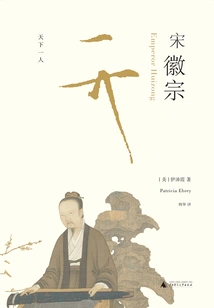
Song Huizong
History宋徽宗
(us) Yi Peixia
During the reign of Song Huizong, China was almost the most advanced country in the world. During his more than twenty years in power, this artistically gifted emperor led the Song Dynasty to its cultural peak. However, because he was captured by the Jurchens and eventually died in a foreign country, Song Huizong was considered by later generations to be a failed emperor and a negative example of moral education. Professor Yi Peixia worked hard for decades to write "Song Huizong", which became the first complete biography of the emperor in the English-speaking world, trying to correct the public's prejudice against Huizong as "corrupt and mediocre". Yi Peixia reshapes the image of Song Huizong, puts him back into the historical context, and restores the ambition of a monarch of a prosperous country to constantly pursue excellence and glory - even though this ambition ended in tragedy. Huizong struggled to rise above court factionalism early in his reign, then turned his attention to his areas of expertise. He greatly expanded the court's charity and established official schools, hospitals, orphanages, and beggars' cemeteries. As an artist, he was surrounded by outstanding poets, painters, and musicians. He also built magnificent palaces, temples, and gardens that would be almost unsurpassed by later generations. He favored Taoist priests, annotated the Taoist scriptures, and allowed his subjects to accept and practice this belief. However, his piety to Taoism eventually deviated from the mainstream of Confucianism, weakening his ability to govern the country.
During the reign of Song Huizong, China was almost the most advanced country in the world. During his more than twenty years in power, this artistically gifted emperor led the Song Dynasty to its cultural peak. However, because he was captured by the Jurchens and eventually died in a foreign country, Song Huizong was considered by later generations to be a failed emperor and a negative example of moral education. Professor Yi Peixia worked hard for decades to write "Song Huizong", which became the first complete biography of the emperor in the English-speaking world, trying to correct the public's prejudice against Huizong as "corrupt and mediocre". Yi Peixia reshapes the image of Song Huizong, puts him back into the historical context, and restores the ambition of a monarch of a prosperous country to constantly pursue excellence and glory - even though this ambition ended in tragedy. Huizong struggled to rise above court factionalism early in his reign, then turned his attention to his areas of expertise. He greatly expanded the court's charity and established official schools, hospitals, orphanages, and beggars' cemeteries. As an artist, he was surrounded by outstanding poets, painters, and musicians. He also built magnificent palaces, temples, and gardens that would be almost unsurpassed by later generations. He favored Taoist priests, annotated the Taoist scriptures, and allowed his subjects to accept and practice this belief. However, his piety to Taoism eventually deviated from the mainstream of Confucianism, weakening his ability to govern the country.
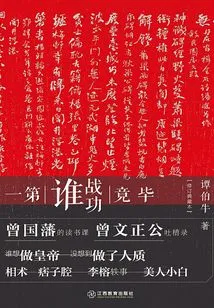
毕竟战功谁第一
Tan Boniu
"Zeng Guofan's Reading Lessons", "Zeng Wenzhenggong's Complaints", "Who Wants to Be the Emperor", "I Didn't Expect to Be a Hostage", "Physiognomy", "Ruffian Tune", "Li Rong's Anecdotes", "Beauty Novice"... This book is Tan Boniu's fine history Shi Xiaowen's collection not only involves anecdotes and secrets about the Hunan Army, Huai Army, Taiping Army and many big figures in Wanqing, but also talks about some historical facts and reversal of the case. The content is well-founded, interesting and informative, making it interesting to read. Tan Boniu said frankly: I just wanted to analyze it from some historical details. I hope that I can see the big from the small and lead to in-depth political, economic and cultural discussions.
"Zeng Guofan's Reading Lessons", "Zeng Wenzhenggong's Complaints", "Who Wants to Be the Emperor", "I Didn't Expect to Be a Hostage", "Physiognomy", "Ruffian Tune", "Li Rong's Anecdotes", "Beauty Novice"... This book is Tan Boniu's fine history Shi Xiaowen's collection not only involves anecdotes and secrets about the Hunan Army, Huai Army, Taiping Army and many big figures in Wanqing, but also talks about some historical facts and reversal of the case. The content is well-founded, interesting and informative, making it interesting to read. Tan Boniu said frankly: I just wanted to analyze it from some historical details. I hope that I can see the big from the small and lead to in-depth political, economic and cultural discussions.
中国通史(插图版)
Lu Simian
Mr. Lu Simian, a modern Chinese historian and master of Chinese studies, wrote this book in 1939. After its publication, it became the most widely circulated general history of China during the Republic of China. To this day, it is still the first choice history introductory book for many readers, which is enough to show people's recognition of Mr. Lu and his writing of general history in vernacular. This book is arranged in chronological order and gives an in-depth insight into the rise and fall of Chinese dynasties. It has a clear and concise context, simple writing and strong logic. It can not only meet the readers' needs to understand the rise and fall of Chinese history, but also help readers to have a macro grasp of social changes. In line with the purpose of preserving the original appearance of the book, this book only corrects a few publication errors, and retains the concepts, titles, terminology and other expressions at that time.
Mr. Lu Simian, a modern Chinese historian and master of Chinese studies, wrote this book in 1939. After its publication, it became the most widely circulated general history of China during the Republic of China. To this day, it is still the first choice history introductory book for many readers, which is enough to show people's recognition of Mr. Lu and his writing of general history in vernacular. This book is arranged in chronological order and gives an in-depth insight into the rise and fall of Chinese dynasties. It has a clear and concise context, simple writing and strong logic. It can not only meet the readers' needs to understand the rise and fall of Chinese history, but also help readers to have a macro grasp of social changes. In line with the purpose of preserving the original appearance of the book, this book only corrects a few publication errors, and retains the concepts, titles, terminology and other expressions at that time.
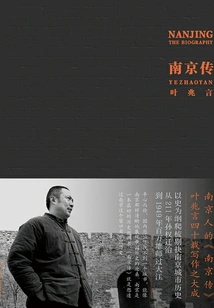
Nanjing Biography
History南京传
Ye Zhaoyan
"Nanjing Biography" is a special biography of Chinese history, a Chinese history based on Nanjing. To understand Nanjing is to understand Chinese history. The ancient capital of six dynasties and the metropolis of ten dynasties uses history as a guide to comb through the history of Nanjing, from Sun Quan's move to rule in 211 to the millions of troops crossing the river in 1949. As a recognized writer, Ye Zhaoyan has a unique understanding of Nanjing, which he has written about for forty years. In this "Nanjing Biography", which is the culmination of his forty years of writing, Ye Zhaoyan uses history as a guide to comb through the history of Nanjing: from Sun Quan's move to Moling in 211 AD to the millions of troops crossing the river in 1949, through the hegemony of the Eastern Wu, the golden powder of the Six Dynasties, the Pian'an of the Southern Tang Dynasty, the Ming and Qing dynasties, and the ups and downs of the Republic of China. How did Nanjing develop step by step? Moling, Jianye, Stone City, Jiankang, what is the historical significance of the ancient names of Nanjing? From bamboo fences to Ming city walls, how did the urban system evolve? Sun Quan, Xiao Yan, Li Bai, Yan Zhenqing, Li Yu, Wang Anshi, Xin Qiji, Zhu Yuanzhang, Zhu Di, Matteo Ricci, Zhang Zhidong, Sun Yat-sen, what immortal legends did these figures leave in Nanjing? ... Ye Zhaoyan, a Nanjing native, was a writer and historian who "looked at Chinese history through the window of Nanjing", peeling off the cocoons and explaining it in detail. Here, Nanjing is not only a narrative space, but also a platform with distant views, and "Nanjing Biography" can also be regarded as a Chinese history based on Nanjing.
"Nanjing Biography" is a special biography of Chinese history, a Chinese history based on Nanjing. To understand Nanjing is to understand Chinese history. The ancient capital of six dynasties and the metropolis of ten dynasties uses history as a guide to comb through the history of Nanjing, from Sun Quan's move to rule in 211 to the millions of troops crossing the river in 1949. As a recognized writer, Ye Zhaoyan has a unique understanding of Nanjing, which he has written about for forty years. In this "Nanjing Biography", which is the culmination of his forty years of writing, Ye Zhaoyan uses history as a guide to comb through the history of Nanjing: from Sun Quan's move to Moling in 211 AD to the millions of troops crossing the river in 1949, through the hegemony of the Eastern Wu, the golden powder of the Six Dynasties, the Pian'an of the Southern Tang Dynasty, the Ming and Qing dynasties, and the ups and downs of the Republic of China. How did Nanjing develop step by step? Moling, Jianye, Stone City, Jiankang, what is the historical significance of the ancient names of Nanjing? From bamboo fences to Ming city walls, how did the urban system evolve? Sun Quan, Xiao Yan, Li Bai, Yan Zhenqing, Li Yu, Wang Anshi, Xin Qiji, Zhu Yuanzhang, Zhu Di, Matteo Ricci, Zhang Zhidong, Sun Yat-sen, what immortal legends did these figures leave in Nanjing? ... Ye Zhaoyan, a Nanjing native, was a writer and historian who "looked at Chinese history through the window of Nanjing", peeling off the cocoons and explaining it in detail. Here, Nanjing is not only a narrative space, but also a platform with distant views, and "Nanjing Biography" can also be regarded as a Chinese history based on Nanjing.
民初内阁制度研究
Xiao Chuanlin
This book takes the cabinet system in the early Republic of China as its basic content and the evolution of the relationship between the cabinet, parliament, and president as its basic clues. It shows the establishment, operation, change, and demise of the cabinet system in the early Republic of China, and analyzes the design and operation of the cabinet system in the early Republic of China. It also analyzed the contradictions and conflicts, the causes of change and demise, analyzed the cabinet system in the early Republic of China, analyzed the legitimacy and flaws of the cabinet system in the early Republic of China, pointed out the variation and reasons of the cabinet system in the early Republic of China, and briefly expounded the value of the cabinet system in the modern political history of China.
This book takes the cabinet system in the early Republic of China as its basic content and the evolution of the relationship between the cabinet, parliament, and president as its basic clues. It shows the establishment, operation, change, and demise of the cabinet system in the early Republic of China, and analyzes the design and operation of the cabinet system in the early Republic of China. It also analyzed the contradictions and conflicts, the causes of change and demise, analyzed the cabinet system in the early Republic of China, analyzed the legitimacy and flaws of the cabinet system in the early Republic of China, pointed out the variation and reasons of the cabinet system in the early Republic of China, and briefly expounded the value of the cabinet system in the modern political history of China.
元史研究:方法与专题
Qu Wenjun
The manuscript is divided into two parts. The first part discusses the special theories and methods in the field of Yuan history research, including the study of hard-translated historical materials, the methods of review and correction, "conquering dynasty theory" and "Mongol era theory in world history", etc.; The second part covers several topics on the politics, economy, culture and other aspects of the Yuan Dynasty, focusing on elaborating on the special phenomena of the Yuan Dynasty and their impact on later generations. Most of the chapters in the manuscript are revised based on related published papers.
The manuscript is divided into two parts. The first part discusses the special theories and methods in the field of Yuan history research, including the study of hard-translated historical materials, the methods of review and correction, "conquering dynasty theory" and "Mongol era theory in world history", etc.; The second part covers several topics on the politics, economy, culture and other aspects of the Yuan Dynasty, focusing on elaborating on the special phenomena of the Yuan Dynasty and their impact on later generations. Most of the chapters in the manuscript are revised based on related published papers.
盛唐长安的国家乐伎与乐舞
Mu Weisheng Zhang Weishen
The national music and dance institutions in Chang'an during the prosperous Tang Dynasty were divided into two major systems: one was the Taiyue Department and the Propaganda Department under the jurisdiction of Taichang Temple ("South Ya" system); the other was the palace teaching workshop and the "Emperor's Liyuan" run by the eunuchs ("Beisi" system). Taichang music and dance has a distinct political etiquette nature and is mainly used in conjunction with the national "Five Rites" ritual system. The royal palaces of the prosperous Tang Dynasty accommodated entertainment "secular music" (Baixi), and the musicians and performers first served the emperor and concubines, followed by the princes, nobles, and civil and military officials. The "Emperor's Liyuan" is the imperial music institution. The author provides a detailed and systematic interpretation of the above-mentioned institutions.
The national music and dance institutions in Chang'an during the prosperous Tang Dynasty were divided into two major systems: one was the Taiyue Department and the Propaganda Department under the jurisdiction of Taichang Temple ("South Ya" system); the other was the palace teaching workshop and the "Emperor's Liyuan" run by the eunuchs ("Beisi" system). Taichang music and dance has a distinct political etiquette nature and is mainly used in conjunction with the national "Five Rites" ritual system. The royal palaces of the prosperous Tang Dynasty accommodated entertainment "secular music" (Baixi), and the musicians and performers first served the emperor and concubines, followed by the princes, nobles, and civil and military officials. The "Emperor's Liyuan" is the imperial music institution. The author provides a detailed and systematic interpretation of the above-mentioned institutions.
晚唐文人仕进心态研究(羊城学术文库·文史哲系列)
Xu Lejun
The mentality of becoming an official was the dominant mentality of literati in the feudal era. It was limited to knowledge and values, and had long been on the fringes of mainstream academic vision. This book is limited to the late Tang Dynasty, starting from region and class, to study the innate factors that generated the mentality of literati seeking officialdom; starting from the process of seeking tribute, seeking rank, and serving as officials, it studies the acquired efforts and mentality characteristics of literati; starting from party struggles, wars, and the fall of the Tang Dynasty, it studies the manifestations of literati's mentality of becoming officials in extraordinary historical periods. By advancing layer by layer and interlocking with each other, we will explore the reasons why the literati in the late Tang Dynasty became secular in their mentality. This book has both academic reference value and reference significance for modern public employee management issues.
The mentality of becoming an official was the dominant mentality of literati in the feudal era. It was limited to knowledge and values, and had long been on the fringes of mainstream academic vision. This book is limited to the late Tang Dynasty, starting from region and class, to study the innate factors that generated the mentality of literati seeking officialdom; starting from the process of seeking tribute, seeking rank, and serving as officials, it studies the acquired efforts and mentality characteristics of literati; starting from party struggles, wars, and the fall of the Tang Dynasty, it studies the manifestations of literati's mentality of becoming officials in extraordinary historical periods. By advancing layer by layer and interlocking with each other, we will explore the reasons why the literati in the late Tang Dynasty became secular in their mentality. This book has both academic reference value and reference significance for modern public employee management issues.
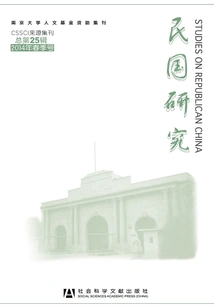
民国研究(2014年春季号\u002F总第25辑)
Editor-in-chief Zhang Xianwen
"Republic of China Studies" is an academic special issue sponsored by the Research Center for the History of the Republic of China at Nanjing University, a key research base in the humanities and social sciences of the Ministry of Education. It mainly publishes research articles on relevant historical facts and theories about the Republic of China period (1912-1949). It is now a CSSCI source publication. The columns of this volume (the 25th), such as "Research on Figures of the Republic of China", "Research on the History of the Kuomintang", and "Economy and Society", are more distinctive. The relevant papers can be used as reference for academic circles, and other articles are also of considerable academic value.
"Republic of China Studies" is an academic special issue sponsored by the Research Center for the History of the Republic of China at Nanjing University, a key research base in the humanities and social sciences of the Ministry of Education. It mainly publishes research articles on relevant historical facts and theories about the Republic of China period (1912-1949). It is now a CSSCI source publication. The columns of this volume (the 25th), such as "Research on Figures of the Republic of China", "Research on the History of the Kuomintang", and "Economy and Society", are more distinctive. The relevant papers can be used as reference for academic circles, and other articles are also of considerable academic value.
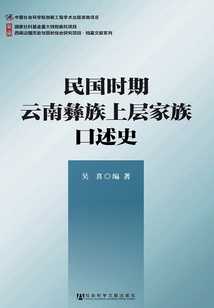
民国时期云南彝族上层家族口述史(西南边疆历史与现状综合研究项目·档案文献系列)
Wu Happy
Through interviews with the children of the upper-class Yi people in Yunnan and close family members during the Republic of China, the author obtained a large amount of first-hand information, which reflected many important political and social activities of the upper-class Yi people in Yunnan during the Republic of China. This revealed the upper-class Yi group and its internal relationships, which is extremely valuable material for studying the society of the Yi people in Southwest China and the history of the southwest frontier in modern times.
Through interviews with the children of the upper-class Yi people in Yunnan and close family members during the Republic of China, the author obtained a large amount of first-hand information, which reflected many important political and social activities of the upper-class Yi people in Yunnan during the Republic of China. This revealed the upper-class Yi group and its internal relationships, which is extremely valuable material for studying the society of the Yi people in Southwest China and the history of the southwest frontier in modern times.
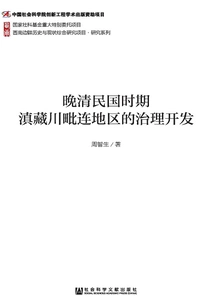
晚清民国时期滇藏川毗连地区的治理开发(西南边疆历史与现状综合研究项目·研究系列)
Zhou Zhisheng
This book is the first academic work to systematically study the management and development of the modern Yunnan-Tibet-Sichuan contiguous area based on the integrity of the cross-border contiguous areas of the three provinces of Yunnan, Tibet and Sichuan. The book objectively and truthfully presents the historical situation of the game between central and local interests, the ups and downs of inter-ethnic relations, and the competition between local forces in the Yunnan-Tibet-Sichuan contiguous area during the late Qing Dynasty and the Republic of China. It also provides an in-depth and systematic analysis of the central government's top-down adjustment of the layout of the governance and development of the Yunnan-Tibet-Sichuan contiguous area based on changes in the domestic and international situation. It focuses on studying the adaptation and response process and development mechanism of grassroots ethnic societies to changes in domestic and international situations and the state's border governance.
This book is the first academic work to systematically study the management and development of the modern Yunnan-Tibet-Sichuan contiguous area based on the integrity of the cross-border contiguous areas of the three provinces of Yunnan, Tibet and Sichuan. The book objectively and truthfully presents the historical situation of the game between central and local interests, the ups and downs of inter-ethnic relations, and the competition between local forces in the Yunnan-Tibet-Sichuan contiguous area during the late Qing Dynasty and the Republic of China. It also provides an in-depth and systematic analysis of the central government's top-down adjustment of the layout of the governance and development of the Yunnan-Tibet-Sichuan contiguous area based on changes in the domestic and international situation. It focuses on studying the adaptation and response process and development mechanism of grassroots ethnic societies to changes in domestic and international situations and the state's border governance.
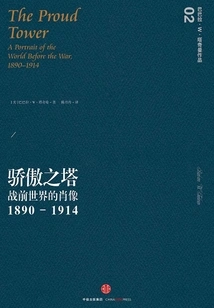
骄傲之塔:战前世界的肖像(1890—1914)
L
In this work, Tuchman focuses his attention on Western society 25 years before the outbreak of the "World War I", using an artist's approach to reproduce the ideological trends and ideals, sudden changes and disputes at that time: before the "August Cannons" exploded, the British aristocratic world began to collapse, and power shifted to a new class, passionate anarchy. The righteous dreamed of a harmonious world, imperialist sentiments climbed to the New World, the U. S. Navy quietly rose, the Dreyfus incident set off a fierce confrontation within the French, Strauss's music and Nietzsche's thoughts influenced Germany... Under the appearance of prosperity, the old world was already full of troubles. That era did not die of old age or accidents, but exploded in a terminal crisis and became an important page in history. ... (It is) more than confidence, innocence, comfort, stability, security and peace. People who lived in that era also misled us. When they looked back across the chasm of war, the first half of their lives were shrouded in the mist of a beautiful sunset, full of peace and tranquility. And we mistakenly believe that doubt, fear, turmoil, protest, violence and hatred do not exist. --Barbara W. Tuchman
In this work, Tuchman focuses his attention on Western society 25 years before the outbreak of the "World War I", using an artist's approach to reproduce the ideological trends and ideals, sudden changes and disputes at that time: before the "August Cannons" exploded, the British aristocratic world began to collapse, and power shifted to a new class, passionate anarchy. The righteous dreamed of a harmonious world, imperialist sentiments climbed to the New World, the U. S. Navy quietly rose, the Dreyfus incident set off a fierce confrontation within the French, Strauss's music and Nietzsche's thoughts influenced Germany... Under the appearance of prosperity, the old world was already full of troubles. That era did not die of old age or accidents, but exploded in a terminal crisis and became an important page in history. ... (It is) more than confidence, innocence, comfort, stability, security and peace. People who lived in that era also misled us. When they looked back across the chasm of war, the first half of their lives were shrouded in the mist of a beautiful sunset, full of peace and tranquility. And we mistakenly believe that doubt, fear, turmoil, protest, violence and hatred do not exist. --Barbara W. Tuchman
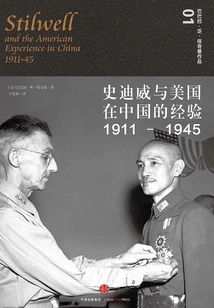
史迪威与美国在中国的经验(1911—1945)
O
In the first half of the 20th century, China and the United States were at an intersection. This was an encounter between an ancient but weak ancient country and another young but powerful emerging country. In this book, we follow Stilwell, an eccentric but true hero and one of America's greatest theater commanders, as we witness the historic encounter that represented America's attempt to make China more like itself. Beyond these quixotic efforts, which have repeatedly failed, modern China reveals its backbone.
In the first half of the 20th century, China and the United States were at an intersection. This was an encounter between an ancient but weak ancient country and another young but powerful emerging country. In this book, we follow Stilwell, an eccentric but true hero and one of America's greatest theater commanders, as we witness the historic encounter that represented America's attempt to make China more like itself. Beyond these quixotic efforts, which have repeatedly failed, modern China reveals its backbone.
民国时期万载县基层政权建设研究:1930~1945
Yang Jian
This book mainly uses social control theory to systematically elaborate on the process of the Kuomintang regime reconstructing the ruling order and effectively implementing local control in Wanzai County, Jiangxi Province, under the macro-historical framework of the "state-society" relationship. It is believed that Wanzai County in Jiangxi Province in the 1930s and 1940s continued the pace of decentralization of state power since the New Deal in the late Qing Dynasty. As the state's bureaucratic political machine was transferred from counties to towns to Baobao, the state changed the configuration and operation of power, replacing the rationality of cultural traditions with the legitimacy of the system, and replacing traditional local authority with the coercion and irresistibility of state public power. At the same time, local social resources have been exploited by the state, their living space is increasingly lost, and they have lost their former organizational functions. As a result, the state established a ruling order of "strong government, weak society", thereby achieving the purpose of controlling grassroots society.
This book mainly uses social control theory to systematically elaborate on the process of the Kuomintang regime reconstructing the ruling order and effectively implementing local control in Wanzai County, Jiangxi Province, under the macro-historical framework of the "state-society" relationship. It is believed that Wanzai County in Jiangxi Province in the 1930s and 1940s continued the pace of decentralization of state power since the New Deal in the late Qing Dynasty. As the state's bureaucratic political machine was transferred from counties to towns to Baobao, the state changed the configuration and operation of power, replacing the rationality of cultural traditions with the legitimacy of the system, and replacing traditional local authority with the coercion and irresistibility of state public power. At the same time, local social resources have been exploited by the state, their living space is increasingly lost, and they have lost their former organizational functions. As a result, the state established a ruling order of "strong government, weak society", thereby achieving the purpose of controlling grassroots society.
唐代试诗制度研究
Tang Yanjun
"Research on the Poetry Examination System in the Tang Dynasty" attempts to examine the specific regulations on poetry examinations in various official selection examinations in the Tang Dynasty, explore the origin of the poetry examinations in the Tang Dynasty, and outline the general poetry examination system in the Tang Dynasty through detailed and comprehensive research on various historical materials, notes, anthologies, etc. It constructs a complete system of poetry examinations in the Tang Dynasty; regards poetry examinations as a unique "political-literary" phenomenon, explores the system, norms and characteristics of poetry examinations from the perspective of literary and moral politics, and establishes an independent evaluation system of imperial examination poetry; at the same time, using the mentality of literati as an intermediary, it deeply reveals the relationship between the poetry examination system and the society, politics, and literature of the Tang Dynasty, and evaluates its role, status, and influence. In addition to the introduction, "Research on the Examination Poetry System in the Tang Dynasty" is mainly divided into eight chapters, which provide a comprehensive investigation of the Tang Dynasty's examination poetry system from four aspects: its origin, basic appearance, stylistic characteristics and influence.
"Research on the Poetry Examination System in the Tang Dynasty" attempts to examine the specific regulations on poetry examinations in various official selection examinations in the Tang Dynasty, explore the origin of the poetry examinations in the Tang Dynasty, and outline the general poetry examination system in the Tang Dynasty through detailed and comprehensive research on various historical materials, notes, anthologies, etc. It constructs a complete system of poetry examinations in the Tang Dynasty; regards poetry examinations as a unique "political-literary" phenomenon, explores the system, norms and characteristics of poetry examinations from the perspective of literary and moral politics, and establishes an independent evaluation system of imperial examination poetry; at the same time, using the mentality of literati as an intermediary, it deeply reveals the relationship between the poetry examination system and the society, politics, and literature of the Tang Dynasty, and evaluates its role, status, and influence. In addition to the introduction, "Research on the Examination Poetry System in the Tang Dynasty" is mainly divided into eight chapters, which provide a comprehensive investigation of the Tang Dynasty's examination poetry system from four aspects: its origin, basic appearance, stylistic characteristics and influence.
中华古政治史论集
Wang Zengyu
This book is one of the special collections of members of the Institute of History of the Academy of Social Sciences. The book contains basically 18 papers on ancient Chinese political history written by the author in the first decade of the 21st century. The content covers the political tradition mainly in the Song Dynasty, the Taiwan admonishment system, the reputation of upright officials, and the shady officialdom. There are also some observations on the real society based on history. The writing style is sharp, current problems are to the point, and the historical materials are informative and emblematic.
This book is one of the special collections of members of the Institute of History of the Academy of Social Sciences. The book contains basically 18 papers on ancient Chinese political history written by the author in the first decade of the 21st century. The content covers the political tradition mainly in the Song Dynasty, the Taiwan admonishment system, the reputation of upright officials, and the shady officialdom. There are also some observations on the real society based on history. The writing style is sharp, current problems are to the point, and the historical materials are informative and emblematic.
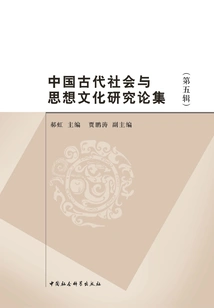
中国古代社会与思想文化研究论集·第五辑
Hao Hong
"Research Papers on Ancient Chinese Society, Ideology and Culture" is a compilation of research results from the "Research Center on Ancient Chinese Society, Ideology and Culture", a key research base for humanities and social sciences in universities in Liaoning Province. This publication is the fifth volume. The results focus on representative and important papers published by colleagues in the center from 2012 to 2016. The paper is divided into four parts: "Research on Ideological and Cultural History", "Research on Social History", "Research on Ancient Characters" and "Research on the History of Sino-foreign Relations". Most of the papers compiled are results that have been published in CSSCI-indexed journals and have a relatively wide academic impact.
"Research Papers on Ancient Chinese Society, Ideology and Culture" is a compilation of research results from the "Research Center on Ancient Chinese Society, Ideology and Culture", a key research base for humanities and social sciences in universities in Liaoning Province. This publication is the fifth volume. The results focus on representative and important papers published by colleagues in the center from 2012 to 2016. The paper is divided into four parts: "Research on Ideological and Cultural History", "Research on Social History", "Research on Ancient Characters" and "Research on the History of Sino-foreign Relations". Most of the papers compiled are results that have been published in CSSCI-indexed journals and have a relatively wide academic impact.
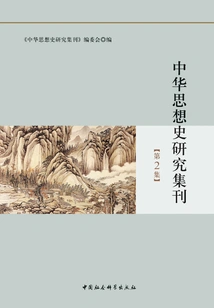
中华思想史研究集刊·第2集
Editorial Board Of "research Collection On Chinese Intellectual History"
In order to reflect and record the research progress of the "General History of Chinese Thought" project and fully demonstrate the research level and research results of the project participants, in accordance with the "Chinese Academy of Social Sciences' "General History of Chinese Thought" Project Implementation Plan" and the unified deployment of the editorial board, the editorial board office organized the publication of "Research Collection on the History of Chinese Thought". "Chinese Intellectual History Research Collection" is based on the proceedings of the annual Chinese Intellectual History Summit Forum and publishes one volume every year. This book is episode 2.
In order to reflect and record the research progress of the "General History of Chinese Thought" project and fully demonstrate the research level and research results of the project participants, in accordance with the "Chinese Academy of Social Sciences' "General History of Chinese Thought" Project Implementation Plan" and the unified deployment of the editorial board, the editorial board office organized the publication of "Research Collection on the History of Chinese Thought". "Chinese Intellectual History Research Collection" is based on the proceedings of the annual Chinese Intellectual History Summit Forum and publishes one volume every year. This book is episode 2.
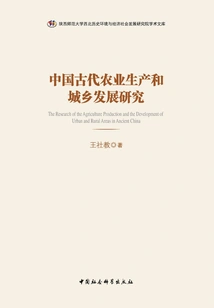
中国古代农业生产和城乡发展研究
Wang Shejiao
The book collects a total of 22 single papers on historical agricultural geography and urban and rural development published by the author since 1992. The content includes three aspects: theoretical thinking, agricultural production and urban and rural development. It discusses the objects, content and tasks of historical agricultural geography research, and examines issues related to ancient agricultural production and urban and rural development in my country from the perspective of historical geography.
The book collects a total of 22 single papers on historical agricultural geography and urban and rural development published by the author since 1992. The content includes three aspects: theoretical thinking, agricultural production and urban and rural development. It discusses the objects, content and tasks of historical agricultural geography research, and examines issues related to ancient agricultural production and urban and rural development in my country from the perspective of historical geography.
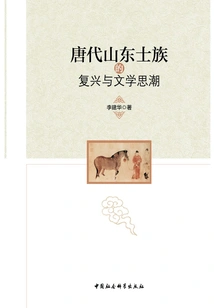
唐代山东士族的复兴与文学思潮
Li Jianhua
This book takes the Shandong gentry in the Tang Dynasty as the research object, studies their family characteristics, thoughts, and marriages, and focuses on their relationship with the literature of the Tang Dynasty. There were many gentry writers in Shandong during the Tang Dynasty, and their literary creations were very distinctive and had an important influence on the development of literature in the Tang Dynasty. Throughout the Tang Dynasty, Shandong gentry writers made great contributions to the creation of landscape poetry and frontier fortress poetry, and made great contributions to the formation of rhythmic poetry. Taking the first year of Jianzhong of Dezong of the Tang Dynasty (780) as the dividing point, we found that the Shandong gentry in the Tang Dynasty fully revived from the middle Tang Dynasty and had an important impact on the literature of the middle and late Tang Dynasty. The Shandong gentry in the Tang Dynasty had a profound influence on literary trends such as the Classical Prose Movement of the Mid-Tang Dynasty, the Han and Meng Poetry Schools, the New Yuefu Movement, and legendary novels.
This book takes the Shandong gentry in the Tang Dynasty as the research object, studies their family characteristics, thoughts, and marriages, and focuses on their relationship with the literature of the Tang Dynasty. There were many gentry writers in Shandong during the Tang Dynasty, and their literary creations were very distinctive and had an important influence on the development of literature in the Tang Dynasty. Throughout the Tang Dynasty, Shandong gentry writers made great contributions to the creation of landscape poetry and frontier fortress poetry, and made great contributions to the formation of rhythmic poetry. Taking the first year of Jianzhong of Dezong of the Tang Dynasty (780) as the dividing point, we found that the Shandong gentry in the Tang Dynasty fully revived from the middle Tang Dynasty and had an important impact on the literature of the middle and late Tang Dynasty. The Shandong gentry in the Tang Dynasty had a profound influence on literary trends such as the Classical Prose Movement of the Mid-Tang Dynasty, the Han and Meng Poetry Schools, the New Yuefu Movement, and legendary novels.
中华历史与传统文化研究论丛·第3辑
Dong Shaowei Chai Bing
Northeastern University Qinhuangdao Branch has attached great importance to humanities and social science research in recent years. It has established a series of academic institutions focusing on liberal arts majors and regularly holds "academic forums" on campus to further promote humanities and social science research. The development of the history discipline is a distinctive liberal arts field of Northeastern University Qinhuangdao Branch. It has master's degree programs or research directions such as history of science and technology, modern history, and regional social history under the discipline of regional economics, etc., Forming a multi-in-one development model with discipline development, academic research, and teacher team building. At present, the school has more than ten doctoral teachers majoring in history, forming a dynamic academic team. History is the scientific study of past societies and covers an extremely rich range. The school is based on scientific research and has a strong sense of social responsibility. In order to closely communicate with the academic community and publish research results on a regular basis, the school has comprehensively considered and verified academic experts and combined with the needs of the country and society, and has planned to establish an academic journal focusing on history and related majors: "Chinese History and Traditional Culture Research Series". The collection focuses on history, including ancient Chinese history, political system history, folk culture history, social and economic history, science and technology history, collection of historical materials, interviews with famous figures, academic developments, etc. Academic achievements in the form of collections are an important academic front. In the eastern Hebei region, especially in the Qinhuangdao area, except for the school journals of some universities and the internal journals of relevant institutions, there are no academic collections officially published by publishing houses. The "Chinese History and Traditional Culture Research Series" has the significance to fill the gap.
Northeastern University Qinhuangdao Branch has attached great importance to humanities and social science research in recent years. It has established a series of academic institutions focusing on liberal arts majors and regularly holds "academic forums" on campus to further promote humanities and social science research. The development of the history discipline is a distinctive liberal arts field of Northeastern University Qinhuangdao Branch. It has master's degree programs or research directions such as history of science and technology, modern history, and regional social history under the discipline of regional economics, etc., Forming a multi-in-one development model with discipline development, academic research, and teacher team building. At present, the school has more than ten doctoral teachers majoring in history, forming a dynamic academic team. History is the scientific study of past societies and covers an extremely rich range. The school is based on scientific research and has a strong sense of social responsibility. In order to closely communicate with the academic community and publish research results on a regular basis, the school has comprehensively considered and verified academic experts and combined with the needs of the country and society, and has planned to establish an academic journal focusing on history and related majors: "Chinese History and Traditional Culture Research Series". The collection focuses on history, including ancient Chinese history, political system history, folk culture history, social and economic history, science and technology history, collection of historical materials, interviews with famous figures, academic developments, etc. Academic achievements in the form of collections are an important academic front. In the eastern Hebei region, especially in the Qinhuangdao area, except for the school journals of some universities and the internal journals of relevant institutions, there are no academic collections officially published by publishing houses. The "Chinese History and Traditional Culture Research Series" has the significance to fill the gap.
清代东番与西番研究论丛
Liu Zhenggang
This book mainly discusses the social changes history of the islands and the indigenous residents in western Sichuan during the Qing Dynasty. Dongfan and Xifan were the special names for these two areas and their indigenous people during the Ming and Qing Dynasties. During the Ming and Qing Dynasties, especially the Qing Dynasty, the dynasty attached great importance to the development of the two places and formulated the policy of "governing according to customs". As the Han population continued to migrate to the two places, the pace of ethnic integration continued to deepen.
This book mainly discusses the social changes history of the islands and the indigenous residents in western Sichuan during the Qing Dynasty. Dongfan and Xifan were the special names for these two areas and their indigenous people during the Ming and Qing Dynasties. During the Ming and Qing Dynasties, especially the Qing Dynasty, the dynasty attached great importance to the development of the two places and formulated the policy of "governing according to customs". As the Han population continued to migrate to the two places, the pace of ethnic integration continued to deepen.
五代宋史论集
Zhang Qifan
This book is a collection of essays, mainly including the author's 14 essays on the history of the Five Dynasties and the Song Dynasty, most of which have been published. It is divided into four volumes. Volume 1 has 4 papers, which are all research papers on the history of the Five Dynasties; Volume 2 has 3 papers, which are for those who study the history of the Song Dynasty; Volume 3 has 4 papers, which are literature research; Volume 4 has 3 papers, including two reviews and a preface. Two appendices.
This book is a collection of essays, mainly including the author's 14 essays on the history of the Five Dynasties and the Song Dynasty, most of which have been published. It is divided into four volumes. Volume 1 has 4 papers, which are all research papers on the history of the Five Dynasties; Volume 2 has 3 papers, which are for those who study the history of the Song Dynasty; Volume 3 has 4 papers, which are literature research; Volume 4 has 3 papers, including two reviews and a preface. Two appendices.
汉代地方社会治安研究
Lin Yongqiang
As the first dynasty in Chinese history after the Qin Dynasty that ruled for a longer period and had better social control, the Han Dynasty accumulated considerable experience and lessons in social security and established a relatively complete management system, which has important enlightenment significance for future generations. The Han Dynasty was the formative period of the ancient Chinese public security management system. Based on the documents handed down from the Han Dynasty and unearthed bamboo slips and inscriptions, the author took local social security in the Han Dynasty as the research object and analyzed the social security functions of grassroots officials in the Han Dynasty, the social security functions of certain local traffic management facilities, and local social security. It has made certain explorations into a series of contents such as social security laws and regulations, regional social security conditions, the impact of folk customs on social security, folk public opinion, and civil society participation in social security. Based on the existing relevant research results, it has conducted a relatively in-depth investigation of the grassroots social security conditions in the Han Dynasty, which has certain academic significance.
As the first dynasty in Chinese history after the Qin Dynasty that ruled for a longer period and had better social control, the Han Dynasty accumulated considerable experience and lessons in social security and established a relatively complete management system, which has important enlightenment significance for future generations. The Han Dynasty was the formative period of the ancient Chinese public security management system. Based on the documents handed down from the Han Dynasty and unearthed bamboo slips and inscriptions, the author took local social security in the Han Dynasty as the research object and analyzed the social security functions of grassroots officials in the Han Dynasty, the social security functions of certain local traffic management facilities, and local social security. It has made certain explorations into a series of contents such as social security laws and regulations, regional social security conditions, the impact of folk customs on social security, folk public opinion, and civil society participation in social security. Based on the existing relevant research results, it has conducted a relatively in-depth investigation of the grassroots social security conditions in the Han Dynasty, which has certain academic significance.
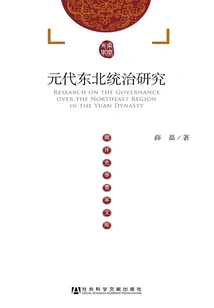
元代东北统治研究
Xue Lei
The management of the Northeast region occupied a very important and special position in the political and military system of the Yuan Empire. The Yuan Empire not only incorporated the entire Northeastern region into the feudal and provincial system, but also tried its best to strengthen its rule over the Northeastern border areas. Influenced by the mixed political system of Mongolia and Han, the Yuan Empire established ruling institutions such as vassals and Liaoyang provinces in the northeastern region, which not only connected the past with the past, but also had its own characteristics. Based on the existing research in the academic field, the author extensively collected relevant historical materials, combed and selected them, and based on the political background of the Yuan Dynasty, he carefully investigated the establishment of ruling institutions such as Liaoyang Province and the staged development of Northeastern rule. From aspects such as feudal changes, establishment of administrative districts, military garrison, establishment of supervisory agencies, Yuanli political relations, etc., He focused on outlining the trajectory of the evolution of the Yuan Empire's management strategy for the Northeastern region. This book is the first monograph by domestic and foreign academic circles to systematically and in-depth study the Liaoyang Province and Northeastern rule in the Yuan Dynasty. It is very helpful for enriching and filling in the research on the history of the Mongolian Yuan Dynasty and the Northeastern frontier.
The management of the Northeast region occupied a very important and special position in the political and military system of the Yuan Empire. The Yuan Empire not only incorporated the entire Northeastern region into the feudal and provincial system, but also tried its best to strengthen its rule over the Northeastern border areas. Influenced by the mixed political system of Mongolia and Han, the Yuan Empire established ruling institutions such as vassals and Liaoyang provinces in the northeastern region, which not only connected the past with the past, but also had its own characteristics. Based on the existing research in the academic field, the author extensively collected relevant historical materials, combed and selected them, and based on the political background of the Yuan Dynasty, he carefully investigated the establishment of ruling institutions such as Liaoyang Province and the staged development of Northeastern rule. From aspects such as feudal changes, establishment of administrative districts, military garrison, establishment of supervisory agencies, Yuanli political relations, etc., He focused on outlining the trajectory of the evolution of the Yuan Empire's management strategy for the Northeastern region. This book is the first monograph by domestic and foreign academic circles to systematically and in-depth study the Liaoyang Province and Northeastern rule in the Yuan Dynasty. It is very helpful for enriching and filling in the research on the history of the Mongolian Yuan Dynasty and the Northeastern frontier.
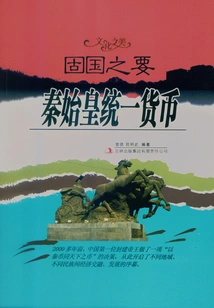
固国之要:秦始皇统一货币
Compiled By Zeng Xun And Zheng Mingwu
More than 2,000 years ago, China's first feudal emperor made a decision to "use Qin coins as the currency of the world," which ushered in the economic integration and development of different regions and different ethnic groups. From the unified currency, to the emergence of financing, to the formation of business groups, China's traditional economy has gone through a long and arduous road.
More than 2,000 years ago, China's first feudal emperor made a decision to "use Qin coins as the currency of the world," which ushered in the economic integration and development of different regions and different ethnic groups. From the unified currency, to the emergence of financing, to the formation of business groups, China's traditional economy has gone through a long and arduous road.
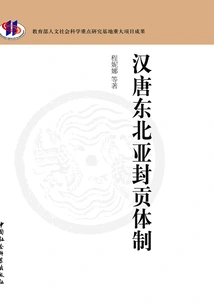
汉唐东北亚封贡体制
Cheng Nina Et Al.
The tribute system in Northeast Asia during the Han and Tang dynasties was a hierarchical political system established between the Han and Tang dynasties and the surrounding ethnic groups and countries. The scope of the tribute system in Northeast Asia during the Han and Tang dynasties can be divided into two parts. The first is the border minority areas outside counties and counties, which are managed by border counties and counties. They include various ethnic governments and primitive clan tribes of varying sizes, mainly the northeastern border areas under the jurisdiction of ancient Chinese dynasties. This book calls it the "inner circle." The second is the countries and regions surrounding the ancient Chinese dynasty. They conducted trade and cultural exchanges with China in the form of tribute, mainly the Korean Peninsula and the Japanese Archipelago, which this book calls the "outer circle." It is worth noting that the two parts are not static, especially the neighboring nations and countries. In certain historical periods, the "outer circle" nations or countries have turned into the "inner circle", and the "inner circle" nations or countries have turned into the "outer circle". The reasons for the changes are complicated. During the Han and Tang Dynasties, the Chinese dynasties experienced great changes from unity to division, and from division to unity again. Northeast Asia's tribute was not abolished because of the division of the Chinese dynasties. Instead, it experienced a change process from a unitary system to a pluralistic system, a dual system, and then returned to a unitary system again. From the Han Dynasty to the Tang Dynasty, the tribute system in Northeast Asia has always been an important political system in this region.
The tribute system in Northeast Asia during the Han and Tang dynasties was a hierarchical political system established between the Han and Tang dynasties and the surrounding ethnic groups and countries. The scope of the tribute system in Northeast Asia during the Han and Tang dynasties can be divided into two parts. The first is the border minority areas outside counties and counties, which are managed by border counties and counties. They include various ethnic governments and primitive clan tribes of varying sizes, mainly the northeastern border areas under the jurisdiction of ancient Chinese dynasties. This book calls it the "inner circle." The second is the countries and regions surrounding the ancient Chinese dynasty. They conducted trade and cultural exchanges with China in the form of tribute, mainly the Korean Peninsula and the Japanese Archipelago, which this book calls the "outer circle." It is worth noting that the two parts are not static, especially the neighboring nations and countries. In certain historical periods, the "outer circle" nations or countries have turned into the "inner circle", and the "inner circle" nations or countries have turned into the "outer circle". The reasons for the changes are complicated. During the Han and Tang Dynasties, the Chinese dynasties experienced great changes from unity to division, and from division to unity again. Northeast Asia's tribute was not abolished because of the division of the Chinese dynasties. Instead, it experienced a change process from a unitary system to a pluralistic system, a dual system, and then returned to a unitary system again. From the Han Dynasty to the Tang Dynasty, the tribute system in Northeast Asia has always been an important political system in this region.
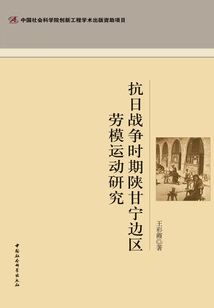
抗日战争时期陕甘宁边区劳模运动研究
Wang Caixia
"Research on the Model Worker Movement in the Shaanxi-Gansu-Ningxia Border Region During the Anti-Japanese War" compiled by Wang Caixia is based on a large amount of literature and takes the model worker movement in the Shaanxi-Gansu-Ningxia Border Region as the research object. Under the background of the Anti-Japanese War, it conducts a comprehensive survey of the development of the model worker movement in the Shaanxi-Gansu-Ningxia Border Region, analyzes the interactive relationship between the model worker movement and the border region government, and clarifies the operating mechanism of the model worker movement and the emergence of model workers. Process, explore the model rural movements and model worker groups that emerged during the model worker movement, discuss the form and effect of the media in the border areas, mainly represented by Liberation Daily, on the model worker movement, examine the spread of various literary and artistic forms in it, and then focus on analyzing the social impact of the model worker movement, including economy, politics, culture and its impact on the Communist Party regime and other base areas. At the same time, a large number of first-hand files are used to analyze the flaws existing in the model worker movement and the government's response measures.
"Research on the Model Worker Movement in the Shaanxi-Gansu-Ningxia Border Region During the Anti-Japanese War" compiled by Wang Caixia is based on a large amount of literature and takes the model worker movement in the Shaanxi-Gansu-Ningxia Border Region as the research object. Under the background of the Anti-Japanese War, it conducts a comprehensive survey of the development of the model worker movement in the Shaanxi-Gansu-Ningxia Border Region, analyzes the interactive relationship between the model worker movement and the border region government, and clarifies the operating mechanism of the model worker movement and the emergence of model workers. Process, explore the model rural movements and model worker groups that emerged during the model worker movement, discuss the form and effect of the media in the border areas, mainly represented by Liberation Daily, on the model worker movement, examine the spread of various literary and artistic forms in it, and then focus on analyzing the social impact of the model worker movement, including economy, politics, culture and its impact on the Communist Party regime and other base areas. At the same time, a large number of first-hand files are used to analyze the flaws existing in the model worker movement and the government's response measures.
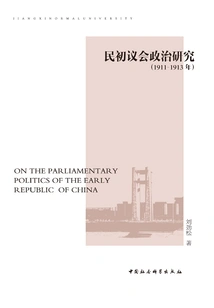
民初议会政治研究(1911-1913年)
Liu Jinsong
"Research on Parliamentary Politics in the Early Republic of China (1911-1913)" focuses on two aspects: first, it places the parliamentary politics of the early Republic of China in the specific historical background of modern China, grasps the historical context of the development of parliamentary politics from a macro perspective, and then provides a more precise explanation of the rise and fall of parliamentary politics in the early Republic of China; second, starting from the operation of parliamentary politics itself, by sorting out the interactive relationship between parliamentary politics and the specific political and social situations of the early Republic of China, it reveals the historical experience and theoretical enlightenment contained therein. It is the theoretical basis for the structure of "Research on Parliamentary Politics in the Early Republic of China (1911-1913)".
"Research on Parliamentary Politics in the Early Republic of China (1911-1913)" focuses on two aspects: first, it places the parliamentary politics of the early Republic of China in the specific historical background of modern China, grasps the historical context of the development of parliamentary politics from a macro perspective, and then provides a more precise explanation of the rise and fall of parliamentary politics in the early Republic of China; second, starting from the operation of parliamentary politics itself, by sorting out the interactive relationship between parliamentary politics and the specific political and social situations of the early Republic of China, it reveals the historical experience and theoretical enlightenment contained therein. It is the theoretical basis for the structure of "Research on Parliamentary Politics in the Early Republic of China (1911-1913)".
明清社会群体研究
Editor-in-chief Wu Qi
"Research on Social Groups in the Ming and Qing Dynasties" contains 10 papers, which generally include three aspects of content: first, group studies of emperors and court officials. For a long time, academic circles have long discussed these research objects from the perspective of institutional or political history, and rarely paid attention to them from the perspective of groups; second, scholar groups, trying to reveal the group characteristics of scholar groups from different perspectives; third, group interaction and the relationship between groups and social development and changes in the current situation. Although most of the selected groups are middle and upper class, they are all implemented at the social level and take into account the society as a whole. The rise of social history has an obvious impact on traditional political history and institutional history. How can the research on traditional political history and institutional history, which has moved from the center to the periphery, regain its footing? How can it gain a new perspective and establish new academic significance? Drawing on the research methods and academic concepts of social history, examining the content of traditional political history and institutional history from the perspective of social history, or directly connecting political history with social history should be effective ways to try and explore. This collection is the result of this thinking and exploration. In fact, this achievement is also intended to correct the downward bias of social history.
"Research on Social Groups in the Ming and Qing Dynasties" contains 10 papers, which generally include three aspects of content: first, group studies of emperors and court officials. For a long time, academic circles have long discussed these research objects from the perspective of institutional or political history, and rarely paid attention to them from the perspective of groups; second, scholar groups, trying to reveal the group characteristics of scholar groups from different perspectives; third, group interaction and the relationship between groups and social development and changes in the current situation. Although most of the selected groups are middle and upper class, they are all implemented at the social level and take into account the society as a whole. The rise of social history has an obvious impact on traditional political history and institutional history. How can the research on traditional political history and institutional history, which has moved from the center to the periphery, regain its footing? How can it gain a new perspective and establish new academic significance? Drawing on the research methods and academic concepts of social history, examining the content of traditional political history and institutional history from the perspective of social history, or directly connecting political history with social history should be effective ways to try and explore. This collection is the result of this thinking and exploration. In fact, this achievement is also intended to correct the downward bias of social history.
明亡清兴六十人
Edited By Li Fumin
"Sixty People from the Ming Dynasty to the Qing Dynasty" is an introduction to the last two great dynasties in ancient China. The Ming and Qing Dynasties have always had many contents that attract the interest of modern people, such as the demise of the Ming Dynasty and the rise of the Qing Dynasty. The fall of the Ming Dynasty and the rise of the Qing Dynasty naturally involved human factors. There were emperors and important ministers who played a role, and some seemingly insignificant figures such as eunuchs, concubines and even wet nurses also played an important role. Through the various words and deeds of these characters, we can actually understand why a dynasty perished and why a dynasty rose. And these not only help us understand history, but also help us grasp the present: how to be ourselves, how to make friends, how to know and employ people. The sixty people described in this book are a vast world, embodying infinite philosophy.
"Sixty People from the Ming Dynasty to the Qing Dynasty" is an introduction to the last two great dynasties in ancient China. The Ming and Qing Dynasties have always had many contents that attract the interest of modern people, such as the demise of the Ming Dynasty and the rise of the Qing Dynasty. The fall of the Ming Dynasty and the rise of the Qing Dynasty naturally involved human factors. There were emperors and important ministers who played a role, and some seemingly insignificant figures such as eunuchs, concubines and even wet nurses also played an important role. Through the various words and deeds of these characters, we can actually understand why a dynasty perished and why a dynasty rose. And these not only help us understand history, but also help us grasp the present: how to be ourselves, how to make friends, how to know and employ people. The sixty people described in this book are a vast world, embodying infinite philosophy.
帮会与革命:江湖三百年风云录
Qin Baoqi
This book is a companion volume to "Three Hundred Years of Jianghu". Mainly based on archives, local chronicles, memoirs, etc., This book truly reproduces the intricate and confusing Jianghu society in China over the past three hundred years. It gives a panoramic description of the ups and downs experienced by gangs: they have gone through a vigorous revolutionary process, and they have also fallen into the underworld that was criticized by people... How did the Revolutionary Party of 1911 incite and guide the gangs to participate in the anti-Qing revolution? What active role did gangs play in the revolution? What negative impact did gangs have on the revolution? How did a gang transform into a mafia organization?
This book is a companion volume to "Three Hundred Years of Jianghu". Mainly based on archives, local chronicles, memoirs, etc., This book truly reproduces the intricate and confusing Jianghu society in China over the past three hundred years. It gives a panoramic description of the ups and downs experienced by gangs: they have gone through a vigorous revolutionary process, and they have also fallen into the underworld that was criticized by people... How did the Revolutionary Party of 1911 incite and guide the gangs to participate in the anti-Qing revolution? What active role did gangs play in the revolution? What negative impact did gangs have on the revolution? How did a gang transform into a mafia organization?
中国近代史基本问题研究
Zhang Haipeng
This book is a special collection of articles by members of the Chinese Academy of Social Sciences. It contains 20 essays by the author. It mainly contains the author's thoughts on several macro-level issues in modern Chinese history, including the periodization of modern Chinese history, theoretical methods, the Opium War, early modernization, all-day relations, and anti-aggression understanding.
This book is a special collection of articles by members of the Chinese Academy of Social Sciences. It contains 20 essays by the author. It mainly contains the author's thoughts on several macro-level issues in modern Chinese history, including the periodization of modern Chinese history, theoretical methods, the Opium War, early modernization, all-day relations, and anti-aggression understanding.
南京国民政府十年(1927—1937)省制构建研究
Chen Ming
This book intends to conduct a special study on the construction process of the provincial system of the Nanjing National Government in the ten years (1927-1937), as well as the entanglements of various political forces behind it around issues such as centralization and division of power, unification and autonomy. The author hopes that through the completion of this project, Under the background of the political changes in the late Qing Dynasty and the Republic of China, the politics and society during the Nanjing National Government period (1927-1937) were studied. On this basis, we can understand and grasp the differences in political systems and concepts between China and foreign countries, and then understand China's national conditions and development trends, providing a historical mirror for the current provincial reform.
This book intends to conduct a special study on the construction process of the provincial system of the Nanjing National Government in the ten years (1927-1937), as well as the entanglements of various political forces behind it around issues such as centralization and division of power, unification and autonomy. The author hopes that through the completion of this project, Under the background of the political changes in the late Qing Dynasty and the Republic of China, the politics and society during the Nanjing National Government period (1927-1937) were studied. On this basis, we can understand and grasp the differences in political systems and concepts between China and foreign countries, and then understand China's national conditions and development trends, providing a historical mirror for the current provincial reform.
明朝宦官研究及其他
Du Wanyan
"Research on Eunuchs of the Ming Dynasty and Others" contains a collection of the author's published papers, covering economics, politics, justice, national defense science and technology, etc. It first fills some gaps in the study of Ming history, especially the study of the history of eunuchs in the Ming Dynasty; secondly, it supplements the existing research on the cabinet system and Zhang Juzheng's reform in the Ming Dynasty and puts forward its own new opinions; thirdly, it introduces two important historical books that are little known, "The Ci" and "The Artifact Spectrum".
"Research on Eunuchs of the Ming Dynasty and Others" contains a collection of the author's published papers, covering economics, politics, justice, national defense science and technology, etc. It first fills some gaps in the study of Ming history, especially the study of the history of eunuchs in the Ming Dynasty; secondly, it supplements the existing research on the cabinet system and Zhang Juzheng's reform in the Ming Dynasty and puts forward its own new opinions; thirdly, it introduces two important historical books that are little known, "The Ci" and "The Artifact Spectrum".
乾隆晚景
Gao Wangling
Compared with the previous fifty years, Qianlong's later years became the most failed and criticized period of Qianlong's rule. The writing style of this book is quite different from the first two. This book puts forward different opinions on several theories, and seems to be a little defense for Emperor Qianlong: was the reason for his failure, or was it because of the dereliction of political affairs? Or is it because of official corruption? Or is it because He Shen is the one responsible? Or lack of vision, resulting in the loss of a possible opportunity (such as in international trade)? ... The biggest controversy may still lie in the so-called "political dereliction". The "autocratic centralization" that people imagine is actually not easy in this country with a vast territory and a high degree of mobility among the people? Another character mentioned in the Qianlong Trilogy is Liu Songling, who is discussed in detail in this book. In addition, the author's methodology for researching Qing history for more than thirty years is also listed for readers to meet. In the end, Qianlong still had to bid farewell to this world and leave with great regret. And our Qianlong Trilogy can come to an end here.
Compared with the previous fifty years, Qianlong's later years became the most failed and criticized period of Qianlong's rule. The writing style of this book is quite different from the first two. This book puts forward different opinions on several theories, and seems to be a little defense for Emperor Qianlong: was the reason for his failure, or was it because of the dereliction of political affairs? Or is it because of official corruption? Or is it because He Shen is the one responsible? Or lack of vision, resulting in the loss of a possible opportunity (such as in international trade)? ... The biggest controversy may still lie in the so-called "political dereliction". The "autocratic centralization" that people imagine is actually not easy in this country with a vast territory and a high degree of mobility among the people? Another character mentioned in the Qianlong Trilogy is Liu Songling, who is discussed in detail in this book. In addition, the author's methodology for researching Qing history for more than thirty years is also listed for readers to meet. In the end, Qianlong still had to bid farewell to this world and leave with great regret. And our Qianlong Trilogy can come to an end here.
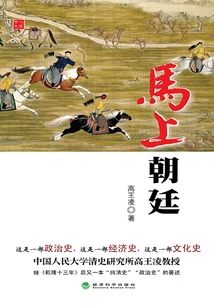
Immediately to the Court
History马上朝廷
Gao Wangling
The Qianlong Dynasty needs to be studied in stages, and it is not appropriate to write straightforwardly. It is sixty-three years at a time. Therefore, the author divides the Qianlong Dynasty into three stages: 1. "Initial Qianlong Administration" (i. E., "Thirteen Years of Qianlong"), about the first fifteen years; 2. "Middle Qianlong" (i. E., "Mashing the Court"), from the 16th to 49th year of Qianlong; 3. "Late Scene of Qianlong", which lasts for more than ten years. In the first stage of the Qianlong Dynasty, the country was mainly governed based on traditional Confucian concepts - such as "restoring the three generations" - but in the second stage, it showed more of the "Manchu characteristics" of Qing rule. This was not a simple "discrimination between leniency and strictness" or "changing from leniency to strictness", but rather reproduced their characteristic of "ruling the country immediately". This book is about the Qianlong Dynasty, about thirty-three years of history. Taking the Southern Tour as the center, I connected many things together, especially those related to "teaching the people" as opposed to "nurturing the people", including "literary prison" and other not-so-small topics. Like writing a story, I wrote them down one by one, paragraph by paragraph, year by year...
The Qianlong Dynasty needs to be studied in stages, and it is not appropriate to write straightforwardly. It is sixty-three years at a time. Therefore, the author divides the Qianlong Dynasty into three stages: 1. "Initial Qianlong Administration" (i. E., "Thirteen Years of Qianlong"), about the first fifteen years; 2. "Middle Qianlong" (i. E., "Mashing the Court"), from the 16th to 49th year of Qianlong; 3. "Late Scene of Qianlong", which lasts for more than ten years. In the first stage of the Qianlong Dynasty, the country was mainly governed based on traditional Confucian concepts - such as "restoring the three generations" - but in the second stage, it showed more of the "Manchu characteristics" of Qing rule. This was not a simple "discrimination between leniency and strictness" or "changing from leniency to strictness", but rather reproduced their characteristic of "ruling the country immediately". This book is about the Qianlong Dynasty, about thirty-three years of history. Taking the Southern Tour as the center, I connected many things together, especially those related to "teaching the people" as opposed to "nurturing the people", including "literary prison" and other not-so-small topics. Like writing a story, I wrote them down one by one, paragraph by paragraph, year by year...
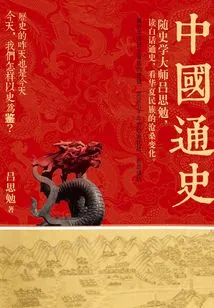
General History of China
History中国通史
Lu Simian
"General History of China" is divided into upper and lower parts. The upper part focuses on cultural phenomena, while the lower part connects them in historical order, sorting out historical knowledge more systematically while sorting out the rise and fall. "General History of China" has been continuously reprinted since its publication, which is enough to show that people recognize the general history written by Mr. Lu. There is no need to go into details about the advantages of such a classic work, but here we still need to emphasize the characteristics of this book: There are many excellent historical classics in the history of our country, but the writing and ink are grand and too profound, which blocks out the entry of junior readers who do not have deep knowledge of classical Chinese. However, Mr. Lu's book is concise and simple in writing, which is relatively simple. In the 77 years since its publication, "The General History of China" has become a best-selling classic.
"General History of China" is divided into upper and lower parts. The upper part focuses on cultural phenomena, while the lower part connects them in historical order, sorting out historical knowledge more systematically while sorting out the rise and fall. "General History of China" has been continuously reprinted since its publication, which is enough to show that people recognize the general history written by Mr. Lu. There is no need to go into details about the advantages of such a classic work, but here we still need to emphasize the characteristics of this book: There are many excellent historical classics in the history of our country, but the writing and ink are grand and too profound, which blocks out the entry of junior readers who do not have deep knowledge of classical Chinese. However, Mr. Lu's book is concise and simple in writing, which is relatively simple. In the 77 years since its publication, "The General History of China" has become a best-selling classic.
吴棠与咸同政局
Gu Jiandi
Wu Tang was an important historical figure during the "Zhongxing" period of Xiantong. He was selected by the National People's Congress to be responsible for river engineering in Nanhe, and was promoted from county magistrate to governor. In the early stage, they had been suppressing the enemy in Jiangbei. At the peak of his power, the governor of water transportation controlled all civil and military personnel in Jiangbei, as well as military affairs and all local affairs. He was responsible for the preparation and control of wages for Jiangbei Liangtai. When Zeng Guofan and Li Hongzhang were governor-general of Liangjiang or Jiangsu in order to suppress the Taiping Army and Nian Army, Wu Tang had been controlling the Huai, Yang, and Xu prefectures in Jiangbei. In fact, there was a faint trend of rivalry with Jiangnan in Jiangsu. He was the most powerful water transport governor in the late Qing Dynasty. In the fifth year of Tongzhi, Wu Tang was transferred to the post of governor of Fujian and Zhejiang. In order to implement his policy measures, he did not hesitate to offend Zuo Zongtang, Shen Baozhen and others. In the end, the Qing government had to transfer him to the post of governor of Sichuan. Wu Tang served as governor of Sichuan for nine years until he returned home due to illness. As an important member of the ZTE group of famous ministers, Wu Tang played a very important role in the political situation during the Xianfeng and Tongzhi years.
Wu Tang was an important historical figure during the "Zhongxing" period of Xiantong. He was selected by the National People's Congress to be responsible for river engineering in Nanhe, and was promoted from county magistrate to governor. In the early stage, they had been suppressing the enemy in Jiangbei. At the peak of his power, the governor of water transportation controlled all civil and military personnel in Jiangbei, as well as military affairs and all local affairs. He was responsible for the preparation and control of wages for Jiangbei Liangtai. When Zeng Guofan and Li Hongzhang were governor-general of Liangjiang or Jiangsu in order to suppress the Taiping Army and Nian Army, Wu Tang had been controlling the Huai, Yang, and Xu prefectures in Jiangbei. In fact, there was a faint trend of rivalry with Jiangnan in Jiangsu. He was the most powerful water transport governor in the late Qing Dynasty. In the fifth year of Tongzhi, Wu Tang was transferred to the post of governor of Fujian and Zhejiang. In order to implement his policy measures, he did not hesitate to offend Zuo Zongtang, Shen Baozhen and others. In the end, the Qing government had to transfer him to the post of governor of Sichuan. Wu Tang served as governor of Sichuan for nine years until he returned home due to illness. As an important member of the ZTE group of famous ministers, Wu Tang played a very important role in the political situation during the Xianfeng and Tongzhi years.
Interaction between China and the West in the Eighteenth Century: Academic Exchange and Inheritance
History十八世纪中西互动:学术交流与传承
Chen Xiaohua
In the course of world history, diverse civilizations have always had an interactive and symbiotic relationship. Based on literature research, this book integrates philology, academic history, and ideological and cultural history research with a global historical perspective to reveal the collision and interaction between Chinese and Western civilizations, highlighting the symbiosis and harmony achieved in this collision and interaction, and providing historical and cultural basis for today's "promoting friendly coexistence, equal dialogue, development and prosperity of different civilizations, and jointly building a harmonious world." Its publication has important historical theory and academic research value.
In the course of world history, diverse civilizations have always had an interactive and symbiotic relationship. Based on literature research, this book integrates philology, academic history, and ideological and cultural history research with a global historical perspective to reveal the collision and interaction between Chinese and Western civilizations, highlighting the symbiosis and harmony achieved in this collision and interaction, and providing historical and cultural basis for today's "promoting friendly coexistence, equal dialogue, development and prosperity of different civilizations, and jointly building a harmonious world." Its publication has important historical theory and academic research value.
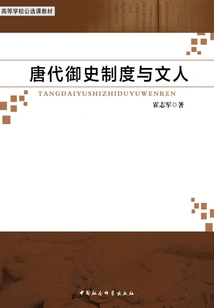
唐代御史制度与文人
Huo Zhijun
The ancient Chinese supervisory system was established in the Three Dynasties and flourished over time, reaching its peak in the Li and Tang Dynasties. The group of censors in the Tang Dynasty was not only the subject of supervision, but also the subject of literary creation. When they were the subject of supervision, the group of censors in the Tang Dynasty showed vigorous supervision practice and unscrupulous admonishment posture; when they were the subject of literature, the spirit of supervision and remonstrance accompanying their active political participation deeply affected the literary creation of the censors of the Tang Dynasty. But so far, there has been no monograph in the academic circle that studies the relationship between the censors and literature in the Tang Dynasty as a relatively independent literary phenomenon. This book attempts to study the relationship between the censors and literature in the Tang Dynasty from the perspectives of literature, history, law and other disciplines. The genealogy and the genealogy of thinking characterized by truth-seeking, criticism, and healing also dynamically examine the development and changes of the censor's personality in different historical stages of the Tang Dynasty and its relationship with literature; it not only examines the impact of the censor's activities on the literature of the Tang Dynasty at a macro level, but also explores the relationship between the censor's activities and poetry and prose creation at a micro level. This book, to a certain extent, makes up for the structural flaws in current research on Tang Dynasty literature and has achieved overall innovative and original academic results.
The ancient Chinese supervisory system was established in the Three Dynasties and flourished over time, reaching its peak in the Li and Tang Dynasties. The group of censors in the Tang Dynasty was not only the subject of supervision, but also the subject of literary creation. When they were the subject of supervision, the group of censors in the Tang Dynasty showed vigorous supervision practice and unscrupulous admonishment posture; when they were the subject of literature, the spirit of supervision and remonstrance accompanying their active political participation deeply affected the literary creation of the censors of the Tang Dynasty. But so far, there has been no monograph in the academic circle that studies the relationship between the censors and literature in the Tang Dynasty as a relatively independent literary phenomenon. This book attempts to study the relationship between the censors and literature in the Tang Dynasty from the perspectives of literature, history, law and other disciplines. The genealogy and the genealogy of thinking characterized by truth-seeking, criticism, and healing also dynamically examine the development and changes of the censor's personality in different historical stages of the Tang Dynasty and its relationship with literature; it not only examines the impact of the censor's activities on the literature of the Tang Dynasty at a macro level, but also explores the relationship between the censor's activities and poetry and prose creation at a micro level. This book, to a certain extent, makes up for the structural flaws in current research on Tang Dynasty literature and has achieved overall innovative and original academic results.