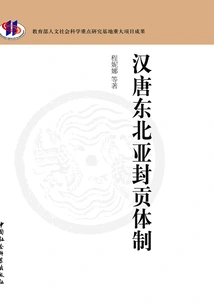
The Tribute System in Northeast Asia During the Han and Tang Dynasties
About This Novel
The tribute system in Northeast Asia during the Han and Tang dynasties was a hierarchical political system established between the Han and Tang dynasties and the surrounding ethnic groups and countries. The scope of the tribute system in Northeast Asia during the Han and Tang dynasties can be divided into two parts. The first is the border minority areas outside counties and counties, which are managed by border counties and counties. They include various ethnic governments and primitive clan tribes of varying sizes, mainly the northeastern border areas under the jurisdiction of ancient Chinese dynasties. This book calls it the "inner circle." The second is the countries and regions surrounding the ancient Chinese dynasty. They conducted trade and cultural exchanges with China in the form of tribute, mainly the Korean Peninsula and the Japanese Archipelago, which this book calls the "outer circle." It is worth noting that the two parts are not static, especially the neighboring nations and countries. In certain historical periods, the "outer circle" nations or countries have turned into the "inner circle", and the "inner circle" nations or countries have turned into the "outer circle". The reasons for the changes are complicated. During the Han and Tang Dynasties, the Chinese dynasties experienced great changes from unity to division, and from division to unity again. Northeast Asia's tribute was not abolished because of the division of the Chinese dynasties. Instead, it experienced a change process from a unitary system to a pluralistic system, a dual system, and then returned to a unitary system again. From the Han Dynasty to the Tang Dynasty, the tribute system in Northeast Asia has always been an important political system in this region.
Official Sources
What Readers Think
Rating
Community(0)
Rating
Community(0)
