Library
Browse and search novels
1,323 novels found
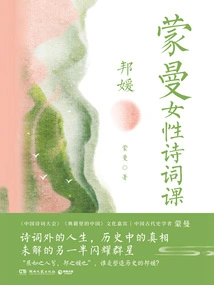
Mengman Women's Poetry Class: Bang Yuan
Literature蒙曼女性诗词课:邦媛
Monman
Teacher Mengman came into the public eye because of her poetry lectures, but in fact, as a university professor, her research direction is ancient history, especially the history of ancient women. In "Mengman Women's Poetry Class", teacher Mengman combines poetry with women, uses poetry as a guide, and follows the order of historical dynasties to tell the wonderful lives of the 52 women behind the poetry, as well as the Chinese history behind them. The first volume "Philosophical Women" mainly talks about 28 political women who changed history, while the second volume "Bang Yuan" mainly talks about 24 cultural women who wrote history. There is not only the deep affection of "I wish to have the same person, and we will never be apart until we grow old together", but also the helplessness of "the highest to the sun and the moon, the closest relatives to the distant couple", the free and easy feeling of "I see how charming the green mountains are, I expected the green mountains to see me like this", and the pride of "no need for light blue and deep red, I am the best among flowers". These women are gentle, but they have scratches. History has shaped them, and they also write history. Their thoughts are in the poems, and their life stories are also in the poems. This is life beyond poetry, the truth in history, the other half of the shining stars besides Qin Shihuang, Tang Xuanzong, Li Bai, Du Fu... That we ignore and cannot understand.
Teacher Mengman came into the public eye because of her poetry lectures, but in fact, as a university professor, her research direction is ancient history, especially the history of ancient women. In "Mengman Women's Poetry Class", teacher Mengman combines poetry with women, uses poetry as a guide, and follows the order of historical dynasties to tell the wonderful lives of the 52 women behind the poetry, as well as the Chinese history behind them. The first volume "Philosophical Women" mainly talks about 28 political women who changed history, while the second volume "Bang Yuan" mainly talks about 24 cultural women who wrote history. There is not only the deep affection of "I wish to have the same person, and we will never be apart until we grow old together", but also the helplessness of "the highest to the sun and the moon, the closest relatives to the distant couple", the free and easy feeling of "I see how charming the green mountains are, I expected the green mountains to see me like this", and the pride of "no need for light blue and deep red, I am the best among flowers". These women are gentle, but they have scratches. History has shaped them, and they also write history. Their thoughts are in the poems, and their life stories are also in the poems. This is life beyond poetry, the truth in history, the other half of the shining stars besides Qin Shihuang, Tang Xuanzong, Li Bai, Du Fu... That we ignore and cannot understand.
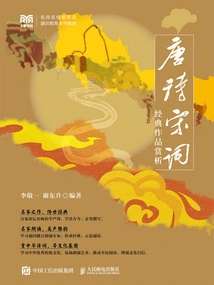
唐诗宋词经典作品赏析
Compiled By Li Jingyi And Xie Dongsheng
This book contains more than 100 classic works of Tang poetry and Song lyrics, some of which express feelings about family and country, some describe family and friendship, some reflect on the past, and some describe mountains and rivers. The themes cover many aspects of ancient social life. The author reads and appreciates these popular poems one by one: introducing their background, summarizing their content, analyzing their characteristics, and appreciating their famous lines, so as to make these classical poems come alive in today's social life and people's emotional world. Reading this book will be of certain benefit to readers in absorbing the essence of traditional culture of the motherland, improving the level of art appreciation, and enriching the knowledge structure of talents. At the same time, this book also invites a group of recitation artists to dub and recite the selected works, and present them in the form of modern electronic technology QR codes; readers can obtain auditory satisfaction and deepen their understanding of ancient poetry on the basis of text reading, which is a true appreciation of art.
This book contains more than 100 classic works of Tang poetry and Song lyrics, some of which express feelings about family and country, some describe family and friendship, some reflect on the past, and some describe mountains and rivers. The themes cover many aspects of ancient social life. The author reads and appreciates these popular poems one by one: introducing their background, summarizing their content, analyzing their characteristics, and appreciating their famous lines, so as to make these classical poems come alive in today's social life and people's emotional world. Reading this book will be of certain benefit to readers in absorbing the essence of traditional culture of the motherland, improving the level of art appreciation, and enriching the knowledge structure of talents. At the same time, this book also invites a group of recitation artists to dub and recite the selected works, and present them in the form of modern electronic technology QR codes; readers can obtain auditory satisfaction and deepen their understanding of ancient poetry on the basis of text reading, which is a true appreciation of art.
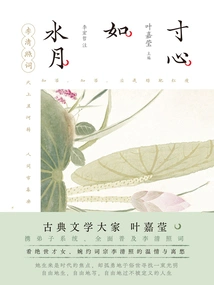
寸心如水月:李清照词
Editor-in-chief Ye Jiaying Notes By Li Hongzhe
The stars in the sky are turning, and the curtains on earth are hanging down. In 1084 AD, Li Qingzhao, an extremely talented woman, was born in Jinan, Shandong Province. Later generations praised her as "the most talented woman in the history". She was born into a well-known family. Her father, Li Gefei, was one of the four scholars of the Su clan, and her mother was the daughter of Wang Gui, the prime minister of the dynasty. She was good at poetry and prose. He became famous when he was young. He has profound family knowledge, rich talents, and is not inferior to men. He created the original "Yi'an body", which is fresh and elegant, with a long charm, and is regarded as "graceful and authentic". A lifetime of tenderness, knowing each other and staying with Zhao Mingcheng, playing the piano and the harp in harmony. He spent half his life wandering, suffered many wars, and was full of feelings for his family and country. He protected gold and stone cultural relics and made outstanding contributions. She dared to love, dare to hate, and was not afraid of the secular world. She wrote a life of ups and downs and freedom with a woman's unique talent and tenderness, and became a bright star in the world of poetry for thousands of years. This book contains all 49 of Li Qingzhao's poems, including explanations, annotations, and character biographies. It truly integrates detailed annotations, systematic analysis, and retro visuals. It is also equipped with audio explanations and recitations. It can be called "a comprehensive and systematic reader of Li Qingzhao's poems that everyone can understand."
The stars in the sky are turning, and the curtains on earth are hanging down. In 1084 AD, Li Qingzhao, an extremely talented woman, was born in Jinan, Shandong Province. Later generations praised her as "the most talented woman in the history". She was born into a well-known family. Her father, Li Gefei, was one of the four scholars of the Su clan, and her mother was the daughter of Wang Gui, the prime minister of the dynasty. She was good at poetry and prose. He became famous when he was young. He has profound family knowledge, rich talents, and is not inferior to men. He created the original "Yi'an body", which is fresh and elegant, with a long charm, and is regarded as "graceful and authentic". A lifetime of tenderness, knowing each other and staying with Zhao Mingcheng, playing the piano and the harp in harmony. He spent half his life wandering, suffered many wars, and was full of feelings for his family and country. He protected gold and stone cultural relics and made outstanding contributions. She dared to love, dare to hate, and was not afraid of the secular world. She wrote a life of ups and downs and freedom with a woman's unique talent and tenderness, and became a bright star in the world of poetry for thousands of years. This book contains all 49 of Li Qingzhao's poems, including explanations, annotations, and character biographies. It truly integrates detailed annotations, systematic analysis, and retro visuals. It is also equipped with audio explanations and recitations. It can be called "a comprehensive and systematic reader of Li Qingzhao's poems that everyone can understand."
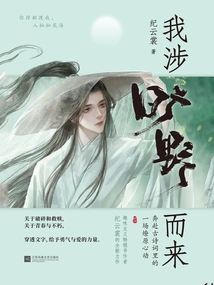
I Came Through the Wilderness
Literature我涉旷野而来
Ji Yunshang
This book uses 38 breathtakingly beautiful ancient poems on vegetation to describe the young hearts of dozens of talented poets. About brokenness and redemption, about youth and immortality, each story is connected with more beautiful poems, covering nearly a hundred ancient Chinese classic poems. Every ancient poem line in the book that has been wet with tears is a boat of time, taking us through thousands of years and reaching the poet's stirring heart. As a result, countless romances, sorrows and joys, whether legendary or ordinary, can reflect each other and meet each other in the vast river of time through the wind and rain.
This book uses 38 breathtakingly beautiful ancient poems on vegetation to describe the young hearts of dozens of talented poets. About brokenness and redemption, about youth and immortality, each story is connected with more beautiful poems, covering nearly a hundred ancient Chinese classic poems. Every ancient poem line in the book that has been wet with tears is a boat of time, taking us through thousands of years and reaching the poet's stirring heart. As a result, countless romances, sorrows and joys, whether legendary or ordinary, can reflect each other and meet each other in the vast river of time through the wind and rain.
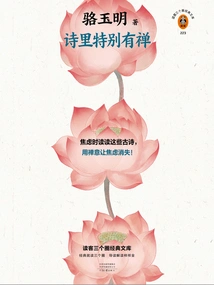
The Poem is Particularly Zen
Literature诗里特别有禅
Luo Yuming
When you are anxious, read these ancient poems and use Zen to make your anxiety disappear! Zen is a wise attitude towards life that allows people to view everything in the world with tranquility and joy. In this book, we will interpret and appreciate a series of poems embodying Zen principles and interests under the leadership of Luo Yuming, a famous professor at Fudan University. By reading this book to eliminate tension and anxiety, we can seek the perfect life that should belong to you with a simple and natural mood and a adaptable attitude. "Picking chrysanthemums under the eastern fence, you can leisurely see the Nanshan Mountain." The golden bald flowers in the hands of Buddha and the chrysanthemums in Tao Yuanming's hands, are they just dispensable props? I'm afraid not necessarily. Although the flowers are tiny, they show the beauty of the world. "Since you have no intention, I will give up." Love, hate, life and death are in the flow, and it is unclear who planted the original seeds where. Love has an end, and hate also has an end. If you can't love, you won't love. If things are over, you won't hate. If you can't die in love and hate, everything will be alive. Open this book, and you will calm down as soon as you read these ancient poems!
When you are anxious, read these ancient poems and use Zen to make your anxiety disappear! Zen is a wise attitude towards life that allows people to view everything in the world with tranquility and joy. In this book, we will interpret and appreciate a series of poems embodying Zen principles and interests under the leadership of Luo Yuming, a famous professor at Fudan University. By reading this book to eliminate tension and anxiety, we can seek the perfect life that should belong to you with a simple and natural mood and a adaptable attitude. "Picking chrysanthemums under the eastern fence, you can leisurely see the Nanshan Mountain." The golden bald flowers in the hands of Buddha and the chrysanthemums in Tao Yuanming's hands, are they just dispensable props? I'm afraid not necessarily. Although the flowers are tiny, they show the beauty of the world. "Since you have no intention, I will give up." Love, hate, life and death are in the flow, and it is unclear who planted the original seeds where. Love has an end, and hate also has an end. If you can't love, you won't love. If things are over, you won't hate. If you can't die in love and hate, everything will be alive. Open this book, and you will calm down as soon as you read these ancient poems!
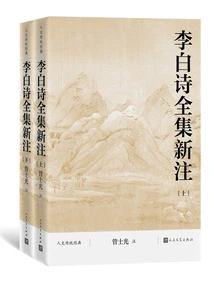
李白诗全集新注(全2册)
Guan Shiguangzhu
Li Bai is one of the greatest poets in the history of Chinese literature. His immortal poems have been passed down among the people for thousands of years and have become precious heritage in the treasure house of ancient Chinese literature. "New Notes on the Complete Works of Li Bai's Poems" contains nearly a thousand of Li Bai's poems (divided into 25 volumes, with 28 additional poems later), and provides detailed annotations, including the creation time of the works, explanations of difficult words and phrases, and related allusions. The author fully absorbs the latest results of research in this field in his annotations on Li Bai's life, the year when his poems were written, and difficult words. At the back of the book, there are appendices "A Brief List of Li Bai's Life and Creation" and "A Brief List of Li Bai's Poetry Versions" to help readers fully understand Li Bai's life story and creative characteristics.
Li Bai is one of the greatest poets in the history of Chinese literature. His immortal poems have been passed down among the people for thousands of years and have become precious heritage in the treasure house of ancient Chinese literature. "New Notes on the Complete Works of Li Bai's Poems" contains nearly a thousand of Li Bai's poems (divided into 25 volumes, with 28 additional poems later), and provides detailed annotations, including the creation time of the works, explanations of difficult words and phrases, and related allusions. The author fully absorbs the latest results of research in this field in his annotations on Li Bai's life, the year when his poems were written, and difficult words. At the back of the book, there are appendices "A Brief List of Li Bai's Life and Creation" and "A Brief List of Li Bai's Poetry Versions" to help readers fully understand Li Bai's life story and creative characteristics.
Translation and Annotation of the Book of Songs (national Reading Classic·collection Edition)
Literature诗经译注(国民阅读经典·典藏版)
Translated And Annotated By Zhou Zhenfu
The Book of Songs is the earliest poetry collection in my country. It created the realist tradition of Chinese literary creation and had a profound influence on later generations. The "Introduction" is written before this book, giving a brief introduction to "The Book of Songs". There is a solution at the beginning of each volume, explaining the general origin and writing characteristics of the genre (feng\u002F Ya\u002F Ode) of this volume. The full text is translated today, with notes on key words, and a commentary is attached after the poem to summarize the main idea of the article. The book has a complete structure, clear style, concise and easy to read, and is a popular reading suitable for general readers.
The Book of Songs is the earliest poetry collection in my country. It created the realist tradition of Chinese literary creation and had a profound influence on later generations. The "Introduction" is written before this book, giving a brief introduction to "The Book of Songs". There is a solution at the beginning of each volume, explaining the general origin and writing characteristics of the genre (feng\u002F Ya\u002F Ode) of this volume. The full text is translated today, with notes on key words, and a commentary is attached after the poem to summarize the main idea of the article. The book has a complete structure, clear style, concise and easy to read, and is a popular reading suitable for general readers.
唐诗三百首(国民阅读经典·典藏版)
(qing Dynasty) Compilation And Selections Of Hengtang Retired Scholars With Commentary By Zhang Zhonggang
"Three Hundred Tang Poems" is an anthology of Tang poetry compiled by Sun Zhu (also known as Hengtang Tuishi) of the Qing Dynasty. It is the most influential and widely circulated anthology of Tang poetry so far. The book contains a total of 313 poems, which are well-selected and cover a wide range of topics. Most of the selected poems are the most popular poems in the Tang Dynasty, including representative works from various schools of Tang poetry in various periods. The commentator Mr. Zhang Zhonggang's annotations and comments on "Three Hundred Tang Poems" are rich in emotion, wonderful and profound, which can help readers better understand Tang poetry.
"Three Hundred Tang Poems" is an anthology of Tang poetry compiled by Sun Zhu (also known as Hengtang Tuishi) of the Qing Dynasty. It is the most influential and widely circulated anthology of Tang poetry so far. The book contains a total of 313 poems, which are well-selected and cover a wide range of topics. Most of the selected poems are the most popular poems in the Tang Dynasty, including representative works from various schools of Tang poetry in various periods. The commentator Mr. Zhang Zhonggang's annotations and comments on "Three Hundred Tang Poems" are rich in emotion, wonderful and profound, which can help readers better understand Tang poetry.
宋词三百首(国民阅读经典·典藏版)
(qing Dynasty) Compiled And Selected By Shangqiang Villagers With Commentary By Liu Naichang
In 1924, the famous lyricist Zhu Xiaozang (a villager in Haoshangqiang) compiled and selected "Three Hundred Song Poems", which is a classical literature anthology as famous as "Three Hundred Tang Poems". The book contains a total of 88 poets from the Song Dynasty and about 300 poems, which basically shows the appearance and development process of Song Ci. The annotations in this book mainly focus on clearing up the words and sentences, explaining allusions and facts, and the commentary is precise. Each poet has a biography to help readers better understand Song Ci.
In 1924, the famous lyricist Zhu Xiaozang (a villager in Haoshangqiang) compiled and selected "Three Hundred Song Poems", which is a classical literature anthology as famous as "Three Hundred Tang Poems". The book contains a total of 88 poets from the Song Dynasty and about 300 poems, which basically shows the appearance and development process of Song Ci. The annotations in this book mainly focus on clearing up the words and sentences, explaining allusions and facts, and the commentary is precise. Each poet has a biography to help readers better understand Song Ci.
Three Hundred Yuan Songs
Literature元曲三百首
Notes From The "xueershukan" Editorial Team
"Three Hundred Yuan Operas" was originally compiled by Mr. Ren Ne in Nanjing. In 1943, he collaborated with Mr. Lu Qian to add and delete the original poems and publish it, still titled "Three Hundred Yuan Operas". "Three Hundred Yuan Songs" has become another classic anthology representing the achievements of ancient Chinese literature after "Three Hundred Tang Poems" and "Three Hundred Song Ci Poems". This selection and compilation of "Three Hundred Yuan Operas" by Ren Ne and Lu Qian and other popular editions have been compiled, and 71 named authors have been selected, with a total of 361 works (excluding appendices at the end of the chapter); 33 works are by unknown persons. The book contains a total of 394 Yuan songs. The appendix at the end of the chapter adds 205 Yuan songs, making the book a total of 599 Yuan songs.
"Three Hundred Yuan Operas" was originally compiled by Mr. Ren Ne in Nanjing. In 1943, he collaborated with Mr. Lu Qian to add and delete the original poems and publish it, still titled "Three Hundred Yuan Operas". "Three Hundred Yuan Songs" has become another classic anthology representing the achievements of ancient Chinese literature after "Three Hundred Tang Poems" and "Three Hundred Song Ci Poems". This selection and compilation of "Three Hundred Yuan Operas" by Ren Ne and Lu Qian and other popular editions have been compiled, and 71 named authors have been selected, with a total of 361 works (excluding appendices at the end of the chapter); 33 works are by unknown persons. The book contains a total of 394 Yuan songs. The appendix at the end of the chapter adds 205 Yuan songs, making the book a total of 599 Yuan songs.
一蓑烟雨任平生:苏轼词(全三册)
Editor-in-chief Ye Jiaying
There is a Su Dongpo in the heart of every Chinese! In 1037 AD, an eternal genius was born in Meishan, Sichuan. Penglaoshan was shocked when the vegetation suddenly withered. In the long history, it is difficult for Su Shi to exist twice. He is a rare "all-round art master" in the literary world. His poems "open up a bold and unrestrained style, wash away the fragrance of Qiluo, get rid of the subtle and subtle way, make people climb high and look into the distance, lift up a majestic song, beyond the dust"; his prose is undulating, and his writing is as pure as dust, and he expresses many wonderful ideas and new ideas, ranking among the "Eight Great Masters of the Tang and Song Dynasties"; He was also a passionate and unrestrained optimist and a gourmet. He suffered many hardships and relegations throughout his life, but he resolved them with his gentle worldly feelings and extraordinary talent, leaving behind many masterpieces that are both timeless and contemporary. This book selects 202 poems by Su Shi, including explanations, annotations, and biographies of characters. It truly integrates beautiful annotations, systematic analysis, and retro visuals. It can be called "a comprehensive and systematic reader of Su Shi's poems that everyone can understand."
There is a Su Dongpo in the heart of every Chinese! In 1037 AD, an eternal genius was born in Meishan, Sichuan. Penglaoshan was shocked when the vegetation suddenly withered. In the long history, it is difficult for Su Shi to exist twice. He is a rare "all-round art master" in the literary world. His poems "open up a bold and unrestrained style, wash away the fragrance of Qiluo, get rid of the subtle and subtle way, make people climb high and look into the distance, lift up a majestic song, beyond the dust"; his prose is undulating, and his writing is as pure as dust, and he expresses many wonderful ideas and new ideas, ranking among the "Eight Great Masters of the Tang and Song Dynasties"; He was also a passionate and unrestrained optimist and a gourmet. He suffered many hardships and relegations throughout his life, but he resolved them with his gentle worldly feelings and extraordinary talent, leaving behind many masterpieces that are both timeless and contemporary. This book selects 202 poems by Su Shi, including explanations, annotations, and biographies of characters. It truly integrates beautiful annotations, systematic analysis, and retro visuals. It can be called "a comprehensive and systematic reader of Su Shi's poems that everyone can understand."
花影明月送将来:中英解读千家诗
(us) Translation And Annotation By Bill Porter
Poetry is the elegance of Chinese art and reached its peak during the Tang and Song Dynasties. The Tang and Song Dynasties were also known as the "golden age" of Chinese poetry. Poetry embodies the Chinese people's insight into the world, and also combines the complex vision with the inner rhythm. Poetry has a long history as an art form. During the Tang and Song Dynasties, poetry was like the spring breeze, blowing in every corner of the palace, streets, homes, inns, temples, and village entrances...
Poetry is the elegance of Chinese art and reached its peak during the Tang and Song Dynasties. The Tang and Song Dynasties were also known as the "golden age" of Chinese poetry. Poetry embodies the Chinese people's insight into the world, and also combines the complex vision with the inner rhythm. Poetry has a long history as an art form. During the Tang and Song Dynasties, poetry was like the spring breeze, blowing in every corner of the palace, streets, homes, inns, temples, and village entrances...
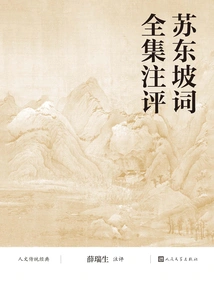
苏东坡词全集注评
Commentary By Xue Ruisheng
Su Shi was a famous literati in ancient China who made outstanding contributions in prose, poetry, poetry, calligraphy, and painting. His poetry is not only bold and bold, but also graceful, clear-minded, broad-minded, etc. It can be said that "words are suitable for all styles". It has a profound influence on later generations and is still read by readers. This book is based on the Zizhi Manchao edition edited by Mao Zedong of the Ming Dynasty. If it is incomplete, it will be supplemented from other editions and explained. Interpretation of words, doubtful words, mistaken words and fragments of sentences will not be accepted. It collects 341 extant poems and chronologically records 310 of them. Each poem is given detailed annotations and comments, which will help readers accurately understand and deeply appreciate Su Shi's poems.
Su Shi was a famous literati in ancient China who made outstanding contributions in prose, poetry, poetry, calligraphy, and painting. His poetry is not only bold and bold, but also graceful, clear-minded, broad-minded, etc. It can be said that "words are suitable for all styles". It has a profound influence on later generations and is still read by readers. This book is based on the Zizhi Manchao edition edited by Mao Zedong of the Ming Dynasty. If it is incomplete, it will be supplemented from other editions and explained. Interpretation of words, doubtful words, mistaken words and fragments of sentences will not be accepted. It collects 341 extant poems and chronologically records 310 of them. Each poem is given detailed annotations and comments, which will help readers accurately understand and deeply appreciate Su Shi's poems.
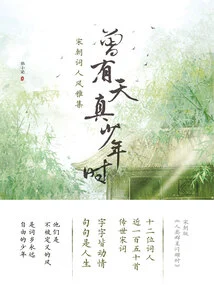
曾有天真少年时
Zhang Xiaoci
This book selects 12 representative poets of the Song Dynasty, mainly based on their life experiences, accompanied by the appreciation of more than a hundred poems, to create this feast of Song poetry that is as beautiful as jade and tastes delicious. Such as Su Shi, who is full of flowers; Xin Qiji, who takes pictures of the railings; Ouyang Xiu, who wears hairpins; Qin Guan, who is loved by everyone; Liu Yong, who is despised; Li Qingzhao, the best among flowers; rebellious girl Zhu Shuzhen... Observe the lives of the ancients from a modern perspective, understand the hardships they were trapped in the times, and admire their persistence in daring to break through themselves.
This book selects 12 representative poets of the Song Dynasty, mainly based on their life experiences, accompanied by the appreciation of more than a hundred poems, to create this feast of Song poetry that is as beautiful as jade and tastes delicious. Such as Su Shi, who is full of flowers; Xin Qiji, who takes pictures of the railings; Ouyang Xiu, who wears hairpins; Qin Guan, who is loved by everyone; Liu Yong, who is despised; Li Qingzhao, the best among flowers; rebellious girl Zhu Shuzhen... Observe the lives of the ancients from a modern perspective, understand the hardships they were trapped in the times, and admire their persistence in daring to break through themselves.
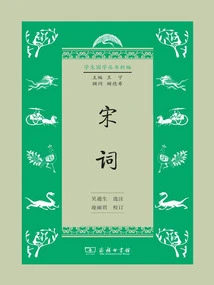
宋词(学生国学丛书新编)
Selected Notes By Wu Dunsheng Edited By Ling Lijun
"Song Ci" (original title "Selected Annotations of Song Ci") was compiled and selected by Wu Dunsheng during the Republic of China. The book is divided into three volumes, with a total of 142 poets from the Song Dynasty and more than 300 poems, totaling 115 tones and 136 styles. The first volume is a "Biography of the Author", which introduces the life and achievements of the selected poets. This book is organized by the name of the ci brand, in order of the number of words in the ci score. As the name of the formal lexicon, it is often also marked with tone, rhyme, sentence pronunciation, etc. Judging from the compilation and selection style of the entire book, the purpose of the editor is not to allow readers to purely appreciate the literary and artistic beauty of the lyrics and understand the creative style of a certain lyricist, but rather to allow readers to understand the rhythm of each lyric score, and to gain a deeper understanding of the creation of lyrics through representative lyrics and gain a glimpse of its secrets.
"Song Ci" (original title "Selected Annotations of Song Ci") was compiled and selected by Wu Dunsheng during the Republic of China. The book is divided into three volumes, with a total of 142 poets from the Song Dynasty and more than 300 poems, totaling 115 tones and 136 styles. The first volume is a "Biography of the Author", which introduces the life and achievements of the selected poets. This book is organized by the name of the ci brand, in order of the number of words in the ci score. As the name of the formal lexicon, it is often also marked with tone, rhyme, sentence pronunciation, etc. Judging from the compilation and selection style of the entire book, the purpose of the editor is not to allow readers to purely appreciate the literary and artistic beauty of the lyrics and understand the creative style of a certain lyricist, but rather to allow readers to understand the rhythm of each lyric score, and to gain a deeper understanding of the creation of lyrics through representative lyrics and gain a glimpse of its secrets.
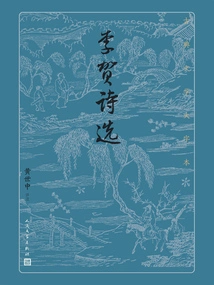
Selected Poems of Li He
Literature李贺诗选
Commentary By Huang Shizhong
Li He was a famous poet in the mid-Tang Dynasty. He, Li Bai and Li Shangyin were called the "Three Lis of the Tang Dynasty". He was a representative of the transition period of poetic style from the mid-Tang Dynasty to the late Tang Dynasty. Most of the poems he wrote lamented his untimely birth and inner depression, and expressed his pursuit of ideals and ambitions; they also reflected the separatist rule of feudal towns, the dictatorship of eunuchs, and the cruel exploitation of the people at that time. He left behind some eternal good sayings such as "Dark clouds threaten to destroy the city", "When the rooster sings, the world becomes white", "If the sky is affectionate, the sky will also grow old". This book is a selection of Li He's poems, a total of 108 poems. The author selects poems carefully, taking into account both ideological and artistic qualities. After each poem, he attaches annotations of important words and an interpretation of the whole poem. The annotations are concise and accurate, including a synopsis of key verses and the phonetic notation and interpretation of difficult words. The interpretation part focuses on exploring the ideological and artistic nature of the poems, explaining the profound things in simple terms, and sometimes creating insights. This book is an excellent ancient poetry reader that is both academic and popular.
Li He was a famous poet in the mid-Tang Dynasty. He, Li Bai and Li Shangyin were called the "Three Lis of the Tang Dynasty". He was a representative of the transition period of poetic style from the mid-Tang Dynasty to the late Tang Dynasty. Most of the poems he wrote lamented his untimely birth and inner depression, and expressed his pursuit of ideals and ambitions; they also reflected the separatist rule of feudal towns, the dictatorship of eunuchs, and the cruel exploitation of the people at that time. He left behind some eternal good sayings such as "Dark clouds threaten to destroy the city", "When the rooster sings, the world becomes white", "If the sky is affectionate, the sky will also grow old". This book is a selection of Li He's poems, a total of 108 poems. The author selects poems carefully, taking into account both ideological and artistic qualities. After each poem, he attaches annotations of important words and an interpretation of the whole poem. The annotations are concise and accurate, including a synopsis of key verses and the phonetic notation and interpretation of difficult words. The interpretation part focuses on exploring the ideological and artistic nature of the poems, explaining the profound things in simple terms, and sometimes creating insights. This book is an excellent ancient poetry reader that is both academic and popular.
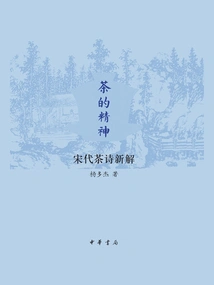
茶的精神:宋代茶诗新解
Yang Duojie
"The Spirit of Tea: A New Interpretation of Tea Poems of the Song Dynasty" selects thirty-six representative tea poems of the Song Dynasty and explains in detail the tea drinking wisdom contained in these tea poems. We can not only understand the tea drinking methods of the Song Dynasty, such as ordering tea, frying tea, and dividing tea, but also learn about various famous teas at that time, such as Longfeng tea, Shu tea, Jian tea, Qibao tea, Shuangjing tea, Mengding tea, etc. This book is not only a book for appreciating the tea poetry of the Song Dynasty, but also a book for understanding the tea culture of the Song Dynasty.
"The Spirit of Tea: A New Interpretation of Tea Poems of the Song Dynasty" selects thirty-six representative tea poems of the Song Dynasty and explains in detail the tea drinking wisdom contained in these tea poems. We can not only understand the tea drinking methods of the Song Dynasty, such as ordering tea, frying tea, and dividing tea, but also learn about various famous teas at that time, such as Longfeng tea, Shu tea, Jian tea, Qibao tea, Shuangjing tea, Mengding tea, etc. This book is not only a book for appreciating the tea poetry of the Song Dynasty, but also a book for understanding the tea culture of the Song Dynasty.
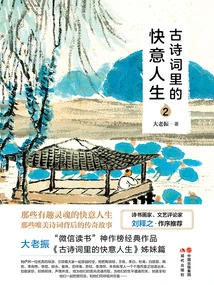
Pleasant Life in Ancient Poetry 2
Literature古诗词里的快意人生2
Da Laozhen
The sequel to Da Laozhen's classic work "The Pleasant Life in Ancient Poetry" reproduces the joyful life and happy atmosphere in the world of classical poetry. In this classic poetry reader, which is full of useful information, fun, rational thinking and historical depth, the author follows the clues of time and leads us to meet great poets such as Tao Yuanming, Wang Wei, Li Bai, Du Fu, Bai Juyi, Han Yu, Li Shangyin, Li Yu, Liu Yong, Yan Shu, Fan Zhongyan, Su Shi, Li Qingzhao, Xin Qiji, Lu You, Wen Tianxiang and so on. The author is full of treasures, full of ups and downs, and full of emotion and emotion. She sang for their noble souls and wept for their life experiences. She even traveled arm-in-arm with them, treating them as fathers, brothers, sisters, husbands, and confidants, in order to gain spiritual resonance and spiritual connection. The author's language is humorous and his writing is fluent. He observes the poet's life from his poems and summarizes his poetic achievements from his life. It expresses the emotions of people in the world and tells the legends of romantic figures through the ages.
The sequel to Da Laozhen's classic work "The Pleasant Life in Ancient Poetry" reproduces the joyful life and happy atmosphere in the world of classical poetry. In this classic poetry reader, which is full of useful information, fun, rational thinking and historical depth, the author follows the clues of time and leads us to meet great poets such as Tao Yuanming, Wang Wei, Li Bai, Du Fu, Bai Juyi, Han Yu, Li Shangyin, Li Yu, Liu Yong, Yan Shu, Fan Zhongyan, Su Shi, Li Qingzhao, Xin Qiji, Lu You, Wen Tianxiang and so on. The author is full of treasures, full of ups and downs, and full of emotion and emotion. She sang for their noble souls and wept for their life experiences. She even traveled arm-in-arm with them, treating them as fathers, brothers, sisters, husbands, and confidants, in order to gain spiritual resonance and spiritual connection. The author's language is humorous and his writing is fluent. He observes the poet's life from his poems and summarizes his poetic achievements from his life. It expresses the emotions of people in the world and tells the legends of romantic figures through the ages.
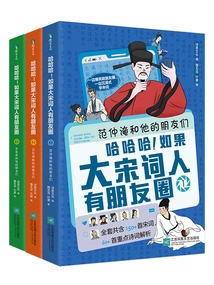
哈哈哈!如果大宋词人有朋友圈(全3册)
Wei Wuji Ye Han
This is a different poetry book. The author chooses a unique method of "using comics to interpret the poet's circle of friends", focusing on the most representative creative masters of the Song Dynasty, leading readers into their lives, seeing the joys and sorrows of the poets of the Song Dynasty, and understanding the stories behind the Song poetry through the ages. The first-person narration perspective gives readers an immersive reading experience; the writing style is humorous and the interpretation is detailed, revealing the prosperity and crisis of the Song Dynasty; it is suitable for all ages, with both laughs and test points, making it easy to understand the relationship between the poets of the Song Dynasty and the things behind the Song lyrics.
This is a different poetry book. The author chooses a unique method of "using comics to interpret the poet's circle of friends", focusing on the most representative creative masters of the Song Dynasty, leading readers into their lives, seeing the joys and sorrows of the poets of the Song Dynasty, and understanding the stories behind the Song poetry through the ages. The first-person narration perspective gives readers an immersive reading experience; the writing style is humorous and the interpretation is detailed, revealing the prosperity and crisis of the Song Dynasty; it is suitable for all ages, with both laughs and test points, making it easy to understand the relationship between the poets of the Song Dynasty and the things behind the Song lyrics.
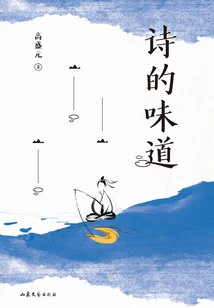
The Taste of Poetry
Literature诗的味道
Goldman Sachs Yuan
"Those verses that I memorized when I was a child hit me at this moment in my life." "Treasure Chinese Teacher" Gao Shengyuan, in ten lectures on intensive reading of Tang and Song poetry, from Li Bai to Su Shi, will take you to re-appreciate the beauty of poetry.
"Those verses that I memorized when I was a child hit me at this moment in my life." "Treasure Chinese Teacher" Gao Shengyuan, in ten lectures on intensive reading of Tang and Song poetry, from Li Bai to Su Shi, will take you to re-appreciate the beauty of poetry.
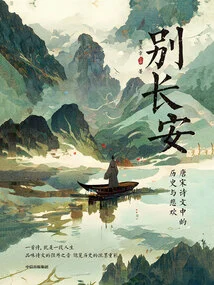
Farewell to Chang'an
Literature别长安
Qu Lizhang
The poetry of the Tang and Song Dynasties is a peak of classical literature, and countless popular masterpieces have been passed down through the long history and space to this day. From the time when we were babbling and learning language as children, we began to recite "Moonlight before the Bed"; when we were young, we also learned from Li Bai's heroic saying "I am born with talents that will be useful"; when wandering outside, we knew that "every festive season misses my family more than ever"; ambitions are hard to achieve, and we lament that "the mountains are difficult to cross, who has lost his way"... Why can a poem or a line of words be passed down through the ages? Poetry expresses ambitions, and prose conveys Tao. Poetry and prose are timeless and have a thousand-year context. They tell the joys and sorrows of one generation after another. In the vast world, how insignificant an individual is to history. A few words cannot describe the spring breeze, autumn, moon, and the changes of things and stars, but they condense thousands of atmospheres and flavors of life. In this book, 23 historical stories are reproduced for us based on 23 poems and paintings. There is the pride of a young man becoming famous, the melancholy of not realizing his talent, the confusion of an unknown future, the loneliness of the long dark night, the stubbornness of being alone, and the desolation of a country destroyed and a family destroyed. Follow the author's narration and once again enter the historical sky and poetic universe of more than 600 years in the Tang and Song Dynasties.
The poetry of the Tang and Song Dynasties is a peak of classical literature, and countless popular masterpieces have been passed down through the long history and space to this day. From the time when we were babbling and learning language as children, we began to recite "Moonlight before the Bed"; when we were young, we also learned from Li Bai's heroic saying "I am born with talents that will be useful"; when wandering outside, we knew that "every festive season misses my family more than ever"; ambitions are hard to achieve, and we lament that "the mountains are difficult to cross, who has lost his way"... Why can a poem or a line of words be passed down through the ages? Poetry expresses ambitions, and prose conveys Tao. Poetry and prose are timeless and have a thousand-year context. They tell the joys and sorrows of one generation after another. In the vast world, how insignificant an individual is to history. A few words cannot describe the spring breeze, autumn, moon, and the changes of things and stars, but they condense thousands of atmospheres and flavors of life. In this book, 23 historical stories are reproduced for us based on 23 poems and paintings. There is the pride of a young man becoming famous, the melancholy of not realizing his talent, the confusion of an unknown future, the loneliness of the long dark night, the stubbornness of being alone, and the desolation of a country destroyed and a family destroyed. Follow the author's narration and once again enter the historical sky and poetic universe of more than 600 years in the Tang and Song Dynasties.
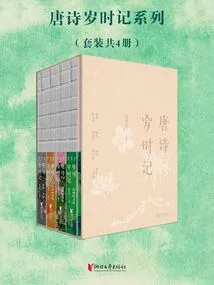
唐诗岁时记系列(套装共4册)
Compiled By Lu Beirong
"Tang Poems of the Years" (Set of 4 volumes) is a popular literary reading for young scholar Lu Beirong to interpret Tang poems related to the four seasons. In terms of layout, the book is presented every day in the form of poems and pictures, which are staggered and unique, and the design sense of the rotation of the years is strengthened in the cover. In terms of the selection of Tang poems, the original intention of adhering to the flow of the four seasons and sharing the interests of ancient and modern times was focused on selecting Tang poems related to the twenty-four solar terms and the seventy-two phenology. There are also interesting commentary to assist reading. Most of the accompanying paintings in the book are masterpieces from the past collections of major museums. In the paintings, they rein in their horses, cultivate, stand, and wander, which gives people a sense of echoes of ancient and modern time and space. Contains Tang poems related to the four seasons of spring, summer, autumn and winter.
"Tang Poems of the Years" (Set of 4 volumes) is a popular literary reading for young scholar Lu Beirong to interpret Tang poems related to the four seasons. In terms of layout, the book is presented every day in the form of poems and pictures, which are staggered and unique, and the design sense of the rotation of the years is strengthened in the cover. In terms of the selection of Tang poems, the original intention of adhering to the flow of the four seasons and sharing the interests of ancient and modern times was focused on selecting Tang poems related to the twenty-four solar terms and the seventy-two phenology. There are also interesting commentary to assist reading. Most of the accompanying paintings in the book are masterpieces from the past collections of major museums. In the paintings, they rein in their horses, cultivate, stand, and wander, which gives people a sense of echoes of ancient and modern time and space. Contains Tang poems related to the four seasons of spring, summer, autumn and winter.
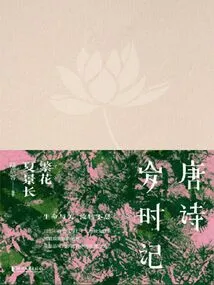
唐诗岁时记:繁花夏景长
Compiled By Lu Beirong
"Tang Poetry Chronicles: Blossoming Flowers and Long Scenery in Summer" is a popular literary reading of young scholar Lu Beirong's interpretation of Tang poetry related to summer. In terms of layout, the book is presented every day in the form of poems and pictures, which are staggered and unique, and the design sense of the rotation of the years is strengthened in the cover. In terms of the selection of Tang poems, the original intention of adhering to the flow of the four seasons and sharing the interests of ancient and modern times was focused on selecting Tang poems related to the twenty-four solar terms and the seventy-two phenology. There are also interesting commentary to assist reading. Most of the accompanying paintings in the book are masterpieces from the past collections of major museums. In the paintings, they rein in their horses, cultivate, stand, and wander, which gives people a sense of echoes of ancient and modern time and space.
"Tang Poetry Chronicles: Blossoming Flowers and Long Scenery in Summer" is a popular literary reading of young scholar Lu Beirong's interpretation of Tang poetry related to summer. In terms of layout, the book is presented every day in the form of poems and pictures, which are staggered and unique, and the design sense of the rotation of the years is strengthened in the cover. In terms of the selection of Tang poems, the original intention of adhering to the flow of the four seasons and sharing the interests of ancient and modern times was focused on selecting Tang poems related to the twenty-four solar terms and the seventy-two phenology. There are also interesting commentary to assist reading. Most of the accompanying paintings in the book are masterpieces from the past collections of major museums. In the paintings, they rein in their horses, cultivate, stand, and wander, which gives people a sense of echoes of ancient and modern time and space.
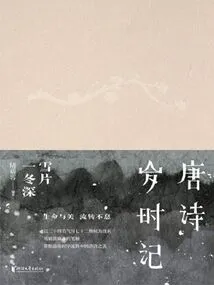
唐诗岁时记:雪片一冬深
Compiled By Lu Beirong
"Tang Poems of the Year: Snowflakes and Deep Winter" is a popular literary reading of young scholar Lu Beirong's interpretation of Tang poems related to winter. In terms of layout, the book is presented every day in the form of poems and pictures, which are staggered and unique, and the design sense of the rotation of the years is strengthened in the cover. In terms of the selection of Tang poems, the original intention of adhering to the flow of the four seasons and sharing the interests of ancient and modern times was focused on selecting Tang poems related to the twenty-four solar terms and the seventy-two phenology. There are also interesting commentary to assist reading. Most of the accompanying paintings in the book are masterpieces from the past collections of major museums. In the paintings, they rein in their horses, cultivate, stand, and wander, which gives people a sense of echoes of ancient and modern time and space.
"Tang Poems of the Year: Snowflakes and Deep Winter" is a popular literary reading of young scholar Lu Beirong's interpretation of Tang poems related to winter. In terms of layout, the book is presented every day in the form of poems and pictures, which are staggered and unique, and the design sense of the rotation of the years is strengthened in the cover. In terms of the selection of Tang poems, the original intention of adhering to the flow of the four seasons and sharing the interests of ancient and modern times was focused on selecting Tang poems related to the twenty-four solar terms and the seventy-two phenology. There are also interesting commentary to assist reading. Most of the accompanying paintings in the book are masterpieces from the past collections of major museums. In the paintings, they rein in their horses, cultivate, stand, and wander, which gives people a sense of echoes of ancient and modern time and space.
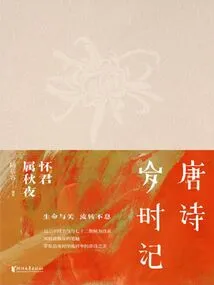
唐诗岁时记:怀君属秋夜
Compiled By Lu Beirong
"Tang Poems of the Year: Huaijun Belongs to Autumn Night" is a popular literary reading about Tang poetry related to autumn, which is interpreted by young scholar Lu Beirong. In terms of layout, the book is presented every day in the form of poems and pictures, which are staggered and unique, and the design sense of the rotation of the years is strengthened in the cover. In terms of the selection of Tang poems, the original intention of adhering to the flow of the four seasons and sharing the interests of ancient and modern times was focused on selecting Tang poems related to the twenty-four solar terms and the seventy-two phenology. There are also interesting commentary to assist reading. Most of the accompanying paintings in the book are masterpieces from the past collections of major museums. In the paintings, they rein in their horses, cultivate, stand, and wander, which gives people a sense of echoes of ancient and modern time and space.
"Tang Poems of the Year: Huaijun Belongs to Autumn Night" is a popular literary reading about Tang poetry related to autumn, which is interpreted by young scholar Lu Beirong. In terms of layout, the book is presented every day in the form of poems and pictures, which are staggered and unique, and the design sense of the rotation of the years is strengthened in the cover. In terms of the selection of Tang poems, the original intention of adhering to the flow of the four seasons and sharing the interests of ancient and modern times was focused on selecting Tang poems related to the twenty-four solar terms and the seventy-two phenology. There are also interesting commentary to assist reading. Most of the accompanying paintings in the book are masterpieces from the past collections of major museums. In the paintings, they rein in their horses, cultivate, stand, and wander, which gives people a sense of echoes of ancient and modern time and space.
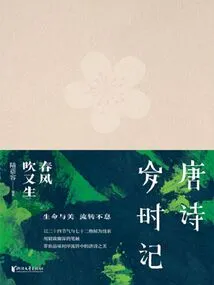
唐诗岁时记:春风吹又生
Compiled By Lu Beirong
"Tang Poems of the Year: Spring Breeze Blows and Rebirth" is a popular literary reading about Tang poetry related to spring, which is interpreted by young scholar Lu Beirong. In terms of layout, the book is presented every day in the form of poems and pictures, which are staggered and unique, and the design sense of the rotation of the years is strengthened in the cover. In terms of the selection of Tang poems, the original intention of adhering to the flow of the four seasons and sharing the interests of ancient and modern times was focused on selecting Tang poems related to the twenty-four solar terms and the seventy-two phenology. There are also interesting commentary to assist reading. Most of the accompanying paintings in the book are masterpieces from the past collections of major museums. In the paintings, they rein in their horses, cultivate, stand, and wander, which gives people a sense of echoes of ancient and modern time and space.
"Tang Poems of the Year: Spring Breeze Blows and Rebirth" is a popular literary reading about Tang poetry related to spring, which is interpreted by young scholar Lu Beirong. In terms of layout, the book is presented every day in the form of poems and pictures, which are staggered and unique, and the design sense of the rotation of the years is strengthened in the cover. In terms of the selection of Tang poems, the original intention of adhering to the flow of the four seasons and sharing the interests of ancient and modern times was focused on selecting Tang poems related to the twenty-four solar terms and the seventy-two phenology. There are also interesting commentary to assist reading. Most of the accompanying paintings in the book are masterpieces from the past collections of major museums. In the paintings, they rein in their horses, cultivate, stand, and wander, which gives people a sense of echoes of ancient and modern time and space.
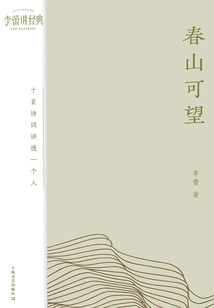
春山可望:十首诗词讲透一个人
Li Lei
The new work by the speaker of "Li Lei Talks about Classics" uses ten poems to explain Wang Wei, Li Shangyin, Li Yu, Li Qingzhao and Xin Qiji. This book selects five famous ancient Chinese poets - Wang Wei, Li Shangyin, Li Yu, Li Qingzhao and Xin Qiji. It uses "life" as a clue, selects "famous lines" as a series, and uses poetry as a guide. It combines poetry interpretation with the poet's life, analyzes the literary connotation and emotional connotation in the works, understands the beauty of the images and words of ancient poetry, and looks back at the traditional emotional expression and aesthetic connotation of the Chinese people between the lines. As the sun and moon pass by, the poem remains the same.
The new work by the speaker of "Li Lei Talks about Classics" uses ten poems to explain Wang Wei, Li Shangyin, Li Yu, Li Qingzhao and Xin Qiji. This book selects five famous ancient Chinese poets - Wang Wei, Li Shangyin, Li Yu, Li Qingzhao and Xin Qiji. It uses "life" as a clue, selects "famous lines" as a series, and uses poetry as a guide. It combines poetry interpretation with the poet's life, analyzes the literary connotation and emotional connotation in the works, understands the beauty of the images and words of ancient poetry, and looks back at the traditional emotional expression and aesthetic connotation of the Chinese people between the lines. As the sun and moon pass by, the poem remains the same.
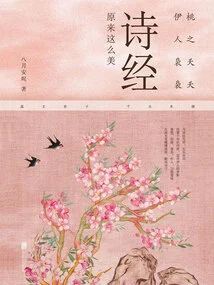
桃之夭夭,伊人袅袅:诗经原来这么美
August Anne
This book extracts classic works from The Book of Songs. The author tastes it with an elegant and spiritual pen, interprets the ageless sentiments of the Book of Songs, and interprets the love, hate, resentment, bitterness, sourness and sweetness of the people in the five thousand years of Chinese history. Let the people who once wrote and sang these ancient songs live again, and be able to show the thickness of life and the thinness of time. Through the vicissitudes of life, what has settled down is human affairs, but what remains unchanged is human relationships.
This book extracts classic works from The Book of Songs. The author tastes it with an elegant and spiritual pen, interprets the ageless sentiments of the Book of Songs, and interprets the love, hate, resentment, bitterness, sourness and sweetness of the people in the five thousand years of Chinese history. Let the people who once wrote and sang these ancient songs live again, and be able to show the thickness of life and the thinness of time. Through the vicissitudes of life, what has settled down is human affairs, but what remains unchanged is human relationships.
秋色连波,不关风月:宋词原来这么美
August Anne
The author of this book puts Song Ci back into the historical context and reads it. Taking the development trajectory of Ci as a clue, he breaks through the tradition and combines many aesthetic methods to provide an intellectual interpretation of Song Ci. He also provides an objective yet interesting introduction to the poet from the perspective of the poet's fate, life encounters, and the origin and influence of the lyrics, leading readers into the real time and space of Song Ci. The literati used Song poetry to express their feelings, either gracefully or boldly, and vividly and vividly interpreted the sorrow of farewell and the feelings of family and country, which is so beautiful.
The author of this book puts Song Ci back into the historical context and reads it. Taking the development trajectory of Ci as a clue, he breaks through the tradition and combines many aesthetic methods to provide an intellectual interpretation of Song Ci. He also provides an objective yet interesting introduction to the poet from the perspective of the poet's fate, life encounters, and the origin and influence of the lyrics, leading readers into the real time and space of Song Ci. The literati used Song poetry to express their feelings, either gracefully or boldly, and vividly and vividly interpreted the sorrow of farewell and the feelings of family and country, which is so beautiful.
宋代集句词评注
Editor-in-chief Zhang Fuqing
This book is a collection of commentaries on collections of verses from the Song Dynasty. The book selects and comments on collected verses of poets from the Song Dynasty, mainly including those of Wang Anshi, Su Shi, Huang Tingjian, He Zhu, Qin Guan, Zheng Shaowei, Zhao Yanduan, Zhu Xizhen, Chao Buzhi, Zhou Zizhi, Xiang Ziyi, Yang Guanqing, Cai Shen, Zhang Xiaoxiang, Xin Qiji, Yang Zemin, Hu Pingzhong, Shi Xiaoyou, Wang Yuanliang and others.
This book is a collection of commentaries on collections of verses from the Song Dynasty. The book selects and comments on collected verses of poets from the Song Dynasty, mainly including those of Wang Anshi, Su Shi, Huang Tingjian, He Zhu, Qin Guan, Zheng Shaowei, Zhao Yanduan, Zhu Xizhen, Chao Buzhi, Zhou Zizhi, Xiang Ziyi, Yang Guanqing, Cai Shen, Zhang Xiaoxiang, Xin Qiji, Yang Zemin, Hu Pingzhong, Shi Xiaoyou, Wang Yuanliang and others.
唐宋诗词鉴赏系列(彩图版):唐宋词
Compiled By Liu Sifen And Liu Sihan
This book selects famous poems from the Tang and Song Dynasties for translation, appreciation and annotation, along with a brief introduction to the author.
This book selects famous poems from the Tang and Song Dynasties for translation, appreciation and annotation, along with a brief introduction to the author.
唐宋诗词鉴赏系列(彩图版):唐诗
Compiled By Liu Sifen And Liu Sihan
This book provides translation, appreciation and annotation of famous Tang poems collected by famous people, and includes a brief introduction of the author.
This book provides translation, appreciation and annotation of famous Tang poems collected by famous people, and includes a brief introduction of the author.
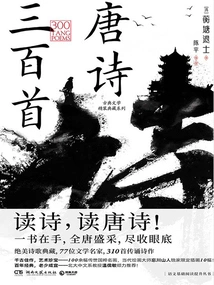
Three Hundred Tang Poems
Literature唐诗三百首
(qing Dynasty) Hengtang Retired Scholars, Edited By Chen Ping
"Three Hundred Tang Poems" is a widely circulated anthology of Tang poems. It was compiled by Sun Zhu (a retired scholar from Hengtang) and his wife Xu Lanying in the Qing Dynasty. It was written around the 28th year of Qianlong's reign (AD 1763). "Three Hundred Tang Poems" has a wide range of themes, bold writing, and various atmospheres. It profoundly reflects the political contradictions, frontier military affairs, palace women's grievances, social interactions, official ups and downs, and secluded life in the Tang Dynasty.
"Three Hundred Tang Poems" is a widely circulated anthology of Tang poems. It was compiled by Sun Zhu (a retired scholar from Hengtang) and his wife Xu Lanying in the Qing Dynasty. It was written around the 28th year of Qianlong's reign (AD 1763). "Three Hundred Tang Poems" has a wide range of themes, bold writing, and various atmospheres. It profoundly reflects the political contradictions, frontier military affairs, palace women's grievances, social interactions, official ups and downs, and secluded life in the Tang Dynasty.
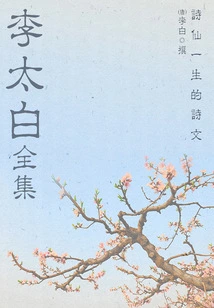
The Complete Works of Li Taibai
Literature李太白全集
Li Bai
"The Complete Works of Li Taibai" was written by Li Bai in the Tang Dynasty and edited and annotated by Wang Qi in the Qing Dynasty. Zeng Gong, an essayist of the Song Dynasty, compiled a thirty-volume collection based on the compilation of Li's poems by his predecessors, which became the final version of Li's collection. Since then, there have been many versions, all of which are different from each other. Although Li Bai lived in seclusion, served as a knight, and sought immortality throughout his life, from his "travelling among thousands of princes" when he was young to "asking for a tassel" when he was old, he was all about making contributions to the country and loving the motherland. "Benefiting the common people" and "securing the country" were the dominant thoughts in his life. Li Bai is the most unique and greatest romantic poet after Qu Yuan, reaching the pinnacle of poetry art in the prosperous Tang Dynasty. He is known as the "Immortal of Poetry" and is also known as "Li Du" together with Du Fu. The positive romantic spirit in Li Bai's poetry is expressed through a positive ideal, which makes his works bright, vivid and shocking.
"The Complete Works of Li Taibai" was written by Li Bai in the Tang Dynasty and edited and annotated by Wang Qi in the Qing Dynasty. Zeng Gong, an essayist of the Song Dynasty, compiled a thirty-volume collection based on the compilation of Li's poems by his predecessors, which became the final version of Li's collection. Since then, there have been many versions, all of which are different from each other. Although Li Bai lived in seclusion, served as a knight, and sought immortality throughout his life, from his "travelling among thousands of princes" when he was young to "asking for a tassel" when he was old, he was all about making contributions to the country and loving the motherland. "Benefiting the common people" and "securing the country" were the dominant thoughts in his life. Li Bai is the most unique and greatest romantic poet after Qu Yuan, reaching the pinnacle of poetry art in the prosperous Tang Dynasty. He is known as the "Immortal of Poetry" and is also known as "Li Du" together with Du Fu. The positive romantic spirit in Li Bai's poetry is expressed through a positive ideal, which makes his works bright, vivid and shocking.
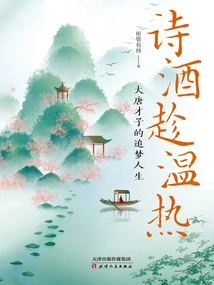
Poetry and Wine While the Wine is Warm: the Dream-chasing Life of a Talented Man in the Tang Dynasty
Literature诗酒趁温热:大唐才子的追梦人生
Tong Guan Youwei
Read Tang poetry to understand history. With familiar names and indulgent experiences, 23 talented poets outline the glory of the Tang Dynasty. The poets of the Tang Dynasty were also confused and overwhelmed, as well as poor and trapped. They created a golden age, but they seemed to be constantly waving their hands to the same era, doing their own things, pursuing their own beliefs, dreams and distances. Poets never go far. Let's meet on the next street corner. Wait, I will give you poetry and wine, and I will also give you a flag. Drink strong wine and say witty words; write coquettish poems and do romantic things. Interesting and informative, it interprets the happy life of the poets of the Tang Dynasty. With exquisite illustrations and rich pictures and texts, this is a youth version of the record of the talents of the Tang Dynasty. This is a record of the glory of the talents of the Tang Dynasty. The Tang Dynasty abandoned everything and tolerated everything. The Tang Dynasty made the era grand and tragic. The poets of the prosperous Tang Dynasty, under the luminous shadow of the prosperous Tang Dynasty, their faces are blurred and the golden light shines. They seem to be always swaying, poetry and wine taking advantage of their years. No one saw them walking in the mountains and on the sea, dancing when they were happy and crying when they sang. They are unique and ordinary. They are talented, but they also pray in poverty, they are stubborn and conservative, and they give up easily. They are us, and history will always overlap. This book selects more than 20 representative poets of the Tang Dynasty, such as the eternal love sage Du Fu, the counterattack hero Gao Shi, and the perfect male god Wang Wei.
Read Tang poetry to understand history. With familiar names and indulgent experiences, 23 talented poets outline the glory of the Tang Dynasty. The poets of the Tang Dynasty were also confused and overwhelmed, as well as poor and trapped. They created a golden age, but they seemed to be constantly waving their hands to the same era, doing their own things, pursuing their own beliefs, dreams and distances. Poets never go far. Let's meet on the next street corner. Wait, I will give you poetry and wine, and I will also give you a flag. Drink strong wine and say witty words; write coquettish poems and do romantic things. Interesting and informative, it interprets the happy life of the poets of the Tang Dynasty. With exquisite illustrations and rich pictures and texts, this is a youth version of the record of the talents of the Tang Dynasty. This is a record of the glory of the talents of the Tang Dynasty. The Tang Dynasty abandoned everything and tolerated everything. The Tang Dynasty made the era grand and tragic. The poets of the prosperous Tang Dynasty, under the luminous shadow of the prosperous Tang Dynasty, their faces are blurred and the golden light shines. They seem to be always swaying, poetry and wine taking advantage of their years. No one saw them walking in the mountains and on the sea, dancing when they were happy and crying when they sang. They are unique and ordinary. They are talented, but they also pray in poverty, they are stubborn and conservative, and they give up easily. They are us, and history will always overlap. This book selects more than 20 representative poets of the Tang Dynasty, such as the eternal love sage Du Fu, the counterattack hero Gao Shi, and the perfect male god Wang Wei.
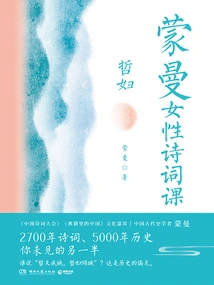
蒙曼女性诗词课:哲妇
Monman
This book is Meng Man's new work after "Meng Man's Most Beautiful Tang Poems". She is best known as a speaker of poetry, but her major and research focus is history, especially women's history. In this book, she combines poetry with women's history, uses the poetry as a guide, and follows the sequence of historical dynasties to tell the wonderful lives of the 28 women behind the poetry, as well as the Chinese history behind them. There is not only the spirit of "smiling gracefully, beautiful eyes looking forward to you", but also the demeanor of "stepping lightly on the waves, wearing stockings that are dusty", but also the vision of "a man with a long bow and a unique talk, a beauty with giant eyes knowing the end of the road", and the pride of "self-cut Sichuan brocade robes, peach blossoms are about to grow tassels". These women are gentle but have traces of iron grip, and they can stir up the historical storms. Their thoughts and thoughts are in the poems, and their life stories are also in the poems. This is 2,700 years of poetry, 5,000 years of history, the other half unknown to you and me.
This book is Meng Man's new work after "Meng Man's Most Beautiful Tang Poems". She is best known as a speaker of poetry, but her major and research focus is history, especially women's history. In this book, she combines poetry with women's history, uses the poetry as a guide, and follows the sequence of historical dynasties to tell the wonderful lives of the 28 women behind the poetry, as well as the Chinese history behind them. There is not only the spirit of "smiling gracefully, beautiful eyes looking forward to you", but also the demeanor of "stepping lightly on the waves, wearing stockings that are dusty", but also the vision of "a man with a long bow and a unique talk, a beauty with giant eyes knowing the end of the road", and the pride of "self-cut Sichuan brocade robes, peach blossoms are about to grow tassels". These women are gentle but have traces of iron grip, and they can stir up the historical storms. Their thoughts and thoughts are in the poems, and their life stories are also in the poems. This is 2,700 years of poetry, 5,000 years of history, the other half unknown to you and me.
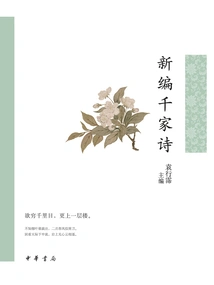
新编千家诗
Editor-in-chief Yuan Xingpei
The book "New Poems of a Thousand Families" is compiled by Mr. Yuan Xingpei, a famous contemporary scholar of literature and history. It is an anthology of Chinese classical poetry that embodies contemporary literary research and literary evaluation. The collection of "Poems of a Thousand Families" has been compiled as early as the Song Dynasty and has continued since the Yuan, Ming and Qing dynasties. However, these selections can only reflect the vision of the people at that time and meet the needs of the people at that time. Many of the selections no longer meet the needs of today's readers. In view of this, Mr. Yuan Xingpei presided over the new edition of "Poems of a Thousand Families" and selected 152 poems in various styles of five or seven words. The selection ranged from the Han, Wei and Six Dynasties to modern times. It can be said that the essence of Chinese classical poetry has been collected. Each poem included in the book has a title and annotation, and the selected author has a corresponding author introduction. This book is not only suitable for adults who love Chinese classical poetry, but also suitable as extracurricular reading for school-age children.
The book "New Poems of a Thousand Families" is compiled by Mr. Yuan Xingpei, a famous contemporary scholar of literature and history. It is an anthology of Chinese classical poetry that embodies contemporary literary research and literary evaluation. The collection of "Poems of a Thousand Families" has been compiled as early as the Song Dynasty and has continued since the Yuan, Ming and Qing dynasties. However, these selections can only reflect the vision of the people at that time and meet the needs of the people at that time. Many of the selections no longer meet the needs of today's readers. In view of this, Mr. Yuan Xingpei presided over the new edition of "Poems of a Thousand Families" and selected 152 poems in various styles of five or seven words. The selection ranged from the Han, Wei and Six Dynasties to modern times. It can be said that the essence of Chinese classical poetry has been collected. Each poem included in the book has a title and annotation, and the selected author has a corresponding author introduction. This book is not only suitable for adults who love Chinese classical poetry, but also suitable as extracurricular reading for school-age children.
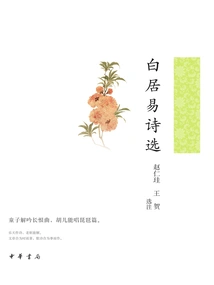
Selected Poems of Bai Juyi
Literature白居易诗选
Selected Notes By Zhao Rengui And Wang He
Bai Juyi, courtesy name Letian, was a Jinshi in the 16th year of Zhenyuan. In the 10th year of Yuanhe, he was demoted to Jiangzhou Sima for writing a letter. In his later years, he had a smooth official career and lived in Luoyang. He called himself "Xiangshan Jushi". In terms of creative concepts, Bai Juyi strongly emphasized the popularity and realism of poetry, and at the same time advocated the use of allegory in poetry to supplement current affairs. His poetry theory had an important impact on the poetry of the middle and late Tang Dynasty and even later generations. Bai Juyi's song-style poetry creation has a strong lyrical color based on narrative, which had a great influence at that time and in later generations. This book selects the most representative works from Bai Juyi's poetry collection, provides concise annotations on the words and allusions, and uses the analysis part to clarify the meaning of the whole poem and explain the artistic features, so that readers can understand the poetic meaning.
Bai Juyi, courtesy name Letian, was a Jinshi in the 16th year of Zhenyuan. In the 10th year of Yuanhe, he was demoted to Jiangzhou Sima for writing a letter. In his later years, he had a smooth official career and lived in Luoyang. He called himself "Xiangshan Jushi". In terms of creative concepts, Bai Juyi strongly emphasized the popularity and realism of poetry, and at the same time advocated the use of allegory in poetry to supplement current affairs. His poetry theory had an important impact on the poetry of the middle and late Tang Dynasty and even later generations. Bai Juyi's song-style poetry creation has a strong lyrical color based on narrative, which had a great influence at that time and in later generations. This book selects the most representative works from Bai Juyi's poetry collection, provides concise annotations on the words and allusions, and uses the analysis part to clarify the meaning of the whole poem and explain the artistic features, so that readers can understand the poetic meaning.
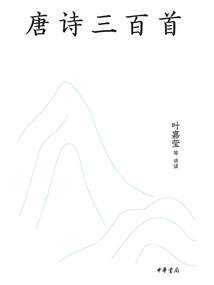
Three Hundred Tang Poems
Literature唐诗三百首
Ye Jiaying And Others Give Lectures
This book adopts the structure of the original text of the poem with analysis by famous teachers. It is based on "Three Hundred Tang Poems (Supplementary Edition)" of Zhonghua Book Company, and consults relevant collections and special collections to compile and polish the lecture notes of famous teachers into a book. At the same time, according to the content of the chapter, the book selects paintings by ancient and modern famous artists related to the theme as accompanying pictures, allowing readers to more intuitively feel the poetry and flavor, and appreciate the beauty of Tang poetry.
This book adopts the structure of the original text of the poem with analysis by famous teachers. It is based on "Three Hundred Tang Poems (Supplementary Edition)" of Zhonghua Book Company, and consults relevant collections and special collections to compile and polish the lecture notes of famous teachers into a book. At the same time, according to the content of the chapter, the book selects paintings by ancient and modern famous artists related to the theme as accompanying pictures, allowing readers to more intuitively feel the poetry and flavor, and appreciate the beauty of Tang poetry.
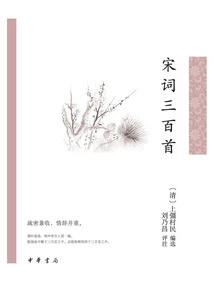
宋词三百首(全2册)
(qing Dynasty) Compiled And Selected By Shangqiang Villagers With Commentary By Liu Naichang
In 1924, the famous lyricist Zhu Xiaozang compiled "Three Hundred Song Poems", which is as famous as the "Three Hundred Tang Poems" anthology of classical literature. The book contains a total of 88 poets from the Song Dynasty and 300 poems, which basically shows the appearance and development process of Song Ci. The annotations in this book mainly focus on clearing up the words and sentences, explaining allusions and facts, and the commentary is precise. Each poet has a biography to help readers better understand Song Ci.
In 1924, the famous lyricist Zhu Xiaozang compiled "Three Hundred Song Poems", which is as famous as the "Three Hundred Tang Poems" anthology of classical literature. The book contains a total of 88 poets from the Song Dynasty and 300 poems, which basically shows the appearance and development process of Song Ci. The annotations in this book mainly focus on clearing up the words and sentences, explaining allusions and facts, and the commentary is precise. Each poet has a biography to help readers better understand Song Ci.
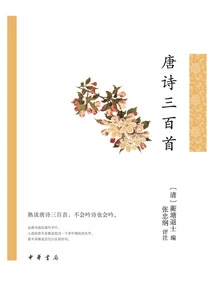
唐诗三百首(全2册)
(qing Dynasty) Compiled By Hengtang Retired Scholars And Zhang Zhonggang's Commentary
"Three Hundred Tang Poems" is an anthology of Tang poetry compiled by Sun Zhu of the Qing Dynasty. It is also an anthology of Tang poetry that has the greatest influence and spreads widely from ancient times to the present. Sun Zhu, nicknamed Hengtang retired scholar. People from the Qing Dynasty. He was fond of Tang poetry throughout his life. He thought that the "Poems of a Thousand Families" that was circulated at that time was too complex, so he chose some of the most popular Tang poems, selected more than 300 poems, and compiled them into the book "Three Hundred Tang Poems". Since its completion, the book has been so favored by readers that it is read in every household and even compiled by everyone. However, "Three Hundred Tang Poems" itself lacks annotations and explanations, and is not in line with contemporary people's reading habits. Now Mr. Zhang Zhonggang will annotate and analyze "Three Hundred Tang Poems" to help readers better understand this anthology of Tang poems and further understand Tang poetry.
"Three Hundred Tang Poems" is an anthology of Tang poetry compiled by Sun Zhu of the Qing Dynasty. It is also an anthology of Tang poetry that has the greatest influence and spreads widely from ancient times to the present. Sun Zhu, nicknamed Hengtang retired scholar. People from the Qing Dynasty. He was fond of Tang poetry throughout his life. He thought that the "Poems of a Thousand Families" that was circulated at that time was too complex, so he chose some of the most popular Tang poems, selected more than 300 poems, and compiled them into the book "Three Hundred Tang Poems". Since its completion, the book has been so favored by readers that it is read in every household and even compiled by everyone. However, "Three Hundred Tang Poems" itself lacks annotations and explanations, and is not in line with contemporary people's reading habits. Now Mr. Zhang Zhonggang will annotate and analyze "Three Hundred Tang Poems" to help readers better understand this anthology of Tang poems and further understand Tang poetry.
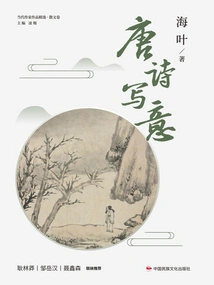
Tang Dynasty Poetry Freehand
Literature唐诗写意
Lingxiang
The freehand expression of classic Tang poems in this book is not a pure interpretation of the poems, but the author combines his own state of mind, either immersing himself in the artistic conception of Tang poems, or wandering outside the poems, and entering the artistic conception described by the poems with the depth of a bystander. The freehand expressions of the author's prose add a layer of personal emotional expression to the interpretation of the poems, which is thought-provoking.
The freehand expression of classic Tang poems in this book is not a pure interpretation of the poems, but the author combines his own state of mind, either immersing himself in the artistic conception of Tang poems, or wandering outside the poems, and entering the artistic conception described by the poems with the depth of a bystander. The freehand expressions of the author's prose add a layer of personal emotional expression to the interpretation of the poems, which is thought-provoking.
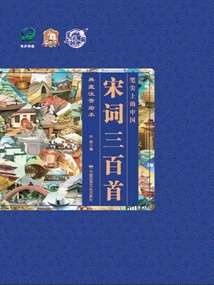
Three Hundred Song Poems
Literature宋词三百首
Rich
The Song Dynasty was the heyday of Chinese poetry creation. Song poetry is a dazzling pearl in the crown of ancient Chinese literature. It competes with Tang poetry for prominence and Yuan opera for beauty. It has always been regarded as one of the two greatest works with Tang poetry, and both represent the prosperity of a generation of literature. "Three Hundred Poems of the Song Dynasty" carefully selects the essence of some of the 300 poems. Some describe leisurely moods, some express homesickness and parting, and some express patriotism... Every word is exquisite, and every sentence is the essence. The styles are very different, either bold or graceful, but they all have novel ideas and beautiful phonology. They can cultivate children's temperament and receive the influence of beauty. They are excellent enlightenment books for children to understand Chinese classical literature.
The Song Dynasty was the heyday of Chinese poetry creation. Song poetry is a dazzling pearl in the crown of ancient Chinese literature. It competes with Tang poetry for prominence and Yuan opera for beauty. It has always been regarded as one of the two greatest works with Tang poetry, and both represent the prosperity of a generation of literature. "Three Hundred Poems of the Song Dynasty" carefully selects the essence of some of the 300 poems. Some describe leisurely moods, some express homesickness and parting, and some express patriotism... Every word is exquisite, and every sentence is the essence. The styles are very different, either bold or graceful, but they all have novel ideas and beautiful phonology. They can cultivate children's temperament and receive the influence of beauty. They are excellent enlightenment books for children to understand Chinese classical literature.
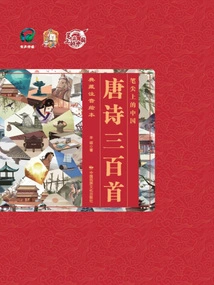
Three Hundred Tang Poems
Literature唐诗三百首
Rich
"Three Hundred Tang Poems" selects classic poems that are suitable for children's cognitive patterns. This is a version suitable for children to learn, easy to understand and chant, and widely circulated. Coupled with easy-to-understand and essential explanations, it can cultivate children's interest in poetry. At the same time, it is accompanied by exquisite pictures, allowing children to experience the beauty of the blend of scenes in ancient poetry.
"Three Hundred Tang Poems" selects classic poems that are suitable for children's cognitive patterns. This is a version suitable for children to learn, easy to understand and chant, and widely circulated. Coupled with easy-to-understand and essential explanations, it can cultivate children's interest in poetry. At the same time, it is accompanied by exquisite pictures, allowing children to experience the beauty of the blend of scenes in ancient poetry.
Selected Poems of Liu Yuxi
Literature刘禹锡诗选
Selected Notes By Yan Qi And Qiu Xiao
Liu Yuxi (772-842), courtesy name Mengde, was born in Luoyang and was a famous poet in the mid-Tang Dynasty. At first, he was as famous as Liu Zongyuan and was called "Liu Liu". In his later years, he sang in harmony with Bai Juyi and was called "Liu Bai". Liu Yuxi actively participated in the Yongzhen Revolution in his early years, and was later relegated to a barbaric land. However, his character was also relatively stubborn. Therefore, his poems appear clear and clear, containing profound life experiences and rich philosophical connotations. His collection of poems and essays currently includes 30 volumes of "Collected Works of Liu Guest" and 10 volumes of "Waiji Collection". This book contains more than three hundred selected poems, organized by year, with necessary explanations and annotations for each poem. It comprehensively reflects the poet's creation and ideological changes, and at the same time better demonstrates the artistic characteristics of his poetry creation. It is very convenient for ordinary readers to understand and appreciate Liu Yuxi's poems.
Liu Yuxi (772-842), courtesy name Mengde, was born in Luoyang and was a famous poet in the mid-Tang Dynasty. At first, he was as famous as Liu Zongyuan and was called "Liu Liu". In his later years, he sang in harmony with Bai Juyi and was called "Liu Bai". Liu Yuxi actively participated in the Yongzhen Revolution in his early years, and was later relegated to a barbaric land. However, his character was also relatively stubborn. Therefore, his poems appear clear and clear, containing profound life experiences and rich philosophical connotations. His collection of poems and essays currently includes 30 volumes of "Collected Works of Liu Guest" and 10 volumes of "Waiji Collection". This book contains more than three hundred selected poems, organized by year, with necessary explanations and annotations for each poem. It comprehensively reflects the poet's creation and ideological changes, and at the same time better demonstrates the artistic characteristics of his poetry creation. It is very convenient for ordinary readers to understand and appreciate Liu Yuxi's poems.
全本诗经浅译(修订版)
Translation And Annotation By Xing Xiansheng
This book reproduces the original meaning and poetic flavor of "The Book of Songs" in plain and concise language, helping Chinese literature lovers recite the "Book of Songs" and feel the poetic flavor. It contains four parts: first, the original poem; second, the translated poem; third, annotation; fourth, phonetic notation.
This book reproduces the original meaning and poetic flavor of "The Book of Songs" in plain and concise language, helping Chinese literature lovers recite the "Book of Songs" and feel the poetic flavor. It contains four parts: first, the original poem; second, the translated poem; third, annotation; fourth, phonetic notation.
唐五代诗鉴赏(全四册)
Shanghai Ancient Books Publishing House
This book selects more than 700 poems from the Tang and Five Dynasties. The whole book provides an overview of the style of the Tang and Five Dynasties poems. Each work adopts the method of appreciation to give a precise description and interpretation of its creative background and theme, with special emphasis on artistic analysis and exploration of aesthetic value.
This book selects more than 700 poems from the Tang and Five Dynasties. The whole book provides an overview of the style of the Tang and Five Dynasties poems. Each work adopts the method of appreciation to give a precise description and interpretation of its creative background and theme, with special emphasis on artistic analysis and exploration of aesthetic value.
先秦汉魏六朝诗鉴赏(全三册)
Shanghai Ancient Books Publishing House
This book selects more than 300 famous works from the pre-Qin, Han, Wei and Six Dynasties periods. The whole book adopts a form that combines selection, annotation, appreciation and research on the history of poetry, giving a comprehensive and in-depth introduction to the poetry of this period.
This book selects more than 300 famous works from the pre-Qin, Han, Wei and Six Dynasties periods. The whole book adopts a form that combines selection, annotation, appreciation and research on the history of poetry, giving a comprehensive and in-depth introduction to the poetry of this period.
元明清诗鉴赏(全三册)
Shanghai Ancient Books Publishing House
This book selects nearly 600 poems from a large number of poems from the Yuan, Ming, and Qing dynasties. It not only explains the creation background, theme ideas, and difficult words of the works, but also provides mutual comparison and in-depth analysis of the art. It also explores the style of the poems of the Yuan, Ming, and Qing dynasties, and explains the writer's life and creative characteristics.
This book selects nearly 600 poems from a large number of poems from the Yuan, Ming, and Qing dynasties. It not only explains the creation background, theme ideas, and difficult words of the works, but also provides mutual comparison and in-depth analysis of the art. It also explores the style of the poems of the Yuan, Ming, and Qing dynasties, and explains the writer's life and creative characteristics.
宋辽金诗鉴赏(全三册)
Shanghai Ancient Books Publishing House
This book selects more than 400 poems from the Song, Liao and Jin dynasties, which are appreciated and analyzed by experts and scholars to reveal their themes and artistic features and explore their aesthetic value. The book also contains an overview of the poetry styles of the Song, Liao and Jin dynasties, as well as a brief introduction to each writer's life and creative characteristics.
This book selects more than 400 poems from the Song, Liao and Jin dynasties, which are appreciated and analyzed by experts and scholars to reveal their themes and artistic features and explore their aesthetic value. The book also contains an overview of the poetry styles of the Song, Liao and Jin dynasties, as well as a brief introduction to each writer's life and creative characteristics.