Library
Browse and search books
2,317 novels found
Farewell, Jiabiangou
Literature别了,夹边沟
Yang Dezhi Yang Su
On August 28, 1958, it rained continuously all night. At around 8 a. M., The police officers who escorted me came to my home and urged me to go to the train station. Wang Jing was in confinement, not yet full moon. My old mother-in-law hurriedly packed my luggage. As soon as I stepped out of the door, "Wow-", there was a cry of children. I looked back and saw my third son Yang Shu, who had just turned two years old, running over with muddy water all over the yard. He held my hand tightly and cried, "Dad, I want to go too!" I said, "Dad has something to do and I can't take you there!" He cried and shouted and wouldn't let me go. I picked up the child and kissed him, tears falling on the child's little face. He cried and shouted: "Daddy and I are going to the street."
On August 28, 1958, it rained continuously all night. At around 8 a. M., The police officers who escorted me came to my home and urged me to go to the train station. Wang Jing was in confinement, not yet full moon. My old mother-in-law hurriedly packed my luggage. As soon as I stepped out of the door, "Wow-", there was a cry of children. I looked back and saw my third son Yang Shu, who had just turned two years old, running over with muddy water all over the yard. He held my hand tightly and cried, "Dad, I want to go too!" I said, "Dad has something to do and I can't take you there!" He cried and shouted and wouldn't let me go. I picked up the child and kissed him, tears falling on the child's little face. He cried and shouted: "Daddy and I are going to the street."
The Ageless Beidahuang
Literature不老的北大荒
Li Lin
Although the return of educated youth to the city is a thing of the past, there are endless stories of educated youth in Beidahuang. The educated youth with mental disabilities in Beidahuang are a unique group among unique groups. This disadvantaged group with mental disabilities still has a unique life destiny for people today. They have a painful past, but they have a happy and peaceful today. Kind people from all over the world are caring for them. A group of poor people who had partially or completely lost their ability to live finally gained true love in the world, and the story was moving. The reportage "The Ageless Beidahuang" launched in this issue uses the author's personal experience to take you into the extraordinary life world of the mentally disabled educated youth in Beidahuang.
Although the return of educated youth to the city is a thing of the past, there are endless stories of educated youth in Beidahuang. The educated youth with mental disabilities in Beidahuang are a unique group among unique groups. This disadvantaged group with mental disabilities still has a unique life destiny for people today. They have a painful past, but they have a happy and peaceful today. Kind people from all over the world are caring for them. A group of poor people who had partially or completely lost their ability to live finally gained true love in the world, and the story was moving. The reportage "The Ageless Beidahuang" launched in this issue uses the author's personal experience to take you into the extraordinary life world of the mentally disabled educated youth in Beidahuang.
Working Reporter
Literature打工记者
Qu Jun
A few years ago, Lao Xu was a well-known and resounding "old reporter" among reporters in the provincial capital. Why is he called old? First, because of his age, Xu, who is in his forties, usually carries a large shoulder bag, which is filled with all the necessary equipment for interviews: interview notebooks, mini tape recorders, a small and practical Olympus fully automatic camera, etc.; Whether in the city or in the countryside, as long as he encounters valuable news, Xu will dive into it. Sometimes I ride a broken bicycle that no one picked up on the roadside, sometimes I take a shuttle bus; when I go to the countryside for interviews, I often even ride on tractors and motorcycles, and my enthusiasm for reporting news is no less than that of a young man in his early twenties, which is very rare among young people who are originally in the "youth rice" reporter profession;
A few years ago, Lao Xu was a well-known and resounding "old reporter" among reporters in the provincial capital. Why is he called old? First, because of his age, Xu, who is in his forties, usually carries a large shoulder bag, which is filled with all the necessary equipment for interviews: interview notebooks, mini tape recorders, a small and practical Olympus fully automatic camera, etc.; Whether in the city or in the countryside, as long as he encounters valuable news, Xu will dive into it. Sometimes I ride a broken bicycle that no one picked up on the roadside, sometimes I take a shuttle bus; when I go to the countryside for interviews, I often even ride on tractors and motorcycles, and my enthusiasm for reporting news is no less than that of a young man in his early twenties, which is very rare among young people who are originally in the "youth rice" reporter profession;
戴笠本家写戴笠
Dai Xianzhang
On the afternoon of March 17, 1946, the C-47 No. 222 Special plane of Dai Li, director of the Kuomintang Military Command Bureau, crashed in Daishan, Banqiao Town, Jiangning County, near Nanjing. None of the thirteen people on the special plane, including Dai Li and the director of the military personnel department, Gong Xianfang, survived. Dai Li's machine was destroyed, and everyone died, from Chiang Kai-shek to the military commanders and chiefs. On April 1st, the routine commemoration meeting for the establishment of military unification became Dai Li's memorial service. All the heads of internal and external service of the military command were present. Chiang Kai-shek also attended the memorial service and officiated with tears in his eyes. Dai Li's tomb site was selected by Chiang Kai-shek himself, and he was buried on the right side of Zhigong Hall next to Linggu Temple in Nanjing.
On the afternoon of March 17, 1946, the C-47 No. 222 Special plane of Dai Li, director of the Kuomintang Military Command Bureau, crashed in Daishan, Banqiao Town, Jiangning County, near Nanjing. None of the thirteen people on the special plane, including Dai Li and the director of the military personnel department, Gong Xianfang, survived. Dai Li's machine was destroyed, and everyone died, from Chiang Kai-shek to the military commanders and chiefs. On April 1st, the routine commemoration meeting for the establishment of military unification became Dai Li's memorial service. All the heads of internal and external service of the military command were present. Chiang Kai-shek also attended the memorial service and officiated with tears in his eyes. Dai Li's tomb site was selected by Chiang Kai-shek himself, and he was buried on the right side of Zhigong Hall next to Linggu Temple in Nanjing.
Ding Ling's Historical Issues
Literature丁玲的历史问题
Li Meiji
In May 1933, Ding Ling was arrested by Kuomintang agents and placed under house arrest in Nanjing with her then husband Feng Da until she left Nanjing in September 1936. Ding Ling's "historical issue" refers to the issue of Ding Ling's integrity during her three years of house arrest. Ding Ling's historical issues have gone through six reviews at different historical stages from 1940 to 1984, resulting in six conclusions. In 1940, Ding Ling's historical issues were reviewed for the first time. In May 1936, Ding Ling went from Nanjing to Peking to search for party organizations, but failed and returned to Nanjing. In June 1936, Feng Xuefeng, the then head of the CCP in Shanghai, sent Zhang Tianyi to contact Ding Ling in Nanjing, and then Ding Ling came to Shanghai. Ding Ling said: "Feng Xuefeng came two or three days later, and he briefly asked me a few questions about the situation in Nanjing. I did not explain to him my mistakes in Nanjing."
In May 1933, Ding Ling was arrested by Kuomintang agents and placed under house arrest in Nanjing with her then husband Feng Da until she left Nanjing in September 1936. Ding Ling's "historical issue" refers to the issue of Ding Ling's integrity during her three years of house arrest. Ding Ling's historical issues have gone through six reviews at different historical stages from 1940 to 1984, resulting in six conclusions. In 1940, Ding Ling's historical issues were reviewed for the first time. In May 1936, Ding Ling went from Nanjing to Peking to search for party organizations, but failed and returned to Nanjing. In June 1936, Feng Xuefeng, the then head of the CCP in Shanghai, sent Zhang Tianyi to contact Ding Ling in Nanjing, and then Ding Ling came to Shanghai. Ding Ling said: "Feng Xuefeng came two or three days later, and he briefly asked me a few questions about the situation in Nanjing. I did not explain to him my mistakes in Nanjing."
Eighteen Years in the Enemy Camp
Literature敌营十八年
Jiang Guo
On April 29, 1949, in the ancient capital of Peiping, the wind was gentle and the sun was shining brightly. At nine o'clock in the morning, a black Volga car drove quietly into Xinhua Gate and stopped in front of an antique house. A young man in military uniform stepped out of the car. "Oh, Comrade Shigure, you are so energetic!" Liu Shaoqi, the second most powerful figure in the Communist Party of China - one of the five secretaries of the Central Committee of the Communist Party of China and vice chairman of the Central Military Commission, tightly held the hand of this tall and handsome young man and said with emotion, "I am a secretary in the Central Northern Bureau When Ji He was a political commissar in the New Fourth Army, he often got important information from you. You did a great job every time. I once told Mr. Chen that you have been fighting in the heart of the enemy for eighteen years and you are able to triumph today. This is not an easy thing. I think it is a miracle.
On April 29, 1949, in the ancient capital of Peiping, the wind was gentle and the sun was shining brightly. At nine o'clock in the morning, a black Volga car drove quietly into Xinhua Gate and stopped in front of an antique house. A young man in military uniform stepped out of the car. "Oh, Comrade Shigure, you are so energetic!" Liu Shaoqi, the second most powerful figure in the Communist Party of China - one of the five secretaries of the Central Committee of the Communist Party of China and vice chairman of the Central Military Commission, tightly held the hand of this tall and handsome young man and said with emotion, "I am a secretary in the Central Northern Bureau When Ji He was a political commissar in the New Fourth Army, he often got important information from you. You did a great job every time. I once told Mr. Chen that you have been fighting in the heart of the enemy for eighteen years and you are able to triumph today. This is not an easy thing. I think it is a miracle.
Emei World Show
Literature峨眉天下秀
Li Zhongxiao Wu Chunguang
Mount Emei is a famous mountain in the world and a holy land of Buddhism. However, once upon a time, due to the large number of tourists and poor management, the messiness of Mount Emei became a persistent problem, causing strong dissatisfaction among tourists, especially overseas tourists. In 1992, a Communist Party member was ordered to risk his life to rule the mountain with an iron fist in times of crisis. Under his command, Mount Emei has undergone earth-shaking changes in more than ten years, and has won many national victories.
Mount Emei is a famous mountain in the world and a holy land of Buddhism. However, once upon a time, due to the large number of tourists and poor management, the messiness of Mount Emei became a persistent problem, causing strong dissatisfaction among tourists, especially overseas tourists. In 1992, a Communist Party member was ordered to risk his life to rule the mountain with an iron fist in times of crisis. Under his command, Mount Emei has undergone earth-shaking changes in more than ten years, and has won many national victories.
Difficult Mental Journey
Literature艰难的心路历程
Cheng Guangwei
In July 1949, Ba Jin, who was 45 years old and already in his middle age, wrote an article titled "I Came to Study." This article gives people the impression that he, who has been writing novels for more than 20 years, walked into the venue of the first national literary conference and seemed to be unable to find the feeling of creation. This summer gave Ba Jin a premonition of "change". Writers from the Kuomintang-controlled areas and the liberated areas sat in the audience of Zhongnanhai Huairen Hall. Many of them were old friends with familiar faces, but the high-spirited and confident expressions of the writers in the liberated areas made him somewhat unfamiliar: "I saw how people combined art with life, mixed words with blood and sweat, and created some beautiful, healthy and powerful works. The soul of New China radiated from them."
In July 1949, Ba Jin, who was 45 years old and already in his middle age, wrote an article titled "I Came to Study." This article gives people the impression that he, who has been writing novels for more than 20 years, walked into the venue of the first national literary conference and seemed to be unable to find the feeling of creation. This summer gave Ba Jin a premonition of "change". Writers from the Kuomintang-controlled areas and the liberated areas sat in the audience of Zhongnanhai Huairen Hall. Many of them were old friends with familiar faces, but the high-spirited and confident expressions of the writers in the liberated areas made him somewhat unfamiliar: "I saw how people combined art with life, mixed words with blood and sweat, and created some beautiful, healthy and powerful works. The soul of New China radiated from them."
金正日运筹北南朝鲜高峰会谈始末
Dou Xinping
August 5, half a century ago, was an unforgettable day for both North and South Korea! "August 15" in 1945 was the day of Japan's defeat. At the same time, on this day, the Korean Peninsula was officially divided into two countries, North and South. Half a century later on this day - at 8:00 a. M. On August 15, 2000, a large Boeing passenger plane flew into the clear blue sky at Sunan Airport in Pyongyang, the capital of North Korea. This plane will transport one hundred elderly northern family members who have been separated from South Korea for many years to Gimpo Airport in Seoul. They are the first batch of lucky people to be reunited with their relatives in South Korea and go to South Korea, which has been closed for more than 50 years. Soon, this passenger plane will transport another 100 Korean dispersed family members from Seoul Gimpo Airport back to Pyongyang.
August 5, half a century ago, was an unforgettable day for both North and South Korea! "August 15" in 1945 was the day of Japan's defeat. At the same time, on this day, the Korean Peninsula was officially divided into two countries, North and South. Half a century later on this day - at 8:00 a. M. On August 15, 2000, a large Boeing passenger plane flew into the clear blue sky at Sunan Airport in Pyongyang, the capital of North Korea. This plane will transport one hundred elderly northern family members who have been separated from South Korea for many years to Gimpo Airport in Seoul. They are the first batch of lucky people to be reunited with their relatives in South Korea and go to South Korea, which has been closed for more than 50 years. Soon, this passenger plane will transport another 100 Korean dispersed family members from Seoul Gimpo Airport back to Pyongyang.
Quiet Land
Literature静地乐土
Huang Feng Shuangqing
This is an ancient land, where humans have lived and multiplied as early as the Paleolithic Age. The county was named Fenyang in the Western Han Dynasty, and the name of Jingle was changed to this day in the Sui Dynasty. This is the land of heroes. During the Anti-Japanese War and the Liberation War, more than 1,000 martyrs died for the country. This is a land of hope. Every unyielding old cave dwelling and every desolate terraced field bear witness to the endless reincarnation of time.
This is an ancient land, where humans have lived and multiplied as early as the Paleolithic Age. The county was named Fenyang in the Western Han Dynasty, and the name of Jingle was changed to this day in the Sui Dynasty. This is the land of heroes. During the Anti-Japanese War and the Liberation War, more than 1,000 martyrs died for the country. This is a land of hope. Every unyielding old cave dwelling and every desolate terraced field bear witness to the endless reincarnation of time.
Records of Jin People Aiding Shu
Literature晋人援蜀记
Zhao Yu Li Du
Spring passes and summer comes, life is normal. Firewood, rice, oil, salt, sauce, vinegar, tea, water and soil support a person. It was noon on May 12th, and it was a cloudy day in the capital. I hurried to the Great Hall of the People and entered the Jilin Hall through the west gate. A new work by military writer Xu Jian tells the story of a severe ice and snow disaster in the south this spring. One hundred thousand soldiers from the State Grid fought hard to fight the disaster and deliver electricity. The launch ceremony of the work and then the discussion were held in the Great Hall, with very high standards, in order to express respect for the fallen heroes and their families. While sitting there I heard the sound of tears. Literary people all said in their speeches that the country is suffering a lot but the people have a conscience.
Spring passes and summer comes, life is normal. Firewood, rice, oil, salt, sauce, vinegar, tea, water and soil support a person. It was noon on May 12th, and it was a cloudy day in the capital. I hurried to the Great Hall of the People and entered the Jilin Hall through the west gate. A new work by military writer Xu Jian tells the story of a severe ice and snow disaster in the south this spring. One hundred thousand soldiers from the State Grid fought hard to fight the disaster and deliver electricity. The launch ceremony of the work and then the discussion were held in the Great Hall, with very high standards, in order to express respect for the fallen heroes and their families. While sitting there I heard the sound of tears. Literary people all said in their speeches that the country is suffering a lot but the people have a conscience.
Spine
Literature脊梁
Xing Junji Form
When the relationship between rural cadres and the masses in some parts of the country is becoming increasingly tense, a village party secretary named Li Liancheng in Puyang, Henan has not only won the love of all the villagers, but also won high praise from relevant central leadership comrades for his touching actions and spirit. Under Li Liancheng's leadership, his Xixinzhuang village has grown from a poor village with an annual per capita income of less than 700 yuan to a wealthy village with an annual per capita income of more than 5,000 yuan and fixed assets of 60 million yuan. However, every step forward in Xixinzhuang Village was made at the expense of Li Liancheng's own interests.
When the relationship between rural cadres and the masses in some parts of the country is becoming increasingly tense, a village party secretary named Li Liancheng in Puyang, Henan has not only won the love of all the villagers, but also won high praise from relevant central leadership comrades for his touching actions and spirit. Under Li Liancheng's leadership, his Xixinzhuang village has grown from a poor village with an annual per capita income of less than 700 yuan to a wealthy village with an annual per capita income of more than 5,000 yuan and fixed assets of 60 million yuan. However, every step forward in Xixinzhuang Village was made at the expense of Li Liancheng's own interests.
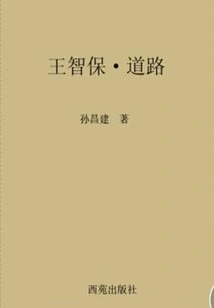
Wang Zhibao·lu
Literature王智保·道路
Sun Changjian
"Wang Zhibao·Road" records the life story of Wang Zhibao, chairman and general manager of Yuhang Transportation Engineering Co., Ltd., Including: childhood experience, reservoir construction, forest manager, cook and cashier, chicken salesman, production captain, marriage and family, serving as militia company commander, establishing a distribution center, serving as manager of a transportation engineering company, etc.
"Wang Zhibao·Road" records the life story of Wang Zhibao, chairman and general manager of Yuhang Transportation Engineering Co., Ltd., Including: childhood experience, reservoir construction, forest manager, cook and cashier, chicken salesman, production captain, marriage and family, serving as militia company commander, establishing a distribution center, serving as manager of a transportation engineering company, etc.
Sniper: Precision and Life
Literature狙击手:精确与生命的绝地反击
Chen Han
Under normal circumstances, snipers are divided into two categories: one is snipers with formal organization who have received complete formal sniper training, and the other is shooters with accurate marksmanship temporarily selected during wartime. In addition to accurate marksmanship, a sniper must also have a strong body and a will of steel. When snipers step onto the stage of war, they are like people standing behind searchlights. They can see others, and others know their existence, but they never know how to find them from behind the light. Whether it was World War I, World War II, local wars, or every battlefield today, snipers exist. Even some military experts believe that snipers are likely to become the main theme in future wars.
Under normal circumstances, snipers are divided into two categories: one is snipers with formal organization who have received complete formal sniper training, and the other is shooters with accurate marksmanship temporarily selected during wartime. In addition to accurate marksmanship, a sniper must also have a strong body and a will of steel. When snipers step onto the stage of war, they are like people standing behind searchlights. They can see others, and others know their existence, but they never know how to find them from behind the light. Whether it was World War I, World War II, local wars, or every battlefield today, snipers exist. Even some military experts believe that snipers are likely to become the main theme in future wars.
Jiaodong White Concentration Camp
Literature胶东白人集中营
Su Jian Liu Jifeng
On December 7, 1941, the islanders on the Hawaiian Islands were immersed in their morning dreams and were suddenly awakened by bursts of thrilling loud noises and the piercing roar of airplanes. The experienced soldiers on vacation who were on vacation ran out of their barracks and ran towards Pearl Harbor, the base of the Taiyang Fleet... However, what greeted them was a crazy and tragic scene: in the gray sky was a beastly plane of unknown nationality, a warship exploded on the gloomy sea, and the soldiers on duty fled in panic on the beach...
On December 7, 1941, the islanders on the Hawaiian Islands were immersed in their morning dreams and were suddenly awakened by bursts of thrilling loud noises and the piercing roar of airplanes. The experienced soldiers on vacation who were on vacation ran out of their barracks and ran towards Pearl Harbor, the base of the Taiyang Fleet... However, what greeted them was a crazy and tragic scene: in the gray sky was a beastly plane of unknown nationality, a warship exploded on the gloomy sea, and the soldiers on duty fled in panic on the beach...
Xiushui River
Literature秀水河
Xu Liqiang
If there is a quarrel between emotion and reason, which one should I believe? --(Soviet) Shiqibachov. Zhao Gang has not entered his office for more than ten days. In addition to a thin layer of dust on the desk, there is also a lot of letters. Zhao Gang casually picked up a rag that had little affinity with water molecules, roughly wiped the dust on the desk and chair, and then he couldn't wait to sit down and read the letters one by one. Suddenly he was attracted by a unique letter. The envelope was made of kraft paper. There was no stamp on it, nor was the recipient's address or postal code written on it. The seal of the envelope was tightly glued, and only the words "Zhao Gang received" were written on it. Obviously, this letter did not come through the post office, but someone put it directly on his writing desk.
If there is a quarrel between emotion and reason, which one should I believe? --(Soviet) Shiqibachov. Zhao Gang has not entered his office for more than ten days. In addition to a thin layer of dust on the desk, there is also a lot of letters. Zhao Gang casually picked up a rag that had little affinity with water molecules, roughly wiped the dust on the desk and chair, and then he couldn't wait to sit down and read the letters one by one. Suddenly he was attracted by a unique letter. The envelope was made of kraft paper. There was no stamp on it, nor was the recipient's address or postal code written on it. The seal of the envelope was tightly glued, and only the words "Zhao Gang received" were written on it. Obviously, this letter did not come through the post office, but someone put it directly on his writing desk.
Charm
Literature心魅
Lan Qiang
In that era, weird things happened all the time, and people were so used to it that they became somewhat numb. The story about the Third Grandma delivering the baby to the Great Fox Fairy has been making a lot of noise among the people. There are all kinds of theories and speculations, and they are flying all over our hometown like birds and dragonflies. I clearly remember that my third grandma was holding my hand, hobbling on her little feet like sharp peppers, pointing to the field that appeared in front of me with her other hand, and panting, "Look, it's here, it's here." Absolutely true. The lights were bright and yellow that night, and the fox girl bled so much. I said, I'm afraid and I want to go home. The third grandma took my hand and left this ominous place. In the local area, the third grandmother is one of the few extremely famous figures.
In that era, weird things happened all the time, and people were so used to it that they became somewhat numb. The story about the Third Grandma delivering the baby to the Great Fox Fairy has been making a lot of noise among the people. There are all kinds of theories and speculations, and they are flying all over our hometown like birds and dragonflies. I clearly remember that my third grandma was holding my hand, hobbling on her little feet like sharp peppers, pointing to the field that appeared in front of me with her other hand, and panting, "Look, it's here, it's here." Absolutely true. The lights were bright and yellow that night, and the fox girl bled so much. I said, I'm afraid and I want to go home. The third grandma took my hand and left this ominous place. In the local area, the third grandmother is one of the few extremely famous figures.
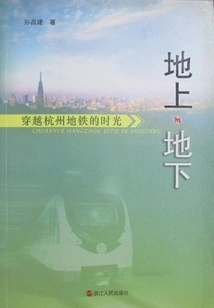
地上·地下:穿越杭州地铁的时光
Sun Changjian
"Above Ground·Underground: Time Traveling Through the Hangzhou Metro" was created by Sun Changjian, vice chairman of the Municipal Writers Association and Hangzhou Newspaper Group. It is a not-so-serious reportage reflecting the Hangzhou Metro construction project. It is a key work sponsored by the Municipal Federation of Literary and Art Circles and the Municipal Writers Association. It uses the "underground" and "above ground" as the perspectives to fully display the spiritual outlook of the Hangzhou subway people and the people of Hangzhou.
"Above Ground·Underground: Time Traveling Through the Hangzhou Metro" was created by Sun Changjian, vice chairman of the Municipal Writers Association and Hangzhou Newspaper Group. It is a not-so-serious reportage reflecting the Hangzhou Metro construction project. It is a key work sponsored by the Municipal Federation of Literary and Art Circles and the Municipal Writers Association. It uses the "underground" and "above ground" as the perspectives to fully display the spiritual outlook of the Hangzhou subway people and the people of Hangzhou.
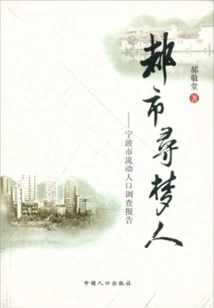
都市寻梦人:宁波市流动人口调查报告
Hao Jingtang
"Urban Dream Seekers: Ningbo Migrant Population Survey Report" truly and vividly records the comrades of the Ningbo Population and Family Planning Commission's courage to move forward and pioneering innovation in the face of new situations and new topics, embodies their people-oriented, high-quality service concept, and reflects their new model of family-friendly service and citizen-oriented management. Their work has built a spiritual bridge for migrant workers to integrate into urban construction, civilized concepts, and modern management. A large number of migrant workers have grown into deputies to people's congresses at all levels, grassroots population and family planning cadres, brave heroes, and models of economic construction... They have become new Ningbo people.
"Urban Dream Seekers: Ningbo Migrant Population Survey Report" truly and vividly records the comrades of the Ningbo Population and Family Planning Commission's courage to move forward and pioneering innovation in the face of new situations and new topics, embodies their people-oriented, high-quality service concept, and reflects their new model of family-friendly service and citizen-oriented management. Their work has built a spiritual bridge for migrant workers to integrate into urban construction, civilized concepts, and modern management. A large number of migrant workers have grown into deputies to people's congresses at all levels, grassroots population and family planning cadres, brave heroes, and models of economic construction... They have become new Ningbo people.
Dance of Noctua
Literature夜蛾之舞
Zhou Xiaofeng
What is the darkest thing in the world? General knowledge teachers make students think deeply. He is over fifty years old, has gray hair on his temples, and is known for his sternness. He is accustomed to using imperative sentences more often than questions. Now he is staring at the desk under the lecture hall with the darkest pupil part of his body, asking us to give the correct answer within a time limit. Years later, I still remember the confusion I felt when faced with the problem. What's the darkest? Coal, gunpowder or words written on white paper? Squid bile, viper scales? Or the compact seeds of a poppy flower? I was confused, like a stumbling moth that couldn't find its direction. The teacher uses experiments to deepen the impression. Only when I put my eyes close to the conical hole on the medicine box and looked in did I realize what true blackness is, absolute blackness - the blackest blackness is difficult to describe.
What is the darkest thing in the world? General knowledge teachers make students think deeply. He is over fifty years old, has gray hair on his temples, and is known for his sternness. He is accustomed to using imperative sentences more often than questions. Now he is staring at the desk under the lecture hall with the darkest pupil part of his body, asking us to give the correct answer within a time limit. Years later, I still remember the confusion I felt when faced with the problem. What's the darkest? Coal, gunpowder or words written on white paper? Squid bile, viper scales? Or the compact seeds of a poppy flower? I was confused, like a stumbling moth that couldn't find its direction. The teacher uses experiments to deepen the impression. Only when I put my eyes close to the conical hole on the medicine box and looked in did I realize what true blackness is, absolute blackness - the blackest blackness is difficult to describe.
A Long Way to Go
Literature天路迢迢
Hao Jingtang
"The Long Journey" includes the echoes of history, love on the icebergs and snowy peaks, the beginning of the war, the tearful red candle, the watch of emotions, the moon in the heart, and the heroic spirit.
"The Long Journey" includes the echoes of history, love on the icebergs and snowy peaks, the beginning of the war, the tearful red candle, the watch of emotions, the moon in the heart, and the heroic spirit.
Don't Turn Your Heels to Death
Literature死不旋踵
Zejin Yoshitaka
Our country is a country seriously short of water resources. According to statistics, more than 400 of the 668 cities in the country are seriously short of water. The annual water shortage reaches 40 billion cubic meters, and nearly 2002F3 cities have varying degrees of water shortage. There are still more than 200 million people in rural areas with unsafe drinking water, and 230 million acres of agriculture are wiped out every year due to drought. But the waste of water resources has reached an incomprehensible and intolerable level! Dai Beichun, a weak woman from Suiling County, Heilongjiang Province, had a forward-looking awareness of the "source of life" - water due to her professional sensitivity and despair of life and death.
Our country is a country seriously short of water resources. According to statistics, more than 400 of the 668 cities in the country are seriously short of water. The annual water shortage reaches 40 billion cubic meters, and nearly 2002F3 cities have varying degrees of water shortage. There are still more than 200 million people in rural areas with unsafe drinking water, and 230 million acres of agriculture are wiped out every year due to drought. But the waste of water resources has reached an incomprehensible and intolerable level! Dai Beichun, a weak woman from Suiling County, Heilongjiang Province, had a forward-looking awareness of the "source of life" - water due to her professional sensitivity and despair of life and death.
Goose-stepping Through Spring
Literature正步走过春天
Hao Jingtang Shu Chang
This book uses documentary techniques, literary style, and rich materials to excavate some little-known details and tell the story of the growth, struggle, and glorious history of the Shenzhen Armed Police Detachment.
This book uses documentary techniques, literary style, and rich materials to excavate some little-known details and tell the story of the growth, struggle, and glorious history of the Shenzhen Armed Police Detachment.
Shangqiu Investigation
Literature商丘调查
Wang Xinpeng
Reportage of Shangqiu Economic Survey. Wang Xinpeng, a member of the Chinese Writers Association, has published 5 novels including "The Common People" and "Drifting Second Generation", 3 novella collections including "Right and Wrong Life", and 7 prose reportage collections including "Our New Third Generation". His works have been selected by "Selected Novels", "Novel Monthly", "Novelette Monthly", etc. The novel was listed as a key national external promotion project and was published and distributed in the United States.
Reportage of Shangqiu Economic Survey. Wang Xinpeng, a member of the Chinese Writers Association, has published 5 novels including "The Common People" and "Drifting Second Generation", 3 novella collections including "Right and Wrong Life", and 7 prose reportage collections including "Our New Third Generation". His works have been selected by "Selected Novels", "Novel Monthly", "Novelette Monthly", etc. The novel was listed as a key national external promotion project and was published and distributed in the United States.
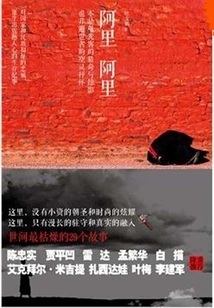
Ali Ali
Literature阿里 阿里
Du Wenjuan
In the past eight years, I have traveled to Tibet five times and arrived in Ali three times, recording the unique panorama of Ali people's lives, their life and death, destiny, love, faith, hidden wounds, regrets and disasters. So I understand better why Tibetans take rebirth and neglect death. Many people left their lives there forever. You know, some of these children were less than twenty years old... In order to improve the Ali sheep breed, how did the old Tibetan man named Wang Huisheng transport five lively Shandong Southwest small-tailed Han sheep from Beijing to Shiquanhe Town, thousands of miles away? Is that letter that traveled on the postal route for one year and seven days like a human being who has climbed over the snow-capped mountains and the Bingda Ban? Will the female soldier, who has a closet full of dresses and has never worn a dress once during her eight years in Ali, try on that purple dress in front of the mirror again? Has the nineteen-year-old soldier been demobilized? He once said to me, thank you aunt, you are the second stranger I have seen in half a year, and the first woman I have seen in the two years since I was a soldier.
In the past eight years, I have traveled to Tibet five times and arrived in Ali three times, recording the unique panorama of Ali people's lives, their life and death, destiny, love, faith, hidden wounds, regrets and disasters. So I understand better why Tibetans take rebirth and neglect death. Many people left their lives there forever. You know, some of these children were less than twenty years old... In order to improve the Ali sheep breed, how did the old Tibetan man named Wang Huisheng transport five lively Shandong Southwest small-tailed Han sheep from Beijing to Shiquanhe Town, thousands of miles away? Is that letter that traveled on the postal route for one year and seven days like a human being who has climbed over the snow-capped mountains and the Bingda Ban? Will the female soldier, who has a closet full of dresses and has never worn a dress once during her eight years in Ali, try on that purple dress in front of the mirror again? Has the nineteen-year-old soldier been demobilized? He once said to me, thank you aunt, you are the second stranger I have seen in half a year, and the first woman I have seen in the two years since I was a soldier.
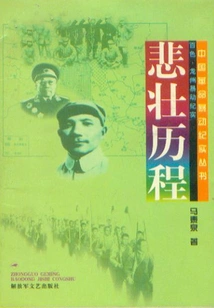
悲壮历程:百色、龙州暴动纪实
Ma Taiquan
In the desperate struggle between light and darkness, rebirth and corruption, a mysterious figure named Deng Bin and his companions used their literary and military skills, wisdom and courage to mediate among various political factions, strategize, play with the enemy, and sow the fire of revolutionary armed forces. The prestige of the Seventh and Eighth Red Army of Chinese Workers and Peasants shocked Guangxi, and finally sounded the thunder of the Baise and Longzhou riots.
In the desperate struggle between light and darkness, rebirth and corruption, a mysterious figure named Deng Bin and his companions used their literary and military skills, wisdom and courage to mediate among various political factions, strategize, play with the enemy, and sow the fire of revolutionary armed forces. The prestige of the Seventh and Eighth Red Army of Chinese Workers and Peasants shocked Guangxi, and finally sounded the thunder of the Baise and Longzhou riots.
灵魂的对话与小说的深度
Liu Zaifu
Intelligence plays an increasingly important role in modern novels. Intelligence in novels is reflected in two aspects: one is the intelligence of storytelling, and the other is the intelligence of life discovery. In fact, this kind of intelligence is connected together in excellent novelists. We make this distinction for the sake of analytical clarity. The former is "technical intelligence" and the latter is "discovery intelligence". Whether a novel is written in depth and whether it is readable or not depends largely on the author's two kinds of intelligence.
Intelligence plays an increasingly important role in modern novels. Intelligence in novels is reflected in two aspects: one is the intelligence of storytelling, and the other is the intelligence of life discovery. In fact, this kind of intelligence is connected together in excellent novelists. We make this distinction for the sake of analytical clarity. The former is "technical intelligence" and the latter is "discovery intelligence". Whether a novel is written in depth and whether it is readable or not depends largely on the author's two kinds of intelligence.
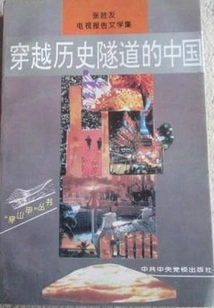
China Through the Tunnel of History
Literature穿越历史隧道的中国
Zhang Shengyou
Zhang Shengyou was born in Yongding, Fujian. Graduated from Fudan University in 1982. Editor and reviewer, member of the National Committee of the Chinese People's Political Consultative Conference. He once served as the editor-in-chief of Guangming Daily Publishing House and the president and editor-in-chief of Writers Publishing House. He is currently a member of the Party Committee of the Chinese Writers Association. Secretary of the Secretariat, Secretary of the Party Committee and Director of the Management Committee of China Writers Publishing Group. Published 12 reportage collections such as "China Through the Tunnel of History" and "Icebreaking Journey"); wrote 25 film and television political commentaries (300 episodes) such as "Ten Years Tide", "Historical Choices" and "Let Pudong Tell the World". He has won the National Outstanding Reportage Award, the Xu Chi Reportage Award, and the Bing Xin Prose Award. Many works have been selected into Chinese language textbooks for universities and middle schools.
Zhang Shengyou was born in Yongding, Fujian. Graduated from Fudan University in 1982. Editor and reviewer, member of the National Committee of the Chinese People's Political Consultative Conference. He once served as the editor-in-chief of Guangming Daily Publishing House and the president and editor-in-chief of Writers Publishing House. He is currently a member of the Party Committee of the Chinese Writers Association. Secretary of the Secretariat, Secretary of the Party Committee and Director of the Management Committee of China Writers Publishing Group. Published 12 reportage collections such as "China Through the Tunnel of History" and "Icebreaking Journey"); wrote 25 film and television political commentaries (300 episodes) such as "Ten Years Tide", "Historical Choices" and "Let Pudong Tell the World". He has won the National Outstanding Reportage Award, the Xu Chi Reportage Award, and the Bing Xin Prose Award. Many works have been selected into Chinese language textbooks for universities and middle schools.
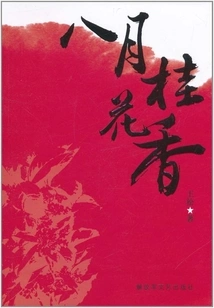
August Osmanthus Fragrance
Literature八月桂花香
Wang Song
Although "Scent of Osmanthus in August" uses a seemingly plain narrative language, it allows us to see a sincere and pure passionate heart to support the army. At the same time, we can also see the soul of a soldier hanging high in the sky, flashing in the fluttering red hunting flag and full of heroism. Calling for the military spirit may be the real theme of this book. We will strongly feel that for our society, our country, and our current era, what is the true meaning of being a soldier and what is the meaning of a hero.
Although "Scent of Osmanthus in August" uses a seemingly plain narrative language, it allows us to see a sincere and pure passionate heart to support the army. At the same time, we can also see the soul of a soldier hanging high in the sky, flashing in the fluttering red hunting flag and full of heroism. Calling for the military spirit may be the real theme of this book. We will strongly feel that for our society, our country, and our current era, what is the true meaning of being a soldier and what is the meaning of a hero.
Blood-sucking Hemodialysis
Literature吸血的血透
Zhang Minyan
Speaking of kidney disease, people may think that it is not as close to them as colds and coughs. But in China, 1 in 10 people suffers from kidney disease, and when kidney disease develops to the end stage, it is uremia (kidney failure). According to incomplete statistics, there are currently 2 million uremia patients in China, with the number increasing at a rate of 200,000 per year. Even if you just care about yourself and your family, you still have the right and obligation to pay attention to kidney disease! Brief introduction of Chen Xiaolan, a conscientious human rights doctor, female, 61 years old, retired doctor in Shanghai.
Speaking of kidney disease, people may think that it is not as close to them as colds and coughs. But in China, 1 in 10 people suffers from kidney disease, and when kidney disease develops to the end stage, it is uremia (kidney failure). According to incomplete statistics, there are currently 2 million uremia patients in China, with the number increasing at a rate of 200,000 per year. Even if you just care about yourself and your family, you still have the right and obligation to pay attention to kidney disease! Brief introduction of Chen Xiaolan, a conscientious human rights doctor, female, 61 years old, retired doctor in Shanghai.
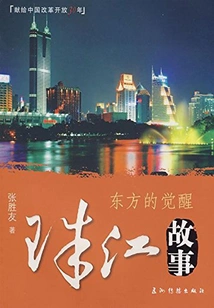
珠江故事:东方的觉醒
Zhang Shengyou
Zhang Shengyou was born in Yongding, Fujian. Graduated from Fudan University in 1982. Editor and reviewer, member of the National Committee of the Chinese People's Political Consultative Conference. He once served as the editor-in-chief of Guangming Daily Publishing House and the president and editor-in-chief of Writers Publishing House. He is currently a member of the Party Committee of the Chinese Writers Association. Secretary of the Secretariat, Secretary of the Party Committee and Director of the Management Committee of China Writers Publishing Group. Published 12 reportage collections such as "China Through the Tunnel of History" and "Icebreaking Journey"); wrote 25 film and television political commentaries (300 episodes) such as "Ten Years Tide", "Historical Choices" and "Let Pudong Tell the World". He has won the National Outstanding Reportage Award, the Xu Chi Reportage Award, and the Bing Xin Prose Award. Many works have been selected into Chinese language textbooks for universities and middle schools.
Zhang Shengyou was born in Yongding, Fujian. Graduated from Fudan University in 1982. Editor and reviewer, member of the National Committee of the Chinese People's Political Consultative Conference. He once served as the editor-in-chief of Guangming Daily Publishing House and the president and editor-in-chief of Writers Publishing House. He is currently a member of the Party Committee of the Chinese Writers Association. Secretary of the Secretariat, Secretary of the Party Committee and Director of the Management Committee of China Writers Publishing Group. Published 12 reportage collections such as "China Through the Tunnel of History" and "Icebreaking Journey"); wrote 25 film and television political commentaries (300 episodes) such as "Ten Years Tide", "Historical Choices" and "Let Pudong Tell the World". He has won the National Outstanding Reportage Award, the Xu Chi Reportage Award, and the Bing Xin Prose Award. Many works have been selected into Chinese language textbooks for universities and middle schools.
Drinking from the Same River
Literature同饮一江水
Zejin
This is a historical record of cross-cultural life. It highly condenses and clearly presents the historical picture of the life of the border residents of China and Russia for more than a century in the Heilongjiang Basin connected by mountains and rivers. Along with the tortuous changes in the relations between China and Russia, highly dramatic tragedies and comedies are constantly being staged in the lives of people on both sides of the Taiwan Strait, including love and hate, love and enmity, individuals and countries, war and peace, loyalty and betrayal. Behind every true story is the intertwined changes of personal destiny and international situation. From June 6 to 7 this year, the new Russian President Vladimir Putin first chose to visit China. He refused to attend the eight-nation summit held in the United States at Camp David and chose to attend the SCO summit in China, which shows that he attaches great importance to Russia-China relations.
This is a historical record of cross-cultural life. It highly condenses and clearly presents the historical picture of the life of the border residents of China and Russia for more than a century in the Heilongjiang Basin connected by mountains and rivers. Along with the tortuous changes in the relations between China and Russia, highly dramatic tragedies and comedies are constantly being staged in the lives of people on both sides of the Taiwan Strait, including love and hate, love and enmity, individuals and countries, war and peace, loyalty and betrayal. Behind every true story is the intertwined changes of personal destiny and international situation. From June 6 to 7 this year, the new Russian President Vladimir Putin first chose to visit China. He refused to attend the eight-nation summit held in the United States at Camp David and chose to attend the SCO summit in China, which shows that he attaches great importance to Russia-China relations.
Iron-blooded Cold Baby
Literature铁血冷娃
Tiancheng
On July 7, 1937, the Japanese invaders launched the "Lugouqiao Incident", and the Anti-Japanese War broke out in an all-round way. The Japanese army captured cities and territories at lightning speed, and large areas of land were lost one after another. As the major passes in Shanxi Province were lost one after another, the strategic position of Zhongtiao Mountain became even more important. Zhongtiao Mountain is located in the southwestern part of Shanxi Province and on the north bank of the Yellow River, with a width of 170 kilometers and a depth of 50 kilometers. It forms an angle with Taihang, Luliang and Taiyue. It has been a battleground for military strategists since ancient times. If we stand here, our army can overlook northern Henan and southern Shanxi. If we advance, we can penetrate directly into the enemy's rear. If we retreat, we can occupy a dangerous position and defend Luoyang and Tongguan. If we lose it, the Japanese army can occupy this important position, cross the river and go south, aiming for our Longhai, invading our Central Plains, and advancing on Shaanxi and Gansu. Therefore, the Zhongtiao Mountain area was regarded as an "important place related to national security" during the Anti-Japanese War.
On July 7, 1937, the Japanese invaders launched the "Lugouqiao Incident", and the Anti-Japanese War broke out in an all-round way. The Japanese army captured cities and territories at lightning speed, and large areas of land were lost one after another. As the major passes in Shanxi Province were lost one after another, the strategic position of Zhongtiao Mountain became even more important. Zhongtiao Mountain is located in the southwestern part of Shanxi Province and on the north bank of the Yellow River, with a width of 170 kilometers and a depth of 50 kilometers. It forms an angle with Taihang, Luliang and Taiyue. It has been a battleground for military strategists since ancient times. If we stand here, our army can overlook northern Henan and southern Shanxi. If we advance, we can penetrate directly into the enemy's rear. If we retreat, we can occupy a dangerous position and defend Luoyang and Tongguan. If we lose it, the Japanese army can occupy this important position, cross the river and go south, aiming for our Longhai, invading our Central Plains, and advancing on Shaanxi and Gansu. Therefore, the Zhongtiao Mountain area was regarded as an "important place related to national security" during the Anti-Japanese War.
山西黑砖窑事件寻访日记(2007)
Luogang
In the afternoon, I went to a local village to investigate an old case in a black brick kiln. When I first came to Yongji, I heard from a local driver that a local child in Xi'an was deceived and returned to a black brick kiln in nearby Ruicheng. The child's home was easily found. According to his family's description, it turned out to be a brick kiln that was more cruel and larger than the brick kiln in Caosheng Village. There are still brutal beatings, and there are still dead people. It happened in 2005. At that time, the kiln owner or contractor was also arrested, and it seemed that the sentence was passed, but the parents were not clear about it. However, the victim did not receive compensation, and his children only received back wages.
In the afternoon, I went to a local village to investigate an old case in a black brick kiln. When I first came to Yongji, I heard from a local driver that a local child in Xi'an was deceived and returned to a black brick kiln in nearby Ruicheng. The child's home was easily found. According to his family's description, it turned out to be a brick kiln that was more cruel and larger than the brick kiln in Caosheng Village. There are still brutal beatings, and there are still dead people. It happened in 2005. At that time, the kiln owner or contractor was also arrested, and it seemed that the sentence was passed, but the parents were not clear about it. However, the victim did not receive compensation, and his children only received back wages.
Shavan's Translations Inside and Out
Literature沙畹的译事内外
Lu Feng
But the young man was interested in the labyrinth of words and the history buried underground. An accident pushed him into the world of Sinology, but no one could push him out again. He couldn't wait to start work, and with the assistance of Tang Xiali, the counselor of the Qing Dynasty Embassy in France, he started with the ancient Chinese ritual "Fengchan Book". Translation is the conversion of two languages, and Shawan's translation is first of all exploration. While translating, he studies what documents the author has referred to, what materials he has used, and how reliable they are. Then he traces those documents, explores their authenticity, and then reconnects various lines. What's rare is that during the search process, all the doors were easily opened without breaking down the doors and picking the locks. The amount and breadth of the information searched out were astonishing. You are waiting for this Western boy to make a story, but there is no accident, and his move is extraordinary. Four years later, half of the book has been annotated, and it was published by Beitang Printing House sponsored by the Christian Church.
But the young man was interested in the labyrinth of words and the history buried underground. An accident pushed him into the world of Sinology, but no one could push him out again. He couldn't wait to start work, and with the assistance of Tang Xiali, the counselor of the Qing Dynasty Embassy in France, he started with the ancient Chinese ritual "Fengchan Book". Translation is the conversion of two languages, and Shawan's translation is first of all exploration. While translating, he studies what documents the author has referred to, what materials he has used, and how reliable they are. Then he traces those documents, explores their authenticity, and then reconnects various lines. What's rare is that during the search process, all the doors were easily opened without breaking down the doors and picking the locks. The amount and breadth of the information searched out were astonishing. You are waiting for this Western boy to make a story, but there is no accident, and his move is extraordinary. Four years later, half of the book has been annotated, and it was published by Beitang Printing House sponsored by the Christian Church.
I Recommend My Hometown with My Love
Literature我以我情荐故乡
Yellow Wind
On the morning of December 19, 2006. Academic Lecture Hall, School of Management, Shanxi University. A man of medium height and elegant manner walked onto the podium amidst roaring applause and began his speech. Previously, he was invited to participate in the Third China Private Economy Summit and the China Private Economy Forum held in Hong Kong with the participation of more than 40 countries. Today, at the invitation of Professor Liang Jiahua, chief doctoral supervisor of the School of Management of Shanxi University, I came to participate in the seminar on harmonious society and entrepreneurial spirit held by the school. As Shanxi University School of Management's window for external exchanges and display of academic standards, those who can be invited to enter this academic lecture hall and are qualified to be on the podium are honestly either experts or scholars, or people who are capable and influential in society. Otherwise, I won't invite you, and you won't dare to try anything in class.
On the morning of December 19, 2006. Academic Lecture Hall, School of Management, Shanxi University. A man of medium height and elegant manner walked onto the podium amidst roaring applause and began his speech. Previously, he was invited to participate in the Third China Private Economy Summit and the China Private Economy Forum held in Hong Kong with the participation of more than 40 countries. Today, at the invitation of Professor Liang Jiahua, chief doctoral supervisor of the School of Management of Shanxi University, I came to participate in the seminar on harmonious society and entrepreneurial spirit held by the school. As Shanxi University School of Management's window for external exchanges and display of academic standards, those who can be invited to enter this academic lecture hall and are qualified to be on the podium are honestly either experts or scholars, or people who are capable and influential in society. Otherwise, I won't invite you, and you won't dare to try anything in class.
No One Saw Him Off
Literature无人送行
Zhang Tingzhu
It was during that raging summer that Shi Hangsheng and I turned against each other. As the son of a martyr, he was elected as the small leader of the Red Guards in the middle school. At first I thought he couldn't help it, but later I realized something was wrong. He fell in love with this kind of happy life. I didn't mention him when I called the Peking Opera master Gai Tianjia, and I didn't mention him when I called him the Rong family in the electrical appliance store. I don't understand the former; the latter often showed off in front of us when we were children. I think it's no big deal for his family to suffer a little in the red storm. Unexpectedly, they implicated Zirong's uncle Zhou Ke, the enlightened gentleman in our childhood, so I had to go to him to negotiate. Shocking slogans and big-character posters covered the walls of all the streets. People crowded in front of the newspaper offices, and confused flies whirled and danced on the heads of men, women, old and young, making a buzzing noise. The horn is blaring.
It was during that raging summer that Shi Hangsheng and I turned against each other. As the son of a martyr, he was elected as the small leader of the Red Guards in the middle school. At first I thought he couldn't help it, but later I realized something was wrong. He fell in love with this kind of happy life. I didn't mention him when I called the Peking Opera master Gai Tianjia, and I didn't mention him when I called him the Rong family in the electrical appliance store. I don't understand the former; the latter often showed off in front of us when we were children. I think it's no big deal for his family to suffer a little in the red storm. Unexpectedly, they implicated Zirong's uncle Zhou Ke, the enlightened gentleman in our childhood, so I had to go to him to negotiate. Shocking slogans and big-character posters covered the walls of all the streets. People crowded in front of the newspaper offices, and confused flies whirled and danced on the heads of men, women, old and young, making a buzzing noise. The horn is blaring.
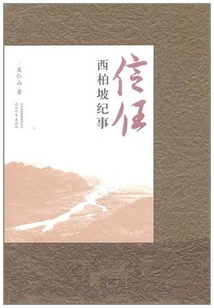
Trust: Xibaipo Chronicle
Literature信任:西柏坡纪事
Guan Renshan
Guan Renshan, a Manchu, was born in Fengnan City, Tangshan, Hebei Province in February 1963. After graduating from Hebei Changli Normal School in 1981, he worked as a teacher, township cultural director and county government secretary. He is currently a member of the Chinese Writers Association and vice chairman of the Hebei Provincial Writers Association. Together with the famous writers He Shen and Tan Ge, he is known as the "Troika" of Hebei in the literary world. He began literary creation and published works in 1984. His major works include five novels, including "Storm Lake" and "Fu Town", nine collections of short and medium stories, including "No Country in Little Snow", "Selected Novels of Guan Renshan" and "Wild Yangzi", as well as short and medium stories such as "No Country in Heavy Snow", "Returning Home in September", "The Lost Soul", and "Bitter Snow", etc., Totaling more than five million words. His works have been reprinted many times by "Novel Monthly", "Selected Novels", "Xinhua Digest", etc. He won the "People's Literature" Outstanding Novel Award twice and the 6th "October" Literary Award. The novel "Ship Festival" won the Champion Award of the 2nd World Chinese Novel Competition of Hong Kong's "Asia Weekly". The novel collection "Selected Novels of Guan Renshan" won the 5th National Ethnic Minority Literature Award of the Chinese Writers Association. Some works have been translated into English, French and Japanese. The works have been adapted into film and television works or plays many times.
Guan Renshan, a Manchu, was born in Fengnan City, Tangshan, Hebei Province in February 1963. After graduating from Hebei Changli Normal School in 1981, he worked as a teacher, township cultural director and county government secretary. He is currently a member of the Chinese Writers Association and vice chairman of the Hebei Provincial Writers Association. Together with the famous writers He Shen and Tan Ge, he is known as the "Troika" of Hebei in the literary world. He began literary creation and published works in 1984. His major works include five novels, including "Storm Lake" and "Fu Town", nine collections of short and medium stories, including "No Country in Little Snow", "Selected Novels of Guan Renshan" and "Wild Yangzi", as well as short and medium stories such as "No Country in Heavy Snow", "Returning Home in September", "The Lost Soul", and "Bitter Snow", etc., Totaling more than five million words. His works have been reprinted many times by "Novel Monthly", "Selected Novels", "Xinhua Digest", etc. He won the "People's Literature" Outstanding Novel Award twice and the 6th "October" Literary Award. The novel "Ship Festival" won the Champion Award of the 2nd World Chinese Novel Competition of Hong Kong's "Asia Weekly". The novel collection "Selected Novels of Guan Renshan" won the 5th National Ethnic Minority Literature Award of the Chinese Writers Association. Some works have been translated into English, French and Japanese. The works have been adapted into film and television works or plays many times.
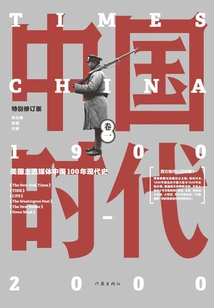
China Times·volume 1
Literature中国时代·卷一
Shi Yonggang
Mainstream American media: 100 years of modern history of China; "The New York Times" version of documents on the ten years of the Cultural Revolution; "Time" version of records of the Korean War between China and the United States; "Washington Post version of the secret history of the establishment of diplomatic relations between China and the United States;" "The New Yorker version" of Deng Xiaoping's reforms; "Newsweek version" version of the story of the rise and fall of Chiang Kai-shek; "Life" version of China's 100-year image memory, one China, two expressions of China's national position, faithfully recording the U. S. National position. Opinion Paper on China's Centenary of Family Interests, the Chinese version of "Glory and Dreams", the book version of "Reference News", "Time" magazine's "Political Technology Insider" on China's look at China, Chinese people's understanding of the modern century history, "Full Political Internal Reference", 1 million words, 25 scholars, eight years of work, six major American mainstream newspapers compiled an American view of modern history of China, Chinese people understand the way and observations of China recorded in the American mainstream media. Recommended content: How does the West understand China? How they discovered China, and how they discovered the part behind the same thing that is different from what we know. This book attempts to explore the way Americans record Chinese history, how they view China, and how they view China. Understanding other countries' research on Chinese history can broaden our horizons and trigger more in-depth thinking on multiple levels. To this end, we need an original, unmodified way of recording Chinese history by Americans, whether it is a prejudice or an insight, whether it is a true knowledge or a misunderstanding. This reference-style modern history of China written by an American is of positive significance to our understanding of China, which is advancing rapidly! One million words, 25 scholars, eight years of work, and six mainstream American newspapers and periodicals compiled a modern history of China from an American perspective. Chinese people understand the way and observations of China in the mainstream American media. Shi Yonggang, who served in the army for fifteen years, is currently the executive editor of Hong Kong Phoenix Weekly magazine, a writer, book planner, and media researcher. The planner and initiator of the boom in painting biography in the Mainland, he has planned and compiled more than 20 books including "Picture Biography of Soong Meiling", "Picture Biography of Chiang Kai-shek", "Picture Biography of Teresa Teng" and "Picture Biography of Che Guevara". There are also monographs on "Phoenix TV", "Reader" on "Reader" magazine, "Mr. Rabbit" on American Playboy magazine and "China Times", a biography of American "Time" magazine, etc.
Mainstream American media: 100 years of modern history of China; "The New York Times" version of documents on the ten years of the Cultural Revolution; "Time" version of records of the Korean War between China and the United States; "Washington Post version of the secret history of the establishment of diplomatic relations between China and the United States;" "The New Yorker version" of Deng Xiaoping's reforms; "Newsweek version" version of the story of the rise and fall of Chiang Kai-shek; "Life" version of China's 100-year image memory, one China, two expressions of China's national position, faithfully recording the U. S. National position. Opinion Paper on China's Centenary of Family Interests, the Chinese version of "Glory and Dreams", the book version of "Reference News", "Time" magazine's "Political Technology Insider" on China's look at China, Chinese people's understanding of the modern century history, "Full Political Internal Reference", 1 million words, 25 scholars, eight years of work, six major American mainstream newspapers compiled an American view of modern history of China, Chinese people understand the way and observations of China recorded in the American mainstream media. Recommended content: How does the West understand China? How they discovered China, and how they discovered the part behind the same thing that is different from what we know. This book attempts to explore the way Americans record Chinese history, how they view China, and how they view China. Understanding other countries' research on Chinese history can broaden our horizons and trigger more in-depth thinking on multiple levels. To this end, we need an original, unmodified way of recording Chinese history by Americans, whether it is a prejudice or an insight, whether it is a true knowledge or a misunderstanding. This reference-style modern history of China written by an American is of positive significance to our understanding of China, which is advancing rapidly! One million words, 25 scholars, eight years of work, and six mainstream American newspapers and periodicals compiled a modern history of China from an American perspective. Chinese people understand the way and observations of China in the mainstream American media. Shi Yonggang, who served in the army for fifteen years, is currently the executive editor of Hong Kong Phoenix Weekly magazine, a writer, book planner, and media researcher. The planner and initiator of the boom in painting biography in the Mainland, he has planned and compiled more than 20 books including "Picture Biography of Soong Meiling", "Picture Biography of Chiang Kai-shek", "Picture Biography of Teresa Teng" and "Picture Biography of Che Guevara". There are also monographs on "Phoenix TV", "Reader" on "Reader" magazine, "Mr. Rabbit" on American Playboy magazine and "China Times", a biography of American "Time" magazine, etc.
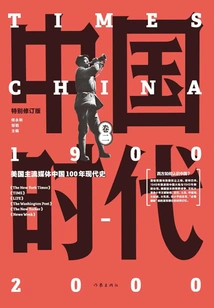
China Times·volume 2
Literature中国时代·卷二
Shi Yonggang
How does the West understand China? How they discovered China, and how they discovered the part behind the same thing that is different from what we know. This book attempts to explore the way Americans record Chinese history, how they view China, and how they view China. Understanding other countries' research on Chinese history can broaden our horizons and trigger more in-depth thinking on multiple levels. To this end, we need an original, unmodified way of recording Chinese history by Americans, whether it is a prejudice or an insight, whether it is a true knowledge or a misunderstanding. This reference-style modern history of China written by an American is of positive significance to our understanding of China, which is advancing rapidly! One million words, 25 scholars, eight years of work, and six mainstream American newspapers and periodicals compiled a modern history of China from an American perspective. Chinese people understand the way and observations of China in the mainstream American media. Shi Yonggang, who served in the army for fifteen years, is currently the executive editor of Hong Kong Phoenix Weekly magazine, a writer, book planner, and media researcher. The planner and initiator of the boom in painting biography in the Mainland, he has planned and compiled more than 20 books including "Picture Biography of Soong Meiling", "Picture Biography of Chiang Kai-shek", "Picture Biography of Teresa Teng" and "Picture Biography of Che Guevara". There are also monographs on "Phoenix TV", "Reader" on "Reader" magazine, "Mr. Rabbit" on American Playboy magazine and "China Times", a biography of American "Time" magazine, etc.
How does the West understand China? How they discovered China, and how they discovered the part behind the same thing that is different from what we know. This book attempts to explore the way Americans record Chinese history, how they view China, and how they view China. Understanding other countries' research on Chinese history can broaden our horizons and trigger more in-depth thinking on multiple levels. To this end, we need an original, unmodified way of recording Chinese history by Americans, whether it is a prejudice or an insight, whether it is a true knowledge or a misunderstanding. This reference-style modern history of China written by an American is of positive significance to our understanding of China, which is advancing rapidly! One million words, 25 scholars, eight years of work, and six mainstream American newspapers and periodicals compiled a modern history of China from an American perspective. Chinese people understand the way and observations of China in the mainstream American media. Shi Yonggang, who served in the army for fifteen years, is currently the executive editor of Hong Kong Phoenix Weekly magazine, a writer, book planner, and media researcher. The planner and initiator of the boom in painting biography in the Mainland, he has planned and compiled more than 20 books including "Picture Biography of Soong Meiling", "Picture Biography of Chiang Kai-shek", "Picture Biography of Teresa Teng" and "Picture Biography of Che Guevara". There are also monographs on "Phoenix TV", "Reader" on "Reader" magazine, "Mr. Rabbit" on American Playboy magazine and "China Times", a biography of American "Time" magazine, etc.
切尔诺贝利的回忆:核灾难口述史
Alexeevich
On April 26, 1986, the reactor of the Chernobyl nuclear power plant exploded. Residents of neighboring Belarus lost everything. Some people died on the spot, and more people were evacuated and were forced to abandon all their belongings. Thousands of acres of land were contaminated, and thousands of people were infected with various diseases due to the leakage of 20 tons of high-radiation nuclear fuel. A famous reporter Alexievich spent three years interviewing survivors of the disaster: the wives of the first rescuers to arrive at the disaster site, on-site photographers, teachers, doctors, farmers, government officials at the time, historians, scientists, forced evacuees, resettled people, wives and grandmothers.
On April 26, 1986, the reactor of the Chernobyl nuclear power plant exploded. Residents of neighboring Belarus lost everything. Some people died on the spot, and more people were evacuated and were forced to abandon all their belongings. Thousands of acres of land were contaminated, and thousands of people were infected with various diseases due to the leakage of 20 tons of high-radiation nuclear fuel. A famous reporter Alexievich spent three years interviewing survivors of the disaster: the wives of the first rescuers to arrive at the disaster site, on-site photographers, teachers, doctors, farmers, government officials at the time, historians, scientists, forced evacuees, resettled people, wives and grandmothers.
七位国家主席首访故事
Xu Chenjing Wang Tinghui Et Al.
On March 22, 2013, Xi Jinping began his first overseas trip as President of China, which attracted widespread attention around the world. The compact schedule and a series of diplomatic activities demonstrated his diplomatic thinking and style and achieved fruitful results. For a long time, compared with ordinary diplomatic visits, a leader's first visit has always been given a deeper connotation and can also achieve better diplomatic results. Although the president's first visit cannot completely determine the direction of China's diplomacy, reading the stories involved will be helpful in understanding the development context of New China's diplomacy. Xi Jinping, a spring interview text\u002FXu Chenjing "Thousands of apricot trees by the river are newly blooming in the night wind. The garden is full of dark and light colors, shining in the green waves." Early spring in March is a season of revival of all things, a new moment of sowing.
On March 22, 2013, Xi Jinping began his first overseas trip as President of China, which attracted widespread attention around the world. The compact schedule and a series of diplomatic activities demonstrated his diplomatic thinking and style and achieved fruitful results. For a long time, compared with ordinary diplomatic visits, a leader's first visit has always been given a deeper connotation and can also achieve better diplomatic results. Although the president's first visit cannot completely determine the direction of China's diplomacy, reading the stories involved will be helpful in understanding the development context of New China's diplomacy. Xi Jinping, a spring interview text\u002FXu Chenjing "Thousands of apricot trees by the river are newly blooming in the night wind. The garden is full of dark and light colors, shining in the green waves." Early spring in March is a season of revival of all things, a new moment of sowing.
Ten Years in a Flash
Literature十年一瞬
Yang Xiaofan Ding Wei
Universal education is a long-term effect, a great cause that will benefit the present and last for generations to come. Five or ten years later, people will see the huge benefits and far-reaching influence they have produced; two or three generations later, the fruitful results of universal education will become ubiquitous; Bozhou's popular education today is one of the great contributions not only to Bozhou, but to our nation; therefore, we cannot overestimate the value of Bozhou's completion of the "two basics"; therefore, compared with the contribution of realizing the "two basics" to Bozhou today and future generations, any words will pale in comparison. Thank you, Bozhou Education. Your great achievements will shine in the sun and the moon, and your reputation will last forever! Bless you, the land of Bozhou. We will wait and see how you take off!
Universal education is a long-term effect, a great cause that will benefit the present and last for generations to come. Five or ten years later, people will see the huge benefits and far-reaching influence they have produced; two or three generations later, the fruitful results of universal education will become ubiquitous; Bozhou's popular education today is one of the great contributions not only to Bozhou, but to our nation; therefore, we cannot overestimate the value of Bozhou's completion of the "two basics"; therefore, compared with the contribution of realizing the "two basics" to Bozhou today and future generations, any words will pale in comparison. Thank you, Bozhou Education. Your great achievements will shine in the sun and the moon, and your reputation will last forever! Bless you, the land of Bozhou. We will wait and see how you take off!
Strive for Innovation and Thrive
Literature拼搏创新,兴旺发达
Hao Wanmin Tie Jingyu
In fact, the so-called corporate culture refers to the cultural concepts, cultural forms and behavioral patterns with the characteristics of the enterprise formed in the business practice. It is a synthesis of conceptual form culture, material form culture and institutional behavior culture. The motivational effect of corporate culture refers to the role of corporate culture itself in stimulating employees' motivation and potential abilities through various constituent elements, which belongs to the category of spiritual motivation. Specifically, corporate culture can satisfy the spiritual needs of employees, mobilize their spiritual strength, and give them a sense of belonging, self-esteem, and accomplishment, thereby giving full play to their great potential. Whether corporate culture can play its due role depends most critically on employees' understanding and recognition of corporate culture. Once employees have a strong resonance with corporate culture, the motivational function of corporate culture will have the characteristics and advantages of persistence, integrity and all-employee characteristics. We see that such a corporate culture is taking shape in Panjin Xingda Group, and we also believe that with such a corporate culture, Panjin Xingda Group is bound to open up a broader space for development, achieve more brilliant results, and make great contributions to the development of Panjin and Liaoning.
In fact, the so-called corporate culture refers to the cultural concepts, cultural forms and behavioral patterns with the characteristics of the enterprise formed in the business practice. It is a synthesis of conceptual form culture, material form culture and institutional behavior culture. The motivational effect of corporate culture refers to the role of corporate culture itself in stimulating employees' motivation and potential abilities through various constituent elements, which belongs to the category of spiritual motivation. Specifically, corporate culture can satisfy the spiritual needs of employees, mobilize their spiritual strength, and give them a sense of belonging, self-esteem, and accomplishment, thereby giving full play to their great potential. Whether corporate culture can play its due role depends most critically on employees' understanding and recognition of corporate culture. Once employees have a strong resonance with corporate culture, the motivational function of corporate culture will have the characteristics and advantages of persistence, integrity and all-employee characteristics. We see that such a corporate culture is taking shape in Panjin Xingda Group, and we also believe that with such a corporate culture, Panjin Xingda Group is bound to open up a broader space for development, achieve more brilliant results, and make great contributions to the development of Panjin and Liaoning.
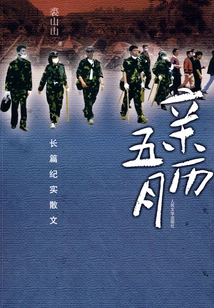
Experience May
Literature亲历五月
Qiushan Mountain
This is a rare documentary prose. For those who have experienced that disaster, it can touch your most concentrated and sensitive memory of love and death; for those who have not experienced this disaster, the stories and scenes are extremely shocking; for rescue workers, it provides a lot of useful experience and knowledge, and is an excellent disaster relief book.
This is a rare documentary prose. For those who have experienced that disaster, it can touch your most concentrated and sensitive memory of love and death; for those who have not experienced this disaster, the stories and scenes are extremely shocking; for rescue workers, it provides a lot of useful experience and knowledge, and is an excellent disaster relief book.
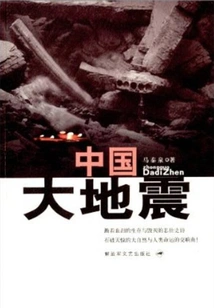
China Earthquake
Literature中国大地震
Ma Taiquan
The history of the earth is the history of natural disasters. Due to factors such as the "invisibility" of the Earth's interior, the "infrequent" nature of major earthquakes, and the complexity of earthquake formation mechanisms, humans are currently unable to accurately and effectively predict the time, location, and intensity of earthquakes. Judging from the current level of seismological research, accurate short-term earthquake prediction is still difficult to achieve. This book records the real status of monitoring and forecasting, emergency rescue, and social response to many famous destructive earthquakes in my country. It discusses the difficulty of earthquake research, analyzes many issues in earthquake forecasting, gets to know various figures in this field, and describes their lives, careers, and emotions. The work pays tribute to those who are consistent and strive for their ideals all their lives, admires those who value friendship, responsibility, life and dignity, and praises those who stick to the forefront of earthquake prediction with their lives as their flags and their souls as their feet...
The history of the earth is the history of natural disasters. Due to factors such as the "invisibility" of the Earth's interior, the "infrequent" nature of major earthquakes, and the complexity of earthquake formation mechanisms, humans are currently unable to accurately and effectively predict the time, location, and intensity of earthquakes. Judging from the current level of seismological research, accurate short-term earthquake prediction is still difficult to achieve. This book records the real status of monitoring and forecasting, emergency rescue, and social response to many famous destructive earthquakes in my country. It discusses the difficulty of earthquake research, analyzes many issues in earthquake forecasting, gets to know various figures in this field, and describes their lives, careers, and emotions. The work pays tribute to those who are consistent and strive for their ideals all their lives, admires those who value friendship, responsibility, life and dignity, and praises those who stick to the forefront of earthquake prediction with their lives as their flags and their souls as their feet...
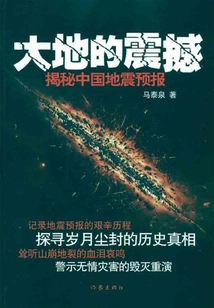
大地的震撼:揭秘中国地震预报
Ma Taiquan
This book records the real status of monitoring and forecasting, emergency rescue, and social response to many famous destructive earthquakes in my country. It discusses the difficulty of earthquake research, analyzes many issues in earthquake forecasting, gets to know various figures in this field, and describes their lives, careers, and emotions. The work respects those who are consistent and strive for their ideals all their lives, admires those who value friendship, responsibility, life and dignity, and praises those who stick to the forefront of earthquake prediction with their lives as their banners and their souls as their feet...
This book records the real status of monitoring and forecasting, emergency rescue, and social response to many famous destructive earthquakes in my country. It discusses the difficulty of earthquake research, analyzes many issues in earthquake forecasting, gets to know various figures in this field, and describes their lives, careers, and emotions. The work respects those who are consistent and strive for their ideals all their lives, admires those who value friendship, responsibility, life and dignity, and praises those who stick to the forefront of earthquake prediction with their lives as their banners and their souls as their feet...
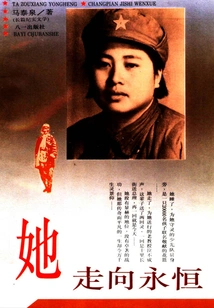
She Goes to Eternity
Literature她走向永恒
Ma Taiquan
This book describes Zhang Peiying's life experience, revolutionary experience and touching deeds before her sacrifice. Ma Taiquan, male, born in 1958. Graduated from the Literature Department of the People's Liberation Army Art Academy, he is currently the deputy director of the Creative Office of the General Logistics Department, a national first-class writer, and an expert enjoying the special allowance of the State Council. He is the author of more than ten novels, including the long reportage "The Ups and Downs of the Minister of Defense", "The Iron Camp", "The Great Earthquake in China", and the novels "Brothers in the Town" and "Jichou Year Festival". His works have won the "Five One Project" Award from the Propaganda Department of the CPC Central Committee, the Horse Award for Chinese Ethnic Literature, the China Book Award, the People's Literature Award, the August 1st Award of the Chinese People's Liberation Army, the Chinese People's Liberation Army Book Award, and the Army's Outstanding Literature and Art Works Award.
This book describes Zhang Peiying's life experience, revolutionary experience and touching deeds before her sacrifice. Ma Taiquan, male, born in 1958. Graduated from the Literature Department of the People's Liberation Army Art Academy, he is currently the deputy director of the Creative Office of the General Logistics Department, a national first-class writer, and an expert enjoying the special allowance of the State Council. He is the author of more than ten novels, including the long reportage "The Ups and Downs of the Minister of Defense", "The Iron Camp", "The Great Earthquake in China", and the novels "Brothers in the Town" and "Jichou Year Festival". His works have won the "Five One Project" Award from the Propaganda Department of the CPC Central Committee, the Horse Award for Chinese Ethnic Literature, the China Book Award, the People's Literature Award, the August 1st Award of the Chinese People's Liberation Army, the Chinese People's Liberation Army Book Award, and the Army's Outstanding Literature and Art Works Award.
A Fight on the Banks of the Yellow River
Literature发生在黄河岸边的械斗
Gao Jurui
After getting off the bus on the way from Yuncheng to Fenglingdu, I climbed up a steep slope to the overpass above, and a different world unfolded before my eyes. The gentle curve of Zhongtiao Mountain is closely connected with the broad Yellow River. This is the end of Zhongtiao Mountain and the gateway for the Yellow River to enter the Central Plains from the hinterland of Shanxi and Shaanxi. The Yellow River has formed a large tidal flat here. Under the thin sunshine in winter, the broad river beach shows its proper color and tranquility. A layer of white mist hangs over the boundless river beach, enveloping it with the bloom of the coming spring, the lush green of summer and the richness of autumn. A line of the Yellow River is hidden in the horizon, and the Qinchuan land opposite is shrouded in smoke. The fresh and moist breath from the waves of the Yellow River blew slowly in the wind and sent me my first greetings.
After getting off the bus on the way from Yuncheng to Fenglingdu, I climbed up a steep slope to the overpass above, and a different world unfolded before my eyes. The gentle curve of Zhongtiao Mountain is closely connected with the broad Yellow River. This is the end of Zhongtiao Mountain and the gateway for the Yellow River to enter the Central Plains from the hinterland of Shanxi and Shaanxi. The Yellow River has formed a large tidal flat here. Under the thin sunshine in winter, the broad river beach shows its proper color and tranquility. A layer of white mist hangs over the boundless river beach, enveloping it with the bloom of the coming spring, the lush green of summer and the richness of autumn. A line of the Yellow River is hidden in the horizon, and the Qinchuan land opposite is shrouded in smoke. The fresh and moist breath from the waves of the Yellow River blew slowly in the wind and sent me my first greetings.