Library
Browse and search books
3,417 novels found
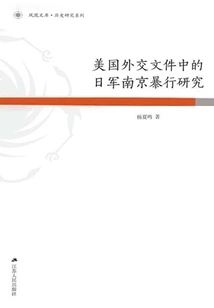
美国外交文件中的日军南京暴行研究
Yang Xiaming
This book is the first monograph in domestic academic circles to systematically study the Japanese atrocities in Nanjing from an American perspective. On the one hand, the book uses a large number of third-party first-hand materials such as diplomatic archives and diaries of decision-makers to demonstrate with irrefutable facts the various atrocities committed by the Japanese army in Nanjing and their relevance; on the other hand, through the above-mentioned first-hand materials, the author demonstrates for the first time at home and abroad that US President Roosevelt not only understood the atrocities committed by the Japanese army in Nanjing, but also responded to them. This book also examines the negative impact of the Japanese atrocities in Nanjing on American public opinion and the resulting American boycott of Japanese goods and its effects, and reveals the connection between the outbreak of the Pacific War and the Japanese atrocities in Nanjing.
This book is the first monograph in domestic academic circles to systematically study the Japanese atrocities in Nanjing from an American perspective. On the one hand, the book uses a large number of third-party first-hand materials such as diplomatic archives and diaries of decision-makers to demonstrate with irrefutable facts the various atrocities committed by the Japanese army in Nanjing and their relevance; on the other hand, through the above-mentioned first-hand materials, the author demonstrates for the first time at home and abroad that US President Roosevelt not only understood the atrocities committed by the Japanese army in Nanjing, but also responded to them. This book also examines the negative impact of the Japanese atrocities in Nanjing on American public opinion and the resulting American boycott of Japanese goods and its effects, and reveals the connection between the outbreak of the Pacific War and the Japanese atrocities in Nanjing.
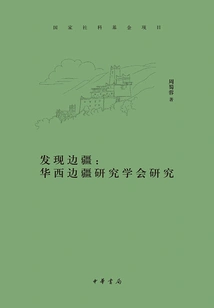
发现边疆:华西边疆研究学会研究
Zhou Shurong
In March 1922, 12 Western scholars headed by the American scholar Morse established the West China Frontier Studies Society at West China Union University in Chengdu. The society aims to study the politics, humanities, customs, environment and impact on local people in West China (Sichuan, Yunnan, Guizhou, Tibet, Gansu, etc.). It plans to promote research through surveys, loaning equipment, holding lectures, publishing papers, and publishing journals. Later, scholars from Britain, the United States, Canada, France, Germany, China, Australia and other countries joined, and the membership once reached more than 540 people. Chinese scholars joined in 1930, and by 1950, 120 people had participated. In the 1940s, Chinese scholars gradually became the main force in West China studies. The Society is the first international academic research institution in modern China with the West China Frontier as its purpose. It occupies an indispensable position in the academic history of modern China and also occupies an important position in Chinese Frontier Studies. It is an important symbol of the transformation from individual-based research methods to specialized academic institutional research activities. This project is the first to conduct a comprehensive and systematic basic research on the West China Frontier Studies Society itself, which will fill the gap in the academic community in the absence of academic monographs on the society itself. It not only corrects the view of the Society as a "reactionary Western academic institution" after 1950, but also re-evaluates the Society based on its archives and published documents. It also places the Society in the context of global politics and politics to discuss its founding and development, and comprehensively evaluates the Society's historical role, value, contribution and influence, and even its important position in the history of modern Chinese academic history, the history of modern Chinese frontiers, the history of international Sinology, the history of cultural exchanges between China and the West, and the history of the spread of Christianity in West China.
In March 1922, 12 Western scholars headed by the American scholar Morse established the West China Frontier Studies Society at West China Union University in Chengdu. The society aims to study the politics, humanities, customs, environment and impact on local people in West China (Sichuan, Yunnan, Guizhou, Tibet, Gansu, etc.). It plans to promote research through surveys, loaning equipment, holding lectures, publishing papers, and publishing journals. Later, scholars from Britain, the United States, Canada, France, Germany, China, Australia and other countries joined, and the membership once reached more than 540 people. Chinese scholars joined in 1930, and by 1950, 120 people had participated. In the 1940s, Chinese scholars gradually became the main force in West China studies. The Society is the first international academic research institution in modern China with the West China Frontier as its purpose. It occupies an indispensable position in the academic history of modern China and also occupies an important position in Chinese Frontier Studies. It is an important symbol of the transformation from individual-based research methods to specialized academic institutional research activities. This project is the first to conduct a comprehensive and systematic basic research on the West China Frontier Studies Society itself, which will fill the gap in the academic community in the absence of academic monographs on the society itself. It not only corrects the view of the Society as a "reactionary Western academic institution" after 1950, but also re-evaluates the Society based on its archives and published documents. It also places the Society in the context of global politics and politics to discuss its founding and development, and comprehensively evaluates the Society's historical role, value, contribution and influence, and even its important position in the history of modern Chinese academic history, the history of modern Chinese frontiers, the history of international Sinology, the history of cultural exchanges between China and the West, and the history of the spread of Christianity in West China.
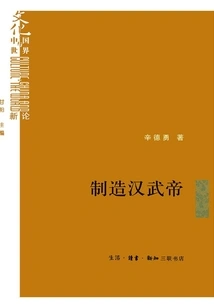
制造汉武帝:由汉武帝晚年政治形象的塑造看《资治通鉴》的历史构建(\
Xin Deyong
This book questions the historical conclusion that Emperor Wu of the Han Dynasty took a major political turn in his later years. Starting from the perspective of historical origin research and new historiography, this article discusses how "Zizhi Tongjian" written by Sima Guang shaped the political image of Emperor Wu of the Han Dynasty in his later years. It points out that there are serious problems with the historical materials "Hanwu Stories" on which it is based. It believes that Emperor Wu of the Han Dynasty did not change his political line as expected by Sima Guang in his later years, and points out that "Tongjian" cannot be used as a general historical material for studying the history of the Qin and Han Dynasties. This book is a case-based historical study, reminding researchers and ordinary readers that the accuracy of historical materials is the basis for the argumentation of historical works.
This book questions the historical conclusion that Emperor Wu of the Han Dynasty took a major political turn in his later years. Starting from the perspective of historical origin research and new historiography, this article discusses how "Zizhi Tongjian" written by Sima Guang shaped the political image of Emperor Wu of the Han Dynasty in his later years. It points out that there are serious problems with the historical materials "Hanwu Stories" on which it is based. It believes that Emperor Wu of the Han Dynasty did not change his political line as expected by Sima Guang in his later years, and points out that "Tongjian" cannot be used as a general historical material for studying the history of the Qin and Han Dynasties. This book is a case-based historical study, reminding researchers and ordinary readers that the accuracy of historical materials is the basis for the argumentation of historical works.
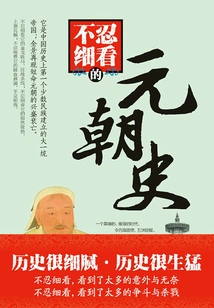
不忍细看的元朝史
Xie Guoji
The Yuan Dynasty lasted a total of ninety-seven years from the establishment of the Yuan Dynasty by Kublai Khan in 1271 to the Ming Taizu Zhu Yuanzhang captured Yuan Dadu in 1368 and the Yuan Shun Emperor, the last emperor of the Yuan Dynasty, fled north. If we count from the establishment of the Mongol Empire by Genghis Khan Temujin in 1206, it only lasted one hundred and sixty-two years. Compared with the previous Tang Dynasty, Song Dynasty and the subsequent Ming Dynasty and Qing Dynasty, there is no doubt that the Yuan Dynasty was a short-lived dynasty. Although the reign of the Yuan Dynasty was very short, this period of history was colorful and magnificent, and it was a colorful chapter in the long scroll of history. The Yuan Dynasty, as a connecting dynasty in Chinese history, had a profound impact on the history of China and the world. The Yuan Dynasty was neither a fleeting meteor nor a small country that suddenly appeared. Its brilliant and majestic appearance is like a Mongolian lion, showing its majesty without anger. Things change and people change.
The Yuan Dynasty lasted a total of ninety-seven years from the establishment of the Yuan Dynasty by Kublai Khan in 1271 to the Ming Taizu Zhu Yuanzhang captured Yuan Dadu in 1368 and the Yuan Shun Emperor, the last emperor of the Yuan Dynasty, fled north. If we count from the establishment of the Mongol Empire by Genghis Khan Temujin in 1206, it only lasted one hundred and sixty-two years. Compared with the previous Tang Dynasty, Song Dynasty and the subsequent Ming Dynasty and Qing Dynasty, there is no doubt that the Yuan Dynasty was a short-lived dynasty. Although the reign of the Yuan Dynasty was very short, this period of history was colorful and magnificent, and it was a colorful chapter in the long scroll of history. The Yuan Dynasty, as a connecting dynasty in Chinese history, had a profound impact on the history of China and the world. The Yuan Dynasty was neither a fleeting meteor nor a small country that suddenly appeared. Its brilliant and majestic appearance is like a Mongolian lion, showing its majesty without anger. Things change and people change.
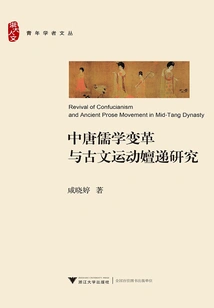
中唐儒学变革与古文运动嬗递研究
Xian Xiaoting
This article explores the occurrence, development and evolution of the ancient prose movement in the mid-Tang Dynasty from the intersection of literary history and intellectual history. It mainly contains six aspects: First, the occurrence and evolution of the early ancient prose movement. Second, the evolution of Confucianism and Taoism in the mid-Tang Dynasty. Third, the formation of the Han-Yu cultural group and its essential characteristics. Fourth, Liu, Liu, Yuan, Bai and the ancient prose movement. Fifth, the relationship between the ancient prose movement and the development of parallel prose. Sixth, the historical practice and historical thoughts of ancient writers in the Mid-Tang Dynasty.
This article explores the occurrence, development and evolution of the ancient prose movement in the mid-Tang Dynasty from the intersection of literary history and intellectual history. It mainly contains six aspects: First, the occurrence and evolution of the early ancient prose movement. Second, the evolution of Confucianism and Taoism in the mid-Tang Dynasty. Third, the formation of the Han-Yu cultural group and its essential characteristics. Fourth, Liu, Liu, Yuan, Bai and the ancient prose movement. Fifth, the relationship between the ancient prose movement and the development of parallel prose. Sixth, the historical practice and historical thoughts of ancient writers in the Mid-Tang Dynasty.
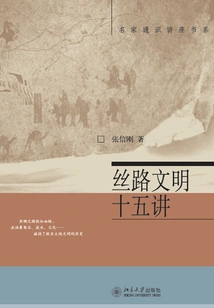
丝路文明十五讲
Zhang Xingang
This book is based on the general courses taught by the author at Shanghai Jiao Tong University, and takes the historical Silk Road as the main line to comprehensively sort out the political, economic, and cultural exchanges of human civilization on the Eurasian continent from prehistory to 1500. The author first summarizes the origins and characteristics of civilization, and then gives a lively, concrete and detailed introduction to the history of the Silk Road civilization, focusing on topics such as Alexander's Eastern Expedition and Zhang Qian's hollowing out, Kumarajiva's translation of scriptures and Fa Xian's pursuit of Dharma, the Sogdians in Sino-Western exchanges, the spread of paper to the west and the spread of letters to the east, the founding and spread of Islam, the westward migration of the Turks and the impact of the Mongolian conquest on Eurasian civilization, etc. The book outlines the history of Eurasian civilization through the Silk Road, making the complicated and magnificent history of human civilization clear and accessible.
This book is based on the general courses taught by the author at Shanghai Jiao Tong University, and takes the historical Silk Road as the main line to comprehensively sort out the political, economic, and cultural exchanges of human civilization on the Eurasian continent from prehistory to 1500. The author first summarizes the origins and characteristics of civilization, and then gives a lively, concrete and detailed introduction to the history of the Silk Road civilization, focusing on topics such as Alexander's Eastern Expedition and Zhang Qian's hollowing out, Kumarajiva's translation of scriptures and Fa Xian's pursuit of Dharma, the Sogdians in Sino-Western exchanges, the spread of paper to the west and the spread of letters to the east, the founding and spread of Islam, the westward migration of the Turks and the impact of the Mongolian conquest on Eurasian civilization, etc. The book outlines the history of Eurasian civilization through the Silk Road, making the complicated and magnificent history of human civilization clear and accessible.
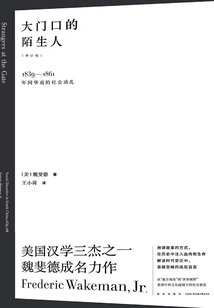
大门口的陌生人:1839—1861年间华南的社会动乱
M
This book is Professor Wei Feide's doctoral thesis, an academic work that studies China's transformation into modern times in the late Qing Dynasty. The main "gate" to China in the Qing Dynasty was Guangzhou, and the "strangers" were foreigners. As the name suggests, "Strangers at the Gate" is related to the history of foreigners breaking into Guangzhou (the gate of China), and about the foreign invasion of China during the Opium War. However, this book is not mainly based on this study. Instead, it uses the two Opium Wars of the British invasion of China as clues to study the social dynamics of Guangzhou and Guangdong Province during this historical period, such as the attitudes of the government, gentry, regiment training, farmers, etc. Towards foreign countries; their respective activities, mutual relationships and changes, thereby revealing some trends in the beginning of modern Chinese history.
This book is Professor Wei Feide's doctoral thesis, an academic work that studies China's transformation into modern times in the late Qing Dynasty. The main "gate" to China in the Qing Dynasty was Guangzhou, and the "strangers" were foreigners. As the name suggests, "Strangers at the Gate" is related to the history of foreigners breaking into Guangzhou (the gate of China), and about the foreign invasion of China during the Opium War. However, this book is not mainly based on this study. Instead, it uses the two Opium Wars of the British invasion of China as clues to study the social dynamics of Guangzhou and Guangdong Province during this historical period, such as the attitudes of the government, gentry, regiment training, farmers, etc. Towards foreign countries; their respective activities, mutual relationships and changes, thereby revealing some trends in the beginning of modern Chinese history.
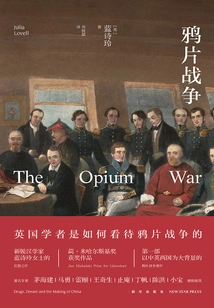
Opium War
History鸦片战争
(uk) Lan Shiling
The Opium War is a topic that both China and Britain should face together, and this new book by Ms. Lan Shiling, a cutting-edge British sinologist, examines it from a broader perspective. It aims to allow us to transcend regional restrictions and seriously reflect on the evils and contradictions of this world conflict. Lan Shiling fully absorbed existing relevant research results (such as Mao Haijian's "The Collapse of the Celestial Dynasty: Re-Study of the Opium War"), and was able to find more moving historical details in original Chinese and English historical materials. Thanks to her profound literary attainments, historical figures such as Lin Zexu, Qi Shan, and Yi Lu seem to emerge before her eyes through her descriptions. In addition to detailing the war process, Lan Shiling also described the complex historical memories of the war between the Chinese and British people, especially the role it played in the construction of China's modern nation.
The Opium War is a topic that both China and Britain should face together, and this new book by Ms. Lan Shiling, a cutting-edge British sinologist, examines it from a broader perspective. It aims to allow us to transcend regional restrictions and seriously reflect on the evils and contradictions of this world conflict. Lan Shiling fully absorbed existing relevant research results (such as Mao Haijian's "The Collapse of the Celestial Dynasty: Re-Study of the Opium War"), and was able to find more moving historical details in original Chinese and English historical materials. Thanks to her profound literary attainments, historical figures such as Lin Zexu, Qi Shan, and Yi Lu seem to emerge before her eyes through her descriptions. In addition to detailing the war process, Lan Shiling also described the complex historical memories of the war between the Chinese and British people, especially the role it played in the construction of China's modern nation.
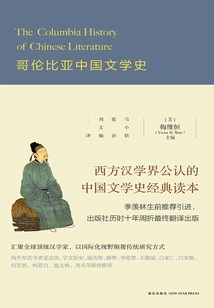
哥伦比亚中国文学史(全两册)
(us) Editor-in-chief Mei Weiheng
This book comprehensively depicts various scenes of Chinese literary tradition, and takes the history of world civilization and literature as reference. The era spans from ancient times to the present day, and the narrative objects also include literary works by writers from Hong Kong, Macao and Taiwan, and overseas Chinese. For the first time, chapters are divided into themes according to literary genres such as poetry, prose, novels, and dramas. The first chapter provides an overview of the key elements of Chinese literature. Each chapter is organized in chronological order and is an independent chapter. Topics covered include: the historical background of relevant works, the influence of popular culture, the impact of Buddhism, the role of women, exchanges with ethnic minority literature and language, etc.
This book comprehensively depicts various scenes of Chinese literary tradition, and takes the history of world civilization and literature as reference. The era spans from ancient times to the present day, and the narrative objects also include literary works by writers from Hong Kong, Macao and Taiwan, and overseas Chinese. For the first time, chapters are divided into themes according to literary genres such as poetry, prose, novels, and dramas. The first chapter provides an overview of the key elements of Chinese literature. Each chapter is organized in chronological order and is an independent chapter. Topics covered include: the historical background of relevant works, the influence of popular culture, the impact of Buddhism, the role of women, exchanges with ethnic minority literature and language, etc.
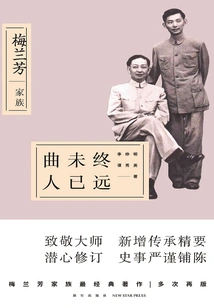
曲未终人已远:梅兰芳家族
Li Zhongming Tan Xiuying
Every era has its own way of telling stories, and the story of the Mei family is particularly touching. Because although silk and bamboo are often melodious and sleeves are fluttering on the stage, dynasties are changing and war is turbulent off the stage. Peking Opera master Mei Lanfang was born in such an era. With his excellent opera talent and loyal patriotic sentiment, he created a generation of famous actress Mei Lanfang who has a legendary life that spans the ages. This book tells the story of four generations of the Mei family, both on and off the stage. From Mei Qiaoling, the grandfather of "Tongguang Thirteen Wonders", to Mei Zhufen, the father who blossomed in a short artistic life, to Mei Baojiu and Mei Baoyue, the descendants who have reformed new plays and created an original school, shouldering the responsibility of inheriting the Mei School, and many Liyuan children, they jointly staged an epic drama on the stage of the times.
Every era has its own way of telling stories, and the story of the Mei family is particularly touching. Because although silk and bamboo are often melodious and sleeves are fluttering on the stage, dynasties are changing and war is turbulent off the stage. Peking Opera master Mei Lanfang was born in such an era. With his excellent opera talent and loyal patriotic sentiment, he created a generation of famous actress Mei Lanfang who has a legendary life that spans the ages. This book tells the story of four generations of the Mei family, both on and off the stage. From Mei Qiaoling, the grandfather of "Tongguang Thirteen Wonders", to Mei Zhufen, the father who blossomed in a short artistic life, to Mei Baojiu and Mei Baoyue, the descendants who have reformed new plays and created an original school, shouldering the responsibility of inheriting the Mei School, and many Liyuan children, they jointly staged an epic drama on the stage of the times.
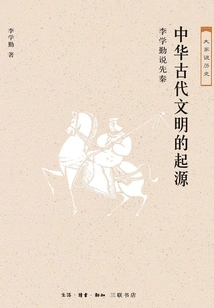
中华古代文明的起源:李学勤说先秦
Li Xueqin
The book begins with "Review and Prospects of Research on Ancient Chinese Civilization in the Past Hundred Years" as an introduction, which runs through Mr. Li Xueqin's academic thoughts. For the general part, we have selected 4 articles, which give a general overview of the formation and development of ancient Chinese civilization; for the sub-part, we have selected 34 articles, starting from Chu Yan and Emperor Huang, the two most important figures in ancient Chinese civilization, and going through the Xia, Shang and Zhou Dynasties, including the Spring and Autumn Period and the War, and strive to reflect the main characteristics of different historical periods in the formation and development of ancient Chinese civilization. There are 7 articles at the back of the book, including the author's biography and a list of works, which can be used as a reference.
The book begins with "Review and Prospects of Research on Ancient Chinese Civilization in the Past Hundred Years" as an introduction, which runs through Mr. Li Xueqin's academic thoughts. For the general part, we have selected 4 articles, which give a general overview of the formation and development of ancient Chinese civilization; for the sub-part, we have selected 34 articles, starting from Chu Yan and Emperor Huang, the two most important figures in ancient Chinese civilization, and going through the Xia, Shang and Zhou Dynasties, including the Spring and Autumn Period and the War, and strive to reflect the main characteristics of different historical periods in the formation and development of ancient Chinese civilization. There are 7 articles at the back of the book, including the author's biography and a list of works, which can be used as a reference.
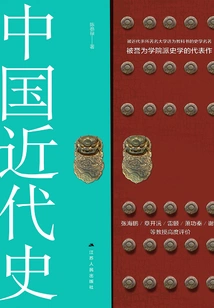
Modern History of China
History中国近代史
Chen Gonglu
"Modern History of China" starts from the geography and natural environment. It first outlines the living conditions and life characteristics of the people of various ethnic groups in our country and surrounding areas, and then sorts out the history of China before modern times from the aspects of products, ideas, literature, science, and art. The history described in "Modern History of China" begins with the Opium War and covers several major themes such as the Opium War, the Taiping Heavenly Kingdom, the Sino-Japanese War of 1888-1898, the Reform Movement of 1898, the Boxer Rebellion, the Revolution of 1911, and the situation since the Republic of China. It provides a basic narrative outline for modern Chinese history. The book is rich in historical materials and the author's descriptions are vivid, giving people the feeling of reading a chapter-by-chapter novel.
"Modern History of China" starts from the geography and natural environment. It first outlines the living conditions and life characteristics of the people of various ethnic groups in our country and surrounding areas, and then sorts out the history of China before modern times from the aspects of products, ideas, literature, science, and art. The history described in "Modern History of China" begins with the Opium War and covers several major themes such as the Opium War, the Taiping Heavenly Kingdom, the Sino-Japanese War of 1888-1898, the Reform Movement of 1898, the Boxer Rebellion, the Revolution of 1911, and the situation since the Republic of China. It provides a basic narrative outline for modern Chinese history. The book is rich in historical materials and the author's descriptions are vivid, giving people the feeling of reading a chapter-by-chapter novel.
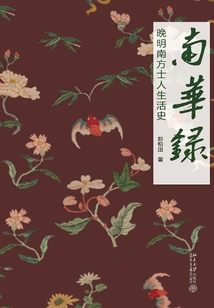
南华录:晚明南方士人生活史
Zhao Baitian
Flowers are the essence, and people are also the essence. The most essence is the magnificent and decadent material and spiritual life of that era, as mentioned in the title of this book.
Flowers are the essence, and people are also the essence. The most essence is the magnificent and decadent material and spiritual life of that era, as mentioned in the title of this book.
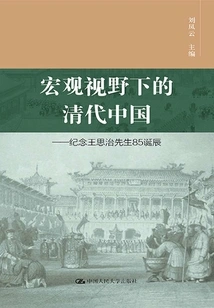
Qing Dynasty China from a Macroscopic Perspective: Commemorating the 85th Birthday of Mr. Wang Sizhi
History宏观视野下的清代中国:纪念王思治先生85诞辰
Liu Fengyun
Wang Sizhi (1929-2012), a famous Chinese historian and a well-respected scholar in the field of Qing history. He has many incisive expositions and arguments on the periodization of ancient Chinese history, the issue of upright officials in feudal society, the historical status of the Qing Dynasty, succession to the throne, clan organization and other issues, showing a macroscopic view of history, clear thinking, profound theory and superb thinking. This book is a collection of academic seminars commemorating the 85th birthday of Mr. Wang Sizhi. It recalls every detail of Mr. Wang Sizhi's life and shows all aspects of China in the Qing Dynasty from a macro perspective.
Wang Sizhi (1929-2012), a famous Chinese historian and a well-respected scholar in the field of Qing history. He has many incisive expositions and arguments on the periodization of ancient Chinese history, the issue of upright officials in feudal society, the historical status of the Qing Dynasty, succession to the throne, clan organization and other issues, showing a macroscopic view of history, clear thinking, profound theory and superb thinking. This book is a collection of academic seminars commemorating the 85th birthday of Mr. Wang Sizhi. It recalls every detail of Mr. Wang Sizhi's life and shows all aspects of China in the Qing Dynasty from a macro perspective.
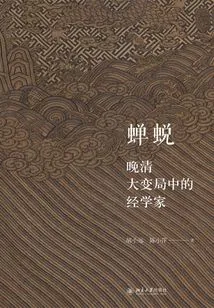
蝉蜕:晚清大变局中的经学家
Hu Xiaoyuan Chen Xiaoping
"Those books are too old, and I am too old, and are of no use to this world." "These books are all newly written by you. How can they be too old and useless?" "Do you think these books can save the Beiyang Navy? Do you think these books can save the country? Do you think these books can save China?" This book uses a deep and elegant narrative technique to portray the generation of intellectuals headed by Sun Yirang, the master of Pu Xue in the late Qing Dynasty. Situated in a "big change that has not happened in three thousand years", they encountered unprecedented complex situations and differentiated outcomes, and the ambivalence and spiritual crisis when they chose to rely on or break away from traditional modes of thinking and behavior. It also describes their different ways of spiritual breakthrough: some are clinging to the old and falling into depression, some are lingering and losing ground, and some are struggling to find ways to make a new start. This is the meaning of the book's title "Cicada Slough". The whole book is like a long ink epic scroll that unfolds gradually, showing an era of wind and rain, turbulence in Kyushu, and the light of day is still far away. The Opium War, the Taiping Heavenly Kingdom, the Sino-Japanese War of Sino-Japanese War, the Gengzi Revolution, the Hundred Days Reform... Major historical events flashed through the screen one by one; Lan Guiren, Zeng Guofan, Li Hongzhang, Zhang Zhidong, Yu Quyuan, Sun Yirang, Weng Tonghe, Huang Shaoji, Rong Hong, Sheng Xuanhuai, Kang Youwei, Zhang Jian, politicians, Confucian scholars, old-school scholars, new-wave scribes, and revolutionaries gradually appeared in the clamor, while the inheritance line of intellectual history was the faint shadow of distant mountains in the background.
"Those books are too old, and I am too old, and are of no use to this world." "These books are all newly written by you. How can they be too old and useless?" "Do you think these books can save the Beiyang Navy? Do you think these books can save the country? Do you think these books can save China?" This book uses a deep and elegant narrative technique to portray the generation of intellectuals headed by Sun Yirang, the master of Pu Xue in the late Qing Dynasty. Situated in a "big change that has not happened in three thousand years", they encountered unprecedented complex situations and differentiated outcomes, and the ambivalence and spiritual crisis when they chose to rely on or break away from traditional modes of thinking and behavior. It also describes their different ways of spiritual breakthrough: some are clinging to the old and falling into depression, some are lingering and losing ground, and some are struggling to find ways to make a new start. This is the meaning of the book's title "Cicada Slough". The whole book is like a long ink epic scroll that unfolds gradually, showing an era of wind and rain, turbulence in Kyushu, and the light of day is still far away. The Opium War, the Taiping Heavenly Kingdom, the Sino-Japanese War of Sino-Japanese War, the Gengzi Revolution, the Hundred Days Reform... Major historical events flashed through the screen one by one; Lan Guiren, Zeng Guofan, Li Hongzhang, Zhang Zhidong, Yu Quyuan, Sun Yirang, Weng Tonghe, Huang Shaoji, Rong Hong, Sheng Xuanhuai, Kang Youwei, Zhang Jian, politicians, Confucian scholars, old-school scholars, new-wave scribes, and revolutionaries gradually appeared in the clamor, while the inheritance line of intellectual history was the faint shadow of distant mountains in the background.
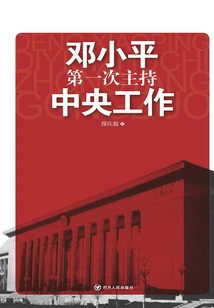
邓小平第一次主持中央工作
Xue Qingchao
In 1975, the First Session of the Fourth National People's Congress was successfully held, setting the grand goal of realizing the four modernizations by the end of the 20th century. Deng Xiaoping served as Vice Chairman of the Central Committee of the Communist Party of China, Vice Premier of the State Council, Vice Chairman of the Central Military Commission and Chief of General Staff of the People's Liberation Army. He presided over the work of the Central Committee and held meetings on industry, agriculture and enlarged meetings of the Military Commission to comprehensively rectify all aspects and achieve great results. At the end of 1975, the "Gang of Four" launched a campaign to "criticize Deng and counter the right-leaning trend of overturning convictions", and the comprehensive rectification was forced to be interrupted.
In 1975, the First Session of the Fourth National People's Congress was successfully held, setting the grand goal of realizing the four modernizations by the end of the 20th century. Deng Xiaoping served as Vice Chairman of the Central Committee of the Communist Party of China, Vice Premier of the State Council, Vice Chairman of the Central Military Commission and Chief of General Staff of the People's Liberation Army. He presided over the work of the Central Committee and held meetings on industry, agriculture and enlarged meetings of the Military Commission to comprehensively rectify all aspects and achieve great results. At the end of 1975, the "Gang of Four" launched a campaign to "criticize Deng and counter the right-leaning trend of overturning convictions", and the comprehensive rectification was forced to be interrupted.
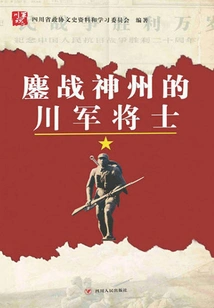
鏖战神州的川军将士
Sichuan Provincial Cppcc Cultural And Historical Materials And Study Committee
During the Anti-Japanese War, a total of 9 military airports were built in Sichuan, including 4 strategic bombing airports (Xinjin, Pengshan, Guanghan, Qionglai) and 5 expulsion airports including Mingshan and Shuangliu, collectively referred to as special projects. On June 16, 1944, the Chinese and American air forces launched a long-distance bombing of the Japanese mainland from Sichuan, which attracted world attention. CBS correspondent Stuart Stuart reported: "Such a huge airport was built by hundreds of thousands of Chinese farmers. The manpower is so huge that it has been used to build the Great Wall for two thousand years." It's rare." The people of Sichuan built more than 2,000 kilometers of Sichuan-Yunnan, Sichuan-Shaanxi and other national defense highways under the condition of shouldering the burden, and paid a huge price. For example, when building the Le (Shan) west (Chang) Highway, more than 1,400 migrant workers were sacrificed to open up the 7-kilometer section of Yanwogou.
During the Anti-Japanese War, a total of 9 military airports were built in Sichuan, including 4 strategic bombing airports (Xinjin, Pengshan, Guanghan, Qionglai) and 5 expulsion airports including Mingshan and Shuangliu, collectively referred to as special projects. On June 16, 1944, the Chinese and American air forces launched a long-distance bombing of the Japanese mainland from Sichuan, which attracted world attention. CBS correspondent Stuart Stuart reported: "Such a huge airport was built by hundreds of thousands of Chinese farmers. The manpower is so huge that it has been used to build the Great Wall for two thousand years." It's rare." The people of Sichuan built more than 2,000 kilometers of Sichuan-Yunnan, Sichuan-Shaanxi and other national defense highways under the condition of shouldering the burden, and paid a huge price. For example, when building the Le (Shan) west (Chang) Highway, more than 1,400 migrant workers were sacrificed to open up the 7-kilometer section of Yanwogou.
Taoism and the World
History道术与天下
Liu Dong
"Taoism and the World" contains Mr. Liu Dong's recent academic works, divided into five volumes: contemporary research, traditional research, comparative research, sinological research, and educational research. With its consistent sensitivity and profundity, it addresses important issues in multiple research fields. The collected articles are collected for the first time, including essays and interviews. The writing style is eclectic, showing his lively thoughts and comprehensive mind.
"Taoism and the World" contains Mr. Liu Dong's recent academic works, divided into five volumes: contemporary research, traditional research, comparative research, sinological research, and educational research. With its consistent sensitivity and profundity, it addresses important issues in multiple research fields. The collected articles are collected for the first time, including essays and interviews. The writing style is eclectic, showing his lively thoughts and comprehensive mind.
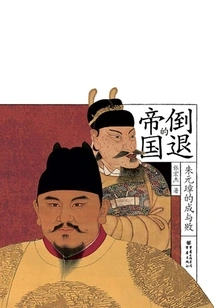
倒退的帝国:朱元璋的成与败
Zhang Hongjie
In 1368 AD, the forty-year-old Zhu Yuanzhang proclaimed himself emperor in Yingtian Mansion after defeating various peasant uprising armies, and established the last huge empire ruled by the Han people. He also became the only true "peasant emperor" in Chinese history. As Zhao Yi of the Qing Dynasty said: "Gai Mingzu is a man who is a sage, a hero, and a thief." He is good at winning people's hearts, treats intellectuals favorably, has an excellent view of the overall situation, and has decisiveness. Zhu Yuanzhang's "sage" qualities that are different from those of the powerful in the late Yuan Dynasty helped him ascend to the high position. When Zhu Yuanzhang defeated all the heroes and ascended to the throne, he showed his green face and fangs, overthrew the eight hundred years of traditional political system with cruel and terrifying means of massacre, took autocratic politics to the extreme, deposed the prime minister, slaughtered meritorious officials arbitrarily, established a royal guard, despised civil servants, implemented a strict Lijia system to force people to migrate, interfered with people's freedom of employment, strictly restricted foreign trade, etc. What's more important is that Zhu Yuanzhang injected poison refined from the think tanks of past dynasties into the people's brains, paralyzing the nerves of the entire China into a vegetative state, fundamentally killing everyone's individuality, initiative, and creativity, and domesticating them into obedient people who specialize in providing food. Zhu Yuanzhang's success and failure are both inseparable from the cultural soil of "China". This book puts Zhu Yuanzhang into the context of Chinese culture and makes a detailed analysis, trying to present a multi-dimensional Zhu Yuanzhang to readers.
In 1368 AD, the forty-year-old Zhu Yuanzhang proclaimed himself emperor in Yingtian Mansion after defeating various peasant uprising armies, and established the last huge empire ruled by the Han people. He also became the only true "peasant emperor" in Chinese history. As Zhao Yi of the Qing Dynasty said: "Gai Mingzu is a man who is a sage, a hero, and a thief." He is good at winning people's hearts, treats intellectuals favorably, has an excellent view of the overall situation, and has decisiveness. Zhu Yuanzhang's "sage" qualities that are different from those of the powerful in the late Yuan Dynasty helped him ascend to the high position. When Zhu Yuanzhang defeated all the heroes and ascended to the throne, he showed his green face and fangs, overthrew the eight hundred years of traditional political system with cruel and terrifying means of massacre, took autocratic politics to the extreme, deposed the prime minister, slaughtered meritorious officials arbitrarily, established a royal guard, despised civil servants, implemented a strict Lijia system to force people to migrate, interfered with people's freedom of employment, strictly restricted foreign trade, etc. What's more important is that Zhu Yuanzhang injected poison refined from the think tanks of past dynasties into the people's brains, paralyzing the nerves of the entire China into a vegetative state, fundamentally killing everyone's individuality, initiative, and creativity, and domesticating them into obedient people who specialize in providing food. Zhu Yuanzhang's success and failure are both inseparable from the cultural soil of "China". This book puts Zhu Yuanzhang into the context of Chinese culture and makes a detailed analysis, trying to present a multi-dimensional Zhu Yuanzhang to readers.
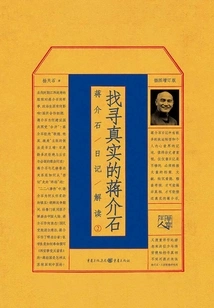
找寻真实的蒋介石:蒋介石日记解读(2)
Yang Tianshi
"Searching for the Real Chiang Kai-shek: Interpretation of Chiang Kai-shek's Diary 2" is a monograph written by the famous historian Yang Tianshi on the study of Chiang Kai-shek's life and thoughts. It is compiled from a series of papers interpreting Chiang Kai-shek's diary, including the cooperation and division between the Kuomintang and the Communist Party, the strategy against Japan during the Anti-Japanese War, the relationship between China and major European countries during World War II, Chiang Kai-shek's reflection after his defeat in Taiwan, and Chiang Kai-shek's family, etc. In the book, Yang Tianshi adopts a unique perspective starting from Chiang Kai-shek's diary. Based on various versions of Chiang Kai-shek's diary and related historical materials stored in archives and archives at home and abroad, through careful reading, comparison, careful textual research and full interpretation, Yang Tianshi deeply explores Chiang Kai-shek's life experience, ideological evolution and true psychology, and uses vivid writing to reveal the roots of Chiang Kai-shek's many decisions and actions in historical events.
"Searching for the Real Chiang Kai-shek: Interpretation of Chiang Kai-shek's Diary 2" is a monograph written by the famous historian Yang Tianshi on the study of Chiang Kai-shek's life and thoughts. It is compiled from a series of papers interpreting Chiang Kai-shek's diary, including the cooperation and division between the Kuomintang and the Communist Party, the strategy against Japan during the Anti-Japanese War, the relationship between China and major European countries during World War II, Chiang Kai-shek's reflection after his defeat in Taiwan, and Chiang Kai-shek's family, etc. In the book, Yang Tianshi adopts a unique perspective starting from Chiang Kai-shek's diary. Based on various versions of Chiang Kai-shek's diary and related historical materials stored in archives and archives at home and abroad, through careful reading, comparison, careful textual research and full interpretation, Yang Tianshi deeply explores Chiang Kai-shek's life experience, ideological evolution and true psychology, and uses vivid writing to reveal the roots of Chiang Kai-shek's many decisions and actions in historical events.
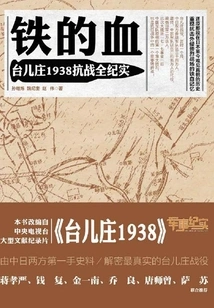
铁的血:台儿庄1938抗战全纪实
Sun Jilian Wei Jikui Zhao Wei
The Central Army, Northwest Army, Northeast Army, Sichuan Army, Jin Army, Zhejiang Army, Yunnan Army, Guangxi Army and local security forces participated in the fighting in and around Taierzhuang, as well as the Eighth Route Army, New Fourth Army led by the Communist Party of China, the New Fourth Army and the general public. In the long journey of the Anti-Japanese War, different political parties and factions laughed away their grudges in the face of resisting foreign humiliation. For the sake of national freedom, they melted their blood together!
The Central Army, Northwest Army, Northeast Army, Sichuan Army, Jin Army, Zhejiang Army, Yunnan Army, Guangxi Army and local security forces participated in the fighting in and around Taierzhuang, as well as the Eighth Route Army, New Fourth Army led by the Communist Party of China, the New Fourth Army and the general public. In the long journey of the Anti-Japanese War, different political parties and factions laughed away their grudges in the face of resisting foreign humiliation. For the sake of national freedom, they melted their blood together!
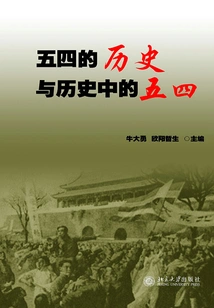
五四的历史与历史中的五四
Niu Dayong Ouyang Zhesheng
"The History of the May Fourth Movement and the May Fourth Movement in History" Introduction: The May Fourth Movement was the most enduringly influential and controversial historical event in modern China. To commemorate this great event of epoch-making historical significance, Peking University held an international academic symposium to commemorate the 90th anniversary of the May Fourth Movement in May 2009 with the theme of "The History of May Fourth and the May Fourth in History". Chinese and foreign scholars attending the meeting conducted extensive and in-depth discussions on issues such as the May Fourth Movement and Chinese modern thought, the May Fourth Movement and Chinese traditional culture, the May Fourth Movement and the development of Chinese society, the characters and ideas of the May Fourth period, the politics and academics of the May Fourth period, the recollection of the May Fourth Movement and the reflection on the May Fourth Movement, reflecting the new progress in the academic research on this historical event in the new century. This collection of essays is a collection of this academic achievement.
"The History of the May Fourth Movement and the May Fourth Movement in History" Introduction: The May Fourth Movement was the most enduringly influential and controversial historical event in modern China. To commemorate this great event of epoch-making historical significance, Peking University held an international academic symposium to commemorate the 90th anniversary of the May Fourth Movement in May 2009 with the theme of "The History of May Fourth and the May Fourth in History". Chinese and foreign scholars attending the meeting conducted extensive and in-depth discussions on issues such as the May Fourth Movement and Chinese modern thought, the May Fourth Movement and Chinese traditional culture, the May Fourth Movement and the development of Chinese society, the characters and ideas of the May Fourth period, the politics and academics of the May Fourth period, the recollection of the May Fourth Movement and the reflection on the May Fourth Movement, reflecting the new progress in the academic research on this historical event in the new century. This collection of essays is a collection of this academic achievement.
20th Century World History
History二十世纪世界史
Wang Hongsheng
"World History in the 20th Century" is a public elective course textbook at Peking University. It provides an syllabus and detailed introduction to the major historical events that occurred in major regions and countries in the world in the 20th century. The content includes the First and Second World Wars, the Russian October Revolution, the national liberation movements in Asia, Africa and Latin America, the Middle East issue, the Cold War and détente between the United States and the Soviet Union, the European unification process, the exploration of the Soviet socialist road, the rise of East Asia, etc.
"World History in the 20th Century" is a public elective course textbook at Peking University. It provides an syllabus and detailed introduction to the major historical events that occurred in major regions and countries in the world in the 20th century. The content includes the First and Second World Wars, the Russian October Revolution, the national liberation movements in Asia, Africa and Latin America, the Middle East issue, the Cold War and détente between the United States and the Soviet Union, the European unification process, the exploration of the Soviet socialist road, the rise of East Asia, etc.
民族复兴的历史起点:当代北大学者论五四运动
Zhang Guoyou
"The Historical Starting Point of National Rejuvenation: Contemporary Peking University Scholars on the May 4th Movement" content introduction: 90 years ago, the May 4th Movement was first organized and launched by young students from Peking University. It was a great patriotic revolutionary movement that was completely anti-imperialist and anti-feudal. It was also a great ideological emancipation movement and a new culture movement. This movement not only launched China's new democratic revolution and became an important turning point in China's modern history, but also promoted the combination of patriotism and Marxism of the Chinese people, forming the great May Fourth spirit with patriotism as the core with the characteristics of the new era. Under the new historical conditions, inheriting and carrying forward the spirit of May Fourth patriotism is of great significance for uniting and rallying people of all ethnic groups in the country to work together to develop socialism with Chinese characteristics and promote the great rejuvenation of the Chinese nation. Peking University is the center of the New Culture Movement and the birthplace of the May Fourth Movement. The May Fourth Movement was first initiated by young students from Peking University, and many of the backbones of the movement were Peking University students. Since the May 4th Movement, the spirit of patriotism, progress, democracy, and science has been passed down from generation to generation among Peking University students. Peking University teachers and students have continued to commemorate the May 4th Movement, elaborate on the May 4th spirit and its historical role, and have produced a large number of articles and writings. These articles and writings are not only commemorations and elaborations of the May 4th Movement, but also reflect the research and thinking of Peking University teachers and students on China's modern development process from one aspect, and have high ideological and historical value. On the occasion of the 90th anniversary of the May Fourth Movement, editing and publishing articles and writings about the May Fourth Movement by contemporary Peking University scholars will help teachers, students and young people to further understand the May Fourth Movement and China's modern history. It will help further explain how history and the people chose Marxism, socialism and the Communist Party of China, thereby further enhancing people's theoretical identification with the Party and New China.
"The Historical Starting Point of National Rejuvenation: Contemporary Peking University Scholars on the May 4th Movement" content introduction: 90 years ago, the May 4th Movement was first organized and launched by young students from Peking University. It was a great patriotic revolutionary movement that was completely anti-imperialist and anti-feudal. It was also a great ideological emancipation movement and a new culture movement. This movement not only launched China's new democratic revolution and became an important turning point in China's modern history, but also promoted the combination of patriotism and Marxism of the Chinese people, forming the great May Fourth spirit with patriotism as the core with the characteristics of the new era. Under the new historical conditions, inheriting and carrying forward the spirit of May Fourth patriotism is of great significance for uniting and rallying people of all ethnic groups in the country to work together to develop socialism with Chinese characteristics and promote the great rejuvenation of the Chinese nation. Peking University is the center of the New Culture Movement and the birthplace of the May Fourth Movement. The May Fourth Movement was first initiated by young students from Peking University, and many of the backbones of the movement were Peking University students. Since the May 4th Movement, the spirit of patriotism, progress, democracy, and science has been passed down from generation to generation among Peking University students. Peking University teachers and students have continued to commemorate the May 4th Movement, elaborate on the May 4th spirit and its historical role, and have produced a large number of articles and writings. These articles and writings are not only commemorations and elaborations of the May 4th Movement, but also reflect the research and thinking of Peking University teachers and students on China's modern development process from one aspect, and have high ideological and historical value. On the occasion of the 90th anniversary of the May Fourth Movement, editing and publishing articles and writings about the May Fourth Movement by contemporary Peking University scholars will help teachers, students and young people to further understand the May Fourth Movement and China's modern history. It will help further explain how history and the people chose Marxism, socialism and the Communist Party of China, thereby further enhancing people's theoretical identification with the Party and New China.
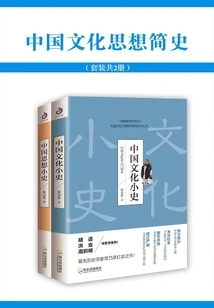
中国文化思想简史(套装共2册)
Chang Naide
This set of books includes two volumes: "A Brief History of Chinese Thought" and "A Brief History of Chinese Culture". "A Brief History of Chinese Culture and Thought (Comprehensively Presenting the Evolution of Chinese Thought and Culture) (Set of 2 Volumes)" takes the popularization of Chinese thought and culture as the starting point, uses concise and popular language and short and concise length to describe the characteristics, formation and development process of thought and culture in various historical periods from primitive society to the "May 4th New Culture Movement", as well as their role and influence. To a large extent, it meets the needs of the public to understand the history of thought and culture. "A Brief History of Chinese Thought" and "A Brief History of Chinese Culture" have won the favor and praise of many readers since their publication.
This set of books includes two volumes: "A Brief History of Chinese Thought" and "A Brief History of Chinese Culture". "A Brief History of Chinese Culture and Thought (Comprehensively Presenting the Evolution of Chinese Thought and Culture) (Set of 2 Volumes)" takes the popularization of Chinese thought and culture as the starting point, uses concise and popular language and short and concise length to describe the characteristics, formation and development process of thought and culture in various historical periods from primitive society to the "May 4th New Culture Movement", as well as their role and influence. To a large extent, it meets the needs of the public to understand the history of thought and culture. "A Brief History of Chinese Thought" and "A Brief History of Chinese Culture" have won the favor and praise of many readers since their publication.
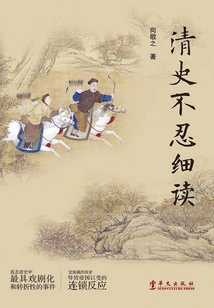
清史不忍细读
Pay Tribute To Him
By reading a large number of Ming and Qing records, daily life notes, Zhu comments, memorials, archives, notes, local chronicles, etc., The author uses a "historical writing" method to describe the Qing Dynasty in "Qing History Cannot Bear to Read Closely". There are court disputes, palace explorations, authenticity analysis, praise and criticism, positive and negative criticisms. He directly hits the dramatic and turning events in Qing history, and detects the chain reaction of accidental factors that led to the great changes in the empire. The alternation of light and dark is thrilling. The book is divided into five chapters, namely "The Destiny of Liaodong", "Dingping the Central Plains", "The Confusion of Kang and Yong", "The Rise and Decline of Qian and Jiaxing" and "The Afterglow of the Empire". Open this book and you will see the evolution of the Qing Dynasty in the past three hundred years: passion and cold-bloodedness, debauchery and restraint, wisdom and stupidity, prosperity and decline...
By reading a large number of Ming and Qing records, daily life notes, Zhu comments, memorials, archives, notes, local chronicles, etc., The author uses a "historical writing" method to describe the Qing Dynasty in "Qing History Cannot Bear to Read Closely". There are court disputes, palace explorations, authenticity analysis, praise and criticism, positive and negative criticisms. He directly hits the dramatic and turning events in Qing history, and detects the chain reaction of accidental factors that led to the great changes in the empire. The alternation of light and dark is thrilling. The book is divided into five chapters, namely "The Destiny of Liaodong", "Dingping the Central Plains", "The Confusion of Kang and Yong", "The Rise and Decline of Qian and Jiaxing" and "The Afterglow of the Empire". Open this book and you will see the evolution of the Qing Dynasty in the past three hundred years: passion and cold-bloodedness, debauchery and restraint, wisdom and stupidity, prosperity and decline...
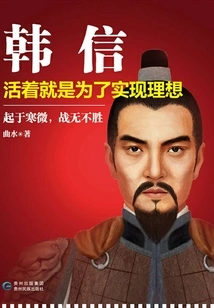
韩信:活着就是为了实现理想
Qushui
Han Xin's life is a legendary life. He was in poverty when he was young, had no food and clothing, and his life gradually improved after he went to the military camp. Seeing that his destiny was turning around, he still could not get the favor of the God of Destiny. In desperation, he had to change his hands and gamble on luck, and his talent was almost not recognized. Fortunately, Xiao He had a keen eye for talents, so Han Xin had a gorgeous stage to show his ambition. With the stage, Han Xin's talent blossomed like flowers in spring. It may be fate, or it may be that Han Xin was too good and lost his life when he was no longer needed. The author uses meticulous writing to describe Han Xin's extraordinary life full of setbacks. This is the basic content of this book.
Han Xin's life is a legendary life. He was in poverty when he was young, had no food and clothing, and his life gradually improved after he went to the military camp. Seeing that his destiny was turning around, he still could not get the favor of the God of Destiny. In desperation, he had to change his hands and gamble on luck, and his talent was almost not recognized. Fortunately, Xiao He had a keen eye for talents, so Han Xin had a gorgeous stage to show his ambition. With the stage, Han Xin's talent blossomed like flowers in spring. It may be fate, or it may be that Han Xin was too good and lost his life when he was no longer needed. The author uses meticulous writing to describe Han Xin's extraordinary life full of setbacks. This is the basic content of this book.
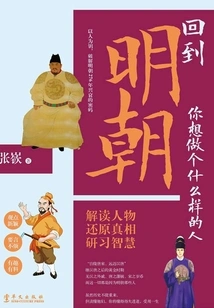
回到明朝,你想做个什么样的人
Zhang Xin
The Ming Dynasty is a dynasty in history that makes people imagine countless things. If you returned to the Ming Dynasty, what kind of person would you like to be? Be an emperor or a prince? Be a minister or a general? What should you pay attention to if you accidentally become a eunuch? Of course, many people may choose to be ordinary people and want to examine the hundreds of years of changes in the Ming Dynasty from the eyes of ordinary people. This book takes human beings as the subject, and through different identities, readers can experience what it was like to grow up in the Ming Dynasty, understand the history of the Ming Dynasty as if they were there in person, and restore the truth of the events in the Ming Dynasty. While increasing readers' interest in reading the history of the Ming Dynasty, it also allows readers to learn from history and live better in the present.
The Ming Dynasty is a dynasty in history that makes people imagine countless things. If you returned to the Ming Dynasty, what kind of person would you like to be? Be an emperor or a prince? Be a minister or a general? What should you pay attention to if you accidentally become a eunuch? Of course, many people may choose to be ordinary people and want to examine the hundreds of years of changes in the Ming Dynasty from the eyes of ordinary people. This book takes human beings as the subject, and through different identities, readers can experience what it was like to grow up in the Ming Dynasty, understand the history of the Ming Dynasty as if they were there in person, and restore the truth of the events in the Ming Dynasty. While increasing readers' interest in reading the history of the Ming Dynasty, it also allows readers to learn from history and live better in the present.
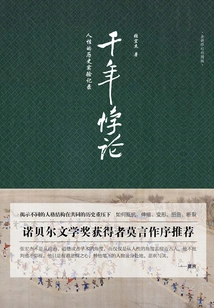
Millennium Paradox
History千年悖论
Zhang Hongjie
"The Millennium Paradox" is the first book published by Zhang Hongjie. This book is a newly revised edition of "The Millennium Paradox", which contains most of the author's excellent "historical and cultural prose" works in the early writing period, as well as two interviews about historical writing in his early years, and is accompanied by exquisite illustrations. In the book, the author uses different perspectives to observe and narrate famous historical figures such as Wu Sangui, Zeng Guofan, Cixi, and Zhu Yuanzhang who have been written and commented on many times by history and others, as well as historical events such as China's imperial examination system, cruel torture, the Sinicization of the Manchus, and the truth about the hermits. He explores human nature in a specific period, giving people a fresh reading experience and thought-provoking thinking. Regarding the narration of historical figures, Zhang Hongjie has his own unique sensory structure on the basis of respecting historical facts. With his calm and meticulous brushwork and penetrating portrayal, he writes about the ups and downs of various characters who live in the same era under the fission of the same era, and explores the ups and downs of human nature in the historical theater. It is thought-provoking and also makes people have more understanding and compassion for labeled historical figures.
"The Millennium Paradox" is the first book published by Zhang Hongjie. This book is a newly revised edition of "The Millennium Paradox", which contains most of the author's excellent "historical and cultural prose" works in the early writing period, as well as two interviews about historical writing in his early years, and is accompanied by exquisite illustrations. In the book, the author uses different perspectives to observe and narrate famous historical figures such as Wu Sangui, Zeng Guofan, Cixi, and Zhu Yuanzhang who have been written and commented on many times by history and others, as well as historical events such as China's imperial examination system, cruel torture, the Sinicization of the Manchus, and the truth about the hermits. He explores human nature in a specific period, giving people a fresh reading experience and thought-provoking thinking. Regarding the narration of historical figures, Zhang Hongjie has his own unique sensory structure on the basis of respecting historical facts. With his calm and meticulous brushwork and penetrating portrayal, he writes about the ups and downs of various characters who live in the same era under the fission of the same era, and explores the ups and downs of human nature in the historical theater. It is thought-provoking and also makes people have more understanding and compassion for labeled historical figures.
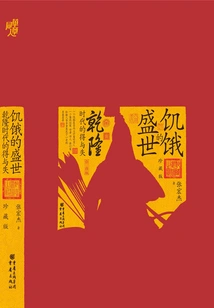
饥饿的盛世:乾隆时代的得与失(珍藏版)
Zhang Hongjie
The content of this book mainly writes about the gains and losses of the Qianlong era. Through the deconstruction of the Qianlong era, the author paints a colorful picture of the "prosperous age" for readers, and at the same time profoundly reveals the lost secrets of modern China. China under Qianlong's rule was the most populous and most powerful period in China's thousands of years of history. Horizontally, it was the most powerful and wealthy country in the world at that time. It is no exaggeration to call it the greatest prosperous era in Chinese history. The Qianlong era created unprecedented political stability, supported an unprecedented population, and established today's territory. However, the author sees from a deeper level that behind the superficial prosperity is a huge crisis. Qianlong's sixty-year reign coincided with Britain going through the entire process of the industrial revolution. In the thirteenth year of Qianlong's reign (1748), Montesquieu published his famous work "The Spirit of the Laws". In the forty-first year of Qianlong's reign (1776), the United States declared independence. In the fifty-fourth year of Qianlong's reign (1789), the Bourgeois Revolution broke out in France. On the other side of the earth, Emperor Qianlong was immersed in the dream of a "prosperous age" and could not extricate himself, trying every means to maintain his feudal rule. It can be said that during this period, China missed the opportunity to contact world civilizations and failed to catch up with the tide of world development. This directly led to China's continued decline and even its status as the "sick man of East Asia." In addition, this book also introduces Qianlong's origin, personal life, personality, etc.
The content of this book mainly writes about the gains and losses of the Qianlong era. Through the deconstruction of the Qianlong era, the author paints a colorful picture of the "prosperous age" for readers, and at the same time profoundly reveals the lost secrets of modern China. China under Qianlong's rule was the most populous and most powerful period in China's thousands of years of history. Horizontally, it was the most powerful and wealthy country in the world at that time. It is no exaggeration to call it the greatest prosperous era in Chinese history. The Qianlong era created unprecedented political stability, supported an unprecedented population, and established today's territory. However, the author sees from a deeper level that behind the superficial prosperity is a huge crisis. Qianlong's sixty-year reign coincided with Britain going through the entire process of the industrial revolution. In the thirteenth year of Qianlong's reign (1748), Montesquieu published his famous work "The Spirit of the Laws". In the forty-first year of Qianlong's reign (1776), the United States declared independence. In the fifty-fourth year of Qianlong's reign (1789), the Bourgeois Revolution broke out in France. On the other side of the earth, Emperor Qianlong was immersed in the dream of a "prosperous age" and could not extricate himself, trying every means to maintain his feudal rule. It can be said that during this period, China missed the opportunity to contact world civilizations and failed to catch up with the tide of world development. This directly led to China's continued decline and even its status as the "sick man of East Asia." In addition, this book also introduces Qianlong's origin, personal life, personality, etc.
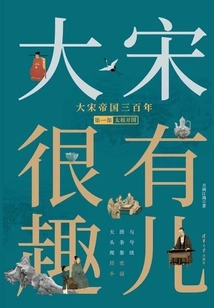
大宋帝国三百年(第一部)
Moon Run Jiangnan
This series of books follows chronological order and tells the historical stories that happened in more than three hundred years from the peasant uprising in the late Tang Dynasty to the naval battle of Yashan. The historical materials in this book are all derived from official history, which includes the games between countries and the love and hate between people; the expansion of territories, the Ming Dynasty and the Dusk, as well as the life experiences of famous ministers, the ups and downs of officialdom, and the relationships between many people. The events are intertwined into a majestic historical drama of the Two Song Dynasties. Readers can feel the social scene and human emotions during that period, and can also taste the warmth and warmth of the world and the way of life from the games between people and between countries. The writing of this book is calm and atmospheric yet relaxed and humorous, and the language is very lens-like. Reading it gives you the feeling of "chasing a drama", making readers unable to put down the book and marveling at the story. It is a historical novel suitable for all ages.
This series of books follows chronological order and tells the historical stories that happened in more than three hundred years from the peasant uprising in the late Tang Dynasty to the naval battle of Yashan. The historical materials in this book are all derived from official history, which includes the games between countries and the love and hate between people; the expansion of territories, the Ming Dynasty and the Dusk, as well as the life experiences of famous ministers, the ups and downs of officialdom, and the relationships between many people. The events are intertwined into a majestic historical drama of the Two Song Dynasties. Readers can feel the social scene and human emotions during that period, and can also taste the warmth and warmth of the world and the way of life from the games between people and between countries. The writing of this book is calm and atmospheric yet relaxed and humorous, and the language is very lens-like. Reading it gives you the feeling of "chasing a drama", making readers unable to put down the book and marveling at the story. It is a historical novel suitable for all ages.
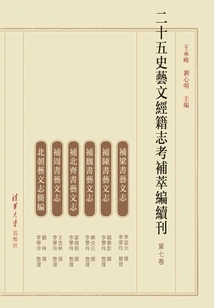
二十五史艺文经籍志考补萃编续刊(第七卷)
Wang Chenglue Liu Xinming
"Twenty-Five Histories, Art, Literature and Classics" was published successively by Tsinghua University Press from 2011 to 2014, with a total of 27 volumes, 31 volumes and 9.6 Million words. "Cuibian" brings together 84 original works of art and literature in official history as well as later textual research, annotations, and supplements. Each book has a selected original and is punctuated and collated. It can be said to be the largest compilation and arrangement of historical records to date. "The Supplement and Continuation of the Examination of the Classics of Twenty-Five Histories, Art and Literature" is a content supplement and natural extension of "The Collection"; market demand and product positioning: "The Continuation" is a comprehensive and well-collated series of high-quality historical records. It is a must-have book for researchers in many disciplines such as history, bibliography, philology, book history, academic history, cultural history, and history of science and technology. It has a huge market demand.
"Twenty-Five Histories, Art, Literature and Classics" was published successively by Tsinghua University Press from 2011 to 2014, with a total of 27 volumes, 31 volumes and 9.6 Million words. "Cuibian" brings together 84 original works of art and literature in official history as well as later textual research, annotations, and supplements. Each book has a selected original and is punctuated and collated. It can be said to be the largest compilation and arrangement of historical records to date. "The Supplement and Continuation of the Examination of the Classics of Twenty-Five Histories, Art and Literature" is a content supplement and natural extension of "The Collection"; market demand and product positioning: "The Continuation" is a comprehensive and well-collated series of high-quality historical records. It is a must-have book for researchers in many disciplines such as history, bibliography, philology, book history, academic history, cultural history, and history of science and technology. It has a huge market demand.
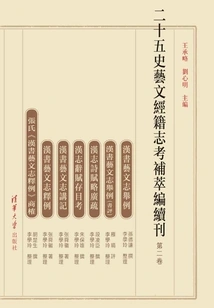
二十五史艺文经籍志考补萃编续刊(第二卷)
Wang Chenglue Liu Xinming
"Twenty-Five Histories, Art, Literature and Classics" was published successively by Tsinghua University Press from 2011 to 2014, with a total of 27 volumes, 31 volumes and 9.6 Million words. "Cuibian" brings together 84 original works of art and literature in official history as well as later textual research, annotations, and supplements. Each book has a selected original and is punctuated and collated. It can be said to be the largest compilation and arrangement of historical records to date. "The Supplement and Supplement to the Examination of the Classics of Twenty-Five Historical Records of Art and Literature" is a content supplement and natural extension of "The Collection"; market demand and product positioning: "The Supplement" is a comprehensive and well-collated series of high-quality historical records. It is a must-have book for researchers in many disciplines such as history, bibliography, philology, book history, academic history, cultural history, and history of science and technology. It has a huge market demand.
"Twenty-Five Histories, Art, Literature and Classics" was published successively by Tsinghua University Press from 2011 to 2014, with a total of 27 volumes, 31 volumes and 9.6 Million words. "Cuibian" brings together 84 original works of art and literature in official history as well as later textual research, annotations, and supplements. Each book has a selected original and is punctuated and collated. It can be said to be the largest compilation and arrangement of historical records to date. "The Supplement and Supplement to the Examination of the Classics of Twenty-Five Historical Records of Art and Literature" is a content supplement and natural extension of "The Collection"; market demand and product positioning: "The Supplement" is a comprehensive and well-collated series of high-quality historical records. It is a must-have book for researchers in many disciplines such as history, bibliography, philology, book history, academic history, cultural history, and history of science and technology. It has a huge market demand.
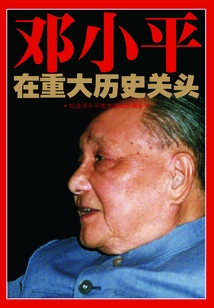
邓小平在重大历史关头:纪念邓小平南方谈话20周年
Gong Li Zhou Jingqing Zhang Shu
"Deng Xiaoping at a Major Historical Moment: Commemorating the 20th Anniversary of Deng Xiaoping's Southern Talks" describes Comrade Deng Xiaoping's magnificent life. At turning points in history, Deng Xiaoping was in a commanding position and was always able to make the right decisions in complex situations. Approaching the southwest, we peacefully liberated Tibet; correcting chaos, China began reform and opening up; when the Chinese economy was facing "left" pressure, the Southern Speech injected new vitality into the Chinese economy.
"Deng Xiaoping at a Major Historical Moment: Commemorating the 20th Anniversary of Deng Xiaoping's Southern Talks" describes Comrade Deng Xiaoping's magnificent life. At turning points in history, Deng Xiaoping was in a commanding position and was always able to make the right decisions in complex situations. Approaching the southwest, we peacefully liberated Tibet; correcting chaos, China began reform and opening up; when the Chinese economy was facing "left" pressure, the Southern Speech injected new vitality into the Chinese economy.
宋史专题课
Deng Guangming Qi Xia
"Song History Special Course" is a "Song History Special Course" written by two history professors from Peking University, Deng Guangming and Qi Xia. "Song History Special Course" studies and observes the history of the Song Dynasty from the laws of Chinese historical development. Specific contents include the Song Dynasty's status in Chinese history, the political reform movement of the Northern Song Dynasty, the struggle against the Jin in the early Southern Song Dynasty, the social productivity of the Song Dynasty, the evolution of the feudal economic system of the Song Dynasty, and handicraft production in the Song Dynasty.
"Song History Special Course" is a "Song History Special Course" written by two history professors from Peking University, Deng Guangming and Qi Xia. "Song History Special Course" studies and observes the history of the Song Dynasty from the laws of Chinese historical development. Specific contents include the Song Dynasty's status in Chinese history, the political reform movement of the Northern Song Dynasty, the struggle against the Jin in the early Southern Song Dynasty, the social productivity of the Song Dynasty, the evolution of the feudal economic system of the Song Dynasty, and handicraft production in the Song Dynasty.
Boxer Studies
History义和团研究
Dai Xuanzhi
"Study on the Boxer Rebellion" is Mr. Dai Xuanzhi's first book, and it is also his famous work. The book is divided into eight chapters, from the origin, essence, spread, and xenophobia of the Boxer Rebellion, to the formation of the war, the mutual protection of the Southeast, the actions of the Eight-Power Allied Forces, and the final peace agreement. It is based on detailed and rigorous research and contains concise and vivid narratives, reproducing the dynamic panorama of the Boxer Rebellion.
"Study on the Boxer Rebellion" is Mr. Dai Xuanzhi's first book, and it is also his famous work. The book is divided into eight chapters, from the origin, essence, spread, and xenophobia of the Boxer Rebellion, to the formation of the war, the mutual protection of the Southeast, the actions of the Eight-Power Allied Forces, and the final peace agreement. It is based on detailed and rigorous research and contains concise and vivid narratives, reproducing the dynamic panorama of the Boxer Rebellion.
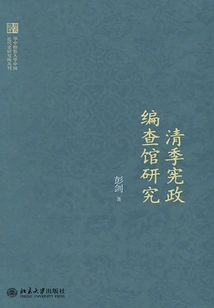
清季宪政编查馆研究
Peng Jian
"Research on the Constitutional Compilation and Inspection Office in the Qing Dynasty" Introduction: The preparatory constitution-making in the Qing Dynasty was the beginning of China's constitutional reform. The Constitutional Affairs Editorial and Inspection Office was the supervisory organ of the preparatory constitution-making and was known as the "constitutional hub". "Research on the Constitutional Compilation and Investigation Office in the Qing Dynasty" not only examines the evolution and management of this institution, but also focuses on analyzing the group interactions caused by the various tasks it carried out to promote constitutional reform, and the constraints caused by group interactions on the constitutional reform. It then penetrates into the dilemma of the constitutional reform in the Qing Dynasty and explores the inherent connection between the preparation for the establishment of the constitution and the collapse of the Qing court.
"Research on the Constitutional Compilation and Inspection Office in the Qing Dynasty" Introduction: The preparatory constitution-making in the Qing Dynasty was the beginning of China's constitutional reform. The Constitutional Affairs Editorial and Inspection Office was the supervisory organ of the preparatory constitution-making and was known as the "constitutional hub". "Research on the Constitutional Compilation and Investigation Office in the Qing Dynasty" not only examines the evolution and management of this institution, but also focuses on analyzing the group interactions caused by the various tasks it carried out to promote constitutional reform, and the constraints caused by group interactions on the constitutional reform. It then penetrates into the dilemma of the constitutional reform in the Qing Dynasty and explores the inherent connection between the preparation for the establishment of the constitution and the collapse of the Qing court.
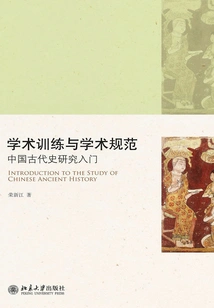
Academic Training and Academic Standards: an Introduction to the Study of Ancient Chinese History
History学术训练与学术规范:中国古代史研究入门
Rong Xinjiang
"Academic Training and Academic Standards: An Introduction to the Research of Ancient Chinese History" For students who are eager to enter the field of ancient Chinese history research, "Academic Training and Academic Standards: An Introduction to the Research of Ancient Chinese History" almost points out the way to get started step by step. Ancient books, stone carvings, bamboo slips, documents, images, as well as modern treatises and publications all have their own methods of review. Grasping editions and collations and tracking new archaeological discoveries are conducive to the accumulation and updating of knowledge. Further academic paper writing also has its own rules, and there is no room for falsehood or trickery. Academic literacy is developed through such persistent training.
"Academic Training and Academic Standards: An Introduction to the Research of Ancient Chinese History" For students who are eager to enter the field of ancient Chinese history research, "Academic Training and Academic Standards: An Introduction to the Research of Ancient Chinese History" almost points out the way to get started step by step. Ancient books, stone carvings, bamboo slips, documents, images, as well as modern treatises and publications all have their own methods of review. Grasping editions and collations and tracking new archaeological discoveries are conducive to the accumulation and updating of knowledge. Further academic paper writing also has its own rules, and there is no room for falsehood or trickery. Academic literacy is developed through such persistent training.
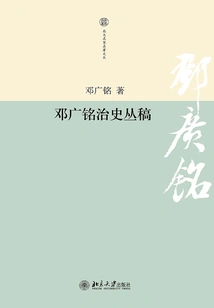
邓广铭治史丛稿
Deng Guangming
The author is the most famous contemporary historian of the Song, Liao and Jin Dynasties. His knowledge is not limited to the narrow field of history, but integrates literature, history and philosophy, and has contributed to all aspects of the history of the Song, Liao and Jin Dynasties. The titles of "Deng Guangming's History of Governance Collection" are personally selected by the author. According to the content of the articles, they are generally prefaced by institutional history, political history, Neo-Confucianism, Ci studies, historical materials, characters, etc. Some of the author's unique insights and most specific research skills on the history of Song, Liao and Jin are presented after careful revision. Among them are long papers such as "The Recruitment System of the Northern Song Dynasty and its Relationship with the Weakness, Poverty and Agricultural Production of the Time", as well as preface texts such as "\u003CSong Historian Official Records Examination\u003E Preface and Examples" and "The High Development of Song Dynasty Culture and the Cultural Policy of the Song Dynasty - \u003CPreface to the Draft of the Cultural History of the Northern Song Dynasty\u003E".
The author is the most famous contemporary historian of the Song, Liao and Jin Dynasties. His knowledge is not limited to the narrow field of history, but integrates literature, history and philosophy, and has contributed to all aspects of the history of the Song, Liao and Jin Dynasties. The titles of "Deng Guangming's History of Governance Collection" are personally selected by the author. According to the content of the articles, they are generally prefaced by institutional history, political history, Neo-Confucianism, Ci studies, historical materials, characters, etc. Some of the author's unique insights and most specific research skills on the history of Song, Liao and Jin are presented after careful revision. Among them are long papers such as "The Recruitment System of the Northern Song Dynasty and its Relationship with the Weakness, Poverty and Agricultural Production of the Time", as well as preface texts such as "\u003CSong Historian Official Records Examination\u003E Preface and Examples" and "The High Development of Song Dynasty Culture and the Cultural Policy of the Song Dynasty - \u003CPreface to the Draft of the Cultural History of the Northern Song Dynasty\u003E".
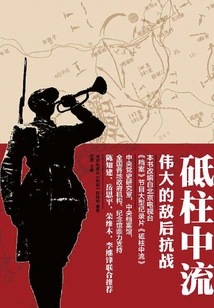
砥柱中流:伟大的敌后抗战
Lu Jun
To commemorate the 69th anniversary of the victory of the Anti-Japanese War and the first "Victory Day of the Chinese People's Anti-Japanese War", under the leadership of the Propaganda Department of the Beijing Municipal Party Committee and Beijing Television, the "Archives" column of Beijing Satellite TV produced a large-scale documentary series "The Mainstay: The Great War of Resistance Behind Enemy Lines". The series has 10 episodes and premiered on Beijing Satellite TV on September 1, 2014. This documentary uses time as its warp and events as its latitude, and uses a large number of precious video materials, archival materials, and historical pictures as its basic materials. It uses the original studio narration of "Archives" as its basic form, and has comprehensively upgraded its presentation methods. In this series, the narrator walks out of the studio for the first time, follows the footsteps of the Chinese Communist Party's Anti-Japanese War behind enemy lines, enters real historical scenes, and recalls the past. In order to give a comprehensive, systematic, objective and vivid presentation of the Chinese Communist Party's 14-year War of Resistance Behind Enemy Lines, the film crew invested nearly 100 people, visited 19 former anti-Japanese base areas across the country, and visited more than 30 historical relics of the Anti-Japanese War. They traveled nearly 20,000 kilometers and shot more than 6,000 minutes of footage. In order to ensure that every scene in the series can faithfully reflect the historical background and regional characteristics of the time, and that every explanation is well-founded, accurate and reliable, the program team invited several experts and scholars from the Party History Research Office of the Communist Party of China to conduct multiple rounds of discussions and discussions, and worked closely with the Central Party History Research Office, the Central Archives, government agencies across the country, memorial halls, etc. The program team collected a large amount of detailed historical information through various channels such as archives, libraries, and memorial halls in various places.
To commemorate the 69th anniversary of the victory of the Anti-Japanese War and the first "Victory Day of the Chinese People's Anti-Japanese War", under the leadership of the Propaganda Department of the Beijing Municipal Party Committee and Beijing Television, the "Archives" column of Beijing Satellite TV produced a large-scale documentary series "The Mainstay: The Great War of Resistance Behind Enemy Lines". The series has 10 episodes and premiered on Beijing Satellite TV on September 1, 2014. This documentary uses time as its warp and events as its latitude, and uses a large number of precious video materials, archival materials, and historical pictures as its basic materials. It uses the original studio narration of "Archives" as its basic form, and has comprehensively upgraded its presentation methods. In this series, the narrator walks out of the studio for the first time, follows the footsteps of the Chinese Communist Party's Anti-Japanese War behind enemy lines, enters real historical scenes, and recalls the past. In order to give a comprehensive, systematic, objective and vivid presentation of the Chinese Communist Party's 14-year War of Resistance Behind Enemy Lines, the film crew invested nearly 100 people, visited 19 former anti-Japanese base areas across the country, and visited more than 30 historical relics of the Anti-Japanese War. They traveled nearly 20,000 kilometers and shot more than 6,000 minutes of footage. In order to ensure that every scene in the series can faithfully reflect the historical background and regional characteristics of the time, and that every explanation is well-founded, accurate and reliable, the program team invited several experts and scholars from the Party History Research Office of the Communist Party of China to conduct multiple rounds of discussions and discussions, and worked closely with the Central Party History Research Office, the Central Archives, government agencies across the country, memorial halls, etc. The program team collected a large amount of detailed historical information through various channels such as archives, libraries, and memorial halls in various places.
中国传统文化概论
Luo Wenwei
"Introduction to Traditional Chinese Culture" focuses on the connotation and composition, evolution and stages, basic types, geographical environment and characteristics, and basic spirit of traditional Chinese culture. It explains Chinese traditional thought, culture and cultural identity. It systematically and comprehensively introduces the basic situation of Chinese traditional thought and culture, art culture, folk culture, architectural culture, religious culture, science and technology culture, as well as the external exchanges of Chinese traditional culture. On this basis, it proposes the inheritance and development of Chinese traditional culture in the context of globalization. "Introduction to Traditional Chinese Culture" adheres to the purpose of serving overseas Chinese and spreading Chinese culture, draws on useful cultures from all over the world, and insists on integrating ideological and moral education into general education. The teaching content comprehensively takes into account the teaching requirements of students from Hong Kong, Macao and Taiwan, overseas Chinese and other international students, helping students to systematically and comprehensively understand Chinese traditional culture, enhancing students' cultural confidence and enhancing cultural identity, which is important for improving the country's cultural soft power and even promoting the country's cultural soft power. Make positive contributions to the reunification of the motherland; strive to build a complete cultural cognitive map of the Chinese nation, which will help students form an objective and scientific view of territory, history, nation and culture; focus on cultivating students' interest in reading ancient classics, which will help improve students' moral cultivation and humanistic qualities. "Introduction to Traditional Chinese Culture" can be used as a textbook for general education in colleges and universities, as a basic reading for readers to study traditional Chinese culture, and as a textbook for various training classes.
"Introduction to Traditional Chinese Culture" focuses on the connotation and composition, evolution and stages, basic types, geographical environment and characteristics, and basic spirit of traditional Chinese culture. It explains Chinese traditional thought, culture and cultural identity. It systematically and comprehensively introduces the basic situation of Chinese traditional thought and culture, art culture, folk culture, architectural culture, religious culture, science and technology culture, as well as the external exchanges of Chinese traditional culture. On this basis, it proposes the inheritance and development of Chinese traditional culture in the context of globalization. "Introduction to Traditional Chinese Culture" adheres to the purpose of serving overseas Chinese and spreading Chinese culture, draws on useful cultures from all over the world, and insists on integrating ideological and moral education into general education. The teaching content comprehensively takes into account the teaching requirements of students from Hong Kong, Macao and Taiwan, overseas Chinese and other international students, helping students to systematically and comprehensively understand Chinese traditional culture, enhancing students' cultural confidence and enhancing cultural identity, which is important for improving the country's cultural soft power and even promoting the country's cultural soft power. Make positive contributions to the reunification of the motherland; strive to build a complete cultural cognitive map of the Chinese nation, which will help students form an objective and scientific view of territory, history, nation and culture; focus on cultivating students' interest in reading ancient classics, which will help improve students' moral cultivation and humanistic qualities. "Introduction to Traditional Chinese Culture" can be used as a textbook for general education in colleges and universities, as a basic reading for readers to study traditional Chinese culture, and as a textbook for various training classes.
春秋那杯茶,战国这碗酒(第四部)
The First Month Of Nanke
The "Cup of Tea in the Spring and Autumn Period, Bowl of Wine in the Warring States Period" series of books is divided into four parts, telling the wonderful historical stories of the Spring and Autumn Period and the Warring States Period in chronological order. The historical materials in the book are all derived from official history, supplemented by poetry, historical knowledge, and the author's romance. It uses hilarious language to describe the people and events of the Spring and Autumn Period and the Warring States Period. Whether they are the emperor's nobles or unknown people, every character shows the style of the Spring and Autumn Period and the Warring States Period. Readers can feel the social scene and human emotions at that time, and can also taste the warmth and warmth of the world and the way of life from the games between people and countries. The language of this book is very cinematic, and reading it gives you the feeling of "chasing a drama", which makes readers unable to put down the book and marveling at it. It is a leisure read suitable for all ages.
The "Cup of Tea in the Spring and Autumn Period, Bowl of Wine in the Warring States Period" series of books is divided into four parts, telling the wonderful historical stories of the Spring and Autumn Period and the Warring States Period in chronological order. The historical materials in the book are all derived from official history, supplemented by poetry, historical knowledge, and the author's romance. It uses hilarious language to describe the people and events of the Spring and Autumn Period and the Warring States Period. Whether they are the emperor's nobles or unknown people, every character shows the style of the Spring and Autumn Period and the Warring States Period. Readers can feel the social scene and human emotions at that time, and can also taste the warmth and warmth of the world and the way of life from the games between people and countries. The language of this book is very cinematic, and reading it gives you the feeling of "chasing a drama", which makes readers unable to put down the book and marveling at it. It is a leisure read suitable for all ages.
东固革命根据地史论
Tang Lianying Ye Fulin Ding Renxiang
"History of the Donggu Revolutionary Base Area" conducts a relatively comprehensive study on its foundation, armed struggle and military construction, political power construction, economic construction, culture, education and health, party building, the new starting point in the history of the Donggu Alliance and the Fourth Red Army, the historical contribution to the development of the Donggu Revolutionary Base Area, the formation and development of the Donggu Revolutionary Base Area and the Central Soviet Area, and the comparative study with the Jinggangshan Revolutionary Base Area.
"History of the Donggu Revolutionary Base Area" conducts a relatively comprehensive study on its foundation, armed struggle and military construction, political power construction, economic construction, culture, education and health, party building, the new starting point in the history of the Donggu Alliance and the Fourth Red Army, the historical contribution to the development of the Donggu Revolutionary Base Area, the formation and development of the Donggu Revolutionary Base Area and the Central Soviet Area, and the comparative study with the Jinggangshan Revolutionary Base Area.
清末提法使研究
Shi Xinheng
The topic discussed in this book, "Tifashi", is a new institution established in each province during the legal reform in the late Qing Dynasty. It was restructured from the Jifashi and is positioned as a judicial administrative agency. It presides over the judicial reform of a province and prepares for the establishment of trial halls, supervisory offices and prisons within a province. This book conducts a comprehensive and holistic examination of the formation, operation and influence of Tifazhi in the context of the constitutional reform in the late Qing Dynasty. The book has a clear narrative context, excavates and sorts out relevant historical materials, and focuses on the collection and use of local historical materials.
The topic discussed in this book, "Tifashi", is a new institution established in each province during the legal reform in the late Qing Dynasty. It was restructured from the Jifashi and is positioned as a judicial administrative agency. It presides over the judicial reform of a province and prepares for the establishment of trial halls, supervisory offices and prisons within a province. This book conducts a comprehensive and holistic examination of the formation, operation and influence of Tifazhi in the context of the constitutional reform in the late Qing Dynasty. The book has a clear narrative context, excavates and sorts out relevant historical materials, and focuses on the collection and use of local historical materials.
World War Ii
History二战风云
Zhang Hongwei
From September 1, 1939 to September 2, 1945, the fascist axis of Germany, Italy, Japan, Bulgaria, Hungary, Romania and other countries on one side, and the Allied Powers with the world's anti-fascist forces on the other side, launched the second largest-scale war, historically known as World War II, referred to as "World War II". When the war was intense, 61 countries and regions participated in the war; more than 2 billion people were involved in the war; the war spread across Europe, Asia, South America, North America, Africa and Oceania; the battle lines spread across the Atlantic, Pacific, Indian and Arctic Oceans; about 90 million people died; about 4 trillion U. S. Dollars in monetary losses; a large number of houses were damaged, and the damage to factories, farms, railways and bridges was difficult to estimate. The fascist movement has seriously trampled on human dignity, freedom and peace, and is a rare catastrophe encountered in human history. Some histories are just pastimes for after-dinner entertainment, but World War II, in which blood and fire intertwined, can touch the heartstrings of mankind more deeply.
From September 1, 1939 to September 2, 1945, the fascist axis of Germany, Italy, Japan, Bulgaria, Hungary, Romania and other countries on one side, and the Allied Powers with the world's anti-fascist forces on the other side, launched the second largest-scale war, historically known as World War II, referred to as "World War II". When the war was intense, 61 countries and regions participated in the war; more than 2 billion people were involved in the war; the war spread across Europe, Asia, South America, North America, Africa and Oceania; the battle lines spread across the Atlantic, Pacific, Indian and Arctic Oceans; about 90 million people died; about 4 trillion U. S. Dollars in monetary losses; a large number of houses were damaged, and the damage to factories, farms, railways and bridges was difficult to estimate. The fascist movement has seriously trampled on human dignity, freedom and peace, and is a rare catastrophe encountered in human history. Some histories are just pastimes for after-dinner entertainment, but World War II, in which blood and fire intertwined, can touch the heartstrings of mankind more deeply.
中国近现代史纲要实践实训教程
Zou Qinghua
This book is a practical training textbook for the "Outline of Modern and Modern Chinese History". It mainly focuses on the main contents of the "Outline of Modern and Modern Chinese History". It teaches the history from the Opium War to the construction of a new era of socialism with Chinese characteristics, and summarizes the development laws of modern and modern Chinese history. At the same time, it strengthens the teaching design of practical training and expansion links, and based on students' actual conditions, strives to help students understand national history and national conditions, and deeply understand history and how the people chose Marxism, the Communist Party of China, and the path of socialism. Generally speaking, this book is particularly suitable for general colleges and universities at all levels as a general textbook for political theory courses in the school.
This book is a practical training textbook for the "Outline of Modern and Modern Chinese History". It mainly focuses on the main contents of the "Outline of Modern and Modern Chinese History". It teaches the history from the Opium War to the construction of a new era of socialism with Chinese characteristics, and summarizes the development laws of modern and modern Chinese history. At the same time, it strengthens the teaching design of practical training and expansion links, and based on students' actual conditions, strives to help students understand national history and national conditions, and deeply understand history and how the people chose Marxism, the Communist Party of China, and the path of socialism. Generally speaking, this book is particularly suitable for general colleges and universities at all levels as a general textbook for political theory courses in the school.
经典之前的中国智慧
Wang Xiaodun
Chinese wisdom has gone through two stages in its development process: first, the "pre-classical" stage before the formation of classical philosophy, and second, the "classical" stage after the Six Classics were used to teach. In the previous stage, people's public knowledge was mainly formed in ritual occasions and spread through spoken language and images, thus using special symbolic methods. Later generations did not observe deeply and often made simplistic understandings based on narrow experience. In order to find the truth, this book selects a section from each of three aspects: ancient mythology, ancient art, ancient rituals and science to analyze. On the one hand, it explains the true connotation of things such as the myth of the turtle dragging its title, the art of gluttony, and astronomical phenomena during the Yin and Zhou Dynasties. On the other hand, it also explains the symbolic characteristics of ancient wisdom, the symbolic thinking of ancient Chinese people, and the linguistic characteristics of ancient images. As a supplement and improvement, this book also discusses five more theoretically significant issues: (1) The prototype of concepts such as "Beginning", "Mother", "Name" and "Dao" in "Laozi"; (2) The transition from the pre-classical world to the classic world represented by Confucius; (3) The relationship between "witchcraft" and "history"; (4) The formation of the classics; (5) The understanding of the "Axis Breakthrough" and other doctrines.
Chinese wisdom has gone through two stages in its development process: first, the "pre-classical" stage before the formation of classical philosophy, and second, the "classical" stage after the Six Classics were used to teach. In the previous stage, people's public knowledge was mainly formed in ritual occasions and spread through spoken language and images, thus using special symbolic methods. Later generations did not observe deeply and often made simplistic understandings based on narrow experience. In order to find the truth, this book selects a section from each of three aspects: ancient mythology, ancient art, ancient rituals and science to analyze. On the one hand, it explains the true connotation of things such as the myth of the turtle dragging its title, the art of gluttony, and astronomical phenomena during the Yin and Zhou Dynasties. On the other hand, it also explains the symbolic characteristics of ancient wisdom, the symbolic thinking of ancient Chinese people, and the linguistic characteristics of ancient images. As a supplement and improvement, this book also discusses five more theoretically significant issues: (1) The prototype of concepts such as "Beginning", "Mother", "Name" and "Dao" in "Laozi"; (2) The transition from the pre-classical world to the classic world represented by Confucius; (3) The relationship between "witchcraft" and "history"; (4) The formation of the classics; (5) The understanding of the "Axis Breakthrough" and other doctrines.
The Prequel of the Sturdy Northern and Southern Dynasties: the Storms of the Sixteen Kingdoms
History彪悍南北朝前传之十六国风云
The Clouds Are Calm And The Heart Is Far Away
This is an era that is often overlooked. It is sandwiched between the two famous historical periods of the Three Kingdoms and the Sui and Tang Dynasties, and is almost brushed off in history textbooks. This is a purgatory-like era, with overwhelming chaos, frequent wars, and desolate lives. This is also a dreamlike era, with soaring excitement, turbulent times, and heroes emerging in large numbers. This is also an era worthy of attention. It can be said that without the Sixteen Kingdoms, there would be no Northern Dynasties, and there would be no Sui and Tang Dynasties that were later powerful. In this shining torrent of the times, there are iron-blooded gods of war and romantic celebrities, there are counterattack grassroots and restoration aristocrats, there are heroes from the Middle Earth and heroes from foreign lands. He was born a slave but ascended to the throne of emperor, this is Shi Le; his name has been preserved for thousands of years but is always full of controversy, this is Ran Min; this is Fu Jian who was tolerant and generous but was repeatedly betrayed. After a rough life, he was able to rise to the occasion, this is Liu Yuan; he has no generosity but cannot save the crisis, this is Zu Ti. In this famous era of great division in Chinese history, they interpret the diverse possibilities of history. When the "Strong Southern and Northern Dynasties" series was serialized in the Tianya community, it was highly praised by countless fans and was hailed as "one of the best-looking histories of the Southern and Northern Dynasties"!
This is an era that is often overlooked. It is sandwiched between the two famous historical periods of the Three Kingdoms and the Sui and Tang Dynasties, and is almost brushed off in history textbooks. This is a purgatory-like era, with overwhelming chaos, frequent wars, and desolate lives. This is also a dreamlike era, with soaring excitement, turbulent times, and heroes emerging in large numbers. This is also an era worthy of attention. It can be said that without the Sixteen Kingdoms, there would be no Northern Dynasties, and there would be no Sui and Tang Dynasties that were later powerful. In this shining torrent of the times, there are iron-blooded gods of war and romantic celebrities, there are counterattack grassroots and restoration aristocrats, there are heroes from the Middle Earth and heroes from foreign lands. He was born a slave but ascended to the throne of emperor, this is Shi Le; his name has been preserved for thousands of years but is always full of controversy, this is Ran Min; this is Fu Jian who was tolerant and generous but was repeatedly betrayed. After a rough life, he was able to rise to the occasion, this is Liu Yuan; he has no generosity but cannot save the crisis, this is Zu Ti. In this famous era of great division in Chinese history, they interpret the diverse possibilities of history. When the "Strong Southern and Northern Dynasties" series was serialized in the Tianya community, it was highly praised by countless fans and was hailed as "one of the best-looking histories of the Southern and Northern Dynasties"!
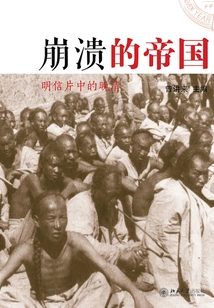
崩溃的帝国:明信片中的晚清
Zeng Told
During the late Qing Dynasty, China's feudal dynasty was irreversibly on the road to decline: Western powers invaded frequently, and the ruling group was dim and decadent... The former "Central Empire" was beset with internal and external difficulties and was in danger. This book focuses on this period of history that is humiliating and unforgettable for the Chinese people. The editor spent many years collecting more than 300 late Qing postcards, photos, drawings, stamps, letters, etc. From home and abroad, and compiled them into a volume in chronological order based on characters and events. The book not only shows the decline of the empire, represented by "representatives of the last dynasty" and "prisons and torture in the late Qing Dynasty", but also shows "the frenzy of carving up China", "the Sino-Japanese Sino-Japanese War", "the development of Taiwan and the 'Taiwan Democratic Republic Incident'", the "Boxer Rebellion", "the Eight-Power Allied Forces' War of Invasion of China", the "Russian-Japanese War" and other major political and military events that severely damaged the empire. It vividly reproduces that period of precarious and embarrassing history. Among the pictures included in this book, postcards are undoubtedly the main body, accounting for more than 90%. The contents of these postcards are mostly documentary photography of major events and social phenomena at that time, and there are also a small number of paintings. Most of them were drawn by reporters accompanying the Eight-Power Allied Forces and foreign missionaries. They were issued by post offices in China at that time, and were purchased by Westerners and sent from China before being circulated overseas. The "Oriental landscapes" on these postcards may not be true and objective, and may be unpleasant or even deeply shameful. But "forgetting the past means betrayal" for today's readers. They open a window to vividly understand the history of the late Qing Dynasty, and their historical value and significance are self-evident. The pictures in this book are mainly based on these stamps and postcards. The editor divided them into different themes, such as "Representatives of the Last Dynasty", Prisons and Torture in the Late Qing Dynasty, "Sino-Japanese Sino-Japanese Sino-Japanese War", "Japanese-Russian War", etc., Supplemented by certain texts, the image vividly reproduces the precarious and lamentable history of the late Qing Dynasty.
During the late Qing Dynasty, China's feudal dynasty was irreversibly on the road to decline: Western powers invaded frequently, and the ruling group was dim and decadent... The former "Central Empire" was beset with internal and external difficulties and was in danger. This book focuses on this period of history that is humiliating and unforgettable for the Chinese people. The editor spent many years collecting more than 300 late Qing postcards, photos, drawings, stamps, letters, etc. From home and abroad, and compiled them into a volume in chronological order based on characters and events. The book not only shows the decline of the empire, represented by "representatives of the last dynasty" and "prisons and torture in the late Qing Dynasty", but also shows "the frenzy of carving up China", "the Sino-Japanese Sino-Japanese War", "the development of Taiwan and the 'Taiwan Democratic Republic Incident'", the "Boxer Rebellion", "the Eight-Power Allied Forces' War of Invasion of China", the "Russian-Japanese War" and other major political and military events that severely damaged the empire. It vividly reproduces that period of precarious and embarrassing history. Among the pictures included in this book, postcards are undoubtedly the main body, accounting for more than 90%. The contents of these postcards are mostly documentary photography of major events and social phenomena at that time, and there are also a small number of paintings. Most of them were drawn by reporters accompanying the Eight-Power Allied Forces and foreign missionaries. They were issued by post offices in China at that time, and were purchased by Westerners and sent from China before being circulated overseas. The "Oriental landscapes" on these postcards may not be true and objective, and may be unpleasant or even deeply shameful. But "forgetting the past means betrayal" for today's readers. They open a window to vividly understand the history of the late Qing Dynasty, and their historical value and significance are self-evident. The pictures in this book are mainly based on these stamps and postcards. The editor divided them into different themes, such as "Representatives of the Last Dynasty", Prisons and Torture in the Late Qing Dynasty, "Sino-Japanese Sino-Japanese Sino-Japanese War", "Japanese-Russian War", etc., Supplemented by certain texts, the image vividly reproduces the precarious and lamentable history of the late Qing Dynasty.