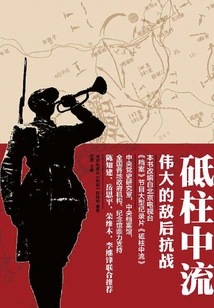
The Mainstay: the Great War of Resistance Behind Enemy Lines
by Lu Jun
About This Novel
To commemorate the 69th anniversary of the victory of the Anti-Japanese War and the first "Victory Day of the Chinese People's Anti-Japanese War", under the leadership of the Propaganda Department of the Beijing Municipal Party Committee and Beijing Television, the "Archives" column of Beijing Satellite TV produced a large-scale documentary series "The Mainstay: The Great War of Resistance Behind Enemy Lines". The series has 10 episodes and premiered on Beijing Satellite TV on September 1, 2014. This documentary uses time as its warp and events as its latitude, and uses a large number of precious video materials, archival materials, and historical pictures as its basic materials. It uses the original studio narration of "Archives" as its basic form, and has comprehensively upgraded its presentation methods. In this series, the narrator walks out of the studio for the first time, follows the footsteps of the Chinese Communist Party's Anti-Japanese War behind enemy lines, enters real historical scenes, and recalls the past. In order to give a comprehensive, systematic, objective and vivid presentation of the Chinese Communist Party's 14-year War of Resistance Behind Enemy Lines, the film crew invested nearly 100 people, visited 19 former anti-Japanese base areas across the country, and visited more than 30 historical relics of the Anti-Japanese War. They traveled nearly 20,000 kilometers and shot more than 6,000 minutes of footage. In order to ensure that every scene in the series can faithfully reflect the historical background and regional characteristics of the time, and that every explanation is well-founded, accurate and reliable, the program team invited several experts and scholars from the Party History Research Office of the Communist Party of China to conduct multiple rounds of discussions and discussions, and worked closely with the Central Party History Research Office, the Central Archives, government agencies across the country, memorial halls, etc. The program team collected a large amount of detailed historical information through various channels such as archives, libraries, and memorial halls in various places.
Official Sources
What Readers Think
Rating
Community(0)
Rating
Community(0)
